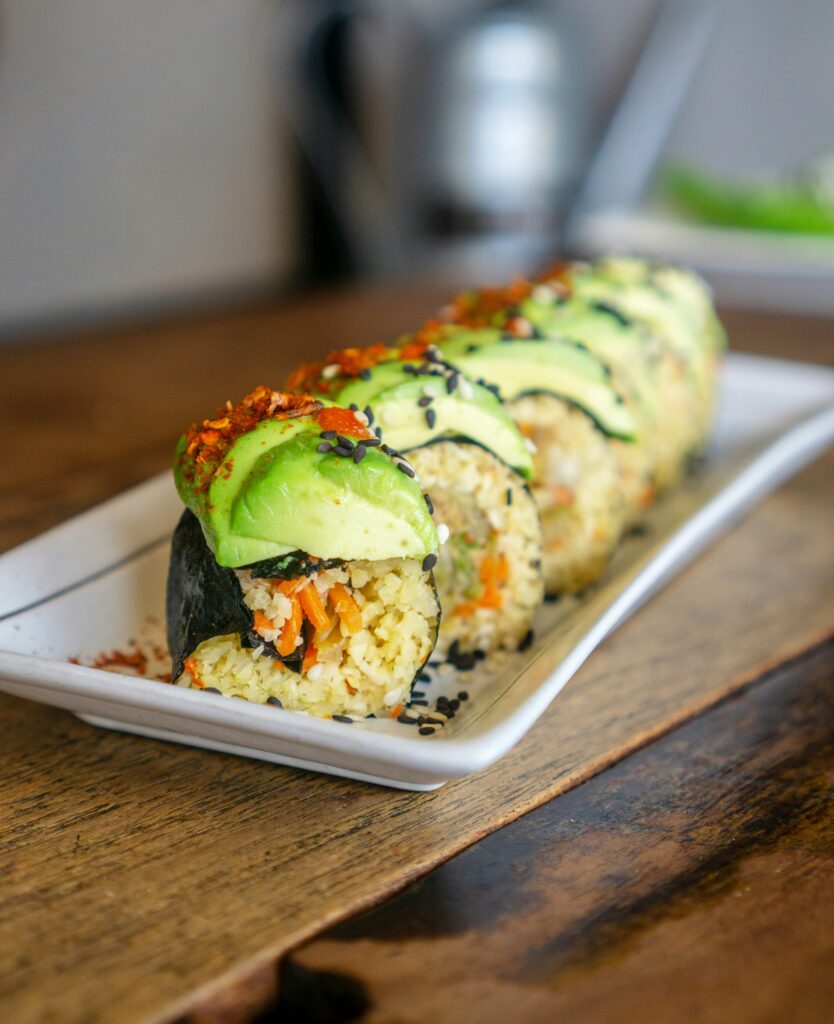
Vegan sushi rolls are a fresh, colorful twist on a classic favorite.
They’re packed with crisp veggies, creamy avocado, and perfectly seasoned rice, all wrapped in tender sheets of nori. Every bite is light, flavorful, and satisfying.
The best part? They’re surprisingly easy to make at home. You can fill them with your favorite vegetables and create rolls that suit your taste.
This recipe uses simple plant-based ingredients and a few basic steps.
I’ll walk you through how to prepare the rice, choose tasty fillings, roll the sushi, and slice it neatly so you can enjoy homemade vegan sushi anytime.
Is Homemade Vegan Sushi Difficult?
Many people assume sushi is complicated to make, but vegan sushi is actually one of the easiest types of sushi for beginners.
Unlike traditional sushi that may require handling raw fish, vegan sushi uses simple ingredients like avocado, cucumber, carrots, and tofu.
Once the rice is prepared, assembling the rolls becomes a straightforward process of layering, rolling, and slicing.
Most first-time makers can successfully prepare vegan sushi in under an hour, and after making a few rolls, the technique becomes surprisingly easy to master.
This recipe is ideal for beginners because it uses readily available ingredients and requires no special culinary skills beyond basic knife work and rolling.
What Are Vegan Sushi Rolls?
Vegan sushi rolls are a plant-based version of traditional sushi, made with seasoned sushi rice, sheets of nori (seaweed), and a variety of fresh vegetables instead of fish or seafood.
The rice is lightly seasoned with rice vinegar, sugar, and salt, giving it that classic sushi flavor—slightly tangy, a little sweet, and perfectly balanced.
The fillings are where vegan sushi really shines. Instead of raw fish, you use ingredients like creamy avocado, crisp cucumber, sweet carrots, bell peppers, or even roasted sweet potato and tofu for extra texture and flavor.
Everything is layered on top of the rice, rolled tightly in nori, and sliced into neat bite-sized pieces.
The main difference from traditional sushi is simply the filling, but the technique, taste balance, and presentation remain very similar.
Vegan sushi keeps the same satisfying combination of tender rice, savory seaweed, and fresh fillings, making each bite flavorful and fun to eat.
Because the ingredients are simple and easy to prepare, vegan sushi rolls are perfect for making at home, and you can mix and match vegetables to create rolls that suit your taste.
Why You’ll Love This Vegan Sushi Rolls Recipe
Quick and Easy to Make
Making vegan sushi at home is much simpler than it looks. Once your sushi rice is cooked and your vegetables are sliced, the rest comes together quickly.
You spread the rice over a sheet of nori, add your fillings, and roll everything up using a bamboo mat or even a clean kitchen towel.
After one or two rolls, the process feels natural. The steps are straightforward, and you don’t need special skills to get great results.
In less time than it takes to order takeout, you can have fresh sushi ready to slice and enjoy.
Healthy and Packed with Fresh Vegetables
These sushi rolls are loaded with colorful vegetables that bring both texture and flavor to every bite.
Creamy avocado adds richness, cucumber brings a cool crunch, and carrots or bell peppers add a touch of sweetness.
The seasoned sushi rice ties everything together with its light tang and soft texture. Each ingredient plays a role, creating a balanced roll that tastes fresh and satisfying.
Because the ingredients are simple and vibrant, the natural flavors shine through.
Budget-Friendly Compared to Restaurant Sushi
Sushi restaurants can be expensive, especially when ordering several rolls. Making vegan sushi at home is much more affordable.
A single batch of sushi rice, a few sheets of nori, and some fresh vegetables can produce several rolls at a fraction of the cost.
Many of the ingredients are everyday items you may already have in your kitchen. With a little prep, you can serve a full plate of sushi without spending restaurant prices.
Customizable With Different Fillings
One of the best things about vegan sushi is how easy it is to customize.
You can keep it simple with avocado and cucumber, or add extra ingredients like roasted sweet potato, tofu, mango, or pickled vegetables.
Mixing textures makes the rolls more interesting—something creamy, something crunchy, and something fresh.
You can also adjust the size of the rolls or try different combinations each time you make them. Once you learn the basic method, the possibilities are wide open.
Ingredients You’ll Need
Sushi Rice
- 1 cup sushi rice
- 1 ¼ cups water (for cooking the rice)
- 2 tablespoons rice vinegar
- 1 tablespoon sugar
- ½ teaspoon salt
Sushi Rolls
- 4 nori sheets
- 1 ripe avocado, sliced into thin strips
- 1 small cucumber, cut into thin matchsticks
- 1 medium carrot, peeled and cut into thin strips
- ½ bell pepper, thinly sliced
- ½ cup cooked sweet potato strips or baked tofu (optional)
Optional Toppings & Add-ins
- 1–2 teaspoons sesame seeds
- 2 green onions, thinly sliced
- 2 tablespoons pickled ginger
- 2–3 tablespoons vegan spicy mayo
For Serving
- Soy sauce or tamari, for dipping
- Wasabi, to taste
- Extra pickled ginger, for serving
Ingredient Substitutions
Missing an ingredient? These simple swaps can help you make vegan sushi with what you already have on hand.
| Ingredient | Best Substitute | Notes |
|---|---|---|
| Sushi Rice | Short-grain rice | The closest alternative. Avoid long-grain rice if possible. |
| Rice Vinegar | Apple cider vinegar or white wine vinegar | Use slightly less and adjust to taste. |
| Nori | Soy paper | Creates a different texture but still works for rolling. |
| Avocado | Mango or cooked sweet potato | Provides a similar creamy texture and balances crunchy vegetables. |
| Tofu | Tempeh or baked mushrooms | Adds a hearty, savory element to the rolls. |
| Cucumber | Zucchini or thinly sliced celery | Maintains a fresh, crunchy texture. |
| Bell Pepper | Carrot strips | Adds sweetness and crunch. |
| Soy Sauce | Tamari or coconut aminos | Great options for gluten-free diets. |
Best Results Tip
For the most balanced sushi rolls, try to include:
- One creamy ingredient (avocado, mango, or sweet potato)
- One crunchy ingredient (cucumber, carrot, or bell pepper)
- One hearty ingredient (tofu, tempeh, or mushrooms)
Kitchen Tools Needed
- Bamboo sushi rolling mat – Helps roll the sushi tightly and evenly. It keeps the roll compact so the fillings stay in place when slicing. If you don’t have one, a clean kitchen towel wrapped in plastic wrap can work in a pinch.
- Sharp knife – A sharp knife is essential for clean slices. Dull knives can crush the roll and pull the fillings out. Lightly wet the blade before cutting to keep the rice from sticking.
- Rice cooker or medium pot – You’ll need this to cook the sushi rice until it’s tender and fluffy. A rice cooker makes the process very easy, but a pot on the stove works just as well.
- Cutting board – Used for slicing vegetables and cutting the finished sushi rolls into even pieces. A stable board makes prep faster and safer.
- Small bowl of water – Keep this nearby while assembling the rolls. Wetting your fingers slightly prevents the rice from sticking to your hands and helps spread it smoothly over the nori.
Choosing the Best Nori for Sushi Rolls
Nori is the seaweed sheet that holds the sushi together, so choosing a good-quality product can make rolling easier and improve the overall texture of your sushi.
When shopping for nori, look for sheets that are:
- Dark green to nearly black in color.
- Crisp and dry rather than soft or flexible.
- Free from tears, cracks, or holes.
- Labeled specifically as “sushi nori” or “roasted nori.”
Higher-quality nori tends to have a cleaner flavor and stays pleasantly tender when rolled.
Lower-quality nori can become chewy, tear more easily, or develop a stronger seaweed taste that may overpower the fillings.
Nori Storage Tip
Once opened, store unused nori sheets in an airtight container or resealable bag.
Exposure to moisture can make nori soft and difficult to work with.
If your nori has absorbed a little moisture, briefly passing it over a low gas flame or placing it in a warm oven for a few seconds can help restore some of its crispness.
How to Make Vegan Sushi Rolls (Step-by-Step)
1. Prepare the Sushi Rice
Start by placing 1 cup of sushi rice in a bowl and rinsing it under cold water. Swirl the rice with your fingers, drain the cloudy water, and repeat until the water runs mostly clear.
This removes extra starch and keeps the rice from turning sticky in the wrong way. Transfer the rinsed rice to a rice cooker or a pot with 1¼ cups of water, then cook according to the package directions.
Once the rice is tender, move it to a wide bowl while it is still warm. In a small bowl, mix 2 tablespoons of rice vinegar, 1 tablespoon of sugar, and ½ teaspoon of salt.
Gently fold this mixture into the rice using a spatula. Use a light cutting motion instead of stirring so the grains stay fluffy. Let the rice cool until it is warm but comfortable to handle.
How to Tell When Sushi Rice Is Ready
Sushi rice can make or break your rolls, so it’s worth taking a moment to check the texture before assembling.
Properly prepared sushi rice should:
- Hold together when gently pressed but still separate into individual grains when eaten.
- Look glossy from the seasoned vinegar mixture.
- Feel soft and tender without being mushy or waterlogged.
- Be slightly warm or at room temperature before rolling.
- Spread easily over the nori without clumping excessively.
If the rice feels overly wet, let it cool for a few more minutes. If it feels dry or stiff, gently cover it with a damp kitchen towel while you prepare the fillings.
2. Prepare the Fillings
While the rice cools, get the fillings ready. Slice the avocado, cucumber, carrots, and bell pepper into long, thin strips so they fit neatly inside the rolls.
Try to keep the pieces similar in size so the roll stays even from end to end. If you’re adding sweet potato, roast or pan-cook thin strips until tender.
If you’re using tofu, cook it until lightly golden, so it holds its shape. Lay all the fillings on a plate so they’re easy to reach when you start assembling the rolls.
3. Assemble the Sushi Rolls
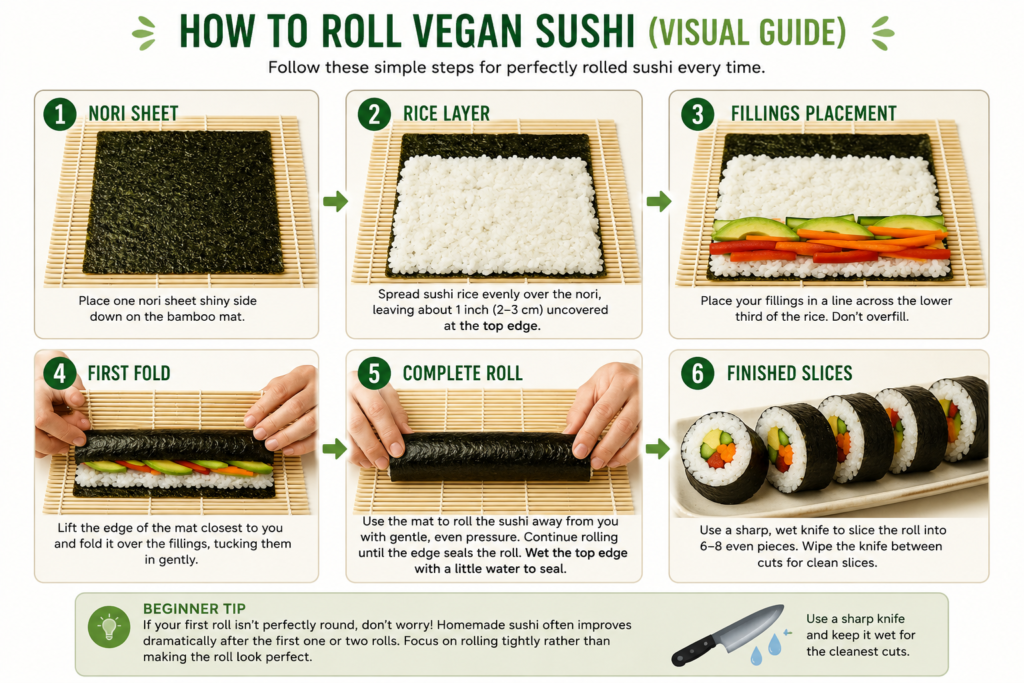
Place a bamboo sushi mat on your work surface and lay one nori sheet on top with the shiny side facing down.
Dip your fingers in the small bowl of water so the rice doesn’t stick to your hands. Take about ¾ cup of sushi rice and gently spread it over the nori.
Press it into an even layer, leaving about 2–3 cm of empty space at the top edge of the sheet. This gap helps seal the roll later.
Arrange a small line of fillings across the lower third of the rice. A few strips of avocado, cucumber, carrot, and pepper are enough. Avoid overfilling, which makes rolling harder.
4. Roll the Sushi
Lift the edge of the bamboo mat closest to you and begin rolling it forward over the fillings. Use your fingers to guide the ingredients while the mat helps shape the roll.
Press gently but firmly so the roll becomes tight and compact. Continue rolling until the rice meets the bare strip of nori at the top.
Lightly dab that edge with a little water, then finish rolling to seal it closed. Give the roll one final gentle squeeze through the mat to help it hold its shape.
5. Slice the Rolls
Place the finished roll on a cutting board. Wet the blade of a sharp knife to keep the rice from sticking. Slice the roll in half first.
Then cut each half into 3–4 even pieces, wiping the knife between cuts if needed. Use smooth, gentle motions instead of pressing down hard.
Arrange the pieces on a plate and repeat the process with the remaining rolls. Your vegan sushi is now ready to serve.
Best Filling Ideas for Vegan Sushi
| Filling | Texture | Flavor Profile | Pairs Well With |
|---|---|---|---|
| Avocado | Creamy | Rich, buttery | Cucumber, carrot, tofu |
| Cucumber | Crisp, crunchy | Fresh, mild | Avocado, chickpea tuna |
| Carrot | Crunchy | Slightly sweet | Avocado, cucumber |
| Mango | Juicy | Sweet, tropical | Cucumber, avocado |
| Tofu | Firm, hearty | Savory, mild | Avocado, bell pepper |
| Sweet Potato | Soft, tender | Sweet, earthy | Spicy mayo, avocado |
| Chickpea Tuna | Creamy | Savory, slightly tangy | Cucumber, carrot |
| Bell Pepper | Crisp | Sweet, fresh | Tofu, avocado |
Avocado & Cucumber
This is one of the most classic vegan sushi fillings. Creamy avocado pairs perfectly with the fresh crunch of cucumber.
The avocado adds richness, while the cucumber keeps the roll light and crisp. Slice both into thin strips so they fit neatly inside the roll.
This combination is simple, refreshing, and always a crowd favorite.
Sweet Potato Tempura
Sweet potato brings a warm, slightly sweet flavor that works beautifully with sushi rice.
For extra texture, coat thin sweet potato strips in a light tempura batter and fry them until golden and crisp.
The crunchy outside and soft center create a satisfying contrast with the tender rice and nori.
Add a few slices of avocado or a drizzle of vegan spicy mayo to make the roll even more flavorful.
Tofu & Avocado
Tofu adds a hearty, savory element that makes the roll more filling. Use firm tofu and cook it in a pan until the edges turn lightly golden.
This helps it hold its shape and adds a deeper flavor. Pair the tofu with creamy avocado for balance. The tofu brings a mild, savory bite while the avocado smooths everything out.
Mango & Cucumber
For a bright and refreshing roll, try mango with cucumber. The mango adds natural sweetness and a juicy texture, while the cucumber keeps the roll crisp and fresh.
This combination works especially well with a sprinkle of sesame seeds or a light drizzle of spicy mayo. The sweet and crunchy mix makes every bite interesting.
Spicy Vegan Tuna (Mashed Chickpeas)
This filling is a fun plant-based twist on spicy tuna rolls. Mash chickpeas in a bowl until slightly chunky, then mix them with vegan mayo, a little sriracha, and a pinch of salt.
The chickpeas create a creamy, slightly textured filling that holds together well in the roll. Spread a small layer along the rice, then add cucumber or avocado for extra crunch and balance.
The result is bold, savory, and a little spicy—perfect if you enjoy sushi with a kick.
Building a Balanced Sushi Roll
For the best texture and flavor, try combining:
- 1 creamy filling (avocado or chickpea tuna)
- 1 crunchy filling (cucumber, carrot, or bell pepper)
- 1 hearty filling (tofu or sweet potato)
Tips for Perfect Sushi Rolls
Don’t Overfill the Rolls
It’s tempting to add lots of fillings, but a small amount works best. Too many ingredients make the roll bulky and difficult to seal.
The fillings can also push out the sides when you start rolling. Aim for a thin line of vegetables across the lower third of the rice.
This keeps the roll balanced and easier to shape. A simple combination also lets each flavor stand out.
Keep Hands Slightly Wet When Handling Rice
Sushi rice is naturally sticky, which helps it hold together in the roll. However, it can quickly cling to your fingers.
Keep a small bowl of water nearby and lightly wet your hands before touching the rice. This simple step makes spreading the rice much easier.
It also helps you create a smooth, even layer across the nori without pulling the rice apart.
Use a Very Sharp Knife for Clean Cuts
A sharp knife is key for neat sushi pieces. A dull blade presses down on the roll and can cause the rice and fillings to squeeze out.
Before cutting, dip the knife in water or wipe it with a damp cloth. The moisture prevents the rice from sticking to the blade.
Use gentle, smooth slicing motions rather than pushing straight down. This keeps each piece clean and well-shaped.
Let Rice Cool Slightly Before Rolling
Freshly cooked rice is too hot to handle and can soften the nori too quickly. Let the rice sit for a few minutes after seasoning it.
It should still be slightly warm but comfortable to touch. This temperature makes the rice easier to spread and helps the roll hold its shape.
Warm rice also keeps the texture soft while allowing the vegetables to stay crisp.
Common Vegan Sushi Mistakes (and How to Fix Them)
Making sushi at home gets easier with practice.
If your first batch isn’t perfect, these quick fixes can help.
| Problem | Likely Cause | How to Fix It |
|---|---|---|
| Rice feels mushy or overly wet | Too much water or insufficient cooling time | Follow the rice-to-water ratio carefully and let the rice cool until slightly warm before rolling |
| Rolls fall apart when sliced | Loose rolling or too many fillings | Roll firmly using the bamboo mat and avoid overfilling the nori |
| Nori becomes soft and chewy | Rolls sat too long before serving | Assemble and serve sushi soon after rolling for the best texture |
| Rice sticks to your hands | Dry hands while handling sushi rice | Keep a small bowl of water nearby and lightly wet your fingers as needed |
| Fillings slide out while rolling | Fillings are too large or unevenly cut | Slice vegetables into thin, uniform strips and keep fillings centered |
| Sushi pieces look messy | Dull knife or sticky blade | Use a very sharp knife and wipe or wet the blade between cuts |
Quick Troubleshooting Tip
If you’re making sushi for the first time, focus on getting the roll tight rather than making it look perfect.
Even slightly uneven rolls will taste great, and most people notice a big improvement after their first few attempts.
How to Store Vegan Sushi Rolls
If you have leftover vegan sushi rolls, place them in an airtight container and store them in the refrigerator.
Keeping the container sealed helps protect the rice from drying out and prevents the rolls from absorbing other fridge odors.
Sushi is always best when it’s fresh, so try to enjoy the leftovers within 24 hours for the best flavor and texture.
After that, the rice can become firm, and the nori may soften too much.
To help the rice stay moist, you can line the container with a slightly damp paper towel or gently cover the rolls with one before sealing the lid.
This adds a little moisture to the environment without making the sushi wet.
When you’re ready to eat the leftovers, let the rolls sit at room temperature for about 10–15 minutes so the rice softens slightly before serving.
Make-Ahead Instructions
If you’re preparing vegan sushi for a party, meal prep, or packed lunch, several components can be made in advance to save time.
- Cook and season the sushi rice up to 24 hours ahead. Store it covered in the refrigerator and allow it to come closer to room temperature before assembling.
- Slice vegetables such as cucumber, carrots, and bell peppers the day before. Store them in separate airtight containers to maintain their crispness.
- Prepare baked tofu, roasted sweet potato, or chickpea tuna filling up to 2 days in advance.
- Keep all fillings and rice stored separately until you’re ready to assemble the rolls.
- For the freshest texture, roll and slice the sushi shortly before serving.
Best Make-Ahead Strategy
If you’re serving sushi for guests, prepare the rice and fillings ahead of time, then assemble the rolls within 1–2 hours of serving.
This helps keep the nori crisp and prevents the rice from drying out.
Serving Suggestions
| Side Dish | Why It Works |
|---|---|
| Miso Soup | Adds warmth and a savory, umami-rich contrast to the cool sushi. |
| Seaweed Salad | Light, refreshing, and naturally complements the nori. |
| Edamame | Adds plant-based protein and makes the meal more filling. |
| Japanese Cucumber Salad | Crisp, tangy flavors balance the richness of avocado. |
| Steamed Vegetable Dumplings | Turns sushi into a more substantial meal. |
| Pickled Vegetables | Add acidity and help cleanse the palate between bites. |
Vegan sushi rolls are best served fresh, arranged neatly on a plate so each piece is easy to pick up.
Set out small dishes of soy sauce or tamari for dipping, along with a little wasabi if you enjoy a bit of heat. Add pickled ginger on the side to refresh your palate between bites.
The bright, tangy flavor of the ginger balances the richness of the rice and avocado, making each bite feel fresh again.
If you want to turn the sushi into a fuller meal, serve it alongside a warm bowl of miso soup or a light seaweed salad.
The soup adds warmth and depth, while the seaweed salad brings a cool, slightly tangy contrast that pairs nicely with the rolls. These sushi rolls are flexible enough for many occasions.
They make a quick and satisfying lunch, a relaxed dinner, or a colorful party platter that guests can easily share.
Arrange several rolls with different fillings on one tray to create variety and make the plate look vibrant and inviting.
Simple Meal Combinations
Light Lunch
- Vegan sushi rolls
- Seaweed salad
- Green tea
Balanced Dinner
- Vegan sushi rolls
- Miso soup
- Edamame
Party Platter
- Several sushi roll varieties
- Pickled ginger
- Edamame
- Vegetable dumplings
Final Thoughts
Vegan sushi rolls are simple, fresh, and fun to make at home. With a few basic ingredients and an easy rolling method, you can create sushi that tastes just as satisfying as your favorite takeout.
Start with the basics, then try new fillings as you go. Mix creamy, crunchy, and colorful ingredients to find the combinations you enjoy most.
Once you make your first roll, the rest comes naturally. Enjoy the process and have fun experimenting in your kitchen.
FAQs
Can I make vegan sushi without a bamboo mat?
Yes. You can use a clean kitchen towel or a sheet of parchment paper to help roll the sushi. Roll gently and press lightly to keep the roll tight.
What rice is best for sushi rolls?
Short-grain sushi rice works best. It becomes slightly sticky when cooked, which helps the rolls hold their shape.
Can I use brown rice instead of white rice?
Yes. Brown rice can be used, but it will be slightly firmer and less sticky than sushi rice. Season it the same way for the best flavor.
How do I keep sushi rolls from falling apart?
Spread the rice evenly, avoid overfilling, and roll the sushi tightly using the mat. A sharp knife also helps keep the pieces neat when slicing.
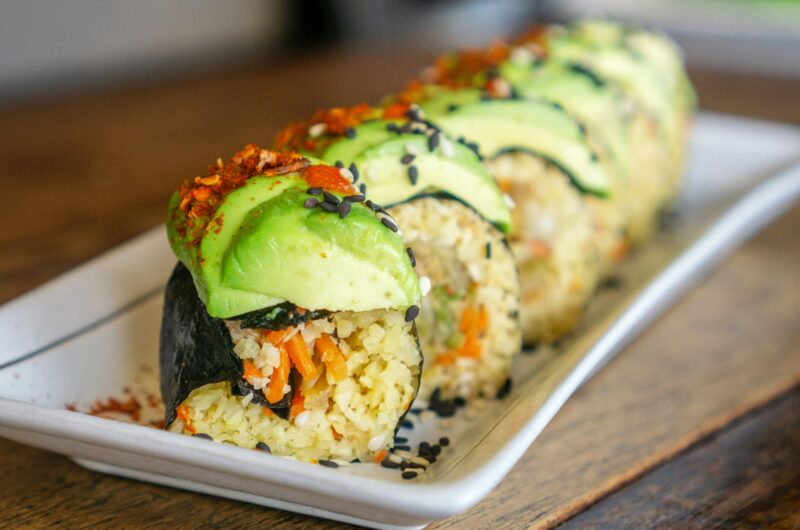
How to Make Delicious Vegan Sushi Rolls (Beginner-Friendly)
Course: Vegan Lunch RecipesDifficulty: Easy4
Rolls20
minutes20
minutes40
minutesFresh vegan sushi rolls made with seasoned sushi rice, crisp vegetables, and nori. These simple homemade rolls are flavorful, customizable, and perfect for lunch, dinner, or sharing.
Ingredients
- Sushi Rice
1 cup sushi rice
1¼ cups water
2 tablespoons rice vinegar
1 tablespoon sugar
½ teaspoon salt
- Sushi Rolls
4 nori sheets
1 avocado, sliced
1 small cucumber, cut into thin strips
1 medium carrot, cut into thin strips
½ bell pepper, thinly sliced
½ cup cooked sweet potato strips or baked tofu (optional)
- For Serving
Soy sauce or tamari
Pickled ginger
Wasabi
Directions
- Cook the rice. Rinse sushi rice until the water runs clear. Cook with 1¼ cups water according to package instructions.
- Season the rice. In a small bowl, mix rice vinegar, sugar, and salt. Gently fold into the warm cooked rice and let it cool slightly.
- Prepare the fillings. Slice the avocado, cucumber, carrot, and bell pepper into thin strips.
- Assemble the rolls. Place a nori sheet on a bamboo mat. Spread a thin layer of rice over the nori, leaving a small border at the top. Add a line of vegetables across the lower third.
- Roll the sushi. Lift the mat and roll the sushi tightly. Seal the edge with a little water.
- Slice and serve. Use a sharp wet knife to cut the roll into bite-sized pieces. Serve with soy sauce, pickled ginger, and wasabi.
Notes
- Keep your hands slightly wet when handling sushi rice to prevent sticking.
- Do not overfill the rolls, or they may be difficult to seal.
- Use a sharp knife and wipe it between cuts for clean slices.
- Try different fillings like mango, tofu, or spicy chickpea “tuna” for variety.

Hi, I’m Daisy Roots, the home cook and recipe developer behind this kitchen. I create simple, tested vegan recipes using everyday ingredients. Every dish is developed and cooked in my own kitchen, with clear steps to help you get reliable results every time. Thanks for stopping by — let’s cook something great!