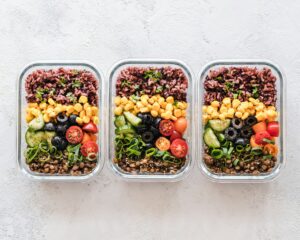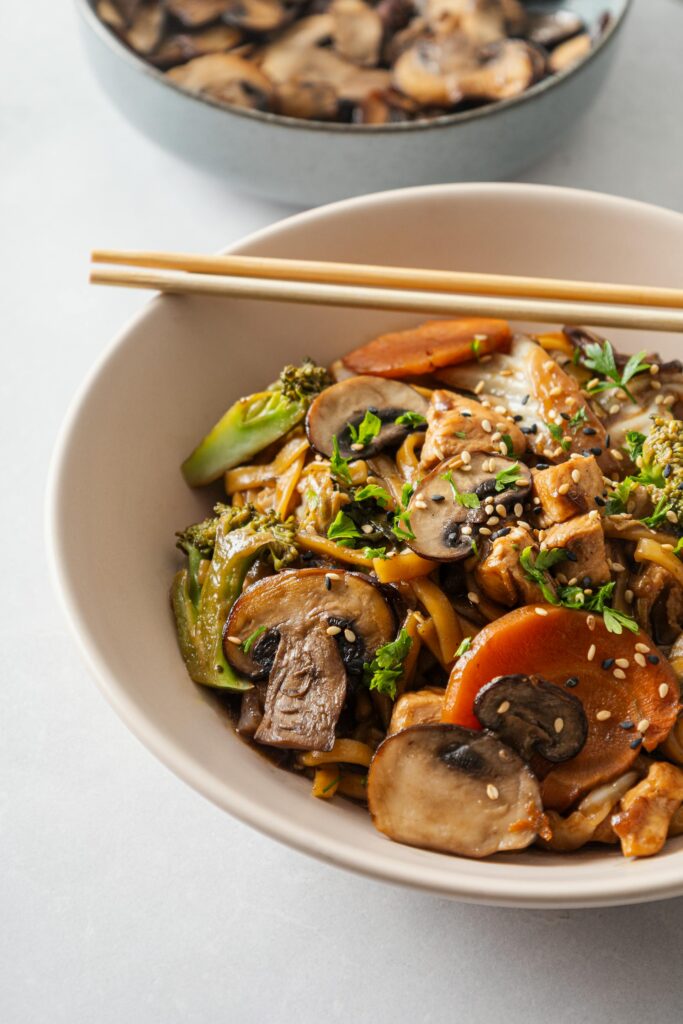
Dinner doesn’t have to be complicated to taste amazing. This one-pan vegan stir fry is quick, colorful, and packed with bold flavor in every bite.
With just a handful of simple ingredients and one pan, you can bring together crisp vegetables, a savory sauce, and your favorite plant-based protein in minutes.
Everything cooks fast and comes together in one easy step-by-step process.
It’s the kind of meal that fits perfectly into busy weeknights.
You can swap in whatever vegetables you have on hand, adjust the flavors to your taste, and have a satisfying dinner on the table without a pile of dishes waiting after.
Why You’ll Love This One-Pan Vegan Stir Fry
Quick and Easy to Make
This stir fry comes together fast, which makes it perfect for busy evenings. Once your vegetables are chopped and your sauce is mixed, the cooking itself takes only a few minutes.
Everything cooks in stages in the same pan. Start with the protein, add the vegetables, then finish with the sauce.
The high heat keeps the vegetables crisp and the flavors bright. In less than 30 minutes, dinner is ready to serve.
Uses Simple Pantry and Fresh Ingredients
You don’t need anything fancy to make a great stir fry. Most of the ingredients are probably already in your kitchen.
Basic items like soy sauce, garlic, ginger, and a little sesame oil create a rich, savory sauce. Fresh vegetables such as broccoli, bell peppers, carrots, or snap peas bring color and texture.
When simple ingredients are cooked quickly and seasoned well, the flavors really shine.
Packed with Vegetables and Plant-Based Goodness
One of the best parts of stir fry is how many vegetables you can add to the pan. Each one brings its own texture, color, and flavor.
Crisp broccoli, sweet peppers, tender mushrooms, and crunchy carrots all cook quickly and hold their bite.
Pair them with tofu, tempeh, or chickpeas to make the dish more filling. Every forkful feels hearty, satisfying, and full of flavor.
Minimal Cleanup with Only One Pan
Cooking everything in a single pan makes this recipe even better. There’s no need to juggle multiple pots or worry about extra dishes.
You sauté the protein, cook the vegetables, and finish the sauce all in the same skillet or wok. The flavors build as you go, and cleanup afterward is quick and easy.
Easy to Customize with Different Veggies or Proteins
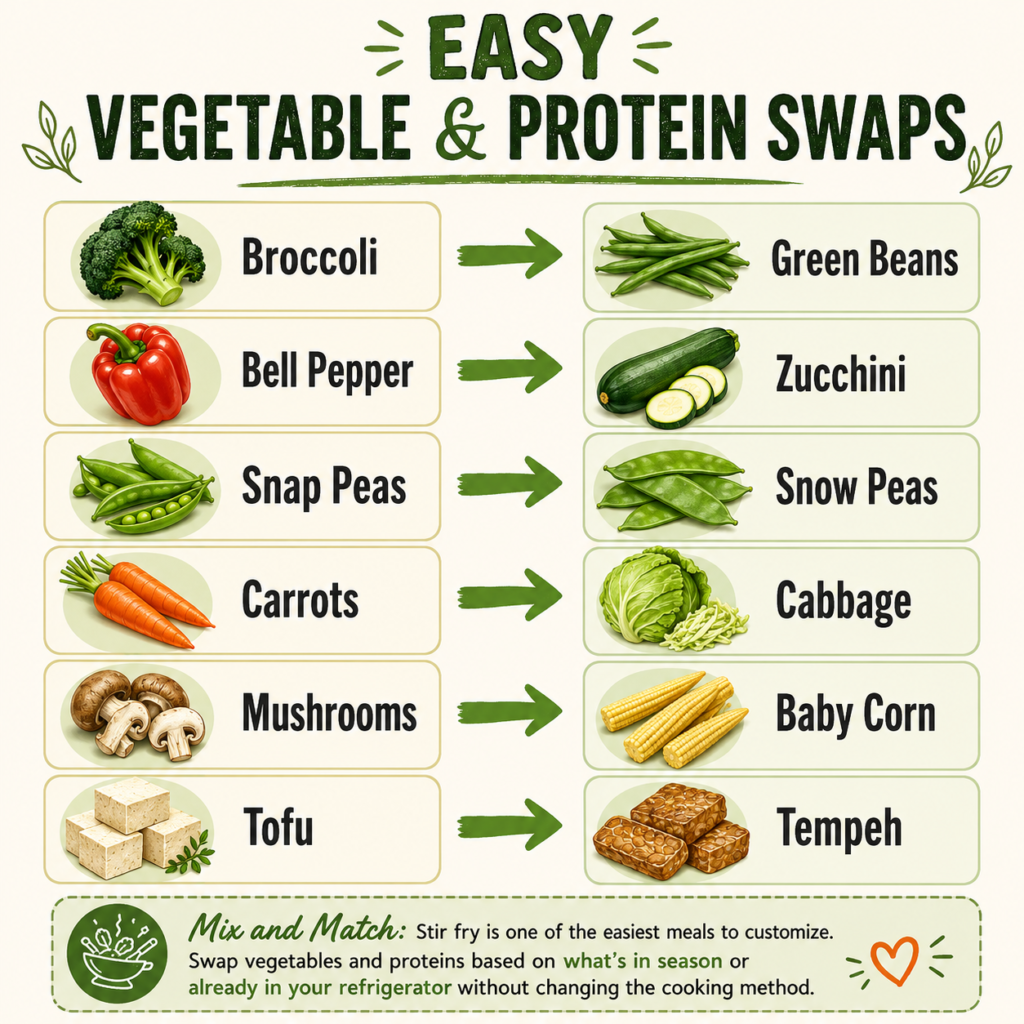
Stir fry is one of the most flexible meals you can make. You can easily swap ingredients based on what you have in the fridge.
Try different vegetables like zucchini, cabbage, baby corn, or green beans. Change the protein with tofu, tempeh, or even edamame.
You can also adjust the sauce to be sweeter, spicier, or more savory. Once you learn the basic method, you can make a new version every time.
Ingredients You’ll Need
A great stir fry starts with fresh vegetables, a simple protein, and a quick homemade sauce.
Everything cooks fast, so it helps to have your ingredients washed, chopped, and ready before you start.
Vegetables
These vegetables add color, crunch, and texture to the dish.
- 2 cups broccoli florets
- 1 red bell pepper, thinly sliced
- 1 medium carrot, thinly sliced or julienned
- 1 cup snap peas, trimmed
- 1 cup mushrooms, sliced
Plant-Based Protein
Choose one of these options to make the stir fry more filling.
- 14 oz (400 g) firm tofu, pressed and cut into cubes
- 8 oz (225 g) tempeh, sliced or cubed
- 1 cup canned chickpeas, drained and rinsed (optional alternative)
Choosing the Best Plant-Based Protein
Not sure which protein to use? Each option brings a different texture and flavor to the stir fry.
Use this quick comparison guide to find the best fit for your meal.
| Protein | Texture | Protein Level | Best For |
|---|---|---|---|
| Tofu | Soft to firm | High | Classic stir fries with a crispy exterior |
| Tempeh | Firm and nutty | Very High | Hearty, protein-packed meals |
| Chickpeas | Tender | Moderate | Budget-friendly and pantry-based meals |
| Edamame | Firm and slightly chewy | High | Quick weeknight meals with minimal prep |
Quick Recommendation: If you’re making this recipe for the first time, firm or extra-firm tofu is usually the best choice. It absorbs the savory stir fry sauce well, develops a crispy texture when browned, and pairs perfectly with a wide variety of vegetables.
Stir Fry Sauce
This simple sauce brings everything together with a rich, savory flavor.
- 3 tablespoons soy sauce or tamari
- 3 cloves garlic, minced
- 1 tablespoon fresh ginger, grated
- 1 tablespoon maple syrup or brown sugar
- 1 tablespoon rice vinegar
- 1 teaspoon cornstarch (mixed with 1 tablespoon water)
- 1 teaspoon sesame oil
| Flavor Style | What to Add |
|---|---|
| Spicy | 1–2 teaspoons sriracha or chili garlic sauce |
| Sweet | 1–2 teaspoons extra maple syrup |
| Tangy | 1–2 teaspoons additional rice vinegar |
| Nutty | 1–2 tablespoons peanut butter |
| Umami | Extra mushrooms or 1 teaspoon tamari |
| Citrusy | Juice of ½ lime |
Optional Add-Ins
These extras add a little more flavor and texture right at the end.
- 2 green onions, sliced
- 1 teaspoon sesame seeds
- ¼ teaspoon chili flakes or 1 teaspoon sriracha for heat
Best Vegetables for Stir Fry (Cook Time Guide)
Not sure which vegetables to use? This quick guide helps you choose vegetables that stir fry well and shows how long each typically takes to cook.
Use it to customize the recipe based on what you already have in your fridge.
| Vegetable | Best Prep Method | Stir Fry Time |
|---|---|---|
| Broccoli | Small florets | 3–4 minutes |
| Bell Pepper | Thin strips | 2–3 minutes |
| Carrots | Julienne or thin slices | 3–4 minutes |
| Snap Peas | Whole, trimmed | 2–3 minutes |
| Mushrooms | Sliced | 2–3 minutes |
| Zucchini | Half-moons | 2 minutes |
| Green Beans | 1-inch pieces | 4–5 minutes |
| Cabbage | Thinly shredded | 2 minutes |
Pro Tip: Start with vegetables that take longer to cook, such as broccoli, carrots, and green beans. Once they begin to soften, add quicker-cooking vegetables like bell peppers, mushrooms, snap peas, zucchini, or cabbage.
Kitchen Tools Required
You don’t need any complicated equipment to make a great stir fry. A few basic kitchen tools will help you cook everything quickly and evenly.
- Large skillet or wok – This is where everything cooks. A wide pan gives the vegetables space to stir and cook evenly without steaming.
- Cutting board – Use it to prep all your vegetables and protein before you start cooking. Having everything ready makes the cooking process smooth and fast.
- Sharp knife – A good knife helps you slice vegetables quickly and evenly. Even cuts help the vegetables cook at the same rate.
- Small bowl – Use this to mix the stir fry sauce before it goes into the pan. Stirring the sauce ahead of time keeps the cooking process simple.
- Spatula or wooden spoon – You’ll use this to stir the vegetables, flip the tofu, and coat everything evenly in the sauce. A flat spatula works especially well for quick stirring.
What Pan Works Best for Stir Fry?
The type of pan you use can have a big impact on the texture and flavor of your stir fry.
While almost any large skillet can work, some pans perform better because they retain heat more effectively and help ingredients cook quickly without becoming soggy.
| Pan Type | Performance |
|---|---|
| Carbon Steel Wok | Best overall for high-heat stir frying |
| Cast Iron Skillet | Excellent heat retention and browning |
| Stainless Steel Skillet | Great all-purpose option with good searing |
| Nonstick Pan | Easy cleanup but produces less browning |
Which Pan Should You Choose?
A carbon steel wok is the traditional choice because its high sides make tossing ingredients easy while maintaining intense heat.
If you don’t have a wok, a large cast-iron or stainless steel skillet works extremely well for home cooking.
A nonstick skillet is still a good option for beginners and helps prevent tofu from sticking, though it won’t create quite as much browning or caramelization as other pans.
Pro Tip: Regardless of which pan you use, allow it to heat fully before adding oil or ingredients. A properly heated pan is one of the biggest secrets to achieving crisp vegetables and restaurant-style stir fry texture.
My Best Stir Fry Success Tips
After making countless vegetable stir fries over the years, I’ve found that a few simple techniques make a noticeable difference in both texture and flavor.
- Press tofu before cooking. Even 10–15 minutes of pressing helps remove excess moisture, allowing the tofu to brown better and develop a firmer texture.
- Preheat the pan completely. A properly heated skillet or wok helps vegetables sear quickly instead of steaming, which keeps them crisp and flavorful.
- Add vegetables in stages. Start with firmer vegetables like broccoli and carrots, then add quicker-cooking ingredients such as bell peppers, mushrooms, and snap peas.
- Keep everything moving. Stir frequently to prevent burning and ensure the vegetables cook evenly while maintaining their crunch.
- Wait until the end to add the sauce. This helps the vegetables stay crisp and allows the sauce to coat everything without becoming watery.
How to Make One-Pan Vegan Stir Fry (Step-by-Step)
Stir fry cooks quickly, so preparation is key. Once everything is chopped and ready, the cooking process moves fast and smoothly.
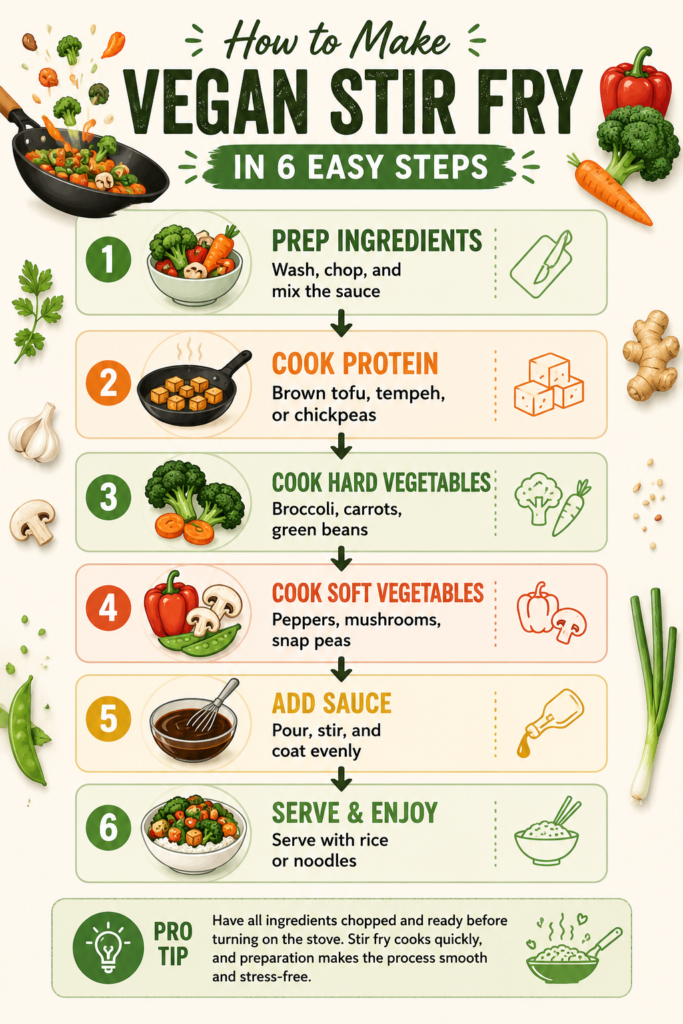
Step 1: Prepare the Ingredients
Start by washing all the vegetables under cold water. Pat them dry, then slice them into evenly sized pieces so they cook at the same speed.
Cut the broccoli into small florets. Slice the bell pepper into thin strips, and cut the carrot into thin rounds or matchsticks. Trim the snap peas and slice the mushrooms.
If you’re using tofu, press it first to remove extra moisture. Wrap the tofu in a clean towel and place something heavy on top for about 10–15 minutes. Then cut it into bite-sized cubes.
In a small bowl, mix the stir fry sauce. Combine soy sauce, minced garlic, grated ginger, maple syrup or brown sugar, rice vinegar, sesame oil, and the cornstarch mixture.
Stir well so everything blends smoothly. Set the sauce aside so it’s ready when the pan is hot.
Step 2: Cook the Protein
Place a large skillet or wok over medium-high heat. Add about 1 tablespoon of cooking oil and let it heat until it shimmers.
Add the tofu cubes or your chosen protein to the pan in a single layer. Let them cook for a few minutes before stirring. This helps them develop a golden, slightly crisp surface.
Flip and stir occasionally so all sides cook evenly. Once the tofu is lightly browned and firm, remove it from the pan and set it aside on a plate.
Step 3: Cook the Vegetables
Using the same pan keeps all the flavor in one place. If needed, add another small drizzle of oil.
Start with the vegetables that take longer to cook. Add the carrots and broccoli first. Stir them often for about 2–3 minutes so they begin to soften while keeping their crunch.
Next, add the quicker-cooking vegetables like bell peppers, mushrooms, and snap peas. Stir everything together and cook for another 2–3 minutes.
The vegetables should be bright, tender, and still slightly crisp.
Step 4: Add the Sauce
Give the sauce a quick stir before adding it to the pan. The cornstarch may settle at the bottom, so mixing it again helps the sauce thicken evenly.
Pour the sauce over the vegetables and return the cooked tofu to the pan. Stir gently so everything gets coated.
As the sauce heats, it will begin to thicken and cling to the vegetables and protein.
Step 5: Simmer and Serve
Let the stir fry cook for another minute or two while stirring. The sauce should turn glossy and slightly thick.
Taste and adjust if needed. You can add a splash of soy sauce, a drizzle of sesame oil, or a little chili sauce for extra heat.
Turn off the heat and sprinkle sliced green onions and sesame seeds over the top. Serve the stir fry hot with rice, noodles, or your favorite side.
Tips for the Best Vegan Stir Fry
Use High Heat for Better Texture
Stir fry cooks best over medium-high to high heat. The goal is to cook the vegetables quickly so they stay crisp and colorful.
When the pan is hot, the vegetables sear instead of slowly steaming. This keeps them firm with a slight bite.
You’ll also notice better flavor because the ingredients cook quickly without losing their natural taste.
Let the pan heat fully before adding oil or ingredients. Once the vegetables hit the pan, keep them moving so they cook evenly without burning.
Don’t Overcrowd the Pan
A crowded pan traps moisture, which causes the vegetables to steam instead of stir fry. This can make them soft and watery.
Give the ingredients space so heat can move around them. If you’re making a large batch, cook the vegetables in two rounds instead of filling the pan all at once.
This small step helps keep everything crisp and well-cooked. It also allows the sauce to coat the vegetables instead of pooling at the bottom of the pan.
Cut Vegetables Evenly for Even Cooking
Try to cut your vegetables into similar sizes. This helps them cook at the same speed.
For example, slice carrots thinly so they soften quickly, and keep broccoli florets small enough to cook through without burning.
Thin strips of bell pepper and evenly sliced mushrooms also cook more consistently.
When the pieces are uniform, you won’t end up with some vegetables undercooked while others turn too soft.
Add Sauce at the End to Prevent Soggy Vegetables
The sauce should go into the pan near the end of cooking. This keeps the vegetables crisp and prevents them from soaking too long in liquid.
Once the vegetables are nearly cooked, pour in the sauce and stir quickly. The heat will thicken it within a minute or two.
The result is a glossy coating that clings to every piece without making the stir fry watery. This simple step keeps the dish bright, flavorful, and perfectly textured.
Common Stir Fry Mistakes to Avoid
Even simple stir fries can fall flat if a few key techniques are overlooked.
Avoid these common mistakes to keep your vegetables crisp, your protein flavorful, and your sauce perfectly balanced.
Using a Cold Pan
One of the biggest stir fry mistakes is adding ingredients before the pan is fully heated.
A hot skillet or wok helps vegetables sear quickly, creating better texture and flavor.
If the pan isn’t hot enough, the vegetables release moisture and begin to steam instead of stir fry.
For the best results, allow the pan to heat completely before adding oil and ingredients.
Adding Sauce Too Early
The sauce should be one of the last ingredients added to the pan.
Pouring it in too soon can soften the vegetables and prevent them from developing a slight crispness.
Wait until the vegetables are nearly cooked, then stir in the sauce and toss everything together for the final minute or two of cooking.
Skipping Tofu Pressing
If you’re using tofu, don’t skip the pressing step.
Excess moisture makes it difficult for the tofu to brown properly and can dilute the flavor of the dish.
Pressing tofu for 10–15 minutes helps remove water, allowing it to develop a firmer texture and a lightly crisp exterior when cooked.
Overcrowding the Pan
Adding too many ingredients at once lowers the pan temperature and traps steam.
This often leads to soft, watery vegetables rather than the crisp texture stir fry is known for.
If you’re making a large batch, cook the ingredients in stages or use a larger pan.
Giving the vegetables enough space helps them cook quickly and evenly.
Not Prepping Ingredients Before Cooking
Stir fry moves fast once the heat is on.
Stopping to chop vegetables or mix sauce while cooking can lead to overcooked ingredients.
Before you start, have all vegetables sliced, protein prepared, and sauce mixed.
This simple habit makes the cooking process smoother and helps everything finish at the right time.
Delicious Variations to Try
One of the best things about stir fry is how easy it is to change the flavors.
Once you know the basic method, you can adjust the sauce, vegetables, or base to create a completely new dish.
These simple variations are a great place to start.
Spicy Vegan Stir Fry
If you enjoy a little heat, this version is easy to make. Add 1–2 teaspoons of sriracha, chili garlic sauce, or chili flakes to the stir fry sauce before pouring it into the pan.
The spice blends well with the garlic, ginger, and soy sauce. It adds warmth without overpowering the vegetables.
You can adjust the heat level to your taste. Start with a small amount, then add more if you like a stronger kick.
Peanut Sauce Stir Fry
Peanut sauce creates a rich and creamy stir fry with deep flavor.
To make it, whisk 2 tablespoons of peanut butter into the stir fry sauce along with a splash of warm water to loosen the mixture.
The sauce becomes smooth, slightly nutty, and lightly sweet. It pairs especially well with broccoli, carrots, bell peppers, and tofu.
Finish with chopped peanuts and green onions for extra texture.
Teriyaki Vegetable Stir Fry
For a sweeter, glossy sauce, turn the dish into a teriyaki-style stir fry.
Replace the maple syrup with 2 tablespoons of teriyaki sauce, or mix soy sauce, brown sugar, garlic, and ginger for a quick homemade version.
As the sauce cooks, it thickens and coats the vegetables with a shiny glaze. This variation works especially well with mushrooms, snap peas, and tofu.
A sprinkle of sesame seeds at the end adds a nice finishing touch.
Noodle Stir Fry Instead of Rice
You can easily turn this stir fry into a noodle dish. Cook rice noodles, soba noodles, or ramen noodles according to the package instructions and set them aside.
Once the vegetables and sauce are ready, add the cooked noodles directly to the pan. Toss everything together so the sauce coats the noodles evenly.
The noodles soak up the flavor and make the meal feel even more hearty and satisfying.
What to Serve with Vegan Stir Fry
A good base helps soak up the stir fry sauce and turns the dish into a complete meal. The vegetables and protein bring the flavor, while the base adds balance and texture.
Steamed Jasmine Rice
Jasmine rice is a classic pairing for stir fry. Its soft texture and light aroma work perfectly with savory sauces.
Cook the rice according to the package instructions until it is fluffy and tender. Spoon the stir fry over a bowl of warm rice and let the sauce soak in.
Each bite becomes rich, satisfying, and full of flavor.
Brown Rice
Brown rice offers a slightly firmer texture and a mild nutty taste. It holds up well under saucy dishes like stir fry.
Cook it a little longer than white rice so the grains soften properly.
Once ready, fluff it with a fork and serve the stir fry on top. The hearty texture makes the meal feel filling and balanced.
Quinoa
Quinoa is another great base for stir fry. The small grains cook quickly and have a light, slightly nutty flavor.
Rinse the quinoa before cooking to remove any bitterness. Once cooked, it becomes fluffy and absorbs the sauce nicely. It pairs especially well with tofu and vegetable-heavy stir fries.
Rice Noodles
Rice noodles turn the stir fry into a noodle bowl instead of a rice dish. They cook quickly and carry the sauce well.
Soak or boil the noodles according to the package instructions. Add them directly to the stir fry pan during the final minute of cooking.
Toss everything together so the noodles are coated in the sauce.
Cauliflower Rice for a Low-Carb Option
Cauliflower rice is a lighter option that still works well with stir fry. It has a mild flavor that lets the sauce and vegetables stand out.
You can use store-bought cauliflower rice or pulse fresh cauliflower in a food processor until it resembles small grains.
Sauté it in a pan for a few minutes until tender. Then serve the stir fry over the top for a simple and flavorful meal.
Storage and Meal Prep Tips
Store Leftovers in an Airtight Container in the Refrigerator
Allow the stir fry to cool slightly before storing it. Transfer it to an airtight container so the vegetables and sauce stay fresh.
Place the container in the refrigerator as soon as it has cooled. Keeping it sealed helps maintain the texture and prevents the stir fry from absorbing other odors in the fridge.
Best Consumed Within 3–4 Days
For the best flavor and texture, enjoy the leftovers within 3 to 4 days. The vegetables will still taste fresh, and the sauce will keep its rich flavor.
After a few days, the vegetables may start to soften too much.
If you plan to make extra for meals during the week, dividing the stir fry into smaller containers can make it easier to grab and reheat.
Reheat in a Skillet or Microwave
The best way to reheat stir fry is in a skillet over medium heat. Add a small splash of water or soy sauce to loosen the sauce while it warms. Stir gently until everything is heated through.
If you’re short on time, the microwave works well too. Heat the stir fry in short intervals, stirring between each round so it warms evenly.
Prep Vegetables in Advance for Faster Cooking
Meal prep can make stir fry even quicker on busy days. Wash and chop the vegetables ahead of time, then store them in sealed containers in the refrigerator.
You can also mix the stir fry sauce in advance and keep it in a small jar. When it’s time to cook, everything is ready to go.
Just heat the pan, add the ingredients, and dinner will be on the table in minutes.
Meal Prep Timeline
If you like having ingredients ready for busy weeknights, many parts of this stir fry can be prepared ahead of time.
Use the guide below to plan your prep and make dinner even faster.
| Task | How Far Ahead |
|---|---|
| Chop vegetables | Up to 3 days |
| Mix stir fry sauce | Up to 5 days |
| Press tofu | Up to 1 day |
| Cook rice | Up to 4 days |
| Fully cooked stir fry | Up to 4 days |
Meal Prep Tip: Store chopped vegetables, prepared protein, and sauce in separate airtight containers. Keeping the ingredients separate helps maintain freshness and allows the vegetables to stay crisp until you’re ready to cook. When dinner time arrives, everything is prepped and ready to go, making it easy to get a healthy meal on the table in under 30 minutes.
How to Freeze Vegan Stir Fry
If you’d like to keep leftovers for longer, this stir fry freezes well and makes a convenient meal for busy days.
Freezing Instructions
- Allow the stir fry to cool completely before freezing.
- Transfer portions to freezer-safe containers or freezer bags.
- Remove as much air as possible to help prevent freezer burn.
- Label the container with the date before storing.
- Freeze for up to 2 months for the best flavor and texture.
How to Thaw and Reheat
For best results, transfer the frozen stir fry to the refrigerator and let it thaw overnight.
To reheat, warm it in a skillet over medium heat with a small splash of water, vegetable broth, or soy sauce.
Stir occasionally until heated through. This helps restore the sauce and preserves the texture better than microwaving.
Freezing Tip
Vegetables with a naturally firm texture, such as broccoli, carrots, bell peppers, and snap peas, tend to freeze and reheat better than softer vegetables.
If you’re making this recipe specifically for freezer meals, slightly undercook the vegetables so they maintain a better texture after reheating.
Nutritional Highlights
This one-pan vegan stir fry isn’t just quick and flavorful.
It’s also packed with a variety of nutrients from whole, plant-based ingredients.
What Makes This Stir Fry Nutritious?
- Plant-based protein from tofu, tempeh, chickpeas, or edamame helps make the meal satisfying and filling.
- Dietary fiber from vegetables supports digestion and helps promote fullness.
- Vitamin A from carrots contributes to healthy vision and immune function.
- Vitamin C from bell peppers and broccoli supports immune health and helps the body absorb iron more effectively.
- Iron and calcium from tofu can help support bone health and overall wellness.
- Antioxidants and phytonutrients from colorful vegetables provide a variety of beneficial plant compounds.
- Lower saturated fat than many restaurant and takeout stir fries, especially when prepared with minimal oil.
Make It Even More Nutritious
For additional protein and fiber, serve the stir fry with brown rice, quinoa, or edamame.
You can also increase the vegetable content by adding cabbage, zucchini, green beans, or baby corn, based on what you have available.
Good to Know: The exact nutritional values will vary depending on the vegetables, protein choice, serving size, and any sauce modifications you make. However, this recipe provides a balanced combination of vegetables, protein, and complex carbohydrates when paired with rice, noodles, or quinoa.
Final Thoughts
This one-pan vegan stir fry is simple, fast, and full of bold flavor. With crisp vegetables, a savory sauce, and just one pan, it’s an easy meal you can make any night of the week.
Feel free to mix and match the vegetables based on what you have in your kitchen. Small changes can create a completely new stir fry every time you cook it!
FAQs
Can I make vegan stir fry without tofu?
Yes. You can use tempeh, chickpeas, edamame, or simply add more vegetables. The stir fry will still be flavorful and satisfying.
What vegetables work best in stir fry?
Broccoli, bell peppers, carrots, snap peas, mushrooms, cabbage, and zucchini all work well. Choose vegetables that cook quickly and keep a slight crunch.
Can I use frozen vegetables?
Yes, frozen vegetables can work in stir fry. Cook them over high heat and avoid overcrowding the pan so they don’t release too much water.
How do I keep vegetables from getting soggy?
Cook on medium-high to high heat and avoid adding the sauce too early. Also, don’t overcrowd the pan so the vegetables can stir fry instead of steam.
Can I make this gluten-free?
Yes. Use tamari or gluten-free soy sauce instead of regular soy sauce, and make sure any other sauces you add are labeled gluten-free.
Can I make stir fry oil-free?
Yes. Use a splash of vegetable broth or water instead of oil and cook over medium-high heat.
What is the best tofu for stir fry?
Extra-firm tofu works best because it holds its shape and develops a crisp exterior.
Can I make stir fry ahead of time?
Yes. Prepare the vegetables and sauce up to 3 days in advance for faster cooking.
Why is my stir fry watery?
The most common causes are overcrowding the pan, using frozen vegetables without proper cooking, or adding the sauce too early.
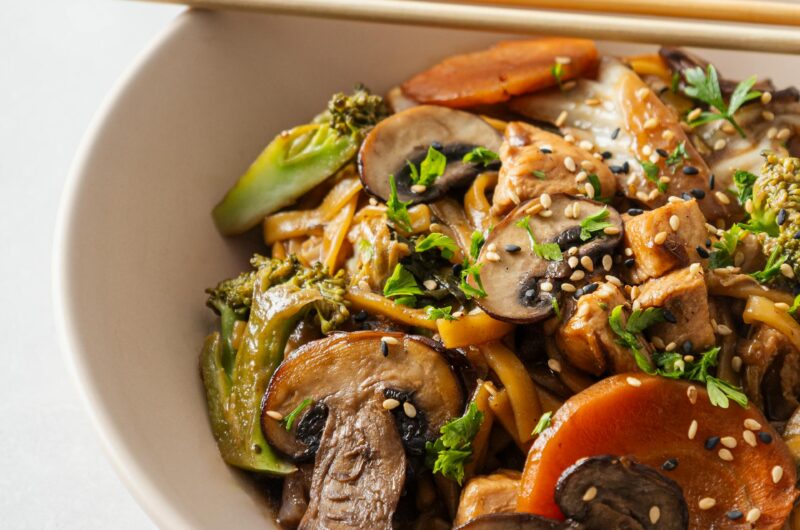
One-Pan Vegan Stir Fry Recipe – Quick, Healthy, and Flavorful
Course: Vegan Lunch RecipesDifficulty: Easy4
servings5
minutes10
minutes25
minutesA quick and flavorful one-pan vegan stir fry made with crisp vegetables, tofu, and a savory garlic-ginger sauce. Perfect for a fast and satisfying weeknight meal.
Ingredients
- Stir Fry
1 tablespoon cooking oil
14 oz (400 g) firm tofu, pressed and cubed
2 cups broccoli florets
1 red bell pepper, sliced
1 medium carrot, thinly sliced
1 cup snap peas
1 cup mushrooms, sliced
- Stir Fry Sauce
3 tablespoons soy sauce or tamari
3 cloves garlic, minced
1 tablespoon fresh ginger, grated
1 tablespoon maple syrup or brown sugar
1 tablespoon rice vinegar
1 teaspoon sesame oil
1 teaspoon cornstarch mixed with 1 tablespoon water
- Optional Garnish
2 green onions, sliced
1 teaspoon sesame seeds
Chili flakes or sriracha to taste
Directions
- Prepare the ingredients. Wash and chop all vegetables. Press tofu for 10–15 minutes and cut into cubes. Mix all sauce ingredients in a small bowl.
- Cook the tofu. Heat oil in a large skillet or wok over medium-high heat. Add tofu and cook for 5–6 minutes, stirring occasionally, until golden. Remove and set aside.
- Cook the vegetables. In the same pan, add carrots and broccoli first. Stir fry for 2–3 minutes. Add bell peppers, mushrooms, and snap peas, then cook for another 2–3 minutes.
- Add the sauce. Return the tofu to the pan. Pour in the stir fry sauce and stir well to coat everything.
- Finish and serve. Cook for 1–2 minutes until the sauce thickens. Garnish with green onions and sesame seeds, then serve hot with rice or noodles.
Notes
- Cut vegetables evenly, so they cook at the same rate.
- Cook over medium-high heat to keep vegetables crisp.
- Do not overcrowd the pan, or the vegetables may steam instead of stir fry.
- Great served with jasmine rice, brown rice, or rice noodles.
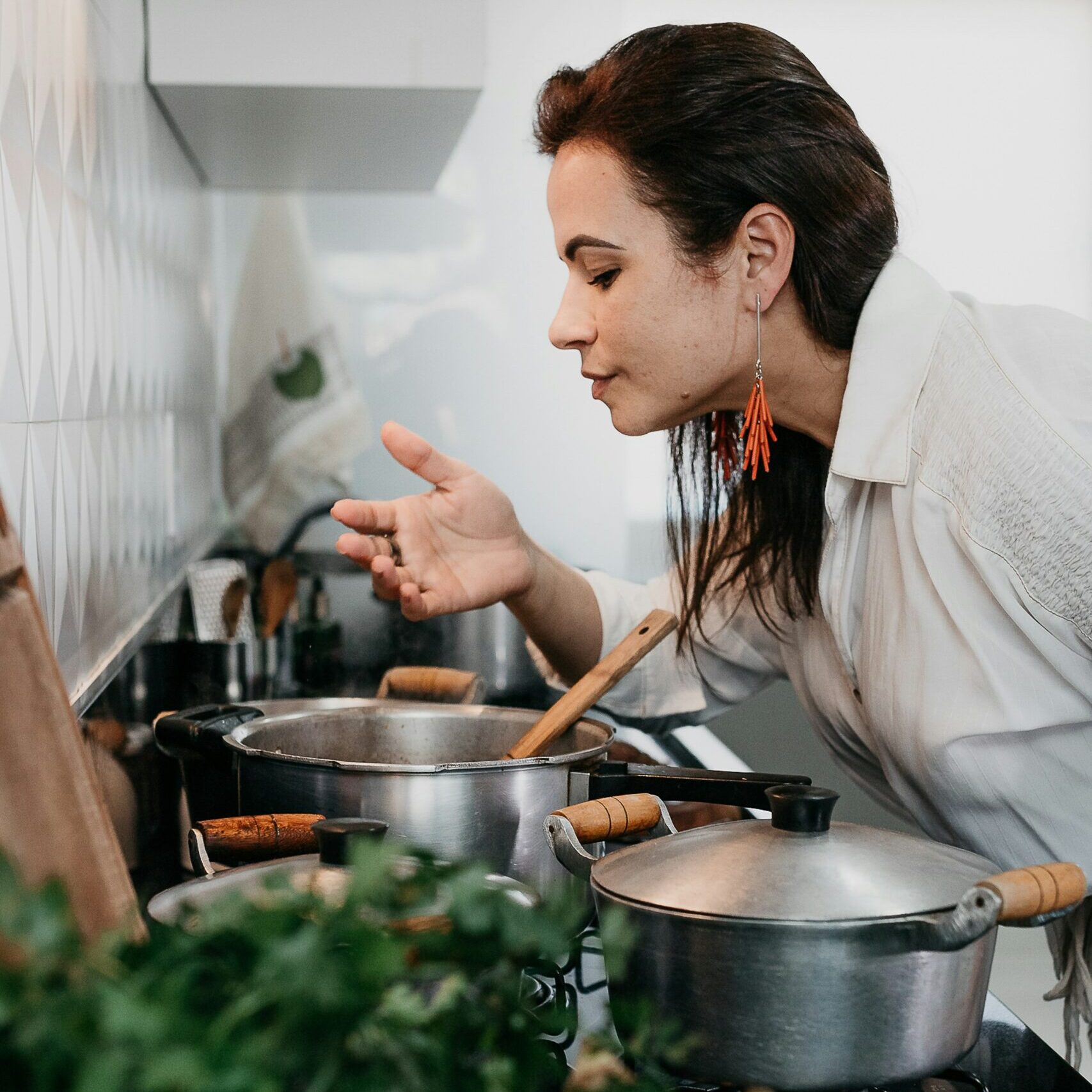
Hi, I’m Daisy Roots, the home cook and recipe developer behind this kitchen. I create simple, tested vegan recipes using everyday ingredients. Every dish is developed and cooked in my own kitchen, with clear steps to help you get reliable results every time. Thanks for stopping by — let’s cook something great!