Eggs are one of the most important ingredients in baking.
They help cakes rise, give cookies structure, add moisture to muffins, and create rich texture in brownies and other baked goods.
But there are many reasons you may need an egg substitute.
Maybe you’re baking for someone with an egg allergy, following a vegan diet, or simply ran out of eggs while making a recipe at home.
The good news is that baking without eggs can still produce delicious results.
With the right substitute, you can make soft cakes, chewy cookies, fluffy pancakes, moist muffins, and fudgy brownies without sacrificing texture or flavor.
Different egg substitutes work better for different recipes.
Some are best for binding ingredients together, while others help add moisture, richness, or lift.
In this guide, you’ll learn the best egg substitutes for baking, how each one works, and which options are best for cakes, cookies, brownies, muffins, pancakes, and more.
| If You’re Baking… | Best Egg Substitute | Why It Works |
|---|---|---|
| Cakes | Yogurt or vinegar + baking soda | Adds lift and moisture |
| Cookies | Flax egg | Strong binding |
| Brownies | Silken tofu | Dense fudgy texture |
| Pancakes | Banana or flax egg | Soft texture + binding |
| Muffins | Applesauce | Moist crumb |
| Meringues | Aquafaba | Whips like egg whites |
What Eggs Do in Baking
Binding Ingredients Together
One of the main jobs of eggs is to hold everything together. As eggs cook, their proteins firm up and connect the ingredients in the batter.
This helps cookies, muffins, and cakes keep their shape instead of falling apart.
Think of eggs as the glue in your recipe. Without that binding power, baked goods can become crumbly or fragile.
Good egg substitutes for binding include flaxseed eggs, chia eggs, and mashed banana because they help the batter stay cohesive as it bakes.
Adding Moisture
Eggs also bring moisture to baked goods. The liquid in eggs blends with the other ingredients and keeps the batter smooth and easy to mix.
During baking, that moisture helps prevent cakes and muffins from turning dry.
This is why recipes without enough moisture can feel dense or crumbly.
Ingredients like applesauce, yogurt, mashed banana, and pumpkin puree work well as substitutes because they add similar moisture to the batter.
Providing Structure
Eggs give baked goods their structure. As they heat in the oven, the proteins in eggs tighten and create a stable framework.
This structure allows cakes to hold their height and keeps slices from collapsing when cut.
Recipes that rely heavily on eggs, like sponge cakes or certain pastries, depend on this structural support.
Substitutes such as silken tofu or commercial egg replacers are often used in these cases because they help create a firmer, more stable result.
Helping Baked Goods Rise
Eggs also help baked goods become light and airy. When eggs are beaten or mixed into batter, they trap tiny pockets of air.
As the batter bakes, those air bubbles expand and help the baked goods rise.
This is especially important for cakes and fluffy muffins. Some substitutes mimic this effect well.
A mix of baking soda and vinegar, for example, creates bubbles that help lift the batter and produce a lighter texture.
Contributing to Texture and Richness
Eggs add richness and improve the overall texture of baked goods. The fats in egg yolks give cakes and cookies a soft, tender crumb.
They also help create that satisfying, slightly rich flavor people expect from baked treats.
When replacing eggs, it helps to think about the texture you want.
Ingredients like nut butter, yogurt, or silken tofu can add that creamy richness while still keeping the baked goods moist and enjoyable.
Best Egg Substitutes by Function
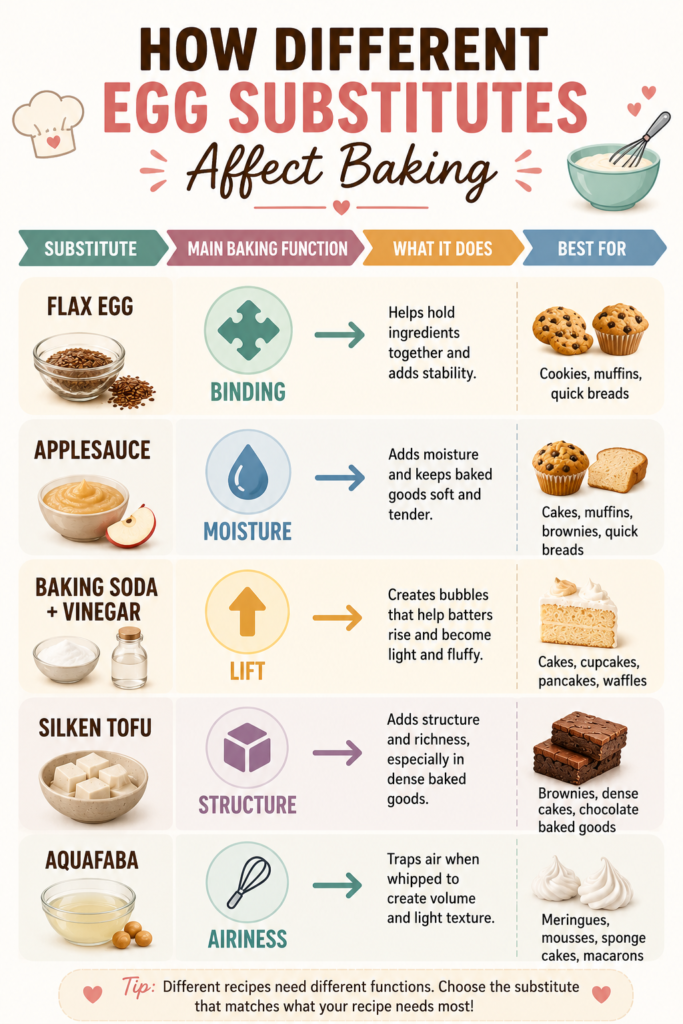
Different egg substitutes work best for different baking needs.
Choosing the right one depends on what the egg is doing in the recipe.
For Binding
These substitutes help hold ingredients together and prevent baked goods from falling apart.
- Flax egg
- Chia egg
Best for cookies, muffins, pancakes, and quick breads.
For Moisture
These ingredients help keep baked goods soft, tender, and moist.
- Applesauce
- Mashed banana
- Plant-based yogurt
Best for cakes, muffins, snack loaves, and brownies.
For Lift and Fluffiness
These substitutes help create air bubbles and give baked goods a lighter texture.
- Baking soda + vinegar
- Aquafaba
Best for cakes, cupcakes, sponge cakes, and meringues.
For Richness and Dense Texture
These options add body, creaminess, and a richer texture to baked goods.
- Silken tofu
- Nut butter
Best for brownies, dense cakes, bars, and fudgy desserts.
For Neutral Flavor
These substitutes blend into recipes without noticeably changing the taste.
- Commercial egg replacers
- Silken tofu
Best for delicate cakes, vanilla desserts, and recipes with subtle flavors.
How to Choose the Right Egg Substitute
Consider the Recipe Type
Different baked goods rely on eggs in different ways. A light cake needs lift and structure, while cookies usually need binding and a bit of moisture.
Pancakes need something that helps the batter hold together but still stay soft. Brownies often rely on eggs for richness and a slightly dense texture.
Start by looking at the style of the recipe. For cookies and muffins, flax eggs, chia eggs, or applesauce usually work well.
Cakes often benefit from baking soda with vinegar or plant-based yogurt to help them rise.
Brownies and dense cakes often turn out best with silken tofu or mashed banana because they add body and moisture.
Match the Function of Eggs in the Recipe
Next, think about what the egg is doing in that specific recipe. Is it helping the batter rise? Is it mainly holding ingredients together? Or is it adding moisture and richness?
If the egg acts as a binder, flaxseed eggs or chia eggs are great options. If the goal is moisture, applesauce or mashed banana usually works well.
When a recipe needs lift, a combination of baking soda and vinegar can help create a lighter texture. Matching the substitute to the egg’s job gives you the most reliable results.
Balance Moisture and Structure
Good baking is all about balance. Too much moisture can make baked goods dense or gummy. Too little structure can cause them to crumble or collapse.
For example, applesauce adds moisture but not much structure, so it works best in soft cakes and muffins.
Flax eggs provide more binding, which helps cookies and quick breads hold together. When a recipe needs both moisture and structure, combining ingredients can help.
A flax egg plus a small amount of applesauce can create a better balance.
Tips for Experimenting Successfully
Start simple. Replace one egg at a time and choose a substitute that matches the recipe’s needs. This keeps the texture closer to the original result.
Test small batches when possible. This makes it easier to adjust the substitute if the first try needs improvement.
Pay attention to batter consistency as well. If the batter looks too thick, a splash of plant-based milk can help loosen it.
Keep notes as you bake. Once you find a substitute that works well for a recipe, it becomes an easy go-to the next time you make it.
Over time, choosing egg substitutes will feel just as natural as using eggs themselves.
How Many Eggs Can You Replace?
Most egg substitutes work best when replacing 1–2 eggs in a recipe. Recipes that rely heavily on eggs for structure and lift, such as sponge cakes, angel food cakes, and certain pastries, may need specially designed egg-free recipes for the best texture and stability.When replacing multiple eggs, combining substitutes often gives better results. For example, using a flax egg for binding along with applesauce for moisture can help create a more balanced texture in cakes and muffins.
Best Egg Substitutes for Baking
1. Flaxseed Egg
A flaxseed egg is one of the most reliable egg substitutes in baking. Ground flaxseed absorbs liquid and forms a gel that helps hold ingredients together.
This makes it a great option when you need binding in a recipe.
How to make a flax egg:
Mix 1 tablespoon ground flaxseed with 2½ tablespoons water. Stir well and let it sit for about 5–10 minutes.
The mixture will thicken and become slightly gel-like. Once it reaches this texture, it’s ready to use as a replacement for one egg.
Flax eggs work best in recipes where a slightly dense, tender texture is welcome.
Best uses:
- Cookies
- Muffins
- Pancakes
- Quick breads
Because flax has a mild nutty flavor, it blends easily into most baked goods without changing the taste too much.
2. Chia Seed Egg
Chia seeds work in a similar way to flaxseeds. When mixed with water, they absorb liquid and create a thick gel. This gel helps bind ingredients together during baking.
How to prepare a chia egg:
Combine 1 tablespoon of chia seeds with 2½ tablespoons of water. Stir the mixture and let it rest for 5–10 minutes.
The seeds will swell and create a thick texture similar to egg consistency.
You can use whole chia seeds or ground chia seeds. Ground chia tends to blend more smoothly into batter.
Ideal recipes:
- Muffins
- Pancakes
- Cookies
- Dense cakes
- Quick breads
Chia eggs provide strong binding power, which helps baked goods hold their shape while staying soft inside.
3. Applesauce
Applesauce is one of the easiest egg substitutes to use. It adds moisture and helps keep baked goods soft and tender.
Because it already has a smooth texture, it blends easily into batters.
Why it works well in baking:
Applesauce adds liquid and natural thickness. This helps replace the moisture eggs usually provide. It also keeps cakes and muffins from drying out during baking.
To replace one egg, use ¼ cup unsweetened applesauce.
Applesauce works best in recipes where a soft texture is more important than a fluffy rise.
Best for:
- Cakes
- Muffins
- Quick breads
- Snack loaves
The mild apple flavor is usually very subtle once baked.
4. Mashed Banana
Mashed banana is another simple and effective egg substitute. It adds both moisture and natural sweetness, which works beautifully in many baked goods.
Adds natural sweetness and moisture:
Bananas help keep batter soft and slightly creamy. They also contribute a gentle sweetness that can enhance the overall flavor of baked treats.
To replace one egg, use ¼ cup well-mashed ripe banana.
Because bananas have a stronger flavor than some substitutes, they work best in recipes where that flavor blends naturally.
Great for:
- Muffins
- Pancakes
- Brownies
- Banana bread
- Soft cakes
Ripe bananas with brown spots mash easily and give the best texture.
5. Yogurt (Plant-Based)
Plant-based yogurt is another excellent option when baking without eggs. It adds moisture while also helping bind ingredients together.
Provides moisture and binding:
The creamy texture of yogurt helps create a smooth batter. During baking, it contributes to a soft crumb and stable structure.
To replace one egg, use ¼ cup plain plant-based yogurt.
Choose unsweetened yogurt so it doesn’t affect the sweetness of the recipe.
Works well in:
- Cakes
- Cupcakes
- Muffins
- Soft quick breads
Yogurt helps baked goods stay tender while still holding their shape, which makes it a dependable substitute in many everyday baking recipes.
6. Silken Tofu
Silken tofu is a dependable egg substitute when you want a smooth, dense texture.
It blends easily into batter and helps create a rich, creamy consistency in baked goods.
Creates dense, creamy texture:
Silken tofu works because it adds body and moisture while also helping ingredients hold together.
When blended until smooth, it mixes seamlessly into batters without leaving lumps. The flavor is very mild, so it usually disappears once the dessert is baked.
To replace one egg, blend ¼ cup silken tofu until completely smooth, then mix it into the batter.
Best for:
- Brownies
- Dense cakes
- Cheesecake-style desserts
- Fudgy baked treats
Silken tofu does not add much lift, so it works best in recipes that are meant to be rich and slightly dense rather than light and airy.
7. Baking Soda + Vinegar
This simple combination works surprisingly well in many cake recipes.
When baking soda and vinegar mix together, they create bubbles that help the batter rise.
Excellent for light and fluffy baked goods:
The reaction between baking soda and vinegar produces carbon dioxide. These tiny bubbles expand in the oven, giving cakes and cupcakes a lighter texture.
To replace one egg, mix 1 teaspoon of baking soda with 1 tablespoon of vinegar. Stir it directly into the batter right before baking.
Ideal for:
- Cakes
- Cupcakes
- Light quick breads
The vinegar flavor disappears during baking, leaving the baked goods soft and fluffy.
8. Aquafaba (Chickpea Liquid)
Aquafaba is the liquid found in canned chickpeas. It may seem unusual at first, but it behaves very much like egg whites when whipped.
Whips like egg whites:
When beaten with a mixer, aquafaba traps air and forms soft peaks. This makes it perfect for recipes that need a light, airy texture.
To replace one egg, use 3 tablespoons of aquafaba. For recipes that call for egg whites, whip the liquid until it becomes foamy and thick.
Perfect for:
- Meringues
- Macarons
- Mousses
- Light sponge cakes
Because it can hold air so well, aquafaba is one of the best substitutes for recipes that rely on whipped egg whites.
9. Commercial Egg Replacers
Commercial egg replacers are specially designed for baking without eggs. They are usually made from ingredients like starches, leavening agents, and plant-based fibers.
Overview of store-bought options:
Most egg replacers come in powder form. You simply mix the powder with water to create a mixture that acts like an egg in baking.
The exact measurements vary by brand, but the package instructions make it easy to prepare.
These products are popular because they are consistent and neutral in flavor.
When they work best:
Commercial egg replacers work well in recipes that require structure and stability. They are often used for cakes, muffins, cookies, and quick breads.
Because they are designed specifically for baking, they tend to produce reliable results.
10. Nut Butter
Nut butter can also work as an egg substitute in certain baked goods. It adds richness while helping hold ingredients together.
Adds richness and binding:
The natural fats in nut butter give baked goods a soft texture and a slightly rich flavor. It also helps bind ingredients, so cookies and bars stay together after baking.
To replace one egg, use 3 tablespoons of nut butter, such as almond butter or peanut butter.
Best for:
- Cookies
- Brownies
- Dense cakes
- Bars and blondies
Because nut butter has a noticeable flavor, it works best in recipes where that flavor fits naturally.
| Egg Substitute | Texture Result | Flavor Impact | Best Used In |
|---|---|---|---|
| Flax Egg | Slightly chewy and hearty | Mild nutty flavor | Cookies, muffins, pancakes |
| Chia Egg | Soft with strong binding | Very mild earthy flavor | Quick breads, muffins |
| Applesauce | Moist and tender | Slight apple sweetness | Cakes, muffins |
| Mashed Banana | Soft and moist | Noticeable banana flavor | Brownies, pancakes, muffins |
| Plant-Based Yogurt | Tender and fluffy | Neutral | Cakes, cupcakes |
| Silken Tofu | Dense and creamy | Neutral | Brownies, dense cakes |
| Baking Soda + Vinegar | Light and airy | Neutral after baking | Cakes, cupcakes |
| Aquafaba | Very light and fluffy | Neutral | Meringues, sponge cakes |
| Commercial Egg Replacer | Balanced texture | Neutral | Most baked goods |
| Nut Butter | Rich and dense | Nutty flavor | Cookies, bars, brownies |
Quick Texture Guide
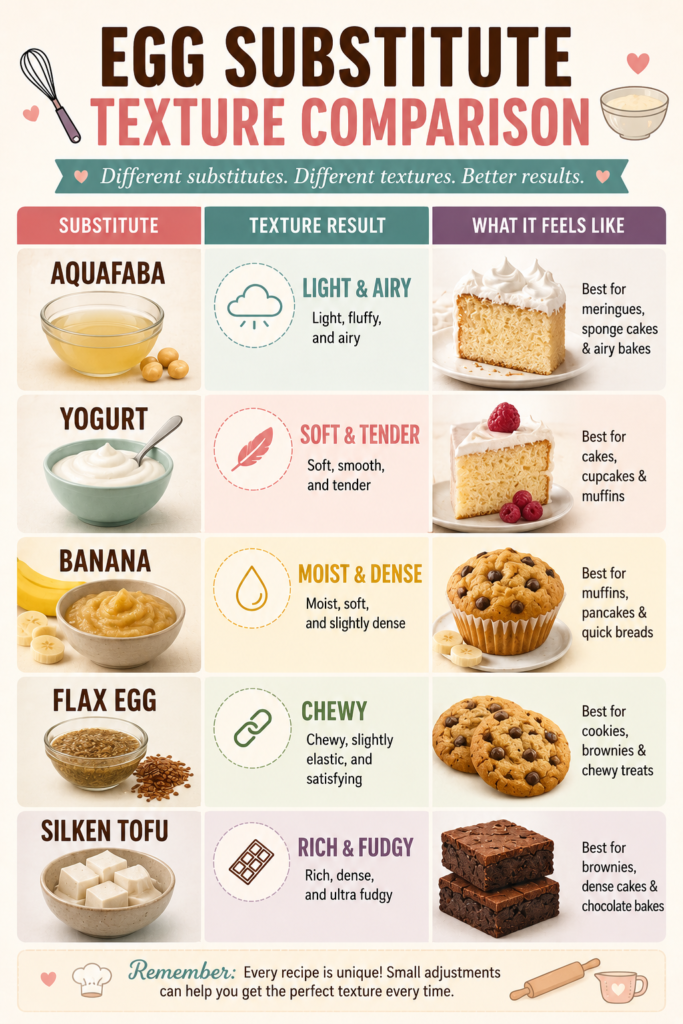
- For chewy texture: flax egg or nut butter
- For soft and moist texture: banana or applesauce
- For fluffy baked goods: aquafaba or baking soda + vinegar
- For dense and fudgy desserts: silken tofu or nut butter
- For the most neutral result: yogurt or commercial egg replacers
Egg Substitute Conversion Chart
When you replace eggs in baking, it helps to have a simple guide. Most substitutes follow easy measurements that work well in everyday recipes.
Use the chart below as a quick reference when you need to replace one egg.
Quick Reference for Replacing One Egg
Here are some of the most reliable egg substitutes and the exact amounts to use:
| Egg Substitute | Amount to Replace 1 Egg | Best For |
|---|---|---|
| Flaxseed Egg | 1 tbsp ground flaxseed + 2½ tbsp water | Cookies, muffins, pancakes |
| Chia Egg | 1 tbsp chia seeds + 2½ tbsp water | Muffins, quick breads, cookies |
| Applesauce | ¼ cup unsweetened applesauce | Cakes, muffins, quick breads |
| Mashed Banana | ¼ cup mashed ripe banana | Muffins, pancakes, brownies |
| Plant-Based Yogurt | ¼ cup plain yogurt | Cakes, cupcakes, muffins |
| Silken Tofu | ¼ cup blended silken tofu | Brownies, dense cakes |
| Baking Soda + Vinegar | 1 tsp baking soda + 1 tbsp vinegar | Cakes, cupcakes |
| Aquafaba | 3 tbsp chickpea liquid | Meringues, macarons, sponge cakes |
| Nut Butter | 3 tbsp peanut or almond butter | Cookies, brownies |
| Commercial Egg Replacer | Follow package directions | Most baked goods |
Easy Measurements to Remember
In most baking recipes, the easiest rule to remember is this: ¼ cup of a moist ingredient usually replaces one egg. This includes options like applesauce, mashed banana, yogurt, or blended tofu.
For recipes that need binding, flax eggs and chia eggs are often the best choice. For recipes that need lift and lightness, the baking soda and vinegar combination works very well.
When a recipe depends on whipped egg whites, aquafaba is the closest match.
Keep this chart nearby while baking. Once you use these substitutes a few times, choosing the right one becomes quick and natural.
Example Recipe Conversions
Sometimes it helps to see exactly how egg substitutes work in real baking situations.
Use these simple examples as a quick guide when replacing eggs in common recipes.
| Recipe | Egg Replacement Example |
|---|---|
| Brownies | Replace 2 eggs with ½ cup blended silken tofu |
| Cookies | Replace 1 egg with 1 flax egg |
| Pancakes | Replace 1 egg with ¼ cup mashed banana |
| Muffins | Replace 1 egg with ¼ cup unsweetened applesauce |
| Cupcakes | Replace 1 egg with ¼ cup plant-based yogurt |
| Quick breads | Replace 1 egg with 1 chia egg |
| Sponge cake | Replace 1 egg with baking soda + vinegar mixture |
| Meringues | Replace 3 egg whites with 9 tablespoons aquafaba |
Helpful Tip
When replacing multiple eggs in a recipe, combining substitutes often creates better texture and structure.
For example, using a flax egg for binding along with applesauce for moisture can produce more balanced results in cakes and muffins.
Tips for Baking Without Eggs
Baking without eggs can still give you soft cakes, tender muffins, and chewy cookies. The key is paying attention to how the batter behaves and making small adjustments when needed.
These simple tips will help your recipes turn out balanced and delicious.
Adjusting Baking Time and Temperature
Egg substitutes can sometimes change how quickly a recipe bakes. Batters made with fruit purees or yogurt often hold more moisture, which may require a few extra minutes in the oven.
Start by baking the recipe at the same temperature listed in the original instructions.
Check for doneness near the end of the baking time. If the center still looks soft, give it another 2–5 minutes and test again.
Use simple cues. Cakes should spring back lightly when touched. Muffins should have a firm top. A toothpick inserted into the center should come out clean or with a few soft crumbs.
Avoiding Overly Dense Baked Goods
Some egg substitutes add moisture but not lift. This can lead to baked goods that feel heavy or dense. Balancing moisture with a bit of rise helps keep the texture light.
If your batter feels very thick, add 1–2 tablespoons of plant-based milk to loosen it slightly.
Also, make sure your recipe includes a leavening ingredient like baking powder or baking soda. These help the batter expand as it bakes.
Mix the batter just until combined. Overmixing can make egg-free batters tougher and less airy.
Combining Substitutes When Needed
Sometimes one ingredient alone does not replace everything an egg does. In those cases, combining two simple substitutes can give better results.
For example, a flax egg plus a spoonful of applesauce can provide both binding and moisture. A banana with a little baking powder can help create a softer crumb in cakes or muffins.
This approach works especially well in recipes that normally use several eggs. Each ingredient fills a small role, creating a balanced batter.
Testing Small Batches First
When trying a new substitute, it helps to test the recipe in a small batch. This makes it easier to adjust without wasting ingredients.
Bake a half batch if possible. Pay attention to how the batter looks and how the baked goods feel once cooled. If the texture is too dense, try a substitute that adds more lift next time.
If it feels dry, use an ingredient that adds more moisture.
Keep a few notes as you experiment. After a few tries, you will know exactly which egg substitutes work best for your favorite recipes.
Common Baking Mistakes When Replacing Eggs
Using Substitutes That Add Too Much Moisture
Many egg substitutes add moisture to a recipe. Ingredients like applesauce, mashed banana, and yogurt are helpful, but using too much can make baked goods heavy or slightly gummy.
Pay attention to the consistency of the batter. It should look similar to a typical cake or muffin batter—smooth and thick, but not runny.
If the batter looks overly wet, you can balance it by adding 1–2 tablespoons of flour or reducing the substitute slightly.
Choosing the right substitute also helps. For example, flax eggs or chia eggs provide binding without adding as much extra moisture as fruit-based substitutes.
Not Considering Flavor Changes
Some egg substitutes bring their own flavor. Banana adds sweetness. Nut butter adds a roasted, nutty taste. Even applesauce can introduce a mild fruit note.
These flavors are not necessarily a problem, but they should match the recipe. Banana works well in muffins, pancakes, and brownies, but it may overpower a delicate vanilla cake.
Nut butter works great in cookies, but might feel out of place in light cupcakes.
When baking something with a subtle flavor, choose neutral substitutes such as flax eggs, chia eggs, silken tofu, or plant-based yogurt.
Replacing Too Many Eggs in One Recipe
Egg substitutes usually work best when replacing one or two eggs. Recipes that rely on several eggs for structure—like sponge cakes or certain specialty desserts—can be harder to convert.
When a recipe calls for three or more eggs, try using a combination of substitutes.
For example, you might use a flax egg for binding and applesauce for moisture. This creates a better balance in the batter.
If a recipe depends heavily on eggs, it may be easier to use a recipe designed to be egg-free from the start.
These recipes are built with the right balance of ingredients to produce reliable results.
Quick Troubleshooting Guide
Even with the right substitute, small adjustments can make a big difference in egg-free baking.
Use this guide to quickly fix common texture problems.
| Problem | Likely Cause | Easy Fix |
|---|---|---|
| Gummy texture | Too much moisture from banana, applesauce, or yogurt | Slightly reduce the puree or add 1–2 tbsp flour |
| Dense cake | Not enough lift or overmixed batter | Add baking soda + vinegar and mix gently |
| Crumbly cookies | Weak binding | Use a flax egg or chia egg |
| Dry muffins | Not enough moisture | Add yogurt, applesauce, or a splash of plant-based milk |
| Flat cupcakes | Batter lacks structure | Use yogurt or commercial egg replacer |
| Heavy pancakes | Batter too thick | Add a small amount of milk to loosen batter |
| Rubbery brownies | Too much tofu or overbaking | Reduce tofu slightly and check baking time earlier |
| Batter too thick | High-fiber substitutes absorbing moisture | Let batter rest briefly, then add milk if needed |
Helpful Tip
Egg-free batters can behave differently depending on the substitute used.
Small adjustments to moisture, mixing, or baking time often solve texture issues quickly without needing to change the entire recipe.
Best Egg Substitutes by Recipe Type
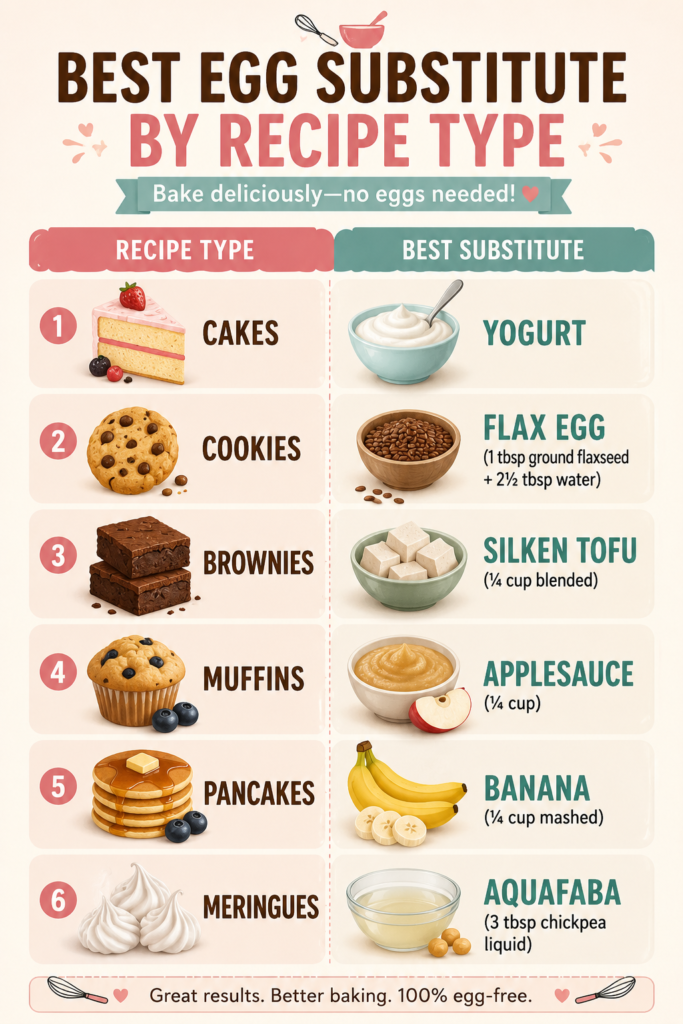
Cakes
Cakes usually need a balance of moisture, structure, and lift. Eggs help cakes rise and create a soft, tender crumb, so the substitute should support that texture.
Good options for cakes include plant-based yogurt, applesauce, and baking soda with vinegar. Yogurt adds moisture and helps bind the batter. Applesauce keeps cakes soft and tender.
The baking soda and vinegar combination helps create bubbles that make cakes lighter.
For best results, keep the batter smooth and avoid overmixing. This helps the cake stay fluffy instead of dense.
Cookies
Cookies depend more on binding and richness than lift. Eggs help hold the dough together and contribute to the final texture.
Flax eggs and chia eggs work especially well in cookies because they provide strong binding. Nut butter can also be a good choice when the flavor fits the recipe.
These substitutes help cookies stay chewy while keeping their shape during baking.
If the dough feels dry, add a small splash of plant-based milk to help bring everything together.
Muffins
Muffins need moisture and structure to keep their soft crumb. The batter should be thick but still easy to scoop into the pan.
Applesauce, mashed banana, flax eggs, and plant-based yogurt all work well in muffins.
Applesauce and banana add moisture and natural sweetness, while flax eggs provide binding so the muffins hold together.
Mix muffin batter gently and stop as soon as the ingredients combine. Overmixing can make muffins dense.
Brownies
Brownies rely on eggs for richness and a slightly fudgy texture. The best substitutes are ingredients that create a dense, moist result.
Silken tofu, mashed banana, and nut butter are great options for brownies. Silken tofu blends smoothly into the batter and helps create a creamy texture.
Banana adds moisture and sweetness. Nut butter adds richness and body.
For fudgy brownies, keep the batter thick and avoid adding too much extra liquid.
Pancakes and Waffles
Pancakes and waffles need light binding with a bit of lift. The batter should be pourable while still holding small air bubbles during cooking.
Flax eggs, mashed banana, and applesauce all work well for these recipes. Flax eggs help bind the batter, while banana or applesauce adds moisture and a soft texture.
Let the batter rest for a few minutes before cooking. This helps the ingredients hydrate and often leads to fluffier pancakes and waffles.
Expert Tips for Better Egg-Free Baking
Small techniques can make a big difference when baking without eggs.
These simple tips help improve texture, consistency, and overall baking results.
- Let flax eggs and chia eggs sit for 5–10 minutes so they fully thicken before mixing into the batter.
- Bring plant-based yogurt to room temperature before baking to help it blend more evenly into the batter.
- Use very ripe bananas for a smoother texture and better natural sweetness.
- Avoid overmixing egg-free batters, which can make cakes and muffins dense or tough.
- Let pancake and waffle batter rest for a few minutes before cooking for a fluffier texture.
- Check baked goods a few minutes early since some egg substitutes can change baking time slightly.
- If a batter feels too thick, add a small splash of plant-based milk to loosen it.
- For recipes replacing multiple eggs, combining substitutes often creates a better balance and texture.
Final Thoughts
Baking without eggs is easier than it may seem. With the right substitute, you can still create cakes, cookies, muffins, and pancakes that taste just as good.
Simple ingredients like flaxseed, applesauce, bananas, and yogurt can step in and do the job well.
Each one works a little differently, which gives you plenty of options depending on the recipe.
Try a few substitutes and see what works best in your kitchen. Once you find your favorites, baking without eggs becomes simple, reliable, and just as delicious.
FAQs
Can I replace eggs in any baking recipe?
Most baking recipes allow eggs to be replaced, especially in cakes, muffins, cookies, and pancakes.
However, recipes that rely heavily on eggs for structure, such as sponge cakes or meringues, may require more specific substitutes like aquafaba.
What is the best egg substitute for cakes?
Plant-based yogurt, applesauce, or a mix of baking soda and vinegar work very well in cakes. These options help add moisture and create a soft, tender texture.
Which egg substitute adds the least flavor?
Flax eggs, chia eggs, silken tofu, and commercial egg replacers have very mild flavors. They blend into most batters without noticeably changing the taste.
How many eggs can I replace in a recipe?
You can usually replace one or two eggs easily. If a recipe calls for three or more eggs, using a combination of substitutes often gives better results.
What is the best egg substitute for cookies?
Flax eggs and chia eggs work best for cookies because they provide strong binding. They help the dough hold together while keeping cookies soft and chewy.

Hi, I’m Daisy Roots, the home cook and recipe developer behind this kitchen. I create simple, tested vegan recipes using everyday ingredients. Every dish is developed and cooked in my own kitchen, with clear steps to help you get reliable results every time. Thanks for stopping by — let’s cook something great!