Fresh herbs can instantly lift a dish. A small handful of basil, parsley, or cilantro adds bright flavor, fresh aroma, and a finishing touch that dried herbs can’t match.
The problem is they don’t last long. Many herbs wilt, turn slimy, or lose their flavor just a few days after you bring them home.
The good news is that a few simple storage tricks can keep herbs fresh much longer.
In this guide, you’ll learn easy, practical ways to store fresh herbs so they stay vibrant, flavorful, and ready to use whenever you cook.
Fresh Herb Storage Cheat Sheet
Not sure how to store your herbs? Use this quick reference guide to choose the best method and maximize freshness.
| Herb | Type | Best Storage Method | Store In | Typical Freshness |
|---|---|---|---|---|
| Basil | Tender | Jar with water | Countertop | 5–7 days |
| Cilantro | Tender | Jar with water or damp paper towel | Refrigerator | 7–14 days |
| Parsley | Tender | Jar with water or damp paper towel | Refrigerator | 7–14 days |
| Mint | Tender | Jar with water or damp paper towel | Refrigerator | 7–10 days |
| Rosemary | Hardy | Damp paper towel wrap | Refrigerator | 2–3 weeks |
| Thyme | Hardy | Damp paper towel wrap | Refrigerator | 2–3 weeks |
| Sage | Hardy | Damp paper towel wrap | Refrigerator | About 2 weeks |
| Oregano | Hardy | Damp paper towel wrap | Refrigerator | About 2 weeks |
Quick Tip: Tender herbs generally stay freshest when kept hydrated, while hardy herbs last longer when stored cool with just a small amount of moisture.
Why Proper Herb Storage Matters
Storing fresh herbs the right way helps them stay vibrant, fragrant, and full of flavor for much longer.
When herbs dry out or sit in too much moisture, they quickly lose their bright taste and fresh aroma, which means they won’t add the same punch to your cooking.
Proper storage keeps the leaves firm, green, and ready to use, so a small handful can still transform a simple dish into something special.
It also helps reduce food waste. Instead of tossing out half a bunch of slimy parsley or wilted cilantro a few days after buying it, you can keep herbs usable for a week or even longer with the right method.
That means more chances to add fresh flavor to soups, sauces, salads, and roasted vegetables before anything goes bad. Good storage also saves money and extra trips to the store.
Herbs can be surprisingly expensive when you buy them often, so making each bunch last longer helps you get the most out of what you bring home.
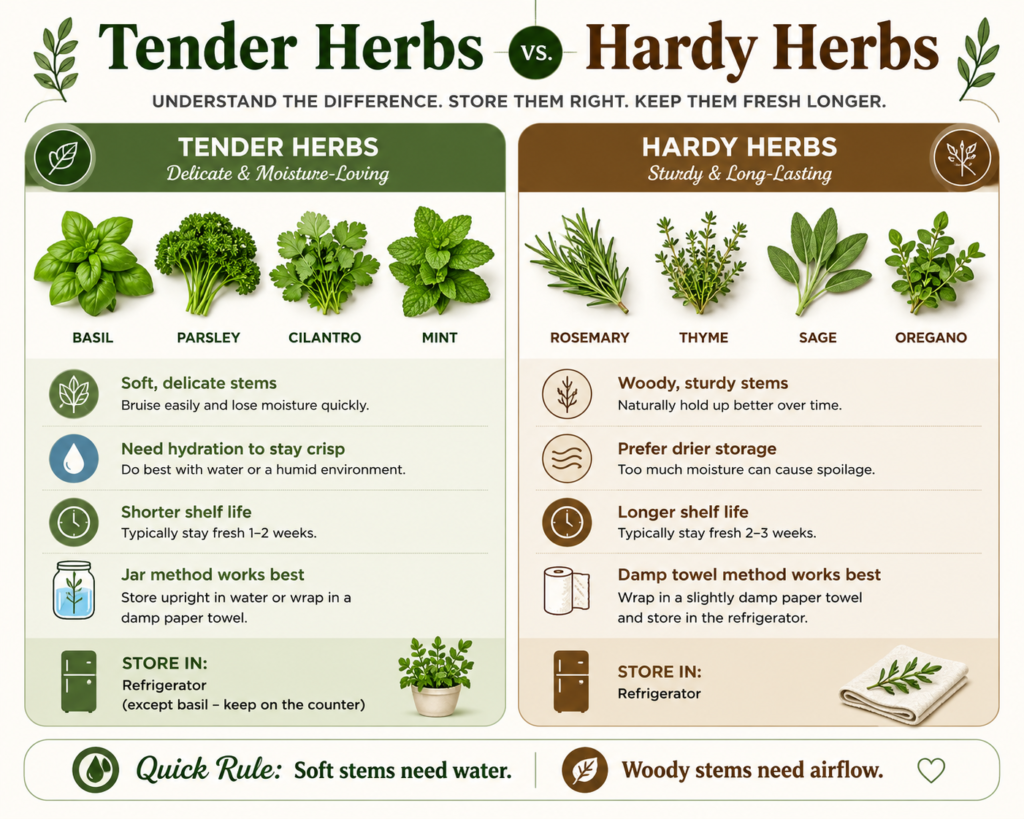
Know Your Herbs: Tender vs. Hardy
A. Tender Herbs
Tender herbs have soft stems and delicate leaves, which means they lose moisture quickly and bruise easily. Common examples include basil, cilantro, parsley, and mint.
These herbs are vibrant and aromatic, but they are also fragile. If they are stored the wrong way, the leaves can wilt, turn dark, or become slimy within a few days.
Because of their delicate structure, tender herbs benefit from gentle storage that keeps them hydrated without trapping too much moisture around the leaves.
Think of them almost like fresh flowers. Their stems absorb water, which helps keep the leaves firm and fresh.
When stored carefully—often upright in a small jar of water or lightly wrapped to hold moisture—they stay bright, flavorful, and ready to use.
Handling them gently also matters. Rough handling or tightly packed containers can crush the leaves and speed up spoilage.
B. Hardy Herbs
Hardy herbs are much sturdier. Varieties like rosemary, thyme, sage, and oregano have woody stems and thicker leaves, which naturally hold up better over time.
These herbs don’t wilt as quickly because their leaves contain less surface moisture and their structure is stronger.
Instead of needing water like tender herbs, hardy herbs store best when kept slightly dry and protected from excess humidity.
Too much moisture can cause them to spoil or grow mold. For that reason, they are usually stored wrapped in a lightly damp paper towel and placed in the refrigerator.
This keeps them cool while maintaining just enough humidity to prevent drying out.
Thanks to their sturdier leaves and woody stems, hardy herbs often last longer than tender ones when stored properly, making them reliable to keep on hand for everyday cooking.
The Best Ways to Store Tender Herbs
A. The Jar Method (Like Fresh Flowers)
One of the easiest and most reliable ways to store tender herbs is the jar method. Think of it as treating your herbs like a small bouquet of flowers.
Start by trimming the bottom of the stems with a sharp knife or kitchen scissors. A small trim helps the stems absorb water better and keeps the herbs looking fresh.
Next, place the herbs upright in a clean jar or glass with a small amount of water, just enough to cover the stems.
The leaves should stay above the water so they don’t become soggy. Loosely cover the herbs with a plastic bag to create a light layer of humidity around the leaves.
This helps prevent them from drying out while still allowing some airflow. Most tender herbs stored this way should go into the refrigerator to stay cool and crisp.
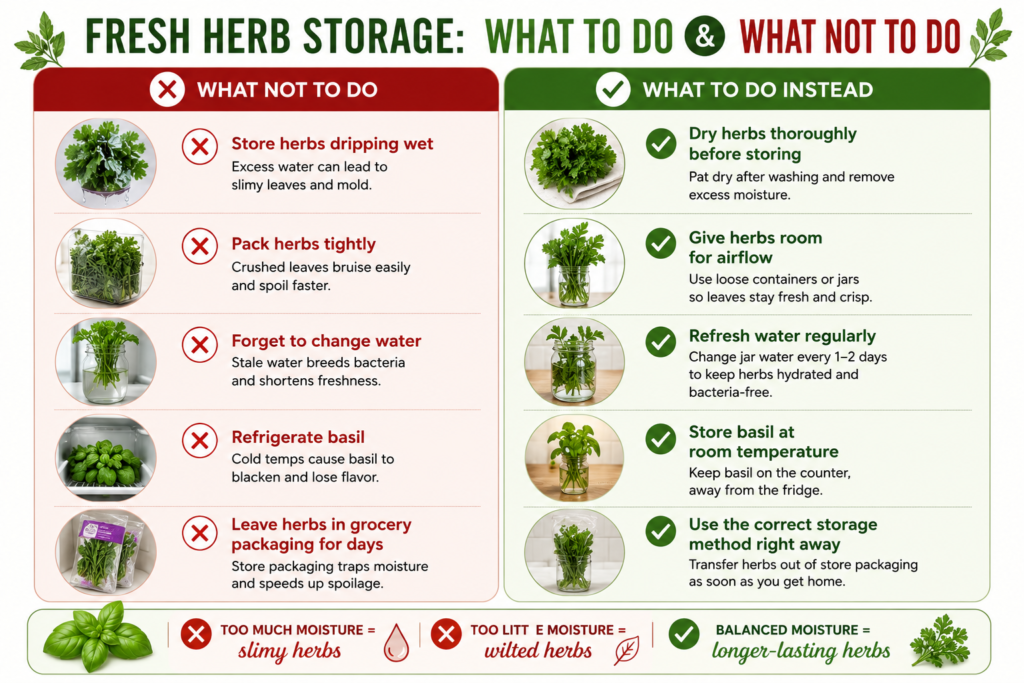
The only common exception is basil. Basil prefers room temperature and can darken in the fridge, so it does best sitting on the counter in its jar of water.
With this method, herbs often stay fresh and vibrant for several days longer than if they were simply left in their original packaging.
B. Damp Paper Towel Method
The damp paper towel method is another simple and reliable way to keep tender herbs fresh.
Start by laying the herbs flat and gently wrapping them in a paper towel that has been lightly dampened with water.
The towel should feel slightly moist but never wet. Too much water can cause the leaves to break down quickly. The goal is to create a soft, humid environment that prevents the herbs from drying out.
Once wrapped, place the herbs inside a container or a resealable plastic bag. This protects them from the dry air inside the refrigerator while still keeping them cool.
Store the container or bag in the fridge, ideally in a produce drawer or a spot where the herbs won’t get crushed.
When you need some herbs, simply unwrap the towel, take what you need, and wrap the rest again.
This method works especially well for herbs like parsley, cilantro, and mint, helping them stay fresh, fragrant, and ready for cooking throughout the week.
The Best Ways to Store Hardy Herbs
A. Refrigerator Wrap Method
Hardy herbs store best when they are kept cool and protected from excess moisture. Start by laying the herbs flat on the counter and gently wrapping them in a slightly damp paper towel.
The towel should feel lightly moist, not wet. Too much water can cause the leaves to soften or spoil. The goal is to provide just enough humidity so the herbs don’t dry out in the refrigerator.
Once wrapped, place the herbs inside a resealable plastic bag or an airtight container.
This step keeps the herbs from absorbing odors in the fridge and prevents them from being crushed by other foods.
Store the container or bag in the refrigerator, ideally in the vegetable drawer where the temperature stays steady.
Hardy herbs like rosemary, thyme, sage, and oregano can last well over a week with this simple method.
When you need some, open the wrap, take what you need, and close it back up. It’s quick, easy, and keeps these sturdy herbs flavorful and ready to use.
B. Herb Storage Containers
Herb storage containers are designed to help herbs stay fresh longer by controlling airflow and moisture.
These containers usually have a ventilated lid and a base that holds a small amount of water.
The stems sit in the water while the leaves remain above it, which helps the herbs stay hydrated without becoming soggy.
Some containers also allow just enough air circulation to prevent excess moisture from building up inside.
This balance is important because too much humidity can cause herbs to spoil, while too little can make them dry and brittle.
To use one, simply trim the herb stems, place them in the container, and add a little water to the base. Then store the container in the refrigerator.
While these containers aren’t required, they can be helpful if you cook with fresh herbs often and want a tidy, reliable way to keep them fresh for longer periods.
How to Store Basil Properly
Basil needs a different approach than most other herbs because it does not like cold temperatures.
When basil sits in the refrigerator, the leaves often turn dark, soft, and bruised within a day or two. Cold air damages the delicate leaves and dulls the herb’s bright flavor.
Instead, basil stays freshest at room temperature using a simple countertop jar method. Start by trimming the bottom of the stems slightly so they can absorb water easily.
Place the basil upright in a small jar or glass with a few centimeters of water, just enough to cover the stems. Keep the leaves above the water so they stay dry and fresh.
Set the jar on your kitchen counter, away from direct sunlight and heat. This setup keeps the stems hydrated and the leaves vibrant, much like a small bouquet of flowers.
To help basil last even longer, change the water every day or two so it stays clean. Handle the leaves gently when you pick some for cooking, since bruising can cause them to darken quickly.
If the bunch is large, make sure the stems are not packed too tightly in the jar so air can move around the leaves.
With this simple method, basil often stays fresh, fragrant, and ready to use for several days, making it easy to add that bright, fresh flavor to sauces, salads, and pasta dishes.
How Long Do Fresh Herbs Last?
Proper storage can dramatically extend the life of fresh herbs, but each variety naturally has a different shelf life.
Use the guide below as a general reference when storing herbs at home.
| Herb | Average Shelf Life |
|---|---|
| Basil | 5–7 days |
| Cilantro | 7–14 days |
| Parsley | 7–14 days |
| Mint | 7–10 days |
| Rosemary | 2–3 weeks |
| Thyme | 2–3 weeks |
| Sage | About 2 weeks |
| Oregano | About 2 weeks |
Keep in mind: Shelf life can vary depending on freshness at purchase, storage conditions, and humidity levels in your refrigerator. For best results, check herbs regularly and remove any damaged leaves before they affect the rest of the bunch.
If you notice discoloration, sliminess, mold, or an unpleasant odor, it’s time to discard the herbs.
Freezing Fresh Herbs for Long-Term Storage
A. Freezing Whole Herbs
Freezing whole herbs is one of the easiest ways to keep extra herbs from going to waste. Start by rinsing the herbs gently under cool water to remove any dirt.
After washing, spread them out on a clean kitchen towel or paper towel and dry them thoroughly.
Removing excess moisture is important because water can form ice crystals that damage the leaves.
Once the herbs are dry, remove any thick or tough stems if needed, then place the herbs into a freezer-safe bag. Try to press out as much air as possible before sealing the bag.
This helps prevent freezer burn and keeps the herbs tasting fresh. Lay the bag flat in the freezer so the herbs freeze quickly and evenly.
When you’re ready to cook, you can take out a small handful straight from the freezer and add it directly to soups, sauces, stews, or sautés.
The texture will soften once frozen, but the flavor stays strong, which is what really matters when cooking.
B. Herb Ice Cubes
Herb ice cubes are a smart and organized way to freeze herbs for cooking later. Begin by finely chopping the herbs so they distribute evenly in the cubes.
Place a spoonful of the chopped herbs into each section of an ice cube tray. Next, fill the tray with either water or olive oil. Water works well for herbs you plan to add to soups, beans, or broths.
Olive oil is perfect for sautéing, roasting vegetables, or starting a sauce. Once filled, place the tray in the freezer and let the cubes freeze completely.
After they are solid, transfer the cubes to a freezer bag or container to save space. When cooking, simply drop a cube into a hot pan or pot.
As it melts, it releases the herbs and their aroma right into the dish, making it a quick way to add fresh herb flavor even weeks later.
How to Dry Fresh Herbs
Drying herbs is a simple way to preserve their flavor so you can keep using them long after they would normally wilt.
The easiest method is air-drying, which works best for herbs with sturdy stems. Start by gathering a small bundle of clean, dry herbs and tying the stems together with kitchen string.
Hang the bundle upside down in a warm, dry spot with good airflow, such as a pantry or a quiet corner of the kitchen. Keep them away from direct sunlight so the flavor and color stay strong.
After several days, the leaves will become crisp and easy to crumble between your fingers. If you want a faster option, you can use the oven.
Spread the herbs in a single layer on a baking sheet and place them in the oven at the lowest temperature possible.
Leave the oven door slightly open so moisture can escape, and check the herbs often to prevent burning. Within an hour or two, the leaves should become dry and brittle.
Once dried, remove the leaves from the stems and store them in an airtight jar in a cool, dark place.
Hardy herbs like rosemary, thyme, oregano, sage, and bay leaves are especially good for drying because their strong flavor holds up well during the process.
Common Mistakes to Avoid
Storing Herbs Wet
One of the quickest ways to spoil fresh herbs is to store them while they are still wet. Excess water clings to the leaves and creates a damp environment where herbs can turn slimy or start to rot.
After washing herbs, always dry them well before storing. You can gently pat them dry with a clean kitchen towel or use a salad spinner to remove extra moisture.
The goal is simple: herbs should feel dry to the touch before they go into the fridge, jar, or container. A little moisture in a paper towel or jar of water is helpful, but wet leaves are not.
Crushing Herbs in Tight Containers
Fresh herbs need a bit of breathing room. When they are packed tightly into a small container or squeezed into a crowded fridge drawer, the leaves bruise and break down quickly.
Bruised herbs darken faster and lose their bright flavor. Instead, store herbs loosely so air can move around the leaves.
Use a container that gives them space, or arrange them gently in a bag without pressing them down. Treat herbs with a light hand, the same way you would handle delicate greens.
Keeping Herbs Too Cold or Too Warm
Temperature plays a big role in how long herbs stay fresh. Most herbs prefer the cool environment of the refrigerator, but extremely cold spots can damage them.
Avoid placing herbs near the back of the fridge, where temperatures can dip lower. At the same time, leaving herbs on a warm counter for too long can cause them to wilt quickly.
Basil is the main exception because it prefers room temperature, but most other herbs stay fresher when kept cool and protected inside the fridge.
Forgetting to Trim Stems
Trimming herb stems may seem like a small step, but it makes a real difference in freshness.
Cutting a small piece off the bottom of the stems allows the herbs to absorb water more easily when using the jar method.
Without trimming, the stem ends can dry out and block water from moving up into the leaves.
A quick trim with a knife or scissors keeps the stems fresh and helps the herbs stay hydrated longer. It takes only a few seconds but can add several extra days of freshness.
Can You Revive Wilted Herbs?
If your herbs have started to wilt but aren’t slimy, moldy, or discolored, there’s a good chance you can bring them back to life.
Many herbs lose firmness simply because they’ve become dehydrated. Rehydrating them with cold water can often restore their texture and freshness.
How to Revive Wilted Herbs
- Trim a small piece off the bottom of the stems.
- Fill a bowl or container with cold water.
- Place the herbs in the water for 15–30 minutes.
- For tender herbs, transfer them to a jar with fresh water and refrigerate.
- Remove any damaged or yellowing leaves before storing.
This method works especially well for parsley, cilantro, mint, and other tender herbs that have become limp from moisture loss.
When Revival Won’t Work
If the herbs are slimy, moldy, have a strong, unpleasant odor, or contain large black or brown patches, they’re past their best and should be discarded.
Signs Your Fresh Herbs Have Gone Bad
Discoloration
Fresh herbs should look vibrant and lively. Bright green leaves are usually a good sign that the herbs are still full of flavor and ready to use.
When herbs begin to spoil, the color is often the first thing that changes. Leaves may turn dark brown, black, or dull yellow.
Some herbs may also develop dry, faded spots. These changes usually mean the leaves are losing their freshness and flavor.
If only a few leaves look discolored, you can remove them and use the rest of the bunch. However, if most of the herbs have lost their color, it’s best to discard them.
Slimy Texture
Texture is another clear indicator of freshness. Healthy herbs should feel crisp, light, and slightly firm when you hold them. When herbs start to spoil, the leaves may become soft, limp, or slippery.
A slimy texture often develops when herbs sit in too much moisture or have been stored for too long.
Once herbs reach this stage, their flavor usually fades, and the leaves break apart easily. If you notice this texture, it’s a sign the herbs are past their best and should not be used in cooking.
Mold or Strong Odor
Fresh herbs should smell clean, bright, and aromatic. That fresh scent is part of what makes them so valuable in the kitchen.
If herbs develop a sour, musty, or unpleasant smell, it usually means they have begun to spoil. Mold may also appear as fuzzy white, gray, or dark spots on the leaves or stems.
When mold or a strong off-odor is present, the herbs should be thrown away immediately. Using spoiled herbs can affect the taste of your dish and is not safe.
Checking your herbs quickly before cooking helps ensure you’re always adding fresh, vibrant flavor to your meals.
Tips to Make Fresh Herbs Last Longer
Wash Herbs at the Right Time
Washing herbs too early can shorten their lifespan if they are not dried properly. Extra moisture sitting on the leaves often causes herbs to soften or spoil faster.
A good approach is to wash herbs right before you plan to use them. If you prefer to wash them when you bring them home, make sure to dry them very well.
Spread them on a clean kitchen towel or gently spin them dry in a salad spinner. Dry leaves store better and hold their flavor longer.
Store Herbs Immediately After Buying
Fresh herbs begin to lose quality the longer they sit out. Once you bring them home, take a minute to prepare them for storage instead of leaving them in the grocery bag.
Trim the stems if needed, remove any damaged leaves, and place them into the storage method that suits the herb best.
This small step helps preserve their freshness from the start and keeps them ready for cooking throughout the week.
Use Breathable Containers
Herbs need some airflow to stay fresh. Completely sealing them in tight plastic containers without any moisture balance can cause them to trap condensation and spoil faster.
A better option is to use containers that allow a little air movement while still protecting the herbs from drying out.
Loose bags, containers with small vents, or jars with a light covering work well. The goal is to keep herbs cool and slightly humid without trapping too much moisture around the leaves.
Check and Refresh Water Regularly
If you are storing herbs in a jar of water, treat them like a small bouquet on your counter or in the fridge. Change the water every day or two so it stays clean and clear.
Fresh water helps keep the stems hydrated and prevents the growth of bacteria that can cause herbs to spoil.
While refreshing the water, take a quick look at the leaves and remove any that are starting to wilt.
This simple habit keeps the rest of the bunch fresh and ready whenever you need to add a handful of flavor to your cooking.
Best Herb Storage Method Based on How You Cook
The best way to store fresh herbs often depends on how frequently you use them.
Use this quick guide to choose the most practical storage method for your cooking habits.
| If You… | Best Storage Method |
|---|---|
| Cook with fresh herbs almost every day | Jar method |
| Use herbs once or twice per week | Damp paper towel method |
| Buy herbs in large quantities | Freezing |
| Grow your own herbs | Jar method for current use + freeze extras |
| Meal prep regularly | Herb ice cubes |
| Want the longest possible shelf life | Drying |
Quick Tip: If you’re unsure which method to use, start with the jar method for tender herbs and the damp paper towel method for hardy herbs. Both require minimal effort and work well for most home cooks.
Here’s What I Think
After storing fresh herbs using several different methods over the years, I’ve found that the jar method consistently produces the best results for parsley and cilantro.
When stored upright in a small amount of water and kept in the refrigerator, they often stay fresh noticeably longer than herbs left in their original grocery packaging.
Basil has been the biggest exception.
Refrigerated basil tends to darken and lose quality quickly, while storing it on the countertop in a jar of water helps the leaves stay vibrant and fragrant for much longer.
I’ve also found that changing the water every couple of days and removing any damaged leaves helps extend the freshness of the entire bunch.
Final Thoughts
Fresh herbs bring bright flavor to everyday cooking, and storing them the right way makes a big difference.
Simple methods like the jar technique for tender herbs, wrapping hardy herbs in a damp towel, or freezing extras can keep them fresh much longer.
With just a few small habits, you can waste less and always have flavorful herbs ready to use.
Treat them well, store them properly, and they’ll keep adding fresh taste to your cooking all week.
Herb Storage Method Comparison
If you’re unsure which storage method is best, use this quick comparison guide to find the option that matches your needs.
| Storage Method | Best For | Typical Shelf Life | Effort Level |
|---|---|---|---|
| Jar Method | Tender herbs like parsley, cilantro, and mint | 1–2 weeks | Low |
| Damp Paper Towel Method | Most herbs, especially hardy varieties | 1–2 weeks | Low |
| Herb Storage Container | Frequent herb users | 1–3 weeks | Low |
| Freezing | Long-term storage and bulk herbs | Several months | Medium |
| Herb Ice Cubes | Meal prep and cooking convenience | Several months | Medium |
| Drying | Seasoning blends and pantry storage | Several months to 1 year | Medium |
Quick Tip: For everyday use, the jar method and damp paper towel method are usually the easiest and most effective options. If you regularly buy herbs in bulk or grow your own, freezing can help prevent waste and extend their usability for months.
FAQs
How long do fresh herbs last in the fridge?
Most fresh herbs last about 7–14 days in the refrigerator when stored properly.
Hardy herbs like rosemary and thyme often last longer, while tender herbs like cilantro and parsley may last about a week.
Should you wash herbs before storing them?
It’s usually best to wash herbs right before using them. If you wash them before storing, make sure they are completely dry to prevent them from becoming slimy.
Can you store different herbs together?
Yes, but it’s better to store herbs with similar needs together. Tender herbs can share the jar method, while hardy herbs can be wrapped together and stored in the fridge.
What is the best container for storing herbs?
A glass jar with water for tender herbs or a container lined with a damp paper towel for hardy herbs works well. The goal is to keep herbs cool with balanced moisture.
Is freezing herbs better than drying them?
Freezing usually preserves more of the fresh flavor, while drying gives herbs a longer shelf life and is great for seasoning blends and cooked dishes.

Hi, I’m Daisy Roots, the home cook and recipe developer behind this kitchen. I create simple, tested vegan recipes using everyday ingredients. Every dish is developed and cooked in my own kitchen, with clear steps to help you get reliable results every time. Thanks for stopping by — let’s cook something great!