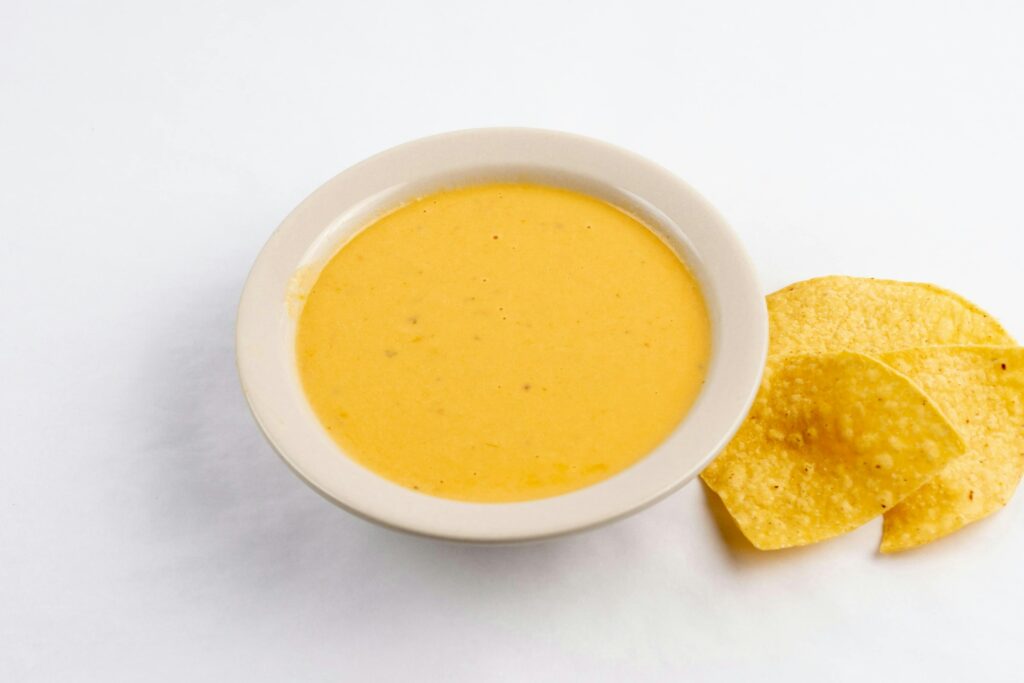
Vegan cheese sauce is a creamy, dairy-free sauce that delivers the rich, cheesy flavor people love without using traditional cheese.
It’s made with simple plant-based ingredients that blend together into a smooth, satisfying sauce.
It has become a favorite for dairy-free and plant-based cooking because it’s easy to make and works in so many dishes.
The texture is silky, the flavor is savory and cheesy, and the sauce comes together in minutes.
Drizzle it over nachos, stir it into pasta, pour it onto roasted vegetables, or use it in casseroles. Once you make it once, you’ll find yourself using it everywhere.
| Use | Best Consistency | Extra Tip |
|---|---|---|
| Nachos | Thin | Add extra plant milk |
| Mac and Cheese | Medium | Mix directly with hot pasta |
| Roasted Vegetables | Thin | Add smoked paprika |
| Casseroles | Thick | Reduce liquid slightly |
| Baked Potatoes | Medium | Top with chives |
| Burritos & Tacos | Medium | Add jalapeños for heat |
What Is Vegan Cheese Sauce?
Vegan cheese sauce is a smooth, creamy sauce designed to deliver the rich taste and texture of traditional cheese sauce without using any dairy.
Instead of melted cheese and butter, it relies on simple plant-based ingredients that blend together into a thick, silky sauce with a surprisingly cheesy flavor.
The magic comes from ingredients that each play a specific role.
Raw cashews are often used as the base because they blend into a naturally creamy texture that feels very similar to melted cheese sauce.
Nutritional yeast adds the bold, savory flavor that makes the sauce taste cheesy rather than nutty. A splash of plant-based milk helps everything blend smoothly and lets you control the thickness.
Lemon juice or apple cider vinegar adds a light tang that mimics the sharpness you get from real cheese.
Garlic powder, onion powder, and salt build depth and bring the whole sauce together. Some cooks also add a pinch of turmeric or paprika for that classic golden color.
When these ingredients are blended and gently heated, they transform into a rich, pourable sauce that coats pasta, nachos, vegetables, and casseroles just like a traditional cheese sauce would.
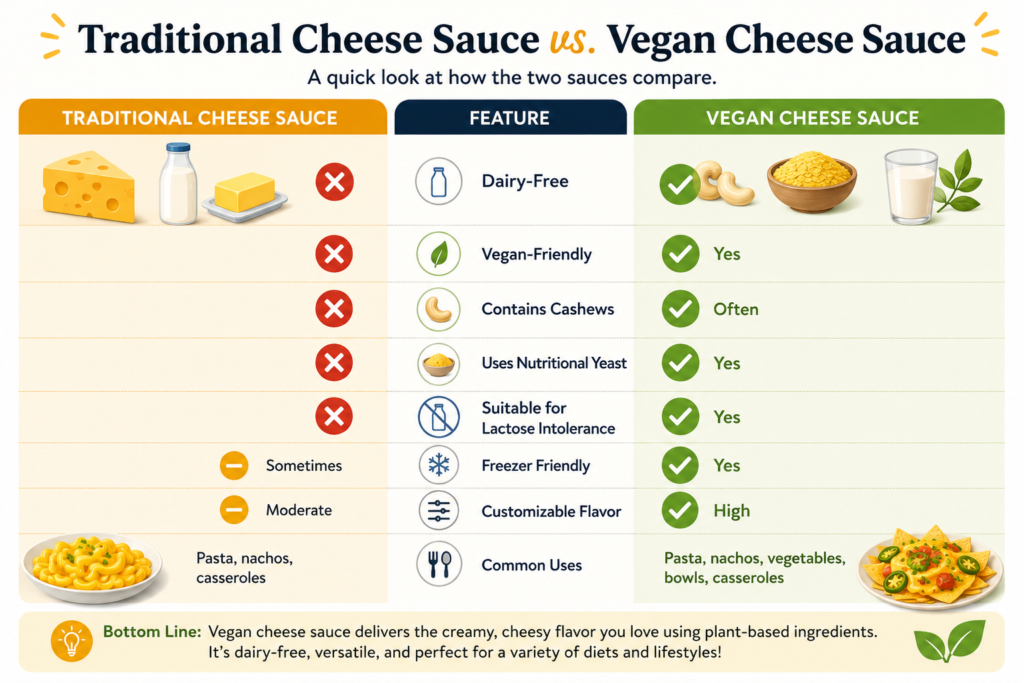
Why You’ll Love This Vegan Cheese Sauce
Dairy-Free and Vegan-Friendly
This sauce gives you the creamy, cheesy experience of a classic cheese sauce without using any dairy at all.
Everything comes from simple plant-based ingredients, which makes it a great option for anyone cooking vegan meals or avoiding dairy.
The flavor is still rich and savory, and the texture is smooth enough to coat pasta, vegetables, or chips just like traditional cheese sauce.
You don’t feel like you’re missing anything. Instead, you get a sauce that’s satisfying, flavorful, and easy to enjoy in everyday cooking.
Quick and Easy to Make
One of the best parts about vegan cheese sauce is how fast it comes together. Most versions only require adding a few ingredients to a blender and blending until smooth.
After that, a quick warm-up on the stove helps the sauce thicken and deepen in flavor. The entire process usually takes about 10–15 minutes from start to finish.
That means you can make it while your pasta cooks or while vegetables roast in the oven, turning simple meals into something creamy and comforting without extra work.
Budget-Friendly Ingredients
This sauce uses pantry staples that are easy to find and affordable.
Ingredients like cashews, nutritional yeast, plant milk, and basic seasonings go a long way and can be used in many other recipes too.
A small amount of cashews creates a surprisingly large batch of sauce, which makes it practical for family meals or meal prep.
Once you keep these ingredients in your kitchen, making vegan cheese sauce becomes a simple and low-cost way to add flavor to everyday dishes.
Customizable Flavor and Thickness
Another reason cooks love this sauce is how easy it is to adjust. If you prefer a thinner sauce for drizzling over nachos or roasted vegetables, simply blend in a little more plant milk.
If you want something thicker for mac and cheese or casseroles, reduce the liquid or let the sauce simmer a little longer. The flavor is just as flexible.
Add smoked paprika for a smoky touch, chili powder for heat, or roasted garlic for deeper flavor. With a few small changes, the same base sauce can match many different dishes.
Great for Many Recipes
Once you make this sauce, you’ll quickly find new ways to use it.
It’s perfect poured over nachos, stirred into pasta for a creamy mac and cheese, or drizzled over steamed broccoli and roasted vegetables.
It also works well in burritos, baked potatoes, grain bowls, and casseroles. Because it reheats easily, you can keep a batch in the fridge and use it throughout the week.
Having a versatile sauce like this on hand makes everyday meals faster, richer, and much more satisfying.
Key Ingredients for Vegan Cheese Sauce
- 1 cup raw cashews (or 1 cup cooked potatoes and ½ cup cooked carrots for a nut-free option)
Cashews are the base that gives the sauce its smooth, creamy texture. When blended, they create a rich body that feels very similar to melted cheese sauce. If you need a nut-free option, cooked potatoes and carrots blend into a soft, creamy base that still gives the sauce a thick and silky consistency. - 3–4 tablespoons nutritional yeast
Nutritional yeast is what gives the sauce its classic cheesy flavor. It adds a savory, slightly nutty taste that closely mimics the depth of real cheese. Start with three tablespoons and add more if you want a stronger cheese-like flavor. - ¾–1 cup unsweetened plant-based milk (such as almond, soy, or oat milk)
Plant milk helps everything blend smoothly and controls the thickness of the sauce. Use about ¾ cup for a thicker sauce that works well for mac and cheese or casseroles. Add closer to 1 cup if you want a thinner sauce that pours easily over nachos or vegetables. - 1 tablespoon lemon juice or apple cider vinegar
This small amount of acid brightens the flavor and adds the tang you normally get from cheese. It balances the richness of the cashews and keeps the sauce from tasting too heavy. - ½ teaspoon garlic powder + ½ teaspoon onion powder + ¾ teaspoon salt
These seasonings build the savory backbone of the sauce. Garlic powder and onion powder deepen the flavor and make the sauce taste more like a classic cheese sauce rather than a nut-based blend. Salt ties everything together and sharpens the cheesy notes. - ¼ teaspoon turmeric or ½ teaspoon paprika (optional)
These spices are mainly used for color. Turmeric gives the sauce a warm golden tone similar to cheddar, while paprika adds a slightly deeper color and a gentle smoky note.
| Ingredient | Purpose in the Sauce |
|---|---|
| Cashews | Creates creamy texture |
| Nutritional Yeast | Provides cheesy flavor |
| Plant Milk | Adjusts consistency |
| Lemon Juice | Adds tanginess |
| Garlic Powder | Adds savory depth |
| Onion Powder | Enhances flavor |
| Turmeric | Creates cheddar-like color |
How to Make Vegan Cheese Sauce (Step-by-Step)
Step 1: Soak the Cashews
Start by soaking the cashews so they blend into a smooth sauce. Place the raw cashews in a bowl and cover them with hot water. Let them soak for about 10–15 minutes.
This softens the nuts and makes them much easier to blend, which helps the final sauce turn out creamy instead of grainy.
If you have extra time, you can soak them in room-temperature water for 1–2 hours instead.
Once they’re soft, drain the cashews and give them a quick rinse before adding them to the blender.
Step 2: Add Ingredients to a Blender
Add the drained cashews to a blender along with the rest of the sauce ingredients.
Pour in the plant-based milk, then add the nutritional yeast, lemon juice or vinegar, garlic powder, onion powder, salt, and any optional spices like turmeric or paprika.
Layering the liquids first helps the blender move everything smoothly. Keep the measurements close to the recipe to start.
You can always adjust the flavor later once the sauce is blended.
Step 3: Blend Until Smooth
Blend the mixture on high speed until it becomes completely smooth and creamy. This usually takes about 30–60 seconds in a high-speed blender.
If you’re using a standard blender, it may take a little longer. Stop and scrape down the sides if needed, so everything blends evenly. The sauce should look silky and pourable with no visible bits of cashew.
If it seems too thick while blending, add a small splash of plant milk and blend again until the texture is smooth.
Step 4: Heat the Sauce
For a thicker, richer sauce, pour the blended mixture into a small saucepan and warm it over medium heat. Stir constantly as it heats so the bottom doesn’t stick.
As the sauce warms, it will naturally thicken and the flavors will deepen. This step usually takes about 3–5 minutes.
The sauce is ready when it becomes glossy, smooth, and lightly coats the back of a spoon.
If you run your finger through the coating on the spoon, it should leave a visible line that doesn’t immediately fill back in.
This is a good sign that the sauce has reached a creamy, cheese-sauce consistency.
Once it reaches this stage, remove it from the heat and adjust the thickness if needed before serving.
Step 5: Adjust Seasoning and Thickness
Taste the sauce once it’s warm and adjust it to your liking. Add a pinch more salt if you want a stronger cheesy flavor.
If the sauce feels too thick, stir in a little more plant milk until it reaches the texture you want. If you want more depth, a small extra spoon of nutritional yeast or a dash of paprika can help.
Once the flavor and texture feel right, the sauce is ready to pour over pasta, nachos, vegetables, or anything else that could use a creamy, cheesy finish.
Tips for the Best Vegan Cheese Sauce
Use Raw Cashews for the Creamiest Texture
Raw cashews create the smoothest and most neutral base for vegan cheese sauce. They blend easily and have a mild flavor that lets the cheesy seasonings shine through.
Roasted cashews can work in a pinch, but they often add a stronger nutty taste and may not blend as smoothly.
If you want that classic silky texture that coats pasta and pours nicely over nachos, raw cashews are the best choice. Soaking them beforehand also helps them break down faster in the blender.
Blend Long Enough for Smoothness
A smooth sauce comes down to proper blending. Give the blender enough time to fully break down the cashews so there are no small bits left behind.
The mixture should look completely creamy and uniform, almost like a thick cream. If you notice any grainy texture, simply blend for another 20–30 seconds.
High-speed blenders make this process quicker, but even a standard blender can produce a great result if you blend long enough and scrape down the sides when needed.
Adjust Thickness with Plant Milk or Water
The thickness of the sauce is easy to control. If the sauce feels too thick, add a small splash of plant milk or water and stir or blend again until it loosens up.
For a pourable sauce that works well on nachos or roasted vegetables, a slightly thinner consistency is perfect.
If you want a thicker sauce for mac and cheese or casseroles, use less liquid or let the sauce simmer for a few extra minutes. Small adjustments make a big difference, so add liquid gradually.
Taste and Balance Flavors Before Serving
The final step is always a quick taste test. A pinch more salt can bring out the cheesy flavor instantly. If the sauce feels too rich, a small squeeze of lemon juice can brighten it up.
If you want a deeper cheesy taste, stir in a little more nutritional yeast. These small tweaks help the sauce taste balanced and bold.
Once the flavor feels right, serve it warm so it stays smooth, creamy, and ready to coat whatever you’re making.
Variations and Flavor Ideas
Spicy Vegan Cheese Sauce
If you enjoy a little heat, turning this sauce into a spicy version is simple. Add ½ teaspoon of chili powder, a pinch of cayenne pepper, or one small chopped jalapeño to the blender before mixing.
The heat blends smoothly into the sauce and gives it a bold kick without overpowering the cheesy flavor.
For a stronger spice level, stir in a little extra chili powder after the sauce is warmed.
This variation works especially well for nachos, tacos, burrito bowls, and loaded fries, where a bit of heat makes the dish more exciting.
Smoky Cheese Sauce
A smoky version adds depth and a slightly grilled flavor that pairs well with hearty meals. The easiest way to do this is by blending in ½ teaspoon of smoked paprika.
It adds both color and a gentle smoky taste that makes the sauce feel richer. If you want a deeper smoky note, add just a drop or two of liquid smoke.
Use it sparingly because it’s very strong. This version is excellent poured over roasted potatoes, vegetables, or used as a sauce for burgers and wraps.
Potato-Carrot Cheese Sauce
For a nut-free option, potatoes and carrots create a surprisingly creamy base. Boil about 1 cup of peeled potatoes and ½ cup chopped carrots until very soft, then drain them well.
Blend them with the same seasonings, nutritional yeast, and plant milk used in the main recipe. The potatoes give the sauce body while the carrots add a natural color and mild sweetness.
Once blended, the sauce becomes smooth, thick, and perfect for anyone avoiding nuts while still wanting a rich cheese-style sauce.
Garlic Herb Cheese Sauce
For a more savory and aromatic flavor, add roasted garlic and fresh herbs. Roast 2–3 cloves of garlic until soft and sweet, then blend them into the sauce.
The roasted garlic deepens the flavor and removes the sharp bite of raw garlic. After heating the sauce, stir in a tablespoon of finely chopped herbs like parsley, chives, or basil.
The herbs brighten the sauce and give it a fresh finish.
This variation pairs beautifully with roasted vegetables, baked potatoes, and pasta dishes, where a little extra flavor makes the whole meal feel more special.
Recommended Flavor Combinations
One of the best things about vegan cheese sauce is how easy it is to customize.
A few simple additions can completely change the flavor profile, allowing the same base recipe to work with everything from nachos to pasta dishes.
| Flavor Style | Add to Sauce | Best For |
|---|---|---|
| Smoky | ½ teaspoon smoked paprika | Roasted potatoes, burgers, wraps |
| Spicy | Jalapeño, cayenne pepper, or chili powder | Nachos, tacos, burrito bowls |
| Herb | Chives, parsley, basil, or dill | Steamed vegetables, grain bowls |
| Garlic | 2–3 cloves roasted garlic | Pasta, baked potatoes |
| Tangy | Extra lemon juice or apple cider vinegar | Grain bowls, roasted vegetables |
| Chipotle | Chipotle powder or adobo sauce | Mexican-inspired dishes |
| Buffalo | Buffalo sauce | Cauliflower wings, wraps |
| Ranch-Style | Dried dill, parsley, and onion powder | Vegetable platters, salads |
Quick Pairing Guide
- For nachos: Try the Spicy or Chipotle variation.
- For mac and cheese: Garlic works especially well.
- For roasted vegetables: Herb or Tangy flavors add freshness.
- For baked potatoes: Smoky or Garlic variations provide extra depth.
- For burrito bowls and tacos: Chipotle and Spicy flavors complement Mexican-inspired ingredients.
How to Use Vegan Cheese Sauce
- Nachos
Drizzle warm vegan cheese sauce over tortilla chips for quick, creamy nachos. Add toppings like beans, diced tomatoes, jalapeños, or avocado to turn it into a satisfying snack or casual meal. - Mac and Cheese
Stir the sauce into freshly cooked pasta to create an easy vegan mac and cheese. The sauce coats the noodles smoothly and delivers that classic creamy, cheesy comfort food flavor. - Loaded Baked Potatoes
Pour the sauce over hot baked potatoes for a rich, savory topping. It pairs well with additions like steamed broccoli, green onions, sautéed mushrooms, or crispy roasted chickpeas. - Steamed Vegetables
Spoon the sauce over vegetables such as broccoli, cauliflower, carrots, or green beans. The creamy texture helps simple vegetables feel more flavorful and satisfying. - Burritos and Tacos
Use the sauce as a creamy topping or drizzle inside burritos and tacos. It adds richness and ties together fillings like beans, rice, grilled vegetables, and salsa. - Casseroles
Mix the sauce into casseroles to add moisture and cheesy flavor without dairy. It works especially well in baked pasta dishes, vegetable bakes, and layered comfort meals.
Make-Ahead and Meal Prep Tips
Vegan cheese sauce is an excellent make-ahead recipe because it stores well and can be used in multiple meals throughout the week.
- Prepare up to 5 days in advance and store it in an airtight container in the refrigerator.
- Portion it into small containers for quick lunches, meal-prep bowls, or individual servings.
- Freeze in ice cube trays for convenient single-serving portions that can be thawed as needed.
- Label and date frozen portions so they’re easy to use within 2 months.
- Reheat only what you need to maintain the best texture and avoid repeated heating and cooling.
- Keep extra plant milk on hand for reheating, as the sauce naturally thickens when chilled.
Best Meal Prep Uses
| Meal | How to Use the Sauce |
|---|---|
| Lunch Bowls | Drizzle over grains, beans, and vegetables |
| Baked Potatoes | Reheat and pour over hot potatoes |
| Pasta Dishes | Stir into freshly cooked pasta |
| Roasted Vegetables | Use as a quick dairy-free topping |
| Wraps & Burritos | Add for extra creaminess and flavor |
How to Store and Reheat Vegan Cheese Sauce
Vegan cheese sauce stores well, which makes it useful for quick meals later in the week. Once the sauce has cooled, transfer it to a clean airtight container and place it in the refrigerator.
It will usually keep well for about 4–5 days. The sauce will thicken as it chills, which is completely normal because the cashews continue to firm up when cold.
If you want to store it longer, the sauce can also be frozen. Pour it into a freezer-safe container and freeze for up to 2 months.
Keep in mind that freezing can slightly change the texture, sometimes making the sauce a little thicker or less smooth once thawed.
This is easy to fix during reheating. To reheat, place the sauce in a small saucepan over low to medium heat and stir often so it warms evenly.
If the sauce looks too thick, add a splash of plant milk or water while stirring until it loosens and becomes creamy again.
Heat it gently rather than quickly, which helps the sauce return to a smooth, silky consistency that’s perfect for pouring over your favorite dishes.
Common Mistakes to Avoid
Not Soaking Cashews Long Enough
Cashews need enough time to soften so they blend smoothly into the sauce. If they are too firm, the blender may leave tiny bits behind, which can make the sauce feel grainy instead of creamy.
A quick soak in hot water for about 10–15 minutes usually works well.
If your blender is not very powerful, letting them soak longer will make blending easier and give you a smoother final texture.
Using Too Little Seasoning
Vegan cheese sauce depends heavily on seasoning for its flavor. Nutritional yeast, salt, garlic powder, and onion powder are what give the sauce its rich, cheesy taste.
If you add too little, the sauce may taste flat or bland. Always taste the sauce once it’s blended or warmed.
A small pinch of extra salt or another spoon of nutritional yeast can quickly bring the flavor to life.
Over-Thinning the Sauce
It’s easy to add too much plant milk at the beginning. When the sauce becomes too thin, it won’t coat pasta or chips properly.
Start with a smaller amount of liquid and blend first. You can always add more milk later to loosen the texture.
If the sauce accidentally becomes too thin, gently heating it on the stove can help it thicken slightly.
Not Blending Long Enough
A creamy sauce depends on thorough blending. If you stop the blender too early, the cashews may not fully break down, which can leave a slightly gritty texture.
Let the blender run long enough for the mixture to become completely smooth and silky. Scrape down the sides if needed and blend again.
Taking an extra 20–30 seconds here can make a big difference in the final result.
Troubleshooting Vegan Cheese Sauce
My Sauce Is Grainy
A grainy texture usually means the cashews were not soft enough or the sauce wasn’t blended long enough.
Make sure to soak the cashews in hot water for at least 10–15 minutes before blending.
If you’re using a standard blender, you may need to blend for an extra 30–60 seconds to achieve a completely smooth consistency.
My Sauce Tastes Bland
If the flavor feels flat, the sauce likely needs a little more seasoning.
Try adding an extra tablespoon of nutritional yeast for a stronger cheesy flavor, a small pinch of salt to enhance the savory notes, or a squeeze of lemon juice to brighten the overall taste.
My Sauce Is Too Thick
Vegan cheese sauce naturally thickens as it cools.
If it becomes too thick, whisk in plant-based milk or water one tablespoon at a time until it reaches your desired consistency.
Warm the sauce gently while stirring to help it loosen evenly.
My Sauce Is Too Thin
If the sauce is thinner than you’d like, simmer it over low heat for 3–5 minutes while stirring frequently.
This allows excess moisture to evaporate and helps the sauce thicken naturally.
You can also blend in a few extra soaked cashews for a richer texture.
My Sauce Tastes Too Nutty
A strong cashew flavor can sometimes overpower the cheesy notes.
To balance it, add a little more nutritional yeast, an extra teaspoon of lemon juice, or a pinch of garlic powder.
These ingredients help bring forward the savory, cheese-like flavor and reduce the nuttiness.
My Sauce Thickened in the Refrigerator
This is completely normal. Cashew-based sauces naturally firm up when chilled.
Simply reheat the sauce gently on the stovetop and stir in a splash of plant milk until it becomes smooth and creamy again.
Recipe Creator’s Tip
During recipe testing, I found that cashew-based versions produce the creamiest texture, while the potato-and-carrot version works best for readers who need a nut-free option. For the smoothest results, I recommend blending for a full minute even if the sauce looks smooth after 30 seconds.
Final Thoughts
Vegan cheese sauce is one of those simple recipes that quickly becomes a kitchen favorite. It’s easy to make, rich in flavor, and works in so many everyday meals.
Try it once, and you’ll see how versatile it can be. Pour it over nachos, stir it into pasta, drizzle it on vegetables, or add your own spices to create new flavors.
A small batch can turn simple ingredients into something warm, creamy, and satisfying.
FAQs
Can I make vegan cheese sauce without cashews?
Yes. You can use cooked potatoes and carrots, sunflower seeds, or even white beans as a creamy base instead of cashews.
What gives vegan cheese sauce its cheesy flavor?
Nutritional yeast provides the main cheesy flavor. Seasonings like garlic powder, onion powder, and salt help deepen that savory taste.
How long does vegan cheese sauce last in the fridge?
Stored in an airtight container, vegan cheese sauce typically lasts about 4–5 days in the refrigerator.
Can I freeze vegan cheese sauce?
Yes, you can freeze it for up to 2 months. The texture may thicken after thawing, but reheating with a little plant milk usually smooths it out.
What plant milk works best for vegan cheese sauce?
Unsweetened plant milks like almond, soy, oat, or cashew milk work best because they blend smoothly without adding sweetness.
Can I make vegan cheese sauce without nutritional yeast?
Yes, but the flavor will be less cheesy. Miso paste, roasted garlic, or a small amount of mustard can help add savory depth.
Can I use a food processor instead of a blender?
A blender works best for a silky texture, but a food processor can work if the cashews are soaked well.
Why is my vegan cheese sauce gritty?
Usually because the cashews were not soaked long enough or the mixture was not blended thoroughly.
Is vegan cheese sauce healthy?
It can be, depending on the ingredients used. Cashews provide healthy fats, while nutritional yeast contributes vitamins and protein.
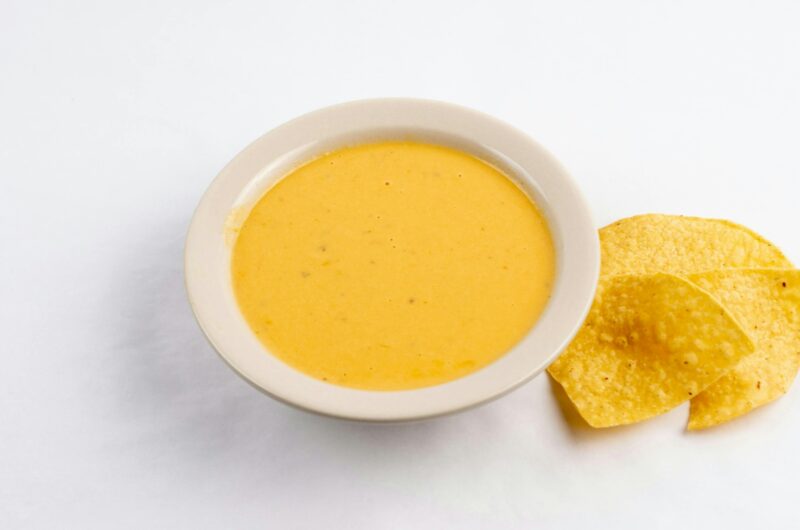
How to Make Vegan Cheese Sauce (Easy, Creamy, Dairy-Free)
Course: Vegan Cooking BasicsDifficulty: Easy4
servings10
minutes5
minutes15
minutesA smooth, creamy vegan cheese sauce made with cashews and simple pantry ingredients. Perfect for drizzling over nachos, stirring into pasta, or adding to vegetables and casseroles.
Ingredients
1 cup raw cashews (soaked 10–15 minutes in hot water)
¾–1 cup unsweetened plant-based milk
3 tablespoons nutritional yeast
1 tablespoon lemon juice or apple cider vinegar
½ teaspoon garlic powder
½ teaspoon onion powder
¾ teaspoon salt
¼ teaspoon turmeric or ½ teaspoon paprika (optional, for color)
Directions
- Soak the cashews in hot water for 10–15 minutes to soften them. Drain and rinse.
- Add the cashews, plant milk, nutritional yeast, lemon juice, garlic powder, onion powder, salt, and optional spices to a blender.
- Blend on high until completely smooth and creamy.
- Pour the sauce into a small saucepan and warm over medium heat for 3–5 minutes, stirring frequently, until slightly thickened.
- Taste and adjust the seasoning or add more plant milk if a thinner consistency is desired. Serve warm.
Notes
- For a thinner sauce, add a splash of plant milk while blending or reheating.
- Store leftovers in an airtight container in the refrigerator for up to 4–5 days.
- Reheat gently on the stove and stir in a little plant milk to restore a smooth texture.

Hi, I’m Daisy Roots, the home cook and recipe developer behind this kitchen. I create simple, tested vegan recipes using everyday ingredients. Every dish is developed and cooked in my own kitchen, with clear steps to help you get reliable results every time. Thanks for stopping by — let’s cook something great!