Choosing the right cooking oil can make a bigger difference than you might think.
It affects how food tastes, how well it cooks, and even how it looks when it comes out of the pan.
A simple swap can help vegetables roast better, baked goods turn out softer, or stir-fries develop the perfect finish.
One thing to keep in mind is that no single oil works best for every recipe.
Some oils handle high heat well, while others shine in dressings, baking, or as a flavorful finishing touch.
A term you’ll often see is smoke point, which simply means the temperature at which an oil starts to smoke.
In this guide, you’ll learn about the most popular plant-based cooking oils, what each one is best for, and how to choose the right oil for frying, roasting, baking, sautéing, and more.
By the end, you’ll feel confident reaching for the best bottle every time you cook.
Quick Oil Selection Cheat Sheet
Need a quick recommendation?
Use this simple guide to match the right plant-based oil to the way you’re cooking.
| If You’re… | Best Oil |
|---|---|
| Frying | Avocado Oil, Canola Oil |
| Deep frying | Peanut Oil, Sunflower Oil |
| Roasting vegetables | Olive Oil, Avocado Oil |
| Baking cakes | Canola Oil |
| Making salad dressings | Extra Virgin Olive Oil |
| Making Asian-inspired dishes | Sesame Oil (toasted for finishing, regular for cooking) |
| Grilling | Avocado Oil |
Use this table as a starting point, then adjust your choice based on the flavor you want and the ingredients you’re cooking.
What Are Plant-Based Cooking Oils?
| Oil | Flavor | Heat | Best For | Refined Available? |
|---|---|---|---|---|
| Olive | Fruity | Medium | Sautéing, dressings | Yes |
| Avocado | Mild | High | Roasting, grilling | Yes |
| Canola | Neutral | High | Frying, baking | Yes |
| Sesame | Nutty | Medium | Finishing | Yes |
| Coconut | Sweet | Medium | Baking | Yes |
| Walnut | Rich | Low | Dressings | No (commonly sold unrefined) |
| Grapeseed | Neutral | Medium-High | Stir fry | Yes |
Definition of Plant-Based Oils
Plant-based oils come from different parts of plants, depending on the variety.
Some are pressed from seeds, such as sunflower, canola, and sesame.
Others come from nuts, including walnut and peanut.
A few are made from fruits, with olives and avocados being two of the most common examples.
There are also oils made from grains, although these are less common in home kitchens.
No matter where they come from, each oil brings something different to the table.
Some have a light, neutral flavor that lets your ingredients shine.
Others have bold, rich flavors that can completely change the character of a dish with just a small drizzle.
Most cooking oils are made using one of two production methods.
The first is mechanical pressing, where the oil is squeezed from the plant using pressure.
This method is often used for oils that are valued for their natural flavor and aroma.
The second method uses additional processing to extract more oil from the raw ingredient before it is filtered and cleaned.
Both methods produce cooking oils that work well in the kitchen, but the finished oil may taste and behave differently depending on how it was made.
Refined vs. Unrefined Oils
One of the biggest differences you’ll notice when shopping for cooking oil is whether it’s refined or unrefined.
The choice isn’t about one being better than the other.
Instead, it’s about choosing the right oil for the way you plan to cook.
Refined oils go through extra processing to remove small particles, natural colors, and stronger flavors.
The result is a cleaner, lighter-tasting oil that usually handles higher cooking temperatures well.
That makes refined oils a great choice for frying, roasting, grilling, and other high-heat cooking methods where you want the flavor of the food to stand out.
Unrefined oils go through less processing, so they keep more of their natural aroma, color, and flavor.
These oils often add character to recipes and are popular for salad dressings, dips, marinades, and finishing dishes just before serving.
Some unrefined oils can also be used for gentle cooking over low to medium heat, depending on the variety.
Flavor is another important difference.
Refined oils are usually mild and neutral, making them easy to use in almost any recipe without changing the overall taste.
Unrefined oils tend to have more personality.
For example, toasted sesame oil adds a rich, nutty finish to stir-fries, while extra virgin olive oil brings a fresh, fruity flavor to salads and pasta dishes.
Shelf life can also vary.
Because refined oils have fewer natural compounds remaining, they often stay fresh longer when stored properly.
Unrefined oils are generally more delicate and can lose their fresh flavor sooner.
To help any cooking oil last longer, store it in a tightly sealed container in a cool, dark cupboard away from direct sunlight and heat.
If an oil develops a sharp, stale, or crayon-like smell, it’s a good sign that it’s time to replace it.
Understanding Smoke Point
What Is Smoke Point?
Smoke point is the temperature at which an oil begins to smoke instead of cook your food.
When an oil reaches this point, you’ll notice wisps of smoke rising from the pan.
As the oil continues to heat, its flavor can become less pleasant, and it may leave food with a slightly burnt taste.
Using an oil with a suitable smoke point helps food cook more evenly and makes the cooking process easier to manage.
For example, if you’re searing vegetables or frying potatoes over high heat, an oil with a higher smoke point is usually a better choice.
If you’re making a salad dressing or gently sautéing onions, a medium smoke point is often perfectly suitable.
Does Smoke Point Always Determine the Best Oil?
Smoke point is helpful, but it isn’t the only thing to consider.
The flavor of the oil can make a big difference in the finished dish.
A mild oil, such as canola or grapeseed, lets the ingredients take center stage.
A more flavorful oil, like extra virgin olive oil or toasted sesame oil, adds its own character and is often used when you want that flavor to stand out.
Cost is another practical factor.
If you’re filling a deep fryer or cooking for a crowd, using an affordable neutral oil often makes more sense than using a premium finishing oil.
Think about what you’re cooking, too.
A rich olive oil can bring fresh flavor to pasta or roasted vegetables, while avocado oil is a reliable choice for high-heat roasting because it handles heat well without overpowering the food.
Personal preference also matters.
Some home cooks enjoy the buttery taste of avocado oil, while others prefer the light flavor of sunflower oil or the distinctive nuttiness of sesame oil.
The best cooking oil is the one that fits your recipe, your budget, and the flavors you enjoy most.
Approximate Smoke Points of Popular Oils
The table below provides a quick reference for common plant-based cooking oils and the cooking methods they’re best suited for.
| Oil | Approx. Smoke Point | Best Uses |
|---|---|---|
| Avocado Oil | High | Searing, roasting |
| Canola Oil | High | Frying |
| Sunflower Oil | High | General cooking |
| Grapeseed Oil | Medium-High | Stir-frying |
| Peanut Oil | High | Deep frying |
| Olive Oil | Medium | Sautéing |
| Sesame Oil | Medium | Finishing dishes |
| Coconut Oil | Medium | Baking |
Keep in mind that smoke points are approximate and can vary slightly between brands and whether an oil is refined or unrefined.
When in doubt, match your oil to both the cooking temperature and the flavor you want in the finished dish for the best results.
Tip: Smoke point is just one factor to consider. Flavor, cooking method, and whether the oil is refined or unrefined are equally important when choosing the best oil for a recipe.
Types of Plant-Based Cooking Oils
Olive Oil
Olive oil is one of the most popular cooking oils because it is versatile and full of flavor.
Its taste ranges from light and buttery to bold and peppery, depending on the variety.
It works well for sautéing, roasting, drizzling over finished dishes, and making homemade salad dressings.
You’ll also find it in recipes for pasta, roasted vegetables, soups, grain bowls, and fresh dips.
Extra Virgin Olive Oil
Extra virgin olive oil is the least processed type of olive oil.
It keeps much of the olive’s natural flavor, giving it a fresh, fruity taste that can add depth to simple recipes.
It shines in salad dressings, marinades, pasta dishes, and as a finishing drizzle over cooked vegetables, bread, or soups.
It can also be used for gentle sautéing over low to medium heat.
Light Olive Oil
Light olive oil has a milder flavor than extra virgin olive oil.
The word “light” refers to its lighter taste and color rather than fewer calories.
Because its flavor is more subtle, it’s a good choice when you don’t want the oil to stand out.
It works well for sautéing, roasting, baking, and everyday cooking.
Avocado Oil
Avocado oil has a smooth, mild flavor that blends easily into many recipes.
It has a high smoke point, making it an excellent choice for cooking at higher temperatures.
You can use it for searing vegetables, roasting, grilling, pan-frying, and stir-frying.
Its neutral taste also makes it suitable for homemade dressings and marinades when you want the other ingredients to take center stage.
Canola Oil
Canola oil has a light, mild flavor that works with almost any meal.
Because it doesn’t overpower other ingredients, it’s often used as an everyday cooking oil.
It’s a reliable option for frying, sautéing, roasting, and cooking vegetables.
Canola oil is also popular for baking because it helps create soft cakes, muffins, quick breads, and cookies without adding a noticeable flavor.
Sunflower Oil
Sunflower oil has a clean, neutral taste that makes it easy to use in a wide variety of recipes.
It performs well at higher cooking temperatures, making it a practical choice for frying and roasting.
Its mild flavor lets herbs, spices, and fresh ingredients remain the focus of the dish.
Many home cooks also use sunflower oil for sautéing and everyday meal preparation.
Grapeseed Oil
Grapeseed oil is light in both flavor and texture.
Its clean taste works especially well in recipes where you don’t want the oil to compete with the other ingredients.
It’s a great choice for stir-fries because it handles medium-high heat while allowing vegetables and sauces to shine.
It also makes smooth homemade vinaigrettes, marinades, and herb-infused dressings.
Peanut Oil
Peanut oil is well known for producing crispy, golden results when frying.
Its high smoke point makes it a favorite for deep frying and pan-frying.
It is commonly used in Asian-inspired recipes, including stir-fries, fried rice, and noodle dishes.
Its mild nutty flavor pairs well with bold seasonings without overpowering them.
Sesame Oil
Sesame oil comes in two common varieties, and each has its own purpose.
Regular sesame oil has a light flavor and can be used for cooking over moderate heat.
Toasted sesame oil has a deep, rich, nutty taste and is usually added near the end of cooking rather than heated for long periods.
Just a small drizzle of toasted sesame oil can add wonderful flavor to stir-fries, noodle dishes, rice bowls, and dipping sauces.
It also works beautifully in marinades and homemade dressings.
Coconut Oil
Coconut oil is available in refined and virgin varieties.
Virgin coconut oil has a noticeable coconut flavor and aroma that works well in recipes where you want a tropical touch.
Refined coconut oil has a milder taste, making it more versatile for everyday cooking.
Both types are popular for baking cookies, cakes, muffins, and quick breads.
Coconut oil also pairs nicely with recipes featuring pineapple, mango, banana, chocolate, or warm spices.
Walnut Oil
Walnut oil has a rich, nutty flavor that adds depth without much effort.
Because its flavor is the highlight, it’s usually used without heavy cooking.
It makes delicious salad dressings and vinaigrettes.
A small drizzle over roasted vegetables, grain bowls, or creamy soups adds a gourmet finish with very little work.
Flaxseed Oil
Flaxseed oil is best used without heating.
Its delicate flavor is ideal for recipes served cold.
Try stirring it into smoothies, whisking it into salad dressings, or mixing it into cold sauces.
To keep its fresh taste, store flaxseed oil in the refrigerator after opening and use it within the time recommended on the bottle.
Pumpkin Seed Oil
Pumpkin seed oil is easy to recognize by its deep green color and rich, earthy flavor.
It is considered a finishing oil rather than a cooking oil.
A light drizzle can add a beautiful finishing touch to creamy soups, roasted squash, mashed potatoes, grain bowls, and fresh salads.
Because its flavor is bold, a little goes a long way, making even simple dishes feel extra special.
Best Oils for Different Cooking Methods
Best Oils for Frying
Frying works best with oils that can handle medium to high heat without adding a strong flavor.
Canola oil is a dependable choice because it has a mild taste and cooks food evenly.
Sunflower oil is another excellent option, especially for crispy vegetables, tofu, and homemade fritters.
Avocado oil also performs well if you’re cooking over higher heat and want a neutral flavor.
No matter which oil you choose, avoid overcrowding the pan.
Giving food enough space helps it brown instead of steam.
Best Oils for Deep Frying
Deep frying requires an oil with a high smoke point and a clean flavor.
Canola, peanut, sunflower, and avocado oils are all popular choices for deep frying.
These oils allow foods like fries, vegetable tempura, and breaded mushrooms to cook until golden and crisp.
Always heat the oil gradually instead of turning the burner to the highest setting right away.
When you’re finished frying, let the oil cool completely before straining and storing it if it’s still clean enough to reuse.
Best Oils for Roasting Vegetables
Roasting brings out the natural sweetness and rich flavor of vegetables.
Avocado oil is a great choice because it handles high oven temperatures well.
Olive oil is another favorite for roasting at moderate temperatures and adds a delicious savory flavor.
Canola and sunflower oils also work well when you want a lighter, more neutral taste.
For the best results, toss the vegetables until they’re evenly coated with oil before spreading them into a single layer on the baking tray.
Best Oils for Baking
The right oil can help baked goods stay soft and moist.
Canola oil is a popular option because its mild flavor blends easily into cakes, muffins, brownies, and quick breads.
Light olive oil also works well in many baked recipes where you want a subtle richness without a strong olive flavor.
Refined coconut oil is another good choice for cookies and bars, while virgin coconut oil adds a gentle coconut flavor to tropical-inspired desserts.
When substituting one oil for another, use the amount called for in the recipe unless it specifically says otherwise.
Best Oils for Salad Dressings
Salad dressings are a great place to enjoy oils with plenty of flavor.
Extra virgin olive oil is one of the most popular choices because it pairs beautifully with vinegar, lemon juice, herbs, and garlic.
Walnut oil adds a rich, nutty taste that complements leafy greens, roasted vegetables, apples, and pears.
Pumpkin seed oil brings a deep, earthy flavor that works especially well with fall-inspired salads.
For a balanced dressing, whisk the oil thoroughly with the other ingredients until smooth just before serving.
Best Oils for Marinades
A good marinade combines oil with ingredients like herbs, spices, citrus juice, or vinegar to coat food evenly and carry flavor.
Olive oil is a classic choice because it blends well with a wide range of seasonings.
Avocado oil is another excellent option when the marinated food will later be cooked over higher heat.
Sesame oil is perfect for Asian-inspired marinades, but its bold flavor means a little goes a long way.
Mix the marinade well before adding your ingredients so the flavors are evenly distributed.
Best Oils for Grilling
Grilling often involves high temperatures, so oils that handle heat well are usually the best fit.
Avocado oil is one of the top choices for brushing onto vegetables before they go on the grill.
Canola and sunflower oils also work well when you want a neutral flavor that lets smoky grilled notes stand out.
If you’d like to add extra flavor with olive oil or toasted sesame oil, drizzle them over the finished food after grilling rather than exposing them to direct high heat for an extended time.
This simple finishing touch adds fresh flavor while helping the natural taste of the grilled ingredients shine.
Kitchen Example
Imagine you’re making crispy roasted potatoes for dinner. Before roasting, toss the potatoes with avocado oil, salt, pepper, and your favorite herbs.
Avocado oil stands up well to the high oven temperature, helping the potatoes brown evenly.
Once they’re out of the oven, finish them with a light drizzle of extra virgin olive oil and a sprinkle of fresh parsley or rosemary.
This simple two-oil approach gives you the best of both worlds: excellent cooking performance during roasting and fresh, vibrant flavor just before serving.
How Much Oil Should You Use?
Using the right amount of oil can improve flavor and texture while helping food cook more evenly.
These guidelines work well for most everyday recipes, though you should always follow recipe-specific measurements when baking or preparing sauces.
| Cooking Method | Typical Amount |
|---|---|
| Sautéing | 1–2 tablespoons |
| Stir-frying | 1 tablespoon |
| Roasting vegetables | 1–2 tablespoons per baking tray |
| Grilling | Lightly coat the food or brush the grill with 1–2 teaspoons of oil |
| Salad dressings | 3 parts oil to 1 part acid (such as vinegar or lemon juice) |
| Baking | Follow the recipe measurements for the best results |
Start with the lower amount whenever possible because you can always add a little more oil if needed, but it’s difficult to remove excess once it’s in the pan or mixed into a recipe.
Flavor Profiles of Popular Cooking Oils
The flavor of an oil is just as important as the way it cooks.
Some oils blend quietly into the background, while others add a noticeable layer of flavor to the finished dish.
Choosing an oil that complements your ingredients can make even simple recipes taste more balanced and delicious.
If you’re unsure which oil to use, start with a mild or neutral option.
Once you’re comfortable, experiment with more flavorful oils to discover combinations you enjoy.
The table below offers a quick guide to the flavor of some of the most popular plant-based cooking oils.
| Oil | Flavor Profile |
|---|---|
| Olive Oil | Fruity |
| Avocado Oil | Mild |
| Sesame Oil | Nutty |
| Coconut Oil | Sweet |
| Walnut Oil | Rich and nutty |
| Grapeseed Oil | Neutral |
| Canola Oil | Mild |
| Sunflower Oil | Neutral |
A fruity oil, like olive oil, pairs beautifully with pasta, roasted vegetables, homemade bread, and fresh salads.
Mild oils, such as avocado and canola, are excellent everyday choices because they let herbs, spices, and other ingredients take the spotlight.
Neutral oils, including grapeseed and sunflower, are ideal when you don’t want the oil to change the flavor of your meal.
Nutty oils, like sesame and walnut, add depth with just a small amount and are best used when you want their distinctive taste to stand out.
Sweet coconut oil works especially well in baked treats, tropical recipes, and desserts where its subtle coconut flavor complements the other ingredients.
As you cook more often, you’ll naturally discover your favorite pairings.
Favorite Flavor Pairings
One of the easiest ways to get more flavor from your cooking is to pair an oil with ingredients that naturally complement its taste.
Use these ideas as inspiration the next time you’re planning a meal.
| Oil | Pairs Well With |
|---|---|
| Extra Virgin Olive Oil | Tomatoes, basil, garlic, lemon, mozzarella |
| Avocado Oil | Potatoes, broccoli, asparagus, mushrooms, grilled chicken alternatives |
| Canola Oil | Pancakes, muffins, cakes, roasted vegetables, stir-fries |
| Sunflower Oil | Corn, zucchini, peppers, green beans, roasted potatoes |
| Grapeseed Oil | Seafood alternatives, leafy greens, citrus, herbs, vinaigrettes |
| Peanut Oil | Soy sauce, ginger, garlic, bok choy, noodles |
| Toasted Sesame Oil | Scallions, sesame seeds, rice, tofu, mushrooms |
| Refined Coconut Oil | Banana, pineapple, chocolate, oats, tropical baked goods |
| Walnut Oil | Apples, pears, spinach, blue cheese, roasted squash |
| Pumpkin Seed Oil | Beetroot, goat cheese, arugula, roasted pumpkin, lentil salads |
These pairings aren’t strict rules, but they can help you build balanced flavors and make it easier to choose the right oil for both everyday meals and special recipes.
How to Choose the Right Oil for Your Recipe
With so many oils available, it’s easy to wonder which one belongs in your pan.
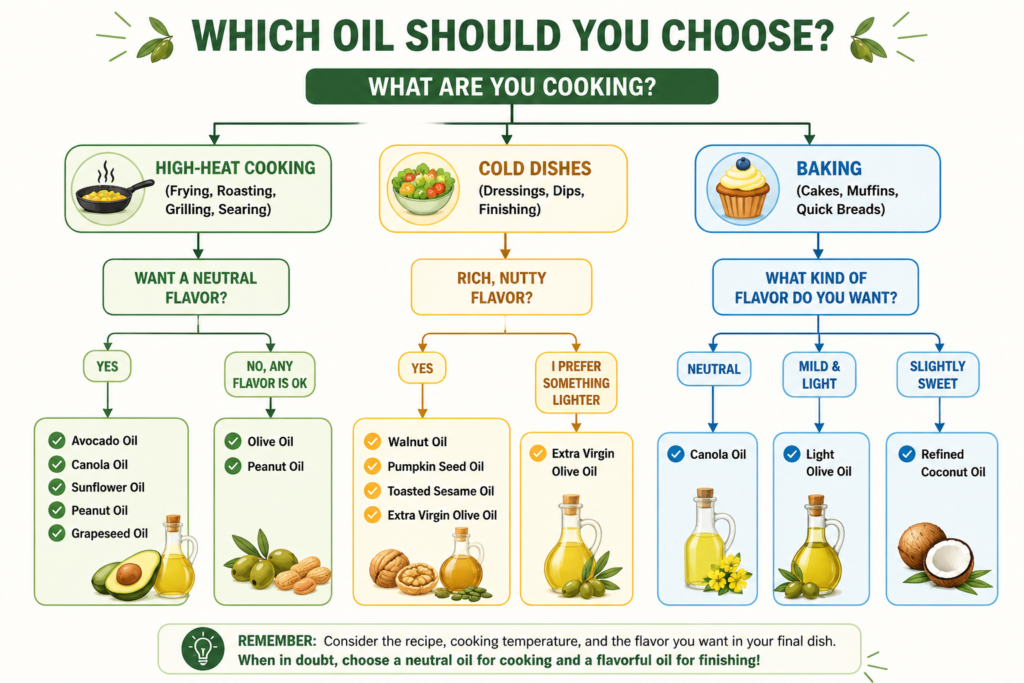
Match the Cooking Temperature
Start by considering how much heat your recipe requires.
For high-heat methods like frying, searing, or grilling, choose oils with a higher smoke point, such as avocado, canola, sunflower, or peanut oil.
These oils stay stable at higher temperatures and let your food develop a crisp, golden finish.
For medium-heat cooking, like sautéing vegetables or cooking grains, olive oil is a dependable choice that adds plenty of flavor.
If you’re making a cold dish, such as a salad dressing or dipping sauce, there’s no need to worry about smoke point.
Instead, choose an oil that tastes great on its own, like extra virgin olive oil, walnut oil, or pumpkin seed oil.
Consider the Flavor
Every oil has its own personality, and the flavor you choose can change the finished dish.
Neutral oils, such as canola, sunflower, and grapeseed, blend into the background and allow your herbs, spices, and main ingredients to shine.
These are excellent choices when you want the natural flavor of the food to be the focus.
More flavorful oils become part of the recipe itself.
Extra virgin olive oil adds a fresh, fruity note that pairs beautifully with vegetables, pasta, and salads.
Toasted sesame oil brings a rich, nutty flavor that complements stir-fries, noodles, and rice dishes.
Virgin coconut oil adds a gentle coconut taste that works especially well in tropical desserts and baked treats.
If you’re trying a new oil for the first time, use a small amount and taste as you go.
You’ll soon discover which flavors you enjoy most.
Think About Texture
Oil does more than add flavor.
It also affects the texture of your finished dish.
Light oils, such as grapeseed and canola, coat ingredients evenly without feeling heavy.
They’re great for baking, sautéing, and homemade vinaigrettes.
Olive oil has a slightly richer texture that helps vegetables caramelize beautifully and gives dressings a smooth, satisfying finish.
Coconut oil becomes solid in cooler temperatures, making it useful for recipes where you want a firmer texture, such as certain cookies, bars, or pie crusts.
Choosing an oil with the right texture helps create the result you’re aiming for without much extra effort.
Choose Based on Cuisine
Many traditional dishes use oils that naturally complement the ingredients and flavors of that cuisine.
You don’t have to follow these pairings every time, but they can be a helpful place to start.
- Mediterranean cuisine: Extra virgin olive oil is the classic choice for salads, roasted vegetables, pasta, beans, and fresh bread.
- Asian cuisine: Peanut oil works well for frying and stir-frying, while toasted sesame oil adds bold flavor as a finishing drizzle or marinade ingredient.
- Mexican cuisine: Avocado oil is excellent for roasting peppers, grilling vegetables, and sautéing fillings thanks to its mild taste and high heat tolerance.
- American cuisine: Canola and sunflower oils are versatile options for everyday cooking, baking, roasting, and pan-frying.
- Baking: Canola oil is a reliable all-purpose option, while light olive oil works well in many cakes and quick breads. Coconut oil is a great choice when you want a subtle tropical flavor or a slightly richer texture.
As you cook more often, you’ll naturally develop your own favorite combinations.
Don’t be afraid to experiment.
Sometimes trying a different oil with a familiar recipe is all it takes to discover a new favorite flavor.
How to Store Plant-Based Oils Properly
Storing your cooking oils the right way helps them keep their fresh flavor for longer.
Keep Away from Heat
Heat is one of the biggest enemies of cooking oil.
Keeping bottles next to the stove or oven may be convenient, but the constant warmth can cause the oil to lose its fresh flavor more quickly.
Instead, store your oils in a cool cupboard or pantry that stays at a steady temperature.
If you cook often, it can be tempting to leave your favorite oil on the counter.
That’s perfectly fine for short periods, but returning it to a cool storage spot after cooking is a good habit to develop.
Protect From Light
Sunlight and bright indoor light can gradually affect the quality of cooking oils.
For the best results, keep bottles in a dark cabinet or pantry whenever possible.
Many high-quality oils are sold in dark glass bottles because they help block light and protect the oil inside.
If your oil comes in a clear bottle, storing it away from windows will help preserve its flavor.
Seal Containers Tightly
Always close the lid tightly after each use.
An open bottle allows air to reach the oil, which can cause it to lose freshness over time.
Wipe away any oil around the rim before replacing the cap.
This simple step helps create a better seal and keeps the bottle cleaner.
If you buy oil in a large container, consider pouring a smaller amount into a separate bottle for everyday use.
Opening a smaller bottle more often helps protect the rest of the oil from unnecessary exposure to air.
Know When an Oil Has Gone Rancid
Cooking oil doesn’t stay fresh forever, even when it’s stored properly.
Before using a bottle that’s been sitting in the pantry for a while, take a quick look and smell.
Fresh oil should have a pleasant aroma that matches its natural flavor.
If it smells sharp, stale, musty, or reminds you of old crayons or paint, it’s likely past its best.
The flavor may also taste bitter or unpleasant.
When that happens, it’s best to replace the oil rather than use it in your cooking.
A Simple Oil Collection for Beginners
If you’re stocking your kitchen for the first time, there’s no need to buy every cooking oil on the shelf.
A small, versatile selection can handle almost every everyday recipe.
Start with these four essentials:
- Avocado oil: Ideal for high-heat cooking, including frying, roasting, grilling, and searing.
- Extra virgin olive oil: Perfect for salad dressings, dipping bread, drizzling over finished dishes, and light sautéing.
- Canola oil: A reliable neutral oil for baking, stir-fries, and everyday cooking when you don’t want the oil’s flavor to stand out.
- Toasted sesame oil: Best used in small amounts to add a rich, nutty finish to Asian-inspired dishes, noodles, marinades, and sauces.
Common Mistakes When Cooking with Oils
Using a Delicate Oil Over High Heat
Not every oil is made for high-temperature cooking.
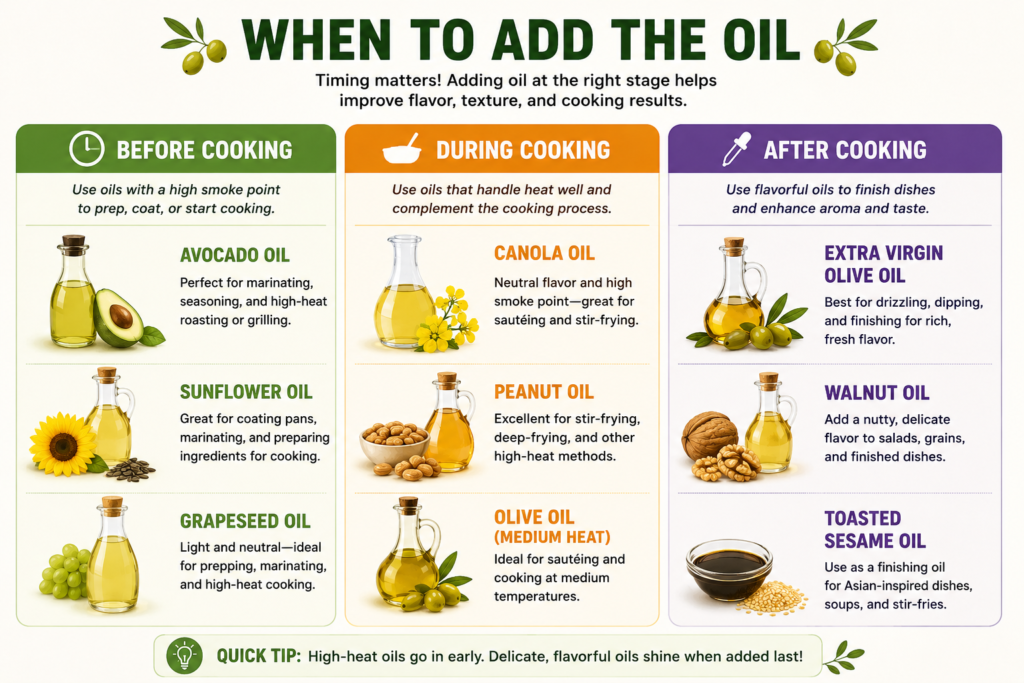
Delicate oils, such as walnut, flaxseed, and toasted sesame oil, are best used in cold dishes or added just before serving.
Heating these oils too much can dull their flavor and prevent them from showing their best qualities.
When cooking over high heat, choose oils like avocado, canola, sunflower, or peanut oil instead.
Save the more flavorful oils for finishing dishes, dressings, or marinades where their taste can really stand out.
Using Too Much Oil
A little oil often goes further than you might expect.
Using too much can leave vegetables greasy, make baked goods heavier, or prevent foods from browning properly.
Start with a small amount and add more only if the recipe needs it.
When roasting vegetables, toss them until they’re lightly coated rather than dripping with oil.
This helps them caramelize nicely while keeping their natural flavor front and center.
Ignoring Flavor Pairings
The flavor of your cooking oil becomes part of the finished dish.
A bold oil can either enhance a recipe or compete with the other ingredients.
For example, toasted sesame oil is wonderful in stir-fries and noodle dishes, but its rich flavor may not suit every baked recipe.
Likewise, extra virgin olive oil shines in Mediterranean-inspired meals, while neutral oils are often a better fit when you want herbs, spices, or fresh produce to be the main attraction.
Thinking about flavor before you start cooking is a simple way to create more balanced meals.
Storing Oils Near the Stove
Keeping cooking oil beside the stove is convenient, but it’s not the best place for long-term storage.
The heat from burners and ovens can gradually reduce the oil’s freshness.
A cool, dark cupboard is a much better home for most cooking oils.
If you use the same bottle every day, simply return it to the cupboard after you’re finished cooking.
This small habit can help preserve its flavor for longer.
Buying More Than You’ll Use
Large bottles often seem like a better value, but they aren’t always the best choice.
If an oil sits in your pantry for too long, it may lose its fresh flavor before you finish the bottle.
This is especially true for specialty oils that you only use occasionally.
Buy a size that matches how often you cook with that particular oil.
For oils you use every day, a larger bottle makes sense.
For finishing oils like walnut or pumpkin seed oil, a smaller bottle is usually the smarter option because you’ll enjoy it while it’s at its freshest.
Common Myths About Cooking Oils
It’s easy to pick up cooking advice that sounds convincing but doesn’t always hold up in the kitchen.
Here are a few common myths that can make choosing and using cooking oils more confusing than it needs to be.
Myth: More oil makes food crispier.
Reality: Using too much oil can leave food greasy instead of crisp. A light, even coating is usually all that’s needed for roasting, sautéing, or air frying.
Myth: Olive oil is the best choice for every recipe.
Reality: Olive oil is versatile, but it’s not the right fit for every dish. Neutral oils work better when you don’t want the oil’s flavor to stand out, while specialty oils like toasted sesame oil are best used to add a finishing touch.
Myth: One cooking oil can handle every cooking method.
Reality: Different oils perform better at different temperatures and bring unique flavors to a dish. Matching the oil to the cooking method usually produces better results.
Myth: Expensive oils should be used for everything.
Reality: Premium oils are often best appreciated where their flavor can shine, such as in salad dressings or drizzled over finished dishes. Everyday cooking is often better suited to more affordable, neutral oils.
Myth: Any oil can replace another in a recipe.
Reality: Many oils can be substituted in a pinch, but the final flavor, aroma, and cooking performance may change. Consider both the oil’s flavor and how it will be used before making a swap.
Simple Oil Substitution Guide
Running out of an ingredient doesn’t have to stop you from making a great meal.
Many cooking oils have similar qualities, so swapping one for another is often easier than you might think.
The best substitute depends on how the oil is being used.
For high-heat cooking, choose another oil with a similar smoke point.
For dressings, marinades, and finishing dishes, try to match the flavor as closely as possible.
Use the table below as a quick reference whenever you need an easy replacement.
| If You Don’t Have | Try Using |
|---|---|
| Avocado Oil | Canola Oil |
| Canola Oil | Sunflower Oil |
| Grapeseed Oil | Avocado Oil |
| Sesame Oil | Peanut Oil (for cooking) |
| Coconut Oil | Neutral vegetable oil (for many baked goods) |
| Walnut Oil | Olive Oil (for savory dressings) |
Keep in mind that a substitute may slightly change the flavor or texture of the finished dish.
Neutral oils are usually the easiest swaps because they blend into most recipes without changing the overall taste.
When replacing a bold oil, such as sesame or walnut oil, the dish may lose some of its distinctive flavor.
If that’s the case, consider adding fresh herbs, citrus juice, garlic, or your favorite spices to bring extra depth back into the recipe.
The more you cook, the easier substitutions become.
Don’t be afraid to experiment a little, because many of the best kitchen discoveries happen when you make the most of what you already have.
Expert Kitchen Tips
You don’t need a large collection of oils to cook delicious meals.
Keep one neutral, high-heat oil, such as avocado, canola, or sunflower oil, for everyday frying, roasting, and sautéing.
Pair it with one flavorful finishing oil, like extra virgin olive oil, toasted sesame oil, or walnut oil, to add a final burst of flavor to salads, pasta, soups, and dips.
Write the purchase or opening date on each bottle with a small label or piece of masking tape.
It’s a simple habit that helps you use your oils while they’re still tasting their best.
Store oils in dark glass bottles whenever possible, or keep them in a cool, dark cupboard away from sunlight and heat.
These small storage habits help preserve both flavor and freshness.
When making a homemade vinaigrette, whisk the oil with vinegar or citrus juice just before serving.
This creates a smooth, well-blended dressing with the freshest flavor and the best texture.
Finally, don’t be afraid to taste as you cook.
A small drizzle of the right oil added just before serving can brighten a dish and bring all the flavors together.
Final Thoughts
Choosing the right plant-based oil doesn’t have to be complicated.
By matching the oil to your cooking method, considering its flavor, and keeping smoke point in mind, you can get better results with every meal.
Don’t be afraid to try different oils in your favorite recipes.
A simple change can add new flavor, improve texture, or become your new go-to cooking trick.
Start with a small collection of versatile oils for everyday cooking, baking, and finishing dishes.
As you cook more often, you’ll discover the combinations you enjoy most and feel more confident reaching for the right bottle every time.
FAQs
Which plant-based oil has the highest smoke point?
Avocado oil is one of the highest smoke point plant-based oils, making it an excellent choice for searing, roasting, grilling, and other high-heat cooking methods.
Can I use olive oil for frying?
Yes. Olive oil works well for shallow frying and sautéing over medium heat.
For very high-heat frying, oils like avocado, canola, or peanut oil are often a better choice.
Which oils work best for baking?
Canola oil is one of the most versatile options for baking because of its mild flavor.
Light olive oil and refined coconut oil also work well in many cakes, muffins, cookies, and quick breads.
Which oils are best for salad dressings?
Extra virgin olive oil is a classic choice for salad dressings.
Walnut oil and pumpkin seed oil are also excellent options when you want to add a richer, more distinctive flavor.
How long do cooking oils usually last after opening?
It depends on the type of oil and how it’s stored.
Most cooking oils stay fresh for several months after opening when kept in a cool, dark place with the lid tightly sealed.
Can different oils be mixed in recipes?
Yes. Combining oils is perfectly fine and can help balance flavor and cooking performance.
For example, you can mix a neutral oil with a more flavorful oil in marinades or dressings.
What is the difference between refined and unrefined oils?
Refined oils are processed to create a milder flavor and typically handle higher cooking temperatures.
Unrefined oils keep more of their natural flavor and aroma, making them ideal for dressings, dips, and finishing dishes.

Hi, I’m Daisy Roots, the home cook and recipe developer behind this kitchen. I create simple, tested vegan recipes using everyday ingredients. Every dish is developed and cooked in my own kitchen, with clear steps to help you get reliable results every time. Thanks for stopping by — let’s cook something great!