Coconut milk is an easy way to add rich flavor and creamy texture to everyday meals.
It works well in curries, soups, smoothies, desserts, and rice dishes, making it one of the most versatile pantry ingredients to keep on hand.
If you’re new to cooking with coconut milk, it’s much simpler to use than it may seem.
Coconut milk is smooth and creamy, coconut cream is thicker and richer, and coconut water is the light liquid found inside young coconuts.
A few simple tips can help you get the best texture and flavor in your recipes.
This guide will show you how to choose the right coconut milk, use it properly in cooking, and avoid common beginner mistakes.
| If You Want To… | Use This Type | Best For |
|---|---|---|
| Make creamy curries | Full-fat canned coconut milk | Curries, soups, sauces |
| Make smoothies or coffee | Carton coconut milk | Drinks, cereal |
| Make desserts extra rich | Coconut cream | Puddings, whipped toppings |
| Reduce calories | Lite coconut milk | Lighter soups and smoothies |
| Replace dairy cream | Full-fat canned coconut milk | Pasta sauces, soups |
What Is Coconut Milk?
Coconut milk is a creamy liquid made from the flesh of mature coconuts.
It has a rich texture, a mild coconut flavor, and is widely used in both savory and sweet cooking.
Many home cooks love it because it can instantly make dishes feel more flavorful and comforting.
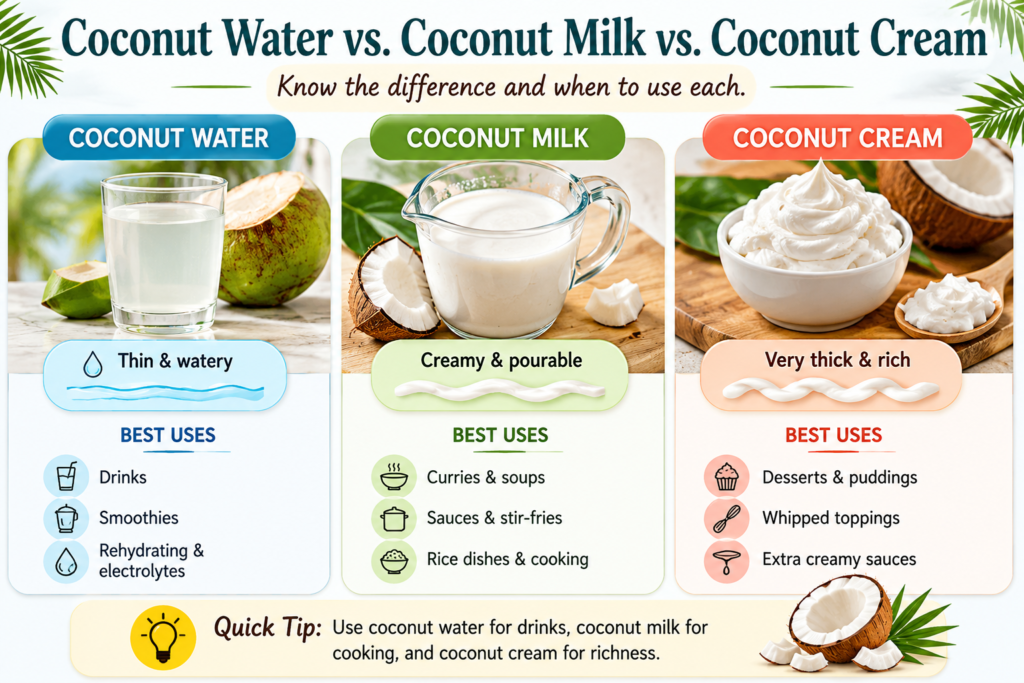
How Coconut Milk Is Made
Coconut milk is made by blending grated mature coconut flesh with water, then straining the mixture to create a smooth, creamy liquid.
There are usually two forms:
- Thick coconut milk — richer and creamier, often used in curries, sauces, and desserts
- Thin coconut milk — lighter in texture, commonly used in soups and simmered dishes
Types of Coconut Milk
Not all coconut milk is the same. Here are the most common types you’ll find in stores:
| Product Type | Thickness | Best Uses | Avoid Using In |
|---|---|---|---|
| Canned Coconut Milk | Thick and creamy | Curries, soups, sauces, desserts | Coffee or cereal |
| Carton Coconut Milk | Thin and light | Smoothies, coffee, cereal, drinks | Thick sauces or curries |
| Coconut Cream | Very thick and rich | Desserts, whipped toppings, creamy sauces | Light soups |
| Lite Coconut Milk | Medium-thin | Light soups, smoothies, lighter sauces | Rich curries or thick desserts |
Canned Coconut Milk
The most popular option for cooking. It’s thick, creamy, and perfect for curries, soups, sauces, and desserts.
Carton Coconut Milk
Usually found in the refrigerated or shelf-stable beverage section. It’s thinner and often used for coffee, cereal, smoothies, or drinking.
Lite Coconut Milk
A lighter version of canned coconut milk with added water and less fat. Good for lighter soups and sauces, though it won’t taste as rich.
Coconut Cream
Extra thick and rich with less water than coconut milk. Great for desserts, whipped toppings, and very creamy sauces.
Common Uses Around the World
Coconut milk is used in many cuisines because it adds richness without needing dairy.
Some popular examples include:
- Thai curries with bold spices and creamy sauces
- Indian dishes like coconut-based curries and stews
- Caribbean recipes such as rice dishes and slow-cooked meals
- Desserts and beverages including puddings, smoothies, and tropical drinks
Why Cook with Coconut Milk?
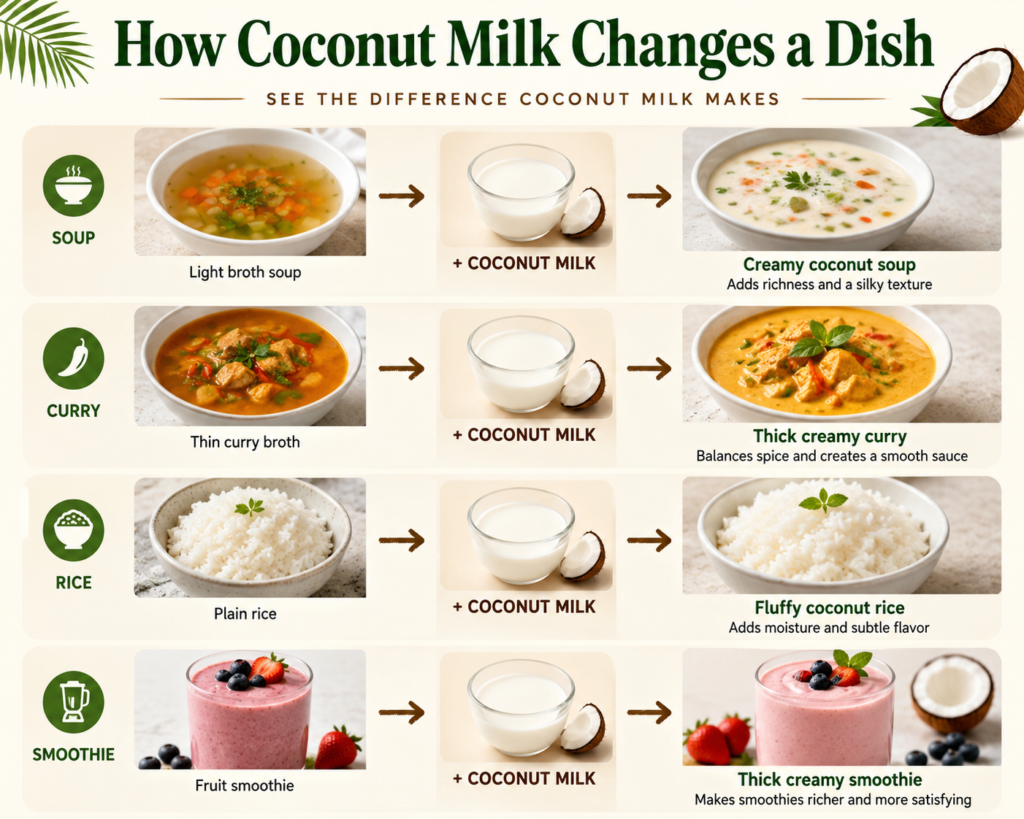
Coconut milk is one of those ingredients that can completely change the feel of a dish with very little effort.
A simple soup becomes richer, sauces turn silky, and even basic rice can taste more comforting and flavorful.
It’s easy to work with, beginner-friendly, and fits into so many different styles of cooking.
Once you learn how to use it, you’ll start finding excuses to add it to more meals.
Rich and Creamy Texture
One of the biggest reasons people love cooking with coconut milk is the texture.
It adds a smooth, creamy finish without needing heavy cream or lots of butter.
Even a small amount can make soups, curries, and sauces feel fuller and more satisfying.
Full-fat canned coconut milk is especially good for creating thick and velvety dishes.
If you want a sauce to feel rich without becoming too heavy, coconut milk does the job beautifully.
It also blends well with spices, garlic, ginger, onions, and herbs, helping flavors come together in a balanced way.
For beginners, this is one of the easiest ways to make homemade meals taste restaurant-quality.
Dairy-Free Alternative for Creamy Dishes
Coconut milk is a great replacement for dairy in many recipes.
You can use it instead of heavy cream, milk, or half-and-half in soups, sauces, and desserts.
It works especially well in creamy pasta sauces, mashed vegetables, curries, and baked treats.
The texture stays smooth and rich, which helps dishes still feel comforting and satisfying.
If you’re cooking for friends or family with dairy sensitivities, coconut milk is an easy ingredient to keep on hand.
It gives you that creamy texture without making recipes complicated.
Naturally Vegan and Lactose-Free
Another reason coconut milk is so popular is that it naturally fits into plant-based cooking.
It adds body and richness to meals without needing any animal products.
That’s why it’s often used in vegan soups, curries, sauces, and desserts.
Even people who are not vegan enjoy cooking with it because the flavor works so well in everyday recipes.
It’s also naturally lactose-free, which makes it a practical option for many households.
The best part is that you usually don’t need special cooking skills to use it successfully.
Open the can, stir it if needed, and add it straight into the dish.
Adds Flavor and Depth
Coconut milk does more than make food creamy.
It also adds a gentle sweetness and light tropical flavor that can make recipes taste more layered and balanced.
In spicy dishes, it helps soften heat and creates a smoother overall flavor.
In desserts, it pairs beautifully with ingredients like vanilla, chocolate, cinnamon, mango, and pineapple.
The coconut flavor is usually mild, especially when mixed with herbs, spices, or savory ingredients.
Full-fat coconut milk has a mild coconut flavor, but in many savory dishes the spices, garlic, ginger, and herbs become the dominant flavors.
In desserts and smoothies, the coconut flavor is usually more noticeable because it pairs naturally with sweet ingredients like vanilla, chocolate, mango, and pineapple.
That balance is what makes it so versatile in the kitchen.
A simple curry can taste deeper and more comforting after just a few spoonfuls of coconut milk.
Works in Both Sweet and Savory Recipes
One of the most useful things about coconut milk is how many different ways you can use it.
It works in savory meals like soups, curries, sauces, and rice dishes.
It also shines in sweet recipes like puddings, smoothies, cakes, ice cream, and baked goods.
You can stir it into oatmeal for a creamier breakfast or blend it into smoothies for extra richness.
It’s also excellent in marinades because it helps carry flavor into ingredients while keeping them tender.
For beginner cooks, this flexibility makes coconut milk feel less intimidating.
You can start with one can and use it in several completely different recipes throughout the week.
That’s part of what makes it such a smart pantry ingredient to keep around.
How to Choose the Best Coconut Milk
Choosing coconut milk can feel confusing the first time you stand in front of the grocery shelf.
Some cans are thick and creamy, while others are thin, sweetened, or made more for drinking than cooking.
The good news is that once you know a few simple things to look for, picking the right one becomes very easy.
For most cooking recipes, canned coconut milk is usually the best place to start.
It has a rich texture that works best in curries, soups, sauces, and desserts.
What to Look for on the Label
Reading the label makes a big difference when buying coconut milk.
A few small details can tell you whether the coconut milk will be rich and creamy or thin and watery.
You do not need to memorize complicated ingredient lists.
Just focus on a few basics.
High Coconut Content
A higher coconut content usually means a creamier and more flavorful product.
Many good-quality canned coconut milks contain mainly coconut and water.
If the can feels heavy and thick when shaken, that is often a good sign.
Some cheaper options contain more water than coconut, which can make sauces taste weaker and less creamy.
For beginner cooking, full-flavor coconut milk is usually easier and more forgiving to work with.
It gives better texture and richer results in most recipes.
Minimal Additives
Simple ingredient lists are usually best.
Many coconut milk brands add stabilizers or gums to keep the texture smooth, and small amounts are completely normal.
Still, products with fewer additives often taste fresher and more natural.
If you see a long list of ingredients you do not recognize, you may want to try another option.
A simple can with coconut, water, and maybe one stabilizer is usually a safe choice.
Additional Shopping Tips
- Avoid cans with dented bottoms, rust, or bulging lids, which can be signs that the product is damaged or expired.
- If buying coconut milk online, look for products with minimal ingredients and a higher coconut extract percentage for better flavor and texture.
- Some coconut milk brands separate more naturally because they contain fewer stabilizers, which is completely normal and often a sign of a less processed product.
Unsweetened vs. Sweetened
Unsweetened coconut milk is the best option for most cooking.
It gives you more control over the final flavor of the dish.
Sweetened coconut milk is mainly used for desserts, drinks, and certain baked goods.
Using sweetened coconut milk in savory recipes can make curries or soups taste strange and overly sugary.
If you are unsure which one to buy, choose unsweetened canned coconut milk first.
It is the most versatile option for beginners.
Best Coconut Milk Brands for Beginners
You do not need the most expensive brand to cook great food with coconut milk.
Many grocery stores carry reliable options that work very well for everyday recipes.
Popular beginner-friendly brands often include Thai Kitchen, Aroy-D, Native Forest, and Chaokoh.
These brands are widely used because they have a consistent texture and balanced flavor.
If you try one brand and it feels too watery or too thick for your taste, do not give up on coconut milk completely.
Different brands can vary a lot in richness and texture.
Over time, you will naturally find one that works best for the kinds of meals you enjoy cooking most.
Full-Fat vs. Lite Coconut Milk
One of the biggest choices you will notice is full-fat versus lite coconut milk.
Both can work in cooking, but they give different results.
Full-Fat Coconut Milk
Full-fat coconut milk is thicker, richer, and creamier.
It is the best choice for curries, creamy soups, sauces, desserts, and dishes where texture matters.
It also handles heat better and creates a smoother finish in recipes.
If you want restaurant-style curry at home, full-fat coconut milk is usually the way to go.
For beginners, it is often easier to cook with because the texture is more forgiving.
Lite Coconut Milk
Lite coconut milk contains more water and less fat.
It has a thinner consistency and a milder flavor.
It can work well in lighter soups, smoothies, or recipes where you do not want as much richness.
However, it may not create the same creamy texture in sauces and curries.
If a recipe feels too thin while using lite coconut milk, you can simmer it a little longer to help it thicken slightly.
For most first-time recipes, starting with full-fat coconut milk usually gives the best results and the most flavor.
Essential Tips for Cooking with Coconut Milk
Cooking with coconut milk is simple once you understand a few basic habits.
Small details can make the difference between a smooth, creamy dish and one that feels separated or flat in flavor.
The good news is that coconut milk is very forgiving, especially once you get comfortable using it.
These beginner-friendly tips will help your recipes turn out better from the start.
Shake the Can Before Opening
One of the most important things to do is shake the can well before opening it.
Coconut milk naturally separates inside the can over time.
The thick coconut cream usually rises to the top while the thinner liquid settles underneath.
That separation is completely normal and does not mean the product has gone bad.
Shaking the can helps bring everything back together before cooking.
If the can feels too solid to shake, open it and stir the contents with a spoon or whisk until smooth.
This simple step helps sauces and soups cook more evenly and keeps the texture creamy from the beginning.
Prevent Separation Issues
Even after shaking, coconut milk can sometimes look slightly separated while cooking.
This happens most often when the heat is too high or when the coconut milk is added too quickly to a very hot pan.
To avoid this, lower the heat before adding coconut milk to soups, curries, or sauces.
Stir gently as it warms through.
A slow simmer works much better than a hard boil.
If the coconut milk looks grainy or oily, do not panic.
In many cases, simply stirring the dish gently will help it come back together.
Don’t Boil Too Aggressively
Coconut milk does not like extremely high heat.
Boiling it too hard for long periods can cause the texture to split or become slightly curdled.
This is especially common in curries and creamy soups.
Once coconut milk is added to a recipe, it is best to keep the heat at a gentle simmer.
You should see small bubbles, not a rapid rolling boil.
This keeps the texture smooth and helps the flavor stay rich and balanced.
A calmer simmer also gives spices, garlic, onions, and herbs more time to blend into the sauce.
If you are cooking a curry, try adding the coconut milk toward the middle or end of cooking rather than at the very beginning.
That small change can make the final dish taste fresher and creamier.
Avoid Curdling or Splitting
Acidic ingredients can sometimes affect coconut milk if they are added too quickly.
Ingredients like lime juice, tomatoes, or vinegar are best added gradually.
Stir well and keep the heat moderate.
This helps the sauce stay smooth instead of separating.
Using fresh coconut milk straight from the refrigerator can also cool the pan too quickly and affect the texture slightly.
Letting it sit at room temperature for a few minutes before cooking can help everything blend more evenly.
These are small details, but they make cooking feel easier and more predictable over time.
Use Coconut Milk to Balance Spice
One of the best things about coconut milk is how well it balances spicy flavors.
It softens heat without completely covering the spices.
That is why coconut milk is so popular in curries, soups, and spicy sauces.
If a dish becomes too spicy, adding a little extra coconut milk can help mellow the heat while keeping the flavor rich.
It also pairs beautifully with bold ingredients like curry paste, chili, garlic, ginger, cumin, and turmeric.
The creamy texture gives spicy dishes a smoother and more comforting finish.
This balance is part of what makes coconut-based recipes feel so satisfying.
Expert Tip: For richer curry flavor, cook curry paste in a small spoonful of coconut cream before adding the remaining coconut milk. This helps release the oils and creates a deeper, more restaurant-style curry flavor.
Great for Spicy Curries and Soups
Coconut milk shines in warm, flavorful dishes that need both richness and balance.
Thai-style curries are one of the most common examples because the coconut milk helps carry the flavor of the spices throughout the sauce.
It also works wonderfully in pumpkin soup, tomato soup, lentil soup, and seafood stews.
Even a small splash can completely change the texture of a broth-based soup.
For beginners, soups and curries are some of the easiest recipes to practice with because coconut milk blends in naturally and quickly.
You do not need complicated techniques to make the dish taste comforting and flavorful.
Store Leftovers Properly
Leftover coconut milk stores surprisingly well when handled properly.
If you only use part of a can, transfer the remaining coconut milk into an airtight container before refrigerating it.
Avoid storing opened coconut milk in the original can because it can affect the flavor over time.
Most leftover coconut milk stays fresh in the refrigerator for about 3 to 4 days.
Storage Safety Tip: Discard coconut milk if it develops a sour smell, mold, or unusual pink discoloration.
Give it a quick stir before using it again because separation will happen naturally in the fridge.
Refrigeration and Freezing Tips
Coconut milk can also be frozen for later use.
Pour leftovers into small containers or even ice cube trays for easy portions.
Frozen coconut milk works especially well for soups, smoothies, sauces, and curries.
After thawing, the texture may look slightly separated at first.
A quick stir or blend usually brings it back together.
Keeping extra coconut milk on hand makes weeknight cooking much easier because you can quickly add creaminess and flavor to simple meals without much effort.
Pantry Staples That Work Well With Coconut Milk
Keeping a few simple pantry staples on hand makes it much easier to cook flavorful coconut milk recipes without much effort.
- Curry paste
- Garlic
- Ginger
- Rice
- Lime
- Soy sauce
- Chili paste
- Brown sugar
- Lentils
- Jasmine rice
Easy Beginner Recipes Using Coconut Milk
These simple recipes are a great way to start cooking with coconut milk at home.
They use easy-to-find ingredients, beginner-friendly steps, and comforting flavors that make coconut milk shine without feeling complicated.
1. Coconut Curry
This easy curry is rich, creamy, and full of flavor.
You can use vegetables, chicken, or a mix of both, depending on what you have at home.
Ingredients
- 1 tablespoon oil
- 1 small onion, diced
- 2 garlic cloves, minced
- 1 tablespoon grated ginger
- 2 tablespoons red curry paste
- 1 can (13.5 oz) full-fat coconut milk
- 1 cup chicken broth or vegetable broth
- 2 cups mixed vegetables (bell peppers, carrots, broccoli, or snap peas)
- 1 pound chicken breast, diced (optional)
- 1 tablespoon soy sauce
- 1 teaspoon brown sugar
- Juice of 1/2 lime
- Cooked rice for serving
Instructions
- Heat the oil in a large pan over medium heat.
- Add the onion and cook for 3 to 4 minutes until softened.
- Stir in the garlic and ginger and cook for 30 seconds.
- Add the curry paste and stir for 1 minute to release the flavor.
- Add the chicken if using and cook until lightly browned.
- Pour in the coconut milk and broth. Stir well.
- Add the vegetables and simmer gently for 10 to 15 minutes until tender.
- Stir in the soy sauce, brown sugar, and lime juice.
- Serve warm over rice.
2. Creamy Coconut Soup
This cozy soup is smooth, comforting, and easy to customize.
It works beautifully as a light dinner or simple lunch.
Ingredients
- 1 tablespoon olive oil
- 1 small onion, chopped
- 2 garlic cloves, minced
- 1 teaspoon grated ginger
- 1 can (14 oz) diced tomatoes
- 1 can (13.5 oz) coconut milk
- 2 cups vegetable broth
- 1 teaspoon curry powder
- Salt and pepper to taste
- Fresh cilantro or basil for garnish
Instructions
- Heat the oil in a soup pot over medium heat.
- Cook the onion for 4 to 5 minutes until soft.
- Add the garlic and ginger and cook for 30 seconds.
- Stir in the curry powder and tomatoes.
- Pour in the broth and coconut milk.
- Simmer gently for 15 minutes.
- Blend the soup until smooth using an immersion blender or regular blender.
- Season with salt and pepper.
- Garnish with fresh herbs before serving.
3. Coconut Rice
Coconut rice is one of the easiest ways to add extra flavor to a simple meal.
It pairs well with curries, grilled chicken, seafood, and roasted vegetables.
Ingredients
- 1 cup jasmine rice
- 1 cup coconut milk
- 1 cup water
- 1/2 teaspoon salt
- 1 teaspoon sugar (optional)
Instructions
- Rinse the rice under cold water until the water runs mostly clear.
- Add the rice, coconut milk, water, salt, and sugar to a saucepan.
- Bring to a gentle boil over medium heat.
- Reduce the heat to low and cover with a lid.
- Cook for 15 minutes or until the liquid is absorbed.
- Remove from heat and let sit covered for 5 minutes.
- Fluff with a fork before serving.
4. Smoothies and Breakfasts
Coconut milk adds creaminess and flavor to quick breakfasts without much effort.
It blends beautifully into smoothies, oatmeal, and chia pudding.
Easy Coconut Smoothie
Ingredients
- 1 cup coconut milk
- 1 banana
- 1/2 cup frozen mango or pineapple
- 1 tablespoon honey
- 1/2 cup ice
Instructions
- Add all ingredients to a blender.
- Blend until smooth and creamy.
- Serve immediately.
Coconut Chia Pudding
Ingredients
- 1 cup coconut milk
- 3 tablespoons chia seeds
- 1 tablespoon maple syrup or honey
- Fresh fruit for topping
Instructions
- Stir the coconut milk, chia seeds, and sweetener together in a bowl or jar.
- Refrigerate for at least 4 hours or overnight.
- Stir once before serving and top with fruit.
6. Coconut Milk Desserts
Coconut milk is excellent in desserts because it creates a rich texture with very little effort.
It works especially well in puddings, frozen desserts, and baked treats.
Simple Coconut Pudding
Ingredients
- 1 can (13.5 oz) coconut milk
- 1/4 cup sugar
- 3 tablespoons cornstarch
- 1 teaspoon vanilla extract
- Pinch of salt
Instructions
- Add the coconut milk, sugar, cornstarch, and salt to a saucepan.
- Whisk until smooth before turning on the heat.
- Cook over medium heat while stirring constantly.
- Continue cooking until thickened, about 5 to 7 minutes.
- Remove from the heat and stir in the vanilla.
- Pour into serving bowls and chill until set.
Easy Coconut Ice Cream
Ingredients
- 2 cans full-fat coconut milk
- 1/3 cup honey or maple syrup
- 1 teaspoon vanilla extract
Instructions
- Whisk all ingredients together until smooth.
- Pour into an ice cream maker and churn according to the machine instructions.
- Freeze until firm before serving.
Common Mistakes to Avoid
Cooking with coconut milk is very beginner-friendly, but a few common mistakes can affect the final texture and flavor of your dish.
The good news is that most of these issues are easy to fix once you know what to watch for.
Using the Wrong Type of Coconut Milk
One of the most common mistakes is using the wrong kind of coconut milk for cooking.
This usually happens because different coconut products can look very similar on store shelves.
For most savory recipes and creamy desserts, canned coconut milk is the best choice.
It has the rich texture needed for curries, soups, sauces, and puddings.
Carton-style coconut milk is much thinner because it is made more for drinking than cooking.
It works well in smoothies, cereal, coffee, and lighter recipes, but it usually does not create the same creamy texture in cooked dishes.
If you use beverage-style coconut milk in a curry, the sauce may turn out watery and less flavorful.
When following recipes, always check whether they mean canned coconut milk or refrigerated coconut milk from a carton.
That small detail makes a big difference.
Beverage-Style vs. Canned Coconut Milk
Understanding the difference between these two products helps avoid a lot of frustration in the kitchen.
Canned coconut milk is thick, rich, and higher in coconut content.
It is designed for cooking.
Carton coconut milk is lighter and often contains more water and added ingredients.
It is closer to almond milk or oat milk in consistency.
If a recipe needs creaminess, canned coconut milk is usually the better option.
If you accidentally use carton coconut milk, you can sometimes improve the texture by simmering the dish longer, but the result will still be lighter.
For beginners, keeping one or two cans of full-fat coconut milk in the pantry is the easiest and most reliable choice.
Skipping Stirring or Shaking
Many people open a can of coconut milk for the first time and think something went wrong because the contents look separated.
This is completely normal.
The thick cream naturally rises to the top while the thinner liquid settles underneath.
If you skip shaking or stirring, your recipe may cook unevenly.
Part of the dish could end up too oily, while another part feels watery.
Before opening the can, give it a good shake.
If it still looks separated after opening, stir it together with a spoon or whisk until smooth.
This only takes a few seconds, but it helps sauces, soups, and desserts turn out much creamier.
Separation Is Normal
Coconut milk separates because it contains natural fat from the coconut.
Unlike heavily processed creamers, it is not always completely blended inside the can.
This is actually a good sign and often means the product contains a higher amount of real coconut.
You may also notice separation after refrigerating leftover coconut milk.
Again, this is normal.
A quick stir usually brings everything back together.
Once you get used to this, it becomes just another simple step in the cooking process.
Overpowering a Dish
Coconut milk has a gentle sweetness and rich flavor, but using too much can sometimes overpower other ingredients.
A dish should still taste balanced.
The coconut flavor should support the spices and seasonings instead of covering them completely.
This is especially important in soups, sauces, and curries.
If the dish tastes too heavy or overly sweet, a small squeeze of lime juice or a splash of vinegar can help brighten the flavor.
Fresh herbs like cilantro or basil also help balance richness.
Salt plays an important role too.
Sometimes a tiny extra pinch of salt is enough to make the flavors feel more balanced and less overly coconut-forward.
Balancing Coconut Flavor with Spices and Acids
Coconut milk works best when paired with ingredients that add contrast and depth.
That is why it tastes so good with garlic, ginger, curry paste, chili, lime, and citrus.
Acidic ingredients help cut through the richness and keep dishes tasting fresh instead of heavy.
Spices add warmth and complexity that balance the mild sweetness of the coconut milk.
If a curry tastes flat, it often needs a little acid, salt, or spice rather than more coconut milk.
Learning this balance is one of the easiest ways to improve homemade meals.
Overcooking
Coconut milk should be cooked gently.
Boiling it too aggressively for too long can change both the texture and flavor.
The sauce may start looking oily, grainy, or slightly split.
This happens because the fat separates under very high heat.
A gentle simmer works much better.
Once coconut milk is added, lower the heat and let the dish cook slowly.
This keeps the texture smooth and allows the flavors to blend naturally.
Overcooking can also dull the fresh flavor of coconut milk.
Adding it later in the cooking process often helps keep the taste richer and creamier.
If your sauce accidentally separates, do not panic.
Lower the heat and stir gently.
In many cases, the texture will improve as the dish settles.
Quick Fixes for Common Coconut Milk Problems
| Problem | Quick Fix |
|---|---|
| Curry too thin | Simmer uncovered for 5–10 minutes to reduce and thicken the sauce |
| Sauce split or oily | Lower the heat and stir gently until smooth again |
| Too coconut-heavy | Add a squeeze of lime juice or a pinch of salt to balance the flavor |
| Dish too spicy | Stir in a little more coconut milk to mellow the heat |
| Soup too rich | Add extra broth or water to lighten the texture |
Best Ingredients That Pair with Coconut Milk
Coconut milk has a rich but gentle flavor, which makes it easy to pair with both bold savory ingredients and sweet dessert flavors.
The key is balance.
These ingredients help bring out the creamy texture and subtle sweetness of coconut milk without overpowering it.
Savory Pairings
- Curry paste — Adds deep spice and bold flavor that blends beautifully with creamy coconut milk.
- Garlic — Brings savory richness and helps balance the mild sweetness of coconut milk.
- Ginger — Adds warmth and freshness that keeps coconut-based dishes bright and flavorful.
- Lime — Cuts through richness with fresh acidity and helps curries and soups taste lighter.
- Chili — Adds heat that coconut milk naturally softens for a smooth, balanced flavor.
Sweet Pairings
- Mango — Its juicy sweetness pairs perfectly with the creamy tropical flavor of coconut milk.
- Pineapple — Adds bright, tangy freshness that works well in smoothies and desserts.
- Chocolate — Creates rich and creamy desserts with deep flavor and smooth texture.
- Vanilla — Enhances the natural sweetness of coconut milk without overpowering it.
- Cinnamon — Adds cozy warmth that works especially well in puddings, oatmeal, and baked treats.
How to Substitute Coconut Milk
Sometimes you may run out of coconut milk or need a different option for allergies or personal preference.
The good news is that several easy substitutes can still give your recipes a creamy texture and balanced flavor.
Some alternatives work better for savory dishes, while others are great for desserts and baking.
Dairy Alternatives
These substitutes work well if you are not avoiding dairy and simply need a replacement for coconut milk in cooking.
- Heavy cream — A rich and creamy substitute that works especially well in soups, sauces, curries, and desserts. Use it in a 1:1 ratio for a similar thick texture.
- Half-and-half — Lighter than heavy cream but still creamy enough for soups, sauces, and baked dishes. It creates a milder and less rich result.
- Almond milk with a thickener — Almond milk is thinner than coconut milk, so mixing it with a small amount of cornstarch or flour helps create a creamier texture for soups and sauces.
Coconut Milk Substitutes for Allergies
If you cannot use coconut products, these plant-based alternatives are great beginner-friendly options.
- Cashew cream — Smooth, rich, and naturally creamy, making it one of the best substitutes for curries, soups, and creamy sauces. It has a mild flavor that blends easily into recipes.
- Oat cream — Creamy and slightly sweet with a smooth texture that works well in soups, pasta sauces, desserts, and baked goods. It creates a comforting texture without overpowering other flavors.
When using substitutes, remember that the final flavor may taste slightly different from coconut milk.
Still, with the right seasoning and balance, you can create delicious dishes that feel just as comforting and satisfying.
Best Uses for Coconut Milk by Meal Type
| Meal Type | Coconut Milk Works Best In |
|---|---|
| Breakfast | Smoothies, oatmeal, chia pudding |
| Lunch | Soups, curries |
| Dinner | Rice dishes, sauces |
| Dessert | Pudding, ice cream, cakes |
Final Thoughts
Coconut milk is one of the easiest ingredients to keep in your kitchen because it works in so many different recipes.
It can turn simple soups, curries, desserts, and even breakfast dishes into something rich, creamy, and full of flavor.
If you are new to cooking with coconut milk, start with a simple recipe and build confidence from there.
Try both savory and sweet dishes to see which flavors you enjoy most.
The more you cook with it, the easier it becomes to experiment and make recipes your own.
FAQs
Can you freeze coconut milk?
Yes, coconut milk freezes well.
Store it in an airtight container or ice cube tray for easy portions.
After thawing, stir or blend it to bring the texture back together.
Is coconut milk healthy?
Coconut milk can be part of a balanced diet when enjoyed in moderation.
It is rich and creamy, which makes it great for adding flavor and texture to meals.
Why does coconut milk separate in the can?
Separation is completely normal.
The thick coconut cream rises to the top while the thinner liquid settles underneath.
Simply shake the can well or stir before using.
Can you drink canned coconut milk?
Yes, you can drink canned coconut milk, but it is much thicker and richer than carton coconut milk.
It is usually best used for cooking, smoothies, and desserts.
What’s the difference between coconut milk and coconut cream?
Coconut cream is thicker and richer because it contains less water.
Coconut milk is lighter and more commonly used in soups, curries, sauces, and everyday cooking.

Hi, I’m Daisy Roots, the home cook and recipe developer behind this kitchen. I create simple, tested vegan recipes using everyday ingredients. Every dish is developed and cooked in my own kitchen, with clear steps to help you get reliable results every time. Thanks for stopping by — let’s cook something great!