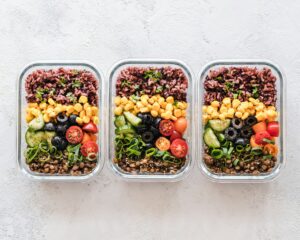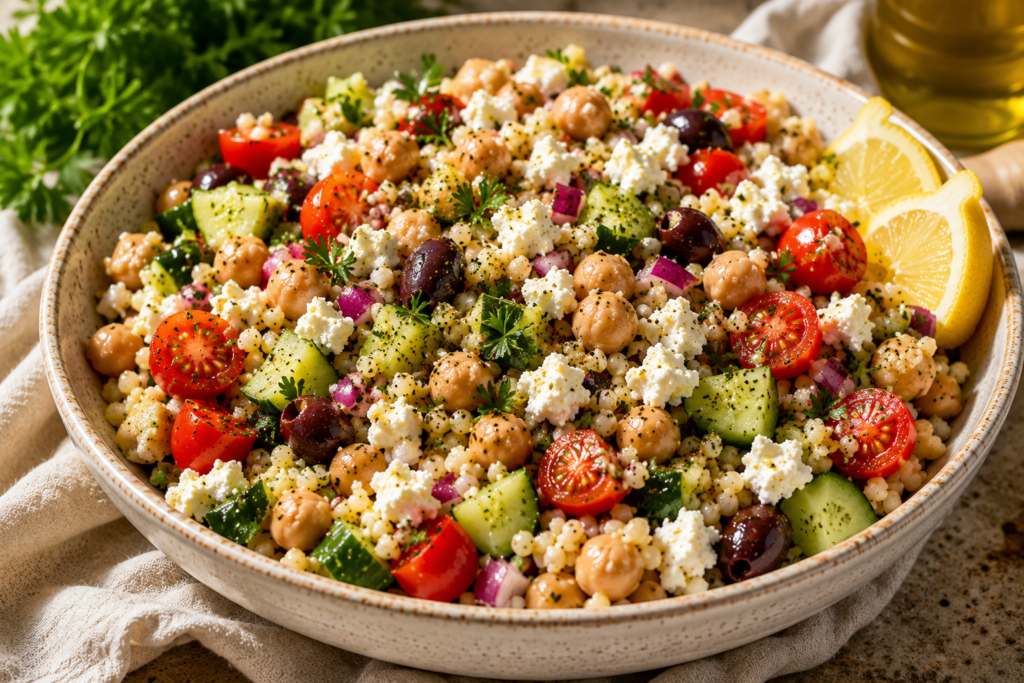
If you’re looking for a lunch that’s fresh, colorful, and full of flavor, this Mediterranean Couscous Lunch Bowl is a great place to start.
Inspired by the simple ingredients and bright tastes of Mediterranean cooking, it’s a satisfying meal that feels both light and filling.
Couscous cooks in minutes, making it perfect for busy days when you want something homemade without spending hours in the kitchen.
In this recipe, you’ll learn how to build a delicious bowl with fluffy couscous, crisp vegetables, and a simple dressing that brings everything together.
It’s easy, flexible, and a lunch you’ll want to make again and again.
Recipe Summary
| Recipe Details | Information |
|---|---|
| Prep Time | 15 minutes |
| Cook Time | 5 minutes |
| Total Time | 20 minutes |
| Servings | 4 servings |
| Cuisine | Mediterranean |
| Difficulty Level | Easy |
| Main Protein Source | Chickpeas |
| Storage Time | 3–4 days in the refrigerator |
Why You’ll Love This Mediterranean Couscous Lunch Bowl
- Quick and easy to prepare – Couscous cooks in just a few minutes, making this a simple lunch you can put together without much effort.
- Packed with fresh vegetables and Mediterranean flavors – Crisp vegetables, bright lemon, and savory ingredients create a fresh and satisfying bowl in every bite.
- Great for meal prep and make-ahead lunches – The ingredients hold up well in the refrigerator, so you can prepare lunches for several days at once.
- Customizable for different dietary preferences – Easily add your favorite protein, swap ingredients, or keep it vegetarian or vegan to suit your needs.
What Is a Mediterranean Couscous Bowl?
A Mediterranean couscous bowl is a simple, flavor-packed meal that combines fluffy couscous with fresh vegetables, herbs, and other ingredients commonly found in Mediterranean cooking.
At its heart is couscous, a small pasta made from semolina wheat that has been enjoyed for generations in North African countries and throughout the Mediterranean region.
One of the reasons couscous is so popular is how quickly it cooks, making it an easy choice for busy lunches and simple weeknight meals.
Once prepared, couscous has a light, tender texture that absorbs dressings and seasonings beautifully, helping every bite taste balanced and flavorful.
Mediterranean couscous bowls often include colorful ingredients such as cucumbers, cherry tomatoes, red onions, bell peppers, olives, fresh parsley, and crumbled feta cheese.
A simple dressing made with olive oil, lemon juice, garlic, and herbs is usually added to bring all the ingredients together and create the bright, fresh flavors that Mediterranean dishes are known for.
Many versions also include chickpeas, grilled chicken, shrimp, or another protein, making the bowl even more satisfying while adding extra texture and flavor.
What makes this style of meal so appealing is the variety of ingredients in every forkful, from crisp vegetables and creamy cheese to tender couscous and zesty dressing.
The combination creates a lunch that feels fresh and filling without being heavy, making it easy to enjoy any time of year.
From a nutritional standpoint, this bowl offers a mix of carbohydrates, protein, healthy fats, and vegetables, giving you a well-rounded meal made from simple everyday ingredients.
Even better, it is easy to customize based on what you have in your kitchen, so you can create a delicious Mediterranean-inspired lunch without following strict rules or searching for hard-to-find ingredients.
Ingredients You’ll Need
For the Couscous
- 1 cup couscous
- 1 cup vegetable broth or water
- 1 tablespoon olive oil
- 1 tablespoon fresh lemon juice
For the Fresh Vegetables
- 1 medium cucumber, diced
- 1 cup cherry tomatoes, halved
- ¼ cup red onion, finely diced
- 1 medium bell pepper, diced
For Added Protein
- 1 can (15 ounces/425 grams) chickpeas, drained and rinsed
Optional Protein Alternatives:
- 1 cup grilled chicken, sliced
- ¾ pound (340 grams) cooked shrimp
- 1 cup firm tofu, cubed and cooked
- ½ cup crumbled feta cheese
For the Mediterranean Dressing
- 3 tablespoons extra-virgin olive oil
- 2 tablespoons fresh lemon juice
- 2 garlic cloves, minced
- 1 teaspoon dried oregano
- ½ teaspoon salt
- ¼ teaspoon black pepper
Optional Toppings
- ¼ cup crumbled feta cheese
- ¼ cup sliced Kalamata olives
- 2 tablespoons chopped fresh parsley or mint
- 2 tablespoons toasted pine nuts
Best Ingredient Substitutions
If you’re missing an ingredient or simply want to use what you already have on hand, these easy substitutions work well while keeping the Mediterranean-inspired flavor of the dish.
| If You Don’t Have | Use Instead |
|---|---|
| Couscous | Quinoa |
| Chickpeas | White beans |
| Feta cheese | Goat cheese |
| Kalamata olives | Green olives |
| Fresh parsley | Fresh cilantro |
| Pine nuts | Slivered almonds |
Most of these swaps can be used in equal amounts, making them simple substitutions without requiring additional recipe adjustments.
How to Make a Mediterranean Couscous Lunch Bowl
Step 1: Cook the Couscous
Pour the vegetable broth or water into a small saucepan and bring it to a gentle boil over medium-high heat.
Stir in the olive oil, then remove the pan from the heat and add the couscous.
Give it a quick stir to make sure all the couscous is lightly moistened.
Cover the pan with a lid and let it sit undisturbed for about 5 minutes so the couscous can absorb the liquid.
Once the liquid is absorbed, use a fork to gently fluff the couscous instead of stirring it with a spoon.
Fluffing separates the grains and helps create the light, airy texture that makes couscous so enjoyable.
If the couscous seems slightly clumped together, keep fluffing gently with the fork until the grains loosen.
Set it aside to cool for a few minutes before assembling the bowl, as warm couscous can soften the vegetables too much.
Step 2: Prepare the Vegetables
While the couscous cools, wash and dry all of the vegetables.
Dice the cucumber into bite-sized pieces so it mixes evenly throughout the bowl.
Cut the cherry tomatoes in half to release their juices and add bursts of fresh flavor.
Finely dice the red onion, so it adds a pleasant bite without overpowering the other ingredients.
Chop the bell pepper into small pieces that are easy to scoop up with each forkful.
Try to keep the vegetables roughly the same size to create a balanced texture and make the bowl easier to eat.
Place all the prepared vegetables into a large mixing bowl and set them aside until you’re ready to combine everything.
Step 3: Mix the Dressing
In a small bowl or jar, combine the extra-virgin olive oil, fresh lemon juice, minced garlic, dried oregano, salt, and black pepper.
Whisk or shake the mixture until the ingredients are fully blended.
The olive oil adds richness, while the lemon juice brings brightness that helps all the flavors stand out.
The garlic and oregano provide the classic Mediterranean flavor that ties the entire bowl together.
Give the dressing a quick taste and adjust the seasoning if needed.
A little extra lemon juice can add more freshness, while a small pinch of salt can help bring out the flavor of the vegetables.
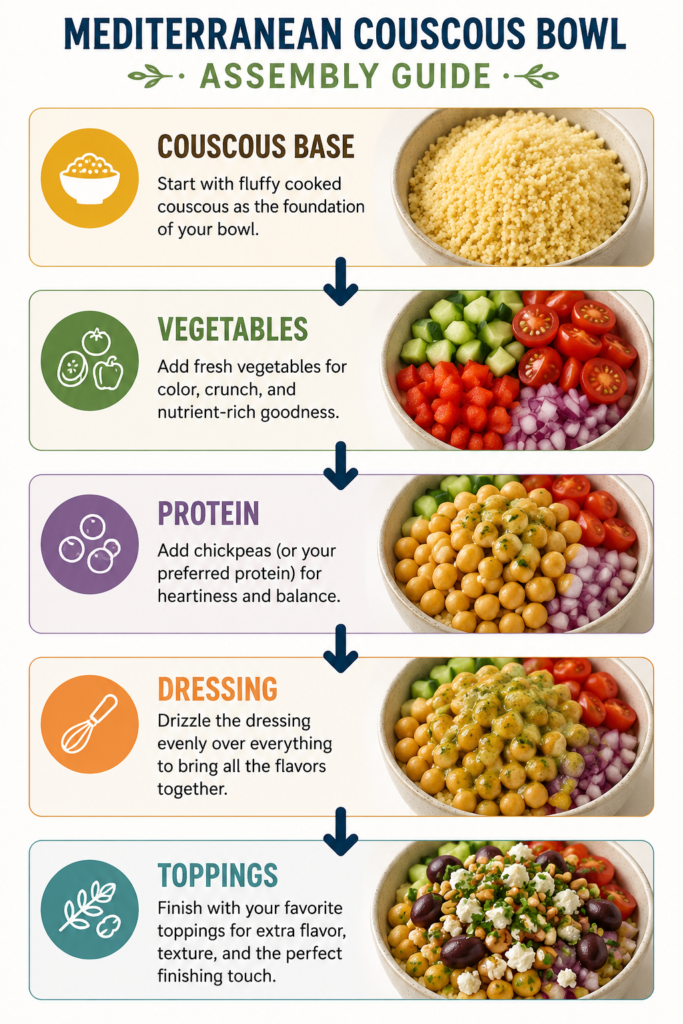
Step 4: Assemble the Bowl
Add the cooled couscous to the bowl with the prepared vegetables.
Stir in the chickpeas or your preferred protein and gently mix everything together.
Pour the dressing over the mixture and toss until the ingredients are evenly coated.
Take your time with this step to make sure the dressing reaches every part of the bowl.
As the dressing coats the couscous and vegetables, the flavors begin to blend together beautifully.
For a more polished presentation, you can also divide the couscous into individual serving bowls and arrange the vegetables and protein on top instead of mixing everything together.
Both methods taste great, so choose whichever style you prefer.
Step 5: Garnish and Serve
Finish the bowl with crumbled feta cheese, sliced Kalamata olives, chopped parsley or mint, and toasted pine nuts if using.
These final touches add extra texture, color, and flavor that make the bowl feel complete.
Fresh herbs bring a bright finish, while the pine nuts add a subtle crunch that contrasts nicely with the tender couscous.
Serve immediately for the freshest flavor and texture.
If you’re making the bowl for lunch later in the day, cover and refrigerate it until you’re ready to eat.
A final squeeze of lemon just before serving can make the flavors taste even brighter and fresher.
Once everything comes together, you’ll have a colorful Mediterranean-inspired lunch that’s simple to make, packed with flavor, and satisfying from the first bite to the last.
Tips for the Best Couscous Bowl
Let Couscous Cool Before Assembling
Allow the couscous to cool for at least a few minutes after fluffing it with a fork.
Warm couscous can cause fresh vegetables to soften too quickly, which takes away some of the crisp texture that makes this bowl so enjoyable.
Cooling also gives the grains time to firm up slightly, helping them stay light and separate instead of becoming sticky.
If you’re short on time, spread the couscous on a large plate or baking sheet to help it cool faster.
A little patience during this step can make a noticeable difference in the final texture of the bowl.
Use Fresh Herbs for Extra Flavor
Fresh herbs add a bright, vibrant flavor that dried herbs simply cannot fully match.
Parsley and mint are both excellent choices because they complement the lemon, vegetables, and dressing without overpowering them.
Chop the herbs just before serving whenever possible to keep their flavor and color at their best.
Even a small handful can make the entire bowl taste fresher and more balanced.
If you’re new to cooking with fresh herbs, start with parsley since its mild flavor pairs easily with almost any Mediterranean ingredient.
Balance Textures with Crunchy Toppings
One of the secrets to a great couscous bowl is creating a variety of textures in every bite.
The couscous is soft and tender, while the vegetables provide freshness and a slight crunch.
Adding toppings such as toasted pine nuts brings another layer of texture that makes the bowl more interesting and satisfying.
A handful of toasted nuts can also add a rich, nutty flavor that works beautifully with the lemon dressing.
If you don’t have pine nuts on hand, chopped almonds, pistachios, or sunflower seeds can provide a similar crunch.
Small texture contrasts like these help turn a simple bowl into something that feels more complete and enjoyable.
Make the Dressing Ahead of Time
Preparing the dressing in advance is an easy way to save time and build even better flavor.
As the garlic, lemon juice, and oregano sit together, the flavors have a chance to blend and become more balanced.
You can make the dressing several hours ahead or even the night before and keep it covered in the refrigerator.
Before using it, give it a quick whisk or shake since the oil and lemon juice may separate as it sits.
Having the dressing ready to go makes assembling lunch quick and stress-free, especially on busy days.
It also gives you one less thing to prepare when you’re ready to put the bowl together and enjoy it.
Common Mistakes to Avoid
Using Too Much Liquid When Cooking Couscous
Couscous absorbs liquid quickly, so adding more than the recommended amount can leave it soft and mushy instead of light and fluffy.
For the best texture, carefully measure both the couscous and liquid before cooking.
Skipping the Fluffing Step
After the couscous has absorbed the liquid, always fluff it gently with a fork.
This simple step separates the grains and prevents them from clumping together.
A few seconds of fluffing can make a big difference in the final texture of the bowl.
Mixing Vegetables Into Hot Couscous
Fresh vegetables stay crisp and flavorful when combined with cooled couscous.
If the couscous is still hot, it can soften the vegetables and reduce the fresh crunch that makes this bowl so enjoyable.
Allow the couscous to cool for a few minutes before assembling the ingredients.
Overdressing the Bowl
The dressing should enhance the ingredients, not overwhelm them.
Start by adding most of the dressing and tossing everything together.
If needed, add a little more until the ingredients are lightly coated and balanced.
Adding Crunchy Toppings Too Early
Toasted pine nuts and other crunchy toppings can lose their texture if they sit in the dressing for too long.
For the best results, add these toppings just before serving.
This keeps them crisp and creates a more enjoyable contrast of textures in every bite.
Under-Seasoning the Dressing
A simple dressing relies on proper seasoning to bring out the flavors of the vegetables, couscous, and protein.
Before pouring it over the bowl, taste the dressing and adjust the salt, pepper, or lemon juice if needed.
A well-seasoned dressing can turn a good couscous bowl into a great one.
Variations and Customizations
Vegetarian Version
This recipe is already a great vegetarian meal when made with chickpeas and feta cheese.
The chickpeas add a hearty texture that blends well with the couscous and fresh vegetables.
Feta brings a creamy, salty flavor that pairs beautifully with the lemon dressing and crisp vegetables.
You can also add extra vegetables such as roasted zucchini, artichoke hearts, or diced cucumber to create even more variety.
Don’t be afraid to use whatever fresh produce you have available, as Mediterranean-style bowls are wonderfully flexible.
Vegan Version
Making this bowl vegan is simple and requires only a few small adjustments.
Replace the feta cheese with a plant-based feta alternative or leave it out completely.
To add extra flavor and texture, consider including more olives, roasted vegetables, or an extra handful of chickpeas.
The lemon and herb dressing provides plenty of bright flavor, so the bowl still feels complete even without dairy.
A sprinkle of fresh herbs just before serving can make the finished bowl taste even more vibrant.
High-Protein Version
If you’re looking for a more filling lunch, adding extra protein is an easy way to customize the bowl.
Grilled chicken is a popular choice because its savory flavor works well with the Mediterranean ingredients.
Cooked shrimp adds a light, slightly sweet flavor that pairs especially well with the lemon dressing.
For a plant-based option, try adding seasoned tofu or an extra serving of chickpeas.
You can even combine two protein sources if you want a heartier meal that stays satisfying for longer.
The key is choosing a protein you enjoy and mixing it into the bowl while keeping the fresh Mediterranean flavors front and center.
Gluten-Free Alternative
Traditional couscous is made from wheat, which means it is not suitable for a gluten-free diet.
Fortunately, this recipe adapts easily without losing its fresh and flavorful character.
Quinoa is one of the best substitutes because it has a light texture and absorbs the dressing beautifully.
Cook the quinoa according to the package directions, allow it to cool, and then use it exactly as you would couscous.
Cauliflower rice is another excellent option if you prefer something lighter.
Its mild flavor allows the vegetables, herbs, and dressing to shine while still providing a satisfying base for the bowl.
Flavor Pairing Ideas
One of the best things about a Mediterranean couscous bowl is how easy it is to customize with different flavor combinations.
If you’re not sure where to start, try one of these simple pairings that work especially well together.
| Flavor Combination | Why It Works |
|---|---|
| Lemon + Feta + Parsley | Bright, fresh, and classic Mediterranean flavors that complement each other beautifully. |
| Cucumber + Mint + Chickpeas | Cool and refreshing with plenty of texture and a clean finish. |
| Roasted Red Peppers + Olives + Feta | Rich, savory flavors balanced by the creamy saltiness of feta. |
| Grilled Chicken + Oregano + Lemon | A simple combination that delivers bold Mediterranean flavor in every bite. |
| Shrimp + Parsley + Garlic | Light, flavorful, and perfect for a seafood-inspired version of the bowl. |
Feel free to use these combinations as inspiration and adjust them based on your favorite ingredients or what you already have in your kitchen.
Sometimes the best version of a couscous bowl comes from mixing and matching a few simple ingredients until you find a combination you love.
What to Serve With Mediterranean Couscous Bowls
This couscous bowl is satisfying on its own, but pairing it with a few complementary dishes can turn it into an even more complete and memorable meal.
Warm Pita Bread
Soft, warm pita bread is perfect for scooping up couscous, vegetables, and any extra dressing left in the bowl.
Its mild flavor pairs naturally with Mediterranean ingredients without overpowering them.
Hummus
Creamy hummus adds a rich, savory element that works beautifully alongside the fresh vegetables and bright lemon dressing.
Serve it on the side with pita bread or fresh vegetables for an easy addition to the meal.
Tzatziki
This cool yogurt-based sauce brings a refreshing contrast to the bold Mediterranean flavors in the bowl.
The combination of cucumber, garlic, and herbs complements the couscous especially well.
Grilled Chicken Skewers
For a heartier meal, grilled chicken skewers are an excellent choice.
Their smoky, savory flavor pairs perfectly with the lemon, herbs, and vegetables found in the bowl.
Greek Salad
A simple Greek salad made with tomatoes, cucumbers, olives, red onion, and feta creates a fresh and colorful side dish.
Since many of the flavors overlap, the two dishes complement each other naturally.
Roasted Vegetables
Roasted zucchini, eggplant, bell peppers, or red onions add warmth and depth to the meal.
Their slightly caramelized flavor provides a delicious contrast to the fresh ingredients in the couscous bowl.
Meal Prep and Storage Tips
This Mediterranean Couscous Lunch Bowl is an excellent meal prep option because the ingredients hold their flavor and texture well when stored properly.
Once assembled, the bowl can typically be stored in an airtight container in the refrigerator for up to 3 to 4 days.
For the freshest results, allow all ingredients to cool completely before placing them in the refrigerator.
Storing warm ingredients can create excess moisture inside the container, which may cause the vegetables to lose some of their crispness.
Glass or high-quality BPA-free plastic containers with tight-fitting lids work especially well because they help keep the ingredients fresh and prevent unwanted odors from affecting the flavor.
If you’re preparing several lunches for the week, portion the couscous and vegetables into individual containers so they’re ready to grab whenever you need them.
One of the best ways to maintain freshness is to store certain ingredients separately until serving time.
Keeping the dressing in a small container prevents the vegetables and couscous from becoming overly soft as they sit.
Fresh herbs are also best added just before eating since they retain more flavor, color, and texture that way.
If you’re using crunchy toppings such as toasted pine nuts, store them separately as well so they stay crisp and don’t absorb moisture from the salad.
For meal prep, many home cooks like to keep the couscous, vegetables, dressing, and toppings in separate containers and assemble everything right before lunch.
This extra step only takes a minute or two, but it helps the finished bowl taste freshly made even after a few days in the refrigerator.
Before serving, give the bowl a quick toss to redistribute the dressing and flavors throughout the ingredients.
If the flavors seem slightly muted after chilling, a small squeeze of fresh lemon juice can quickly brighten everything and bring the bowl back to life.
Make It Ahead Timeline
If you’re preparing this recipe for busy weekdays, breaking the prep work into a few simple steps can make lunchtime even easier.
| Time | Task |
|---|---|
| Night Before | Cook the couscous and allow it to cool completely. |
| Night Before | Wash and chop the vegetables. |
| Night Before | Prepare the dressing and store it in a sealed container. |
| Morning | Assemble the couscous, vegetables, and protein in meal prep containers. |
| Before Serving | Add the dressing, fresh herbs, and crunchy toppings. |
Preparing the couscous, vegetables, and dressing the night before can save valuable time during the day.
Keeping the dressing and toppings separate until serving helps maintain the freshest flavor and best texture.
Best Occasions for This Recipe
One of the reasons this Mediterranean Couscous Lunch Bowl is so popular is its versatility.
It works well for everything from quick weekday lunches to casual gatherings with family and friends.
Meal Prep Lunches
The ingredients store well in the refrigerator, making this recipe an excellent option for preparing several lunches in advance.
Simply portion the ingredients into containers and enjoy them throughout the week.
Work-From-Home Lunches
When you need a lunch that’s quick, satisfying, and easy to assemble, this couscous bowl is a great choice.
Most of the prep can be done ahead of time, making lunchtime simple and stress-free.
Picnic Meals
Because it can be served chilled or at room temperature, this recipe travels well for outdoor meals.
Pack the dressing separately and toss everything together just before serving for the freshest flavor.
Potlucks
The colorful ingredients and fresh Mediterranean flavors make this bowl a crowd-pleasing addition to potlucks and shared meals.
It’s easy to scale up for larger groups and can be customized to suit different preferences.
Light Summer Dinners
On warm evenings, this couscous bowl offers a fresh and flavorful dinner without feeling too heavy.
Pair it with grilled chicken, shrimp, or warm pita bread for a simple yet satisfying meal.
Packed Lunches
Whether you’re heading to the office, school, or a day out, this recipe packs easily and holds up well during transport.
Keeping the dressing separate until serving helps maintain the best texture and freshness.
Health Benefits of Mediterranean Couscous Bowls
Fiber-Rich Ingredients
One of the biggest advantages of this couscous bowl is the variety of fiber-rich ingredients packed into every serving.
Ingredients such as chickpeas, cucumbers, tomatoes, bell peppers, and fresh herbs all contribute texture, flavor, and fiber.
Fiber helps create a meal that feels satisfying and balanced, making this bowl a filling lunch option without feeling overly heavy.
Because the recipe includes several different vegetables, you also get a wider range of flavors and textures in every bite.
Adding extra vegetables is an easy way to increase the fiber content even further while making the bowl more colorful and enjoyable.
Heart-Healthy Fats From Olive Oil
Olive oil is one of the signature ingredients in Mediterranean cooking and plays an important role in this recipe.
Beyond adding richness to the dressing, it helps create a smooth, balanced flavor that ties all of the ingredients together.
A good-quality extra-virgin olive oil brings a fresh, slightly fruity taste that complements the bright lemon juice and herbs.
Since the dressing uses only a few ingredients, choosing a flavorful olive oil can make a noticeable difference in the final dish.
The result is a bowl that tastes fresh, vibrant, and satisfying from the first bite to the last.
Plant-Based Protein Benefits
Chickpeas add more than just texture to this Mediterranean couscous bowl.
They provide plant-based protein that helps make the meal more substantial and filling.
Their mild, nutty flavor blends naturally with the vegetables and dressing without overpowering the other ingredients.
Because chickpeas are so versatile, they work well with nearly every Mediterranean ingredient, from feta cheese and olives to fresh herbs and lemon.
If you prefer a vegetarian lunch that still feels hearty, chickpeas are an excellent ingredient to keep on hand.
Nutrient-Dense Vegetables
The fresh vegetables in this bowl do more than add color to your plate.
Cucumbers contribute a cool, crisp crunch that keeps the bowl refreshing.
Cherry tomatoes add natural sweetness and a burst of juicy flavor.
Bell peppers bring a satisfying crunch and subtle sweetness that balances the tangy dressing.
Red onions add a little sharpness that helps highlight the other ingredients without overwhelming them.
Together, these vegetables create a bowl that is rich in flavor, texture, and variety.
Final Thoughts
This Mediterranean Couscous Lunch Bowl is a simple, flavorful meal that’s easy to prepare, easy to customize, and perfect for busy lunches.
Whether you stick with the recipe or add your favorite Mediterranean ingredients, it’s a flexible dish that can easily become part of your regular meal rotation.
Give it a try, make it your own, and don’t be afraid to experiment with different vegetables, proteins, herbs, and toppings.
FAQs
Can I make this recipe ahead of time?
Yes, this recipe is great for meal prep and can be made up to 3 to 4 days in advance when stored in an airtight container in the refrigerator.
What protein pairs best with couscous?
Chickpeas, grilled chicken, shrimp, tofu, and feta cheese all pair well with couscous and complement the fresh Mediterranean flavors in the bowl.
Can I use pearl couscous instead?
Absolutely. Pearl couscous has a larger size and slightly chewier texture, but it works beautifully in this recipe when cooked according to the package instructions.
How do I keep the vegetables fresh for meal prep?
For the best texture, store the dressing, fresh herbs, and crunchy toppings separately and combine them with the vegetables just before serving.
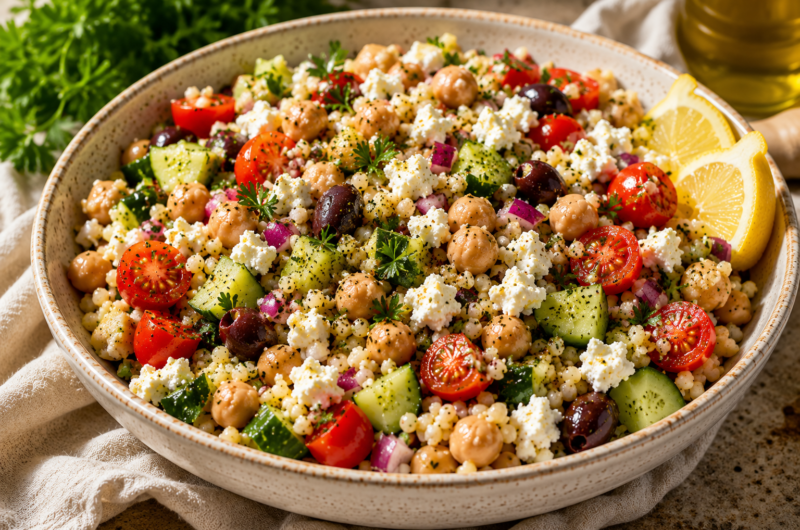
Mediterranean Couscous Lunch Bowl: A Fresh, Flavor-Packed Meal
Course: Vegan Lunch RecipesCuisine: MediterraneanDifficulty: Easy4
servings15
minutes5
minutes20
minutesA fresh and flavorful Mediterranean-inspired lunch bowl made with fluffy couscous, crisp vegetables, chickpeas, and a bright lemon herb dressing. Perfect for meal prep, quick lunches, and light dinners.
Ingredients
- For the Bowl:
1 cup couscous
1 cup vegetable broth or water
1 tablespoon olive oil
1 tablespoon lemon juice
1 medium cucumber, diced
1 cup cherry tomatoes, halved
¼ cup red onion, finely diced
1 bell pepper, diced
1 can (15 ounces) chickpeas, drained and rinsed
- For the Dressing:
3 tablespoons extra-virgin olive oil
2 tablespoons fresh lemon juice
2 garlic cloves, minced
1 teaspoon dried oregano
½ teaspoon salt
¼ teaspoon black pepper
- Optional Toppings:
¼ cup crumbled feta cheese
¼ cup sliced Kalamata olives
2 tablespoons chopped fresh parsley or mint
2 tablespoons toasted pine nuts
Directions
- Bring the vegetable broth or water to a boil, remove from the heat, stir in the couscous, cover, and let sit for 5 minutes.
- Fluff the couscous with a fork and allow it to cool slightly.
- In a large bowl, combine the cucumber, tomatoes, red onion, bell pepper, and chickpeas.
- In a small bowl, whisk together the olive oil, lemon juice, garlic, oregano, salt, and pepper.
- Add the couscous to the vegetables and pour the dressing over the top.
- Toss gently until everything is evenly combined.
- Garnish with feta, olives, fresh herbs, and toasted pine nuts if desired.
- Serve immediately or refrigerate until ready to enjoy.
Notes
- Let the couscous cool before mixing it with the vegetables for the best texture.
- Store leftovers in an airtight container in the refrigerator for up to 4 days.
- Keep the dressing and crunchy toppings separate if preparing meals ahead of time.
- Easily customize the bowl with grilled chicken, shrimp, tofu, or your favorite Mediterranean ingredients.

Hi, I’m Daisy Roots, the home cook and recipe developer behind this kitchen. I create simple, tested vegan recipes using everyday ingredients. Every dish is developed and cooked in my own kitchen, with clear steps to help you get reliable results every time. Thanks for stopping by — let’s cook something great!