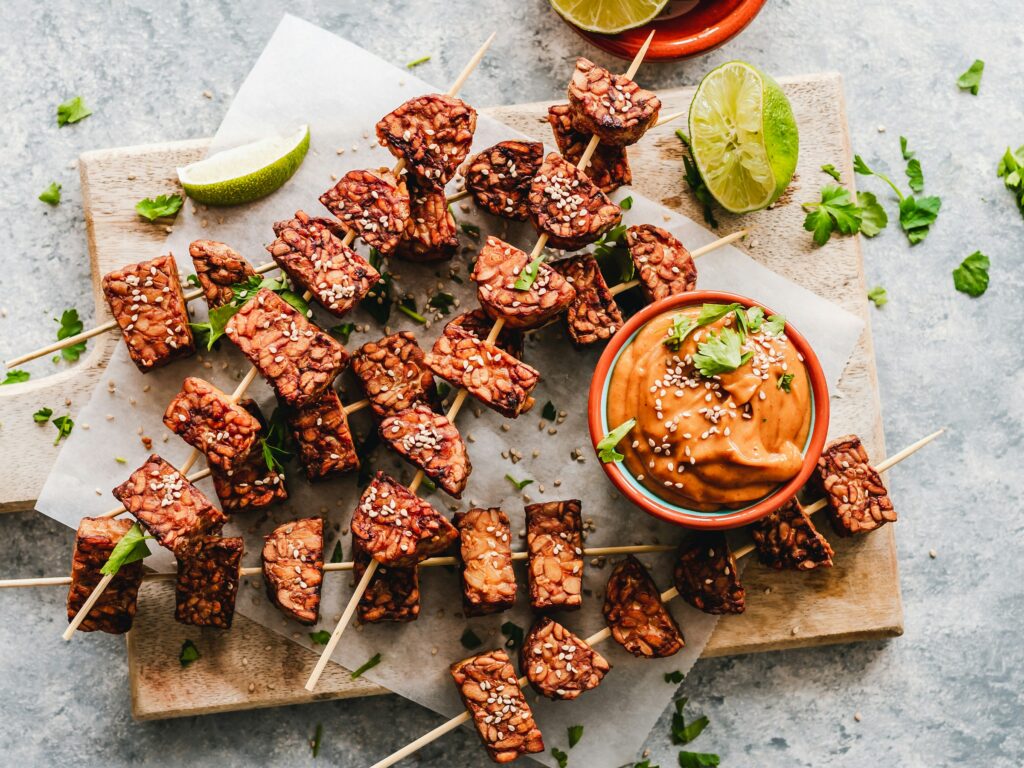
Tempeh might look a little unusual at first, but don’t let that stop you from trying it.
Made from fermented soybeans, it’s firm, hearty, and does a great job of soaking up bold flavors, making it a favorite in many plant-based kitchens.
If you’ve ever wondered why your tempeh tasted bitter, turned out dry, or just didn’t live up to the hype, you’re not alone.
Many beginners skip a few simple steps that make a big difference, but they’re easy to learn.
In this guide, you’ll discover how to choose, prepare, season, and cook tempeh with confidence.
What Is Tempeh?
Tempeh is a traditional soy-based food made by fermenting whole soybeans into a firm, sliceable block.
Unlike many other plant-based proteins, tempeh keeps the whole soybean intact, giving it a hearty texture that holds up well in all kinds of recipes.
Its mild, earthy flavor makes it a great base for marinades, spices, and sauces, so it can fit into everything from stir-fries and sandwiches to salads and grain bowls.
If you’re trying tempeh for the first time, think of it as an ingredient that takes on the flavors you cook it with rather than something that’s meant to stand on its own.
The Origins of Tempeh
Tempeh has been enjoyed in Indonesia for hundreds of years and is considered a traditional staple in many homes.
It is believed to have originated on the island of Java, where families developed the fermentation process as a simple way to preserve soybeans and create a satisfying source of protein.
Over time, tempeh became an important part of Indonesian cooking and appeared in everything from everyday meals to special family dishes.
Today, people around the world enjoy tempeh for its versatility, but its roots remain deeply connected to Indonesian food traditions and craftsmanship.
How Tempeh Is Made
Tempeh starts with whole soybeans that are soaked, cooked, and partially dried before fermentation begins.
A natural starter culture, similar to the way yogurt or sourdough is made, is mixed with the cooked soybeans.
The soybeans are then kept warm for about one to two days while the culture grows.
During this time, a network of white strands develops and gently binds the soybeans together into a firm block.
This white layer is completely normal and is one of the easiest signs that the tempeh has fermented properly.
It also helps create tempeh’s firm texture, making it easy to slice, cube, crumble, or cut into strips without falling apart.
Fresh tempeh should smell pleasantly earthy and slightly nutty.
A few small black or gray spots can appear as the fermentation continues, and these are usually harmless and part of the natural aging process.
If the tempeh smells sour, rotten, or has fuzzy mold in colors like green, pink, or blue, it’s best to throw it away and use a fresh package instead.
What Does Tempeh Taste Like?
Tempeh has a mild flavor with earthy and nutty notes that become richer as it cooks.
On its own, the taste is more subtle than bold, which is why seasoning plays such an important role.
Its firm, slightly chewy texture gives it a satisfying bite that works well in both simple weeknight dinners and heartier meals.
Many first-time cooks expect tempeh to taste like meat, but that’s not really the goal.
Instead, think of it as a flavorful base that absorbs whatever you cook it with.
Marinating tempeh before cooking helps it soak up sauces and spices, making every bite more flavorful.
Pan-frying creates a crisp golden crust while keeping the inside tender.
Baking gives tempeh a slightly firmer texture with caramelized edges that pair well with sweet or savory marinades.
Air frying produces crispy edges with very little effort, making it one of the easiest cooking methods for beginners.
As you experiment with different seasonings and cooking techniques, you’ll discover that tempeh can taste surprisingly different from one recipe to the next, which is part of what makes it such a fun ingredient to cook with.
Is Tempeh Healthy?
Let’s take a closer look at what makes tempeh stand out.
High in Plant-Based Protein
One of the biggest reasons people enjoy cooking with tempeh is its high protein content.
Protein helps make meals feel more filling and satisfying, which is especially helpful when you’re building meat-free dishes.
Because tempeh has a firm texture, it works well in recipes where you want something hearty to bite into.
Try adding it to grain bowls, wraps, pasta dishes, curries, or stir-fries to make your meal more substantial.
If you’re just getting started, crispy pan-fried tempeh is an easy way to enjoy its texture while letting your favorite sauce do the rest of the work.
Rich in Fiber
Unlike some soy products, tempeh is made from whole soybeans, so it naturally contains fiber.
Fiber adds texture to meals and helps create a more satisfying eating experience.
Pairing tempeh with vegetables, whole grains, or roasted potatoes creates balanced meals that are both colorful and filling.
Contains Vitamins and Minerals
Tempeh also provides several important vitamins and minerals that your body uses every day.
It naturally contains nutrients such as iron, magnesium, phosphorus, manganese, and potassium.
These nutrients support many normal body functions and are one of the reasons tempeh is often included in balanced eating patterns.
Because tempeh is so versatile, it’s easy to include these nutrients in meals you already enjoy instead of changing the way you cook.
Fermented Foods and Gut Health
One thing that makes tempeh different from tofu is that it’s a fermented food.
Fermentation is a natural process where helpful microorganisms change the soybeans, giving tempeh its firm texture and distinctive flavor.
Many people enjoy adding fermented foods to their diet as part of an overall balanced way of eating.
Cooking tempeh doesn’t take away its delicious flavor, and it still remains a versatile ingredient for countless recipes.
Is Tempeh Good for Weight Management?
Tempeh can be a satisfying ingredient if you’re looking for meals that keep you feeling full for longer.
Its combination of protein and fiber helps create hearty dishes without relying on heavily processed ingredients.
Instead of focusing on cutting foods out, think about building meals that are balanced and enjoyable.
For example, serve marinated tempeh with roasted vegetables, brown rice, and a flavorful sauce for a meal that feels generous without being complicated.
The best part is that tempeh is easy to adapt to your own tastes, so you can enjoy it in everything from fresh salads to comforting curries while keeping your meals varied and delicious.
Tempeh vs Tofu: What’s the Difference?
Ingredients
The biggest difference starts with how each one is made.
Tempeh is made from whole soybeans that are cooked and fermented until they naturally stick together into a firm block.
Because the soybeans stay whole, you can often see them throughout the finished tempeh.
Tofu is made by turning soybeans into soy milk.
The soy milk is then thickened and pressed into blocks, much like the process used to make cheese.
This gives tofu a much smoother and more uniform appearance.
Both are made from soybeans, but the different production methods give each ingredient its own unique character in the kitchen.
Texture
Texture is where most people notice the biggest difference.
Tempeh is firm, dense, and pleasantly chewy.
It holds its shape well, even after slicing, cubing, grilling, or pan-frying.
That makes it a great choice when you want crisp edges and a hearty bite.
Tofu is much softer.
Depending on the variety, it can range from silky and creamy to extra firm.
Firm and extra-firm tofu work well for frying and baking, while soft and silken tofu are better for soups, smoothies, sauces, and desserts.
If you’re looking for something that feels substantial in tacos, sandwiches, or grain bowls, tempeh is often the better fit.
Taste
Tempeh has a naturally nutty and earthy flavor that becomes richer as it browns during cooking.
Its flavor stands on its own, but it also absorbs marinades and sauces beautifully.
A simple soy, garlic, and maple marinade can completely transform it into something savory and slightly sweet.
Tofu has a much milder taste.
On its own, it’s almost neutral, which allows it to take on the flavor of whatever you cook it with.
This makes tofu incredibly versatile, especially if you enjoy experimenting with different seasonings.
If you’re trying tempeh for the first time, don’t judge it straight from the package.
Cooking it until golden and pairing it with a flavorful marinade makes a world of difference.
Nutrition Comparison
Both tempeh and tofu can be part of a balanced diet, and each has its own strengths.
Tempeh generally contains more protein and fiber because it’s made from whole soybeans.
It also has a firmer texture that naturally makes meals feel hearty and satisfying.
Tofu is usually a little lower in calories and has a softer texture that works well in a wider variety of dishes.
Both provide valuable nutrients and can fit into everything from quick lunches to comforting family dinners.
Rather than choosing one over the other, many home cooks keep both on hand because they shine in different recipes.
Which Is Better for Beginners?
If you enjoy crispy textures and bold flavors, tempeh is an excellent place to start.
It stays together easily during cooking, making it forgiving for beginners.
Even if your slices aren’t perfectly even, they’ll still cook well and develop delicious golden edges.
Tofu can take a little more practice.
Some varieties need to be pressed before cooking to remove excess moisture, and softer types can break apart if handled roughly.
If you’re following this guide, you’ll quickly learn that tempeh isn’t difficult to cook at all.
With a simple marinade, the right cooking method, and a little confidence, it’s an ingredient that’s both easy to prepare and rewarding to master.
Many home cooks eventually enjoy both tempeh and tofu, using each one where it performs best.
Starting with tempeh gives you a great introduction to plant-based cooking while helping you build skills you’ll use again and again.
Types of Tempeh You Can Buy
Traditional Soy Tempeh
Traditional soy tempeh is the classic version you’ll find in most grocery stores.
It’s made from whole soybeans that have been fermented into a firm block.
This variety has a mild, nutty flavor that works well with almost any seasoning or marinade.
It’s also the easiest option for beginners because there are countless recipes designed specifically for it.
Slice it into strips for sandwiches, cube it for stir-fries, or crumble it into tacos, pasta sauces, and chili.
If you’re buying tempeh for the first time, traditional soy tempeh is the best place to start.
Mixed Grain Tempeh
Mixed grain tempeh combines soybeans with grains such as brown rice, barley, millet, or quinoa.
The added grains create a slightly softer texture while giving the tempeh a more complex, hearty flavor.
You may also notice a little extra chewiness, which works especially well in grain bowls and salads.
Its mild taste pairs nicely with herb-based marinades, lemon, garlic, and olive oil.
If you enjoy different textures in your meals, mixed grain tempeh is a fun option to explore.
Black Bean Tempeh
Black bean tempeh replaces some or all of the soybeans with black beans.
It has a richer, earthier flavor than traditional tempeh and a darker appearance.
Because black beans naturally have a creamy taste, this variety works especially well in Mexican-inspired dishes.
Try it in tacos, burritos, enchiladas, or rice bowls with smoky spices like cumin, paprika, and chili powder.
It also makes a delicious filling for wraps and hearty sandwiches.
Chickpea Tempeh
Chickpea tempeh offers another tasty alternative for anyone looking to try something different.
It has a slightly milder flavor with a subtle nuttiness that pairs beautifully with Mediterranean and Middle Eastern ingredients.
Its texture is firm enough for grilling, baking, or pan-frying while remaining pleasantly tender inside.
Lemon, garlic, fresh herbs, tahini, and warm spices all complement chickpea tempeh particularly well.
If you enjoy hummus and roasted chickpeas, you’ll likely appreciate this variety too.
Flavored and Pre-Marinated Tempeh
Many stores also sell tempeh that’s already seasoned or marinated.
These products often come in flavors like barbecue, smoky maple, teriyaki, buffalo, sesame ginger, or spicy chili.
They’re a great choice when you want a quick meal with very little preparation.
Most can go straight into a skillet, oven, or air fryer after opening the package.
Even though they’re convenient, it’s still worth checking the ingredient list to see what seasonings and sauces have been added.
If you’re learning how to cook tempeh, plain varieties give you more control over the final flavor.
Where to Buy Tempeh
Grocery Stores
Many large grocery stores now keep tempeh in their refrigerated produce or natural foods section.
You’ll often find it next to tofu, seitan, and other plant-based proteins.
Some stores carry only traditional soy tempeh, while others offer flavored or pre-marinated options as well.
If you’re shopping for the first time, start with a plain block of soy tempeh.
It gives you the freedom to season and cook it however you like.
If you can’t find it, don’t hesitate to ask a store employee.
Many stores keep tempeh in a separate refrigerated case that’s easy to overlook.
Health Food Stores
Health food stores usually have one of the largest selections of tempeh.
You’ll often find several brands along with different varieties made from soybeans, chickpeas, black beans, or mixed grains.
Some stores even stock locally made tempeh, which can be a fun way to discover new flavors.
You’ll also have more options if you’re looking for organic products or specific ingredients.
If you’re interested in experimenting beyond traditional soy tempeh, this is an excellent place to shop.
Asian Markets
Asian grocery stores can be another great place to find tempeh.
Since tempeh has its roots in Indonesia, some markets carry authentic brands that may not be available elsewhere.
You may even discover fresh tempeh with a slightly different texture than packaged versions found in larger supermarkets.
While you’re there, it’s worth picking up ingredients that pair beautifully with tempeh, such as soy sauce, sesame oil, fresh ginger, garlic, chili paste, rice vinegar, or coconut milk.
Shopping at an Asian market is also a great way to find new sauces and seasonings that can completely change the flavor of your meals.
Buying Online
If you can’t find tempeh locally, ordering it online is a convenient option.
Many specialty food retailers and grocery delivery services sell both fresh and frozen tempeh.
Online shopping also makes it easier to compare brands and explore varieties that aren’t available in nearby stores.
When ordering refrigerated or frozen tempeh, check that it’s shipped with proper cooling to keep it fresh during delivery.
Reading customer reviews can also give you a better idea of the flavor, texture, and quality before you buy.
Once you find a brand you enjoy, consider buying a few extra packages and freezing them.
Tempeh freezes well, so you’ll always have a block ready whenever you’re in the mood to cook.
How to Choose the Best Tempeh
Not all tempeh is exactly the same, so it’s worth taking a minute to choose a good-quality package.
The right tempeh will have better flavor, a firmer texture, and be much more enjoyable to cook with.
Fresh vs Frozen
Both fresh and frozen tempeh can be excellent choices.
Fresh tempeh is the most common option and is usually found in the refrigerated section of the grocery store.
It’s ready to use after opening the package, making it a convenient choice for weeknight meals.
Frozen tempeh is just as useful and often keeps its quality for several months.
Once thawed in the refrigerator, it cooks much like fresh tempeh.
If you don’t cook with tempeh often, keeping a package in the freezer is a great way to have it on hand whenever you need it.
There’s no need to worry if frozen is the only option available.
Many home cooks use frozen tempeh regularly with excellent results.
Reading Ingredient Labels
A quick look at the ingredient list can tell you a lot about the tempeh you’re buying.
For traditional tempeh, you’ll usually see whole soybeans, water, and a fermentation culture listed as the main ingredients.
Some brands may also include grains, beans, vinegar, or a small amount of salt.
Short ingredient lists are often a good sign because they let the natural flavor of the tempeh shine through.
If you’re buying flavored or pre-marinated tempeh, take a moment to see which seasonings have already been added.
This helps you decide how to season the rest of your meal without accidentally doubling up on strong flavors.
If you have food allergies or dietary preferences, always check the label carefully before purchasing.
Signs of High-Quality Tempeh
Good-quality tempeh should feel firm and hold together well inside the package.
The soybeans should be tightly bound together by a clean white layer created during fermentation.
This white coating is completely normal and shows that the fermentation process worked as it should.
You may notice a few small gray or black spots on the surface.
These can naturally develop as tempeh matures and are usually nothing to worry about.
Fresh tempeh should have a pleasant earthy, nutty smell.
It shouldn’t have a sour, rotten, or unpleasant odor.
Avoid packages that look excessively slimy, contain colorful fuzzy mold, or have damaged or leaking packaging.
It’s also a good habit to check the use-by date before adding tempeh to your cart.
When in doubt, choose the package that looks fresh, feels firm, and has the simplest ingredient list.
How to Store Tempeh Properly
Refrigeration
If your tempeh is fresh, keep it in the refrigerator until you’re ready to use it.
Store unopened packages in their original packaging and follow the use-by date printed on the label.
Once you’ve opened the package, transfer any leftover tempeh to an airtight container or wrap it tightly to prevent it from drying out.
Keeping air away from the surface helps preserve its texture and flavor.
Place the container back in the refrigerator as soon as possible after using what you need.
Avoid leaving tempeh at room temperature for long periods, especially on warm days.
A little care now means your next meal will taste just as good.
Freezing
Tempeh freezes very well, making it a great ingredient to keep on hand.
If you buy several packages while they’re on sale, simply place them in the freezer before the use-by date.
You can freeze unopened packages as they are.
If you’ve already opened a package, wrap the remaining tempeh tightly or store it in a freezer-safe container before freezing.
For extra convenience, consider slicing or cubing the tempeh before freezing it.
That way, you can thaw only the amount you need for a quick meal.
When you’re ready to cook, move the tempeh to the refrigerator and let it thaw overnight.
If you’re short on time, you can also thaw it gently using your microwave’s defrost setting.
Shelf Life
Fresh tempeh usually keeps well in the refrigerator until the use-by date if it remains unopened.
After opening, it’s best to use it within a few days for the best flavor and texture.
Frozen tempeh can maintain good quality for several months when stored properly.
While it may still be safe beyond that point if continuously frozen, using it sooner helps preserve its texture and taste.
Labeling frozen packages with the date is a simple habit that makes it easier to keep track of what you have.
Can You Eat Expired Tempeh?
Always start by checking the use-by date and inspecting the tempeh before cooking.
A use-by date is a food safety guideline, so it’s best not to eat refrigerated tempeh after that date has passed.
Even before the date, trust your senses if something seems off.
Fresh tempeh should smell mildly earthy and nutty.
If it develops a strong sour, rotten, or unpleasant odor, it’s safest to throw it away.
The natural white coating is completely normal, and a few small gray or black spots can also appear as part of the fermentation process.
However, if you notice fuzzy mold in colors such as green, blue, pink, or orange, don’t try to trim it off.
Discard the entire package instead.
When you’re ever unsure about the freshness of tempeh, it’s better to replace it than risk spoiling an otherwise delicious meal.
Should You Steam Tempeh Before Cooking?
Why Some People Steam Tempeh
Steaming helps soften tempeh and mellow some of its naturally earthy flavor.
If you’ve ever heard someone describe tempeh as slightly bitter, steaming is one of the easiest ways to reduce that taste.
It also opens the surface of the tempeh a little, making it easier for marinades to soak in.
This means you’ll often get more flavor in every bite after marinating.
Steaming is especially helpful if you’re using plain tempeh and want the seasoning to really stand out.
Many home cooks make this a regular part of their routine because it takes very little effort and can noticeably improve the final dish.
If you’re introducing tempeh to family or friends for the first time, steaming first is a simple way to create a milder, more approachable flavor.
When Steaming Isn’t Necessary
You don’t have to steam tempeh every time you cook it.
If you’re using a strongly flavored marinade or simmering tempeh in a rich sauce, you may find that steaming doesn’t make much difference.
Pre-marinated tempeh also usually doesn’t need this extra step because it has already been seasoned.
When you’re short on time, you can slice the tempeh, season it well, and cook it directly in a skillet, oven, or air fryer.
Many people enjoy tempeh this way and are happy with the results.
The best approach is to try both methods and see which one you prefer.
Cooking is personal, and your favorite technique may be different from someone else’s.
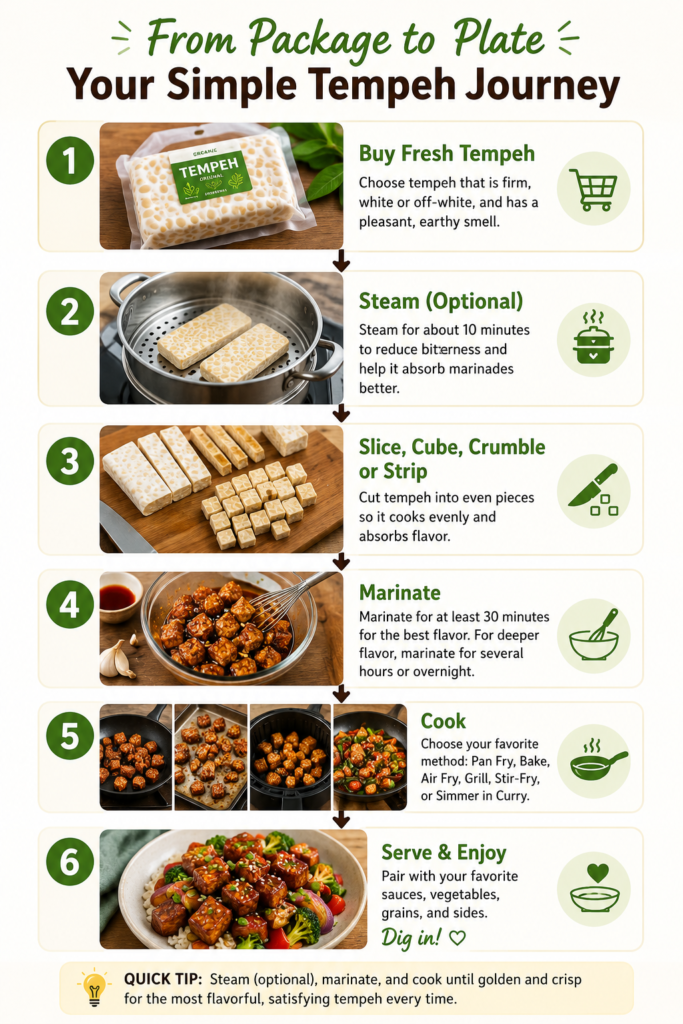
Simple Steaming Method
Steaming tempeh is quick and doesn’t require any special equipment.
Start by cutting the tempeh into slices, cubes, or strips, depending on your recipe.
Bring a small amount of water to a gentle simmer in a pot.
Place the tempeh in a steamer basket or on a heat-safe plate that sits above the water.
Cover the pot with a lid to trap the steam.
Steam the tempeh for about 10 minutes.
Once it’s finished, carefully remove it and let it cool for a minute or two.
Pat the surface dry with a paper towel if it feels damp.
Now it’s ready for your favorite marinade.
For the best flavor, let the tempeh marinate for at least 30 minutes before cooking.
If you have more time, letting it marinate for a few hours or even overnight in the refrigerator will give you even deeper, richer flavor.
After marinating, cook the tempeh until it’s beautifully golden and lightly crisp on the outside.
How to Prepare Tempeh Before Cooking
Slicing
Slicing is one of the easiest ways to prepare tempeh.
Cut the block into even slices about ¼ to ½ inch thick.
Keeping the slices roughly the same thickness helps them cook evenly.
Slices are perfect for sandwiches, burgers, breakfast plates, and grain bowls.
They also develop beautifully crisp edges when pan-fried or baked.
After slicing, marinate the pieces before cooking so every bite is full of flavor.
Cubing
Cubed tempeh is a great choice for stir-fries, curries, soups, salads, and skewers.
Aim for cubes that are about ¾ to 1 inch wide.
Uniform cubes cook at the same rate, so you won’t end up with some pieces overcooked while others are still soft.
Because cubes have several cut sides, they soak up marinades especially well.
They also become nicely browned on multiple sides as they cook.
Give the pan a gentle shake every few minutes to help the cubes brown evenly without breaking apart.
Crumbling
Crumbling tempeh creates small pieces that work well as a plant-based alternative to ground meat.
Simply break the block apart with your fingers or crumble it gently using a fork.
The pieces don’t need to be perfectly even.
A mix of small and slightly larger crumbles creates a more natural texture.
Crumbled tempeh is excellent in tacos, chili, pasta sauce, sloppy joes, stuffed peppers, and lettuce wraps.
Season it generously while it cooks so every crumble is packed with flavor.
Cooking the crumbles until they’re lightly browned also adds extra texture and a deeper savory taste.
Cutting into Strips
Long strips are ideal for wraps, sandwiches, fajitas, rice bowls, and salads.
Cut the tempeh into strips about the width of a finger for easy cooking and serving.
The larger surface area allows plenty of marinade to coat each piece.
Strips are especially delicious when grilled, baked, or air-fried because the edges become slightly crisp while the center stays tender.
If you’re serving tempeh as the main part of a meal, strips create an attractive presentation and are easy to eat.
Grating Tempeh
Grating tempeh is a simple trick that many beginners don’t think to try.
Use the large holes of a box grater to create small shreds.
These thin pieces cook quickly and become wonderfully crispy in a skillet.
Grated tempeh is perfect for taco fillings, fried rice, noodle dishes, grain bowls, and savory breakfast scrambles.
Because the pieces are so small, they absorb marinades and seasonings very quickly.
This is also a great way to introduce tempeh to someone who’s unsure about its texture.
No matter which cut you choose, try to keep the pieces as even as possible.
Evenly sized pieces cook more consistently, brown better, and make every bite just as delicious as the last.
Best Marinades for Tempeh
One of the easiest ways to make tempeh taste amazing is to marinate it before cooking.
Because tempeh has a firm texture, it eagerly soaks up bold flavors, especially if you’ve steamed it first.
Even a simple 30-minute marinade can completely change the finished dish.
If you have extra time, let the tempeh marinate in the refrigerator for a few hours or overnight for even richer flavor.
Soy-Ginger Marinade
This is a classic choice that works with almost every cooking method.
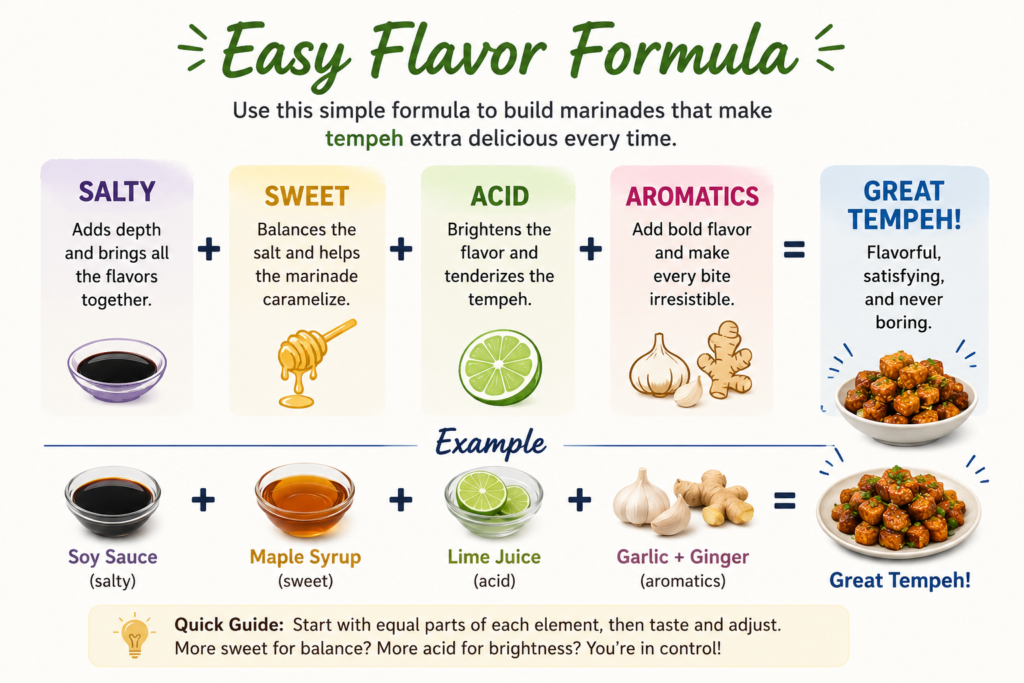
The combination of salty soy sauce, fresh ginger, garlic, and a touch of sweetness creates a balanced flavor that’s savory, slightly sweet, and incredibly satisfying.
It’s perfect for stir-fries, rice bowls, noodle dishes, and lettuce wraps.
Once cooked, the marinade caramelizes beautifully, giving the tempeh golden edges and deep flavor.
If you enjoy Asian-inspired meals, this is a great recipe to start with.
BBQ Marinade
A smoky barbecue marinade turns tempeh into a hearty centerpiece for casual meals.
The sweet, tangy, and smoky flavors pair perfectly with the nutty taste of tempeh.
Bake, grill, or air fry the marinated pieces until they’re lightly charred around the edges.
Serve them in sandwiches, wraps, burgers, or alongside roasted potatoes and grilled vegetables.
For even more flavor, brush on an extra layer of barbecue sauce during the final few minutes of cooking.
Lemon Herb Marinade
If you’re looking for something fresh and light, a lemon herb marinade is an excellent choice.
Fresh lemon juice adds brightness, while olive oil, garlic, parsley, oregano, and thyme create a fragrant blend of herbs.
This marinade works especially well with grilled vegetables, quinoa, pasta salads, and roasted potatoes.
The citrus helps balance tempeh’s earthy flavor without overpowering it.
Peanut Marinade
Peanut marinade creates a rich, creamy coating that’s packed with flavor.
Peanut butter, soy sauce, garlic, ginger, lime juice, and a little maple syrup or brown sugar come together to make a smooth, savory sauce.
This marinade is especially delicious with rice noodles, steamed vegetables, and grain bowls.
After cooking, sprinkle chopped peanuts and fresh cilantro over the top for extra crunch and freshness.
If you love satay-inspired flavors, this is one you’ll want to make again and again.
Spicy Chili Marinade
For anyone who enjoys a little heat, a spicy chili marinade adds plenty of excitement.
A mixture of chili paste or hot sauce, soy sauce, garlic, smoked paprika, maple syrup, and a splash of lime juice creates layers of sweet, smoky, and spicy flavor.
Adjust the amount of chili to match your preferred level of heat.
The sweetness helps balance the spice while allowing the tempeh’s natural flavor to shine through.
This marinade pairs wonderfully with tacos, burrito bowls, roasted vegetables, or crispy fries.
| Pantry Item | Why Keep It |
|---|---|
| Soy sauce | Base for marinades |
| Maple syrup | Sweetness |
| Garlic | Flavor |
| Ginger | Freshness |
| Sesame oil | Rich aroma |
| Rice vinegar | Bright acidity |
| Smoked paprika | Smoky flavor |
Easy Tempeh Marinade Recipes
| Marinade | Main Ingredients | Best For | Marinating Time |
|---|---|---|---|
| Soy-Ginger | Soy sauce, ginger, garlic, sesame oil, maple syrup | Stir-fries, rice bowls, noodles | 30 minutes to overnight |
| BBQ | Barbecue sauce, smoked paprika, garlic powder, apple cider vinegar | Sandwiches, burgers, grilling | 30 minutes to overnight |
| Lemon Herb | Lemon juice, olive oil, garlic, parsley, oregano | Salads, roasted vegetables, grain bowls | 30 minutes to 2 hours |
| Peanut | Peanut butter, soy sauce, ginger, garlic, lime juice | Noodles, bowls, wraps | 30 minutes to overnight |
| Spicy Chili | Chili paste, soy sauce, smoked paprika, maple syrup, lime juice | Tacos, burrito bowls, roasted vegetables | 30 minutes to overnight |
No matter which marinade you choose, don’t throw away any leftover sauce.
If it hasn’t touched raw ingredients other than the tempeh, you can simmer it in a small saucepan for a few minutes until it thickens.
Drizzle it over the cooked tempeh just before serving for an extra layer of flavor that ties the whole meal together.
Best Ways to Cook Tempeh
| If you want… | Use… |
|---|---|
| Crispiest tempeh | Air fryer |
| Quick weeknight meal | Pan fry |
| Meal prep | Bake |
| Smoky flavor | Grill |
| One-pan dinner | Stir-fry |
| Comfort food | Simmer in curry |
Pan-Frying
Pan-frying is one of the easiest and most popular ways to cook tempeh.
Heat a small amount of oil in a non-stick or cast-iron skillet over medium heat.
Arrange the marinated tempeh in a single layer without overcrowding the pan.
Let it cook undisturbed for a few minutes before flipping.
This gives each piece time to develop a crisp, golden crust.
Cook both sides until they’re evenly browned and slightly crispy.
Pan-fried tempeh is delicious in sandwiches, wraps, rice bowls, salads, and tacos.
If your marinade contains a little maple syrup or brown sugar, the edges will caramelize beautifully.
Baking
Baking is a simple hands-off method that’s perfect when cooking larger batches.
Preheat your oven to about 400°F (200°C).
Arrange the marinated tempeh on a parchment-lined baking tray, leaving a little space between each piece.
Bake until the edges are golden, flipping halfway through for even browning.
The outside becomes lightly crisp while the inside stays pleasantly firm.
Baked tempeh is ideal for meal prep because it reheats well throughout the week.
Keep a batch in the refrigerator to add to salads, grain bowls, or quick lunches.
Air Frying
An air fryer makes it easy to cook crispy tempeh with very little oil.
Place the marinated pieces in a single layer inside the basket.
Avoid stacking them so the hot air can circulate properly.
Cook until the tempeh is golden and crisp around the edges.
Give the basket a gentle shake halfway through to help everything cook evenly.
Air-fried tempeh is perfect for busy weeknights because it’s quick, easy, and requires very little cleanup.
Serve it with your favorite dipping sauce or add it straight to bowls and wraps.
Grilling
Grilling adds a smoky flavor that’s hard to beat.
It’s an excellent choice during barbecue season or anytime you’re using an indoor grill pan.
Brush the grill lightly with oil to help prevent sticking.
Cook the marinated tempeh until grill marks appear and the edges begin to caramelize.
The smoky flavor pairs especially well with barbecue, lemon herb, or spicy marinades.
Serve grilled tempeh with grilled vegetables, corn on the cob, baked potatoes, or fresh salads for an easy summer meal.
Stir-Frying
Tempeh was made for stir-fries.
Start by browning the tempeh first so it develops a crisp exterior.
Once it’s golden, remove it from the pan and cook your vegetables.
Add the tempeh back near the end along with your sauce.
This keeps the tempeh crisp while allowing it to soak up the final layer of flavor.
Bell peppers, broccoli, snap peas, carrots, mushrooms, and onions all pair wonderfully with tempeh.
Serve everything over rice or noodles for a colorful meal that’s ready in no time.
Crumbling into Sauces
Crumbling tempeh opens up a whole new range of recipes.
Cook the crumbles in a skillet until they’re lightly browned before adding them to sauces.
The browned edges create extra texture and a rich, savory flavor.
Crumbled tempeh works beautifully in pasta sauce, chili, tacos, stuffed peppers, shepherd’s pie, and sloppy joes.
Don’t be afraid to season generously.
Because the pieces are small, they absorb herbs, spices, and sauces very quickly.
Simmering in Curries
Tempeh also shines in rich, comforting curries.
Brown the tempeh first to add extra flavor and texture.
Then stir it into the curry sauce and let it simmer gently.
As it cooks, the tempeh absorbs the spices and becomes wonderfully flavorful.
It pairs especially well with coconut milk, tomatoes, ginger, garlic, curry powder, garam masala, turmeric, and fresh herbs.
Serve the finished curry over fluffy rice or with warm flatbread for a satisfying meal.
| Cooking Method | Temperature | Time | Result |
|---|---|---|---|
| Pan Fry | Medium heat | 8–10 min | Crispy outside |
| Bake | 400°F (200°C) | 20–25 min | Firm with caramelized edges |
| Air Fry | 375°F (190°C) | 12–15 min | Crispy with little oil |
| Grill | Medium-high | 8–10 min | Smoky and charred |
| Stir-Fry | Medium-high | 8–12 min | Tender with crisp edges |
How to Tell When Tempeh Is Done
If you’re new to cooking tempeh, it can be tricky to know exactly when it’s ready.
Instead of watching the clock alone, look for these signs:
- Golden brown edges that show the tempeh has developed good color.
- A lightly crisp exterior with a firm, tender center.
- Evenly heated throughout, with no cool spots in the middle.
- Caramelized marinade that has turned slightly sticky and browned, not burned.
- A pleasant roasted aroma with nutty, savory notes.
If the tempeh becomes very dark, feels hard all the way through, or starts to taste dry, it’s likely been cooked for too long.
When in doubt, remove it from the heat once it’s golden and crisp.
You can always cook it for another minute or two, but it’s much harder to bring back moisture once it’s overcooked.
Beginner-Friendly Tempeh Recipes
Once you’ve learned the basics, the fun really begins.
These simple recipes are full of flavor, easy to customize, and perfect for building confidence in the kitchen.
They’re also great for using whatever vegetables, grains, or sauces you already have at home.
Start with one recipe that sounds appealing, then branch out as you become more comfortable cooking with tempeh.
Crispy Tempeh Bowls
A grain bowl is one of the easiest meals you can make with tempeh.
Cook your favorite marinated tempeh until it’s crispy and golden.
Fill a bowl with cooked rice, quinoa, or another grain you enjoy.
Add roasted or steamed vegetables like broccoli, carrots, bell peppers, or sweet potatoes.
Top everything with the crispy tempeh and drizzle over your favorite sauce.
A peanut sauce, tahini dressing, or soy-ginger glaze all work beautifully.
Finish with sliced green onions, sesame seeds, chopped herbs, or avocado for extra flavor and texture.
Every bowl can be a little different, making this a recipe you’ll never get tired of.
BBQ Tempeh Sandwiches
If you’re craving comfort food, a barbecue tempeh sandwich is hard to beat.
Cook slices of tempeh until they’re browned and slightly crispy.
Coat them in your favorite barbecue sauce and let the sauce bubble for a minute or two.
Pile the tempeh onto a toasted bun.
Add crunchy coleslaw, crisp lettuce, sliced pickles, or red onion for freshness.
Serve with roasted potato wedges, baked beans, or a simple side salad for an easy meal everyone can enjoy.
Tempeh Tacos
Tempeh makes a delicious filling for tacos.
Crumble or finely chop the tempeh before cooking.
Season it with chili powder, cumin, smoked paprika, garlic powder, onion powder, and a pinch of oregano.
Cook until lightly browned and fragrant.
Spoon the filling into warm tortillas.
Top with shredded lettuce, diced tomatoes, avocado, salsa, fresh cilantro, or a squeeze of lime.
You can also add your favorite hot sauce if you enjoy a little extra heat.
These tacos come together quickly and are perfect for busy weeknights.
Stir-Fried Vegetables with Tempeh
A colorful stir-fry is a great way to enjoy plenty of fresh vegetables alongside crispy tempeh.
Start by browning the tempeh until the edges are crisp.
Set it aside while you quickly cook your vegetables over medium-high heat.
Broccoli, carrots, mushrooms, snap peas, zucchini, and bell peppers all work well.
Add the tempeh back to the pan along with a flavorful stir-fry sauce.
Cook everything together for another minute or two until well coated.
Serve over steamed rice or noodles for a simple, satisfying dinner.
Tempeh Fried Rice
Fried rice is one of the best ways to turn leftovers into a delicious meal.
Use cooked rice that’s been chilled in the refrigerator, as it fries more evenly than freshly cooked rice.
Brown small cubes or crumbles of tempeh until they’re crispy.
Add vegetables like peas, carrots, corn, onions, or diced bell peppers.
Stir in the rice along with soy sauce, garlic, ginger, and a splash of sesame oil.
Cook until everything is hot and lightly toasted.
Finish with sliced green onions for a fresh burst of flavor.
Tempeh Salad
Tempeh can turn a simple salad into a satisfying meal.
Cook bite-sized cubes until they’re crisp on the outside.
Let them cool slightly before adding them to the salad.
Combine fresh greens with vegetables like cucumbers, cherry tomatoes, shredded carrots, avocado, and red onion.
Add nuts, seeds, or roasted chickpeas for extra crunch if you’d like.
Finish with a dressing that complements your marinade, such as lemon vinaigrette, balsamic dressing, or a creamy tahini sauce.
The warm tempeh and crisp vegetables create a delicious contrast that makes every bite interesting.
| Meal | Idea |
|---|---|
| Breakfast | Tempeh breakfast scramble |
| Lunch | Grain bowl |
| Snack | Air-fried tempeh bites |
| Dinner | Stir-fry |
| Meal Prep | BBQ sandwiches |
Foods That Pair Well with Tempeh
Vegetables
Almost any vegetable can be paired with tempeh.
Roasted broccoli, carrots, cauliflower, Brussels sprouts, and sweet potatoes bring out its rich, savory flavor.
Bell peppers, mushrooms, zucchini, onions, and snap peas are excellent choices for stir-fries.
Leafy greens like spinach, kale, and arugula add freshness to grain bowls and salads.
Fresh vegetables such as cucumbers, tomatoes, shredded cabbage, and radishes also create a crisp contrast with crispy tempeh.
Using a mix of colors and textures makes every meal look more inviting and keeps each bite interesting.
Rice and Grains
Tempeh and grains are a natural match.
Steamed white rice is simple, comforting, and lets the flavor of the tempeh shine.
Brown rice adds a slightly nutty taste that pairs beautifully with earthy marinades.
Quinoa, farro, barley, bulgur, and couscous all work well if you want to change things up.
Even creamy mashed potatoes or roasted baby potatoes make an excellent base for crispy tempeh.
Cooking a large batch of grains at the beginning of the week makes it easy to build quick lunches and dinners whenever you need them.
Noodles
Tempeh fits perfectly into noodle dishes.
Rice noodles, soba noodles, udon, ramen, and whole wheat spaghetti all make great partners.
Toss crispy tempeh with noodles, vegetables, and a flavorful sauce for a meal that’s ready in minutes.
Cold noodle salads also work wonderfully with grilled or baked tempeh.
The combination of chewy noodles and crispy tempeh creates a satisfying contrast that makes every bite enjoyable.
Sauces
A good sauce can completely transform a tempeh dish.
Soy-ginger sauce is a classic choice that never disappoints.
Peanut sauce adds richness and a creamy texture that pairs beautifully with crispy tempeh.
Teriyaki sauce creates a sweet and savory glaze that’s perfect for bowls and stir-fries.
Barbecue sauce brings smoky flavor to sandwiches and wraps.
Tahini dressing, lemon vinaigrette, chimichurri, sweet chili sauce, and coconut curry sauce are all excellent options as well.
If you’re unsure where to start, choose one flavorful sauce and let it be the star of the meal.
Herbs and Spices
Fresh herbs and spices are the finishing touch that brings everything together.
Garlic and ginger are two of the most dependable flavor partners for tempeh.
Smoked paprika, cumin, chili powder, curry powder, and black pepper add warmth and depth.
Italian herbs like oregano, basil, rosemary, and thyme work especially well in baked dishes and grain bowls.
Fresh cilantro, parsley, basil, dill, and green onions brighten the finished meal with fresh flavor and color.
A squeeze of fresh lemon or lime just before serving can make all the other flavors taste even more vibrant.
Don’t be afraid to experiment with different combinations.
| Flavor | Seasonings |
|---|---|
| Asian | Soy sauce, garlic, ginger, sesame oil |
| BBQ | Smoked paprika, garlic, BBQ sauce |
| Mexican | Chili powder, cumin, lime |
| Mediterranean | Lemon, oregano, parsley |
| Indian | Curry powder, garam masala |
Common Mistakes Beginners Make
Not Marinating
One of the most common mistakes is cooking plain tempeh without adding any flavor first.
While tempeh has a pleasant nutty taste, it’s much more enjoyable when paired with a good marinade.
Even a quick 30-minute soak can make a noticeable difference.
If you have more time, let it marinate for several hours or overnight for deeper flavor.
Don’t forget to turn the tempeh occasionally so every piece is coated evenly.
A little planning goes a long way toward creating a delicious meal.
Overcooking
Tempeh should be cooked until it’s lightly browned and crisp around the edges, not until it’s dry.
Leaving it in the pan or oven for too long can make it tough and less enjoyable to eat.
Keep an eye on it during the last few minutes of cooking because it can brown quickly.
Golden edges are exactly what you’re looking for.
Once the tempeh is cooked through and nicely caramelized, it’s ready to serve.
Using Too Little Seasoning
Tempeh has a mild flavor, so don’t be afraid to season it generously.
Garlic, ginger, herbs, spices, citrus juice, and flavorful sauces all help bring it to life.
Adding a pinch of salt and black pepper alone isn’t usually enough.
Think about building layers of flavor with marinades, sauces, and fresh herbs.
A final drizzle of sauce or squeeze of lemon or lime just before serving can make the entire dish taste brighter and more balanced.
Expecting It to Taste Like Meat
One of the biggest disappointments for beginners comes from expecting tempeh to taste exactly like meat.
It doesn’t.
Tempeh has its own unique flavor and texture, and that’s part of its appeal.
Instead of comparing it to meat, think of it as a delicious ingredient in its own right.
Focus on crisp edges, bold marinades, and fresh ingredients rather than trying to make it imitate something else.
Once you appreciate tempeh for what it is, you’ll find it much easier to enjoy.
Skipping Steaming When Needed
Steaming isn’t required for every recipe, but it can be a helpful extra step, especially if you’re new to tempeh.
If your tempeh tastes a little stronger or more bitter than you’d like, steaming it for about 10 minutes before marinating can mellow the flavor.
It also helps the tempeh absorb marinades more effectively.
If you’re using a strongly flavored sauce or a pre-marinated product, you may decide to skip steaming altogether.
Try cooking tempeh both ways and see which method you prefer.
The more you cook with tempeh, the more you’ll learn which techniques suit your taste and your favorite recipes.
Easy Weekly Meal Prep with Tempeh
Tempeh is one of the easiest plant-based proteins to prepare ahead of time.
It keeps its texture well after cooking and can be added to a variety of meals throughout the week.
Spending a little time in the kitchen once or twice a week means you’ll have flavorful protein ready whenever you need it.
Batch Cooking
Cooking several portions of tempeh at once saves both time and effort.
Start by slicing, cubing, or crumbling the tempeh based on the recipes you plan to make.
Steam it first if you like, then marinate it for at least 30 minutes.
Cook the entire batch using your preferred method, whether that’s baking, pan-frying, or air frying.
Once the tempeh has cooled, divide it into meal-sized containers.
You can prepare different marinades at the same time to give yourself more variety during the week.
For example, make one batch with a soy-ginger marinade and another with barbecue or lemon herb flavors.
Freezing Cooked Tempeh
Cooked tempeh freezes surprisingly well.
Let it cool completely before placing it into freezer-safe containers or bags.
If possible, spread the pieces into a single layer before freezing.
This makes it easier to remove only the amount you need later.
Label each container with the date and the type of marinade.
That way, you’ll know exactly what’s waiting in the freezer.
When you’re ready to use it, thaw the tempeh overnight in the refrigerator.
You can also reheat it straight from frozen in the oven, air fryer, or a skillet over medium heat.
A few extra minutes of cooking is usually all it takes to warm it through and bring back some of its crispy edges.
Mixing into Meals Throughout the Week
One of the biggest advantages of meal-prepped tempeh is how easy it is to use.
Add a handful to salads for a quick lunch.
Toss it into grain bowls with roasted vegetables and your favorite sauce.
Fill wraps or sandwiches with crispy slices for an easy dinner.
Stir cubes into fried rice, noodles, or vegetable stir-fries when you need a meal in a hurry.
Crumble leftover tempeh into pasta sauce, tacos, chili, or soups for extra texture and flavor.
You can even enjoy it alongside roasted potatoes and vegetables for a simple sheet pan dinner.
Keeping cooked grains, chopped vegetables, and a few homemade sauces in the refrigerator makes meal assembly even faster.
How Much Tempeh Per Person?
If you’re planning a meal and aren’t sure how much tempeh to cook, these serving sizes are a helpful starting point.
Keep in mind that the right amount depends on what else you’re serving alongside it.
| Serving | Recommended Amount |
|---|---|
| As part of a meal (with grains and vegetables) | 3–4 oz (85–115 g) per person |
| As the main protein | 5–6 oz (140–170 g) per person |
| Salads or wraps | 3–4 oz (85–115 g) per person |
| Grain bowls or hearty dinners | 4–5 oz (115–140 g) per person |
Kitchen Tip: A standard 8 oz (225 g) block of tempeh typically serves 2–3 people, depending on whether it’s the main protein or one part of a larger meal. If you’re meal prepping, cooking two blocks at once is an easy way to have enough for several lunches or dinners throughout the week.
Beginner’s Tempeh Cooking Checklist
Before you start cooking, run through this quick checklist.
- Choose fresh, good-quality tempeh with a firm texture and a pleasant earthy smell.
- Slice, cube, crumble, or cut the tempeh into even pieces so it cooks evenly.
- Steam the tempeh for about 10 minutes if you want a milder flavor or better marinade absorption.
- Marinate the tempeh for at least 30 minutes, or longer if time allows.
- Cook until the outside is golden brown and lightly crisp while the inside stays tender.
- Pair it with colorful vegetables, grains, and a flavorful sauce to build a balanced, satisfying meal.
- Cool and store any leftovers in an airtight container in the refrigerator so they’re ready for another easy meal.
Kitchen Confidence Tip
Your first batch of tempeh doesn’t have to be perfect.
Every home cook has a favorite method because they’ve experimented with different marinades, seasonings, and cooking techniques over time.
Start with one simple marinade, cook the tempeh until it’s golden and lightly crisp, then taste and make small adjustments the next time.
A little more garlic, an extra squeeze of lime, or a few more minutes of browning can completely change the final dish.
The more often you cook tempeh, the easier it becomes, and before long you’ll know exactly how to prepare it to match your own taste.
Final Thoughts
Tempeh is a simple, versatile ingredient that’s easy to enjoy once you know a few basic techniques.
With the right marinade, cooking method, and a little practice, you can turn it into flavorful meals you’ll look forward to making again.
Don’t be afraid to experiment with different seasonings, sauces, and recipes until you find your favorites.
Every time you cook tempeh, you’ll learn a little more about what you enjoy and what works best in your kitchen.
Start with one easy recipe this week, have fun with the process, and enjoy watching your confidence grow with every delicious bite.
FAQs
Can you eat tempeh without cooking it?
Tempeh is technically cooked during production, so some packaged varieties can be eaten without further cooking.
However, most people prefer to cook it because it improves the flavor, creates a better texture, and allows the tempeh to absorb marinades and seasonings.
Does tempeh need to be steamed first?
No, steaming is optional. It can help reduce tempeh’s earthy or slightly bitter flavor and makes it absorb marinades more easily, but you can also cook it directly if you prefer.
Why does tempeh taste bitter?
Tempeh has a naturally earthy flavor that some people describe as slightly bitter.
Steaming it before marinating, using bold seasonings, and cooking it until golden and crisp can help mellow that taste.
Is tempeh gluten-free?
Traditional tempeh made from soybeans is usually gluten-free.
However, some flavored varieties or those made with grains may contain gluten, so always check the ingredient label if you need to avoid it.
Can kids eat tempeh?
Yes. Tempeh can be a great option for kids when it’s prepared in bite-sized pieces and seasoned with flavors they enjoy.
As with any food, introduce it in an age-appropriate way and consider any individual dietary needs or allergies.
Can you freeze tempeh?
Yes. Both uncooked and cooked tempeh freeze well.
Store it in a freezer-safe container or bag, then thaw it in the refrigerator before using for the best texture.
How long does cooked tempeh last?
Cooked tempeh will generally keep in an airtight container in the refrigerator for 3 to 4 days. Reheat it thoroughly before serving.
Is tempeh healthier than tofu?
Neither is necessarily healthier than the other. Tempeh is typically higher in protein and fiber because it’s made from whole fermented soybeans, while tofu has a milder flavor and softer texture.

Hi, I’m Daisy Roots, the home cook and recipe developer behind this kitchen. I create simple, tested vegan recipes using everyday ingredients. Every dish is developed and cooked in my own kitchen, with clear steps to help you get reliable results every time. Thanks for stopping by — let’s cook something great!