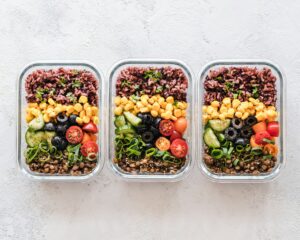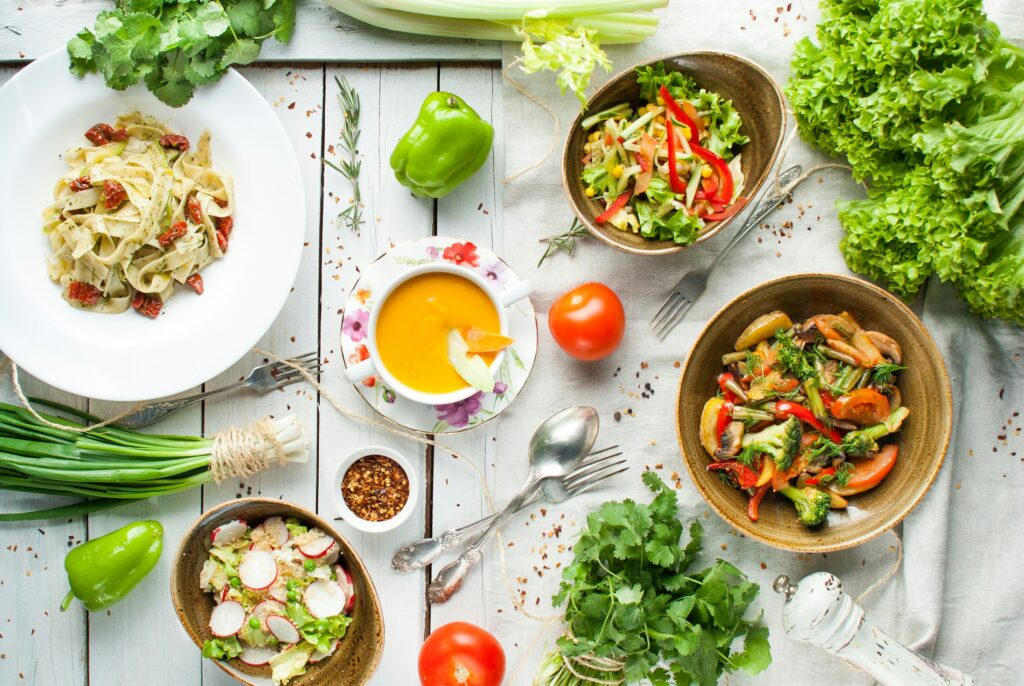
Many people use the terms vegan and vegetarian as if they mean the same thing, but there are a few important differences.
Both eating styles are built around plant-based foods like fruits, vegetables, grains, beans, nuts, and seeds, yet they follow different rules when it comes to animal-derived ingredients.
Knowing those differences can make grocery shopping, meal planning, and ordering at restaurants much easier.
We’ll break down what vegans and vegetarians eat, the foods they avoid, and the everyday choices that make each approach unique.
By the end, you’ll have a clear understanding of both, making it easier to choose recipes and meals that fit your preferences.
| Feature | Vegetarian | Vegan |
|---|---|---|
| Meat | ❌ | ❌ |
| Poultry | ❌ | ❌ |
| Fish | Usually ❌ | ❌ |
| Dairy | ✅ Usually | ❌ |
| Eggs | Sometimes | ❌ |
| Honey | Usually ✅ | Often ❌ |
| Gelatin | Usually ❌ | ❌ |
| Plant Foods | ✅ | ✅ |
What Is a Vegetarian Diet?
A vegetarian diet focuses on plant-based foods while leaving out meat, poultry, and seafood.
Depending on the type of vegetarian diet someone follows, it may still include foods like dairy products and eggs.
There isn’t just one way to be vegetarian, which is why it’s helpful to understand the different variations.
Definition of Vegetarian
Being vegetarian means choosing not to eat meat, poultry, or seafood.
Instead, meals are built around foods such as vegetables, fruits, whole grains, legumes, nuts, and seeds.
Many vegetarians also enjoy dairy products, eggs, or both, depending on the type of vegetarian diet they follow.
Foods That Are Typically Included
Vegetarian diets often include:
- Fruits
- Vegetables
- Whole grains
- Beans, lentils, and chickpeas
- Nuts and seeds
- Herbs and spices
- Dairy products (for some vegetarians)
- Eggs (for some vegetarians)
- Plant-based proteins like tofu, tempeh, and edamame
Foods That Are Avoided
Vegetarians do not eat:
- Beef
- Pork
- Lamb
- Chicken and turkey
- Fish and shellfish
- Game meats
- Products made with meat, such as bacon, sausage, and deli meats
Different Types of Vegetarian Diets
Not all vegetarian diets follow the same guidelines.
Here are the most common types you’ll come across.
Lacto-Vegetarian
Lacto-vegetarians eat plant-based foods along with dairy products such as milk, cheese, yogurt, and butter. They do not eat eggs, meat, poultry, or seafood.
Ovo-Vegetarian
Ovo-vegetarians include eggs in their diet but avoid dairy products. Like all vegetarians, they also avoid meat, poultry, and seafood.
Lacto-Ovo Vegetarian
This is the most common type of vegetarian diet. Lacto-ovo vegetarians eat both dairy products and eggs while avoiding meat, poultry, and seafood.
Pescatarian
A pescatarian diet includes fish and seafood along with plant-based foods and may also include dairy products and eggs.
Although pescatarians avoid meat and poultry, this eating pattern is generally not considered vegetarian because it includes seafood.
The two are often confused because both emphasize plant-based meals.
Flexitarian
A flexitarian follows a mostly plant-based diet but occasionally eats meat, poultry, or seafood.
Since animal meat is still included from time to time, a flexitarian diet is not considered vegetarian.
It’s best described as a flexible approach to eating more plant-based meals.
What Is a Vegan Diet?
A vegan diet is entirely plant-based and excludes all animal-derived foods.
While every vegan eats plant-based meals, many also choose products that avoid animal ingredients or animal testing in other areas of daily life.
For some, veganism is simply a way of eating. For others, it’s a broader lifestyle choice.
Definition of Vegan
Being vegan means eating foods that come from plants while avoiding ingredients that come from animals.
Meals are centered around fruits, vegetables, whole grains, legumes, nuts, seeds, and a wide variety of plant-based alternatives.
Foods Included
A vegan diet commonly includes:
- Fruits
- Vegetables
- Whole grains
- Beans, lentils, and chickpeas
- Nuts and seeds
- Tofu, tempeh, and edamame
- Plant-based milks
- Plant-based yogurts and cheeses
- Herbs, spices, and plant-based oils
Foods Excluded
Vegans avoid all animal-derived foods, including:
- Meat
- Poultry
- Fish and seafood
- Dairy products
- Eggs
- Honey
- Gelatin
- Ingredients made from animal products, such as whey and casein
Veganism Beyond Food
For many people, veganism extends beyond what’s on the plate.
It often influences everyday purchasing decisions by encouraging products that don’t contain animal-derived ingredients or involve animal testing whenever practical.
Clothing Choices
Many vegans choose clothing and accessories made without materials such as leather, wool, silk, fur, or exotic animal skins.
Instead, they may opt for alternatives made from cotton, linen, hemp, recycled materials, or plant-based fabrics.
Cosmetics
Many vegans look for cosmetics and personal care products that are made without animal-derived ingredients.
They may also prefer products that are labeled as not tested on animals.
Household Products
Some household items, including soaps, candles, cleaning products, and detergents, can contain animal-derived ingredients or be tested on animals.
Many vegans choose plant-based alternatives when available.
Lifestyle Philosophy
For many, veganism is more than a diet—it’s a lifestyle centered on reducing the use of animal-derived products where practical.
While individual choices vary, the common goal is to make everyday decisions that align with this approach, from food and clothing to household purchases.
Foods Vegetarians Can Eat
Vegetarian meals can be colorful, satisfying, and full of variety.
Most are built around whole plant foods, while some vegetarian diets also include dairy products, eggs, or both.
The exact foods depend on the type of vegetarian diet someone follows.
Fruits
Fresh, frozen, dried, and canned fruits are all great options. Popular choices include:
- Apples
- Bananas
- Berries
- Oranges
- Grapes
- Mangoes
- Pineapple
- Peaches
- Pears
- Kiwi
Fruits work well in smoothies, oatmeal, yogurt, salads, desserts, and as quick snacks.
Vegetables
Vegetables are the foundation of many vegetarian meals and can be enjoyed raw, roasted, steamed, grilled, or sautéed.
Some favorites include:
- Broccoli
- Spinach
- Kale
- Carrots
- Bell peppers
- Tomatoes
- Cucumbers
- Zucchini
- Cauliflower
- Sweet potatoes
- Mushrooms
- Onions
Mixing different colors and textures helps create meals that are both flavorful and visually appealing.
Whole Grains
Whole grains add texture and make meals more filling. They pair well with vegetables, beans, and plant-based proteins.
Common choices include:
- Brown rice
- Quinoa
- Oats
- Whole wheat pasta
- Whole wheat bread
- Barley
- Bulgur
- Farro
Legumes
Legumes are a staple in many vegetarian kitchens because they’re affordable, versatile, and easy to use in everyday cooking.
Popular options include:
- Black beans
- Kidney beans
- Chickpeas
- Lentils
- Pinto beans
- Cannellini beans
- Split peas
They’re perfect for soups, stews, curries, salads, tacos, and veggie burgers.
Dairy Products (When Applicable)
Lacto-vegetarians and lacto-ovo vegetarians include dairy products in their meals, while ovo-vegetarians do not.
Common dairy foods include:
- Milk
- Cheese
- Yogurt
- Cottage cheese
- Butter
- Cream
These ingredients are often used in breakfast dishes, baked goods, pasta, and casseroles.
Eggs (When Applicable)
Ovo-vegetarians and lacto-ovo vegetarians eat eggs, while lacto-vegetarians do not.
Eggs can be enjoyed in many ways, including:
- Scrambled
- Boiled
- Fried
- Omelets
- Frittatas
- Quiches
- Baking recipes
Nuts and Seeds
Nuts and seeds add crunch, flavor, and variety to vegetarian meals. They’re easy to sprinkle over salads, blend into smoothies, or enjoy as a simple snack.
Popular choices include:
- Almonds
- Walnuts
- Cashews
- Pistachios
- Pecans
- Peanuts
- Chia seeds
- Flaxseeds
- Pumpkin seeds
- Sunflower seeds
- Sesame seeds
Keeping a few different varieties on hand makes it easy to add extra texture and flavor to breakfasts, lunches, dinners, and snacks.
Foods Vegans Can Eat
A vegan diet includes a wide variety of delicious plant-based foods.
From fresh produce to hearty grains and protein-rich staples, there are plenty of ingredients to mix and match for satisfying everyday meals.
Fruits and Vegetables
Fruits and vegetables are at the heart of a vegan diet.
They can be enjoyed fresh, frozen, canned, or dried and add natural color, flavor, and variety to every meal.
Popular choices include:
- Apples
- Bananas
- Berries
- Oranges
- Mangoes
- Broccoli
- Spinach
- Kale
- Bell peppers
- Carrots
- Tomatoes
- Cauliflower
- Zucchini
- Mushrooms
- Sweet potatoes
Try combining a variety of colors on your plate for meals that look as good as they taste.
Beans, Lentils, and Chickpeas
Beans and legumes are pantry staples that work well in countless recipes. They’re affordable, filling, and incredibly versatile.
Some favorites include:
- Black beans
- Kidney beans
- Pinto beans
- Chickpeas
- Green lentils
- Brown lentils
- Red lentils
- Cannellini beans
- Navy beans
- Split peas
Use them in soups, curries, salads, burritos, pasta dishes, and homemade veggie burgers.
Whole Grains
Whole grains provide a hearty base for many vegan meals and pair well with vegetables, legumes, and plant-based proteins.
Common options include:
- Brown rice
- Quinoa
- Oats
- Whole wheat pasta
- Whole wheat bread
- Barley
- Bulgur
- Farro
- Millet
Cooking a batch of grains ahead of time can make meal prep faster throughout the week.
Nuts and Seeds
Nuts and seeds bring crunch, flavor, and texture to both sweet and savory dishes.
Popular varieties include:
- Almonds
- Cashews
- Walnuts
- Pecans
- Pistachios
- Peanuts
- Chia seeds
- Flaxseeds
- Pumpkin seeds
- Sunflower seeds
- Hemp seeds
- Sesame seeds
Enjoy them as snacks, blend them into sauces, or sprinkle them over oatmeal, salads, and smoothie bowls.
Plant-Based Milks
Plant-based milks are widely available and can be used in place of dairy milk in cooking, baking, coffee, cereal, and smoothies.
Common choices include:
- Oat milk
- Soy milk
- Almond milk
- Coconut milk
- Cashew milk
- Rice milk
- Pea milk
Each variety has its own flavor and texture, making it easy to find one that suits your favorite recipes.
Tofu, Tempeh, and Seitan
These popular plant-based proteins are used in a wide range of vegan dishes.
- Tofu has a mild flavor that absorbs marinades and seasonings well, making it great for stir-fries, curries, scrambles, and baked dishes.
- Tempeh is made from fermented soybeans and has a firm texture with a slightly nutty flavor. It’s delicious sliced, grilled, crumbled, or pan-fried.
- Seitan is made from wheat gluten and has a chewy, meat-like texture that works well in sandwiches, wraps, stir-fries, and hearty main dishes.
Plant-Based Yogurts and Cheeses
There are now many dairy-free alternatives that make it easy to enjoy creamy textures and familiar flavors.
Popular options include:
- Soy yogurt
- Coconut yogurt
- Almond yogurt
- Oat yogurt
- Cashew-based cheese
- Almond-based cheese
- Coconut-based cheese
- Vegan cream cheese
These products can be enjoyed on their own or used in recipes ranging from breakfast parfaits to pizzas and pasta dishes.
| Pantry Staple | Vegetarian | Vegan |
|---|---|---|
| Rice | ✓ | ✓ |
| Lentils | ✓ | ✓ |
| Chickpeas | ✓ | ✓ |
| Pasta | ✓ | ✓ |
| Canned Tomatoes | ✓ | ✓ |
| Oats | ✓ | ✓ |
| Olive Oil | ✓ | ✓ |
| Herbs & Spices | ✓ | ✓ |
Foods That Separate Vegan and Vegetarian Diets
Both vegan and vegetarian diets are centered around plant-based foods, but a few ingredients clearly set them apart.
Understanding these differences can make it easier to read food labels, shop with confidence, and choose meals that match your preferences.
Dairy Products
Dairy products are one of the biggest differences between the two eating styles.
Most vegetarians include dairy foods such as:
- Milk
- Cheese
- Yogurt
- Butter
- Cream
- Cottage cheese
Vegans do not eat dairy products. Instead, they choose plant-based alternatives made from ingredients like oats, soy, almonds, coconuts, or cashews.
Eggs
Eggs are another key difference.
Many vegetarians, particularly lacto-ovo and ovo-vegetarians, include eggs in their meals. They may enjoy them boiled, scrambled, fried, or use them in baking and cooking.
Vegans avoid eggs completely and often use plant-based substitutes in recipes, such as flax eggs, chia eggs, or commercial egg replacements.
Honey
Honey is commonly eaten by many vegetarians and is often used as a natural sweetener in drinks, desserts, and baked goods.
Most vegans choose not to consume honey because it is produced by bees. Instead, they may use alternatives such as maple syrup, agave syrup, date syrup, or other plant-based sweeteners.
Gelatin
Gelatin is made from animal collagen and is found in a variety of foods and desserts.
Common products that may contain gelatin include:
- Gummy candies
- Marshmallows
- Gelatin desserts
- Some cheesecakes
- Certain yogurts
- Some capsules and supplements
Since gelatin is animal-derived, it is generally avoided by both vegans and vegetarians. Plant-based alternatives such as agar-agar or pectin are commonly used instead.
Animal-Derived Ingredients to Watch For
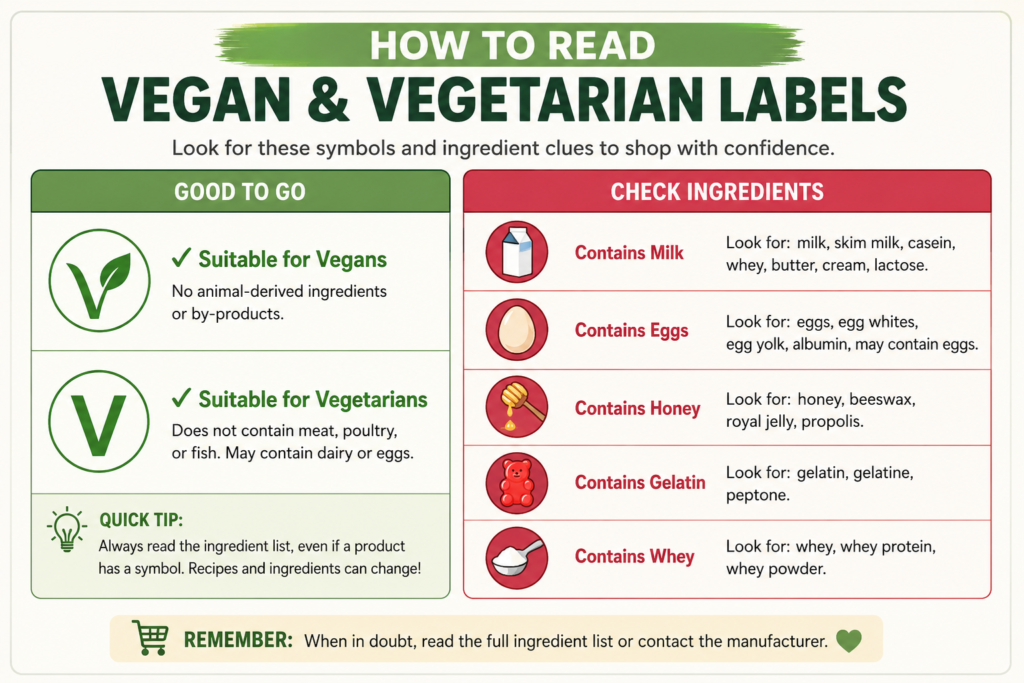
Some packaged foods contain ingredients that aren’t immediately obvious. Taking a moment to read the ingredient list can help you spot them.
Whey
Whey is a milk protein commonly found in protein powders, baked goods, snack foods, and processed products. It is suitable for many vegetarians but is not vegan.
Casein
Casein is another protein derived from milk. It’s often used in cheese, creamy sauces, processed foods, and nutritional products.
Vegetarians may consume it, while vegans avoid it.
Carmine
Carmine is a red food coloring made from insects. It may appear in candies, beverages, baked goods, and some cosmetic products.
Both vegans and many vegetarians choose to avoid it.
Isinglass
Isinglass is made from fish and has traditionally been used during the production of some beers and wines.
Because it comes from fish, it is not considered vegan or vegetarian.
Beeswax
Beeswax is produced by honeybees and is commonly found in candies, coatings, cosmetics, lip balms, and some food wraps.
Many vegetarians use products containing beeswax, while most vegans avoid it.
Shellac
Shellac is a glazing agent made from insect secretions. It is sometimes used to give candies, chocolates, fruit, and pills a shiny finish.
Because it is insect-derived, it is generally avoided by vegans, and many vegetarians also choose to avoid it.
Common Reasons People Choose Vegan or Vegetarian Diets
Personal Food Preferences
Some people simply enjoy meals built around vegetables, grains, beans, and other plant-based ingredients.
They may prefer the flavors, textures, and variety that plant-based cooking offers.
Others discover that they naturally eat less meat over time because they enjoy experimenting with new recipes and ingredients.
A homemade vegetable curry, hearty lentil soup, or pasta loaded with roasted vegetables can be just as satisfying as many traditional meat-based meals.
If you’re just getting started, begin with dishes you already love and swap in plant-based ingredients one step at a time.
Environmental Considerations
Many people are interested in reducing their environmental impact through their food choices.
Choosing more plant-based meals is one way some people aim to use fewer natural resources.
Even small changes, such as preparing one or two plant-based dinners each week, can help people move toward their personal goals.
There’s no need to change everything overnight.
Building new habits gradually often makes the transition easier and more enjoyable.
Animal Welfare Concerns
For many people, concern for animals is an important reason for choosing a vegan or vegetarian lifestyle.
Some decide to avoid certain animal products because they want their everyday purchases to better reflect their personal values.
The level of commitment varies from person to person.
Some people become vegetarian, while others decide that a vegan lifestyle is the better fit.
Cultural and Religious Traditions
Vegetarian eating has long been part of many cultures and religious traditions around the world.
For some families, plant-based meals are everyday favorites that have been passed down through generations.
These recipes often highlight simple ingredients, bold flavors, and traditional cooking methods that continue to bring people together around the table.
Food is deeply personal, and cultural traditions remain an important part of how many people choose to eat.
Household Budget
Plant-based meals can fit many different budgets.
Staple ingredients such as rice, oats, beans, lentils, potatoes, and seasonal vegetables are often affordable and can be used in countless recipes.
Cooking larger batches of soups, curries, chili, or pasta sauces is another practical way to stretch ingredients across several meals.
Planning meals before shopping can also help reduce food waste and make grocery trips more efficient.
Convenience and Availability
Today, it’s easier than ever to prepare vegan or vegetarian meals at home.
Most grocery stores carry a wide variety of fresh produce, grains, legumes, and plant-based alternatives.
Many restaurants also offer vegetarian and vegan menu options, making dining out much more convenient than it was in the past.
If you’re new to plant-based cooking, keep your pantry stocked with a few versatile staples like canned beans, pasta, rice, frozen vegetables, and your favorite seasonings.
Which Diet Is More Flexible?
Everyday Meal Planning
Vegetarian meal planning is often a little simpler because recipes can include ingredients like cheese, yogurt, butter, and eggs.
That means many familiar dishes can be made with only a few small changes.
Vegan meal planning takes a bit more attention, especially when replacing ingredients such as milk, cheese, eggs, or butter in certain recipes.
Fortunately, grocery stores now offer a wide range of plant-based alternatives that make these swaps much easier than they once were.
If you’re just starting out, choose recipes that are naturally vegan or vegetarian instead of trying to replace several ingredients at once.
Simple meals like vegetable stir-fries, bean chili, pasta with tomato sauce, or roasted vegetable grain bowls are great places to begin.
Eating at Restaurants
Dining out is usually straightforward for vegetarians because many restaurants offer dishes that include cheese, eggs, or dairy.
Vegans may have fewer choices depending on the restaurant, but plant-based menus have become much more common in recent years.
Looking at the menu before you arrive can save time and help you find meals that fit your preferences.
Don’t hesitate to ask if a dish can be adjusted by leaving out cheese, butter, or another ingredient.
Many restaurants are happy to make simple changes when possible.
Tips For Ordering At Restaurants
- Look for vegan (V) or vegetarian (VG) symbols on the menu.
- Read the dish description carefully, as ingredients like cheese, butter, eggs, or cream may be included.
- Ask for dressings and sauces on the side so you can check the ingredients first.
- Request that cheese, butter, sour cream, or mayonnaise be left off if needed.
- Don’t be afraid to ask if a meal can be customized with simple substitutions, such as swapping meat for beans or tofu.
- Side dishes like roasted vegetables, rice, baked potatoes, and salads can often be combined into a satisfying meal.
- If you’re unsure about an ingredient, politely ask your server—they’re usually happy to help clarify menu options.
Grocery Shopping
Shopping for vegetarian foods is generally easy because most supermarkets carry plenty of suitable ingredients.
Vegan shopping may require a closer look at ingredient labels since some packaged foods contain hidden animal-derived ingredients.
The good news is that more products are now clearly labeled as vegan, making them easier to spot.
A helpful habit is to build your shopping list around whole foods first.
Fresh vegetables, fruit, beans, lentils, rice, pasta, oats, nuts, and seeds create the foundation for countless satisfying meals.
You can then add plant-based alternatives like oat milk, tofu, or dairy-free cheese if you enjoy them.
Traveling
Traveling as a vegetarian is often a little easier because more menu items may fit your eating style without changes.
Vegan travelers sometimes need a bit more planning, especially when visiting places with fewer plant-based options.
Packing a few easy snacks like trail mix, roasted chickpeas, granola bars, or dried fruit can be helpful during long trips.
Before traveling, it can also be useful to look up nearby grocery stores or restaurants with vegan and vegetarian options.
A little preparation goes a long way and makes it much easier to enjoy good food wherever your trip takes you.
Sample One-Day Vegetarian Menu
If you’re new to vegetarian eating, seeing a full day’s menu can make meal planning feel much easier.
This sample menu combines familiar ingredients with simple recipes to show how satisfying and flavorful vegetarian meals can be.
Breakfast
Vegetable Omelet with Whole Wheat Toast
- Vegetable omelet with spinach, mushrooms, and tomatoes
- Whole wheat toast with butter or avocado
- Fresh berries
- Coffee, tea, or a glass of milk
Lunch
Chickpea Salad Wrap
- Whole wheat tortilla filled with chickpeas, lettuce, cucumber, tomatoes, shredded carrots, and feta cheese
- Side of fresh fruit
- Sparkling water or iced tea
Snack
Greek Yogurt and Fruit
- Plain or vanilla Greek yogurt
- Mixed berries
- A handful of almonds or walnuts
Dinner
Vegetable Pasta Primavera
- Whole wheat pasta tossed with zucchini, broccoli, bell peppers, mushrooms, and cherry tomatoes
- Parmesan cheese sprinkled on top
- Mixed green salad with your favorite dressing
- Garlic bread
Dessert
Fresh Fruit with Yogurt
- Sliced strawberries and blueberries
- A spoonful of vanilla yogurt
- A drizzle of honey (optional)
Sample One-Day Vegan Menu
Planning vegan meals doesn’t have to be complicated.
This sample menu shows how easy it is to build a full day of delicious meals using everyday plant-based ingredients.
Feel free to mix and match your favorite foods to create meals that suit your taste.
Breakfast
Creamy Berry Oatmeal
- Rolled oats cooked with oat milk
- Fresh strawberries, blueberries, and banana slices
- Chopped walnuts
- A sprinkle of cinnamon
- Coffee or tea with your favorite plant-based milk
Lunch
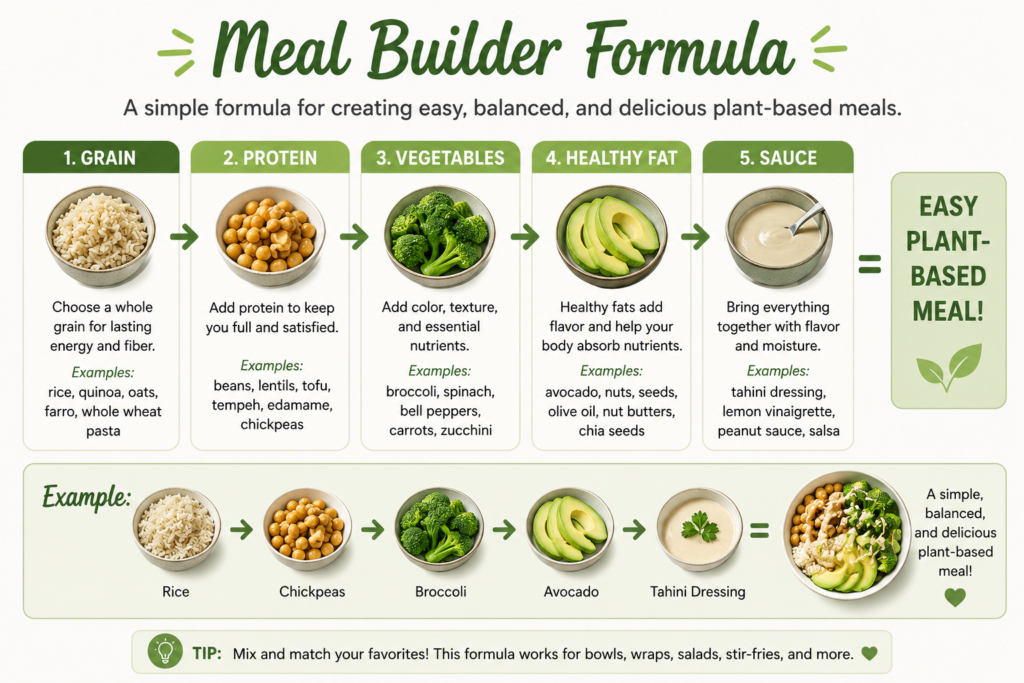
Rainbow Chickpea Grain Bowl
- Brown rice or quinoa
- Roasted chickpeas
- Cucumber, cherry tomatoes, shredded carrots, and avocado
- Mixed greens
- Lemon-tahini dressing
Snack
Apple with Peanut Butter
- One crisp apple, sliced
- Natural peanut butter for dipping
- A small handful of roasted pumpkin seeds
Dinner
Tofu and Vegetable Stir-Fry
- Pan-fried tofu
- Broccoli, bell peppers, snap peas, carrots, and mushrooms
- Garlic and ginger soy sauce
- Steamed brown rice or jasmine rice
Dessert
Coconut Yogurt Parfait
- Plant-based coconut or soy yogurt
- Fresh mixed berries
- Granola
- A drizzle of maple syrup (optional)
Popular Vegan Alternatives to Vegetarian Foods
If you’re moving from a vegetarian diet to a vegan one, you don’t have to give up your favorite meals.
There are plenty of plant-based alternatives that can replace common dairy and egg products while still delivering great flavor and texture in everyday recipes.
| Vegetarian Food | Popular Vegan Alternative | Common Uses |
|---|---|---|
| Cow’s milk | Oat milk | Coffee, cereal, smoothies, baking, cooking |
| Cheese | Cashew cheese | Sandwiches, pizzas, pasta, crackers |
| Yogurt | Coconut yogurt | Breakfast bowls, parfaits, smoothies |
| Butter | Vegan butter | Baking, sautéing, spreading on toast |
| Eggs | Flax egg | Baking cookies, cakes, muffins, pancakes |
| Mayonnaise | Vegan mayo | Sandwiches, wraps, salads, dips |
| Ice cream | Oat milk ice cream | Frozen desserts and milkshakes |
Most of these alternatives can be found in the refrigerated or dairy-free section of many grocery stores.
If you’re trying them for the first time, start by replacing one ingredient at a time instead of changing everything at once.
You’ll quickly discover which products you enjoy most and which work best in your favorite recipes.
For everyday cooking, simple swaps like oat milk, vegan butter, and flax eggs are often all you need to recreate familiar dishes with very little effort.
Simple Ingredient Swaps
Making the switch to vegan cooking can be easier than you might expect.
These simple swaps let you recreate many familiar recipes without sacrificing flavor or texture.
| Instead of… | Try… | Works Well In |
|---|---|---|
| Sour cream | Cashew cream | Tacos, baked potatoes, dips |
| Heavy cream | Coconut cream | Soups, curries, creamy sauces |
| Parmesan | Nutritional yeast | Pasta, popcorn, roasted vegetables |
| Ground beef | Lentils | Tacos, chili, pasta sauce |
| Chicken | Tofu | Stir-fries, grain bowls, wraps |
| Butter | Olive oil | Sautéing, roasting, pasta dishes |
Kitchen Tip: You don’t have to replace every ingredient at once. Start with one or two swaps in recipes you already enjoy, then gradually try new alternatives as you become more comfortable with plant-based cooking. This makes the transition feel simple and keeps your favorite meals familiar.
Grocery Shopping Tips for Both Diets
Read Ingredient Labels
Taking a few extra seconds to read ingredient labels can save surprises later.
Some packaged foods contain ingredients that aren’t obvious at first glance, especially products like sauces, soups, baked goods, and snack foods.
If you’re following a vegan diet, check for ingredients such as milk, eggs, whey, casein, gelatin, or honey.
If you’re vegetarian, ingredient labels can still help you avoid products that contain meat, poultry, fish, or gelatin.
Many grocery stores also carry products labeled “Vegetarian” or “Vegan,” making shopping even simpler.
Stock a Plant-Based Pantry
A well-stocked pantry makes it easy to prepare satisfying meals without making an extra trip to the store.
Start with ingredients you know you’ll use often and gradually build your collection over time.
Some pantry staples worth keeping on hand include:
- Brown rice
- Quinoa
- Oats
- Whole wheat pasta
- Canned beans
- Lentils
- Chickpeas
- Canned tomatoes
- Vegetable broth
- Olive oil
- Herbs and spices
- Nut butters
Keep Versatile Staples on Hand
Some ingredients work in dozens of different recipes, making them excellent everyday staples.
Keeping these foods in your refrigerator or pantry gives you plenty of meal options throughout the week.
Good choices include:
- Tofu
- Frozen vegetables
- Fresh onions
- Garlic
- Potatoes
- Sweet potatoes
- Carrots
- Bell peppers
- Spinach
- Plant-based milk
- Eggs (for vegetarians)
- Yogurt or plant-based yogurt
Explore Seasonal Produce
Seasonal fruits and vegetables often offer the best flavor and variety.
They can also inspire new recipes throughout the year.
In spring, try asparagus, peas, and strawberries.
Summer brings tomatoes, zucchini, peaches, berries, and sweet corn.
Autumn is perfect for squash, pumpkins, apples, and pears.
Winter is a great time to enjoy broccoli, cauliflower, cabbage, carrots, and citrus fruits.
Shopping seasonally keeps meals interesting and encourages you to cook with a wider variety of ingredients.
Try New Plant-Based Products Gradually
There’s no need to fill your cart with every plant-based product on your first shopping trip.
Choose one or two new items each week and see how you like them.
You might start with oat milk, tofu, vegan butter, or a dairy-free yogurt.
Once you become familiar with those ingredients, adding new products feels much less overwhelming.
The more you cook, the more you’ll discover your favorite flavors, brands, and recipes.
Beginner Shopping Cart Example
If you’re new to vegan or vegetarian cooking, use this simple shopping list as a starting point.
It includes versatile ingredients that can be mixed and matched to create breakfasts, lunches, dinners, and snacks throughout the week.
| Produce | Pantry | Refrigerated |
|---|---|---|
| Broccoli | Brown rice | Tofu |
| Spinach | Canned beans | Oat milk |
| Bell peppers | Lentils | Yogurt or vegan yogurt |
| Carrots | Whole wheat pasta | Cheese or vegan cheese |
| Tomatoes | Rolled oats | Eggs (vegetarian only) |
| Onions | Chickpeas | Vegan butter |
| Garlic | Quinoa | Hummus |
| Bananas | Peanut butter | Plant-based yogurt |
| Apples | Canned tomatoes | Fresh herbs |
| Avocados | Olive oil | Tempeh (optional) |
Shopping Tip: Start with versatile ingredients you can use in several meals. For example, broccoli, rice, and tofu can become a stir-fry one night, while chickpeas, spinach, and quinoa can be turned into a hearty grain bowl the next day. This approach helps reduce food waste and makes meal planning much easier.
5 Beginner-Friendly Plant-Based Cooking Tools
You don’t need a kitchen full of gadgets to prepare delicious vegan or vegetarian meals.
A few reliable tools can make cooking faster, easier, and more enjoyable.
| Tool | Why It’s Helpful |
|---|---|
| Chef’s knife | Makes chopping vegetables, herbs, and fruit faster and more precise. |
| Cutting board | Provides a safe, stable surface for preparing ingredients. |
| Nonstick skillet | Perfect for sautéing vegetables, cooking tofu, and making one-pan meals with minimal sticking. |
| Sheet pan | Ideal for roasting vegetables, chickpeas, and tofu with very little hands-on effort. |
| Blender | Great for smoothies, creamy soups, sauces, dips, and homemade dressings. |
Kitchen Tip: Start with these five essentials before buying specialty equipment. They can handle most everyday vegan and vegetarian recipes, helping you cook confidently without spending a lot on extra kitchen tools.
Easy Meals Everyone Can Enjoy
Vegetable Stir-Fry
A vegetable stir-fry is one of the quickest meals you can make.
Start by cooking your favorite vegetables, such as broccoli, carrots, bell peppers, mushrooms, and snap peas, in a little oil over medium-high heat.
Add garlic, ginger, and a splash of soy sauce or tamari for bold flavor.
Serve the vegetables over steamed rice, quinoa, or noodles for a complete meal.
For extra texture, add tofu for a vegan version or top with a fried egg if you’re following a vegetarian diet that includes eggs.
Chickpea Curry
Chickpea curry is warm, comforting, and surprisingly easy to prepare.
Cook onions, garlic, and your favorite curry spices until fragrant, then stir in canned chickpeas, diced tomatoes, and coconut milk.
Let everything simmer until the sauce thickens and the flavors come together.
Serve it with fluffy rice or warm naan for a satisfying meal.
Leftovers taste just as delicious the next day, making this recipe perfect for meal prep.
Pasta Primavera
Pasta primavera is a colorful dish that celebrates fresh vegetables.
Cook your favorite pasta while sautéing vegetables such as zucchini, broccoli, cherry tomatoes, peas, asparagus, or mushrooms.
Toss everything together with olive oil, garlic, fresh herbs, and a squeeze of lemon juice.
Vegetarians can finish the dish with grated Parmesan cheese, while vegans can sprinkle on nutritional yeast or a dairy-free Parmesan alternative for a savory finish.
Lentil Soup
A pot of lentil soup is simple, filling, and ideal for busy days.
Start with onions, carrots, and celery, then add garlic, lentils, vegetable broth, diced tomatoes, and your favorite herbs.
Let the soup simmer until the lentils are tender and the vegetables are soft.
Serve it with crusty bread or a side salad for an easy meal that feels comforting any time of year.
Make a large batch and freeze individual portions for quick lunches or dinners.
Veggie Burrito Bowls
Veggie burrito bowls are easy to customize with whatever ingredients you have on hand.
Begin with a base of rice or quinoa, then add black beans, corn, tomatoes, avocado, shredded lettuce, and your favorite salsa.
Top with fresh cilantro and a squeeze of lime for extra brightness.
Vegetarians can add shredded cheese or sour cream, while vegans can use dairy-free cheese, guacamole, or a creamy cashew sauce.
Every bowl can be a little different, making this a fun meal for families or meal prep.
Overnight Oats
Overnight oats are one of the easiest breakfasts to prepare ahead of time.
Combine rolled oats with milk or plant-based milk, then stir in chia seeds and a little maple syrup if you’d like extra sweetness.
Refrigerate the mixture overnight so the oats soften while you sleep.
In the morning, add fresh fruit, chopped nuts, seeds, or a spoonful of nut butter for extra flavor and texture.
Prepare several jars at once, and you’ll have a quick breakfast ready for the next few days.
Common Myths About Vegan and Vegetarian Diets
“They’re Exactly the Same”
This is probably the biggest misconception.
Both vegan and vegetarian diets focus on plant-based foods, but they are not the same.
Many vegetarians eat dairy products, eggs, or both, while vegans avoid all animal-derived foods, including milk, cheese, butter, eggs, and honey.
“Plant-Based Meals Are Always Expensive”
Plant-based meals don’t have to cost a fortune.
Some specialty products can be pricey, but they aren’t required for delicious everyday cooking.
Many affordable pantry staples, such as rice, oats, beans, lentils, potatoes, pasta, and seasonal vegetables, can be used to create satisfying meals.
Cooking at home and planning meals around these ingredients is often one of the easiest ways to keep grocery costs under control.
“There’s Nothing to Eat”
At first, a vegan or vegetarian diet may seem limiting.
In reality, there are thousands of meals to choose from.
Pasta dishes, soups, curries, tacos, grain bowls, stir-fries, sandwiches, salads, wraps, casseroles, and homemade pizzas can all be adapted to fit either lifestyle.
Once your pantry is stocked with a few basic ingredients, you’ll have plenty of options for breakfast, lunch, dinner, and snacks.
“Every Vegetarian Eats Eggs and Dairy”
Not all vegetarians eat the same foods.
Some include both eggs and dairy, while others choose only one of those foods.
For example, a lacto-vegetarian eats dairy but not eggs, while an ovo-vegetarian eats eggs but not dairy.
“All Vegan Foods Taste the Same”
Nothing could be further from the truth.
Vegan cooking includes an incredible variety of flavors, textures, and cuisines from around the world.
Fresh herbs, spices, roasted vegetables, rich sauces, crunchy toppings, and flavorful ingredients like garlic, ginger, citrus, and herbs can completely transform a meal.
The more recipes you try, the more you’ll discover just how creative and delicious plant-based cooking can be.
Many people are surprised by how satisfying familiar favorites like chili, pasta, curries, tacos, burgers, and desserts can be when made with plant-based ingredients.
Tips for Transitioning to Either Lifestyle
Start with Familiar Meals
The easiest way to begin is by making plant-based versions of meals you already love.
If tacos are a family favorite, try filling them with black beans or lentils instead of meat.
If you enjoy pasta, toss it with roasted vegetables, a rich tomato sauce, or a creamy plant-based sauce.
Starting with familiar recipes helps you build confidence while keeping mealtime enjoyable.
Replace One Ingredient at a Time
There’s no need to change your entire grocery list overnight.
Pick one ingredient to swap and see how you like it.
You might replace cow’s milk with oat milk, use vegan butter instead of dairy butter, or add tofu to a stir-fry instead of chicken.
Making one change at a time gives you the chance to discover what works best for your cooking style and taste.
Learn Simple Plant-Based Cooking Techniques
A few basic cooking skills can make plant-based meals taste even better.
Roasting vegetables brings out their natural sweetness and creates delicious caramelized edges.
Sautéing onions and garlic before adding other ingredients builds a flavorful base for soups, curries, pasta sauces, and stir-fries.
Cooking grains like rice or quinoa in vegetable broth instead of water is another easy way to add extra flavor.
As you become more comfortable with these techniques, creating satisfying meals becomes second nature.
Keep Easy Snacks Available
Having ready-to-eat snacks on hand makes it easier to stay on track during busy days.
Fresh fruit, mixed nuts, roasted chickpeas, hummus with vegetables, popcorn, and trail mix are all simple choices that require little preparation.
Preparing a few snacks ahead of time can save time and make it easier to avoid last-minute food decisions.
Experiment with Herbs and Spices
Flavor is what makes people excited to cook the same meal again.
Fresh herbs, dried spices, citrus juice, garlic, onions, and ginger can completely change the character of a dish.
Try seasoning roasted vegetables with smoked paprika, rosemary, or thyme, or brighten soups and grain bowls with fresh parsley and a squeeze of lemon.
Don’t be afraid to experiment.
Some of the best recipes come from trying new flavor combinations and discovering what you enjoy most.
The more you cook, the more confident you’ll become, and before long, preparing delicious vegan or vegetarian meals will feel like second nature.
Kitchen Confidence Tip
You don’t need to learn dozens of recipes to enjoy vegan or vegetarian cooking. Start by mastering three or four simple meals that you genuinely enjoy, then keep those in regular rotation while gradually trying new recipes. Over time, you’ll naturally build a collection of favorite dishes, making meal planning easier and cooking feel more relaxed and enjoyable.
7-Day Beginner Plant-Based Meal Challenge
Ready to put what you’ve learned into practice? Try this simple one-week meal challenge to explore a variety of vegan and vegetarian dishes.
It’s an easy way to build confidence in the kitchen and discover new favorites without feeling overwhelmed.
| Day | Meal Idea |
|---|---|
| Monday | Overnight Oats with Fresh Fruit |
| Tuesday | Vegetable Stir-Fry with Rice |
| Wednesday | Hearty Lentil Soup with Whole Grain Bread |
| Thursday | Veggie Burrito Bowl |
| Friday | Creamy Chickpea Curry with Rice |
| Saturday | Pasta Primavera with Roasted Vegetables |
| Sunday | Black Bean and Veggie Tacos |
Challenge Tip: Feel free to swap meals based on what you already have at home. The goal isn’t perfection—it’s to try new ingredients, practice simple cooking techniques, and enjoy more flavorful plant-based meals throughout the week.
Final Thoughts
Vegan and vegetarian lifestyles both celebrate delicious plant-based foods, but they differ in whether animal-derived products like dairy, eggs, and honey are included.
Neither approach is one-size-fits-all, so choose the one that best matches your preferences, values, and everyday routine.
If you’re just getting started, keep it simple by trying a few new recipes and experimenting with different plant-based ingredients.
Every meal is a chance to discover new flavors, build confidence in the kitchen, and enjoy the variety that plant-based cooking has to offer.
FAQs
Is vegan the same as vegetarian?
No. Both diets focus on plant-based foods, but vegetarians may eat dairy products, eggs, or both, while vegans avoid all animal-derived foods.
Can vegetarians eat cheese?
Yes, many vegetarians eat cheese because it is made from milk. However, vegans do not eat cheese unless it is a plant-based alternative.
Do vegans eat eggs?
No. Vegans avoid eggs and foods made with eggs, choosing plant-based substitutes when needed.
Can vegans eat honey?
Most vegans do not eat honey because it is produced by bees. Popular alternatives include maple syrup, agave syrup, and date syrup.
What foods do both vegans and vegetarians eat?
Both diets include foods such as fruits, vegetables, whole grains, beans, lentils, chickpeas, nuts, seeds, herbs, spices, and plant-based oils.
Can someone switch between vegan and vegetarian eating?
Yes. Some people move from vegetarian to vegan over time, while others choose a vegetarian diet after trying vegan eating. The best approach is the one that fits your lifestyle and preferences.
Is tofu vegan and vegetarian?
Yes. Tofu is made from soybeans, making it suitable for both vegan and vegetarian diets.
What are the easiest meals for beginners?
Simple meals like vegetable stir-fries, chickpea curry, lentil soup, veggie burrito bowls, pasta primavera, and overnight oats are all great options for beginners.

Hi, I’m Daisy Roots, the home cook and recipe developer behind this kitchen. I create simple, tested vegan recipes using everyday ingredients. Every dish is developed and cooked in my own kitchen, with clear steps to help you get reliable results every time. Thanks for stopping by — let’s cook something great!