Perfectly cooked vegetables should be tender, colorful, and full of flavor—not soft and mushy.
If you’ve ever ended up with broccoli that falls apart or zucchini that’s watery, you’re not alone.
Small mistakes like cooking for too long or using too much water can quickly change the texture.
The good news is that it’s easy to keep vegetables crisp-tender with a few simple cooking habits.
The right method, careful timing, and a little attention make all the difference.
In this guide, you’ll learn what causes vegetables to become mushy, how to avoid the most common mistakes, and practical tips to help you cook vegetables that look great, taste delicious, and have the perfect bite every time.
Why Vegetables Become Mushy
Overcooking
The most common reason vegetables become mushy is that they stay on the heat for too long.
As vegetables cook, their structure gradually softens.
A little softening is what makes them pleasant to eat, but once they pass that point, they quickly become limp and watery.
Many vegetables only need a few extra minutes to go from perfectly crisp-tender to overcooked.
Checking them a minute or two before the recommended cooking time is a simple habit that can make a big difference.
A fork should slide in with a little resistance instead of passing through effortlessly.
Remember that vegetables continue to cook for a short time after you remove them from the heat, so it’s often better to stop cooking just before they seem completely done.
Different vegetables also cook at different speeds.
Tender vegetables like spinach, zucchini, and asparagus cook much faster than carrots, potatoes, or beets.
Trying to cook everything for the same amount of time almost always leaves some vegetables overcooked while others need more time.
When cooking mixed vegetables, add the ones that take longer first, then stir in the quicker-cooking vegetables later.
Too Much Moisture
Water is useful for cooking vegetables, but too much of it can leave them soft instead of flavorful.
Boiling vegetables in a large pot of water for too long allows them to absorb extra moisture.
That added water weakens their texture and can also dull their flavor.
Steaming often helps vegetables stay firmer because they are surrounded by steam instead of sitting directly in water.
If you do boil vegetables, use only as much water as needed and drain them as soon as they reach the texture you want.
Leaving cooked vegetables sitting in hot water allows them to keep cooking even after the heat is turned off.
Frozen vegetables can also become mushy if they aren’t cooked correctly.
Ice crystals naturally form during freezing, and they release moisture as the vegetables heat up.
Cooking frozen vegetables over medium-high heat and avoiding overcrowded pans helps that extra moisture evaporate instead of collecting around the vegetables.
Incorrect Cooking Method
Not every vegetable responds well to the same cooking method.
Choosing the right technique can make the difference between vegetables that are crisp and flavorful or soft and soggy.
Roasting works well for vegetables like broccoli, carrots, Brussels sprouts, and cauliflower because the dry heat removes moisture while creating delicious browned edges.
Sautéing is a great choice when you want vegetables to cook quickly while keeping a little bite.
Steaming is ideal for vegetables that you want tender without becoming waterlogged, such as green beans, broccoli, and asparagus.
Boiling works best for vegetables that need to soften more, like potatoes or beets, but timing is especially important.
Matching the cooking method to the vegetable gives you much better results with very little extra effort.
Cutting Vegetables Unevenly
The size of your vegetable pieces affects how evenly they cook.
Small pieces cook much faster than large ones.
If some pieces are tiny while others are thick, the smaller pieces may become mushy before the larger ones are ready.
Taking an extra minute to cut vegetables into similar-sized pieces helps everything finish cooking at about the same time.
You don’t need perfect knife skills to do this.
Simply aim for pieces that are close in size, and you’ll notice a much more even texture in the finished dish.
This small habit makes cooking easier and helps every bite look and taste better.
Know Your Vegetables
Not all vegetables cook at the same speed.
Some become tender in just a few minutes, while others need much longer to soften.
Tender Vegetables
These vegetables cook quickly because they naturally contain more moisture and have a softer texture.
| Vegetable | Best Cooking Methods | Helpful Tip |
|---|---|---|
| Zucchini | Sauté, grill, roast | Cook just until lightly browned to prevent it from becoming watery. |
| Spinach | Sauté, steam | It wilts very quickly, usually in just a few minutes. Remove it from the heat as soon as it softens. |
| Asparagus | Roast, steam, grill | Cook until crisp-tender so it keeps its slight snap. |
| Mushrooms | Sauté, roast, grill | Cook over medium-high heat so excess moisture evaporates instead of making them soggy. |
Tender vegetables benefit from short cooking times and higher heat.
Keep an eye on them because even one or two extra minutes can noticeably change their texture.
Medium-Firm Vegetables
These vegetables are sturdy enough to handle several cooking methods while still cooking fairly quickly.
| Vegetable | Best Cooking Methods | Helpful Tip |
|---|---|---|
| Broccoli | Steam, roast, sauté | Remove it from the heat while it’s still bright green and slightly firm. |
| Cauliflower | Roast, steam, air fry | Roast for caramelized edges or steam just until fork-tender. |
| Green Beans | Steam, sauté, blanch | They taste best when they still have a slight crunch. |
| Bell Peppers | Sauté, roast, grill | Cook until slightly softened while keeping a little firmness for the best texture. |
The goal with medium-firm vegetables is to reach a crisp-tender texture.
This means they are cooked through but still have a gentle bite instead of feeling soft or falling apart.
Checking them often during the last few minutes of cooking helps you stop at just the right moment.
Dense Vegetables
Dense vegetables have a firmer structure, so they naturally take longer to cook.
| Vegetable | Best Cooking Methods | Helpful Tip |
|---|---|---|
| Carrots | Roast, steam, boil | Slice evenly so every piece cooks at the same rate. |
| Potatoes | Roast, boil, bake | Cook until tender but not crumbly unless you’re making mashed potatoes. |
| Sweet Potatoes | Roast, bake, steam | Roast to develop a creamy inside with lightly crisp edges. |
| Beets | Roast, boil, steam | Their dense texture allows for longer cooking without becoming mushy too quickly. |
Because these vegetables start out much firmer, they can handle longer cooking times without losing their shape.
That doesn’t mean they can’t be overcooked, though.
Testing them with a fork as they near the end of the cooking time helps you find the perfect balance between tender and firm.
Once you learn which vegetables cook quickly and which need more time, planning meals becomes much easier, and you’ll get consistently better texture with every dish.
Vegetable Cooking Cheat Sheet
Cooking times can vary depending on the size of your vegetable pieces and the cooking method you choose.
Use this quick guide as a starting point, then check your vegetables near the end of cooking to avoid overcooking them.
| Vegetable | Best Cooking Method | Cooking Time | Texture Goal |
|---|---|---|---|
| Broccoli | Steaming, roasting | 5–25 minutes | Bright green with a slight crunch and tender stems |
| Zucchini | Sautéing, grilling | 4–10 minutes | Tender with a firm bite, not soft or watery |
| Carrots | Roasting, steaming | 8–35 minutes | Soft enough to bite while still holding their shape |
| Green Beans | Steaming, sautéing | 4–7 minutes | Crisp with a fresh snap |
| Brussels Sprouts | Roasting, air frying | 20–30 minutes | Crispy outer leaves with a tender center |
| Potatoes | Roasting, boiling | 20–40 minutes | Fork-tender while still keeping their structure |
The key is to start checking vegetables slightly before the suggested cooking time.
Smaller pieces will cook faster, while larger pieces may need a little longer.
When vegetables reach the texture you enjoy, remove them from the heat to prevent them from becoming mushy.
Choose the Right Cooking Method
The way you cook your vegetables has just as much impact on their texture as the vegetables themselves.
Using the right cooking method helps bring out natural sweetness, creates better texture, and keeps vegetables from becoming soft and watery.
Roasting
Roasting is one of the best ways to cook vegetables if you want rich flavor and a satisfying texture.
The dry heat of the oven removes excess moisture instead of trapping it, which helps vegetables brown instead of steam.
As vegetables roast, their natural sugars caramelize.
Caramelization is simply the browning that happens when natural sugars are exposed to high heat, creating deeper flavor and golden edges.
For the best results, spread vegetables in a single layer with a little space between each piece.
Overcrowding the baking tray causes vegetables to steam instead of roast.
Roasting works especially well for broccoli, cauliflower, carrots, Brussels sprouts, potatoes, sweet potatoes, onions, and bell peppers.
Steaming
Steaming is a gentle cooking method that helps vegetables stay bright, fresh, and tender.
Because the vegetables aren’t sitting directly in water, they absorb less moisture and are less likely to become soggy.
This method works especially well for broccoli, green beans, asparagus, cauliflower, and carrots.
Keep a close eye on the cooking time because vegetables can quickly go from crisp-tender to overcooked.
As soon as they reach the texture you like, remove them from the steamer so they don’t continue cooking.
Sautéing
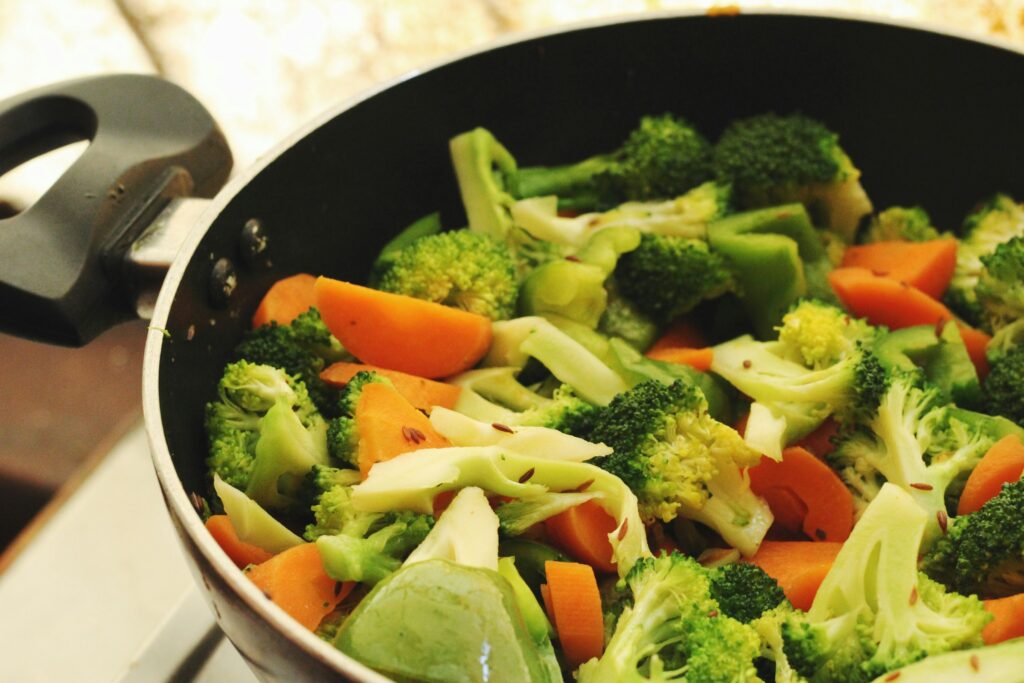
Sautéing cooks vegetables quickly over medium-high heat using a small amount of oil or butter.
The higher heat helps vegetables soften while still keeping a pleasant bite.
Stir the vegetables occasionally so they cook evenly without burning.
Avoid adding too many vegetables to the pan at once.
A crowded pan traps steam, making vegetables softer instead of lightly browned.
Sautéing is an excellent choice for zucchini, mushrooms, bell peppers, onions, asparagus, and green beans.
Stir-Frying
Stir-frying uses high heat and very short cooking times to create vegetables that are tender yet crisp.
The secret is to have everything prepared before you turn on the stove.
Once cooking begins, things move quickly.
Keep the vegetables moving almost constantly so they cook evenly without sitting too long against the hot pan.
Adding vegetables in order of cooking time also helps.
Start with firmer vegetables like carrots or broccoli, then add quicker-cooking vegetables such as bell peppers, mushrooms, or snow peas.
Grilling
Grilling gives vegetables a lightly charred exterior and a delicious smoky flavor while helping them stay firm inside.
The direct heat cooks the outside quickly without giving the inside time to become mushy.
Brush vegetables lightly with oil before grilling to help prevent sticking.
Turn them occasionally so they cook evenly on all sides.
Asparagus, zucchini, corn, mushrooms, onions, eggplant, and bell peppers all grill beautifully.
Air Frying
Air frying combines hot circulating air with quick cooking times to produce vegetables with crisp edges and tender centers.
Because moisture escapes easily during cooking, vegetables are less likely to become soggy.
Spread vegetables in a single layer inside the basket whenever possible.
If the basket is packed too full, air cannot circulate properly, and the vegetables may steam instead of crisp.
Air fryers work especially well for broccoli, cauliflower, Brussels sprouts, carrots, zucchini, and green beans.
Boiling
Boiling is useful when vegetables need to become soft enough for recipes like mashed potatoes, vegetable soups, or purees.
It also works well for vegetables that will be added to another dish after cooking.
The key is to avoid leaving vegetables in boiling water longer than necessary.
Start checking for doneness a few minutes before the expected cooking time.
As soon as the vegetables are tender, drain them immediately.
If you want them to stay firm and colorful, briefly rinse them with cold water or place them in an ice bath to stop the cooking process.
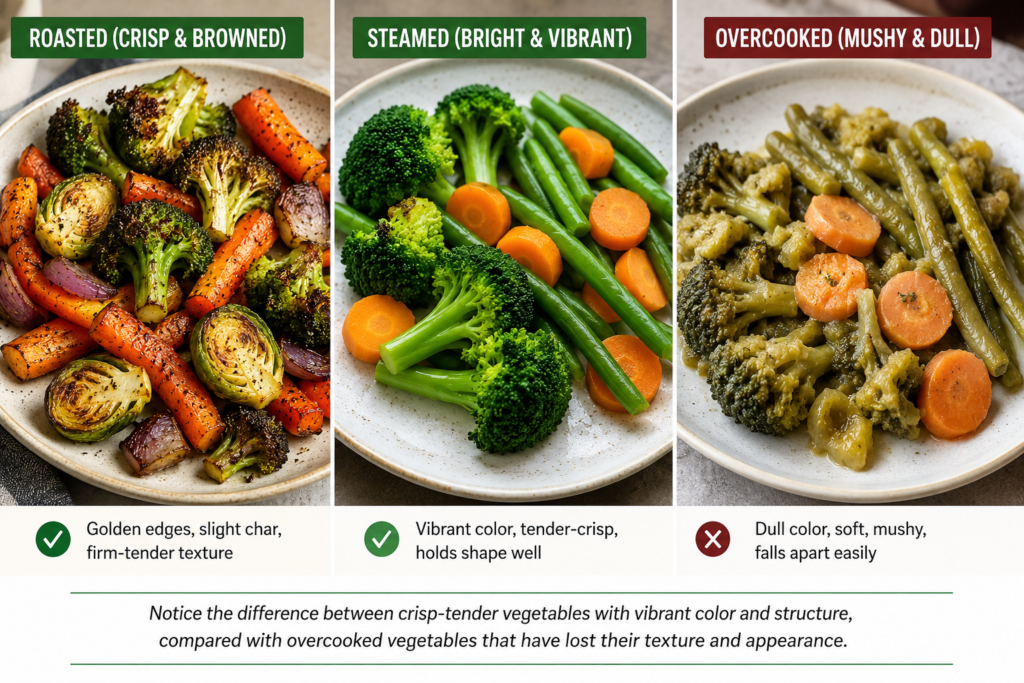
Choose Your Cooking Method Based on Your Goal
The best cooking method depends on the texture and flavor you want to achieve.
Use this simple guide to choose the right technique before you start cooking.
| If You Want… | Best Method | Why It Works |
|---|---|---|
| Crispy edges | Roasting | Dry heat removes moisture and creates golden, flavorful browning. |
| Bright color | Steaming | Gentle heat helps vegetables stay vibrant while keeping their texture. |
| Fast results | Sautéing | High heat cooks vegetables quickly while maintaining a pleasant bite. |
| Smoky flavor | Grilling | Direct heat adds a delicious char while helping vegetables stay firm. |
| Extra crisp texture | Air frying | Circulating hot air removes moisture and creates crisp edges. |
| Softer vegetables | Boiling | Works well for vegetables that need more tenderness, such as potatoes and soup ingredients. |
Master Cooking Times
Cooking vegetables for the right amount of time is one of the easiest ways to improve their texture.
Even the best cooking method can produce mushy vegetables if they stay on the heat for too long.
Learning when to stop cooking takes a little practice, but it quickly becomes second nature.
Cook Until Crisp-Tender
The goal for many vegetables is to reach a texture called crisp-tender.
Crisp-tender means the vegetables are fully cooked but still have a slight firmness when you bite into them.
They shouldn’t feel raw or hard, but they also shouldn’t be so soft that they fall apart.
Broccoli, green beans, asparagus, carrots, and cauliflower all taste wonderful when cooked to this stage.
One of the easiest ways to test doneness is with a fork.
Gently press a fork into the thickest part of the vegetable.
The fork should slide in with a little resistance instead of sinking in effortlessly.
You can also cut into a piece and take a quick taste.
If it has a pleasant bite and good flavor, it’s ready to come off the heat.
Don’t worry if it isn’t perfect the first time.
With each meal, you’ll become better at recognizing the texture you enjoy most.
Set a Timer
It’s surprisingly easy to lose track of time while preparing the rest of a meal.
A simple kitchen timer or the timer on your phone can prevent vegetables from cooking longer than planned.
Set the timer for a minute or two before the expected cooking time rather than waiting until the very end.
This gives you a chance to check the vegetables before they become overcooked.
If they need another minute, you can always continue cooking.
It’s much harder to fix vegetables that have already turned mushy.
Check Frequently
Vegetables often cook slowly at first and then seem to finish all at once.
Those last couple of minutes are when texture changes the fastest.
Make a habit of checking your vegetables more often as they get close to being done.
Lift the lid, stir the pan, or test a piece every minute or so.
This only takes a few seconds and helps you catch the perfect moment to stop cooking.
Keep in mind that vegetables continue cooking from their own heat even after you remove them from the stove, oven, or grill.
Taking them off just before they seem completely finished often gives you the best final texture by the time they reach the table.
Signs Your Vegetables Are Perfectly Cooked
Knowing when vegetables are done is easier when you look for a few simple signs.
The goal is to cook them until they are tender, flavorful, and easy to enjoy without losing their natural texture.
- Color: Vegetables should usually keep their bright, fresh appearance instead of becoming dull or faded.
- Texture: A fork should slide in easily, but the vegetable should still have a little resistance when you bite into it.
- Shape: Properly cooked vegetables should hold their structure instead of becoming soft, flat, or falling apart.
- Flavor: Well-cooked vegetables should taste naturally sweet and flavorful without becoming watery or bland.
Use Less Water
Using the right amount of water can make a big difference in how your vegetables turn out.
Too much water can leave vegetables soft, watery, and less flavorful.
In many cases, a simple change in cooking technique is all it takes to keep them firm and delicious.
Steam Instead of Boil
Steaming is one of the easiest ways to cook vegetables without making them mushy.
Because the vegetables are surrounded by hot steam instead of sitting in water, they absorb much less moisture.
This helps them keep their natural texture while still becoming tender.
Steaming also allows vegetables to hold their bright color and fresh flavor.
Broccoli, green beans, asparagus, carrots, cauliflower, and zucchini all respond well to this gentle cooking method.
You only need enough water in the pot to create steam.
The vegetables should sit above the water rather than touching it.
Once they reach a crisp-tender texture, remove them from the steamer right away to prevent overcooking.
Use Just Enough Water
When boiling is the best choice, using less water often gives better results.
There’s no need to fill a large pot to the top if you’re only cooking a small amount of vegetables.
Using just enough water to cover the vegetables helps reduce the amount of moisture they absorb during cooking.
Bring the water to a full boil before adding the vegetables.
Starting with boiling water helps them cook more quickly and evenly.
Avoid lowering the heat too much after adding the vegetables.
A gentle boil keeps the cooking time shorter and helps preserve a better texture.
Drain Immediately
Once vegetables are cooked, don’t let them sit in the hot water.
Even after the burner is turned off, the remaining heat continues cooking them.
This extra cooking time is often what turns perfectly tender vegetables into mushy ones.
As soon as the vegetables reach the texture you want, carefully drain them in a colander.
If you’re cooking vegetables for a salad, meal prep, or another dish where you want them to stay especially firm, rinse them briefly with cold water or place them in an ice bath.
The sudden drop in temperature quickly stops the cooking process and helps lock in both texture and color.
Don’t Overcrowd the Pan
How you arrange your vegetables in the pan is just as important as how long you cook them.
When too many vegetables are packed into the same space, they don’t cook the way you expect.
Giving them a little room allows heat to circulate properly and helps create a much better texture.
Why Crowding Causes Steaming
Every vegetable releases moisture as it cooks.
When the pan is overcrowded, that moisture has nowhere to escape.
Instead of evaporating, it collects around the vegetables and creates steam.
Steaming isn’t always a bad thing, but it won’t give you the lightly browned, crisp edges that roasting, sautéing, or air frying can achieve.
The trapped moisture also slows down browning.
Without enough direct contact with the hot surface, vegetables soften before they have a chance to develop rich flavor and color.
If you’ve ever wondered why your roasted vegetables came out pale and soft instead of golden and slightly crispy, an overcrowded pan is often the reason.
Leaving a little space between the pieces allows the heat to reach every side more evenly.
Cook in Batches
If you have a large amount of vegetables to cook, it’s better to prepare them in two smaller batches than one crowded pan.
Cooking in batches gives each piece enough space for hot air or direct heat to do its job.
Better airflow helps moisture escape instead of collecting around the vegetables.
The result is vegetables that brown more evenly and keep a firmer texture.
This approach also makes it easier to stir or flip the vegetables without crushing them.
If you’re roasting, use two baking sheets instead of piling everything onto one.
For sautéing or stir-frying, wait until the first batch is finished before adding the next.
It may take a few extra minutes, but the improvement in texture and flavor is well worth the small amount of extra time.
Dry Vegetables Before Cooking
Removing excess moisture before cooking is a small step that can make a big difference.
Dry vegetables brown more easily, develop better flavor, and are much less likely to turn soft or soggy.
Pat Fresh Vegetables Dry
After washing fresh vegetables, don’t place them straight into a hot pan or onto a baking sheet.
Water left on the surface creates steam as soon as it meets the heat.
That steam makes it harder for the vegetables to brown and can leave them softer than you’d like.
Use a clean kitchen towel or paper towels to gently pat the vegetables dry.
You don’t have to remove every single drop of water, but they should feel mostly dry before cooking.
This step is especially important when roasting or sautéing.
Dry vegetables roast with crisp, golden edges instead of becoming pale and watery.
They also sauté more evenly because the pan stays hot instead of cooling down from excess moisture.
Leafy vegetables like spinach are an exception because they’re often cooked specifically to wilt.
Even then, draining off excess water after washing helps prevent a watery finished dish.
Remove Excess Moisture from Frozen Vegetables
Frozen vegetables are convenient, but they naturally release extra water as they cook.
This happens because tiny ice crystals form during freezing and melt once heat is applied.
In many cases, you don’t need to thaw frozen vegetables before cooking.
Cooking them directly from frozen often helps them keep a better texture.
The key is to use a hot oven, skillet, or air fryer so the extra moisture evaporates quickly.
Avoid overcrowding the pan, as this traps the released moisture and causes the vegetables to steam.
If your frozen vegetables produce a lot of liquid while cooking, carefully pour off the excess or allow it to evaporate before continuing.
For roasting, spread frozen vegetables into a single layer so hot air can circulate around each piece.
A little extra cooking time is usually better than lowering the temperature.
Higher heat helps remove moisture while encouraging browning, giving you vegetables with crisp edges and tender centers instead of a soft, watery texture.
Keep Vegetables Bright and Firm
Great vegetables should look as good as they taste.
Bright color and a firm texture often go hand in hand, and both are easier to achieve than you might think.
Use an Ice Bath After Blanching
Blanching means briefly cooking vegetables in boiling water before quickly cooling them.
This method is commonly used for vegetables like broccoli, green beans, asparagus, peas, and carrots.
As soon as the vegetables are done blanching, transfer them straight into a bowl of ice water.
The sudden drop in temperature stops the cooking process almost immediately.
Without this step, the vegetables continue cooking from their own heat, even after they’ve been removed from the boiling water.
An ice bath helps vegetables keep their bright, fresh color.
It also helps preserve the crisp-tender texture that can easily be lost if they continue cooking for even a minute or two.
Leave the vegetables in the ice water until they are completely cool.
Once cooled, drain them well and pat them dry before using them in salads, stir-fries, or other recipes.
Serve Soon After Cooking
Even perfectly cooked vegetables won’t stay at their best forever.
As they sit, they continue to soften from the heat trapped inside.
Serving vegetables soon after they finish cooking gives you the best texture and flavor.
If you’re preparing a full meal, try to time your vegetables so they’re one of the last items to finish cooking.
This helps ensure they arrive at the table while they’re still vibrant and crisp-tender.
If you need to hold vegetables for a short time, avoid leaving them covered with a tight-fitting lid.
Trapped steam creates extra moisture, which can quickly soften the vegetables.
Instead, leave the lid slightly open or transfer the vegetables to a warm serving dish where excess steam can escape.
A little planning goes a long way.
Season at the Right Time
Good seasoning does more than improve flavor.
When you season at the right stage of cooking, you also help your vegetables keep a better texture and appearance.
Salt Carefully
Salt is one of the most important seasonings in the kitchen, but when you add it can make a difference.
Salt naturally draws moisture out of vegetables.
If you salt certain vegetables too early, especially those with a high water content like zucchini, eggplant, or mushrooms, they can release extra liquid while cooking.
That extra moisture may cause the vegetables to steam instead of brown.
For roasting or sautéing, it’s often best to season vegetables shortly before they go into the pan or oven.
This gives them plenty of flavor without allowing too much moisture to build up.
For vegetables that are boiled or steamed, a light sprinkle of salt after cooking also works well because it lets you season to taste without affecting the cooking process.
There’s no need to use a lot of salt.
Start with a small amount, taste the vegetables, and add more only if needed.
This simple habit gives you better control over both flavor and texture.
Add Delicate Herbs at the End
Fresh herbs add color, aroma, and a burst of fresh flavor to cooked vegetables.
Delicate herbs like parsley, basil, dill, cilantro, chives, and mint don’t need much heat.
Adding them too early causes them to wilt, lose their bright color, and fade in flavor.
Instead, sprinkle fresh herbs over the vegetables just before serving or stir them in during the final minute of cooking.
The gentle heat is enough to release their aroma while keeping them looking vibrant.
If you’re using heartier herbs like rosemary or thyme, they can handle longer cooking times and are great for roasting or grilling.
Finishing your vegetables with fresh herbs is an easy way to add color and flavor without changing their texture.
It’s a small touch that makes even simple vegetables feel fresh, inviting, and full of life.
Common Mistakes That Lead to Mushy Vegetables
- Cooking Everything Together: Different vegetables cook at different speeds, so add quick-cooking vegetables later or cook them separately to prevent overcooking.
- Using Low Heat for Too Long: Cooking vegetables over low heat for an extended time causes them to soften gradually instead of developing a crisp-tender texture.
- Covering the Pan Unnecessarily: Keeping a lid on the pan traps steam and moisture, making vegetables softer instead of allowing them to brown.
- Forgetting Residual Heat: Vegetables continue cooking after they’re removed from the heat, so take them off just before they reach your desired level of doneness.
| Problem | Possible Cause | Quick Fix |
|---|---|---|
| Vegetables are watery | Too much moisture | Roast or sauté briefly to remove excess water |
| Vegetables are pale | Pan was overcrowded | Cook in smaller batches |
| Vegetables are too soft | Cooked too long | Reduce cooking time next time |
| Vegetables lack flavor | Seasoning added too late | Season during cooking and finish with fresh herbs |
| Vegetables won’t brown | Too much surface moisture | Pat dry before cooking |
A Simple Rule for Better Vegetables
When you’re unsure how to cook your vegetables, remember these three simple rules:
- High heat creates better texture: Roasting, sautéing, and grilling help remove moisture while creating better color and flavor.
- Less water prevents sogginess: Using minimal water or choosing dry-heat methods helps vegetables stay firmer and more flavorful.
- Shorter cooking times preserve firmness: Cooking vegetables just until tender helps prevent them from becoming soft and mushy.
Tips for Cooking Popular Vegetables
Every vegetable has its own ideal cooking time and method.
Use this quick reference guide to help you achieve vegetables that are tender, flavorful, and never mushy.
| Vegetable | Best Cooking Method | Approximate Cooking Time | Desired Texture |
|---|---|---|---|
| Broccoli | Roast, steam, or air fry | Roast: 20–25 minutes at 425°F (220°C)Steam: 4–6 minutes | Bright green with crisp-tender stems and florets. |
| Cauliflower | Roast, steam, or air fry | Roast: 25–30 minutes at 425°F (220°C)Steam: 5–7 minutes | Tender with lightly browned edges or a slight bite when steamed. |
| Carrots | Roast, steam, or boil | Roast: 25–35 minutes at 425°F (220°C)Steam: 6–8 minutes | Tender enough for a fork to slide in while still holding their shape. |
| Green Beans | Steam, sauté, or blanch | Steam: 4–5 minutesSauté: 5–7 minutes | Bright green with a pleasant snap. |
| Asparagus | Roast, grill, or steam | Roast: 10–15 minutes at 425°F (220°C)Steam: 3–5 minutes | Tender stalks with slightly firm tips. |
| Brussels Sprouts | Roast, air fry, or sauté | Roast: 25–30 minutes at 425°F (220°C)Air fry: 12–15 minutes | Crispy outer leaves with tender centers. |
| Zucchini | Sauté, grill, roast, or air fry | Sauté: 4–6 minutesRoast: 15–20 minutes at 425°F (220°C) | Lightly browned with a tender center that isn’t watery. |
These cooking times are general guidelines and may vary depending on the size of the vegetable pieces and your cooking equipment.
Start checking for doneness a minute or two before the suggested time.
When in doubt, it’s better to remove vegetables slightly early than leave them on the heat too long.
You can always cook them for another minute, but once they become mushy, there’s no easy way to bring back their crisp texture.
How to Rescue Slightly Overcooked Vegetables
Even experienced home cooks occasionally overcook vegetables.
The good news is that vegetables that are only slightly too soft don’t have to go in the trash.
With a little creativity, you can turn them into something just as delicious while reducing food waste.
Roast Them Briefly
If the vegetables still hold their shape, roasting can help improve their texture.
Spread them in a single layer on a baking sheet and drizzle lightly with oil.
Roast them in a hot oven for a few minutes until the edges begin to brown.
The dry heat helps remove some of the extra moisture while adding a little crispness and rich, roasted flavor.
Finish with a sprinkle of fresh herbs, grated Parmesan, or a squeeze of lemon juice for an easy flavor boost.
Blend into Soups
Vegetables that are too soft for serving on their own are perfect for homemade soups.
Blend cooked carrots, broccoli, cauliflower, zucchini, or sweet potatoes with broth until smooth and creamy.
Add your favorite herbs, spices, or a splash of cream if you’d like a richer texture.
Since the vegetables are blended, their softer texture becomes an advantage rather than a problem.
This is an easy way to make a comforting meal while making the most of ingredients you already have.
Add to Casseroles or Pasta
Soft vegetables also work well in dishes where texture isn’t the main focus.
Stir them into casseroles, baked pasta, fried rice, grain bowls, or vegetable bakes.
They blend naturally with the other ingredients while adding color and flavor.
You can also chop them into smaller pieces and mix them into scrambled eggs, omelets, or savory muffins.
Repurposing vegetables instead of throwing them away saves time, reduces waste, and helps stretch your grocery budget.
A slightly overcooked vegetable doesn’t have to be a disappointment.
Kitchen Confidence Tip:
Don’t worry about getting perfectly cooked vegetables every time right away. Start by checking them a minute or two early, taste as you go, and adjust the cooking time if needed. Learning the texture you enjoy most is one of the simplest ways to build confidence and become more comfortable in the kitchen.
Final Thoughts
Mushy vegetables usually come down to a few simple things: cooking them too long, using too much water, choosing the wrong cooking method, or trapping excess moisture.
The good news is that these are all easy habits to improve.
Choose the cooking method that suits your vegetables, keep an eye on the cooking time, and give them enough space and dry heat whenever possible.
With just a few small adjustments, you’ll be serving vegetables that are colorful, flavorful, and perfectly crisp-tender more often.
The more you cook, the easier it becomes, so enjoy the process and have fun experimenting with your favorite vegetables.
FAQs
Why do my roasted vegetables turn soft instead of crispy?
This usually happens because the pan is overcrowded, the oven temperature is too low, or the vegetables have too much moisture.
Spread them out in a single layer and roast at a high temperature for the best results.
Is steaming better than boiling?
For most vegetables, yes. Steaming helps preserve texture because the vegetables aren’t sitting directly in water, making them less likely to become soft and waterlogged.
Should frozen vegetables be thawed first?
Usually not. Cooking them straight from frozen over high heat helps excess moisture evaporate quickly and often produces a better texture than thawing first.
How do restaurants keep vegetables crisp?
Restaurants use high heat, cook vegetables for a short time, avoid overcrowding, and often stop the cooking process immediately by removing the vegetables from the heat or using an ice bath after blanching.
Can I prepare vegetables ahead of time without making them mushy?
Yes. Wash and cut vegetables ahead of time, then cook them just before serving.
If you blanch vegetables in advance, cool them in an ice bath and reheat them briefly when you’re ready to eat.
Hi, I’m Daisy Roots, the home cook and recipe developer behind this kitchen. I create simple, tested vegan recipes using everyday ingredients. Every dish is developed and cooked in my own kitchen, with clear steps to help you get reliable results every time. Thanks for stopping by — let’s cook something great!