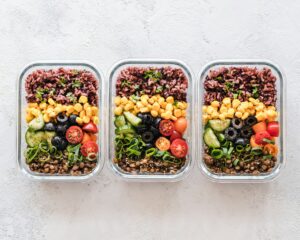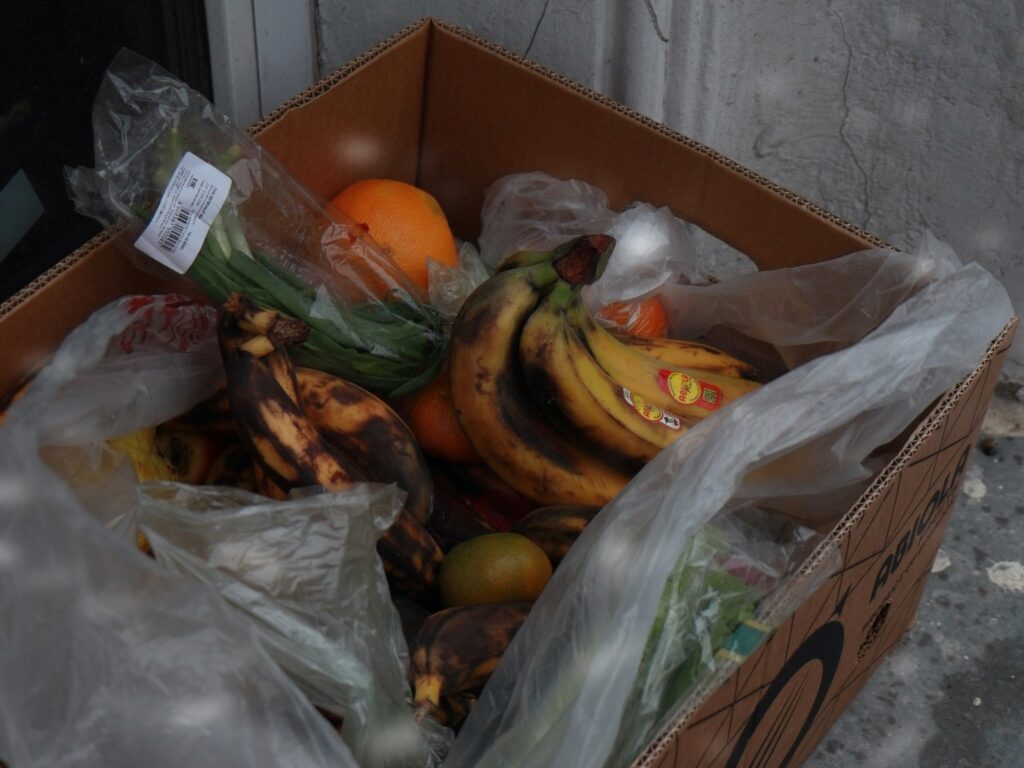
Every week, perfectly good food ends up in the trash because it gets forgotten, spoils too soon, or never gets used.
It happens in almost every kitchen, but a few simple habits can make a big difference.
Reducing food waste helps stretch your grocery budget, keeps your kitchen more organized, and means less food goes to waste.
In this guide, you’ll learn practical ways to plan meals, shop smarter, store food properly, and make the most of leftovers.
These easy tips fit into everyday life and don’t require a complete change to your routine.
Start with one or two habits, and you’ll be surprised by how much food and money you can save.
Reduce Food Waste in 5 Simple Steps
If you’re short on time, start with these five simple habits.
They’re easy to put into practice and can make a noticeable difference in how much food you save each week.
- Check your refrigerator, freezer, and pantry before grocery shopping.
- Plan your meals before writing your shopping list.
- Buy only the ingredients you’ll realistically use.
- Store food properly so it stays fresh longer.
- Freeze extra food before it has a chance to spoil.
Food Waste at a Glance
| Habit | Why It Helps |
|---|---|
| Plan your meals | Prevents overbuying and unused ingredients |
| Shop with a grocery list | Reduces impulse purchases |
| Store food properly | Keeps food fresh for longer |
| Use the FIFO method | Helps you use older food before newer items |
| Freeze extra food | Prevents food from spoiling before you can use it |
| Compost unavoidable scraps | Reduces waste that can’t be eaten |
Why Food Waste Happens in the First Place
Buying More Than You Need
Buying more food than you can use is one of the biggest reasons groceries end up in the trash.
Shopping without a list makes it easy to forget what you already have at home and pick up duplicate items.
Before heading to the store, spend a few minutes checking your refrigerator, freezer, and pantry so you only buy what you actually need.
Bulk deals can also be tempting, but they aren’t always a bargain if fresh food spoils before you have a chance to use it.
If you buy larger quantities, make sure you already have meals planned that use those ingredients throughout the week, or freeze extra portions while they’re still fresh.
Impulse purchases are another common cause of food waste.
A fruit, vegetable, or specialty ingredient may look great in the store, but if you don’t have a plan for using it, there’s a good chance it will be forgotten.
A simple shopping list helps you stay focused while still leaving room for the occasional treat.
Improper Food Storage
Even fresh, high-quality ingredients won’t last long if they’re stored the wrong way.
Many fruits and vegetables have different storage needs, so keeping everything in the same place can shorten their freshness.
Learning where your most-used produce stores best can help it last several days longer.
A disorganized pantry can also lead to waste because older ingredients become hidden behind newer purchases.
Keeping similar foods together and placing older items at the front makes them much easier to see and use first.
An overcrowded refrigerator creates similar problems.
When shelves are packed too tightly, leftovers disappear behind larger containers, and fresh ingredients are easy to overlook.
Leaving a little space between items and keeping the refrigerator organized helps you quickly spot what should be used next.
Forgetting About Leftovers
Leftovers are one of the easiest ways to save both time and money, yet they’re often forgotten until it’s too late.
Containers pushed to the back of the refrigerator are easy to miss, especially after another grocery trip.
Keeping leftovers where you’ll see them first makes them much more likely to become tomorrow’s lunch or dinner.
Adding a simple label with the name of the dish and the date it was made also removes the guesswork.
Clear labels help everyone in the household know what should be eaten first.
A lack of meal planning can make leftovers even easier to ignore.
Planning one or two leftover meals each week gives those dishes a purpose instead of letting them sit untouched.
You can also transform leftovers into something new, like turning roasted vegetables into soup or cooked chicken into wraps.
Cooking Portions That Are Too Large
Cooking extra food can be helpful, but only if it gets eaten.
Many people simply overestimate how much food everyone will want, especially when making pasta, rice, or side dishes.
With a little practice, you’ll learn the serving sizes that work best for your household.
When you’re unsure, it’s often better to cook slightly less since you can always prepare an extra side if needed.
It’s also worth thinking about exactly how many people will be eating before you begin cooking.
If plans change or someone won’t be home, adjusting the recipe can prevent unnecessary leftovers.
When you intentionally make extra food, portion it into containers while it’s still fresh so it’s ready for quick meals later in the week instead of being forgotten in the refrigerator.
Plan Meals Before You Shop
A little planning before grocery shopping can make a big difference in how much food you actually use.
Instead of wondering what to cook each day, you’ll already have a simple plan that helps you use ingredients while they’re still fresh.
Even spending ten minutes planning your meals can save time, reduce waste, and make cooking feel much less stressful.
Check Your Pantry First
Before writing your shopping list, take a quick look through your refrigerator, freezer, and pantry.
You may already have ingredients that can be turned into a delicious meal without buying much else.
Look for vegetables that should be used soon, half-open bags of pasta or rice, canned goods, and frozen ingredients you’ve forgotten about.
Building meals around what you already have is one of the easiest ways to reduce food waste.
For example, leftover cooked chicken can become tacos, wraps, or a hearty salad, while vegetables can be added to soups, stir-fries, or pasta dishes.
Once you’ve planned meals using existing ingredients, you’ll have a much clearer idea of what you actually need to buy.
Create a Weekly Meal Plan
A weekly meal plan doesn’t need to include every single detail.
Simply decide what you’ll make for breakfast, lunch, dinner, and a few snacks throughout the week.
Try to use ingredients in more than one meal whenever possible.
For example, a bag of spinach can be added to omelets, sandwiches, pasta, and salads instead of being used once and forgotten.
It’s also helpful to include one or two flexible meals.
These are meals that can easily change depending on what needs to be used first, such as fried rice, soups, pasta, grain bowls, or homemade pizza.
Flexible meals are perfect for using leftover vegetables, cooked meats, herbs, and small amounts of cheese before they go to waste.
Write a Grocery List
Once your meal plan is finished, write a grocery list based on the ingredients you’re missing.
Organizing your list by store sections, such as produce, dairy, pantry items, frozen foods, and meat, makes shopping quicker and helps prevent forgotten items.
A well-organized list also reduces the temptation to wander through every aisle picking up things you hadn’t planned to buy.
While shopping, try your best to stick to the list.
If you decide to buy something extra, think about when you’ll use it and whether it fits into your meals for the week.
Schedule Leftover Meals
Leftovers deserve a place in your weekly meal plan just like any other dinner.
Setting aside one or two leftover nights each week helps ensure cooked food gets enjoyed instead of forgotten.
You don’t have to serve leftovers exactly as they were the first time.
Cooked chicken can become sandwiches or quesadillas.
Roasted vegetables can be blended into soup or tossed into a pasta dish.
Leftover rice works perfectly in fried rice, rice bowls, or stuffed peppers.
Thinking of leftovers as ingredients instead of repeat meals makes them much more exciting to use.
With a little creativity, yesterday’s dinner can easily become one of the tastiest meals of the week.
Buy Smarter at the Grocery Store
Making smart choices at the grocery store is one of the easiest ways to reduce food waste before it even starts.
A few thoughtful decisions while you shop can help you bring home the right amount of food and make better use of every ingredient.
Understand Portion Needs
It’s easy to overestimate how much food you’ll need, especially when shopping for a full week.
Before adding items to your cart, think about how many people you’ll be cooking for and how many meals you’ll prepare at home.
If you’re shopping for one or two people, smaller packages often make more sense than large family-sized packs.
While bigger packages may seem like a better deal, they aren’t a bargain if part of the food ends up being thrown away.
If your schedule changes often, buy a little less fresh food and restock later in the week if needed.
You’ll usually waste less by making an extra grocery trip than by throwing away unused ingredients.
Choose Loose Produce When Possible
Loose fruits and vegetables give you more control over how much you buy.
Instead of purchasing an entire bag, you can pick exactly the number of apples, potatoes, onions, or carrots you know you’ll use.
This is especially helpful for recipes that only call for a small amount of produce.
Buying only what you need also leaves more room in your refrigerator and makes it easier to keep track of what you have.
If you find yourself regularly throwing away extra produce, choosing loose items can quickly become one of your best shopping habits.
Don’t Shop While Hungry
Shopping on an empty stomach can make almost everything look tempting.
It’s much easier to grab snacks, bakery treats, or ingredients you hadn’t planned to buy when you’re hungry.
Having a small meal or snack before heading to the store helps you focus on your grocery list instead of your cravings.
When you stick to your plan, you’ll usually come home with ingredients that fit into your meals instead of items that sit untouched in the pantry.
If something catches your eye, pause for a moment and think about when you’ll actually use it.
That quick check can prevent many impulse purchases from turning into food waste later.
Rotate Fresh and Frozen Ingredients
Fresh ingredients add wonderful flavor, but they don’t always last as long as you’d like.
Keeping a few frozen vegetables and fruits on hand gives you more flexibility during busy weeks.
If fresh produce starts running low or your plans change, frozen ingredients are ready whenever you need them.
They’re perfect for soups, stir-fries, smoothies, pasta dishes, casseroles, and many other everyday meals.
Using a mix of fresh and frozen ingredients also means you don’t have to buy large amounts of fresh produce all at once.
Store Food the Right Way
Storing food properly helps it stay fresh longer, taste better, and gives you more time to enjoy it.
The easier it is to see and find your ingredients, the more likely you are to cook with them.
Organize Your Refrigerator
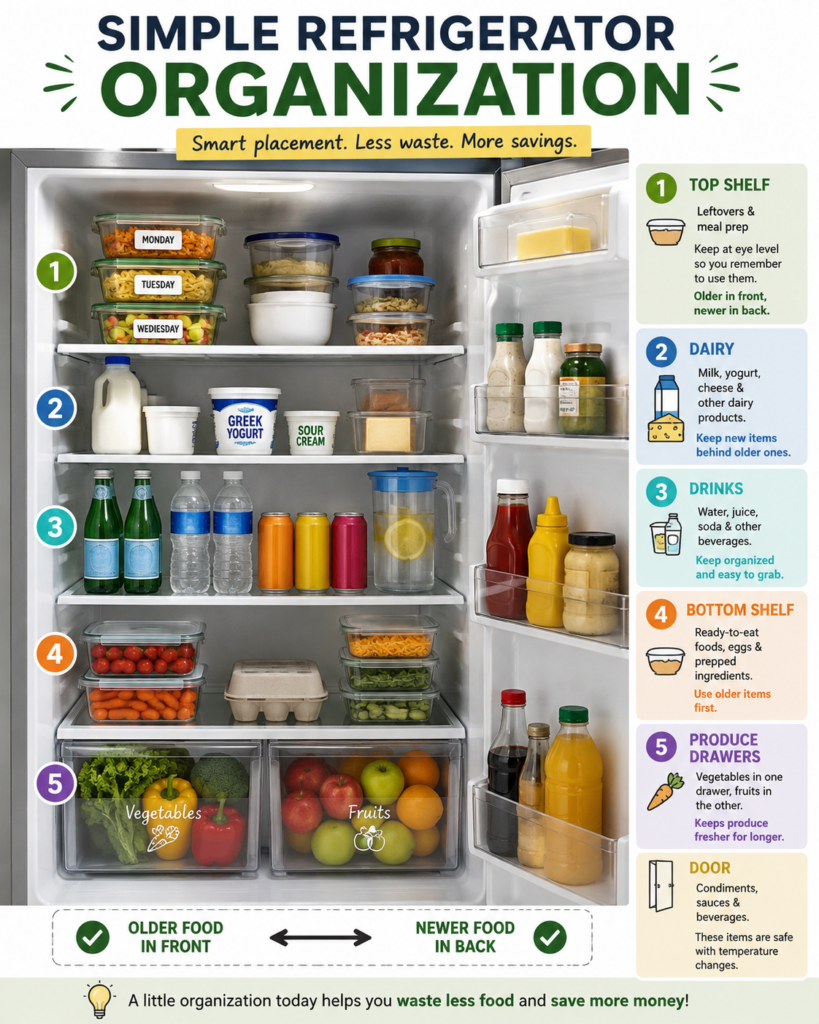
A well-organized refrigerator makes meal planning much easier.
When everything has a place, you can quickly see what you have before reaching for something new.
Keep older foods at the front of each shelf and place newer groceries behind them.
This simple habit helps you use ingredients in the order you bought them instead of forgetting older items in the back.
Try grouping similar foods together, such as dairy products, leftovers, drinks, condiments, and ready-to-eat snacks.
Knowing exactly where everything belongs makes it quicker to find ingredients while cooking and helps prevent duplicate purchases.
Take a minute once a week to tidy the shelves and move foods that should be used soon to the front where they’re easy to spot.
Store Produce Properly
Not every fruit and vegetable belongs in the refrigerator.
Many vegetables, including carrots, broccoli, spinach, lettuce, cauliflower, celery, and green beans, stay fresh longer when refrigerated.
Store them in the crisper drawer if your refrigerator has one, as it helps maintain the right moisture level for many types of produce.
Some fruits keep their best flavor and texture on the kitchen counter until they’re fully ripe.
Bananas, peaches, nectarines, pears, mangoes, and avocados are good examples.
Once these fruits ripen, you can move them to the refrigerator if you need a few extra days before using them.
Keeping produce in the right place helps it last longer and reduces the chances of throwing away fruits or vegetables that spoiled too quickly.
Use Clear Storage Containers
Clear containers make it easy to see what’s inside without opening every lid.
When leftovers and prepared ingredients are visible, they’re much more likely to be used in your next meal.
Store chopped vegetables, cooked grains, sauces, and leftovers in transparent containers whenever possible.
Stack similar containers neatly so nothing gets hidden behind larger dishes.
Label Homemade Foods
It’s surprisingly easy to forget when you made a soup, casserole, or batch of cooked rice.
Adding a label with the name of the dish and the preparation date keeps everything easy to identify.
A small piece of masking tape and a permanent marker work perfectly for this.
Reusable food labels are another great option if you regularly meal prep or freeze leftovers.
Clear labels help everyone in the household know what each container holds and which meals should be enjoyed first.
Learn the “First In, First Out” Method
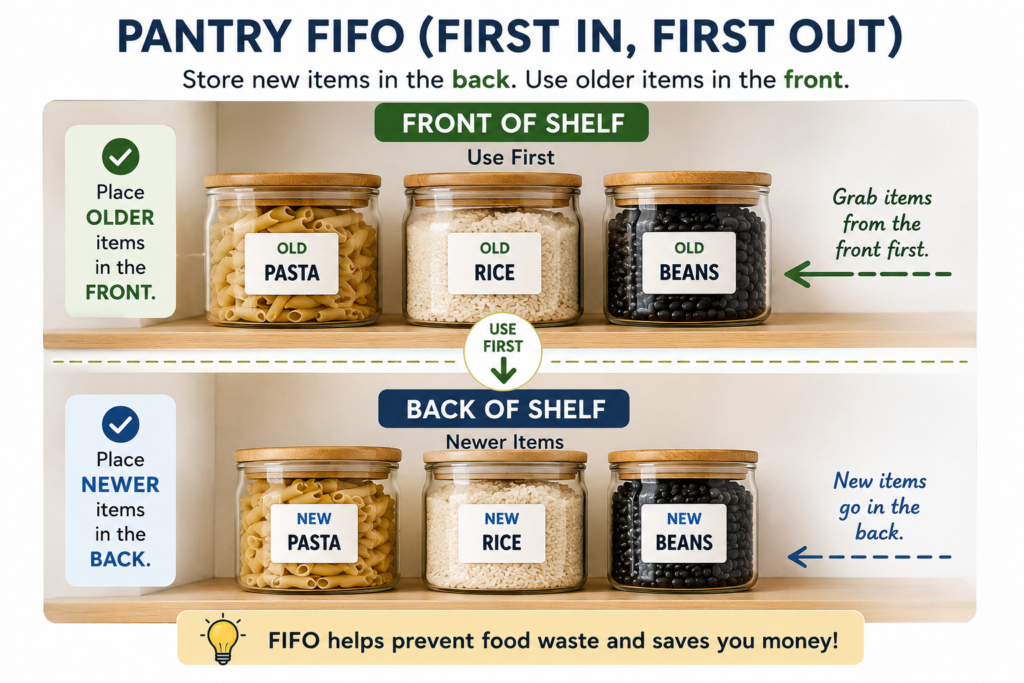
The First In, First Out (FIFO) method is one of the simplest ways to reduce food waste at home.
It sounds technical, but the idea is easy to follow.
Foods you bought or prepared first should be used before newer ones.
This small habit helps keep ingredients moving through your kitchen instead of getting forgotten at the back of a shelf or drawer.
What FIFO Means
Think of FIFO as giving older foods the first chance to be used.
When you unpack groceries, avoid placing new items in front of older ones.
Instead, move the older items forward and place the new purchases behind them.
The same idea works for homemade meals, leftovers, pantry staples, and frozen foods.
Once FIFO becomes part of your routine, you’ll naturally start reaching for foods that need to be used first.
How to Apply It at Home
The pantry is one of the easiest places to practice FIFO.
When putting away groceries, slide older cans, boxes, pasta, rice, and baking ingredients to the front of the shelf.
Place newly purchased items behind them so the older products are always the first ones you see.
Use the same approach in your refrigerator.
Move older yogurt, cheese, sauces, leftovers, and fresh ingredients to the front where they’re easy to grab while cooking.
Keep recently purchased foods behind them so nothing gets buried and forgotten.
Your freezer can benefit from FIFO as well.
When freezing soups, cooked meats, vegetables, or meal-prep containers, place newer items behind the ones already stored.
Keeping similar foods together also makes it much easier to find what you’re looking for without digging through the freezer.
If possible, leave a little space so you can clearly see what’s inside instead of stacking everything too tightly.
Benefits of FIFO
One of the biggest advantages of FIFO is that it reduces forgotten food.
When older ingredients stay visible, you’re much more likely to use them while they’re still fresh and full of flavor.
FIFO also creates better ingredient rotation throughout your kitchen.
Instead of buying replacements for foods you already own, you’ll naturally work through your pantry, refrigerator, and freezer before restocking.
Over time, this habit helps you waste less food, spend less on groceries, and keep your kitchen better organized.
The best part is that FIFO only takes a few extra seconds each time you unpack groceries, but those small moments can save a surprising amount of food over the course of a year.
Make the Most of Leftovers
Leftovers are one of the easiest ways to save food, time, and money.
Instead of seeing them as yesterday’s dinner, think of them as ready-to-use ingredients for your next meal.
A little creativity can turn leftovers into dishes that feel fresh and exciting.
Reinvent Yesterday’s Meals
Many cooked foods can be transformed into something completely different with just a few extra ingredients.
This keeps meals interesting while making sure good food doesn’t go to waste.
| Leftover | Turn It Into |
|---|---|
| Roast chicken | Wraps, sandwiches, tacos, or salads |
| Cooked rice | Fried rice, rice bowls, or stuffed peppers |
| Roasted vegetables | Soup, pasta, omelets, or stir-fries |
| Cooked pasta | Baked casserole, pasta salad, or skillet dinner |
Don’t be afraid to mix and match ingredients you already have.
Some of the best meals come from using up small amounts of leftovers that might otherwise be forgotten.
💡 Quick Leftover Makeover Ideas
Give yesterday’s leftovers a fresh twist with these simple meal ideas:
Leftover Turn It Into Roast vegetables Frittata or grain bowls Cooked potatoes Breakfast hash Cooked chicken Quesadillas or wraps Cooked rice Stuffed peppers or fried rice Stale bread French toast or homemade croutons Cooked pasta Pasta salad or baked casserole
Portion Leftovers Immediately
Once dinner is over, divide extra food into individual portions instead of leaving everything in one large serving dish.
This makes leftovers much easier to enjoy during the week.
Meal-prep containers are perfect for keeping portions organized and ready to grab when you’re short on time.
Having ready-made lunches or quick dinners waiting in the refrigerator also makes it less tempting to order takeout or cook another meal before using what you already have.
Clear containers make it easy to see what’s available, so leftovers stay visible instead of getting pushed to the back of the refrigerator.
Freeze Extras
If you know you won’t eat leftovers within the next few days, freeze them while they’re still fresh.
Freezing extends the life of many cooked foods and gives you homemade meals ready for busy days.
Foods that freeze especially well include:
- Soups
- Sauces
- Cooked grains such as rice and quinoa
- Chili
- Casseroles
Cool cooked food before packaging it, then store it in freezer-safe containers or bags with a label and preparation date.
Freezing leftovers at the right time means you’ll always have a delicious homemade meal waiting instead of letting good food go to waste.
Understand Food Date Labels
Food date labels can be confusing, and many people throw away perfectly good food simply because they’re unsure what the dates mean.
Learning the difference between the most common labels can help you make better decisions and reduce unnecessary waste.
The label is only one piece of information, so it’s always worth checking the food itself before deciding whether to use it or discard it.
| Date Label | What It Generally Means |
|---|---|
| Best Before | Indicates when the product is expected to be at its best quality, such as flavor, texture, or freshness. |
| Use By | Indicates the manufacturer’s recommended date for using the product as intended. Always follow the storage instructions on the packaging. |
| Sell By | Primarily used by retailers to help manage inventory. It isn’t a guide for when the food should be eaten. |
Why Many Foods Stay Good Beyond Certain Dates
Many packaged foods can still maintain good quality after certain dates, especially when they’ve been stored according to the manufacturer’s instructions.
Rather than relying on the date alone, take a moment to look at the food before deciding whether to use it.
Check its appearance to see if it still looks normal.
Notice whether the smell seems fresh and expected for that food.
Pay attention to the texture as well, since unusual changes can indicate that the quality has declined.
Keeping foods stored as directed on the package also helps them stay in their best condition for as long as possible.
Use Every Edible Part of Your Ingredients
Many ingredients have edible parts that are often thrown away without a second thought.
Vegetable Scraps
Not every vegetable trimming belongs in the compost bin.
Clean onion skins, carrot peels, celery ends, mushroom stems, and herb trimmings can all add rich flavor to a homemade vegetable stock.
Keep a freezer bag for vegetable scraps and add to it as you cook.
Once it’s full, simmer the scraps with water and your favorite seasonings to create a flavorful stock for soups, stews, sauces, and risotto.
Small pieces of leftover vegetables are also perfect for stir-fries.
Mix them together with fresh vegetables, noodles, or rice for a quick meal that uses up ingredients before they go to waste.
You can also add leftover vegetables to homemade soups, where different flavors blend together beautifully.
Herb Stems
Don’t throw away herb stems just because they’re a little firmer than the leaves.
Tender stems from herbs like parsley, cilantro, and dill are packed with flavor.
Finely chop them and blend them into sauces, pesto, dressings, or marinades.
They also add wonderful flavor to homemade broths, soups, and slow-cooked dishes.
Using both the leaves and stems helps you get the most from every bunch of fresh herbs.
Citrus Peels
Before peeling lemons, limes, or oranges, remove the zest if your recipe doesn’t already call for it.
The colorful outer layer is full of bright citrus flavor and can be used in many different ways.
Add fresh zest to cakes, muffins, cookies, pancakes, or salad dressings for an extra burst of flavor.
You can also place a strip of citrus peel into a pitcher of water for a refreshing twist without needing additional ingredients.
Using the peel before discarding the fruit helps reduce waste while adding fresh flavor to everyday recipes.
Stale Bread
Bread that’s a little dry doesn’t have to be thrown away.
Cut it into cubes, season it with olive oil and herbs, then bake until crisp to make homemade croutons.
You can also pulse stale bread in a food processor to make fresh breadcrumbs for coating chicken, topping casseroles, or adding texture to baked dishes.
If you have several slices left, turn them into a comforting bread pudding for a delicious dessert.
Seeing stale bread as another useful ingredient instead of something to discard is an easy way to waste less and cook more creatively.
Freeze Food Before It Goes Bad
Your freezer is one of the best tools for reducing food waste.
If you know you won’t use certain foods before they lose their freshness, freezing them gives you more time instead of letting them go to waste.
Making freezing part of your regular kitchen routine also means you’ll always have ingredients or homemade meals ready for busy days.
Foods That Freeze Well
Many everyday foods freeze surprisingly well without losing their usefulness in future meals.
Some of the best options include:
- Bread
- Cooked rice
- Pasta sauce
- Soups
- Fruit
- Vegetables
Slice bread before freezing so you can remove only what you need instead of thawing the whole loaf.
Freeze cooked rice in meal-sized portions for quick stir-fries, rice bowls, or side dishes.
Extra pasta sauce freezes beautifully and can be thawed for an easy weeknight dinner.
Soups are another excellent choice because they reheat well and make convenient homemade lunches.
Fruit can be frozen for smoothies, baking, sauces, or desserts.
Many vegetables also freeze well, making them perfect for soups, casseroles, stir-fries, and pasta dishes whenever you need them.
Portion Before Freezing
Instead of freezing large batches in one container, divide food into portions that match the way you’ll use it later.
Meal-sized portions are much easier to thaw than one large block of frozen food.
Small portions are also helpful for ingredients like cooked rice, pasta sauce, or chopped fruit because you can take out exactly what you need.
Using freezer-safe containers or freezer bags helps keep portions organized and makes stacking them much easier.
Removing as much air as possible from freezer bags can also help save space and keep your freezer tidy.
Label Everything Clearly
It’s easy to forget what’s inside a frozen container after a few weeks.
Adding a simple label takes only a few seconds and saves plenty of guessing later.
Write the name of the food and the date it was frozen on masking tape, a freezer label, or directly on a freezer bag if it’s designed for writing.
Place newer items behind older ones, so you’ll naturally use the oldest food first.
A clearly labeled freezer is easier to organize, easier to shop from, and much less likely to end up with forgotten containers hiding in the back.
Keep Your Pantry Organized
An organized pantry makes it much easier to use the food you already have.
When you can quickly see your ingredients, you’re less likely to buy duplicates or forget about items tucked away on the back of a shelf.
Store Similar Foods Together
Keeping similar foods in the same area makes your pantry easier to use.
Store baking supplies in one section, canned goods in another, and keep pasta, rice, grains, snacks, spices, and breakfast items grouped together.
When everything has a dedicated place, you’ll spend less time searching for ingredients and more time cooking.
It’s also much easier to notice when you’re running low on something or when you already have enough before your next grocery trip.
Whenever you put groceries away, move older packages to the front and place newer ones behind them so the oldest items are used first.
Use Transparent Containers
Clear containers make it easy to see how much food you have without opening every package.
They’re especially useful for pantry staples like flour, sugar, oats, rice, pasta, beans, nuts, and cereal.
Seeing the contents at a glance helps remind you to use ingredients before buying more.
Transparent containers also stack neatly, making better use of shelf space and giving your pantry a cleaner, more organized look.
If you transfer food into containers, keep the original cooking instructions nearby if you’ll need them later.
Regular Pantry Check-Ups
Set aside a few minutes each week to look through your pantry.
Check which ingredients you already have and think about how you can use them in upcoming meals.
This quick habit often helps you spot foods that have been sitting untouched for a while.
Planning a meal around those ingredients is much easier than discovering them after they’ve been forgotten.
A quick pantry check before grocery shopping also helps you avoid buying items you already own.
Keep an Inventory List
A simple inventory list can make meal planning even easier.
Write down pantry staples, canned goods, grains, and other ingredients you like to keep on hand.
You can keep the list on paper, a whiteboard, or in a notes app on your phone.
Update it whenever you finish an item or bring home new groceries.
You don’t need to list every single ingredient in your kitchen.
Focus on the foods you buy most often or those that tend to get forgotten.
Compost Food Scraps You Can’t Eat
Even with careful meal planning and smart storage, you’ll still end up with some food scraps that can’t be used in cooking.
Instead of sending those scraps to the trash, consider adding them to a home compost bin.
Composting turns many natural kitchen scraps into nutrient-rich material that can be used to improve soil in gardens, flower beds, or potted plants.
What Can Be Composted
Many everyday kitchen scraps are great candidates for composting.
Common examples include:
- Fruit and vegetable peels
- Coffee grounds and paper coffee filters
- Tea leaves and most paper tea bags
- Eggshells
- Wilted herbs
- Corn husks
- Nut shells
- Dead flowers
- Small amounts of plain cooked grains
These items break down naturally over time and can become a valuable addition to your compost.
Cutting larger scraps into smaller pieces can help them break down more quickly.
What Shouldn’t Go in a Home Compost Bin
Not everything belongs in a backyard compost bin.
Items such as meat, fish, dairy products, cooking oils, greasy foods, and heavily processed foods are usually best left out.
Large bones and pet waste should also be avoided.
These materials can create unpleasant odors, attract unwanted pests, or take much longer to break down than typical kitchen scraps.
If you’re using a countertop compost collector, empty it regularly into your outdoor compost bin to keep it fresh and easy to manage.
Benefits of Composting
Composting is a simple way to make better use of food scraps that can’t be eaten.
Instead of filling your trash can, those scraps are put to work in a useful way.
Finished compost can be mixed into garden soil, added to raised beds, or used around flowers and outdoor plants to improve soil texture.
Composting also helps reduce the amount of kitchen waste your household throws away each week.
If you’re new to composting, start small with just a few fruit and vegetable scraps.
Like many good kitchen habits, it becomes easier with practice and can make a noticeable difference over time.
Build Daily Habits That Reduce Waste
Reducing food waste doesn’t require a complete change to the way you cook.
Small habits practiced every day often have the biggest impact over time.
Once these routines become part of your normal kitchen rhythm, wasting less food starts to feel effortless.
Eat Older Foods First
Before opening a new package or cooking with freshly bought ingredients, take a quick look at what you already have.
Choose foods that have been in your refrigerator, pantry, or freezer the longest whenever possible.
This simple habit helps ingredients get used while they’re still fresh and flavorful.
Keeping older foods at the front of shelves makes them much easier to spot when you’re deciding what to cook.
Over time, you’ll find yourself throwing away far fewer forgotten ingredients.
Cook Smaller Portions
It’s easy to prepare more food than everyone can comfortably eat.
When you’re trying a new recipe or cooking for a smaller group, consider making a slightly smaller batch.
You can always prepare an extra side dish or make more next time if needed.
Cooking realistic portions means less food is left sitting in the refrigerator without a plan.
As you cook more often, you’ll naturally learn the serving sizes that work best for your household.
Freeze Extras Promptly
If you know you won’t finish leftovers within the next few days, don’t wait until they’re almost forgotten.
Freeze extra portions while they’re still fresh and full of flavor.
Individual portions are especially convenient because they’re easy to thaw for a quick lunch or dinner.
Keeping a variety of homemade meals in the freezer also gives you a great alternative to ordering takeout on busy evenings.
Schedule Weekly Refrigerator Clean-Outs
Set aside a few minutes once a week to check what’s in your refrigerator.
Look for ingredients that should be used soon and make a plan to include them in your next meal.
This doesn’t mean throwing food away.
It’s simply a chance to organize shelves, combine duplicate items, and bring older foods to the front where you’ll see them first.
Many delicious meals begin with asking yourself, “What do I already have that I can use today?”
End-of-Week Clean-Out Meal Ideas
If your refrigerator has a few leftover ingredients that need to be used, these flexible meals can help reduce waste before your next grocery trip.
- 🥣 Vegetable soup
- 🍚 Fried rice
- 🍝 Pasta bake
- 🍳 Omelet or frittata
- 🥗 Grain bowl
- 🥘 Stir-fry
- 🍕 Homemade pizza
Keep a Running Grocery List
Instead of trying to remember what you need, keep a grocery list that you update throughout the week.
A notepad on the refrigerator, a small notebook, or a notes app on your phone all work well.
Add items only when you’re genuinely running low rather than guessing while you’re at the store.
Before shopping, compare your list with what’s already in your pantry and refrigerator.
This quick check helps prevent duplicate purchases and ensures every item you bring home has a purpose.
Over time, these small habits work together to create a kitchen that’s easier to manage, more organized, and much less wasteful.
Common Food Waste Mistakes
- Ignoring What’s Already in the Fridge: Before planning meals or grocery shopping, take a quick look through your refrigerator. Using ingredients you already have helps prevent food from being forgotten until it’s no longer fresh.
- Buying Bulk Without a Plan: Large packages can be a great value, but only if you’ll use everything. Always have a plan for how you’ll cook, store, or freeze bulk purchases before adding them to your cart.
- Forgetting Freezer Items: Food can easily disappear into the back of the freezer. Keep similar items together, label everything clearly, and check your freezer regularly so homemade meals and ingredients don’t get overlooked.
- Throwing Away Slightly Imperfect Produce: A bruised apple, slightly soft tomato, or wilted spinach often still has plenty of life left. Many fruits and vegetables work perfectly in soups, sauces, smoothies, baked goods, or stir-fries even if they no longer look picture-perfect.
- Cooking Too Much Food: Making oversized portions often creates leftovers that never get eaten. Prepare realistic amounts for the number of people you’re serving, and if you intentionally cook extra, portion and store it right away so it’s ready for another meal.
✅ One-Week Food Waste Challenge
Put these tips into practice over the next seven days and see how much food you can save.
- Day 1: Check your pantry, refrigerator, and freezer before shopping.
- Day 2: Plan your meals and create a grocery list.
- Day 3: Organize your refrigerator using the FIFO (First In, First Out) method.
- Day 4: Make a meal using leftovers or ingredients that need to be used soon.
- Day 5: Freeze any extra food you won’t eat this week.
- Day 6: Clean out your pantry and donate any unopened, non-perishable foods you won’t use if they’re still within date.
- Day 7: Look back at how much food you used instead of throwing away, then choose one new habit to keep using every week.
💡 Kitchen Tip
Keep a small “Use First” bin or basket on the front shelf of your refrigerator for ingredients that need to be used soon. Every time you open the fridge, check that bin before reaching for newer items. This simple habit makes it much easier to use food while it’s still fresh and can significantly reduce forgotten leftovers and produce.
Final Thoughts
Reducing food waste doesn’t require a complete overhaul of the way you cook.
Simple habits like planning your meals, storing ingredients properly, and making the most of what you already have can make a big difference over time.
There’s no need to change everything at once.
Start with one new habit this week, and add another when it feels natural.
Before long, you’ll waste less food, save more on groceries, and enjoy a kitchen that’s easier to organize and cook in.
FAQs
What is the easiest way to reduce food waste?
The easiest way to reduce food waste is to plan your meals, shop with a grocery list, and use older ingredients before opening new ones.
How can meal planning reduce food waste?
Meal planning helps you buy only the ingredients you need and gives every item a purpose.
It also makes it easier to use leftovers and avoid forgotten food in the refrigerator.
Should leftovers be frozen?
Yes, if you don’t plan to eat leftovers within the next few days, freezing them is a great way to keep them for future meals.
Portion them into freezer-safe containers and label them so they’re easy to find later.
What foods are most commonly wasted at home?
Fresh fruits, vegetables, bread, leftovers, dairy products, and herbs are some of the foods most often wasted.
Proper storage and meal planning can help you use them before they go to waste.
Is composting necessary to reduce food waste?
No, composting isn’t required. The best way to reduce food waste is to prevent edible food from being wasted in the first place.
Composting is simply a useful option for unavoidable food scraps that can’t be eaten.
Hi, I’m Daisy Roots, the home cook and recipe developer behind this kitchen. I create simple, tested vegan recipes using everyday ingredients. Every dish is developed and cooked in my own kitchen, with clear steps to help you get reliable results every time. Thanks for stopping by — let’s cook something great!