Vegan butter and coconut oil are two of the most popular plant-based fats you’ll find in the kitchen.
Both can add richness to everything from cookies and cakes to roasted vegetables and sauces, but they don’t always work the same way.
While you can sometimes swap one for the other, the results can be surprisingly different.
A simple change can affect the flavor, texture, browning, or even how a baked treat holds together.
This guide is all about how these ingredients perform when you cook and bake.
By the end, you’ll know when vegan butter is the better choice, when coconut oil shines, and how to use each with confidence to get the results you’re after.
Key Takeaways
- Vegan butter contains water, making it behave more like dairy butter in cooking and baking.
- Coconut oil is nearly pure fat, so it creates different textures and may require small recipe adjustments when substituted.
- Your choice should depend on the recipe. Consider the flavor, texture, and cooking method rather than assuming one ingredient is always better.
- Refined coconut oil has a mild, neutral taste, while virgin coconut oil adds a noticeable coconut flavor that works well in certain recipes.
- Keeping both vegan butter and coconut oil in your kitchen gives you the most flexibility, allowing you to choose the best option for everything from cookies and cakes to roasted vegetables and homemade treats.
At A Glance
| Feature | Vegan Butter | Coconut Oil |
|---|---|---|
| Flavor | Rich, buttery flavor; available salted or unsalted | Mild coconut flavor (virgin) or neutral (refined) |
| Texture | Soft, creamy, and spreadable | Solid when cool, liquid when warm |
| Smoke Point | Best for low to medium-high heat cooking | Refined: High heat; Virgin: Medium heat |
| Best Uses | Baking, sauces, spreading, sautéing | Roasting, frying, baking, no-bake desserts |
| Baking Performance | Produces tender, buttery baked goods | Creates moist baked goods with a slightly different texture |
| Frying | Suitable for light pan-frying and sautéing | Excellent for pan-frying and higher-heat cooking (especially refined) |
| Roasting | Adds rich flavor and helps vegetables brown | Promotes crisp edges and even browning |
| Cost | Usually more expensive | Often more budget-friendly, especially in larger containers |
| Shelf Life | Refrigerate after opening; freezes well | Long pantry shelf life; refrigeration optional |
| Easy Substitute? | Yes, in many recipes with minor adjustments | Yes, but texture and flavor may change depending on the recipe |
What Is Vegan Butter?
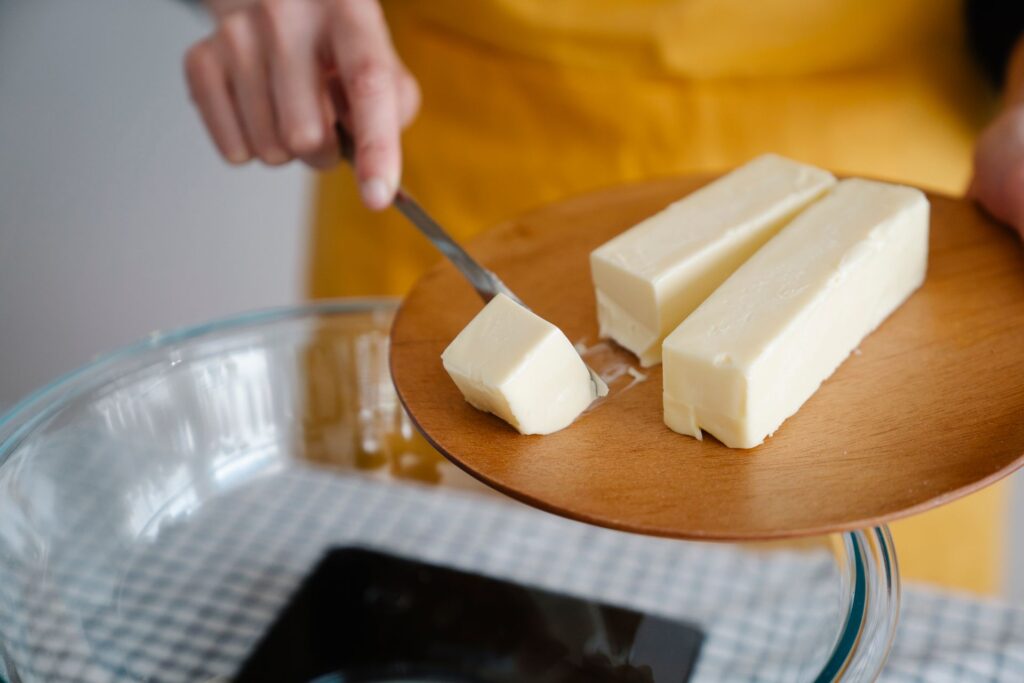
Vegan butter is a plant-based alternative to dairy butter made by blending plant oils with water and other ingredients to create a smooth, creamy spread.
It’s designed to melt, spread, and bake much like traditional butter, making it a popular choice for both everyday cooking and baking.
Common Ingredients
Most vegan butters contain a combination of:
- Plant oils (such as coconut, canola, sunflower, olive, or avocado oil)
- Water
- Emulsifiers to keep the oil and water blended together
- Salt (in salted varieties)
- Natural flavors for a buttery taste
The exact ingredients vary by brand, so the flavor and texture can differ slightly from one product to another.
How It’s Made
Vegan butter starts with a blend of plant oils and water. Since oil and water naturally separate, emulsifiers are added to keep them mixed together, creating a smooth, stable consistency.
The mixture is then chilled and processed until it develops a creamy, butter-like texture.
This gives vegan butter many of the same cooking and baking qualities as dairy butter, including the ability to spread easily, melt smoothly, and cream well with sugar for baked goods.
Different Varieties
You’ll commonly find vegan butter in several forms, each suited to different kitchen tasks:
- Salted: Great for spreading on bread, finishing vegetables, and everyday cooking.
- Unsalted: Ideal for baking, where you want full control over the amount of salt in a recipe.
- Baking sticks: Firm sticks designed for measuring and baking, making them the closest substitute for dairy butter in recipes.
- Spreadable tubs: Softer and easier to spread straight from the refrigerator, making them convenient for toast, sandwiches, and quick cooking.
What Is Coconut Oil?
Coconut oil is a plant-based cooking fat made by pressing oil from the flesh of mature coconuts.
Unlike most liquid cooking oils, it naturally changes between a solid and a liquid depending on the temperature, making it a versatile ingredient for both cooking and baking.
Types of Coconut Oil
The type of coconut oil you choose can affect the flavor and how it performs in recipes.
Refined Coconut Oil
Refined coconut oil is processed to remove much of the natural coconut aroma and flavor.
It has a clean, neutral taste, making it a good choice when you don’t want coconut flavor to stand out in a dish.
Virgin Coconut Oil
Virgin coconut oil is made from fresh coconut with minimal processing.
It keeps more of its natural aroma and has a noticeable coconut flavor that works well in recipes where that tropical taste is welcome.
Extra Virgin Coconut Oil
You may also see extra virgin coconut oil on store shelves.
Unlike olive oil, there isn’t an official industry standard for this label.
In most cases, it is very similar to virgin coconut oil and offers the same fresh coconut flavor and aroma.
Solid vs. Liquid
One of coconut oil’s unique features is that it changes texture with the temperature.
- Below about 76°F (24°C): It becomes firm or solid.
- Above about 76°F (24°C): It melts into a clear liquid.
This natural change doesn’t affect its quality, so it’s perfectly normal for a jar of coconut oil to be solid in winter and liquid during warmer months.
Flavor Characteristics
The flavor of coconut oil depends on the variety you choose.
- Refined coconut oil: Mild, neutral flavor that blends easily into both sweet and savory recipes.
- Virgin or extra virgin coconut oil: Distinct coconut flavor and aroma that can enhance baked goods, curries, granola, and tropical-inspired dishes.
Quick Comparison: Vegan Butter vs Coconut Oil
| Feature | Vegan Butter | Coconut Oil |
|---|---|---|
| Taste | Rich, buttery flavor that closely resembles dairy butter | Mild coconut flavor (virgin) or nearly flavorless (refined) |
| Aroma | Buttery and creamy | Light to strong coconut aroma, depending on the variety |
| Texture | Soft, creamy, and easy to spread | Firm when cool and liquid when warm |
| Water Content | Contains water, which helps create steam and tenderness in baking | Nearly 100% fat with little to no water |
| Fat Content | Blend of plant fats with added water and other ingredients | Almost pure fat |
| Moisture | Adds moisture to baked goods because of its water content | Adds richness but very little moisture |
| Consistency | Stays soft in the refrigerator (depending on the brand) and creams well | Changes from solid to liquid as the temperature rises |
| Ease of Measuring | Baking sticks are easy to measure; spreadable tubs may require spooning | Simple to measure when fully solid or fully melted, but partially softened oil can be less precise |
| Storage | Usually stored in the refrigerator; can also be frozen | Stores well in a cool pantry, with refrigeration optional in very warm climates |
The Bottom Line
Both vegan butter and coconut oil have their place in the kitchen, but they aren’t identical.
Vegan butter is the better choice when you want a rich buttery flavor and the familiar texture of traditional butter.
Coconut oil stands out for its long shelf life, versatility, and ability to handle a wide range of cooking and baking tasks.
Understanding the Biggest Difference: Water Content
The biggest difference between vegan butter and coconut oil isn’t their flavor, but it’s their water content. This one detail has a surprising impact on how your food turns out.
Vegan butter is made from a blend of plant oils and water, so it contains both fat and moisture.
Coconut oil, on the other hand, is almost entirely fat with little to no water.
Because of this, the two ingredients don’t always behave the same way, even when used in equal amounts.
Here’s how that difference affects your cooking and baking.
Baking Structure
When vegan butter heats up, the water inside turns to steam.
That steam helps create a lighter, more tender texture in many baked goods, especially cakes, muffins, and biscuits.
Coconut oil doesn’t produce steam in the same way because it contains almost no water.
As a result, baked goods may have a slightly denser texture unless the recipe includes enough liquid from other ingredients.
Browning
The moisture in vegan butter can help create a nicely browned surface as baked goods cook. It also works well with ingredients like sugar to develop a golden finish.
Coconut oil encourages browning too, but it does so differently. Since it’s almost pure fat, it can help foods crisp and brown without adding extra moisture.
Moisture
Vegan butter contributes both fat and water, helping keep baked goods soft and tender.
Coconut oil adds richness but very little moisture.
If a recipe relies on butter for some of its liquid, simply swapping in coconut oil may produce a slightly drier result unless another liquid ingredient is increased.
Crispness
Because coconut oil contains almost pure fat, it often creates crisp edges in foods like roasted vegetables, granola, and certain cookies.
Vegan butter can also produce crisp results, but its water content usually leads to a softer interior and a more delicate texture.
Dough Consistency
Doughs and batters made with vegan butter are often softer and easier to mix because of the added moisture.
Coconut oil behaves differently depending on its temperature. When solid, it creates a firmer dough.
Once melted, it blends easily but can make batters thinner if a recipe isn’t designed for liquid fat.
Kitchen Tip: If you’re replacing vegan butter with coconut oil in a baking recipe, pay attention to the dough or batter as you mix. If it seems too dry or stiff, adding a small amount of plant-based milk or another liquid can help bring it back to the right consistency.
Flavor Comparison
Flavor is one of the biggest reasons to choose one of these fats over the other.
While both add richness to recipes, they create very different taste experiences.
Vegan Butter
Vegan butter is made to closely mimic the rich, creamy flavor of traditional dairy butter.
It blends naturally into recipes without drawing attention to itself, making it a reliable choice when you want a classic buttery taste.
Rich Buttery Flavor
Most vegan butters have a smooth, savory flavor that works well in both sweet and savory dishes.
They add richness to cookies, cakes, mashed potatoes, pasta sauces, and garlic bread without changing the overall flavor profile of the recipe.
Salted vs. Unsalted
The variety you choose can make a difference.
- Salted vegan butter adds extra seasoning, making it great for spreading on toast, finishing vegetables, or everyday cooking.
- Unsalted vegan butter gives you complete control over the salt in a recipe, making it the preferred choice for baking.
If a recipe doesn’t specify which type to use, unsalted vegan butter is usually the safer option since you can always add salt if needed.
Best for Traditional Baked Goods
Because of its familiar buttery flavor, vegan butter is ideal for recipes where butter is meant to be a noticeable part of the finished product. It works especially well in:
- Cookies
- Cakes
- Muffins
- Pie crusts
- Biscuits
- Frostings
- Shortbread
These recipes benefit from the rich flavor that vegan butter provides.
Coconut Oil
Coconut oil has a very different flavor profile.
Depending on the type you buy, it can either add a noticeable coconut taste or stay almost completely neutral.
Coconut Aroma
Virgin and extra virgin coconut oil have a pleasant coconut aroma and flavor that can stand out in a finished dish.
This can be a wonderful addition when the recipe pairs well with tropical or naturally sweet flavors.
Neutral Refined Versions
Refined coconut oil has much of its natural coconut flavor removed during processing.
The result is a mild, neutral cooking fat that works well when you want the texture and cooking performance of coconut oil without adding coconut flavor.
Many home cooks choose refined coconut oil for everyday cooking because it lets the other ingredients take center stage.
When Coconut Flavor Enhances Recipes
Virgin coconut oil can add extra depth to recipes where a hint of coconut feels right at home, such as:
- Granola
- Banana bread
- Coconut cookies
- Vegan brownies
- Curry dishes
- Homemade energy bites
- No-bake desserts
- Tropical-inspired cakes and muffins
If you’re making recipes with flavors like vanilla, chocolate, banana, pineapple, mango, or warm spices, the subtle coconut notes can complement the finished dish beautifully.
Kitchen Tip: When you’re unsure which coconut oil to use, choose refined coconut oil for neutral recipes and virgin coconut oil when you want a gentle coconut flavor to become part of the dish.
Texture Differences in Cooking
Texture plays a big role in how vegan butter and coconut oil perform in the kitchen.
Even though they can often be used for similar recipes, they react differently as they heat, cool, and mix with other ingredients.
Melting
Vegan butter melts into a smooth, creamy liquid, making it easy to stir into sauces, brush over vegetables, or mix into baked goods.
Coconut oil also melts easily, but it becomes a clear, thin liquid.
Since it contains almost no water, it can make some batters feel slightly richer or looser than vegan butter.
Cooling
As food cools, vegan butter helps create a soft, tender texture in many baked goods.
Cookies, cakes, and muffins often stay pleasantly moist without becoming overly firm.
Coconut oil firms up more quickly as it cools.
This is especially noticeable in recipes like homemade chocolate treats, frostings, and no-bake desserts, where it helps everything set into shape.
Solidifying
Vegan butter stays fairly soft after refrigeration, although the exact texture depends on the brand.
It usually softens again after sitting at room temperature for a short time.
Coconut oil becomes firm once the temperature drops below about 76°F (24°C).
This natural change is useful in recipes that need a fat to harden after chilling, but it can also make baked goods feel firmer when served cold.
Creaming with Sugar
One of vegan butter’s biggest strengths is how well it creams with sugar.
Beating softened vegan butter with sugar traps tiny air bubbles, which helps create lighter cakes, fluffy cupcakes, and tender cookies.
Coconut oil doesn’t cream in quite the same way. If it’s too hard, it’s difficult to mix smoothly. If it’s fully melted, it won’t trap much air at all.
Some recipes are designed specifically for coconut oil, but it isn’t always the best substitute in recipes that rely on the traditional creaming method.
Mixing Into Dough
Vegan butter creates soft, easy-to-work doughs that hold together well.
Its blend of fat and water helps evenly distribute moisture throughout the mixture.
Coconut oil can change the consistency of a dough depending on its temperature.
Solid coconut oil creates a firmer dough, while melted coconut oil produces a softer, looser mixture.
Following the recipe’s instructions for using it solid or melted helps achieve the best results.
Blending Into Sauces
Vegan butter melts smoothly into many sauces, adding a creamy texture and rich buttery flavor.
It’s a great choice for simple pasta sauces, garlic butter alternatives, and vegetable dishes.
Coconut oil also blends easily into warm sauces but adds a different finish.
Refined coconut oil keeps the flavor neutral, while virgin coconut oil contributes a light coconut taste that pairs especially well with curries, peanut sauces, and tropical-inspired dishes.
Kitchen Tip: Let your recipe guide the temperature of your fat. If it calls for softened butter, use softened vegan butter rather than melted coconut oil. If it calls for melted fat, warm either ingredient gently to preserve its texture and make mixing easier.
Smoke Point Comparison
A fat’s smoke point is the temperature at which it begins to smoke and break down.
While you don’t need to memorize exact numbers, knowing which fat handles higher heat can help you choose the right one for the job.
Vegan Butter
Most vegan butters have a moderate smoke point, making them best suited for low to medium-high heat cooking.
The exact temperature varies by brand because different plant oils are used, but they’re generally ideal for everyday stovetop cooking rather than very high-heat searing.
Best for Sautéing
Vegan butter shines when you want to add rich flavor while gently cooking ingredients.
It’s a great choice for:
- Sautéing onions and garlic
- Cooking mushrooms
- Softening leafy greens
- Lightly browning vegetables
- Finishing cooked pasta
- Making simple pan sauces
To get the best results, cook over medium heat and avoid leaving the pan empty for long periods, as the butter can begin to smoke if overheated.
Coconut Oil
Coconut oil handles heat differently depending on whether it’s refined or virgin.
Refined Coconut Oil
Refined coconut oil has a higher smoke point, making it well suited for medium-high to high-heat cooking.
Its neutral flavor also makes it a versatile option for recipes where you don’t want a noticeable coconut taste.
It’s a good choice for:
- Stir-fries
- Pan-frying
- Roasting vegetables
- Cooking tofu
- Searing plant-based proteins
Virgin Coconut Oil
Virgin coconut oil has a slightly lower smoke point than refined coconut oil, but it still performs well for many everyday cooking tasks.
Its natural coconut flavor makes it especially enjoyable in recipes where that taste complements the other ingredients.
It’s ideal for:
- Gentle sautéing
- Curries
- Granola
- Baked goods
- Light roasting
Which One Is Better for Higher-Heat Cooking?
If you’re cooking over medium-high or high heat, refined coconut oil is usually the more reliable choice.
It stays stable at higher temperatures and has a neutral flavor that works with a wide variety of dishes.
For lower to medium heat, vegan butter is an excellent option when you want to add a rich, buttery taste.
It performs especially well in recipes where flavor is just as important as the cooking method.
Kitchen Tip: If your pan starts smoking, lower the heat before adding more ingredients. Steady, moderate heat often produces better flavor and more even cooking than turning the burner up to its highest setting.
Best Uses for Vegan Butter
Cookies
Vegan butter helps cookies spread evenly while creating crisp edges and soft, chewy centers.
It also gives them a classic buttery flavor that works with everything from chocolate chip to sugar cookies.
Cakes
The moisture in vegan butter helps produce soft, tender cakes with a fine crumb. It also creams well with sugar, which creates a lighter texture in many cake recipes.
Muffins
Vegan butter adds richness and helps keep muffins soft without making them heavy. It pairs well with flavors like blueberry, banana, lemon, and chocolate.
Frostings
Softened vegan butter whips into smooth, fluffy frostings with a rich, creamy consistency. It’s a great choice for buttercream-style frostings that spread and pipe easily.
Biscuits
The fat in vegan butter creates tender, flaky layers as it melts during baking. Using it cold helps produce biscuits with a light, delicate texture.
Pie Crusts
Cold vegan butter forms small pockets of fat throughout the dough, creating a flaky crust that’s easy to roll and full of buttery flavor.
Garlic Bread
Melted vegan butter blends beautifully with garlic, herbs, and seasonings, soaking into bread while creating a crisp, golden crust.
Mashed Potatoes
A spoonful of vegan butter adds creaminess and a rich finish, giving mashed potatoes a smooth texture and classic buttery taste.
Pasta Sauces
Vegan butter melts easily into warm sauces, adding richness and helping create a silky texture for simple pasta dishes.
Best Choice: Reach for vegan butter whenever you want a classic buttery flavor and a soft, tender texture.
Best Uses for Coconut Oil
Granola
Coconut oil coats oats, nuts, and seeds evenly, helping them toast to a crisp, golden finish while creating crunchy clusters.
Roasted Vegetables
Its high heat tolerance makes coconut oil an excellent choice for roasting. It helps vegetables brown evenly and develop crisp, caramelized edges.
Homemade Chocolate Treats
Because coconut oil becomes firm as it cools, it’s perfect for homemade chocolate bark, truffles, and chocolate-coated snacks that need to set quickly.
Energy Bites
Coconut oil helps bind ingredients together while adding richness. Once chilled, it helps energy bites hold their shape without becoming too hard.
Stir-Fries
Refined coconut oil works especially well for stir-frying because it handles higher heat and has a neutral flavor that lets the vegetables and seasonings shine.
Popcorn
Melted coconut oil coats popcorn evenly, helping seasonings stick while adding a rich finish.
Virgin coconut oil can also contribute a light coconut aroma that pairs well with sweet or savory toppings.
Curry Dishes
Virgin coconut oil naturally complements many curry recipes. Its subtle coconut flavor blends beautifully with spices, vegetables, and creamy sauces.
Vegan Fudge
Coconut oil hardens as it cools, making it an excellent ingredient for smooth, sliceable vegan fudge and other no-bake desserts.
Best Choice: Coconut oil is ideal when you need a versatile fat for roasting, higher-heat cooking, or recipes that benefit from its ability to firm up after cooling.
Baking Performance Comparison
Cookies
Cookies are one of the easiest places to notice the difference between these two fats.
| Feature | Vegan Butter | Coconut Oil |
|---|---|---|
| Softer Cookies | ✔ Produces soft, tender centers | Can be slightly firmer after cooling |
| Crispier Cookies | Creates lightly crisp edges | Often produces crispier cookies, especially around the edges |
| Better Spread | Spreads more evenly during baking | May spread less when used solid; melted oil can increase spread |
Best Choice: Vegan butter is the better option if you want classic bakery-style cookies with a buttery flavor and chewy center. Coconut oil is a great choice when you prefer cookies with crisp edges and a slightly firmer bite.
Cakes
Both fats work well in cakes, but they create slightly different textures.
| Feature | Vegan Butter | Coconut Oil |
|---|---|---|
| Moisture | Adds moisture through its water content | Adds richness but less moisture |
| Crumb | Fine, soft, even crumb | Slightly denser crumb in some recipes |
| Tenderness | Light and tender | Moist and rich with a slightly different texture |
Best Choice: Vegan butter is ideal for traditional layer cakes and cupcakes, while coconut oil works well in snack cakes, banana bread, and recipes designed for oil-based batters.
Muffins
The choice of fat can affect both the texture and flavor of your muffins.
| Feature | Vegan Butter | Coconut Oil |
|---|---|---|
| Rise | Supports a light, fluffy rise | Produces a good rise but can be slightly denser |
| Texture | Soft and tender | Moist with a slightly heartier texture |
| Flavor | Rich buttery taste | Neutral (refined) or lightly coconut (virgin) |
Best Choice: Vegan butter creates muffins with a classic bakery-style texture, while coconut oil is excellent for fruit-filled or tropical-inspired muffins.
Pie Crusts
A good pie crust depends on keeping the fat cold until it reaches the oven.
| Feature | Vegan Butter | Coconut Oil |
|---|---|---|
| Flakiness | Excellent flaky layers | Very flaky when kept cold |
| Ease of Handling | Softens quickly but rolls easily | Can become brittle if too cold and soft if too warm |
| Chilling | Benefits from chilling before baking | Requires careful chilling to maintain texture |
Best Choice: Vegan butter is easier for most beginners to work with. Coconut oil can produce wonderfully flaky crusts, but it requires closer attention to temperature throughout the process.
Frosting
The fat you choose affects both the texture and flavor of your finished frosting.
| Feature | Vegan Butter | Coconut Oil |
|---|---|---|
| Stability | Holds its shape well at room temperature | Firms noticeably when chilled and softens more in warm conditions |
| Creaminess | Smooth, fluffy, and easy to whip | Rich but denser and less airy |
| Flavor | Classic buttery flavor | Neutral (refined) or coconut-flavored (virgin) |
Best Choice: Vegan butter is the clear winner for traditional buttercream-style frostings. Coconut oil works best for simple glazes, chocolate frostings, or recipes where a firmer finish is desired after chilling.
Kitchen Tip: If you’re following a baking recipe, use the fat it calls for whenever possible. While vegan butter and coconut oil can often be substituted, each one affects the final texture, flavor, and appearance in its own way.
Kitchen Test Notes
We tested both fats in the same batch of chocolate chip cookies.
- Vegan butter produced softer cookies with more spread and a richer buttery flavor.
- Refined coconut oil produced slightly thicker cookies with crisp edges and a mild flavor.
- Both worked well, but each created a noticeably different texture.
Cooking Performance Comparison
Sautéing Vegetables
For gentle sautéing, vegan butter is hard to beat.
It adds a rich, buttery flavor while helping vegetables become tender and lightly browned.
It’s especially good for mushrooms, onions, spinach, zucchini, and green beans.
Coconut oil also performs well, particularly refined coconut oil. It has a higher heat tolerance and a more neutral flavor, making it a great choice when you want the vegetables and seasonings to take center stage.
Best Choice: Vegan butter for maximum flavor, refined coconut oil for cooking at slightly higher temperatures.
Roasting Vegetables
Both fats help vegetables roast beautifully, but the results are slightly different.
| Feature | Vegan Butter | Coconut Oil |
|---|---|---|
| Browning | Develops a rich golden color | Encourages even browning across the surface |
| Crisp Edges | Creates lightly crisp edges with a tender interior | Produces crisp, caramelized edges |
| Flavor | Adds a rich buttery finish | Neutral (refined) or subtle coconut notes (virgin) |
Best Choice: Coconut oil is often the better option for roasting because it handles oven heat well and helps vegetables develop crisp, caramelized edges. Vegan butter is perfect when you’re looking for extra buttery flavor.
Pan-Frying
Whether you’re cooking tofu, veggie burgers, pancakes, or plant-based cutlets, both fats can do the job.
Heat Stability
- Vegan butter: Best for low to medium-high heat.
- Refined coconut oil: Handles medium-high to high heat more comfortably.
Flavor Contribution
- Vegan butter: Adds rich, buttery flavor that complements many savory dishes.
- Refined coconut oil: Neutral flavor that lets the other ingredients shine.
- Virgin coconut oil: Adds a light coconut taste that pairs well with certain recipes.
Cleanup
Both fats clean up easily with warm, soapy water.
Coconut oil can solidify on cooler cookware, so washing the pan while it’s still slightly warm usually makes cleanup quicker.
Best Choice: Refined coconut oil for higher-heat pan-frying and vegan butter when buttery flavor is the priority.
Sauces
The choice of fat changes both the texture and flavor of finished sauces.
| Feature | Vegan Butter | Coconut Oil |
|---|---|---|
| Creaminess | Smooth, creamy texture | Rich but lighter in body |
| Emulsification | Blends easily with liquids for silky sauces | Mixes well but may separate if not whisked thoroughly |
| Richness | Delivers a classic buttery finish | Adds richness without a buttery flavor |
Best Choice: Vegan butter is the better choice for creamy pasta sauces, garlic butter alternatives, and simple pan sauces. Coconut oil works especially well in curries, peanut sauces, and other recipes where its flavor and texture naturally complement the dish.
Kitchen Tip: Think about the final flavor you want before choosing your cooking fat. If you want a classic buttery finish, reach for vegan butter. If you need a versatile fat for roasting or higher-heat cooking, refined coconut oil is usually the better fit.
Can You Substitute One for the Other?
Yes, vegan butter and coconut oil can often be substituted for one another, but they’re not always interchangeable.
Since vegan butter contains water and coconut oil is almost pure fat, swapping one for the other can change the texture, flavor, and consistency of the finished dish.
Baking
Many baking recipes can handle a swap, but you may notice small differences.
- Vegan butter → Coconut oil: Baked goods may be slightly denser with crisper edges. If the batter seems dry, you may need to add a small splash of plant-based milk.
- Coconut oil → Vegan butter: Cakes and cookies are often softer and more tender because of the extra moisture in vegan butter.
Works best for: Cookies, quick breads, muffins, and simple cakes.
May need adjustments: Delicate pastries, flaky biscuits, or recipes that rely on the creaming method for a light texture.
Roasting
Roasting is one of the easiest places to substitute these two fats because both coat vegetables well and encourage browning.
- Use vegan butter when you want a rich, buttery finish.
- Use coconut oil when you want crisp, caramelized edges or are roasting at slightly higher temperatures.
In most cases, no recipe adjustments are needed.
Sautéing
Both fats work well for everyday sautéing.
- Swap vegan butter for extra buttery flavor in dishes like mushrooms, onions, and leafy greens.
- Swap refined coconut oil when cooking over slightly higher heat or when you want a neutral flavor.
The amount usually stays the same, so no adjustments are necessary.
Sauces
Substitutions work, but the finished sauce may feel different.
- Vegan butter creates a creamier, richer sauce with a classic buttery taste.
- Coconut oil produces a lighter sauce and may need a little extra whisking to blend smoothly with other ingredients.
If the sauce feels too thin or separates, whisk it continuously over gentle heat until it comes together.
Desserts
Many no-bake desserts can use either ingredient, but the final texture will change.
- Vegan butter creates a softer, creamier finish.
- Coconut oil firms up as it cools, making it ideal for chocolate bark, vegan fudge, and chilled desserts that need to hold their shape.
For desserts that are meant to set in the refrigerator, coconut oil is often the better choice.
When You May Need to Adjust the Recipe
Simple swaps usually work well, but these situations may require a small adjustment:
- Add a little extra liquid if replacing vegan butter with coconut oil and the batter feels dry.
- Chill dough made with coconut oil if it becomes too soft after mixing.
- Use refined coconut oil if you don’t want coconut flavor in the finished recipe.
- Keep coconut oil at the temperature the recipe calls for—solid or melted—as this can affect the final texture.
- If a recipe depends on creaming butter with sugar, vegan butter will usually produce more consistent results.
Kitchen Tip: When trying a substitution for the first time, make a half batch if possible. It’s an easy way to see how the change affects flavor and texture before preparing a full recipe.
Common Recipe Adjustments
Even when using a simple 1:1 substitution, small differences in moisture, flavor, and texture can affect the final result.
Use this quick reference if your recipe doesn’t turn out exactly as expected.
| If This Happens… | Try This Simple Fix |
|---|---|
| Batter or dough seems dry | Add 1–2 tablespoons of plant-based milk until the consistency looks right. |
| Cookies spread too much | Chill the dough for 20–30 minutes before baking. |
| Coconut flavor is stronger than expected | Use refined coconut oil instead of virgin coconut oil. |
| Pie dough feels too soft to handle | Refrigerate the dough for 20–30 minutes before rolling it out. |
| Sauce begins to separate | Lower the heat and whisk continuously until smooth. |
| Cookie dough is too firm | Let it sit at room temperature for 5–10 minutes before scooping. |
| Frosting feels too soft | Chill it briefly, then whip again until light and fluffy. |
Kitchen Tip: Make only one adjustment at a time. Small changes are easier to evaluate and help you understand how vegan butter and coconut oil each affect your favorite recipes.
Simple Conversion Guide
| Recipe Calls For | Can You Substitute? | Notes |
|---|---|---|
| Vegan Butter | ✔ Yes, with coconut oil | Use a 1:1 substitution in most recipes. Expect a slightly different texture and, if using virgin coconut oil, a mild coconut flavor. Some baked goods may benefit from a small splash of extra liquid. |
| Coconut Oil | ✔ Yes, with vegan butter | Replace using a 1:1 ratio. Vegan butter adds moisture, which can make baked goods softer and sauces creamier. |
| Melted Vegan Butter | ✔ Yes, with melted coconut oil | Works well in muffins, quick breads, brownies, and many cakes. Use refined coconut oil if you want a neutral flavor. |
| Solid Vegan Butter | ✔ Yes, with solid coconut oil | Best for pie crusts, biscuits, and some cookies. Keep the coconut oil cold for the easiest handling and flakiest results. |
Kitchen Tip: A 1:1 substitution works for most everyday recipes, but always consider the role the fat plays. If the recipe depends on a rich buttery flavor or the creaming method, vegan butter usually delivers the closest results. If it relies on a fat that firms up after cooling, coconut oil is often the better choice.
Common Mistakes When Swapping Vegan Butter and Coconut Oil
Using Virgin Coconut Oil in Neutral Recipes
Virgin coconut oil has a naturally noticeable coconut aroma and flavor.
While this can enhance tropical desserts, curries, and granola, it may overpower recipes where you want a neutral taste.
Avoid it by: Choosing refined coconut oil for cakes, cookies, pie crusts, sauces, and savory dishes where coconut flavor isn’t desired.
Forgetting That Vegan Butter Contains Water
One of the biggest differences between these two fats is moisture. Vegan butter contains water, while coconut oil is almost entirely fat.
Replacing vegan butter with coconut oil without accounting for this difference can result in:
- Slightly drier batters
- Crispier baked goods
- Denser textures
Avoid it by: Adding a tablespoon or two of plant-based milk if the batter or dough seems noticeably dry after the substitution.
Melting Coconut Oil Too Early
Coconut oil changes consistency quickly as it cools.
If you melt it long before using it, it may begin to solidify again or become too warm for recipes that require a cooler fat.
This can affect:
- Cookie dough consistency
- Muffin batter
- Pie dough
- No-bake desserts
Avoid it by: Melting coconut oil just before adding it to the recipe and allowing it to cool slightly if it’s very hot.
Using Cold Coconut Oil Incorrectly
Solid coconut oil can be much firmer than softened vegan butter. Mixing large, cold chunks directly into batter may leave pockets of fat that don’t blend evenly.
It can also make dough difficult to mix or roll.
Avoid it by: Using coconut oil in the form specified by the recipe. If it needs to be softened, let it sit at room temperature until it’s smooth and scoopable—not rock hard or fully melted.
Ignoring Recipe Temperature Requirements
Many recipes specify whether the fat should be cold, softened, or melted for a reason.
Using the wrong consistency can dramatically change the final texture.
For example:
- Cold fat creates flaky pie crusts and biscuits.
- Softened fat creams well with sugar for cakes and cookies.
- Melted fat works best in brownies, quick breads, and muffins.
Avoid it by: Matching the temperature and consistency of your substitute to what the original recipe calls for whenever possible.
Assuming Every Recipe Will Turn Out Identically
Even when using a 1:1 substitution, vegan butter and coconut oil don’t behave exactly the same. Small differences in moisture, flavor, and texture are completely normal.
Avoid it by: Testing substitutions in a small batch first, especially when trying a new recipe or baking for a special occasion.
Kitchen Tip: Successful substitutions aren’t just about using the same amount—they’re also about using the fat in the right form. Paying attention to whether it should be cold, softened, or melted will often make a bigger difference than the substitution itself.
Storage and Shelf Life
Proper storage helps both vegan butter and coconut oil maintain their best flavor, texture, and cooking performance.
While both have a good shelf life, they should be stored differently to prevent changes in quality.
| Ingredient | Store In | Freeze? | Shelf Stable? |
|---|---|---|---|
| Vegan butter | Refrigerator | ✔ Yes | ✘ No |
| Coconut oil | Cool, dry pantry | Optional | ✔ Yes |
Vegan Butter
Because vegan butter contains water and plant-based ingredients, it should be stored in the refrigerator when not in use.
Refrigeration
Keep vegan butter in its original packaging or an airtight container in the refrigerator.
This helps preserve its flavor and prevents it from absorbing odors from foods like onions, garlic, or strong cheeses.
If you’ll be using it frequently, remove only the amount you need and return the rest to the refrigerator promptly.
Freezing
Most vegan butters freeze very well for longer-term storage.
For best results:
- Freeze in the original wrapper or a freezer-safe container.
- Wrap opened packages tightly to reduce exposure to air.
- Thaw overnight in the refrigerator before using.
Freezing has little effect on cooking or baking performance when the butter is thawed properly.
Preventing Off Flavors
Plant-based fats can absorb surrounding odors if they’re left uncovered.
To keep vegan butter tasting fresh:
- Store it in a sealed container or tightly wrapped package.
- Keep it away from strong-smelling foods.
- Use clean utensils to avoid introducing crumbs or moisture.
- Follow the package’s recommended storage guidelines and use it by the best-before date for the best quality.
Coconut Oil
Coconut oil is naturally shelf-stable and doesn’t require refrigeration under normal conditions.
Pantry Storage
Store coconut oil in a cool, dry pantry away from direct sunlight, ovens, and other heat sources.
Always replace the lid tightly after use to keep out moisture, dust, and food particles.
Warm Climates
In warm kitchens, coconut oil will naturally become liquid. This is completely normal and doesn’t reduce its quality or cooking performance.
If you prefer it in solid form, you can refrigerate it briefly before using or store it in the coolest part of your kitchen.
Solidification
When temperatures drop below about 76°F (24°C), coconut oil hardens into a solid white fat. As temperatures rise above that point, it melts into a clear liquid.
This repeated melting and solidifying is normal and does not harm the oil, provided it stays clean and is stored properly.
Shelf Stability
Thanks to its low moisture content, coconut oil keeps well for an extended period when stored correctly.
For the best quality:
- Keep the container tightly sealed.
- Use clean, dry utensils each time you scoop it out.
- Store it away from heat and direct sunlight.
- Discard it if it develops an unpleasant odor, unusual flavor, or signs of contamination.
Cost Comparison
Brand
Brand recognition often has the biggest impact on price.
Premium brands may cost more because they use higher-quality plant oils, fewer additives, or specialty ingredients.
Store-brand versions are usually more affordable and often perform just as well for everyday cooking and baking.
If you’re using either ingredient regularly, comparing the price per ounce or gram can help you find the best value.
Organic Options
Organic versions of both products typically cost more than conventional varieties.
- Organic vegan butter may use organic plant oils and flavorings.
- Organic coconut oil is available in both refined and virgin forms.
If organic ingredients are important to you, expect to pay a premium regardless of which product you choose.
Specialty Baking Butter
Not all vegan butters are made for the same purpose.
Some manufacturers produce baking sticks or specialty vegan butters designed specifically for pie crusts, laminated doughs, cookies, and pastries.
These products often have a higher fat content or a firmer texture, making them more expensive than standard spreadable vegan butter.
If you mainly bake cakes, cookies, or pastries, the extra cost may be worthwhile. For everyday cooking, standard vegan butter is usually sufficient.
Refined vs. Virgin Coconut Oil
There is often a slight price difference between the two main types of coconut oil.
- Refined coconut oil is commonly used for general cooking because of its neutral flavor and is often competitively priced.
- Virgin coconut oil may cost a little more because it undergoes less processing and retains its natural coconut aroma.
For recipes where flavor isn’t important, refined coconut oil often provides better value.
Buying in Bulk
Buying larger containers can reduce the cost per serving, especially if you cook or bake frequently.
Vegan Butter
- Multi-packs of sticks or larger tubs are often more economical than buying single packages.
- Freeze extra packages if you won’t use them right away.
Coconut Oil
- Large jars usually cost less per ounce than smaller containers.
- Because coconut oil is shelf-stable, buying in bulk is a practical option for many home cooks.
Which Offers Better Value?
The better value depends on how you use it:
- Choose vegan butter if you frequently bake cookies, cakes, frostings, biscuits, and pastries where buttery flavor and texture matter.
- Choose coconut oil if you cook often, roast vegetables, make curries, prepare no-bake desserts, or want a versatile pantry staple with a long shelf life.
Kitchen Tip: Instead of comparing the package price, compare the cost per ounce (or per 100 g) listed on the shelf label. Larger containers often offer better value, especially if you use these ingredients regularly and can store them properly.
Which One Should You Choose?
Both vegan butter and coconut oil deserve a place in the kitchen, but the best choice depends on what you’re making.
Rather than asking which one is “better,” think about which one is better suited to your recipe and cooking style.
Choose Vegan Butter If You…
Want a Rich, Buttery Flavor
If you’re looking for the classic taste associated with traditional butter, vegan butter is the clear winner.
It adds richness to baked goods, vegetables, pasta, and sauces without introducing other flavors.
It’s an excellent choice whenever buttery flavor is part of the recipe.
Bake Traditional Desserts
Vegan butter performs especially well in recipes that rely on creaming with sugar or need a soft, tender crumb.
It’s ideal for:
- Chocolate chip cookies
- Layer cakes
- Cupcakes
- Brownies
- Pie crusts
- Biscuits
- Buttercream frosting
Because it contains water, it behaves more like dairy butter in many classic baking recipes.
Need Creamy Sauces
For silky pasta sauces, garlic butter, mashed potatoes, or vegetable finishes, vegan butter creates a smooth, creamy texture that’s difficult to match with coconut oil.
Its mild buttery flavor also blends well with herbs, garlic, and spices.
Want Results Similar to Dairy Butter
If you’re adapting a favorite family recipe or replacing dairy butter in a traditional dish, vegan butter is usually the easiest substitute because its texture and cooking behavior are more familiar.
It’s the closest option for achieving classic butter-like results in both cooking and baking.
Choose Coconut Oil If You…
Prefer a Shelf-Stable Pantry Ingredient
Unlike vegan butter, coconut oil doesn’t require refrigeration under normal conditions.
It’s convenient to keep in the pantry and is always ready for cooking, making it a great staple if you don’t use butter frequently.
Roast Vegetables Often
Coconut oil helps vegetables develop beautifully crisp, caramelized edges during roasting.
Refined coconut oil is especially useful because it has a neutral flavor that lets the vegetables shine.
Make Homemade Treats
Because coconut oil firms as it cools, it’s perfect for desserts that need to set after chilling.
It works especially well in:
- Homemade chocolate bark
- Vegan fudge
- Energy bites
- Granola bars
- No-bake cheesecakes
- Chocolate coatings
Want Either a Neutral or Coconut Flavor
One advantage of coconut oil is its versatility.
- Choose refined coconut oil when you want little to no added flavor.
- Choose virgin coconut oil when a light coconut taste complements the recipe, such as tropical desserts, curries, or banana bread.
This flexibility allows you to match the flavor profile to the dish you’re preparing.
Quick Recommendation
If you only plan to keep one on hand:
- Choose vegan butter if you bake frequently or enjoy rich, buttery flavor in everyday cooking.
- Choose coconut oil if you cook more than you bake, roast vegetables often, prepare no-bake desserts, or want a long-lasting pantry staple.
Many home cooks find that keeping both in the kitchen offers the greatest flexibility, allowing them to choose the one that best suits each recipe.
When Either One Works Perfectly
While vegan butter and coconut oil have important differences, there are plenty of recipes where either one can produce excellent results.
In these cases, your choice comes down to the flavor and texture you prefer rather than one ingredient being universally better.
Both work well for:
- Simple muffins
- Quick breads
- Brownies
- Sautéed vegetables
- Homemade popcorn
- Everyday chocolate chip cookies
- Banana bread
- Baked oatmeal
- Granola
For these recipes:
- Choose vegan butter if you want a richer, buttery flavor and a softer texture.
- Choose refined coconut oil if you prefer a neutral flavor and slightly crispier results.
- Choose virgin coconut oil if a light coconut flavor complements the recipe.
Beginner’s Checklist
Before you choose between vegan butter and coconut oil, run through this quick checklist:
- Decide if you want a buttery flavor or a neutral (or coconut) flavor.
- Check whether the recipe calls for cold, softened, or melted fat.
- Use refined coconut oil when you don’t want a coconut taste.
- Keep vegan butter or coconut oil cold for flaky pie crusts and biscuits.
- If substituting coconut oil for vegan butter in baking, add a small splash of plant-based milk if the batter seems dry.
- Match the fat to the cooking method—vegan butter for creamy sauces and classic baking, coconut oil for roasting, higher-heat cooking, and desserts that firm up after cooling.
- When trying a new recipe, test the substitution with a small batch first to see which texture you prefer.
Final Thoughts
Vegan butter and coconut oil are both excellent kitchen staples, but they aren’t interchangeable in every recipe.
Vegan butter is the better choice when you want a rich buttery flavor and classic baking results, while coconut oil shines in roasting, high-heat cooking, and desserts that firm up after cooling.
Once you understand how their flavor, water content, and texture affect a recipe, choosing the right one becomes much easier.
Keeping both on hand gives you the flexibility to create the best possible results, whether you’re baking cookies, roasting vegetables, or trying something new in the kitchen.
FAQs
Can coconut oil replace vegan butter in baking?
Yes, in many recipes you can substitute coconut oil for vegan butter using a 1:1 ratio. Keep in mind that coconut oil contains no water, so baked goods may be slightly crispier or denser.
Does vegan butter brown the same way as coconut oil?
No. Vegan butter browns differently because it contains water and other ingredients. Coconut oil is nearly pure fat and tends to produce crisp, well-browned surfaces, especially when roasting.
Which produces flakier pie crusts?
Both can make flaky pie crusts when used cold, but vegan butter is often easier to work with and creates a texture that’s closer to traditional butter-based crusts.
Can I use coconut oil for cookies?
Absolutely. Coconut oil works well in cookies, although it usually creates a slightly crispier texture than vegan butter. Use refined coconut oil if you don’t want a coconut flavor.
Does refined coconut oil taste like coconut?
Very little, if at all. Refined coconut oil has a mild, neutral flavor, making it a good choice for recipes where you don’t want coconut to stand out.
Which works better for roasting vegetables?
Refined coconut oil is generally the better choice because it handles higher roasting temperatures well and helps vegetables develop crisp, caramelized edges.
Can vegan butter be used for frying?
Yes. Vegan butter works well for low- to medium-heat frying and sautéing, especially when you want a rich buttery flavor. For very high heat, refined coconut oil is usually the better option.
Which ingredient lasts longer in storage?
Coconut oil typically lasts longer because it’s shelf-stable and contains almost no water. Vegan butter should be refrigerated and can also be frozen for longer storage.

Hi, I’m Daisy Roots, the home cook and recipe developer behind this kitchen. I create simple, tested vegan recipes using everyday ingredients. Every dish is developed and cooked in my own kitchen, with clear steps to help you get reliable results every time. Thanks for stopping by — let’s cook something great!