Choosing a vegan cheese alternative is easier than ever.
Whether you’re cooking dairy-free, exploring more plant-based meals, or simply looking to try something new, there are plenty of delicious options that fit every recipe.
Today’s vegan cheeses have come a long way. From creamy spreads to gooey mozzarella-style shreds and flavorful parmesan alternatives, many offer great taste, satisfying texture, and reliable melting for everyday cooking.
In this guide, you’ll discover the best vegan cheese alternatives for pizza, pasta, sandwiches, salads, sauces, and more.
You’ll also learn what makes each type unique, when to use it, and simple tips to help you get the best results in your kitchen.
At a Glance
| Looking For | Best Choice |
|---|---|
| Pizza | Mozzarella-style vegan cheese |
| Grilled cheese | Cheddar-style vegan slices |
| Pasta | Vegan parmesan alternative |
| Creamy sauces | Cashew cheese sauce |
| Cheesecake | Vegan cream cheese |
| Snack board | Aged nut-based vegan cheese |
| Budget option | Homemade nutritional yeast cheese |
| Best meltability | Coconut oil-based vegan cheese |
What Makes a Good Vegan Cheese Alternative?
The best vegan cheese depends on how you plan to use it.
Some are made to melt beautifully on pizza, while others shine in salads, sandwiches, or creamy sauces.
Keeping the following qualities in mind will help you choose the right option for every recipe.
Flavor
Different vegan cheeses offer different flavor profiles, including:
- Mild – Smooth and subtle, perfect for everyday sandwiches and pizzas.
- Sharp – Rich and bold, similar to aged cheddar.
- Tangy – Bright and slightly acidic, great for feta or goat cheese alternatives.
- Smoky – Adds depth to burgers, wraps, and grilled dishes.
- Aged – Nutty, savory flavors that work well over pasta and salads.
Texture
Texture is just as important as flavor. Common textures include:
- Soft – Ideal for dips and spreads.
- Spreadable – Perfect for bagels, crackers, and toast.
- Sliceable – Great for sandwiches and burgers.
- Crumbly – Best for salads, tacos, and grain bowls.
- Firm – Holds its shape well on snack boards and in cooked dishes.
Meltability
Not every vegan cheese melts the same way.
Products made with ingredients like coconut oil, potato starch, tapioca starch, or other plant-based starches often become smoother and stretchier when heated, making them a better choice for pizza, grilled cheese, and baked pasta dishes.
Cooking Performance
Choose your vegan cheese based on how you’ll use it:
- Baking: Look for varieties that melt evenly and brown lightly.
- Grilling: Sliceable cheeses that soften without falling apart work best.
- Sauces: Creamy options like cashew-based cheeses blend into smooth, rich sauces.
- Cold applications: Firm, flavorful cheeses are ideal for salads, sandwiches, wraps, and snack boards where melting isn’t needed.
First-Time Tips: What to Expect When Switching from Dairy Cheese
If you’re trying vegan cheese for the first time, it’s helpful to know that it won’t always behave exactly like dairy cheese.
Keeping an open mind and experimenting with a few different varieties can make the transition much more enjoyable.
- It may melt differently than dairy cheese: Many vegan cheeses soften and become creamy rather than stretching in the same way as traditional cheese.
- Flavor often improves when served warm: Heating can enhance the taste and create a smoother texture in many vegan cheeses.
- Seasoning makes a difference: A sprinkle of herbs, garlic, black pepper, or nutritional yeast can add extra depth of flavor.
- Every brand is different: Ingredients and recipes vary, so one brand may perform much better than another for the same dish.
- Try more than one variety: If you don’t enjoy your first vegan cheese, don’t give up—different styles and brands can have very different flavors and textures.
Common Ingredients Used in Vegan Cheese
Vegan cheeses are made from a variety of plant-based ingredients, each bringing its own flavor, texture, and cooking qualities.
Knowing what’s inside can help you choose the best option for your favorite recipes.
Nuts
Many homemade and artisan vegan cheeses use nuts as their base, especially:
- Cashews – Smooth, creamy, and perfect for sauces, spreads, and soft cheeses.
- Almonds – Slightly firmer with a mild, nutty flavor.
- Macadamias – Rich and buttery, often used in premium aged-style cheeses.
Pros
- Naturally creamy texture
- Rich, satisfying flavor
- Great for homemade recipes
- Blends well into sauces and dips
Cons
- Not suitable for people with nut allergies
- Usually more expensive than other ingredients
Coconut Oil
Coconut oil is commonly used in store-bought vegan cheeses because it helps create a smooth texture and improves melting.
Pros
- Melts well for pizza and grilled cheese
- Creates a creamy, rich texture
- Helps cheeses hold their shape when cooled
Cons
- Some products may have a slight coconut flavor
- Can become very soft when warm
Oats
Oats are becoming more common in dairy-free cheese products because they create a mild, creamy base.
Pros
- Mild flavor that works in many recipes
- Budget-friendly ingredient
- Blends into smooth sauces and spreads
Cons
- Doesn’t usually melt as well as coconut oil-based cheeses
- Texture can vary between brands
Soy
Soy is often used to make vegan cheese slices, blocks, and spreads because of its versatility.
Pros
- Good source of plant-based protein
- Mild flavor that pairs well with seasonings
- Works well in both hot and cold dishes
Cons
- Not suitable for people avoiding soy
- Flavor and texture can vary depending on the product
Potatoes and Starches
Ingredients like potatoes, tapioca starch, and potato starch help create the stretchy, gooey texture found in many vegan cheeses.
Pros
- Excellent meltability
- Creates a smooth, stretchy consistency
- Ideal for sauces and baked dishes
Cons
- Usually needs other ingredients for a richer flavor
- Homemade versions may require careful cooking for the best texture
Nutritional Yeast
Why It’s Popular
Nutritional yeast is a pantry favorite in vegan cooking because it adds a naturally cheesy flavor without dairy.
It’s commonly used in homemade cheese sauces, seasonings, and parmesan-style toppings.
Flavor Characteristics
Nutritional yeast has a savory, slightly nutty taste with a cheesy, umami-rich flavor.
It doesn’t melt like traditional cheese, but it’s an excellent way to add depth to pasta, popcorn, roasted vegetables, sauces, and many other dishes.
Best Vegan Cheese Alternatives by Type
With so many vegan cheeses available, choosing the right one is easier when you know what each variety does best.
From stretchy mozzarella for pizza to tangy feta for salads, each type has its own strengths in the kitchen.
Vegan Mozzarella
Vegan mozzarella is one of the most versatile dairy-free cheeses. It’s known for its mild flavor and excellent melting qualities, making it a favorite for baked dishes.
Best Uses
- Pizza
- Lasagna
- Pasta bakes
- Stuffed vegetables
Texture: Soft, stretchy, and creamy when melted.
Flavor: Mild, slightly milky, and neutral enough to pair with many ingredients.
Melting Ability: Excellent. Many mozzarella-style vegan cheeses melt smoothly and develop a lightly golden finish in the oven.
Vegan Cheddar
If you’re looking for a bold, everyday cheese, vegan cheddar is a great choice. It’s available in slices, blocks, shredded varieties, and creamy sauces.
Best Uses
- Sandwiches
- Burgers
- Mac and cheese
- Crackers
Texture: Firm when chilled and creamy when melted.
Flavor: Mild to sharp, depending on the variety.
Vegan Parmesan
Vegan parmesan adds a savory finishing touch to many meals. It’s often made with nuts, seeds, or nutritional yeast for a rich, cheesy flavor.
Best Uses
- Pasta
- Soups
- Salads
- Garlic bread
Texture: Fine, grated, or crumbly.
Flavor: Nutty, salty, and packed with savory umami flavor.
Vegan Cream Cheese
Vegan cream cheese has a smooth, spreadable texture that works just as well in sweet recipes as it does in savory ones.
Best Uses
- Bagels
- Frosting
- Cheesecake
- Dips
Texture: Thick, creamy, and easy to spread.
Flavor: Mild with a pleasant tang that complements both sweet and savory dishes.
Vegan Feta
Vegan feta is known for its tangy flavor and crumbly texture, making it an excellent topping for fresh dishes.
Best Uses
- Greek salads
- Grain bowls
- Roasted vegetables
- Wraps
Texture: Firm and crumbly.
Flavor: Bright, salty, and slightly tangy.
Vegan Ricotta
Vegan ricotta is a soft cheese alternative that brings creamy texture to baked pasta dishes and simple appetizers.
Best Uses
- Stuffed shells
- Cannelloni
- Lasagna
- Toast
Texture: Soft, fluffy, and slightly grainy.
Flavor: Mild, creamy, and lightly savory.
Vegan Goat Cheese
Vegan goat cheese delivers a rich, tangy flavor that pairs beautifully with fresh produce and baked breads.
Best Uses
- Salads
- Flatbreads
- Crostini
Texture: Soft, creamy, and easy to spread or crumble.
Flavor: Tangy with a smooth, rich finish.
Vegan Blue Cheese
For bold flavors, vegan blue cheese is a standout option. Its rich taste makes a little go a long way.
Best Uses
- Dressings
- Burgers
- Pizza
- Charcuterie boards
Texture: Creamy with a slightly crumbly consistency.
Flavor: Bold, savory, and pleasantly pungent, similar to traditional blue cheese.
Vegan Cheese Texture Comparison
Texture is just as important as flavor when choosing a vegan cheese.
Some varieties are made to melt and stretch, while others are better for crumbling over salads or spreading onto bread.
| Vegan Cheese | Soft | Firm | Stretchy | Crumbly |
|---|---|---|---|---|
| Mozzarella-style | ✓ | ✓ | ||
| Cheddar-style | ✓ | Moderate | ||
| Parmesan-style | ✓ | ✓ | ||
| Cream cheese | ✓ | |||
| Feta-style | ✓ | ✓ | ||
| Cashew cheese | ✓ | |||
| Ricotta-style | ✓ | Slightly | ||
| Blue cheese-style | ✓ | ✓ |
Tip: If you’re cooking pizza, baked pasta, or grilled sandwiches, prioritize cheeses with good melting and stretching qualities. For salads, grain bowls, and pasta toppings, firm or crumbly varieties usually deliver the best texture.
Best Homemade Vegan Cheese Alternatives
These homemade alternatives work well in everything from everyday meals to special recipes.
Cashew Cheese
Cashew cheese is one of the most popular homemade vegan cheeses because it blends into an incredibly smooth and creamy consistency.
Flavor: Mild, rich, and slightly nutty. It easily takes on the flavors of garlic, herbs, lemon juice, and spices.
Texture: Smooth and creamy when blended, or firmer if chilled after preparation.
Best Uses
- Cheese spreads
- Creamy pasta sauces
- Sandwiches and wraps
- Vegetable dips
- Pizza drizzle
- Crackers and snack boards
Tofu Ricotta
Tofu ricotta is a quick and affordable substitute for traditional ricotta cheese.
It has a soft texture that works especially well in baked dishes.
Best Uses
- Lasagna
- Stuffed shells
- Cannelloni
- Stuffed vegetables
- Toast with herbs
- Ravioli filling
Sunflower Seed Cheese
Sunflower seed cheese is an excellent nut-free alternative that delivers a creamy texture without the higher cost of many nuts.
Why It’s Budget-Friendly
Sunflower seeds are often less expensive than cashews or macadamias while still blending into a smooth, flavorful cheese.
They’re widely available, making them a practical option for homemade vegan cheeses, spreads, and dips.
Potato Carrot Cheese Sauce
This creamy sauce is a favorite for comfort foods thanks to its smooth texture and rich, cheesy flavor created with simple pantry ingredients.
Great For
- Nachos
- French fries
- Roasted vegetables
- Steamed broccoli
- Baked potatoes
- Mac and cheese
- Burrito bowls
Nutritional Yeast Sprinkle
This quick homemade topping adds a cheesy, savory finish to meals without any cooking.
Simply combine nutritional yeast with seasonings like garlic powder, onion powder, and a pinch of salt for extra flavor.
Perfect For
- Pasta
- Popcorn
- Roasted vegetables
- Garlic bread
- Salads
- Rice and grain bowls
- Avocado toast
Best Vegan Cheese for Popular Recipes
Use this quick guide to find the best match for your favorite recipes.
| Recipe | Recommended Cheese |
|---|---|
| Pizza | Mozzarella-style vegan cheese |
| Burgers | Cheddar-style vegan cheese |
| Tacos | Vegan cheddar or vegan queso |
| Pasta | Vegan parmesan |
| Alfredo | Cashew cream cheese sauce |
| Mac and cheese | Vegan cheddar cheese sauce |
| Lasagna | Vegan mozzarella + vegan ricotta |
| Cheesecake | Vegan cream cheese |
| Salad | Vegan feta |
| Charcuterie board | Aged nut-based vegan cheese |
Best Vegan Cheese by Cooking Method
Use this quick guide to find the best option for each cooking method.
| Cooking Method | Best Vegan Cheese |
|---|---|
| Baking | Mozzarella-style vegan cheese |
| Frying | Cheddar-style vegan slices |
| Melting into sauces | Cashew cheese sauce |
| Sprinkling | Parmesan-style vegan cheese |
| Spreading | Vegan cream cheese |
| Crumbling | Vegan feta-style cheese |
| Stuffing | Vegan ricotta |
| Snacking | Aged cashew-based vegan cheese |
Store-Bought vs Homemade Vegan Cheese
Both store-bought and homemade vegan cheeses have their advantages.
If you’re short on time, ready-made options are convenient and often melt well.
If you enjoy cooking from scratch, homemade versions let you customize the flavor, texture, and ingredients to suit your preferences.
| Feature | Store-Bought Vegan Cheese | Homemade Vegan Cheese |
|---|---|---|
| Convenience | ★★★★★ | ★★☆☆☆ |
| Cost | Higher | Lower |
| Ingredients | Varies by brand | Fully customizable |
| Shelf Life | Generally longer | Shorter |
| Meltability | Usually melts better | Depends on the recipe and ingredients |
| Customization | Limited | Excellent |
Which Should You Choose?
- Choose store-bought vegan cheese if you want convenience, reliable melting, and a quick option for everyday meals.
- Choose homemade vegan cheese if you prefer to control the ingredients, experiment with flavors, save money, or enjoy making food from scratch.
How to Choose the Right Vegan Cheese
Intended Recipe
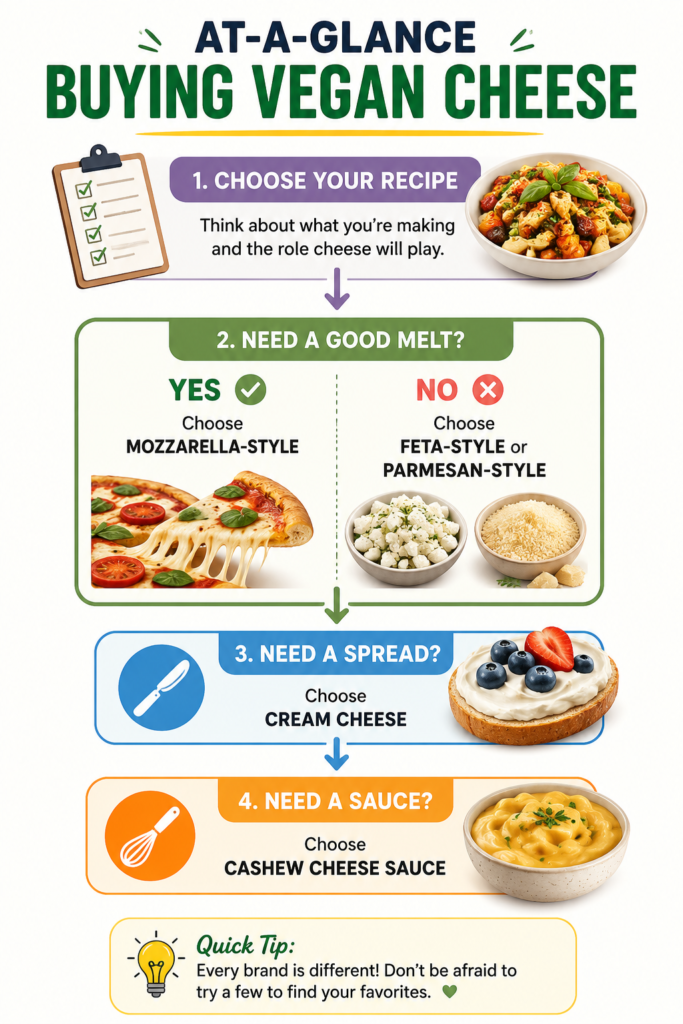
Start by thinking about the dish you’re making. Mozzarella-style cheeses work well for pizza and baked pasta, while feta-style cheeses are better for salads and grain bowls.
Cream cheese is ideal for dips, frosting, and cheesecakes, and parmesan-style cheeses are perfect for finishing pasta and soups.
Desired Texture
Texture can completely change the eating experience. Ask yourself whether you need a cheese that’s:
- Soft and creamy
- Spreadable
- Sliceable
- Crumbly
- Firm enough for a snack board
Meltability
If you’re making pizza, grilled cheese, burgers, or casseroles, look for a vegan cheese designed to melt well.
For salads, wraps, and cold platters, meltability isn’t as important, so a firmer cheese is often the better choice.
Flavor Profile
Vegan cheeses range from mild and creamy to sharp, tangy, smoky, and aged. Pick a flavor that complements your recipe rather than overpowering it.
Budget
Store-bought vegan cheeses can vary in price, while homemade versions are often more economical if you regularly cook from scratch.
Finding a balance between convenience and cost can help you stay within your budget.
Ingredient Preferences
Take a quick look at the ingredient list before buying. Some vegan cheeses are made with cashews, almonds, soy, oats, coconut oil, or starches.
Availability in Your Area
Not every grocery store carries the same selection of vegan cheeses.
If your local options are limited, consider trying homemade recipes or experimenting with readily available varieties until you find your favorites.
Tips for Cooking with Vegan Cheese
Let It Melt Slowly
Moderate heat usually works better than high heat.
Giving vegan cheese a little extra time to warm through helps it melt more evenly and reduces the chance of it becoming dry or overcooked.
Add Moisture When Needed
Some vegan cheeses melt more smoothly with a little added moisture.
Lightly mist the cheese with water or cover the dish with a lid or foil for a few minutes to trap steam while it heats.
Combine Different Types
Don’t be afraid to mix cheeses for better results.
For example, pair mozzarella-style vegan cheese for stretch and melt with parmesan-style vegan cheese for a richer, more savory flavor.
Season to Taste
Many vegan cheeses benefit from a little extra seasoning.
Fresh herbs, garlic, black pepper, nutritional yeast, smoked paprika, or Italian seasoning can add more depth and bring out the best flavor in both homemade and store-bought varieties.
Finish at the End
Some vegan cheeses taste and look their best when added near the end of cooking.
Sprinkle grated parmesan-style cheese over pasta just before serving or add crumbled feta-style cheese to salads and grain bowls after the other ingredients are cooked.
Bring Refrigerated Cheese Closer to Room Temperature
If time allows, let refrigerated vegan cheese sit on the counter for 10 to 15 minutes before cooking.
This can help some varieties melt more evenly and blend better into hot dishes.
Vegan Cheese Flavor Pairing Guide
Pairing vegan cheese with complementary ingredients can bring out its best flavor and make simple meals even more delicious.
Use this guide for quick inspiration when planning your next dish.
| Vegan Cheese | Pairs Well With |
|---|---|
| Mozzarella-style | Tomato, basil, pesto, roasted vegetables |
| Cheddar-style | Burgers, baked potatoes, chili, sandwiches |
| Parmesan-style | Pasta, roasted vegetables, garlic bread, risotto |
| Feta-style | Cucumbers, olives, spinach, watermelon, grain bowls |
| Cream cheese | Bagels, fresh berries, desserts, toast |
| Cashew cheese | Crackers, wraps, sandwiches, raw vegetables |
| Ricotta-style | Lasagna, stuffed shells, spinach, herbs |
| Blue cheese-style | Buffalo cauliflower, walnuts, pears, leafy salads |
Common Mistakes to Avoid
- Expecting identical behavior to dairy cheese: Vegan cheese melts and browns differently, so adjust your expectations and cooking methods accordingly.
- Using the wrong cheese for the recipe: Choose a cheese that matches the dish, such as mozzarella-style for pizza or feta-style for salads.
- Overheating vegan cheese: High heat can dry out or separate some varieties, so cook gently whenever possible.
- Skipping seasoning: A pinch of herbs, garlic, black pepper, or nutritional yeast can greatly improve the final flavor.
- Buying based only on appearance: Read the label to see whether the cheese is designed for melting, slicing, spreading, or crumbling.
- Not reading storage instructions: Following the recommended storage guidelines helps maintain the best flavor and texture.
- Using cold cheese straight from the refrigerator: Letting some cheeses sit at room temperature for a few minutes before cooking can help them melt more evenly.
Vegan Cheese Storage Guide
Proper storage helps vegan cheese stay fresh, maintain its texture, and reduce food waste.
While storage times can vary slightly by brand and ingredients, the guide below provides general recommendations for both store-bought and homemade varieties.
| Cheese Type | Refrigerator | Freezer |
|---|---|---|
| Sliced vegan cheese | 1–2 weeks after opening | Up to 2 months |
| Shredded vegan cheese | 1–2 weeks after opening | Up to 2 months |
| Vegan cream cheese | About 1 week after opening | Up to 1 month (texture may change) |
| Homemade cashew cheese | 4–7 days | Up to 2 months |
| Vegan cheese sauce | 4–5 days | Up to 2 months |
Storage Tips
- Keep vegan cheese refrigerated in its original packaging or an airtight container after opening.
- Label homemade cheeses with the preparation date so you know when to use them.
- Freeze portions in small amounts to make thawing more convenient.
- Thaw frozen vegan cheese overnight in the refrigerator for the best texture.
- If you notice mold, an unpleasant odor, or significant changes in texture, discard the cheese rather than trying to salvage it.
Signs Your Vegan Cheese Has Gone Bad
Proper storage helps extend the life of vegan cheese, but it won’t last forever.
Before using it, take a quick look, smell, and check the texture.
If you notice any of the following signs, it’s best to throw it away.
- Mold (unless intentionally cultured): Unexpected mold growth is a clear sign the cheese is no longer safe to eat.
- Sour or unpleasant smell: An off odor usually means the cheese has spoiled.
- Slimy texture: A sticky or slimy surface is a common sign of spoilage.
- Severe discoloration: Significant changes in color can indicate the cheese is past its best.
- Broken or leaking packaging: Damaged packaging may allow bacteria or moisture to contaminate the cheese.
- Stored beyond the recommended time: If it has been kept longer than the suggested refrigerator or freezer storage period, it’s safest to discard it.
Kitchen Tip: When in doubt, throw it out. Replacing spoiled vegan cheese is always better than risking a disappointing meal.
Beginner’s Shopping Checklist
If you’re new to vegan cheese, taking a minute to check the label can help you choose a product that works well for your recipe and matches your preferences.
Before buying vegan cheese, make sure to check:
- Cheese style matches your recipe (mozzarella-style for pizza, feta-style for salads, cream cheese for spreads and desserts).
- Suitable for melting if needed if you’re making dishes like pizza, grilled cheese, burgers, or casseroles.
- Ingredient list aligns with your preferences, especially if you avoid nuts, soy, coconut, or gluten.
- Proper storage instructions so you know how to keep the cheese fresh after opening.
- Portion size to ensure you have enough for your recipe without buying more than you need.
- Flavor description such as mild, sharp, smoky, tangy, or aged to complement your dish.
- Whether it’s best served cold or heated, as some vegan cheeses are designed for cooking while others are intended for salads, snack boards, or spreading.
Budget-Friendly Starter List
A great beginner-friendly shopping list includes:
- Mozzarella-style vegan cheese – Perfect for pizza, baked pasta, casseroles, and grilled sandwiches.
- Cheddar-style vegan slices or shreds – Ideal for burgers, tacos, wraps, toasties, and nachos.
- Parmesan-style vegan cheese – Great for sprinkling over pasta, soups, roasted vegetables, and salads.
- Vegan cream cheese – Excellent for bagels, toast, dips, frostings, and creamy recipes.
- Nutritional yeast – An affordable pantry staple that adds a savory, cheesy flavor to popcorn, sauces, mashed potatoes, vegetables, and pasta.
Final Thoughts
There isn’t one vegan cheese that’s best for every recipe.
The right choice depends on what you’re making, whether you need a great melt, a creamy spread, or a bold finishing touch.
Try a few store-bought and homemade options to see what you enjoy most.
Start with a versatile mozzarella-style cheese for pizzas and baked dishes or a simple cashew cheese for dips and spreads.
As you build your plant-based pantry, you’ll quickly learn which cheeses work best for your favorite meals and make every dish even more satisfying.
🧀 Kitchen Tip: Experiment with One Cheese at a Time
If you’re new to vegan cheese, start with just one variety instead of buying several at once. Use it in a few of your favorite recipes to learn how it melts, tastes, and performs during cooking. Once you’re comfortable with it, try another style for different dishes. Taking small steps makes the transition easier and helps you discover the vegan cheeses you’ll reach for again and again.
FAQs
What is the closest vegan cheese to dairy cheese?
Aged cashew-based cheeses and high-quality store-bought varieties often come closest in flavor and texture. The best choice depends on whether you want a cheese for melting, slicing, or spreading.
Which vegan cheese melts the best?
Mozzarella-style vegan cheese made with coconut oil and starches usually melts the best, making it a popular choice for pizza, grilled cheese, and baked pasta.
Can you freeze vegan cheese?
Yes. Most vegan cheeses freeze well for up to two months. Thaw them in the refrigerator overnight for the best texture.
Does homemade vegan cheese melt?
Some homemade vegan cheeses melt well, while others are better as spreads or dips. Recipes made with ingredients like tapioca starch generally melt better than simple nut-based cheeses.
What is nutritional yeast?
Nutritional yeast is a deactivated yeast with a naturally savory, cheesy flavor. It’s commonly used to add richness to sauces, pasta, popcorn, and homemade vegan cheese recipes.
Which vegan cheese works best for pizza?
Mozzarella-style vegan cheese is usually the best option because it melts well and provides a creamy, stretchy texture.
Which vegan cheese is best for pasta?
Parmesan-style vegan cheese is ideal for sprinkling over pasta, while cashew cheese sauce or shredded mozzarella-style cheese works well in creamy and baked pasta dishes.
How long does homemade vegan cheese last?
Most homemade vegan cheeses stay fresh for about 4 to 7 days in an airtight container in the refrigerator. Some varieties can also be frozen for up to two months.

Hi, I’m Daisy Roots, the home cook and recipe developer behind this kitchen. I create simple, tested vegan recipes using everyday ingredients. Every dish is developed and cooked in my own kitchen, with clear steps to help you get reliable results every time. Thanks for stopping by — let’s cook something great!