Vegan baking is all about swapping traditional ingredients like eggs, butter, and dairy milk for plant-based alternatives without giving up great flavor or texture.
Once you learn a few simple substitutions, you can bake everything from soft cookies to fluffy cakes with confidence.
If you’re just getting started, don’t worry because it’s much easier than it looks.
A handful of reliable ingredients and a few basic techniques can make a big difference, and you’ll quickly discover which swaps work best for your favorite recipes.
In this guide, you’ll learn the essential vegan baking ingredients, the most useful egg and dairy substitutes, beginner-friendly tips, common mistakes to avoid, and simple recipes to help you build confidence in the kitchen.
By the end, you’ll be ready to bake delicious vegan treats that everyone can enjoy.
What Is Vegan Baking?
Vegan baking is the practice of making baked goods without animal-based ingredients.
Instead of using eggs, dairy products, or other animal-derived ingredients, recipes rely on plant-based alternatives that deliver delicious flavor, moisture, and texture.
How Vegan Baking Differs from Traditional Baking
The biggest difference between vegan and traditional baking is the ingredients used.
Instead of relying on animal products, vegan recipes use plant-based alternatives that perform similar roles in the finished bake.
- No eggs: Ingredients like flax eggs, chia eggs, applesauce, mashed banana, or commercial egg replacers help bind ingredients together and add moisture.
- No dairy milk: Plant-based milks such as soy, oat, almond, or coconut milk replace cow’s milk in most recipes.
- No butter: Vegan butter, vegetable oil, coconut oil, or other plant-based fats provide richness and help create tender baked goods.
- No honey (when applicable): Sweeteners like maple syrup, agave syrup, or other vegan-friendly options are commonly used instead of honey.
Why People Choose Vegan Baking
Everyone has their own reason for trying vegan baking.
Some bake this way every day, while others simply enjoy experimenting with new recipes.
- Plant-based lifestyle: Many people choose vegan baking because it matches the way they like to cook and eat.
- Baking for vegan friends and family: Learning a few vegan recipes makes it easy to prepare treats that everyone at the table can enjoy.
- Trying new ingredients: Vegan baking introduces you to ingredients like oat milk, flaxseed, and coconut oil, opening up new flavors and techniques.
- Expanding baking skills: Understanding how different ingredient substitutions work can make you a more confident and versatile baker, even when following non-vegan recipes.
Quick Ingredient Swap Cheat Sheet
If you’re new to vegan baking, this simple reference table makes ingredient swaps easy.
Save it for later or keep it nearby while baking so you can quickly choose the right plant-based alternative.
| Instead of… | Use… |
|---|---|
| Egg | Flax egg, chia egg, applesauce |
| Dairy milk | Soy milk, oat milk, almond milk |
| Butter | Vegan butter, coconut oil |
| Heavy cream | Plant-based cream, full-fat coconut milk |
| Honey | Maple syrup, agave syrup |
Essential Vegan Baking Ingredients
A well-stocked pantry makes vegan baking much easier.
While you don’t need dozens of specialty products, having a few reliable ingredients on hand means you’ll be ready to bake everything from cookies and brownies to cakes and muffins whenever the craving strikes.
Plant-Based Milks
Plant-based milk replaces dairy milk in vegan baking by adding moisture and helping ingredients blend together.
Most options can be used as a 1:1 substitute, although each has its own flavor and texture.
- Soy milk: One of the best all-purpose choices thanks to its creamy texture and neutral flavor. It works well in cakes, muffins, breads, and cookies.
- Oat milk: Naturally creamy with a mild taste, making it a great option for soft cakes, quick breads, and cupcakes.
- Almond milk: Light and slightly nutty, almond milk works well in most baked goods without overpowering other flavors.
- Coconut milk: Rich and creamy, coconut milk is ideal for recipes where you want extra moisture, such as brownies or coconut-flavored desserts.
Vegan Butters and Oils
Fat plays an important role in baking by creating tender textures, adding richness, and helping baked goods stay moist.
- Vegan butter: A convenient substitute for traditional butter that works well in cookies, cakes, frostings, and pastries.
- Coconut oil: Adds moisture and a subtle coconut flavor. Refined coconut oil has a more neutral taste if you prefer less coconut flavor.
- Vegetable oil: A versatile option that produces soft, moist cakes, muffins, and quick breads.
- Olive oil: Best suited for recipes where its light, fruity flavor complements the finished bake, such as certain loaf cakes, muffins, or breads.
Flour Options
Different flours create different textures, so choosing the right one can improve your results.
- All-purpose flour: The most versatile flour for everyday vegan baking and a great place for beginners to start.
- Bread flour: Higher in protein, making it ideal for yeast breads and recipes that need extra structure.
- Whole wheat flour: Adds a hearty texture and slightly nutty flavor. It’s often combined with all-purpose flour for lighter baked goods.
- Cake flour: Finely milled with a lower protein content, producing soft, tender cakes and delicate cupcakes.
Natural Sweeteners
Sweeteners do more than add sweetness—they also influence moisture, browning, and texture.
- Granulated sugar: A classic choice for cakes, cookies, and many everyday baked goods.
- Brown sugar: Adds moisture along with a rich, caramel-like flavor.
- Maple syrup: A liquid sweetener that provides subtle maple notes and works well in muffins, cakes, and loaf breads.
- Agave syrup: Mild in flavor and easy to mix into batters for smooth, even sweetness.
- Coconut sugar: Offers a light caramel flavor and can often be used in place of brown sugar in many recipes.
Baking Staples
These pantry essentials help baked goods rise, develop flavor, and achieve the right texture.
- Baking powder: A leavening agent that helps cakes, muffins, and quick breads rise.
- Baking soda: Works with acidic ingredients to create lift and a light crumb.
- Salt: Enhances flavor and balances sweetness in every bake.
- Vanilla extract: Adds warmth and depth to both simple and rich desserts.
- Cocoa powder: Brings deep chocolate flavor to cakes, brownies, cookies, and frostings.
- Cornstarch: Useful for thickening fillings and creating a softer, more tender texture in certain baked goods.
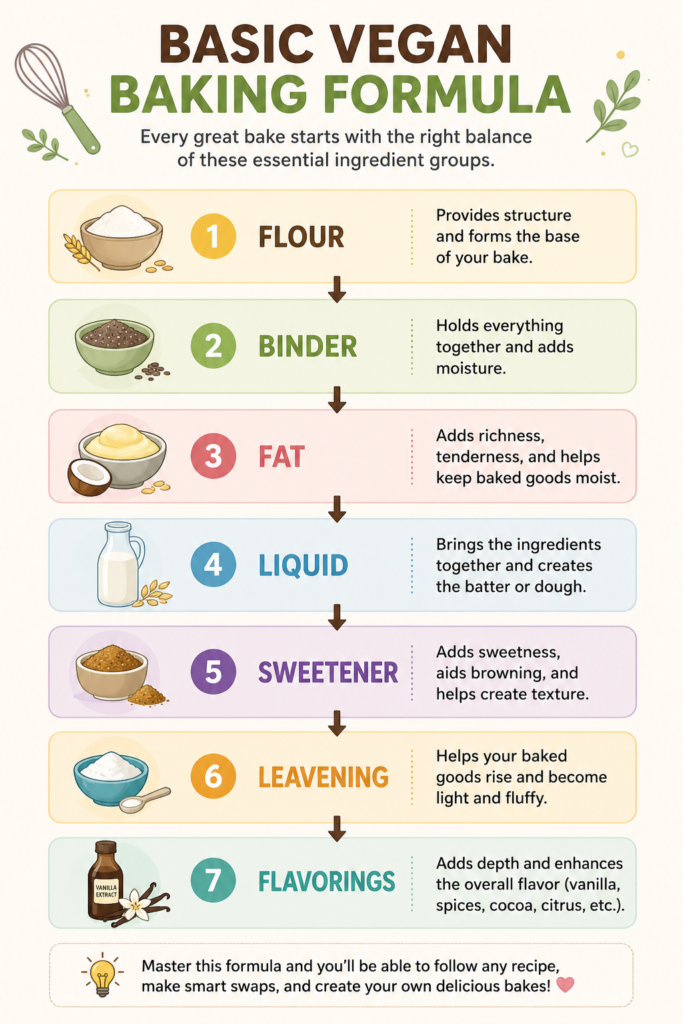
Common Baking Ingredient Roles
Understanding what each ingredient does makes it much easier to choose the right substitutions and troubleshoot recipes when something doesn’t turn out as expected.
Use this quick reference whenever you’re trying a new recipe or experimenting with different plant-based ingredients.
| Ingredient | Main Purpose |
|---|---|
| Flour | Provides structure and forms the base of the baked good. |
| Plant-based milk | Adds moisture and helps combine the ingredients smoothly. |
| Vegan butter or oil | Adds richness, tenderness, and helps keep baked goods moist. |
| Egg substitute | Binds ingredients together and adds moisture. |
| Baking powder | Helps cakes, muffins, and quick breads rise and become light. |
| Baking soda | Creates lift when combined with acidic ingredients. |
| Sugar | Adds sweetness, promotes browning, and helps create a tender texture. |
| Salt | Enhances flavor and balances sweetness. |
| Vanilla extract | Adds depth and rounds out the overall flavor. |
| Cornstarch | Thickens fillings and can create a softer, more tender crumb in some recipes. |
The Most Common Egg Replacements
Eggs play several roles in baking, including binding ingredients, adding moisture, and helping baked goods rise.
In vegan baking, there isn’t a single substitute that works for every recipe.
Choosing the right replacement depends on what you’re making and the texture you want to achieve.
| Egg Substitute | Best For | Notes |
|---|---|---|
| Flax egg | Cookies, muffins | Adds moisture and helps bind ingredients |
| Chia egg | Dense baked goods | Creates a slightly textured finish |
| Applesauce | Cakes | Adds moisture and a touch of natural sweetness |
| Mashed banana | Muffins | Adds moisture with a mild banana flavor |
| Silken tofu | Brownies | Creates a rich, dense texture |
| Commercial egg replacer | Most recipes | Convenient and designed for reliable results |
Flax Egg
A flax egg is made by mixing ground flaxseed with water and letting it sit for a few minutes until it thickens.
It’s one of the most popular egg substitutes because it binds ingredients well while adding moisture.
Use it for cookies, muffins, pancakes, and quick breads where a slightly hearty texture works well.
Chia Egg
Like a flax egg, a chia egg is made by combining chia seeds with water until it forms a gel.
It provides excellent binding power and works best in denser baked goods such as hearty muffins, loaf cakes, and baked bars.
Keep in mind that the tiny seeds may remain visible in lighter-colored recipes.
Applesauce
Unsweetened applesauce is a simple substitute that keeps cakes soft and moist.
It works especially well in snack cakes, cupcakes, and quick breads where a little extra moisture is welcome.
Because it adds natural sweetness, you may want to slightly reduce other sweeteners in recipes that are already quite sweet.
Mashed Banana
Ripe mashed banana is perfect for muffins, banana bread, and other baked goods where its mild fruit flavor complements the recipe.
It adds moisture and creates a soft, tender crumb, making it a great choice for breakfast-style bakes.
Silken Tofu
Silken tofu blends into a smooth, creamy consistency that adds richness and structure without changing the flavor very much.
It’s ideal for dense desserts like brownies, rich cakes, and some cheesecakes where a fudgy texture is desirable.
Commercial Egg Replacer
Commercial egg replacers are made specifically for baking and are usually the easiest option for beginners. Simply follow the package directions to prepare the amount you need.
They work well in a wide variety of recipes, making them a convenient choice when you’re looking for consistent results.
Dairy-Free Substitutes That Actually Work
Finding good dairy-free substitutes is one of the easiest parts of vegan baking once you know what each ingredient does.
Many plant-based alternatives can be used as a direct replacement, so you don’t need to completely change your favorite recipes.
The key is choosing the substitute that matches the texture and flavor you’re trying to create.
Milk Alternatives
Plant-based milk is one of the simplest swaps because most varieties can replace dairy milk in equal amounts.
Soy milk is a favorite for baking because its creamy texture and neutral flavor work well in almost every recipe.
Oat milk is another excellent choice, especially for cakes, muffins, and cupcakes, because it creates a soft, tender crumb without adding a strong flavor.
Almond milk has a lighter consistency and a subtle nutty taste that pairs well with vanilla, chocolate, and fruit-based desserts.
Coconut milk adds extra richness and is perfect when you want a moist cake, creamy bars, or tropical-inspired treats.
When trying a recipe for the first time, stick with an unsweetened and unflavored plant-based milk so it doesn’t change the sweetness or flavor of the finished bake.
Butter Alternatives
Butter adds richness, tenderness, and flavor, but several plant-based ingredients can do the same job.
Vegan butter is usually the closest substitute because it behaves much like traditional butter in cookies, cakes, frostings, and pie crusts.
If a recipe calls for melted butter, vegetable oil is often an easy replacement that helps keep baked goods soft and moist.
Coconut oil also works well, especially in brownies, cookies, and loaf cakes, although unrefined versions can add a light coconut flavor.
Refined coconut oil is a better option when you want a more neutral taste.
Olive oil is another useful choice for certain recipes, particularly simple cakes, muffins, and quick breads where its mild fruity flavor complements the other ingredients.
For the best results, use the type of fat recommended in the recipe whenever possible, since different fats can slightly change the final texture.
Vegan Yogurt
Vegan yogurt is a simple way to add moisture and tenderness to baked goods.
It works especially well in cakes, muffins, quick breads, and cupcakes where a soft crumb is important.
Plain, unsweetened varieties are usually the safest choice because they won’t compete with the other flavors in the recipe.
Soy, oat, almond, and coconut yogurt can all work well, although thicker yogurts often produce a richer batter.
If your yogurt is very thin, give it a quick stir before measuring so the consistency is even.
Dairy-Free Cream
Some recipes call for cream to create extra richness or a smooth texture.
Plant-based cooking creams are an easy substitute and are designed to work much like traditional cream.
Full-fat canned coconut milk is another popular option, especially in rich desserts like cheesecakes, ganache, and creamy frostings.
If you only need a small amount of cream, blending plant-based milk with a little vegan butter can also add richness to certain recipes.
Always choose an unsweetened product unless the recipe specifically calls for a flavored version.
Vegan Chocolate
Many dark chocolates are naturally dairy-free, but it’s always worth checking the ingredient label before using them.
Vegan chocolate chips, baking bars, and cocoa powder make it easy to create rich chocolate desserts without changing the recipe very much.
Good-quality cocoa powder delivers deep chocolate flavor and works beautifully in cakes, brownies, cookies, and frostings.
If you’re melting vegan chocolate, do it gently over low heat or in short bursts in the microwave to keep it smooth.
Basic Vegan Baking Equipment
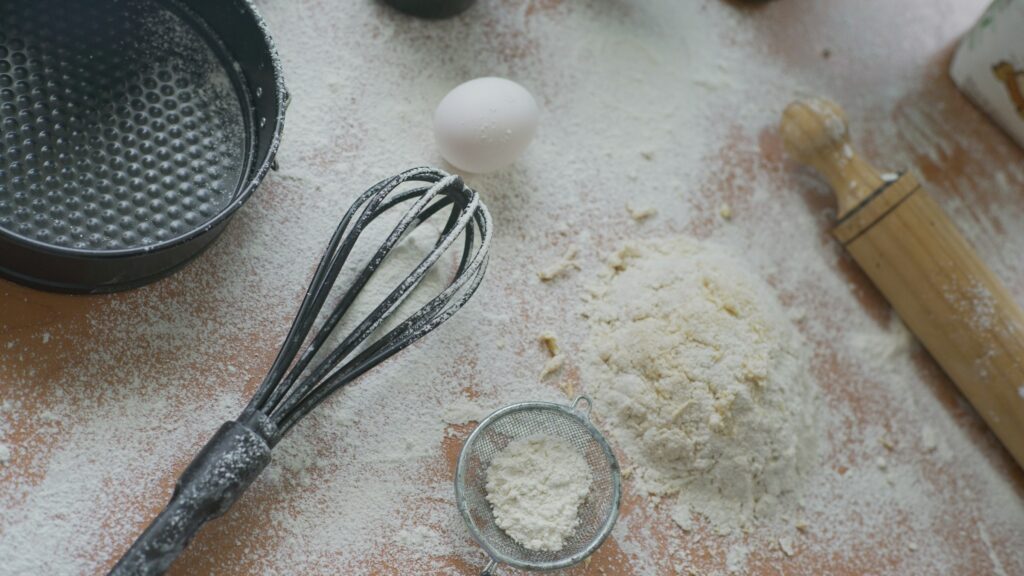
You don’t need a kitchen full of expensive gadgets to start vegan baking.
A few reliable tools are enough to help you mix, measure, bake, and cool your treats with confidence.
If you already enjoy baking, you probably have most of these items in your kitchen.
| Equipment | Why It’s Useful |
|---|---|
| Mixing bowls | Hold ingredients while you mix batters, doughs, and frostings. Having a few different sizes makes baking easier. |
| Measuring cups | Help you measure dry and liquid ingredients accurately for consistent results. |
| Kitchen scale | Provides the most accurate measurements, especially for flour and other dry ingredients. |
| Whisk | Blends ingredients smoothly and helps incorporate air into batters when needed. |
| Silicone spatula | Scrapes every bit of batter from bowls and folds ingredients together gently without overmixing. |
| Baking pans | Give your cakes, brownies, cookies, and breads the right shape and help them bake evenly. |
| Cooling rack | Allows baked goods to cool evenly by letting air circulate underneath, helping prevent soggy bottoms. |
| Parchment paper | Keeps food from sticking to baking pans and makes cleanup much quicker. |
Mixing Bowls
A sturdy set of mixing bowls is one of the first things every baker needs.
Using separate bowls for wet and dry ingredients helps recipes come together more smoothly.
Having a few different sizes also makes it easier to prepare several ingredients at once.
Measuring Cups
Accurate measuring is one of the simplest ways to improve your baking.
Use dry measuring cups for ingredients like flour and sugar, and a liquid measuring cup for plant-based milk and oils.
Small measuring spoons are just as important for ingredients like baking powder, baking soda, vanilla extract, and salt.
Kitchen Scale
A kitchen scale takes the guesswork out of measuring ingredients.
Flour can easily become packed into a measuring cup, which may lead to dry or dense baked goods.
Weighing ingredients gives you more consistent results, especially when following recipes that list measurements by weight.
Whisk
A whisk quickly combines wet ingredients and breaks up small lumps before they become a problem.
It also helps evenly distribute ingredients like cocoa powder and baking soda into your batter.
For many recipes, a simple hand whisk is all you need.
Silicone Spatula
A silicone spatula is one of the most useful tools in any kitchen.
It helps fold ingredients together gently, which is especially important for keeping cakes and muffins light.
It’s also perfect for scraping every bit of batter from the bowl so nothing goes to waste.
Baking Pans
The right baking pan helps your desserts bake evenly from edge to center.
Common choices include loaf pans, round cake pans, square baking pans, muffin tins, and cookie sheets.
Using the pan size recommended in a recipe helps ensure the correct baking time and texture.
Cooling Rack
Freshly baked treats continue to set as they cool.
A cooling rack lifts them off the hot pan and allows air to circulate underneath, helping cookies stay crisp and cakes cool evenly.
Waiting until baked goods have cooled also makes them easier to slice, frost, or decorate.
Parchment Paper
Parchment paper creates a non-stick surface that makes removing baked goods much easier.
It’s especially helpful for cookies, brownies, and cakes that might otherwise stick to the pan.
It also saves time during cleanup, leaving you with less scrubbing and more time to enjoy your homemade treats.
Pantry Staples to Keep on Hand
Stocking a few versatile ingredients makes vegan baking much easier.
Start with the essentials below, then add the optional items as you try new recipes and expand your baking skills.
| Always Keep | Nice to Have |
|---|---|
| All-purpose flour | Cake flour |
| Baking powder | Coconut sugar |
| Baking soda | Plant-based cream |
| Vanilla extract | Vegan chocolate chips |
| Soy milk or oat milk | Maple syrup |
| Vegan butter | Coconut oil |
| Granulated sugar | Brown sugar |
| Ground flaxseed | Chia seeds |
| Salt | Cornstarch |
| Apple cider vinegar | Unsweetened cocoa powder |
Before You Start Baking Checklist
- Read the recipe completely so you understand every step before you begin.
- Measure all ingredients accurately using the correct measuring cups and spoons.
- Preheat the oven so it’s at the proper temperature when your batter or dough is ready.
- Prepare your baking pan by greasing it or lining it with parchment paper if required.
- Bring chilled ingredients to room temperature when the recipe calls for it, as they blend more smoothly.
- Double-check ingredient quantities before mixing to avoid simple mistakes that can affect the final result.
Easy Vegan Baking Tips for Beginners
Measure Ingredients Accurately
Good baking starts with accurate measurements.
Too much flour can make cakes dry and cookies crumbly, while too much liquid can leave batters thin and difficult to bake properly.
For dry ingredients like flour, gently spoon them into the measuring cup instead of scooping directly from the bag.
Level the top with the flat edge of a knife so you don’t accidentally add extra flour.
If you have a kitchen scale, use it whenever a recipe includes weight measurements.
A few extra seconds spent measuring carefully can make a noticeable difference in the final texture.
Don’t Overmix the Batter
Once the wet and dry ingredients come together, mix only until everything is combined.
Overmixing can make cakes, muffins, and quick breads heavier than they should be.
A few small lumps in the batter are perfectly normal and usually disappear during baking.
Use a silicone spatula or wooden spoon to gently fold the ingredients together instead of stirring aggressively.
When adding chocolate chips, berries, or chopped nuts, fold them in at the end using just a few gentle strokes.
Read the Entire Recipe First
Before you reach for the mixing bowl, take a minute to read the recipe from beginning to end.
This helps you understand each step and prevents surprises halfway through baking.
Check that you have every ingredient measured and ready before you start mixing.
It’s also a good time to preheat the oven and prepare your baking pan so everything is ready when the batter is finished.
A little planning makes the entire baking process feel much more relaxed.
Bring Ingredients to Room Temperature (When Needed)
Some recipes work best when certain ingredients are not straight from the refrigerator.
Room-temperature plant-based milk, vegan butter, and vegan yogurt blend together more smoothly and create a more even batter.
If an ingredient is cold, let it sit on the counter for 20 to 30 minutes before baking.
If you’re short on time, gently warming plant-based milk for a few seconds can take the chill off without making it hot.
Line Baking Pans Properly
Preparing your baking pan before adding the batter saves frustration later.
Parchment paper helps cakes, brownies, and cookies release easily without sticking.
For cakes and quick breads, lightly grease the pan before adding parchment paper so it stays in place.
If you’re baking cookies, lining the baking sheet with parchment paper also helps promote even browning and makes cleanup much quicker.
Taking a minute to prepare your pan properly can help your finished bake look just as good as it tastes.
Check for Doneness Carefully
Every oven bakes a little differently, so use the recipe’s baking time as a guide instead of a strict rule.
Start checking your baked goods a few minutes before the suggested baking time ends.
For cakes and muffins, insert a toothpick into the center.
If it comes out clean or with just a few moist crumbs, they’re ready to come out of the oven.
Cookies often continue to firm up as they cool, so it’s usually better to remove them when the edges are set and the centers still look slightly soft.
Giving baked goods enough time to cool before slicing or decorating also helps them finish setting and improves their texture.
Common Vegan Baking Mistakes to Avoid
Every baker makes mistakes, especially when trying something new.
The good news is that most vegan baking problems are easy to prevent once you know what to watch for.
If a recipe doesn’t turn out perfectly the first time, don’t be discouraged.
Each bake helps you learn a little more about how different ingredients work together.
| Mistake | What Can Happen | How to Avoid It |
|---|---|---|
| Using the wrong egg substitute | Dense, crumbly, or overly moist baked goods | Choose the egg replacement that matches the recipe and its purpose. |
| Adding too much flour | Dry, heavy cakes and tough cookies | Measure flour carefully or use a kitchen scale when possible. |
| Forgetting to preheat the oven | Uneven baking and poor texture | Always preheat the oven before the batter goes in. |
| Overbaking | Dry cakes, hard cookies, and crumbly brownies | Start checking for doneness a few minutes before the recommended baking time ends. |
| Using expired baking powder | Little or no rise | Check expiration dates and replace old leavening agents regularly. |
| Opening the oven too often | Cakes may sink or bake unevenly | Keep the oven door closed until it’s time to check for doneness. |
| Skipping ingredient measurements | Inconsistent results | Measure every ingredient carefully, even if you’re experienced. |
Using the Wrong Egg Substitute
Not every egg replacement works the same way.
A flax egg is great for cookies and muffins, while applesauce is often a better choice for soft cakes.
Taking a moment to choose the right substitute gives your baked goods the best chance of turning out as expected.
Adding Too Much Flour
Flour is one of the easiest ingredients to overmeasure.
Scooping directly from the bag can pack extra flour into the measuring cup, making the batter too dry.
Instead, spoon the flour into the cup and level it with a straight edge, or weigh it with a kitchen scale for the most accurate results.
Forgetting to Preheat the Oven
Your batter should go into a fully heated oven.
Starting with a cold oven can affect how your baked goods rise and may change their texture.
Turn the oven on before you begin mixing so it’s ready when you are.
Overbaking
A few extra minutes in the oven can make a big difference.
Cakes become dry, cookies lose their soft centers, and brownies can turn crumbly if baked for too long.
Begin checking a little early, since you can always bake for another minute or two if needed.
Using Expired Baking Powder
Baking powder and baking soda help create light, fluffy baked goods.
If they’re old or expired, your cakes and muffins may not rise properly.
Check the expiration date before baking, especially if the container has been sitting in your pantry for a long time.
Opening the Oven Too Often
It can be tempting to peek while something is baking.
Each time you open the oven door, heat escapes and the baking temperature drops.
This can slow baking and may even cause delicate cakes to sink before they’re fully set.
Wait until the recipe suggests checking for doneness before opening the oven.
Skipping Ingredient Measurements
Baking is much more precise than cooking.
Guessing ingredient amounts can easily throw off the balance of a recipe and lead to inconsistent results.
Even experienced bakers take the time to measure carefully because small differences can have a noticeable impact on the finished bake.
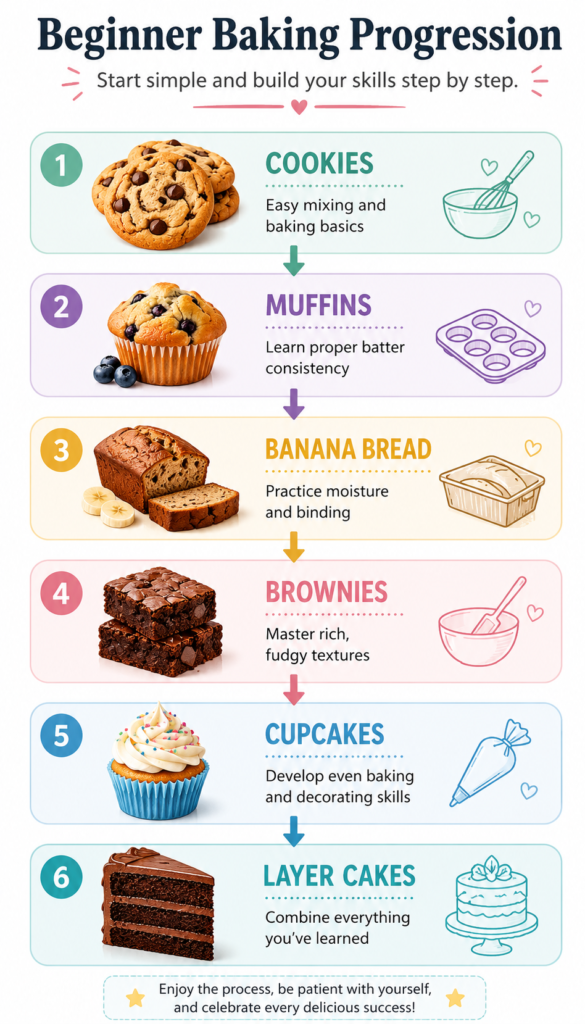
Beginner-Friendly Vegan Recipes to Try First
The best way to build confidence is to start with simple recipes that use basic ingredients and easy techniques.
These beginner-friendly bakes are forgiving, delicious, and perfect for practicing common vegan ingredient swaps.
Chocolate Chip Cookies
Chocolate chip cookies are one of the easiest vegan treats to master.
The dough comes together quickly, and you can easily see how vegan butter and an egg substitute work in a classic recipe.
They’re also ready in a short time, making them perfect when you want fast results.
Banana Bread
Banana bread is a great choice because ripe bananas naturally add moisture and help bind the batter.
The recipe is simple to mix, and small imperfections usually don’t affect the final result.
It’s also an excellent way to use bananas that have become very ripe.
Vanilla Cupcakes
Vanilla cupcakes help you practice making a smooth batter and baking evenly sized portions.
They’re ideal for learning how plant-based milk and vegan butter create a soft, fluffy crumb.
Once you’ve mastered a basic vanilla cupcake, you can easily experiment with different frostings and flavors.
Brownies
Brownies are naturally rich and fudgy, making them one of the most forgiving vegan desserts.
They don’t require a light, airy texture, so simple egg substitutes often work very well.
They’re a great recipe to bake when you’re just starting out and want a delicious, reliable result.
Muffins
Muffins are quick to prepare and don’t require any special decorating skills.
You can customize them with ingredients like blueberries, chocolate chips, chopped nuts, or cinnamon to create different flavors.
They’re also a great way to practice mixing the batter just enough without overworking it.
Simple Loaf Cake
A basic loaf cake is another excellent beginner project.
The batter is straightforward to prepare, and the larger pan gives the cake plenty of time to bake evenly.
Once you’re comfortable with the basic recipe, you can add citrus zest, spices, berries, or chocolate chips to create new variations without making the process more complicated.
How to Store Vegan Baked Goods
Storing your baked goods the right way helps them stay fresh, soft, and full of flavor for longer.
The best storage method depends on what you’ve baked and how soon you plan to enjoy it.
Allow your baked goods to cool completely before storing them.
Placing warm treats in a container can trap steam, creating excess moisture that affects their texture.
| Baked Good | Room Temperature | Refrigerator | Freezer |
|---|---|---|---|
| Cookies | 4–5 days | Optional | Up to 3 months |
| Muffins | 2–3 days | Up to 1 week | Up to 3 months |
| Cakes | 2–4 days | Up to 1 week | Up to 3 months |
| Brownies | 3–5 days | Up to 1 week | Up to 3 months |
Room Temperature
Most cookies, muffins, brownies, and unfrosted cakes stay fresh for several days when stored at room temperature.
Place them in an airtight container to help prevent them from drying out.
If you’re stacking cookies or brownies, place a sheet of parchment paper between the layers to keep them from sticking together.
Store the container in a cool, dry place away from direct sunlight and heat.
Refrigerator
The refrigerator is useful when baked goods contain fillings, frostings, or ingredients that are best kept chilled.
Keep everything in an airtight container so the baked goods don’t absorb odors from other foods.
Before serving, let refrigerated treats sit at room temperature for a few minutes.
This allows cakes, brownies, and muffins to soften slightly and brings back their best texture.
Freezer
Freezing is a great option if you want to enjoy your homemade treats later.
Wrap individual portions tightly in plastic wrap or parchment paper, then place them in a freezer-safe container or resealable freezer bag.
Label the container with the date so you know when you stored them.
When you’re ready to enjoy them, thaw the baked goods at room temperature until they’re soft.
If you’d like them slightly warm, a few seconds in the microwave or a few minutes in a low oven can help refresh their texture and flavor.
Expert Kitchen Tips
- Keep a small baking notebook to record successful ingredient swaps, baking times, and any adjustments that produced great results.
- Label opened specialty ingredients such as flax meal, almond flour, or whole wheat flour with the purchase date so you can use them while they’re at their freshest.
- Change only one ingredient at a time when experimenting with a new vegan substitute. This makes it much easier to identify what improved—or affected—the final result.
- Measure by weight whenever possible. A kitchen scale provides more consistent results than measuring cups, especially for flour.
- Taste and evaluate after every bake. Make a note if your baked goods need more moisture, sweetness, or structure so you can fine-tune the recipe next time.
Final Thoughts
Great vegan baking starts with a few simple ingredient swaps and a little practice.
Begin with easy recipes like cookies, muffins, or banana bread, and you’ll quickly learn which plant-based ingredients work best for your favorite treats.
Don’t worry if every bake isn’t perfect the first time.
Each batch helps you build confidence, improve your skills, and discover new techniques along the way.
Keep experimenting, have fun in the kitchen, and enjoy the process—before long, you’ll be baking delicious vegan treats that everyone will love.
FAQs
Can you replace eggs in every baking recipe?
In most recipes, yes. The key is choosing the right egg substitute for the type of baked good you’re making, since different replacements provide different textures and levels of moisture.
Which plant milk is best for baking?
Soy milk is often the most reliable choice because of its creamy texture and neutral flavor. Oat milk is another excellent option and works well in most cakes, cookies, and muffins.
Does vegan baking taste different?
Not necessarily. When the right ingredients are used, vegan baked goods can be just as flavorful, soft, and delicious as traditional recipes.
Can I use regular recipes and simply replace the eggs and dairy?
Yes, many traditional baking recipes can be adapted with plant-based milk, vegan butter, and an appropriate egg substitute.
Some recipes may need small adjustments, but many work well with simple swaps.
Why are my vegan cakes dense?
Dense cakes are often caused by adding too much flour, overmixing the batter, or using an egg substitute that isn’t the best match for the recipe.
Measuring carefully and mixing gently usually improves the texture.
What’s the easiest vegan dessert for beginners?
Chocolate chip cookies, banana bread, and brownies are all excellent beginner recipes. They use simple ingredients, are easy to prepare, and are generally very forgiving.
Do I need special baking equipment?
No. Basic tools like mixing bowls, measuring cups, a whisk, a spatula, baking pans, and parchment paper are enough to make most vegan baking recipes successfully.
Hi, I’m Daisy Roots, the home cook and recipe developer behind this kitchen. I create simple, tested vegan recipes using everyday ingredients. Every dish is developed and cooked in my own kitchen, with clear steps to help you get reliable results every time. Thanks for stopping by — let’s cook something great!