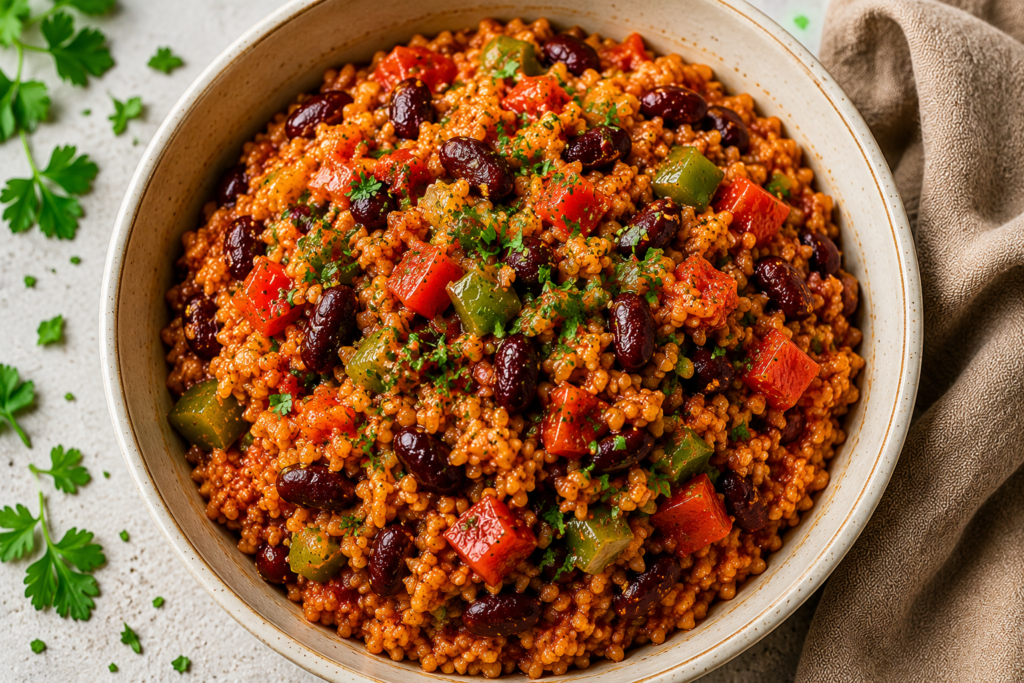
If you’re looking for a hearty dinner that delivers big flavor without a sink full of dishes, this one-pot vegan jambalaya is the recipe to make.
Inspired by the bold Cajun flavors of the South, it combines tender rice, colorful vegetables, beans, and warm spices in one satisfying meal.
Everything cooks in a single pot, making it perfect for busy weeknights when time and energy are limited.
The ingredients are simple, budget-friendly, and easy to find, but the finished dish tastes like it took much more effort.
In this recipe, you’ll learn exactly how to build rich flavor step by step, cook the rice perfectly, and customize the jambalaya to suit your taste.
Why This Recipe Works
This vegan jambalaya delivers bold flavor and satisfying texture by using a few simple techniques that work together throughout the cooking process.
The recipe starts with onions, celery, and bell peppers, often called the Cajun “holy trinity,” which creates a rich and flavorful base before any other ingredients are added.
Cooking the rice directly in the seasoned vegetable broth allows every grain to absorb the spices and savory flavors as it cooks.
Diced tomatoes add moisture and richness while helping create the classic texture that makes each bite so satisfying.
Beans bring heartiness and texture to the dish, making it filling while blending naturally with the rice and vegetables.
Because everything cooks together in one pot, the ingredients have time to share flavors, creating a well-balanced dish with very little effort.
The result is a simple, reliable meal that delivers bold Cajun-inspired flavor using everyday ingredients and easy cooking techniques.
Why You’ll Love This One-Pot Vegan Jambalaya
- One-pot convenience – Everything cooks in a single pot, making cleanup quick and easy.
- Bold Cajun-inspired flavor – A blend of spices, vegetables, and aromatics creates a rich and satisfying dish.
- 100% plant-based – Made without meat or dairy while still delivering plenty of flavor and texture.
- Easy to customize – Swap in your favorite vegetables, beans, tofu, or vegan sausage to make it your own.
- Perfect for meal prep – It stores well and tastes just as delicious the next day, making leftovers something to look forward to.
What Is Jambalaya?
Jambalaya is a classic rice dish that comes from Louisiana and is known for its bold flavors, comforting texture, and ability to feed a crowd using simple ingredients.
The dish reflects a mix of culinary influences, including French, Spanish, African, and Caribbean cooking traditions, which all helped shape the rich food culture of the region over many generations.
Traditional jambalaya is often made by cooking rice in the same pot as vegetables, seasonings, broth, and proteins, allowing every ingredient to share flavor as it cooks.
One reason jambalaya has remained popular for so long is its simplicity, since it turns everyday ingredients into a hearty and satisfying meal without requiring complicated techniques.
There are two main styles of jambalaya: Cajun and Creole, and while both are delicious, there are a few key differences between them.
Cajun jambalaya is sometimes called “brown jambalaya” because it is usually made without tomatoes, relying instead on browned vegetables, spices, and proteins to build its deep flavor and color.
Creole jambalaya, often known as “red jambalaya,” includes tomatoes, which add extra richness, moisture, and a slightly brighter flavor to the finished dish.
This vegan version takes inspiration from both styles by combining aromatic vegetables, rice, tomatoes, flavorful seasonings, and a rich vegetable broth in one pot.
Instead of meat, ingredients like beans and vegetables add heartiness and texture while soaking up all the delicious Cajun-inspired flavors.
Smoked paprika, garlic, onion, celery, and bell peppers help create the savory depth that people love in traditional jambalaya, proving that a plant-based version can be every bit as satisfying.
The result is a warm, comforting meal that stays true to the spirit of classic jambalaya while using simple vegan ingredients that are easy to find and easy to cook with.
Ingredients You’ll Need
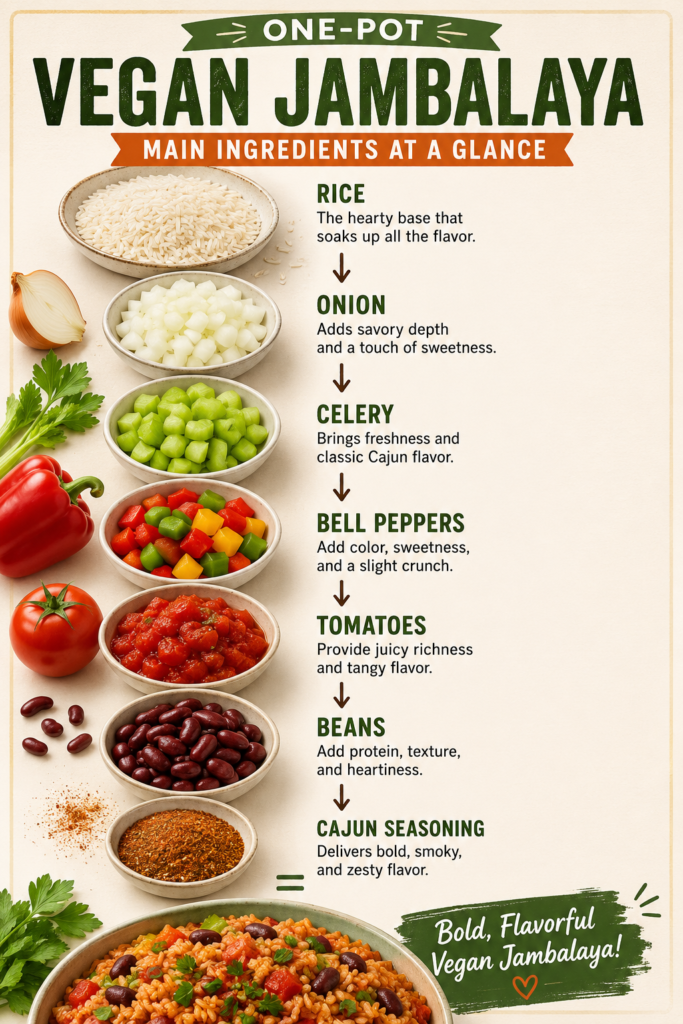
Vegetables
- 1 medium yellow onion, diced – Adds a savory base and natural sweetness.
- 2 bell peppers, diced (any color) – Bring color, texture, and classic jambalaya flavor.
- 2 celery stalks, diced – Adds freshness and depth to the dish.
- 4 cloves garlic, minced – Provides rich, aromatic flavor.
- 1 can (14 oz/400 g) diced tomatoes, undrained – Adds moisture and a touch of acidity.
Protein
- 1 can (15 oz/425 g) kidney beans or black beans, drained and rinsed – Makes the jambalaya hearty and satisfying.
- 8 oz (225 g) plant-based sausage, sliced (optional) – Adds extra texture and savory flavor.
Grains
- 1½ cups (285 g) long-grain white rice, uncooked – Cooks directly in the pot and absorbs all the flavors.
Seasonings
- 2 teaspoons Cajun seasoning – Provides the signature jambalaya flavor.
- 1 teaspoon smoked paprika – Adds a subtle smoky depth.
- 1 teaspoon dried thyme – Brings earthy flavor to the dish.
- 1 teaspoon dried oregano – Adds warmth and balance.
- ½ teaspoon black pepper – Enhances the overall seasoning.
- ½ teaspoon salt, or to taste – Helps bring all the flavors together.
Liquid
- 3 cups (720 ml) vegetable broth – Cooks the rice and creates a flavorful base.
Optional Garnishes
- 2 green onions, thinly sliced – Adds freshness and color before serving.
- 2 tablespoons fresh parsley, chopped – Brightens the finished dish.
- Hot sauce, to taste – Perfect for those who enjoy extra heat.
- Lemon wedges, for serving – A squeeze of lemon adds a fresh finishing touch.
Ingredient Substitutions
If you’re missing an ingredient or simply want to use what you already have on hand, these easy swaps will help you make a delicious jambalaya without compromising flavor.
| If You Don’t Have | Use Instead |
|---|---|
| Kidney beans | Black beans or pinto beans |
| Bell peppers | Sweet mini peppers |
| Cajun seasoning | Creole seasoning |
| Vegetable broth | Vegetable stock |
| Plant-based sausage | Tofu or tempeh |
Most of these substitutions can be made in equal amounts, making it easy to adapt the recipe to your pantry while still achieving great results.
Kitchen Equipment
- Large Dutch oven or deep skillet with lid – Provides enough space for the vegetables, rice, and broth to cook evenly in one pot.
- Measuring cups and spoons – Help ensure the right balance of ingredients and seasonings for the best flavor and texture.
- Cutting board – Gives you a safe and sturdy surface for prepping the vegetables and other ingredients.
- Chef’s knife – Makes chopping onions, peppers, celery, and garlic quick and easy.
Key Recipe Success Tips at a Glance
| Goal | What to Do |
|---|---|
| Fluffy rice | Use long-grain white rice and avoid overcooking. |
| More flavor | Sauté the vegetables until softened before adding the remaining ingredients. |
| Prevent mushy rice | Measure the broth carefully and stick to the recommended amount. |
| Extra heat | Add cayenne pepper or hot sauce to taste. |
| Better leftovers | Let the jambalaya rest for a few minutes before serving so the rice can absorb any remaining moisture. |
Keep these simple tips in mind as you cook, and you’ll be well on your way to a flavorful, perfectly textured vegan jambalaya.
How to Make One-Pot Vegan Jambalaya
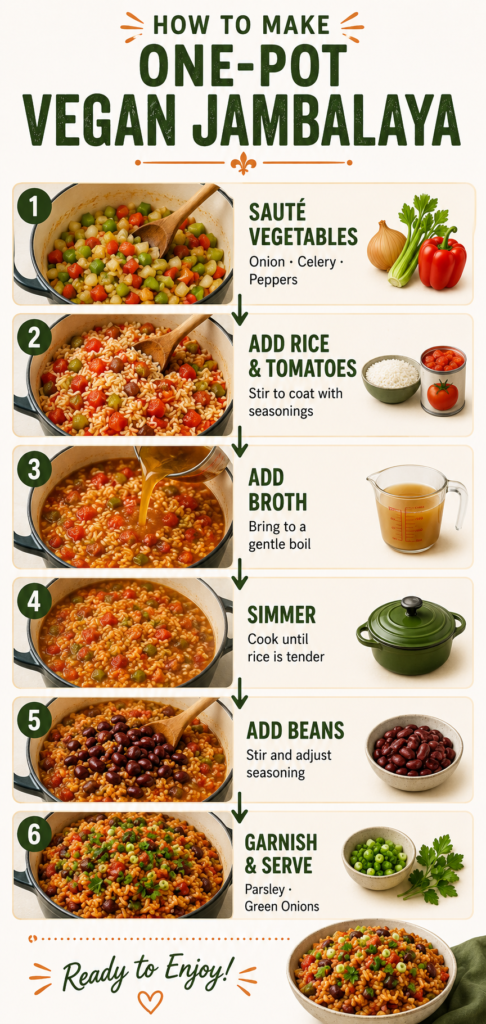
Step 1: Sauté the Vegetables
Place your Dutch oven or deep skillet over medium heat and add a small splash of oil if desired.
Add the diced onion, bell peppers, and celery to the pot and cook for 5 to 7 minutes, stirring occasionally, until the vegetables become soft and fragrant.
This mixture is often called the “holy trinity” of Cajun cooking, and it creates the flavorful foundation of the entire dish.
Once the vegetables have softened, stir in the minced garlic, Cajun seasoning, smoked paprika, thyme, oregano, black pepper, and salt.
Cook for about 30 seconds to 1 minute, stirring constantly, until the garlic smells fragrant and the spices coat the vegetables evenly.
Taking a few extra moments during this step helps build deeper flavor throughout the jambalaya.
Step 2: Add Rice and Tomatoes
Add the uncooked long-grain rice and the can of diced tomatoes, including the juices, directly into the pot.
Stir everything together until the rice is evenly coated with the vegetables, tomatoes, and seasonings.
This quick mixing step helps the rice absorb flavor from the very beginning of the cooking process.
Make sure there are no dry pockets of rice left in the pot before moving on to the next step.
Step 3: Pour in Broth
Slowly pour the vegetable broth into the pot and stir well to combine all the ingredients.
As you stir, scrape the bottom of the pot to loosen any flavorful bits that may have stuck during sautéing.
Increase the heat slightly and bring the mixture to a gentle boil.
You should see steady bubbles across the surface, but there is no need for a rapid boil.
Once the broth reaches this stage, you’re ready to let the rice do the rest of the work.
Step 4: Simmer Until Tender
Reduce the heat to low and cover the pot with a tight-fitting lid.
Allow the jambalaya to simmer for 18 to 20 minutes, or until the rice is tender and most of the liquid has been absorbed.
Try to keep the lid closed as much as possible during cooking since trapped steam helps the rice cook evenly.
If your pot tends to cook unevenly, you can give the mixture a gentle stir once or twice during cooking.
By the end of this step, the rice should be fluffy, tender, and full of flavor.
How to Know Your Jambalaya Is Ready
Before moving on to the next step, take a quick look at the pot to make sure everything has cooked properly.
- The rice should be tender but not mushy – It should have a soft texture while still holding its shape.
- Most of the liquid should be absorbed – You shouldn’t see excess broth pooling at the bottom of the pot.
- The mixture should look moist, not soupy – The rice should be coated with flavor, but the jambalaya shouldn’t be watery.
- The vegetables should be soft and fully cooked – The onions, celery, and peppers should be tender and easy to bite through.
- The rice should fluff easily with a fork – A quick fluff should separate the grains without turning them sticky or clumpy.
If your jambalaya checks all of these boxes, it’s ready for the final steps and serving.
Step 5: Add Beans and Finish
Stir the drained and rinsed beans into the jambalaya during the final few minutes of cooking.
If you’re using plant-based sausage, add it at this stage as well so it can warm through without overcooking.
Gently fold everything together until the beans are evenly distributed throughout the rice.
Taste the jambalaya and adjust the seasoning if needed.
A little extra Cajun seasoning, salt, or black pepper can help bring all the flavors into balance.
Let the pot sit for a few minutes off the heat before serving to allow the flavors to settle and the rice to finish absorbing any remaining liquid.
Step 6: Garnish and Serve
Spoon the hot jambalaya into bowls and finish with your favorite garnishes.
Fresh parsley adds a bright, fresh flavor that complements the warm spices beautifully.
Sliced green onions provide a little crunch and a pop of color.
If you enjoy extra heat, add a few dashes of hot sauce just before serving.
A squeeze of fresh lemon juice can also brighten the entire dish and make the flavors stand out even more.
Serve warm and enjoy a comforting bowl of vegan jambalaya packed with bold Cajun-inspired flavor in every bite.
Tips for the Best Vegan Jambalaya
Use Long-Grain Rice for Ideal Texture
Long-grain white rice is the best choice for jambalaya because it cooks up fluffy and separate rather than soft and sticky.
Since the rice absorbs the flavorful broth as it cooks, using the right variety helps create the classic texture that makes jambalaya so satisfying.
Short-grain rice tends to release more starch, which can make the finished dish heavier and less distinct.
If possible, stick with long-grain rice for the most reliable results and the best overall texture.
Avoid Lifting the Lid Too Often While Cooking
Once the pot is covered and simmering, try to resist the temptation to check on it every few minutes.
The trapped steam inside the pot plays an important role in cooking the rice evenly and helping it absorb the liquid properly.
Every time the lid is lifted, heat and steam escape, which can slow down the cooking process and affect the texture of the rice.
If you’re using the recommended cooking time and a low simmer, you can trust the process and let the pot do the work.
Adjust the Spice Level to Your Preference
One of the best things about homemade jambalaya is that you can easily make it as mild or as spicy as you like.
For a gentler flavor, reduce the amount of Cajun seasoning slightly or choose a mild blend.
If you enjoy a little more heat, add extra Cajun seasoning, a pinch of cayenne pepper, or a few dashes of your favorite hot sauce.
Taste the jambalaya before serving and make any final seasoning adjustments so the flavors are exactly how you like them.
Let the Jambalaya Rest Before Serving
After the jambalaya finishes cooking, remove the pot from the heat and let it sit uncovered for about 5 minutes.
This short resting period gives the rice time to finish absorbing any remaining moisture and allows the flavors to settle together.
The texture often becomes even better during these few minutes, making the dish easier to fluff and serve.
A little patience at the end can make a noticeable difference, so don’t skip this simple step.
Once rested, gently fluff the rice with a fork and serve while everything is warm and full of flavor.
Recipe Variations
Spicy Vegan Jambalaya
If you enjoy meals with a little extra heat, this recipe is easy to turn into a spicier version.
Add ¼ to ½ teaspoon of cayenne pepper along with the other seasonings to build more warmth throughout the dish.
For even more heat, stir a few dashes of your favorite hot sauce into the pot before serving.
You can also place hot sauce on the table and let everyone adjust the spice level in their own bowl.
The key is to add spice gradually and taste as you go so the heat complements the flavors instead of overpowering them.
Vegetable-Packed Version
This jambalaya is a great way to use extra vegetables you already have in your kitchen.
Diced zucchini blends beautifully into the dish and cooks quickly alongside the rice.
Sliced mushrooms add a hearty texture and bring extra savory flavor to every bite.
Okra is another classic addition that pairs naturally with Cajun-inspired dishes and adds a unique texture.
You can also experiment with vegetables such as corn, carrots, or diced green beans, depending on what you enjoy most.
When adding extra vegetables, try to keep the overall balance of rice and liquid the same for the best results.
Protein-Rich Version
For a heartier meal, add your favorite plant-based protein to the jambalaya.
Cubed tofu works especially well because it absorbs the flavorful broth and seasonings as it cooks.
For the best texture, lightly pan-fry the tofu before adding it to the pot.
Tempeh is another excellent option and adds a firm, satisfying bite along with a rich, nutty flavor.
Plant-based sausage brings a classic jambalaya-style feel and pairs perfectly with the Cajun seasonings.
You can use one protein source or combine several to create a more filling and flavorful meal.
Brown Rice Option
Brown rice can be used instead of white rice if you prefer its slightly nutty flavor and firmer texture.
Because brown rice takes longer to cook, you will need to increase both the cooking time and the amount of liquid.
A good starting point is to add an extra ½ to 1 cup of vegetable broth and allow the jambalaya to simmer for about 40 to 45 minutes.
Keep an eye on the pot near the end of cooking and add a splash of broth if the rice needs more time to become tender.
Although it requires a little extra patience, brown rice creates a delicious variation that still delivers all the bold flavors that make jambalaya so enjoyable.
Best Vegetables for Vegan Jambalaya
If you’d like to add more vegetables to your jambalaya, these options work especially well with the bold Cajun-inspired flavors in this recipe.
| Vegetable | Flavor Contribution |
|---|---|
| Okra | Adds a traditional Southern flavor and texture. |
| Mushrooms | Provide a savory, meaty bite that makes the dish feel even heartier. |
| Zucchini | Brings a mild flavor and tender texture without overpowering the other ingredients. |
| Corn | Adds a subtle sweetness that balances the spices. |
| Green beans | Contribute extra texture and a fresh flavor. |
Most of these vegetables can be added alongside the onions, celery, and bell peppers at the beginning of the recipe, allowing them to cook evenly and absorb the seasonings.
What to Serve with Vegan Jambalaya
- Cornbread – A warm slice of cornbread pairs perfectly with the bold Cajun-inspired flavors and helps soak up every bite.
- Green salad – A simple fresh salad adds a crisp, refreshing contrast to the hearty jambalaya.
- Steamed greens – Tender greens such as kale, collard greens, or spinach make an easy and flavorful side dish.
- Roasted vegetables – Roasted carrots, Brussels sprouts, or broccoli add extra texture and complement the savory flavors of the meal.
- Garlic bread – Crispy garlic bread is great for scooping up the flavorful rice and vegetables while adding a satisfying crunch.
Storage and Reheating
Refrigeration
Allow the jambalaya to cool to room temperature before transferring it to storage containers.
Place the leftovers in an airtight container to help maintain their flavor and texture.
Store the container in the refrigerator for up to 4 days.
The flavors often deepen as the jambalaya sits, making leftovers especially delicious the next day.
For easy meals throughout the week, divide the jambalaya into individual portions before refrigerating.
Freezing
If you’d like to keep the jambalaya longer, freezing is a great option.
Let the dish cool completely before placing it in freezer-safe containers or freezer bags.
Removing as much air as possible from the container can help preserve the texture and flavor.
Label the container with the date so you can keep track of how long it has been stored.
The jambalaya can be frozen for up to 3 months.
When you’re ready to enjoy it again, thaw it overnight in the refrigerator for the best results.
Reheating Tips
Rice naturally absorbs moisture as it sits, so leftovers may seem slightly drier than when freshly cooked.
Before reheating, add a small splash of vegetable broth or water to help bring back moisture and loosen the rice.
For stovetop reheating, place the jambalaya in a skillet or saucepan over medium-low heat and stir occasionally until warmed through.
If using a microwave, transfer a portion to a microwave-safe bowl and cover it loosely to help retain moisture.
Heat in short intervals, stirring between each one to ensure even warming.
Once heated through, taste and adjust the seasoning if needed before serving.
A sprinkle of fresh parsley, sliced green onions, or a dash of hot sauce can help make leftovers taste freshly made.
Make Ahead Instructions
This vegan jambalaya is a great make-ahead meal, whether you’re planning for a busy weeknight or preparing food in advance for guests.
Prep Ingredients Ahead
The onion, celery, bell peppers, and garlic can be chopped and stored in an airtight container in the refrigerator 1 to 2 days before cooking.
Having the vegetables prepped and ready to go can make dinner come together much faster when it’s time to cook.
Mix the Seasonings in Advance
You can combine the Cajun seasoning, smoked paprika, thyme, oregano, black pepper, and salt in a small container ahead of time.
This simple step saves time and ensures all the seasonings are ready to add when needed.
Cook the Entire Dish Ahead
The full jambalaya can be prepared up to 1 day before serving and stored in the refrigerator once cooled.
When you’re ready to eat, simply reheat it on the stovetop or in the microwave with a small splash of vegetable broth to refresh the texture.
Enjoy Even Better Flavor the Next Day
Like many rice-based dishes, jambalaya often tastes even better after resting overnight.
The extra time allows the seasonings, vegetables, beans, and rice to blend together, creating an even richer and more balanced flavor in every bite.
Common Mistakes to Avoid
- Using too much liquid – Excess broth can leave the jambalaya overly wet and prevent the rice from achieving the proper texture.
- Overcooking the rice – Cooking the rice for too long can make it soft and mushy instead of light and fluffy.
- Under-seasoning the dish – Jambalaya relies on bold seasonings, so be sure to taste and adjust the flavors before serving.
- Skipping the vegetable sauté step – Cooking the vegetables and spices first helps build the rich, savory flavor that gives jambalaya its signature taste.
Troubleshooting Vegan Jambalaya
If your jambalaya doesn’t turn out exactly as expected, don’t worry.
Most issues are easy to fix with a few simple adjustments.
| Problem | Solution |
|---|---|
| Rice too firm | Add a splash of vegetable broth, cover the pot, and continue cooking for a few more minutes. |
| Rice too soft | Remove the lid and let the jambalaya sit uncovered for several minutes to allow excess moisture to evaporate. |
| Too spicy | Stir in extra cooked rice or beans to help balance the heat. |
| Needs more flavor | Add a little extra Cajun seasoning and salt, then taste again before serving. |
Small adjustments can make a big difference, so don’t be afraid to taste and tweak the jambalaya until it’s exactly how you like it.
Final Thoughts
This one-pot vegan jambalaya is proof that a simple meal can still be packed with bold, satisfying flavor.
With easy ingredients, minimal cleanup, and plenty of room for customization, it’s a recipe you can make your own every time.
Feel free to experiment with different vegetables, proteins, and spice levels to create a version that suits your taste.
FAQs
Is jambalaya traditionally vegan?
No, traditional jambalaya usually includes ingredients such as sausage, chicken, or seafood.
This vegan version uses beans, vegetables, and plant-based ingredients to recreate the hearty texture and bold flavor of the original dish.
Can I use brown rice?
Yes, but you’ll need to increase the cooking time and add extra vegetable broth.
Brown rice typically takes 40 to 45 minutes to become tender and may require an additional ½ to 1 cup of liquid.
What beans work best in vegan jambalaya?
Kidney beans, black beans, and pinto beans all work well.
Each option adds heartiness to the dish while absorbing the flavorful Cajun-inspired seasonings.
Can I make this recipe oil-free?
Absolutely. Simply sauté the vegetables in a few tablespoons of vegetable broth or water instead of oil, adding more as needed to prevent sticking.
Is this recipe gluten-free?
Yes, this recipe can be gluten-free as long as you use certified gluten-free ingredients, including vegetable broth, Cajun seasoning, and any optional plant-based sausage.
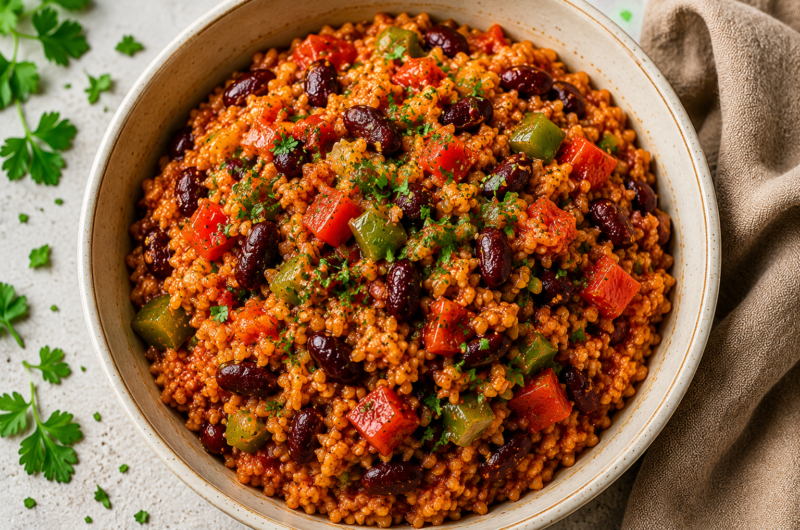
The Best One-Pot Vegan Jambalaya for a Hearty Weeknight Dinner
Course: Vegan Dinner RecipesDifficulty: Easy5
servings15
minutes30
minutes45
minutesThis one-pot vegan jambalaya is packed with bold Cajun-inspired flavors, tender rice, colorful vegetables, and hearty beans for a simple and satisfying meal with minimal cleanup.
Ingredients
1 medium onion, diced
2 bell peppers, diced
2 celery stalks, diced
4 garlic cloves, minced
1 can (14 oz/400 g) diced tomatoes
1 can (15 oz/425 g) kidney beans, drained and rinsed
1½ cups long-grain white rice
3 cups vegetable broth
2 teaspoons Cajun seasoning
1 teaspoon smoked paprika
1 teaspoon dried thyme
1 teaspoon dried oregano
½ teaspoon black pepper
½ teaspoon salt
Directions
- Sauté the onion, bell peppers, and celery in a large pot over medium heat until softened. Stir in the garlic and seasonings.
- Add the rice and diced tomatoes, stirring to coat the rice with the seasonings.
- Pour in the vegetable broth and bring to a gentle boil.
- Cover, reduce the heat, and simmer for 18–20 minutes, or until the rice is tender.
- Stir in the kidney beans and cook for 2–3 minutes until heated through.
- Let the jambalaya rest for 5 minutes, then fluff with a fork and serve.
Notes
- Adjust the spice level with extra Cajun seasoning or hot sauce.
- For added protein, stir in vegan sausage, tofu, or tempeh.
- Leftovers keep well in the refrigerator for up to 4 days.
- Let the jambalaya rest before serving for the best texture.
Hi, I’m Daisy Roots, the home cook and recipe developer behind this kitchen. I create simple, tested vegan recipes using everyday ingredients. Every dish is developed and cooked in my own kitchen, with clear steps to help you get reliable results every time. Thanks for stopping by — let’s cook something great!