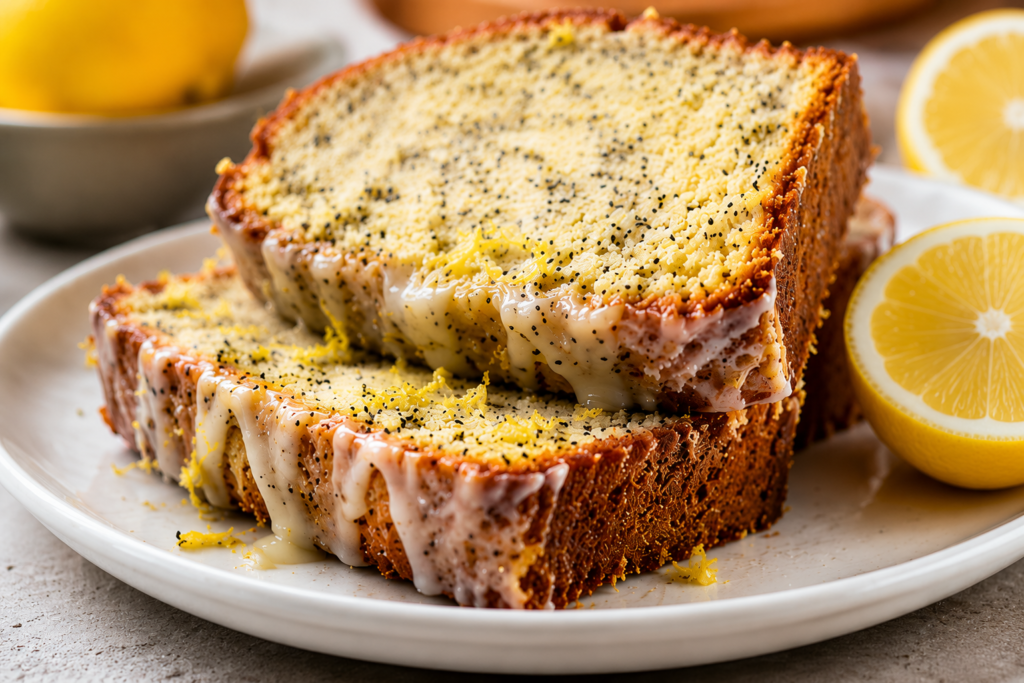
There’s something special about a slice of lemon poppy seed loaf.
It’s soft, bright, and packed with fresh lemon flavor, with just the right amount of sweetness in every bite.
This vegan version delivers the same tender texture you love without any dairy or eggs.
Simple plant-based ingredients come together to create a loaf that’s moist, flavorful, and easy to make, even if you’re new to baking.
Enjoy it with your morning coffee, serve it at brunch, or bring it along to a gathering.
No matter the occasion, this lemon poppy seed loaf is a simple treat that always feels a little special.
Recipe Snapshot
| Recipe Snapshot | Details |
|---|---|
| Difficulty | Easy |
| Prep Time | 10 Minutes |
| Bake Time | 45–55 Minutes |
| Yield | 1 Loaf (8–10 Slices) |
| Key Flavor | Bright Lemon & Sweet Glaze |
| Freezer Friendly | Yes |
Why You’ll Love This Vegan Lemon Poppy Seed Loaf
- Bursting with Fresh Lemon Flavor – Fresh lemon juice and zest give every slice a bright, tangy taste that perfectly balances the sweetness.
- Soft, Moist, and Tender Texture – This loaf bakes up light and fluffy with a tender crumb that stays moist for days.
- Simple Pantry-Friendly Ingredients – Made with everyday baking staples, this recipe comes together without any hard-to-find ingredients.
- Perfect for Breakfast, Brunch, or Dessert – Enjoy a slice with coffee in the morning, serve it at brunch, or treat yourself after dinner.
What Is Lemon Poppy Seed Loaf?
Lemon poppy seed loaf is a soft, cake-like quick bread made with fresh lemon juice, lemon zest, and crunchy poppy seeds, creating a combination of bright citrus flavor and a light, tender texture.
This classic baked treat has been enjoyed for generations and is especially popular in coffee shops, bakeries, and home kitchens because it feels both simple and special at the same time.
The pairing of lemon and poppy seeds has long been a favorite in baking, with the citrus adding a fresh, tangy flavor while the tiny poppy seeds bring a subtle nutty taste and a delicate crunch to every bite.
Unlike yeast breads, lemon poppy seed loaf is made with baking powder or baking soda, which means there is no waiting for dough to rise, making it an approachable recipe for bakers of all skill levels.
Traditional versions are usually made with ingredients like butter, milk, and eggs to create a rich and moist loaf.
A vegan lemon poppy seed loaf achieves the same delicious results by using simple plant-based ingredients that provide moisture, structure, and flavor without any dairy or eggs.
Many people are surprised by how closely a vegan version resembles the classic recipe because the loaf still bakes up soft, tender, and flavorful.
Fresh lemon juice and zest remain the stars of the recipe, delivering the bright citrus flavor that makes this loaf so memorable.
The result is a beautifully balanced loaf that is sweet without being overly sugary and tangy without being overpowering.
Ingredients You’ll Need
Dry Ingredients
- 2 cups all-purpose flour – Provides the structure for a soft and tender loaf.
- 2 tablespoons poppy seeds – Add a subtle crunch and classic poppy seed flavor.
- 2 teaspoons baking powder – Helps the loaf rise and stay light.
- ½ teaspoon baking soda – Works with the lemon juice to create a fluffy texture.
- ½ teaspoon salt – Balances the sweetness and enhances the lemon flavor.
Wet Ingredients
- 1 cup unsweetened plant-based milk – Adds moisture and helps bring the batter together.
- ¼ cup fresh lemon juice – Gives the loaf its bright, tangy flavor.
- 2 tablespoons lemon zest – Adds concentrated citrus aroma and taste.
- ½ cup vegetable oil or melted coconut oil – Keeps the loaf moist and tender.
- 1 teaspoon vanilla extract – Adds warmth and depth to the flavor.
- ¾ cup granulated sugar – Sweetens the loaf while balancing the tart lemon.
Ingredient Substitution Guide
If you need to swap an ingredient, use the table below to make adjustments while still achieving great results.
| Ingredient | Substitute | Notes |
|---|---|---|
| All-Purpose Flour | 1:1 Gluten-Free Flour | Use a gluten-free baking blend designed for baking. |
| Plant-Based Milk | Oat Milk, Soy Milk, Almond Milk | Unsweetened varieties work best for balanced flavor. |
| Vegetable Oil | Melted Coconut Oil | Adds moisture with a subtle coconut flavor. |
| Poppy Seeds | Chia Seeds | Provides a similar appearance with a slightly different texture. |
| Granulated Sugar | Cane Sugar | Can be substituted in equal amounts. |
These simple substitutions can help you adapt the recipe to what you already have on hand without significantly affecting the flavor or texture of the finished loaf.
Best Vegan Ingredients for Baking
Choosing the Right Plant-Based Milk
Plant-based milk adds moisture to the batter and helps bring all of the ingredients together into a smooth mixture.
Unsweetened soy milk, oat milk, and almond milk all work well in this recipe because they have a mild flavor that won’t compete with the bright lemon notes.
Oat milk is a favorite for many bakers because it creates a rich, tender crumb while keeping the flavor neutral.
Soy milk is another excellent option and can help produce a slightly softer texture.
If you use sweetened plant-based milk, keep in mind that it may make the loaf sweeter than intended.
For the most consistent results, choose an unsweetened variety and allow it to come to room temperature before mixing the batter.
Fresh Lemons vs Bottled Lemon Juice
Fresh lemons are one of the most important ingredients in this recipe.
Freshly squeezed lemon juice provides a brighter, cleaner citrus flavor that stands out in every bite.
Bottled lemon juice can work in a pinch, but it often lacks the fresh taste that makes lemon poppy seed loaf so appealing.
Since you’ll also need lemon zest, buying fresh lemons gives you everything required for the recipe in one ingredient.
When selecting lemons, look for fruits that feel heavy for their size and have smooth, firm skin.
A quick roll on the countertop before juicing can help release more juice and make squeezing easier.
Best Lemons for Baking
While almost any fresh lemon will work in this recipe, some varieties can slightly change the overall flavor.
- Meyer lemons have a naturally sweeter, less acidic taste, making them a great choice if you prefer a softer citrus flavor.
- Eureka lemons offer the classic bright and tangy lemon taste that most people associate with lemon desserts and baked goods.
- Lisbon lemons are similar to Eureka lemons, providing a bold tart flavor and are often easy to find in grocery stores year-round.
The Importance of Lemon Zest
If you want a loaf with bold lemon flavor, don’t skip the zest.
Lemon zest is the thin yellow outer layer of the lemon peel, and it contains natural oils that carry intense citrus aroma and flavor.
While lemon juice provides tartness, the zest delivers the unmistakable lemon character that makes this loaf shine.
Using both juice and zest creates a more balanced and vibrant flavor than using either one alone.
When zesting, avoid the white layer underneath the peel because it can taste bitter.
A fine grater or microplane makes it easy to collect the flavorful outer peel without any extra effort.
Why Poppy Seeds Matter
Poppy seeds may be small, but they play an important role in this recipe.
They add a delicate crunch that contrasts beautifully with the soft texture of the loaf.
Their mild, slightly nutty flavor complements the bright lemon without overpowering it.
Poppy seeds also give lemon loaf its classic appearance, creating those tiny speckles throughout every slice.
For the best texture and flavor, use fresh poppy seeds that have been stored in a cool, dry place.
A couple of tablespoons is all it takes to give the loaf its signature look and a subtle bite that makes each slice more interesting.
Kitchen Tools Needed
- Loaf Pan – Holds the batter and helps the loaf bake into its classic shape.
- Mixing Bowls – Used for combining the dry and wet ingredients separately before mixing.
- Whisk – Helps blend ingredients smoothly and evenly without overmixing.
- Measuring Cups and Spoons – Ensure accurate measurements for consistent baking results.
- Cooling Rack – Allows air to circulate around the loaf so it cools evenly and maintains its texture.
How to Make Vegan Lemon Poppy Seed Loaf
Step 1: Prepare the Oven and Pan
Start by preheating your oven to 350°F (175°C) so it reaches the proper temperature before the batter is ready.
Lightly grease a 9×5-inch loaf pan with oil or nonstick cooking spray to prevent the loaf from sticking.
For even easier removal, line the pan with parchment paper and leave a little overhang on the sides to use as handles later.
Taking a few minutes to prepare the pan now will make serving the finished loaf much easier.
Step 2: Mix the Dry Ingredients
In a large mixing bowl, add the all-purpose flour, poppy seeds, baking powder, baking soda, and salt.
Whisk everything together until the ingredients are evenly distributed throughout the mixture.
This simple step helps prevent pockets of baking powder or baking soda from ending up in the loaf.
A quick whisk also breaks up any small lumps in the flour, creating a smoother batter later on.
Step 3: Combine the Wet Ingredients
In a separate bowl, combine the plant-based milk, fresh lemon juice, lemon zest, vegetable oil, vanilla extract, and sugar.
Whisk until the sugar is mostly dissolved and the mixture looks smooth and well blended.
As the lemon juice mixes with the plant-based milk, you may notice it thickening slightly.
This is completely normal and helps create a tender texture in the finished loaf.
The fresh lemon zest will begin releasing its citrus aroma at this stage, giving you a preview of the flavor to come.
Step 4: Create the Batter
Pour the wet ingredients into the bowl of dry ingredients.
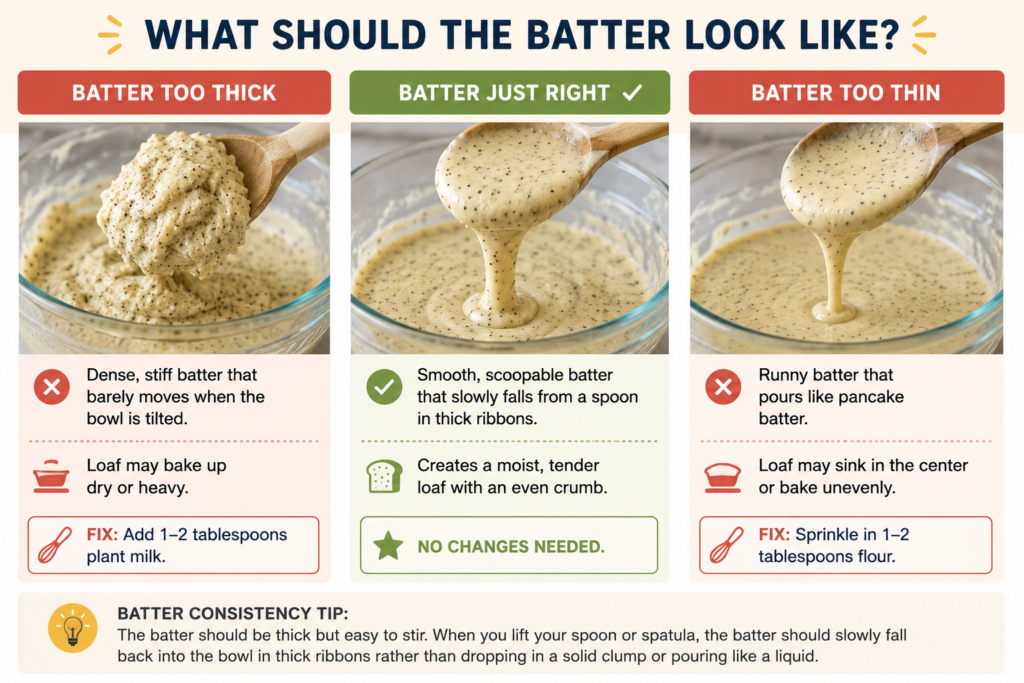
Using a spatula or wooden spoon, gently stir until no dry streaks of flour remain.
Mix only until everything is combined, as overmixing can lead to a denser loaf.
A few small lumps in the batter are perfectly fine and will disappear as the loaf bakes.
Once mixed, transfer the batter to the prepared loaf pan and spread the top into an even layer.
Step 5: Bake Until Golden
Place the loaf pan on the center rack of the preheated oven.
Bake for 45 to 55 minutes, or until the top is lightly golden and a toothpick inserted into the center comes out clean or with a few moist crumbs.
If the top begins browning too quickly, loosely cover it with aluminum foil during the final part of baking.
Every oven is slightly different, so begin checking for doneness around the 45-minute mark.
When fully baked, the loaf should feel set in the center and spring back lightly when touched.
Step 6: Cool Before Glazing
Remove the loaf from the oven and allow it to cool in the pan for about 10 to 15 minutes.
Carefully lift it from the pan and transfer it to a cooling rack.
Let the loaf cool completely before adding any glaze.
Applying glaze to a warm loaf can cause it to melt and soak into the bread rather than creating a beautiful finish on top.
Once cooled, your loaf is ready for a drizzle of lemon glaze and a well-deserved slice.
The hardest part of this recipe is waiting for it to cool, but the flavor and texture are worth the patience.
Making the Perfect Lemon Glaze
A simple lemon glaze adds the finishing touch to this vegan lemon poppy seed loaf by enhancing the citrus flavor and giving the top a beautiful bakery-style look.
The combination of sweet glaze and bright lemon creates a delicious contrast that makes every slice feel a little more special.
The best part is that the glaze comes together in just a few minutes with ingredients you may already have in your kitchen.
Ingredients for the Glaze
To make the glaze, combine 1 cup powdered sugar with 2 to 3 tablespoons fresh lemon juice in a small bowl.
Fresh lemon juice gives the glaze a vibrant citrus flavor that pairs perfectly with the loaf.
If you’d like an even stronger lemon taste, add a small pinch of finely grated lemon zest.
Start with the smaller amount of lemon juice and add more only if needed.
This makes it easier to control the texture and prevents the glaze from becoming too thin.
How to Achieve the Right Consistency
Whisk the powdered sugar and lemon juice together until the mixture is completely smooth.
A good lemon glaze should be thick enough to sit on top of the loaf while still being thin enough to slowly drizzle down the sides.
If the glaze feels too thick, add lemon juice a few drops at a time until it reaches the desired consistency.
If it becomes too thin, whisk in a little more powdered sugar to thicken it.
Take your time with this step because small adjustments can make a big difference.
When you lift the whisk from the bowl, the glaze should flow smoothly in a thin ribbon.
Glazing Tips for a Bakery-Style Finish
Always wait until the loaf has cooled completely before adding the glaze.
A warm loaf can cause the glaze to melt and soak into the bread instead of sitting neatly on top.
Place the loaf on a cooling rack before glazing so any excess can drip away cleanly.
Use a spoon or small whisk to drizzle the glaze back and forth across the top of the loaf.
Allow some of the glaze to naturally run down the sides for a classic bakery-style appearance.
For extra visual appeal, sprinkle a little lemon zest over the glaze while it is still wet.
Let the glaze sit for 15 to 20 minutes before slicing, so it has time to set.
Once the glaze firms up, you’ll have a loaf that looks beautiful, slices cleanly, and delivers bright lemon flavor in every bite.
Expert Tips for the Best Vegan Lemon Loaf
Avoid Overmixing the Batter
Once the wet and dry ingredients are combined, stir only until you no longer see dry flour in the bowl.
It can be tempting to keep mixing for a perfectly smooth batter, but doing so can make the loaf heavier and less tender.
A few small lumps are completely normal and will disappear during baking.
Using a spatula or wooden spoon instead of an electric mixer gives you more control and makes it easier to stop at the right moment.
Think of mixing as a gentle process rather than a race to create a perfectly smooth batter.
The less you handle the batter, the softer the finished loaf will be.
Use Fresh Lemon Juice and Zest
Fresh lemons bring a bright, lively flavor that bottled juice simply cannot match.
The juice provides the tangy citrus taste, while the zest adds the fragrant lemon oils that make the loaf smell and taste amazing.
Using both ingredients together creates a deeper and more balanced lemon flavor throughout the loaf.
When zesting lemons, remove only the yellow outer layer and avoid the white pith underneath, which can add bitterness.
If possible, zest the lemons before juicing them since it is much easier to handle whole fruit.
This small step can have a big impact on the final flavor of your loaf.
Test for Doneness Properly
The top of the loaf may look fully baked before the center is actually done.
The easiest way to check is by inserting a toothpick into the middle of the loaf near the end of the baking time.
If it comes out clean or with a few moist crumbs attached, the loaf is ready to come out of the oven.
If you see wet batter on the toothpick, continue baking and check again after a few more minutes.
Avoid opening the oven door too often during baking, as frequent temperature changes can affect how evenly the loaf rises.
A properly baked loaf will feel lightly firm on top and spring back gently when touched.
Additional Tip: For the most accurate results, the center of the loaf should reach approximately 200–205°F (93–96°C) when checked with an instant-read thermometer.
Using a thermometer removes the guesswork and helps ensure the loaf is fully baked without becoming dry from overbaking.
This is especially helpful if your oven runs hot or cool, or if you’re baking this recipe for the first time.
Let the Loaf Cool Completely
Patience is one of the most important ingredients in this recipe.
Allowing the loaf to cool completely helps the texture settle and makes slicing much easier.
Cutting into a hot loaf can cause it to crumble and lose some of its moisture.
Cooling also gives the lemon flavor time to develop and become more balanced throughout the loaf.
If you’re planning to add glaze, waiting until the loaf is completely cool will help it stay beautifully on top instead of melting into the bread.
The extra waiting time may feel difficult, but it rewards you with cleaner slices, better texture, and the best possible flavor.
Delicious Variations to Try
- Vegan Lemon Blueberry Poppy Seed Loaf – Fold 1 cup of fresh or frozen blueberries into the batter for bursts of sweet, juicy flavor.
- Lemon Coconut Loaf – Add ½ cup shredded coconut to the batter for extra texture and a subtle tropical twist.
- Lemon Almond Poppy Seed Bread – Replace the vanilla extract with 1 teaspoon almond extract for a rich, nutty flavor that pairs beautifully with lemon.
- Extra Tangy Lemon Loaf – Increase the lemon zest to 3 tablespoons and add an extra tablespoon of lemon juice for a brighter citrus punch.
Common Mistakes to Avoid
- Using Too Much Flour – Measure flour carefully using the spoon-and-level method to prevent a dry, dense loaf.
- Skipping the Lemon Zest – Lemon zest provides most of the bold citrus flavor, so leaving it out can make the loaf taste flat.
- Overbaking the Loaf – Baking too long can dry out the loaf, so check for doneness as soon as it nears the recommended baking time.
- Applying Glaze to a Warm Loaf – Always let the loaf cool completely so the glaze stays on top and sets properly instead of melting into the bread.
| Problem | Likely Cause | Solution |
|---|---|---|
| Dense Loaf | Overmixed batter | Stir until just combined |
| Dry Loaf | Too much flour | Measure carefully |
| Sunken Center | Underbaked | Bake until fully set |
| Weak Lemon Flavor | Not enough zest | Use fresh zest |
| Glaze Disappears | Loaf too warm | Cool completely first |
How to Store Vegan Lemon Poppy Seed Loaf
Proper storage helps keep your vegan lemon poppy seed loaf soft, moist, and full of fresh lemon flavor long after it comes out of the oven.
For room temperature storage, allow the loaf to cool completely before placing it in an airtight container or wrapping it tightly with plastic wrap.
Keeping the loaf sealed helps prevent it from drying out and protects its tender texture.
Stored this way, the loaf will typically stay fresh for up to 3 days on the kitchen counter.
If your loaf has been glazed, make sure the glaze has fully set before wrapping or storing it to avoid a sticky mess.
For longer storage, the refrigerator is a great option.
Place the loaf in an airtight container or wrap it well to prevent it from absorbing odors from other foods in the fridge.
A refrigerated lemon poppy seed loaf can stay fresh for up to a week while maintaining its flavor and texture.
Before serving, let refrigerated slices sit at room temperature for a few minutes to soften and bring out their best flavor.
If you’d like to save some for later, freezing works exceptionally well.
Allow the loaf to cool completely, then wrap it tightly in plastic wrap, followed by a layer of aluminum foil, or place it in a freezer-safe container.
You can freeze the entire loaf or slice it first for convenient single-serving portions.
Separating slices with small pieces of parchment paper makes it easy to remove only what you need.
The loaf can be frozen for up to 3 months without losing much of its texture or flavor.
When you’re ready to enjoy it, thaw the loaf overnight in the refrigerator or let individual slices sit at room temperature until softened.
A quick warm-up in the microwave for a few seconds can make a thawed slice taste almost as fresh as the day it was baked.
Can You Make This Recipe Ahead of Time?
Yes, this vegan lemon poppy seed loaf is an excellent make-ahead recipe because the flavor often becomes even better after a few hours of resting.
As the loaf sits, the lemon flavor has more time to spread throughout the bread, creating a brighter and more balanced taste.
If you’re preparing for a brunch, gathering, holiday meal, or busy week ahead, you can easily bake the loaf a day in advance.
Once the loaf has cooled completely, wrap it tightly or store it in an airtight container to lock in moisture and freshness.
If you plan to add the lemon glaze, you can either glaze the loaf the day you bake it or wait until shortly before serving for the freshest appearance.
For meal prep, consider slicing the loaf after it has cooled and storing the slices in a sealed container.
Pre-sliced portions make it easy to grab a quick breakfast, afternoon snack, or dessert without needing to cut the loaf each time.
Placing a sheet of parchment paper between slices can help prevent them from sticking together during storage.
To maintain the best texture, keep the loaf away from direct sunlight, heat, and excess air exposure.
Air is one of the biggest causes of baked goods drying out, so keeping the loaf tightly covered makes a noticeable difference.
If you’re making the loaf several days ahead, storing it in the refrigerator can help extend its freshness.
For even longer storage, freezing individual slices allows you to enjoy the loaf whenever a lemon craving strikes.
A quick thaw at room temperature or a few seconds in the microwave will bring back its soft texture and fresh-baked appeal.
| When | What To Do |
|---|---|
| 3 Months Ahead | Freeze loaf |
| 1 Day Ahead | Bake loaf |
| Serving Day | Add glaze and serve |
Serving Suggestions
- With Morning Coffee or Tea – Enjoy a slice alongside your favorite hot beverage for a simple and satisfying breakfast or mid-morning treat.
- As a Light Dessert – Serve a glazed slice after dinner when you’re craving something sweet but not too heavy.
- For Brunch Gatherings – Add the loaf to a brunch spread for a bright, citrusy baked treat that pairs well with both sweet and savory dishes.
- As a Sweet Afternoon Snack – Enjoy a slice during the afternoon for a flavorful pick-me-up with a cup of tea or coffee.
Recommended Pairings
Pairing the loaf with a complementary drink or side can make it even more enjoyable.
| Pairing | Why It Works |
|---|---|
| Earl Grey Tea | The citrus notes in the tea naturally complement the bright lemon flavor of the loaf. |
| Black Coffee | Its bold flavor balances the sweetness of the glaze and loaf. |
| Fresh Berries | Adds a fresh, juicy contrast to the soft texture of the bread. |
| Coconut Yogurt | Creates a simple brunch-style serving with a creamy finish. |
These pairings are easy ways to elevate a simple slice into a more complete breakfast, snack, or dessert experience.
Nutritional Benefits
Benefits of Lemons
Fresh lemons do more than add bright flavor to this loaf.
They contribute natural citrus oils, acidity, and freshness that help create the signature taste people love in lemon baked goods.
The juice adds a pleasant tang that balances the sweetness of the loaf, while the zest provides concentrated lemon flavor without adding extra liquid.
Using both parts of the lemon helps create a dessert that tastes vibrant and well-rounded rather than overly sweet.
The fresh aroma released from the lemon zest also enhances the overall baking experience and makes every slice more enjoyable.
Plant-Based Baking Advantages
One of the great things about this recipe is how simple plant-based baking can be.
By using ingredients like plant-based milk and oil instead of dairy products and eggs, this loaf remains moist, tender, and flavorful.
Many bakers find that oil-based cakes and loaves stay soft for several days, making them ideal for preparing ahead of time.
Plant-based ingredients are also easy to find in most grocery stores, making this recipe accessible for a wide range of home bakers.
Even people who do not typically follow a vegan lifestyle often enjoy the soft texture and bright flavor of this loaf without noticing any difference.
The focus remains on the delicious lemon flavor rather than the ingredients that were left out.
Portion and Moderation Tips
This loaf is rich enough to feel satisfying while still being light enough to enjoy any time of day.
A single slice is often the perfect serving size for breakfast, an afternoon snack, or a simple dessert.
Serving the loaf with coffee, tea, or fresh fruit can help create a balanced and enjoyable treat.
If you’re hosting guests, slicing the loaf into thinner pieces allows everyone to enjoy a taste while leaving plenty to share.
Keeping individual slices stored separately can also make portioning easier throughout the week.
The goal is simply to enjoy the loaf in a way that fits your occasion, whether that’s a quick morning bite or a relaxed dessert after dinner.
With its bright citrus flavor and tender texture, even a small slice can feel like a special treat.
Recipe Notes From My Kitchen
After making this vegan lemon poppy seed loaf several times, I found that the biggest flavor difference comes from using both fresh lemon juice and fresh lemon zest.
While the juice adds the classic tangy lemon flavor, the zest provides the bright citrus oils that give the loaf its signature aroma and vibrant taste.
If you’re tempted to skip the zest, I highly recommend keeping it in the recipe.
It’s a small ingredient, but it has a surprisingly big impact on the final result.
I also found that allowing the loaf to cool completely before glazing creates a much cleaner finish and prevents the glaze from soaking into the bread.
For the best flavor, I like to bake the loaf a few hours before serving or even the day before, as the lemon flavor becomes even more pronounced as it rests.
Final Thoughts
This vegan lemon poppy seed loaf is proof that simple ingredients can create something truly delicious.
With its bright lemon flavor, tender texture, and easy preparation, it’s a recipe you’ll want to make again and again.
Feel free to make it your own by adding blueberries, coconut, almonds, or any other flavors you enjoy.
Grab your lemons, preheat the oven, and enjoy every slice.
FAQs
Can I make this loaf gluten-free?
Yes. Use a 1-to-1 gluten-free baking flour blend designed for baking to achieve the best texture and structure.
Can I use whole wheat flour?
Yes. Replace up to half of the all-purpose flour with whole wheat flour for a slightly heartier texture and flavor.
What can I substitute for poppy seeds?
Chia seeds work well as a substitute and provide a similar appearance and light crunch.
Why did my loaf turn out dense?
A dense loaf is often caused by overmixing the batter, using too much flour, or not measuring ingredients accurately.
Can I freeze the glazed loaf?
Yes. Allow the glaze to set completely before wrapping the loaf tightly and freezing it for up to 3 months.
How long does vegan lemon poppy seed loaf stay fresh?
It stays fresh for about 3 days at room temperature or up to 1 week when stored in an airtight container in the refrigerator.
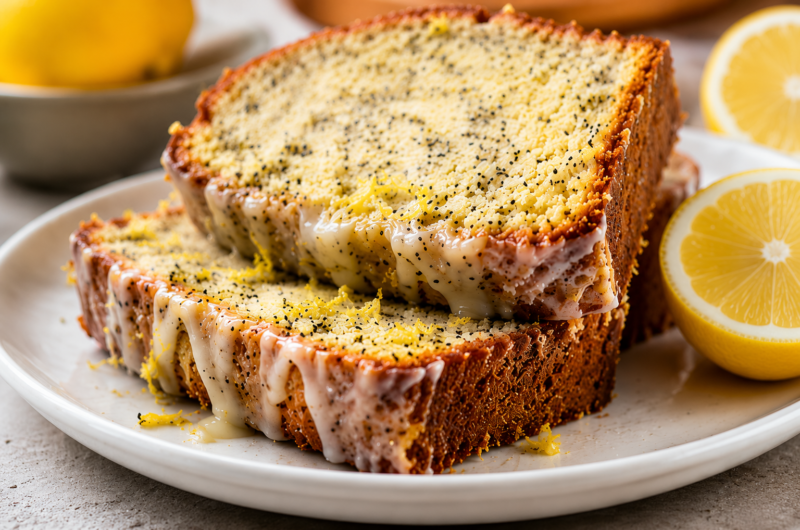
This Vegan Lemon Poppy Seed Loaf Is Soft, Zesty, and Irresistible
Course: Vegan DessertsDifficulty: Easy10
Slices10
minutes45
minutes55
minutesThis vegan lemon poppy seed loaf is soft, moist, and packed with fresh lemon flavor. Finished with a simple lemon glaze, it’s perfect for breakfast, brunch, or dessert.
Ingredients
- For the Loaf:
2 cups all-purpose flour
2 tbsp poppy seeds
2 tsp baking powder
½ tsp baking soda
½ tsp salt
1 cup unsweetened plant-based milk
¼ cup fresh lemon juice
2 tbsp lemon zest
½ cup vegetable oil or melted coconut oil
1 tsp vanilla extract
¾ cup granulated sugar
- For the Glaze:
1 cup powdered sugar
2–3 tbsp fresh lemon juice
Directions
- Preheat oven to 350°F (175°C) and grease a 9×5-inch loaf pan.
- In a large bowl, whisk together the flour, poppy seeds, baking powder, baking soda, and salt.
- In a separate bowl, whisk together the plant-based milk, lemon juice, lemon zest, oil, vanilla, and sugar.
- Pour the wet ingredients into the dry ingredients and mix until just combined.
- Transfer the batter to the prepared loaf pan and smooth the top.
- Bake for 45–55 minutes, or until a toothpick inserted into the center comes out clean.
- Cool in the pan for 10–15 minutes, then transfer to a wire rack to cool completely.
- Whisk together the glaze ingredients and drizzle over the cooled loaf before slicing and serving.
Notes
- Use fresh lemon juice and zest for the brightest flavor.
- Do not overmix the batter to keep the loaf soft and tender.
- Allow the loaf to cool completely before glazing.
- Store in an airtight container for up to 3 days at room temperature or freeze for up to 3 months.

Hi, I’m Daisy Roots, the home cook and recipe developer behind this kitchen. I create simple, tested vegan recipes using everyday ingredients. Every dish is developed and cooked in my own kitchen, with clear steps to help you get reliable results every time. Thanks for stopping by — let’s cook something great!