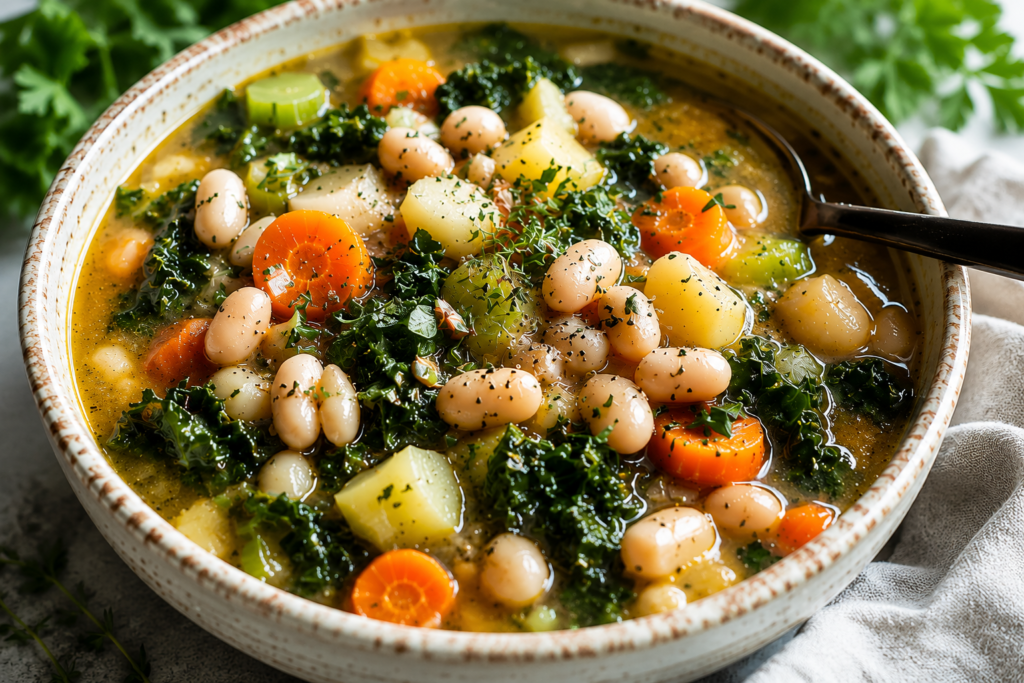
There’s nothing better than a warm bowl of stew when you want something comforting, filling, and easy to make.
This vegan white bean and vegetable stew combines tender white beans, hearty vegetables, and simple seasonings to create a meal that tastes like it has been simmering all day.
It’s the kind of recipe that works for busy weeknights, weekend meal prep, or chilly evenings when you want something cozy without spending hours in the kitchen.
The ingredients are affordable, the steps are straightforward, and the results are always satisfying.
Recipe at a Glance
- Difficulty: Easy
- Prep Time: 15 minutes
- Cook Time: 35 minutes
- Total Time: 50 minutes
- Servings: 4–6 bowls
- Cuisine Type: Plant-Based / Comfort Food
- Method: One-Pot Stove Top
Why You’ll Love This Vegan White Bean and Vegetable Stew
Hearty and Satisfying
A bowl of this stew is both comforting and filling.
The white beans add a rich, creamy texture that makes the stew feel substantial without being heavy.
As they simmer in the broth, they soak up all the flavors from the herbs, vegetables, and seasonings, making every bite more delicious.
The vegetables add texture, color, and natural flavor, while potatoes help make the stew extra comforting.
Together, these simple ingredients create a meal that feels complete and satisfying on its own.
Nutritious and Plant-Based
This stew is made entirely with plant-based ingredients, yet it delivers plenty of flavor and substance.
The combination of white beans and vegetables creates a wholesome meal that is naturally dairy-free and vegan.
Every spoonful is filled with ingredients that bring their own unique flavor and texture to the pot.
The beans add creaminess, the vegetables provide freshness, and the herbs tie everything together with a savory, homemade taste.
It’s proof that simple ingredients can create a deeply satisfying meal.
Easy One-Pot Meal
One of the best things about this recipe is how simple it is to prepare.
Everything cooks together in a single pot, allowing the flavors to develop while keeping cleanup to a minimum.
You don’t need special equipment or advanced cooking skills to make it successfully.
The steps are straightforward, making this a great recipe for beginners and experienced cooks alike.
Just add the ingredients, let the stew simmer, and enjoy a comforting homemade meal without spending hours in the kitchen.
Ingredients You’ll Need
Main Ingredients
- 2 cans (15 ounces each) white beans, drained and rinsed (cannellini, navy, or great northern beans)
- 3 medium carrots, peeled and sliced
- 3 celery stalks, diced
- 1 medium yellow onion, diced
- 4 garlic cloves, minced
- 2 medium Yukon Gold potatoes, peeled and cut into 1-inch cubes
- 6 cups vegetable broth
- 1 can (14.5 ounces) diced tomatoes, optional
Herbs and Seasonings
- 1 teaspoon dried thyme
- 1 teaspoon dried rosemary
- 2 bay leaves
- 1 teaspoon salt, or to taste
- ½ teaspoon ground black pepper, or to taste
Optional Add-Ins
- 2 cups chopped kale or spinach
- 1 medium zucchini, diced
- 1 cup trimmed and chopped green beans
- ¼ to ½ teaspoon red pepper flakes, for a little heat
Ingredient Notes
- Cannellini beans create the creamiest texture, but any white bean variety works well.
- Yukon Gold potatoes hold their shape nicely while becoming tender as they cook.
- If using fresh herbs instead of dried, use about three times the amount listed.
- Adding kale or spinach during the last few minutes of cooking helps keep the greens vibrant and fresh.
- For a thicker stew, lightly mash some of the beans before serving.
Ingredient Substitutions
- White beans → Chickpeas or butter beans
- Potatoes → Sweet potatoes or parsnips
- Kale/spinach → Swiss chard or cabbage
- Vegetable broth → Mushroom broth for deeper flavor
Kitchen Tools Required
You don’t need any special equipment to make this stew.
A few basic kitchen tools are all it takes to bring everything together.
- Large soup pot or Dutch oven – For sautéing the vegetables and simmering the stew in one pot.
- Cutting board – Makes prepping the vegetables safe and organized.
- Sharp knife – For chopping the vegetables into evenly sized pieces.
- Wooden spoon – Perfect for stirring the ingredients without scratching your cookware.
- Measuring cups and spoons – Helps ensure accurate amounts of broth, herbs, and seasonings.
Helpful Tip
Try to cut the vegetables into similar-sized pieces so they cook evenly.
This helps create a stew with the best texture and ensures every spoonful contains a little bit of everything.
Before You Start Cooking
- Chop all vegetables before turning on the heat to make cooking smoother and less rushed.
- Taste your vegetable broth before adding salt, since some brands are already well-seasoned.
- Keep beans slightly firm if you plan to store leftovers, as they will continue to soften over time.
- Have extra broth nearby in case the stew thickens more than expected while it simmers.
How to Make Vegan White Bean and Vegetable Stew
Step 1: Prepare the Vegetables
Wash all of the vegetables thoroughly under cool running water.
Peel the carrots and potatoes if desired.
Dice the onion, slice the carrots, chop the celery, and cut the potatoes into bite-sized cubes.
Mince the garlic cloves finely so they distribute their flavor evenly throughout the stew.
If you’re using optional vegetables such as zucchini or green beans, chop those now as well.
Having everything prepped before you start cooking makes the process much smoother and more enjoyable.
Step 2: Sauté the Aromatics
Place a large soup pot or Dutch oven over medium heat.
Add 1 to 2 tablespoons of olive oil.
Once the oil is warm, add the diced onion, carrots, and celery.
Cook for about 5 to 7 minutes, stirring occasionally, until the vegetables begin to soften.
Add the minced garlic and cook for another 30 seconds to 1 minute.
You’ll know it’s ready when the garlic becomes fragrant.
Avoid letting the garlic brown, as it can develop a bitter flavor.
This step builds the savory foundation that gives the stew its depth and richness.
Step 3: Add the Remaining Ingredients
Add the diced potatoes to the pot.
Stir in the white beans and diced tomatoes if using.
Pour in the vegetable broth and gently stir everything together.
Add the dried thyme, dried rosemary, bay leaves, salt, and black pepper.
Give the mixture a final stir to distribute the seasonings evenly.
At this stage, the stew may look brothy, but the flavors will concentrate as it cooks.
If the mixture looks a little thin at this stage, don’t worry. It will naturally thicken as the potatoes cook and the beans soften into the broth.
Step 4: Simmer the Stew
Increase the heat and bring the stew to a gentle boil.
Once it begins to boil, reduce the heat to low.
Cover the pot partially with a lid and allow the stew to simmer for 25 to 30 minutes.
Stir occasionally to prevent anything from sticking to the bottom.
The potatoes should become tender, and the vegetables should be soft but not falling apart.
As the stew simmers, the beans absorb the flavors of the broth and herbs, creating a richer and more satisfying dish.
If you’d like a thicker stew, use the back of a spoon to lightly mash some of the beans against the side of the pot.
Don’t worry if the stew looks too watery early on. As it simmers, the flavors deepen and the texture naturally comes together.
Step 5: Add Greens and Finish
Stir in the chopped kale or spinach during the last 5 minutes of cooking.
The greens will wilt quickly and blend beautifully into the stew.
Remove the bay leaves before serving.
Taste the stew and adjust the seasoning as needed.
A small pinch of extra salt or black pepper can make a noticeable difference.
If you enjoy a little heat, stir in a pinch of red pepper flakes at this stage.
Step 6: Serve and Enjoy
Ladle the hot stew into serving bowls.
For extra flavor, garnish with freshly chopped parsley, a squeeze of lemon juice, or a sprinkle of cracked black pepper.
Serve with crusty bread, warm dinner rolls, or a simple green salad.
Enjoy it fresh from the pot while the vegetables are tender and the broth is rich and comforting.
Any leftovers taste even better the next day as the flavors continue to develop.
Tips for the Best White Bean Vegetable Stew
Use Quality Vegetable Broth
Since vegetable broth forms the base of the stew, its flavor has a big impact on the finished dish.
Choose a vegetable broth that tastes good on its own and isn’t overly salty.
A rich, well-seasoned broth helps create depth and gives the vegetables and beans a stronger flavor foundation.
If you have homemade vegetable broth, this is a great recipe to use it in.
If you’re using store-bought broth, don’t be afraid to taste it before adding it to the pot.
A flavorful broth means a more flavorful stew.
Mash Some Beans
For a thicker and creamier stew, mash a small portion of the white beans during the last few minutes of cooking.
You can do this directly in the pot using the back of a wooden spoon.
The mashed beans naturally thicken the broth without the need for flour, cornstarch, or cream.
This simple trick creates a heartier texture while keeping the stew completely plant-based.
Start by mashing about a cup of the beans and see how you like the consistency.
You can always mash a little more if you prefer a thicker stew.
Don’t Overcook the Vegetables
Tender vegetables make a stew comforting, but overcooked vegetables can become mushy and lose their texture.
Keep an eye on the potatoes, carrots, and other vegetables as the stew simmers.
They should be soft enough to pierce easily with a fork while still holding their shape.
Adding delicate ingredients such as kale or spinach near the end of cooking helps them stay vibrant and fresh.
A stew with vegetables that maintain a little texture feels more balanced and enjoyable to eat.
| Ingredient | What It Adds | Pro Tip |
|---|---|---|
| Garlic | Deep savory base | Add at the end of sautéing for best flavor |
| Thyme & Rosemary | Earthy warmth | Lightly crush before adding to release aroma |
| Beans | Creamy texture | Mash a small portion for a thicker stew |
| Broth | Core flavor base | Use a high-quality broth for the richest taste |
Easy Recipe Variations
Mediterranean Style
For a brighter, fresher flavor, try giving the stew a Mediterranean-inspired twist.
Stir in the juice of half a lemon just before serving.
The lemon adds a light, fresh flavor that balances the richness of the beans and broth.
Finish each bowl with a generous sprinkle of chopped fresh parsley.
The parsley adds color and a clean, herbaceous flavor that pairs beautifully with the white beans.
For even more Mediterranean flavor, you can add a handful of chopped olives or a pinch of dried oregano.
Rustic Italian Version
This variation brings classic Italian-inspired flavors to the pot.
Add a can of diced tomatoes along with the broth and beans.
The tomatoes add richness and a subtle sweetness that deepens as the stew simmers.
Replace the thyme and rosemary with 1 to 2 teaspoons of Italian seasoning, or use a combination of basil, oregano, and thyme.
A small handful of fresh basil stirred in at the end adds an extra layer of flavor.
Serve with crusty bread for a comforting meal that feels like it came straight from an Italian kitchen.
Extra Protein Boost
If you’d like an even heartier stew, adding another source of plant-based protein is an easy option.
Stir in 1 cup of cooked lentils during the last 10 minutes of cooking.
The lentils blend seamlessly into the stew while adding texture and substance.
You can also add 1 cup of diced firm tofu.
For the best flavor, lightly brown the tofu in a skillet before adding it to the pot.
Both options make the stew even more filling without changing its comforting character.
Spicy Stew
If you enjoy a little heat, this variation is a simple way to add extra flavor.
Start by adding ¼ teaspoon of red pepper flakes when you add the herbs and seasonings.
Allowing the flakes to simmer in the broth helps spread the heat throughout the stew.
For a bolder kick, add a small pinch of cayenne pepper.
It’s best to start with a small amount and adjust to your preference after tasting.
The gentle heat complements the creamy beans and savory vegetables without overpowering them.
A little spice can completely transform the stew while keeping all of its comforting qualities intact.
What to Serve with Vegan White Bean Stew
This hearty stew is satisfying on its own, but the right side dish can make the meal even more enjoyable.
Bread Pairings
A warm piece of bread is perfect for soaking up every last spoonful of the flavorful broth.
- Crusty artisan bread – A rustic loaf with a crisp crust and soft interior pairs wonderfully with the creamy beans and vegetables.
- Garlic bread – Adds a savory, buttery garlic flavor that complements the herbs in the stew.
- Whole grain rolls – Soft, hearty, and slightly nutty, these rolls make a filling addition to the meal.
Side Dishes
If you’d like to round out the meal, these simple sides work especially well alongside the stew.
- Green salad – A fresh salad with crisp lettuce, cucumber, and a light vinaigrette adds a refreshing contrast to the warm stew.
- Roasted vegetables – Roasted broccoli, Brussels sprouts, cauliflower, or carrots bring extra flavor and texture to the table.
- Quinoa or brown rice – Serve the stew over a scoop of quinoa or brown rice for an even heartier and more filling meal.
Mix and match your favorite pairings to create a comforting meal that suits the occasion and your appetite.
Serving Ideas
A simple bowl of stew can look and feel completely different depending on how you serve it.
Here are a few easy ways to bring it to the table:
- A warm bowl of stew topped with crusty bread on the side and a fresh squeeze of lemon for brightness
- Stew served over fluffy rice, finished with a drizzle of olive oil and a sprinkle of fresh herbs
- Stew paired with a crisp green salad and a tray of roasted vegetables for a balanced, hearty meal
Storage and Meal Prep Tips
This stew is just as good the next day, which makes it perfect for planning ahead.
A little storage know-how will help you enjoy every last bowl without losing any of its flavor or texture.
Refrigerator Storage
Let the stew cool slightly before storing it.
Transfer it into an airtight container once it reaches room temperature.
Place it in the refrigerator where it will stay fresh for up to 4 days.
The flavors actually deepen as it sits, making leftovers even more flavorful.
When reheating, warm it gently on the stove over low heat or use the microwave in short intervals.
Add a splash of vegetable broth or water if it thickens too much in the fridge.
How Long the Stew Stays Fresh
In the fridge, this stew is best enjoyed within 3 to 4 days.
After that, the vegetables may start to soften too much and lose their texture.
The beans will still taste good, but the overall balance of the stew is best within the first few days.
If you know you won’t finish it quickly, freezing is the better option.
Freezing Instructions
This stew freezes very well, which makes it great for batch cooking.
Allow the stew to cool completely before freezing.
Divide it into individual portions or family-sized containers, depending on how you plan to use it.
Leave a little space at the top of each container to allow for expansion as it freezes.
Store in the freezer for up to 3 months for the best flavor and texture.
When ready to eat, thaw it overnight in the refrigerator.
Reheat slowly on the stove, stirring occasionally until heated through.
You may need to add a small splash of broth or water to bring back the original consistency.
Best Practices for Freezing and Reheating
If possible, slightly undercook the vegetables before freezing.
This helps them keep a better texture once reheated.
Avoid freezing with fresh greens like spinach or kale already mixed in.
Instead, add those fresh when reheating the stew.
Stir well while reheating so the flavors come back together evenly.
A gentle simmer works best to restore the stew without breaking down the ingredients too much.
Make-Ahead Tips
You can easily prep parts of this recipe ahead of time to save effort later.
Chop the vegetables in advance and store them in airtight containers in the fridge.
Measure out the herbs and spices so everything is ready to go when you start cooking.
You can even cook the entire stew a day ahead, then simply reheat it when needed.
This makes it a great option for busy weeks or meal prep days when you want something homemade without extra work.
A little preparation goes a long way and makes cooking this stew feel even easier and more relaxed.
Quick Reheating Tip
Always reheat gently over low heat instead of boiling.
Boiling can break down the beans too much and change the texture of the stew.
If the stew thickens overnight, add a small splash of broth before reheating to bring it back to the right consistency.
Common Mistakes to Avoid
- Using Too Little Seasoning – The stew can taste flat if you don’t season properly, so always taste and adjust salt and herbs as it cooks.
- Adding Greens Too Early – Spinach or kale will overcook and lose their texture if added too soon, so always stir them in at the end.
- Over-Thickening the Stew – Mashing too many beans or reducing too much liquid can make the stew heavy, so aim for a creamy but still spoonable consistency.
- Skipping the Simmering Time – The flavors need time to blend, so rushing the simmer means missing out on the stew’s full depth and richness.
Health Benefits of White Beans
Excellent Source of Plant Protein
White beans are one of the easiest ways to add plant-based protein to your meals.
They help turn a simple vegetable stew into something more filling and satisfying.
As they cook, they soften and absorb the flavors around them, making every bite rich and comforting.
If you’re trying to build balanced meals without meat, white beans are a great staple to keep in your kitchen.
High in Fiber
White beans are naturally high in fiber, which gives the stew its thick, comforting texture.
The fiber also helps the stew feel more filling, even in a smaller portion.
When simmered in broth, the beans break down slightly and help create a creamy base without any cream or flour.
It’s one of those simple ingredients that quietly does a lot of work in the background.
Supports Heart Health
White beans are naturally low in saturated fat and fit well into a balanced, everyday diet.
They pair nicely with vegetables and olive oil-based cooking, which keeps the recipe light but still satisfying.
When combined with herbs, garlic, and vegetables, they help create a meal that feels both comforting and wholesome.
It’s a simple way to enjoy a warm, home-cooked dish that feels good to eat.
Helps Keep You Full Longer
One of the best things about white beans is how long they keep you feeling satisfied.
The mix of protein and fiber helps slow digestion, which means the stew holds you over for hours.
That makes this recipe perfect for lunch, dinner, or even meal prep for busy days.
You’ll notice that a bowl goes a long way, especially when paired with bread or rice.
It’s the kind of meal that keeps you full without feeling heavy or overly rich.
Final Thoughts
This vegan white bean and vegetable stew is simple, comforting, and full of flavor in every spoonful.
It’s the kind of meal that works any day of the week, whether you’re cooking for yourself or sharing with family.
Don’t be afraid to make it your own.
Try different vegetables, herbs, or spices to match what you enjoy or what you already have in the kitchen.
Every pot will turn out a little different, and that’s part of the fun.
If you give this recipe a try, share your version and let others know how you made it yours.
FAQs
Can I use canned white beans?
Yes, canned white beans work perfectly. Just drain and rinse them before adding to the stew.
Which white beans work best for stew?
Cannellini beans are the creamiest, but navy beans and great northern beans also work well.
Can I make this stew in a slow cooker?
Yes, cook on low for 6–7 hours or high for 3–4 hours until the vegetables are tender.
How do I thicken vegetable stew naturally?
Mash some of the beans in the pot or let the stew simmer uncovered to reduce the liquid.
Can I freeze leftover stew?
Yes, it freezes well for up to 3 months. Cool completely before storing.
Is this recipe gluten-free?
Yes, all the ingredients are naturally gluten-free.
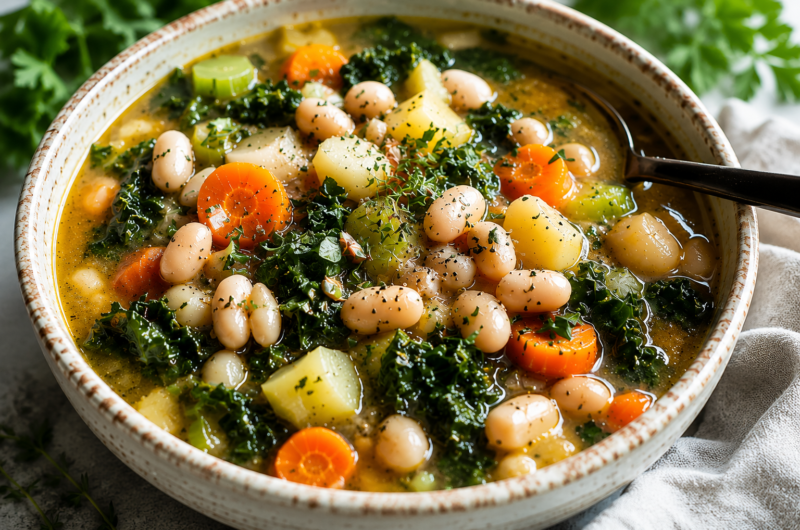
Nutritious Vegan White Bean and Vegetable Stew for Weeknights
Course: Vegan Dinner RecipesDifficulty: Easy4
Bowls15
minutes35
minutes50
minutesA warm, hearty one-pot vegan stew made with creamy white beans, tender vegetables, and simple herbs. Comforting, filling, and perfect for any day of the week.
Ingredients
2 cans (15 oz each) white beans, drained and rinsed
3 medium carrots, sliced
3 celery stalks, diced
1 medium onion, chopped
4 garlic cloves, minced
2 medium potatoes, cubed
6 cups vegetable broth
1 can (14.5 oz) diced tomatoes (optional)
1 tsp dried thyme
1 tsp dried rosemary
2 bay leaves
Salt and black pepper, to taste
2 cups kale or spinach (optional)
1 tbsp olive oil (for sautéing)
Directions
- Heat olive oil in a large pot over medium heat.
- Sauté onion, carrots, and celery for 5–7 minutes until softened.
- Add garlic and cook for 1 minute until fragrant.
- Stir in potatoes, white beans, broth, herbs, salt, and pepper.
- Bring to a boil, then reduce the heat and simmer for 25–30 minutes.
- Add greens (if using) and cook for another 3–5 minutes.
- Remove bay leaves, adjust seasoning, and serve warm.
Notes
- Mash a few beans if you want a thicker, creamier stew.
- Add extra broth if the stew becomes too thick while simmering.
- This stew tastes even better the next day as flavors deepen.
- Freeze leftovers for up to 3 months for easy future meals.

Hi, I’m Daisy Roots, the home cook and recipe developer behind this kitchen. I create simple, tested vegan recipes using everyday ingredients. Every dish is developed and cooked in my own kitchen, with clear steps to help you get reliable results every time. Thanks for stopping by — let’s cook something great!