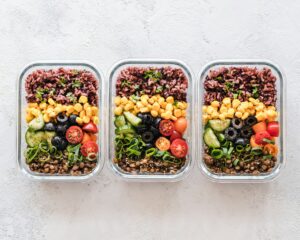
Switching to a vegan diet doesn’t have to be confusing or overwhelming.
At its core, a vegan diet focuses on plant-based foods like vegetables, fruits, beans, grains, nuts, and seeds while leaving out animal products.
People choose veganism for many different reasons.
Some want to enjoy more plant-based meals, others care about the environment or animal welfare, and many simply want to explore new foods and flavors.
Whatever brings you here, this guide will walk you through everything you need to know—from the foods to eat and the nutrients to pay attention to, to simple meal ideas and practical tips that make getting started feel easy and enjoyable.
What Is a Vegan Diet?
A vegan diet is built entirely around plant-based foods and does not include animal products or ingredients made from them.
Instead of focusing on what you can’t eat, it’s more helpful to think about the wide variety of foods you can enjoy every day.
A well-planned vegan diet is full of colorful vegetables, fresh fruit, hearty grains, beans, nuts, seeds, herbs, spices, and plenty of satisfying meals that don’t rely on animal products.
Many traditional dishes from around the world are already vegan or can be made vegan with a few simple swaps, making it easier than most beginners expect.
Definition of Veganism
Veganism is a lifestyle that aims to avoid using animal products whenever possible.
When it comes to food, this means choosing ingredients that come from plants instead of animals.
For many people, veganism also extends beyond the kitchen to products like clothing, cosmetics, and household items, but this guide focuses on the food side of vegan living.
There is no need to make every change overnight.
Many beginners find it easier to learn one meal, one recipe, and one grocery trip at a time.
Foods That Are Included
One of the biggest surprises for new vegans is just how many foods are naturally plant-based.
Fresh vegetables provide endless options, whether they’re roasted, grilled, steamed, or added to soups and stir-fries.
Fruits add natural sweetness, color, and freshness to breakfasts, snacks, smoothies, and desserts.
Whole grains like rice, oats, quinoa, barley, and whole wheat pasta make meals filling and satisfying.
Beans, lentils, chickpeas, and peas are pantry staples that work well in soups, curries, salads, tacos, and pasta dishes.
Soy-based foods such as tofu, tempeh, and edamame are popular because they easily absorb marinades and seasonings, making them incredibly versatile.
Nuts and seeds bring crunch, richness, and flavor while also making great snacks or toppings for oatmeal, salads, and grain bowls.
Plant-based milks made from soy, oats, almonds, or coconut are widely available and can be used much like dairy milk in cooking and baking.
Herbs, spices, garlic, onions, citrus juice, and flavorful sauces play an important role in making vegan meals exciting and delicious.
The more you experiment with different ingredients, the more you’ll discover that plant-based cooking is anything but boring.
Foods That Are Avoided
A vegan diet leaves out all animal-derived foods.
This includes beef, chicken, pork, lamb, fish, shellfish, and other types of meat and seafood.
Dairy products like milk, cheese, butter, cream, and yogurt are also avoided.
Eggs are not included, whether they’re cooked on their own or used in baked goods.
Honey is usually left out because it is produced by bees.
Some packaged foods may contain less obvious animal-based ingredients, so it’s worth getting into the habit of reading ingredient labels.
Ingredients such as gelatin, whey, casein, lard, and certain food colorings are examples of products that many vegans choose to avoid.
Don’t worry if this feels like a lot to remember at first.
Reading labels quickly becomes second nature after a few shopping trips.
Vegan vs Vegetarian: What’s the Difference?
Although the two eating styles are often grouped together, they are not the same.
Vegetarians avoid meat, poultry, and seafood, but many still eat dairy products, eggs, or both.
Vegans avoid all animal products, including dairy, eggs, and honey.
For example, a cheese pizza may be suitable for a vegetarian but not for someone following a vegan diet.
Likewise, oatmeal made with oat milk and topped with berries and nuts can easily fit into a vegan lifestyle.
Common Myths About Vegan Diets
One common myth is that vegan food is bland.
In reality, great flavor comes from herbs, spices, fresh ingredients, sauces, roasting, and good cooking techniques rather than meat itself.
Another misconception is that vegan meals are difficult to prepare.
Many beginner-friendly recipes use everyday ingredients and come together in less than 30 minutes.
Some people also believe that vegan cooking is expensive.
Staples like rice, oats, dried beans, lentils, potatoes, and seasonal vegetables are often among the most affordable foods in the grocery store.
There’s also a belief that vegans only eat salads.
While salads can certainly be part of a vegan diet, they’re just one small piece of the picture.
Comfort foods like chili, pasta, curries, tacos, burgers, soups, casseroles, baked potatoes, and even desserts can all be made vegan without giving up great taste.
The best way to discover what vegan eating is really like is to try a few simple recipes for yourself.
You’ll quickly see that plant-based cooking offers plenty of variety, satisfying meals, and flavors you’ll want to make again.
Why Do People Choose a Vegan Lifestyle?
Health Benefits
Many people begin eating more plant-based meals because they want to add a wider variety of fruits, vegetables, beans, and whole grains to their plate.
These foods are naturally colorful, versatile, and easy to use in everything from quick lunches to comforting family dinners.
A vegan diet can also encourage more home cooking.
Preparing meals from scratch gives you more control over the ingredients you use and lets you experiment with different herbs, spices, sauces, and cooking methods.
Many beginners are surprised by how satisfying simple meals can be.
A bowl of lentil soup with crusty bread, a creamy chickpea curry over rice, or roasted vegetables tossed with pasta can be both filling and packed with flavor.
Rather than aiming for perfection, focus on building balanced meals that you genuinely enjoy eating.
Animal Welfare
For many people, compassion for animals is one of the biggest reasons for choosing a vegan lifestyle.
They prefer to avoid foods that come from animals and instead choose plant-based alternatives whenever possible.
This choice often reflects personal values about kindness and reducing the demand for animal products.
Whether it’s swapping dairy milk for oat milk or using beans instead of ground meat in tacos, small changes can make it easier to match everyday meals with those values.
If animal welfare is important to you, remember that every plant-based meal is a positive step, even if you’re still learning.
Environmental Sustainability
Some people choose vegan foods because they want to reduce their environmental impact.
Growing plant foods generally uses fewer natural resources than producing many animal-based foods.
Choosing more plant-based meals can be one way to support a more sustainable way of eating.
It doesn’t have to be complicated.
Simple habits like cooking with seasonal vegetables, using dried beans, reducing food waste, and planning meals ahead can all make a difference.
Religious and Cultural Reasons
In some cultures and religions, plant-based eating has been practiced for generations.
For many people, choosing vegan meals is a way to honor long-standing traditions, beliefs, or spiritual values.
Others discover vegan cooking through family recipes that naturally rely on beans, lentils, grains, vegetables, and fragrant spices.
Many popular dishes from around the world are already vegan or can be made vegan with just a simple ingredient swap.
Is a Vegan Diet Healthy?
What Research Says
Research shows that a well-planned vegan diet can provide the nutrients most people need while supporting overall health.
Many health organizations agree that vegan diets can be suitable for people at every stage of life when they are thoughtfully planned.
That doesn’t mean every vegan meal is automatically nutritious.
A plate of fries and soft drinks is technically vegan, but it doesn’t offer the same value as a meal made with beans, vegetables, whole grains, and healthy fats.
That’s why choosing whole, minimally processed foods most of the time is such a helpful habit.
At the same time, it’s perfectly fine to enjoy your favorite vegan treats now and then.
A balanced way of eating leaves room for both nourishing meals and foods you simply enjoy.
Benefits of Eating More Whole Plant Foods
Whole plant foods are naturally versatile and easy to work into everyday cooking.
Beans and lentils make soups, stews, tacos, and curries more filling.
Whole grains like brown rice, quinoa, and oats provide a hearty base for countless meals.
Fresh vegetables add color, texture, and flavor to almost any dish.
Nuts and seeds bring crunch and richness while making simple breakfasts, salads, and grain bowls even more satisfying.
Cooking with whole ingredients also gives you endless opportunities to experiment with flavors.
A squeeze of lemon, a handful of fresh herbs, a sprinkle of smoked paprika, or a spoonful of your favorite sauce can completely change a meal without making it complicated.
The more you cook with whole foods, the easier it becomes to create meals that are both simple and delicious.
Potential Challenges to Be Aware Of
Starting a vegan diet comes with a learning curve, and that’s completely normal.
One of the biggest challenges for beginners is simply knowing what to cook.
Keeping a few easy recipes on hand makes busy days much less stressful.
Another common mistake is relying too heavily on highly processed vegan convenience foods.
While they’re great to have occasionally, building most meals around whole ingredients usually leads to better flavor, more variety, and greater satisfaction.
Planning ahead also makes a big difference.
Keeping your pantry stocked with staples like rice, pasta, canned beans, lentils, oats, herbs, and spices means you’ll always have the basics for a quick meal.
There are also a few nutrients that deserve extra attention on a vegan diet, including vitamin B12, iron, calcium, vitamin D, iodine, zinc, and omega-3 fats.
The good news is that with a little planning—and, in the case of vitamin B12, an appropriate supplement or fortified foods—meeting your nutritional needs is very achievable.
Remember that you don’t have to learn everything in a single week.
Foods You Can Eat on a Vegan Diet
One of the best parts of a vegan diet is the incredible variety of foods you can enjoy.
Building meals from different plant-based ingredients keeps your cooking flavorful, colorful, and satisfying.
Here are some of the main food groups to include in your kitchen.
- Vegetables – Fresh, frozen, or canned vegetables add color, texture, and flavor to meals while serving as the foundation of many vegan dishes.
- Fruits – Enjoy fruits as snacks, desserts, smoothie ingredients, or toppings for oatmeal, yogurt, and cereal.
- Whole Grains – Brown rice, quinoa, oats, barley, whole wheat pasta, and whole grain bread provide a hearty base for balanced meals.
- Legumes – Beans, lentils, chickpeas, split peas, and black-eyed peas are versatile pantry staples that work well in soups, salads, curries, and stews.
- Nuts and Seeds – Almonds, walnuts, cashews, peanuts, chia seeds, flaxseeds, hemp seeds, and pumpkin seeds add crunch, healthy fats, and rich flavor.
Plant-Based Proteins
These protein-rich foods are excellent meat alternatives and can be used in countless recipes.
- Tofu – Made from soybeans, tofu has a mild flavor that easily absorbs marinades and seasonings, making it perfect for stir-fries, curries, and grilling.
- Tempeh – This firm, fermented soybean product has a nutty flavor and works well sliced, crumbled, or marinated.
- Seitan – Made from wheat gluten, seitan has a chewy, meat-like texture that makes it a popular choice for sandwiches, stir-fries, and skewers.
- Edamame – Young green soybeans are delicious steamed, added to salads, grain bowls, or enjoyed as a simple snack.
- Healthy Fats – Avocados, olives, nuts, seeds, and plant-based oils like olive and avocado oil help add richness and flavor to everyday meals.
- Herbs, Spices, and Condiments – Fresh herbs, dried spices, garlic, onions, lemon juice, soy sauce, nutritional yeast, mustard, salsa, and other seasonings transform simple ingredients into flavorful dishes.
Foods to Avoid
A vegan diet avoids all foods and ingredients that come from animals.
Some foods are easy to recognize, while others can appear in packaged products under less familiar names.
Learning what to look for becomes much easier with practice, and reading ingredient labels will soon become second nature.
- Meat and Poultry – Beef, pork, lamb, chicken, turkey, duck, and other meats are not included in a vegan diet.
- Fish and Seafood – Fish, shrimp, crab, lobster, mussels, oysters, tuna, salmon, and other seafood are also avoided.
- Dairy Products – Milk, cheese, butter, cream, yogurt, ice cream, and other dairy-based foods are replaced with plant-based alternatives.
- Eggs – Eggs are not eaten on a vegan diet, whether they’re served on their own or used as an ingredient in baked goods and other recipes.
- Honey – Since honey is produced by bees, most vegans choose plant-based sweeteners such as maple syrup, agave nectar, or date syrup instead.
Hidden Animal Ingredients to Watch For
Some packaged foods contain ingredients that aren’t obviously animal-derived.
Taking a quick look at the ingredient list can help you make informed choices.
- Gelatin – A gelling ingredient made from animal collagen that is commonly found in gummies, marshmallows, jelly desserts, and some desserts.
- Casein – A milk protein often used in processed foods, dairy-free look-alikes, protein products, and some non-dairy creamers.
- Whey – Another milk-derived ingredient that frequently appears in breads, crackers, snack foods, protein powders, and baked goods.
- Carmine – A red food coloring made from insects that may be used in candies, beverages, yogurt alternatives, and some packaged foods.
- Isinglass – A fish-derived ingredient traditionally used to clarify certain beers and wines during production.
- Lard – Rendered pork fat that is sometimes used in pastries, pie crusts, refried beans, tortillas, and other baked or fried foods.
Common Vegan Food Swaps
Switching to a vegan diet doesn’t mean giving up your favorite meals.
In many cases, a simple ingredient swap is all it takes to create a delicious plant-based version of a familiar dish.
Use this table as a quick reference while planning meals or shopping for groceries.
| Instead of… | Try… |
|---|---|
| Cow’s milk | Oat milk, soy milk, almond milk |
| Butter | Vegan butter, olive oil, avocado oil |
| Ground beef | Lentils, black beans, crumbled tofu |
| Chicken | Tofu, tempeh, seitan, chickpeas |
| Fish | Marinated tofu, hearts of palm, jackfruit |
| Eggs (scrambled) | Tofu scramble |
| Eggs (baking) | Flax egg, chia egg, unsweetened applesauce* |
| Cheese | Vegan cheese, nutritional yeast |
| Sour cream | Unsweetened dairy-free yogurt, vegan sour cream |
| Mayonnaise | Vegan mayonnaise, mashed avocado |
| Heavy cream | Full-fat coconut milk, oat cream |
| Honey | Maple syrup, agave nectar, date syrup |
The best egg substitute for baking depends on the recipe, so it’s worth checking what works best for cakes, cookies, or muffins before you begin.
Essential Nutrients Every Vegan Should Know About
Protein
Protein helps build and repair muscles and other tissues throughout the body.
Good vegan sources include beans, lentils, chickpeas, tofu, tempeh, edamame, seitan, quinoa, nuts, and seeds.
Including a protein-rich food with each meal is an easy habit that helps create balanced, satisfying plates.
Vitamin B12
Vitamin B12 supports healthy nerves and helps your body make red blood cells.
Unlike many other nutrients, reliable natural plant sources of vitamin B12 are very limited.
For this reason, vegans should get vitamin B12 from fortified foods, a vitamin B12 supplement, or both.
This is one of the most important nutrients to plan for when following a vegan diet.
Iron
Iron helps carry oxygen throughout your body and supports normal energy levels.
Plant-based sources include lentils, beans, tofu, spinach, pumpkin seeds, quinoa, and fortified breakfast cereals.
Pairing iron-rich foods with foods high in vitamin C, such as oranges, strawberries, tomatoes, or bell peppers, can help your body absorb more iron.
Calcium
Calcium helps keep bones and teeth strong.
You can find calcium in fortified plant milks, calcium-set tofu, fortified yogurt alternatives, kale, bok choy, broccoli, almonds, and sesame seeds.
Choosing fortified products is an easy way to increase your calcium intake.
Vitamin D
Vitamin D helps your body absorb calcium and supports healthy bones.
Some people get enough through sunlight, but this depends on where they live, the season, skin exposure, and other factors.
Fortified plant milks, fortified cereals, and supplements can help meet your vitamin D needs when sunlight isn’t enough.
Omega-3 Fatty Acids
Omega-3 fats play an important role in overall health.
Excellent vegan sources include ground flaxseeds, chia seeds, hemp seeds, walnuts, and algae-based omega-3 supplements.
Adding a spoonful of seeds to oatmeal, smoothies, or yogurt is a simple way to include more omega-3s in your diet.
Zinc
Zinc supports your immune system and helps with normal growth and healing.
Beans, lentils, chickpeas, whole grains, nuts, seeds, and fortified cereals all provide zinc.
Eating a wide variety of these foods throughout the week makes it easier to meet your needs.
Iodine
Iodine helps support normal thyroid function.
Many vegans get iodine from iodized table salt.
Sea vegetables like nori can also contain iodine, although the amount varies depending on the type.
If you avoid iodized salt completely, talk with a healthcare professional or registered dietitian about whether an iodine supplement is appropriate for you.
Selenium
Selenium supports healthy cells and plays a role in normal thyroid function.
Brazil nuts are one of the richest natural sources, and just one or two nuts can provide a significant amount.
Other plant sources include whole grains, legumes, sunflower seeds, and mushrooms, although the amount can vary depending on where they’re grown.
Eating a varied diet with plenty of whole plant foods is the simplest way to cover most of your nutrient needs.
If you’re ever unsure about a particular nutrient, a registered dietitian or healthcare professional can help you create a plan that fits your lifestyle.
Best Vegan Sources of Protein
Getting enough protein on a vegan diet is easier than many beginners expect.
Including a variety of protein-rich foods throughout the day helps create balanced, satisfying meals while adding different flavors and textures to your cooking.
- Beans and Lentils – Affordable pantry staples that are perfect for soups, stews, curries, salads, tacos, and pasta dishes.
- Chickpeas – A versatile legume that can be roasted for snacks, blended into hummus, or added to salads, wraps, and grain bowls.
- Soy Foods – Tofu, tempeh, and edamame are complete protein sources that work well in everything from stir-fries to sandwiches.
- Quinoa – A hearty whole grain that provides complete protein and makes an excellent base for salads, bowls, and side dishes.
- Hemp Seeds – Soft, nutty seeds that are easy to sprinkle over oatmeal, smoothies, yogurt alternatives, and salads.
- Chia Seeds – Tiny seeds that add protein and texture to smoothies, overnight oats, puddings, and baked goods.
- Pumpkin Seeds – Crunchy seeds that make a delicious snack or topping for soups, salads, grain bowls, and roasted vegetables.
- Nutritional Yeast – A savory, cheesy-flavored seasoning that’s often sprinkled over pasta, popcorn, roasted vegetables, and sauces while adding extra protein.
How Much Protein Do Vegans Need?
Many people worry about getting enough protein when they switch to a vegan diet, but for most adults, meeting their daily needs is much easier than they expect.
The general recommendation for healthy adults is about 0.8 grams of protein per kilogram (2.2 pounds) of body weight each day, although individual needs can vary depending on age, activity level, and personal health goals.
If you’re physically active, regularly lift weights, or take part in endurance sports, your protein needs are usually higher, so including a good source of protein with every meal and snack becomes even more important.
The easiest approach is to spread your protein intake throughout the day instead of trying to eat it all at once.
A bowl of oatmeal topped with hemp seeds for breakfast, a chickpea salad for lunch, tofu stir-fry for dinner, and a handful of roasted edamame or nuts as a snack can easily help you reach your daily goal.
Mixing different protein-rich foods also adds variety to your meals and keeps cooking interesting, so don’t feel like you have to rely on one ingredient.
Beans, lentils, tofu, tempeh, quinoa, whole grains, nuts, and seeds all work together to create filling meals with plenty of flavor.
Rather than counting every gram, focus on building balanced meals that include a protein-rich food alongside vegetables, whole grains, and healthy fats.
As your confidence in the kitchen grows, you’ll find that meeting your protein needs becomes a natural part of preparing delicious vegan meals.
Building a Balanced Vegan Plate
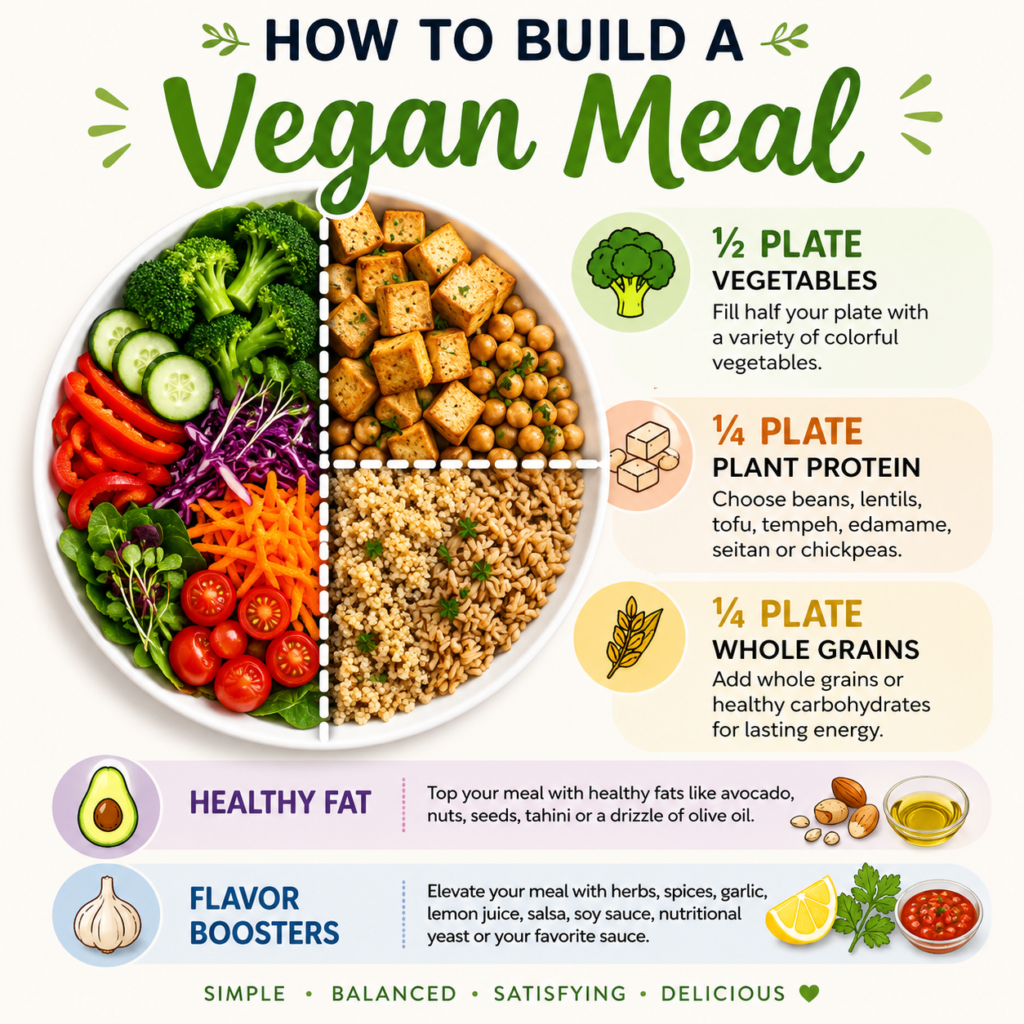
The Half-Plate Vegetable Method
An easy place to start is by filling about half of your plate with vegetables.
Fresh, roasted, steamed, grilled, or stir-fried vegetables all work well, so choose whichever cooking method you enjoy most.
Using several colors on your plate naturally adds more variety.
For example, you could combine roasted carrots, broccoli, bell peppers, and leafy greens for a meal that looks just as good as it tastes.
Frozen vegetables are just as useful when you’re short on time.
They’re convenient, budget-friendly, and make it easy to add vegetables to meals without extra prep work.
Choosing Healthy Carbohydrates
Healthy carbohydrates provide the foundation for many satisfying vegan meals.
Whole grains like brown rice, quinoa, oats, whole wheat pasta, barley, and farro are excellent choices because they pair well with almost any cuisine.
Starchy vegetables such as potatoes, sweet potatoes, and corn are also delicious options that make meals hearty and comforting.
Try rotating your carbohydrate choices instead of eating the same one every day.
Changing the base of your meal is one of the easiest ways to keep your weekly menu interesting.
Including Protein at Every Meal
Adding a protein-rich food to each meal is a simple habit that helps create balanced plates.
Beans, lentils, tofu, tempeh, edamame, seitan, and chickpeas are all versatile ingredients that work in countless recipes.
For breakfast, you might enjoy tofu scramble or overnight oats with hemp seeds.
Lunch could be a hearty lentil soup or a chickpea wrap packed with fresh vegetables.
Dinner might include tofu stir-fry over rice or a comforting bean chili served with baked potatoes.
Once you begin planning meals this way, including protein becomes second nature.
Don’t Forget Healthy Fats
Healthy fats add richness, flavor, and a satisfying finish to vegan meals.
Avocados, nuts, seeds, olives, and plant-based oils such as olive oil and avocado oil are all great choices.
Even a small amount can make a noticeable difference.
A handful of toasted walnuts on a salad, sliced avocado on a grain bowl, or a drizzle of olive oil over roasted vegetables adds both flavor and texture.
Seeds like pumpkin, sunflower, hemp, and sesame are another easy way to finish a meal.
Keep a few jars in your pantry so you can sprinkle them over soups, pasta, salads, or oatmeal whenever you want an extra layer of crunch.
As you build your meals around vegetables, whole grains, protein, and healthy fats, creating balanced vegan plates becomes less about following rules and more about enjoying simple, delicious food.
Easy Vegan Cooking Methods
Roasting Vegetables
Roasting brings out the natural sweetness and flavor of vegetables while creating crisp edges and tender centers.
Simply toss vegetables with a little olive oil, your favorite seasonings, and spread them in a single layer on a baking sheet.
Broccoli, carrots, cauliflower, Brussels sprouts, zucchini, and sweet potatoes are all excellent choices for roasting.
Steaming Vegetables
Steaming is one of the quickest ways to cook vegetables while keeping them bright, tender, and fresh-tasting.
Broccoli, green beans, peas, spinach, and carrots all steam beautifully.
Finish steamed vegetables with a squeeze of lemon juice, fresh herbs, or a sprinkle of nutritional yeast for extra flavor.
Sautéing Tofu
Tofu develops a delicious golden crust when cooked in a hot skillet.
Pat the tofu dry, cut it into cubes or slices, and cook it with a small amount of oil until each side is lightly browned.
Once it’s crisp, add your favorite sauce or seasoning so the tofu absorbs even more flavor.
Baking Potatoes
Baked potatoes and sweet potatoes are simple, filling, and incredibly versatile.
Bake them until tender, then top with black beans, chili, roasted vegetables, salsa, avocado, or a drizzle of tahini for an easy, balanced meal.
They’re also perfect for meal prep because they reheat well throughout the week.
Air Frying Chickpeas
Air-fried chickpeas make a crispy snack and a flavorful topping for salads, soups, and grain bowls.
Pat canned chickpeas dry, toss them with a little olive oil and your favorite spices, then cook until golden and crunchy.
Try seasonings like smoked paprika, garlic powder, chili powder, curry powder, or Italian herbs to create different flavor combinations.
Simple Vegan Grocery List
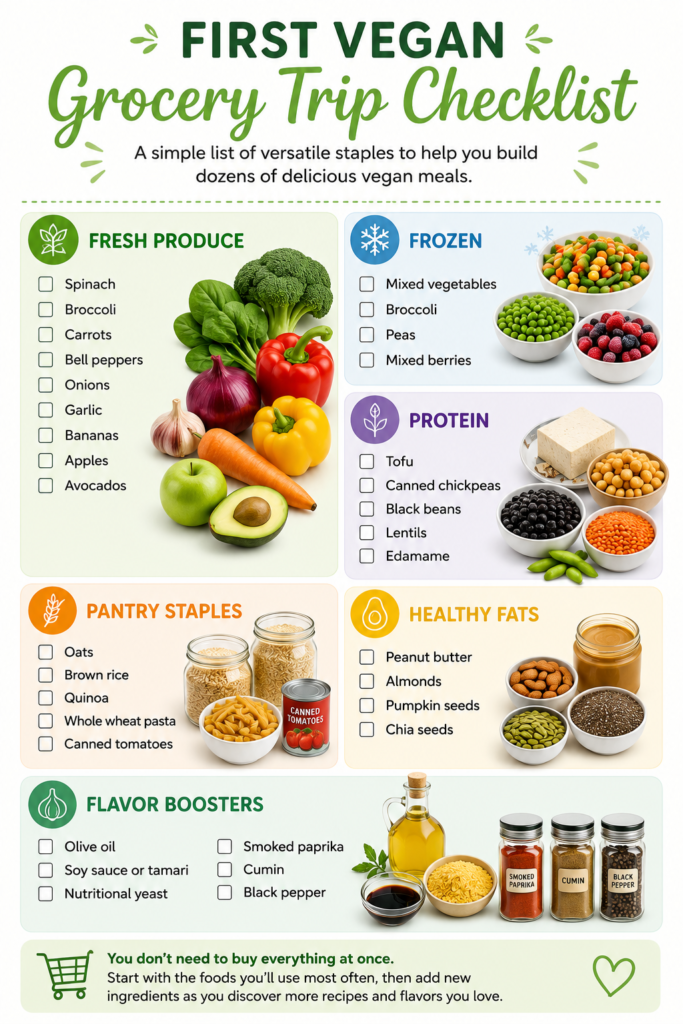
Fresh Produce
Fresh fruits and vegetables are the heart of a vegan kitchen.
Choose a mix of leafy greens, broccoli, carrots, bell peppers, onions, garlic, mushrooms, tomatoes, cucumbers, zucchini, sweet potatoes, and any seasonal vegetables you enjoy.
For fruit, stock up on bananas, apples, berries, oranges, grapes, lemons, and avocados.
Buying produce that’s in season is often more affordable and usually offers the best flavor.
Don’t worry about buying every vegetable at once.
Start with the ones you already enjoy eating and gradually branch out as your confidence grows.
Pantry Staples
A few pantry basics make it easy to prepare balanced meals without needing a last-minute trip to the store.
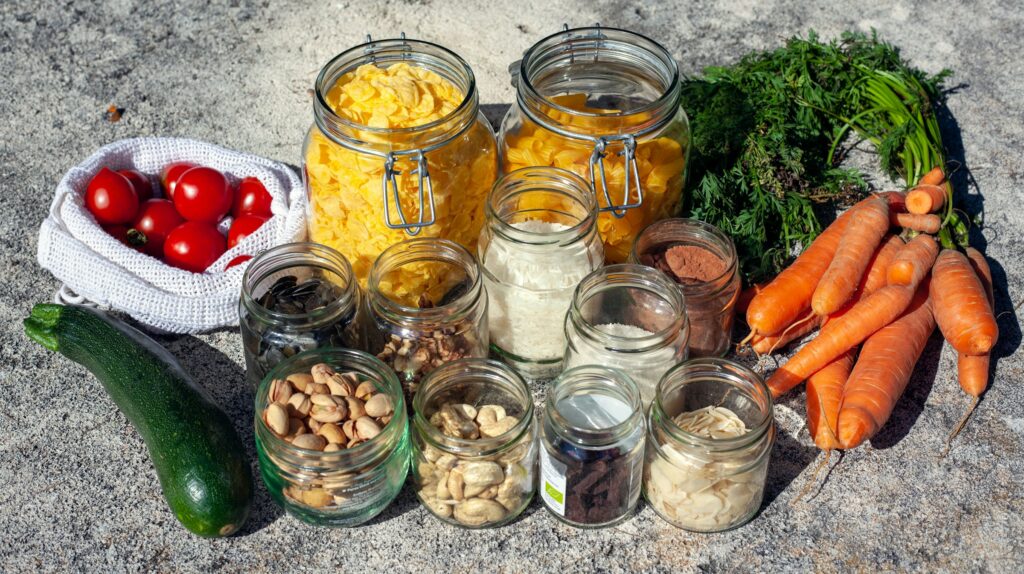
Keep dried or canned beans, lentils, chickpeas, brown rice, quinoa, oats, whole wheat pasta, canned tomatoes, vegetable broth, and whole grain bread on hand whenever possible.
It’s also helpful to stock canned coconut milk, peanut butter, almond butter, tomato paste, and nutritional yeast for quick sauces and flavorful meals.
These ingredients have a long shelf life and can be combined in countless ways throughout the week.
How Long Vegan Pantry Staples Last
One of the advantages of a vegan pantry is that many staple ingredients have a long shelf life, making them perfect for meal planning and reducing food waste.
Store these foods in airtight containers in a cool, dry place for the best quality.
| Food | Typical Pantry Shelf Life |
|---|---|
| White rice | Up to 2 years |
| Brown rice | 6–12 months |
| Dried lentils | Up to 2 years |
| Dried beans | 2–3 years |
| Quinoa | Up to 2 years |
| Rolled oats | Up to 1 year |
| Whole wheat pasta | 1–2 years |
| Canned beans | 2–5 years (unopened) |
| Canned tomatoes | 12–18 months (unopened) |
| Nuts and seeds | 3–6 months* |
| Peanut butter | 6–9 months (opened) |
Store nuts and seeds in the refrigerator or freezer to help them stay fresh longer and prevent their natural oils from becoming rancid.
Frozen Foods
Frozen foods are one of the easiest ways to save time while reducing food waste.
Frozen vegetables like broccoli, peas, spinach, mixed vegetables, and corn are perfect for stir-fries, soups, curries, and casseroles.
Frozen fruit works wonderfully in smoothies, oatmeal, and homemade desserts.
Keeping a few frozen options in your freezer means you’ll always have ingredients ready, even when fresh produce runs low.
Refrigerated Items
The refrigerator is where many everyday vegan essentials are stored.
Plant-based milk, tofu, tempeh, hummus, dairy-free yogurt, fresh herbs, and plant-based butter alternatives are all useful ingredients to keep on hand.
You may also want to include fresh salsa, lemon juice, and ready-to-eat vegetables for quick snacks and easy meal prep.
Choose unsweetened fortified plant milk if you plan to use it regularly for cereal, coffee, smoothies, or cooking.
Freezer Essentials
Your freezer can make busy weeknights much easier.
Store extra portions of cooked rice, quinoa, beans, lentils, soups, stews, and homemade sauces in individual containers for quick meals.
Frozen veggie burgers, homemade bean burgers, and frozen bread or tortillas are also convenient to have available.
Labeling containers with the contents and date helps you use them while they’re at their best.
Flavor Boosters
Simple seasonings are what turn everyday ingredients into meals you’ll look forward to eating.
Keep garlic, onions, black pepper, sea salt, paprika, cumin, chili powder, oregano, basil, thyme, cinnamon, and curry powder in your pantry.
Soy sauce or tamari, Dijon mustard, balsamic vinegar, olive oil, hot sauce, maple syrup, tahini, and fresh lemon or lime juice are also excellent staples.
Fresh herbs like parsley, cilantro, basil, and green onions add a bright finish to many dishes.
Essential Flavor Builders
One of the easiest ways to make vegan meals more satisfying is to layer different flavors.
Keep a few of these ingredients on hand and mix them into your cooking to create meals that taste rich, balanced, and anything but boring.
| Flavor | Try These Ingredients | Best Used In |
|---|---|---|
| Umami (Savory) | Soy sauce, tamari, mushrooms, nutritional yeast, miso paste | Stir-fries, soups, sauces, grain bowls |
| Smoky | Smoked paprika, chipotle powder, liquid smoke | Chili, roasted vegetables, tofu, beans |
| Tangy | Lemon juice, lime juice, balsamic vinegar, apple cider vinegar | Salads, grain bowls, roasted vegetables |
| Creamy | Tahini, avocado, coconut milk, cashew cream | Dressings, curries, pasta sauces |
| Spicy | Chili flakes, cayenne pepper, hot sauce, fresh chilies | Tacos, soups, curries, stir-fries |
| Fresh | Parsley, cilantro, basil, mint, green onions | Salads, pasta, grain bowls, soups |
| Warm & Earthy | Cumin, coriander, turmeric, curry powder | Lentils, chickpeas, rice dishes, curries |
| Sweet Balance | Maple syrup, dates, roasted onions | Dressings, marinades, roasted vegetables |
Most great vegan meals combine three or more flavor profiles.
For example, roasted vegetables with smoked paprika (smoky), lemon juice (tangy), and tahini (creamy) create a balanced, flavorful dish with very little effort.
Kitchen Tip: Never Run Out of These 10 Vegan Staples
Keeping these ingredients in your kitchen means you’ll almost always have the basics for a quick, satisfying meal:
- 🫘 Lentils
- 🥫 Chickpeas
- 🫘 Black beans
- 🌾 Brown rice
- 🥣 Rolled oats
- 🥜 Peanut butter
- 🌱 Tofu
- 🥛 Fortified soy milk
- 🥦 Frozen mixed vegetables
- 🧀 Nutritional yeast
First Vegan Grocery Trip Checklist
If you’re not sure where to start, use this simple checklist for your first shopping trip.
These versatile ingredients can be mixed and matched to create dozens of beginner-friendly vegan meals.
Beginner-Friendly Vegan Meal Ideas
One of the easiest ways to stick with a vegan diet is to keep your meals simple and familiar.
You don’t need complicated recipes or hard-to-find ingredients to enjoy delicious plant-based food.
Start with meals you already love and swap in vegan-friendly ingredients where needed.
Breakfast
- Overnight oats with berries, chia seeds, and almond butter
- Tofu scramble with spinach, mushrooms, and whole grain toast
- Oatmeal topped with sliced banana, walnuts, and cinnamon
- Smoothie made with plant-based milk, frozen fruit, spinach, and peanut butter
- Whole grain toast with avocado, tomato, and a sprinkle of hemp seeds
Lunch
- Chickpea salad wraps with lettuce, cucumber, and tomato
- Lentil soup served with whole grain bread
- Quinoa bowl with roasted vegetables and tahini dressing
- Black bean tacos topped with salsa and avocado
- Hummus and veggie sandwich on whole grain bread
Dinner
- Tofu stir-fry with colorful vegetables and brown rice
- Chickpea curry served over basmati rice
- Three-bean chili with baked potatoes
- Whole wheat pasta with lentil Bolognese and a side salad
- Stuffed bell peppers filled with rice, beans, vegetables, and herbs
Snacks
- Fresh fruit with a handful of almonds or walnuts
- Carrot and cucumber sticks with hummus
- Roasted chickpeas seasoned with your favorite spices
- Apple slices with peanut butter
- Trail mix made with nuts, seeds, and dried fruit
- Edamame sprinkled with a little sea salt
Desserts
- Fresh fruit salad with a squeeze of lime
- Chia pudding topped with berries
- Dairy-free banana nice cream made from frozen bananas
- Baked apples with cinnamon and chopped walnuts
- Vegan oatmeal cookies
- Dark chocolate that’s labeled vegan, enjoyed in moderation
These ideas are meant to inspire rather than follow strict rules.
Mix and match your favorite ingredients, try new recipes when you feel ready, and remember that simple meals are often the ones you’ll come back to again and again.
Sample One-Day Balanced Vegan Menu
If you’re wondering what a balanced vegan day looks like, here’s a simple example.
It combines vegetables, whole grains, plant-based protein, and healthy fats to create satisfying meals that are easy to prepare.
| Meal | Example Menu | Why It Works |
|---|---|---|
| 🌞 Breakfast | Overnight oats with soy milk, blueberries, chia seeds, and peanut butter | Provides whole grains, protein, healthy fats, and fruit to start the day. |
| 🍎 Morning Snack | Apple with a handful of almonds | A simple combination of fruit and healthy fats that helps keep you satisfied. |
| 🥣 Lunch | Lentil soup with whole grain bread and a side salad | Includes protein, fiber, vegetables, and whole grains in one balanced meal. |
| 🥕 Afternoon Snack | Carrot sticks with hummus | Adds extra vegetables while chickpeas provide plant-based protein. |
| 🍛 Dinner | Tofu stir-fry with broccoli, carrots, peppers, and brown rice | Follows the balanced vegan plate formula with vegetables, protein, whole grains, and plenty of flavor. |
| 🍓 Optional Dessert | Fresh berries with dairy-free yogurt | A light way to finish the day while adding more fruit and calcium-fortified dairy alternatives. |
Remember, this is only one example.
Feel free to swap ingredients based on what you enjoy, what’s in season, or what you already have in your kitchen.
Sample 7-Day Vegan Meal Plan
If you’re new to vegan eating, having a simple meal plan can make grocery shopping and meal prep much easier.
Use this sample plan as inspiration and feel free to swap meals based on your tastes, schedule, and the ingredients you already have.
| Day | Breakfast | Lunch | Dinner | Snack |
|---|---|---|---|---|
| Day 1 | Overnight oats with blueberries, chia seeds, and almond butter | Chickpea salad wrap with mixed greens | Tofu stir-fry with broccoli, carrots, peppers, and brown rice | Apple slices with peanut butter |
| Day 2 | Tofu scramble with mushrooms, spinach, and whole grain toast | Lentil soup with whole grain bread | Sweet potato and black bean tacos with avocado | Roasted chickpeas |
| Day 3 | Green smoothie with spinach, banana, berries, oats, and soy milk | Quinoa bowl with roasted vegetables and tahini dressing | Chickpea curry served over basmati rice | Mixed nuts and fresh grapes |
| Day 4 | Oatmeal topped with banana, walnuts, and cinnamon | Hummus and roasted vegetable sandwich | Lentil Bolognese with whole wheat pasta | Carrot sticks with hummus |
| Day 5 | Whole grain toast with avocado and tomato | Black bean and corn salad with quinoa | Vegetable and tofu coconut curry with rice | Fresh berries with dairy-free yogurt |
| Day 6 | Chia pudding topped with strawberries and pumpkin seeds | Leftover vegetable curry with brown rice | Homemade vegan chili with baked potato | Steamed edamame |
| Day 7 | Smoothie bowl topped with granola, hemp seeds, and fresh fruit | Mediterranean chickpea bowl with cucumber, tomatoes, olives, and lemon dressing | Stuffed bell peppers with rice, beans, vegetables, and herbs | Trail mix with dried fruit and nuts |
This meal plan is only one example of how a balanced vegan week can look.
Don’t be afraid to repeat your favorite meals or use leftovers to save time.
As you become more comfortable with plant-based cooking, you’ll naturally build a collection of recipes that fit your lifestyle and make weekly meal planning even easier.
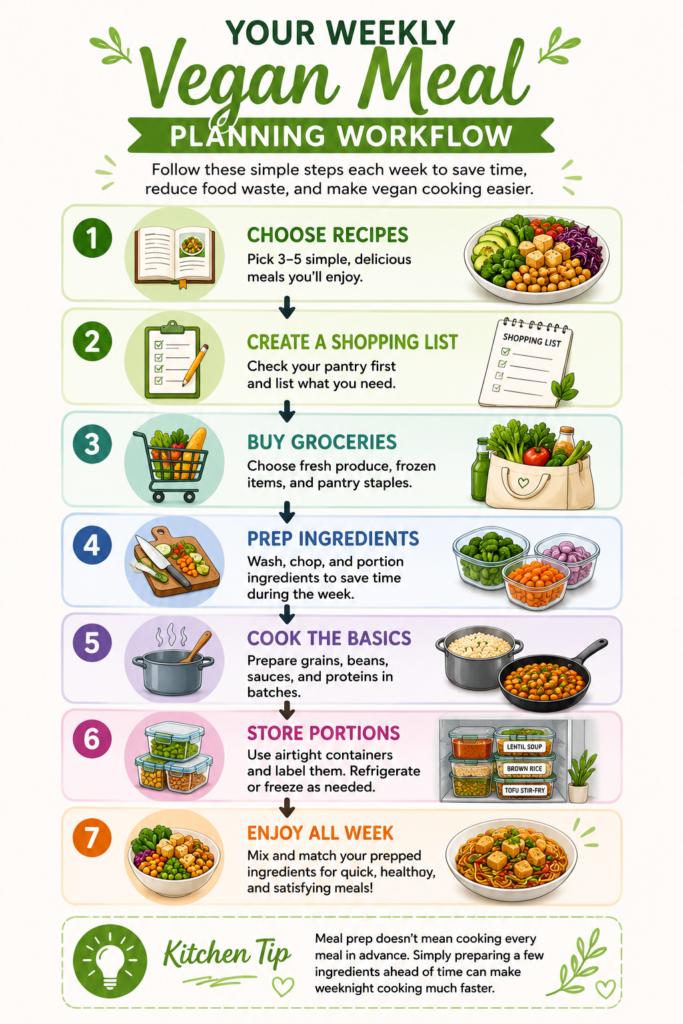
Easy Vegan Meal Prep Tips
Meal prep doesn’t have to take over your entire weekend.
Spending just an hour or two preparing a few basics can make the rest of the week much easier.
Instead of cooking complete meals, focus on prepping versatile ingredients that you can mix and match.
Cook Grains in Bulk
Cook a large batch of brown rice, quinoa, barley, or another favorite grain at the beginning of the week.
Let the grains cool before storing them in airtight containers in the refrigerator.
Having cooked grains ready means you can quickly build grain bowls, stir-fries, salads, soups, or side dishes in just a few minutes.
If you make more than you’ll use within a few days, freeze extra portions for later.
Batch Cook Beans
Whether you use dried beans or canned beans, keeping a supply ready makes everyday cooking much simpler.
If you’re cooking dried beans, prepare a large batch and divide them into meal-sized containers once they’ve cooled.
Store some in the refrigerator for the week and freeze the rest for future meals.
Cooked beans are perfect for tacos, curries, soups, salads, wraps, pasta dishes, and homemade veggie burgers.
Prepare Vegetables Ahead
Wash, dry, and chop vegetables as soon as you bring them home.
Store them in clear containers so they’re easy to see and even easier to grab when it’s time to cook.
Cut vegetables are perfect for stir-fries, sheet pan dinners, salads, soups, and quick snacks with hummus.
You can also roast a large tray of vegetables to enjoy throughout the week.
Roasted vegetables pair well with grains, sandwiches, wraps, and pasta, making them one of the most versatile meal prep ingredients.
Freeze Individual Portions
Freezing individual servings is one of the easiest ways to avoid food waste while making future meals almost effortless.
Soups, stews, chili, curries, cooked grains, beans, and pasta sauces all freeze well.
Use freezer-safe containers or reusable freezer bags, and label each one with the contents and date.
Small portions thaw more quickly, making them perfect for busy lunches or last-minute dinners.
Keep Healthy Snacks Ready
Having ready-to-eat snacks makes it much easier to stay on track between meals.
Wash fresh fruit, portion out nuts and seeds, cut vegetables for dipping, or prepare small containers of hummus at the start of the week.
Roasted chickpeas, trail mix, popcorn, and steamed edamame are also great options to keep on hand.
When healthy snacks are easy to reach, you’re more likely to enjoy them instead of searching for something less satisfying.
Remember that meal prep doesn’t have to be perfect to be helpful.
Even preparing just one or two ingredients ahead of time can make cooking feel easier, faster, and much more enjoyable throughout the week.
How to Transition to a Vegan Diet
Changing the way you eat doesn’t have to happen all at once.
The best approach is the one that feels realistic and enjoyable for you.
Some people love diving straight into a new challenge, while others prefer making small changes over time.
There isn’t a right or wrong way to begin.
The goal is to build habits that you can comfortably maintain for the long term.
Switching Overnight
Some people decide to become vegan from one day to the next.
If this approach feels exciting rather than stressful, it can be a great way to make a fresh start.
Before you begin, stock your kitchen with simple staples like beans, lentils, rice, pasta, oats, tofu, vegetables, fruit, nuts, seeds, and plant-based milk.
Having plenty of ingredients ready makes it much easier to prepare satisfying meals instead of wondering what to cook.
Start with a handful of easy recipes you know you’ll enjoy.
Keeping meals simple during your first week allows you to build confidence without feeling overwhelmed.
Gradual Transition
Many beginners find that making changes little by little feels more natural.
You might begin by replacing one meal each day with a vegan version.
Once that becomes routine, add another plant-based meal until eating vegan feels like second nature.
Another easy strategy is to choose a few vegan days each week before making the switch full-time.
This gives you plenty of time to discover new recipes and favorite ingredients without feeling rushed.
Remember that every plant-based meal is progress.
Small, consistent changes often become lasting habits.
Replacing Favorite Foods
One of the easiest ways to enjoy a vegan diet is to start with meals you already love.
Instead of giving up your favorite dishes, look for simple ingredient swaps.
Use lentils or black beans instead of ground beef in tacos.
Replace dairy milk with oat or soy milk in cereal, coffee, and baking.
Try tofu, tempeh, or chickpeas in place of chicken in stir-fries and curries.
Choose dairy-free cheese, vegan butter, and plant-based yogurt if those products help make the transition easier.
As your cooking skills grow, you’ll probably find yourself trying entirely new recipes alongside familiar favorites.
Eating Out Successfully
Eating at restaurants becomes much easier once you know what to look for.
Many restaurants now offer clearly marked vegan options or dishes that can be easily customized.
Don’t hesitate to ask if a meal can be prepared without cheese, butter, cream, or other animal products.
Most restaurants are happy to accommodate simple requests.
Menus featuring Mexican, Mediterranean, Indian, Thai, Middle Eastern, and many Asian-inspired dishes often include naturally plant-based options or meals that can be adapted with just a few changes.
Looking at the menu online before you arrive can also make ordering feel more relaxed.
Handling Social Gatherings
Family dinners, parties, and celebrations may seem challenging at first, but they become easier with a little planning.
If you’re attending a gathering, consider bringing a vegan dish to share.
This guarantees you’ll have something to enjoy while introducing others to a delicious plant-based recipe.
If someone has questions about your food choices, keep the conversation friendly and simple.
You don’t need to convince anyone to eat the same way you do.
Let your meals speak for themselves.
Most importantly, be patient with yourself.
Learning a new way to cook takes time, and every meal is another opportunity to build confidence.
The more recipes you try and the more flavors you discover, the more natural your vegan lifestyle will begin to feel.
What to Expect During Your First Month
Week 1: Learning the Basics
Your first week is all about getting familiar with vegan foods and ingredients.
You’ll likely spend a little more time reading food labels, shopping for new pantry staples, and trying a few simple recipes.
Don’t worry if meal planning feels slower than usual.
You’re building new habits, and that’s completely normal.
Week 2: Finding Your Favorite Meals
By the second week, you’ll probably discover a handful of recipes that you’ll want to make again.
Cooking starts to feel more familiar, and you’ll become more comfortable using ingredients like tofu, lentils, beans, and plant-based milk.
You may also find yourself spending less time checking every ingredient label as you begin recognizing vegan-friendly products.
Week 3: Grocery Shopping Gets Easier
Shopping becomes quicker because you already know which foods you enjoy and where to find them.
You’ll likely have a better-stocked pantry, making it easier to throw together meals without needing a special trip to the store.
Meal prep also starts feeling more efficient as you learn which ingredients are worth preparing ahead of time.
Week 4: Building Lasting Habits
By the fourth week, many of your new routines begin to feel natural.
Planning meals, preparing simple recipes, and choosing vegan options often require much less thought than they did at the beginning.
If you experienced cravings for familiar foods during your first couple of weeks, you’ll often find they’re easier to manage as you discover satisfying plant-based alternatives.
Most importantly, you’ll have built the confidence to keep exploring new recipes, ingredients, and flavors long after your first month is over.
Common Beginner Mistakes
- Not Eating Enough Calories – Plant-based foods can be very filling, so make sure you’re eating enough wholesome foods to keep yourself satisfied throughout the day.
- Relying Too Much on Processed Foods – Vegan convenience foods are helpful occasionally, but most meals should be built around whole foods like vegetables, grains, beans, fruits, nuts, and seeds.
- Ignoring Vitamin B12 – Vitamin B12 isn’t reliably found in plant foods, so include fortified foods, a supplement, or both as part of your routine.
- Eating Too Little Protein – Include protein-rich foods like beans, lentils, tofu, tempeh, edamame, or quinoa with your meals to make them more filling and balanced.
- Forgetting Healthy Fats – Add foods like avocados, nuts, seeds, olive oil, or nut butters to meals for extra flavor, richness, and satisfaction.
- Not Planning Meals – Keeping a simple meal plan and a well-stocked pantry makes it much easier to prepare quick vegan meals and avoid last-minute food choices.
Budget-Friendly Vegan Eating Tips
Eating a vegan diet doesn’t have to be expensive.
In fact, many of the most affordable foods at the grocery store are naturally plant-based.
Buy Dry Beans and Lentils
Dry beans and lentils are some of the best-value foods you can buy.
A single bag makes several meals and usually costs much less than buying ready-made convenience foods.
Cook a large batch, then refrigerate or freeze portions for quick lunches and dinners throughout the week.
If you’re short on time, canned beans are still an excellent option.
Just rinse them before using to remove excess sodium if desired.
Purchase Seasonal Produce
Seasonal fruits and vegetables are often fresher, more flavorful, and less expensive than produce that’s out of season.
Build your weekly meals around what’s available at the best price.
Farmers markets and local produce stands can also be great places to find fresh seasonal ingredients.
Don’t be afraid to swap vegetables in recipes based on what’s available.
Roasted carrots work just as well as roasted zucchini, and broccoli can easily replace green beans in many dishes.
Shop Frozen Fruits and Vegetables
Frozen produce is a smart choice for both your budget and your freezer.
It’s picked and frozen at peak freshness, making it convenient to keep on hand all year.
Frozen spinach, broccoli, mixed vegetables, berries, mango, and peas are perfect for quick meals and smoothies.
Because you only use what you need, frozen produce also helps reduce food waste.
Buy Whole Grains in Bulk
Staples like brown rice, oats, quinoa, barley, and whole wheat pasta often cost less when purchased in larger packages.
Buying in bulk means you’ll always have the basics for hearty meals without making frequent trips to the grocery store.
Store grains in airtight containers to keep them fresh and organized.
Having a variety of grains available also makes it easy to change up your meals throughout the week.
Reduce Food Waste
Making the most of the food you buy is one of the easiest ways to save money.
Plan your meals before shopping so you only purchase what you’ll use.
Store fresh produce properly to help it stay fresh longer.
Use leftover vegetables in soups, stir-fries, fried rice, wraps, or pasta dishes instead of letting them go to waste.
Extra cooked beans, grains, and sauces can also be frozen for future meals.
Even small habits, like using vegetable scraps to make homemade broth or freezing ripe bananas for smoothies, can stretch your grocery budget while adding more flavor to your cooking.
💰 Kitchen Tip: Save More on Your Vegan Grocery Bill
Keep these simple habits in mind every time you shop:
- Buy dried beans and lentils whenever you have time to cook them.
- Choose seasonal fruits and vegetables for the best value.
- Keep frozen produce on hand to reduce food waste.
- Compare unit prices instead of package prices.
- Plan meals before shopping and stick to your grocery list.
- Freeze leftovers in individual portions for quick future meals.
Vegan Kitchen Essentials
Basic Cookware
A few quality pots and pans can handle almost every vegan recipe.
A large non-stick or stainless steel skillet is perfect for stir-fries, tofu, vegetables, and one-pan meals.
A medium saucepan works well for cooking rice, oats, soups, and sauces.
A large stockpot is useful for pasta, chili, curries, and batch cooking beans or soups.
You’ll also want a baking sheet for roasting vegetables and a sturdy cutting board with a sharp chef’s knife to make meal prep easier and safer.
Simple measuring cups, measuring spoons, a wooden spoon, a silicone spatula, and a colander round out the essentials you’ll use again and again.
Pantry Staples
Keeping your pantry stocked makes it much easier to prepare meals without making frequent grocery trips.
Store a variety of grains like brown rice, oats, quinoa, and whole wheat pasta alongside canned tomatoes, vegetable broth, beans, lentils, and chickpeas.
Include nuts, seeds, nut butters, nutritional yeast, olive oil, soy sauce or tamari, vinegar, tomato paste, and canned coconut milk for extra flavor and versatility.
A good selection of herbs and spices is just as important.
Even simple ingredients taste completely different when seasoned with garlic powder, smoked paprika, cumin, oregano, basil, black pepper, or curry powder.
Helpful Appliances
While they’re not essential, a few small appliances can save time and make everyday cooking easier.
A blender is ideal for smoothies, creamy soups, sauces, hummus, and salad dressings.
A food processor quickly chops vegetables, makes homemade dips, and mixes veggie burger or energy ball mixtures.
An Instant Pot or pressure cooker is helpful for cooking dried beans, lentils, soups, and grains in less time.
An air fryer is great for making crispy tofu, roasted vegetables, potatoes, and chickpeas with very little oil.
If you enjoy meal prep, these appliances can quickly become some of the most useful tools in your kitchen.
Food Storage Containers
Good food storage containers are one of the most valuable investments for any home cook.
Clear containers make it easy to see what’s already prepared, helping you use ingredients before they spoil.
Choose a variety of sizes for storing chopped vegetables, cooked grains, beans, leftovers, sauces, and snacks.
Freezer-safe containers are especially useful for batch cooking and freezing individual meal portions.
Labeling containers with the contents and date helps you stay organized and reduces food waste.
Kitchen Equipment Priority List
If you’re building your kitchen from scratch, don’t feel like you need to buy everything at once.
Start with the essentials, then add more tools as you cook more often.
| Start With These Essentials | Add Later if Needed |
|---|---|
| 🔪 Chef’s knife | 🍟 Air fryer |
| 🥣 Cutting board | ⚡ Instant Pot or pressure cooker |
| 🍳 Non-stick or stainless steel skillet | 🥕 Food processor |
| 🍲 Medium saucepan | 🍚 Rice cooker |
| 🥘 Large stockpot | 🧇 Panini press or sandwich maker |
| 🥄 Measuring cups and spoons | 🍦 High-speed blender (upgrade from a basic blender) |
| 🥣 Mixing bowls | 🥬 Salad spinner |
| 🥡 Food storage containers | 🍽️ Specialty baking dishes |
For most beginners, a good knife, a sturdy pan, a saucepan, and a few food storage containers are enough to prepare hundreds of delicious vegan meals.
Add extra appliances only when they’ll genuinely make your favorite recipes easier or faster to prepare.
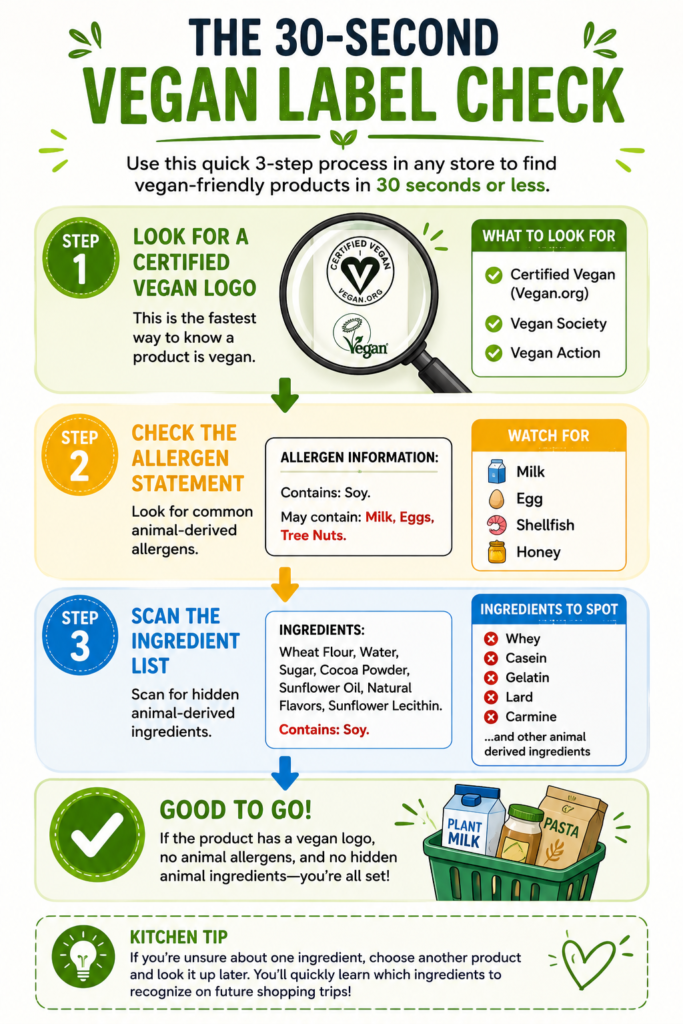
Reading Food Labels
Reading food labels is one of the most useful skills you can learn when starting a vegan diet, and it becomes much quicker with a little practice.
While many foods are clearly labeled as vegan, it’s still worth checking the ingredient list, especially when trying a product for the first time.
If you see a certified vegan logo on the packaging, you can feel confident that the product contains no animal-derived ingredients according to the standards of that certification.
Even without a certification, many everyday foods are naturally vegan, so the ingredient list is always your best guide.
As you shop, take a moment to look for ingredients that may come from animals, such as gelatin, whey, casein, carmine, isinglass, or lard, since these aren’t always obvious from the front of the package.
Dairy ingredients can also appear under names like milk powder, butterfat, cream, cheese, lactose, milk solids, or milk protein, while eggs may be listed as whole egg, egg white, egg yolk, egg powder, albumen, or simply egg.
Don’t let unfamiliar ingredient names discourage you, because you’ll soon recognize the ones that matter most.
When you’re unsure about a product, choosing another option with a shorter, simpler ingredient list is often the easiest solution.
The more labels you read, the faster you’ll become at spotting vegan-friendly foods, making grocery shopping feel easier and more enjoyable every week.
How to Stay Motivated as a New Vegan
Starting a vegan lifestyle is exciting, but it’s also normal to have days when things don’t go exactly as planned.
The key is to build habits that feel enjoyable instead of overwhelming.
The more you focus on delicious meals and simple routines, the easier it becomes to stay motivated.
Remember that every meal is a chance to learn something new and discover another favorite recipe.
Focus on Progress, Not Perfection
You don’t have to eat perfectly to be successful.
If you accidentally eat something that isn’t vegan or find yourself struggling one day, simply move forward with your next meal.
Long-term success comes from consistency, not perfection.
Celebrate the small wins, whether that’s trying a new ingredient, cooking a homemade dinner, or finding a plant-based version of one of your favorite meals.
Every positive step builds confidence.
Find Simple Recipes You Love
The easiest meals to stick with are the ones you genuinely enjoy eating.
Start with recipes that use familiar ingredients and don’t require complicated techniques.
Once you have five or six dependable meals, planning your week becomes much easier.
Don’t be afraid to cook the same favorites more than once.
Having reliable recipes takes the pressure out of deciding what to make every day.
As your confidence grows, you can slowly add new dishes to your rotation.
Join Vegan Communities
Learning alongside others can make the journey more enjoyable.
Look for local groups, online communities, or social media pages where people share recipes, cooking tips, and meal ideas.
Seeing what other home cooks are making is a great way to find inspiration when you’re feeling stuck.
You can also ask questions, exchange ideas, and learn simple tricks that make everyday cooking easier.
Being part of a supportive community reminds you that you’re not learning alone.
Keep Trying New Foods
One of the best parts of a vegan diet is discovering ingredients and flavors you may never have tried before.
Pick up a new vegetable, grain, bean, or spice every now and then and experiment with it in a simple recipe.
You don’t have to love every new ingredient.
Sometimes finding your favorites simply takes a little curiosity and practice.
Keeping your meals varied also helps prevent boredom and makes cooking feel more creative.
Most importantly, enjoy the process.
When cooking feels fun and rewarding, staying motivated becomes much easier.
Bonus: Beginner’s Vegan Diet Checklist
Use this simple checklist to stay organized as you begin your vegan journey.
Before You Start
- Learn which foods are naturally vegan and which ingredients to avoid.
- Stock your pantry with staples like rice, oats, pasta, canned beans, lentils, herbs, and spices.
- Choose a fortified plant-based milk that you enjoy drinking and cooking with.
- Buy versatile protein sources such as beans, lentils, tofu, tempeh, chickpeas, and whole grains.
- Purchase a reliable vitamin B12 supplement or choose fortified foods that provide vitamin B12.
During Your First Week
- Try one new vegan recipe each day to build confidence in the kitchen.
- Include a protein-rich food with every meal.
- Drink plenty of water throughout the day.
- Experiment with different herbs, spices, sauces, and seasonings to discover new favorite flavors.
- Prepare lunches or leftovers ahead of time to make busy days easier.
Long-Term Habits
- Fill your plate with a variety of colorful fruits and vegetables each week.
- Rotate your protein sources instead of relying on the same foods every day.
- Read ingredient labels when buying packaged foods.
- Set aside time each week for meal prep or ingredient prep.
- Pay attention to important nutrients such as vitamin B12, iron, calcium, vitamin D, iodine, zinc, and omega-3 fatty acids.
- Keep learning, trying new recipes, and enjoying the journey one meal at a time.
Final Thoughts
Starting a vegan diet is all about learning the basics, stocking your kitchen with simple plant-based ingredients, and finding meals you genuinely enjoy making.
There’s no need to change everything overnight, so take small, steady steps that fit your lifestyle and build on them over time.
Remember that balance and consistency matter far more than perfection, and every plant-based meal is another chance to grow your confidence in the kitchen.
With a little planning and a willingness to try new flavors, a vegan diet can be delicious, satisfying, and a joyful way to cook and eat every day.
FAQs
Can You Get Enough Protein on a Vegan Diet?
Yes. Eating a variety of protein-rich foods like beans, lentils, tofu, tempeh, edamame, quinoa, nuts, and seeds makes it easy for most people to meet their daily protein needs.
Do Vegans Need Supplements?
Vitamin B12 is the one supplement most vegans should include, either through a supplement or fortified foods. Depending on your individual needs, a healthcare professional may also recommend vitamin D, iodine, or omega-3 supplements.
Is a Vegan Diet Safe for Children?
A well-planned vegan diet can be suitable for children, but it’s important to ensure they receive all the nutrients they need for healthy growth. Parents should work with a pediatrician or registered dietitian when planning a child’s diet.
Can You Build Muscle While Vegan?
Absolutely. Strength training, eating enough calories, and including plenty of plant-based protein can support muscle growth on a vegan diet.
Is Vegan Food Expensive?
Not necessarily. Many affordable foods, including beans, lentils, rice, oats, potatoes, and seasonal vegetables, are naturally vegan and budget-friendly.
What Happens During the First Few Weeks?
Most people spend the first few weeks learning new recipes, trying different ingredients, and adjusting their grocery shopping habits. As these routines become familiar, vegan cooking starts to feel much easier.
Can You Lose Weight on a Vegan Diet?
Some people lose weight after switching to a vegan diet, while others maintain or gain weight. Your results depend on the foods you eat, your portion sizes, and your overall lifestyle.
Are Plant-Based Meat Alternatives Healthy?
They can be a convenient option, especially when you’re getting started. For the best balance, enjoy them alongside plenty of whole foods like vegetables, beans, whole grains, nuts, and seeds.
Is Soy Safe to Eat?
Yes. For most people, moderate amounts of soy foods such as tofu, tempeh, edamame, and soy milk are considered safe and can be part of a balanced vegan diet.
How Long Does It Take to Adjust to a Vegan Diet?
Everyone is different, but many people feel comfortable with their new routine after a few weeks. Taking things one step at a time and finding recipes you enjoy can make the transition much smoother.
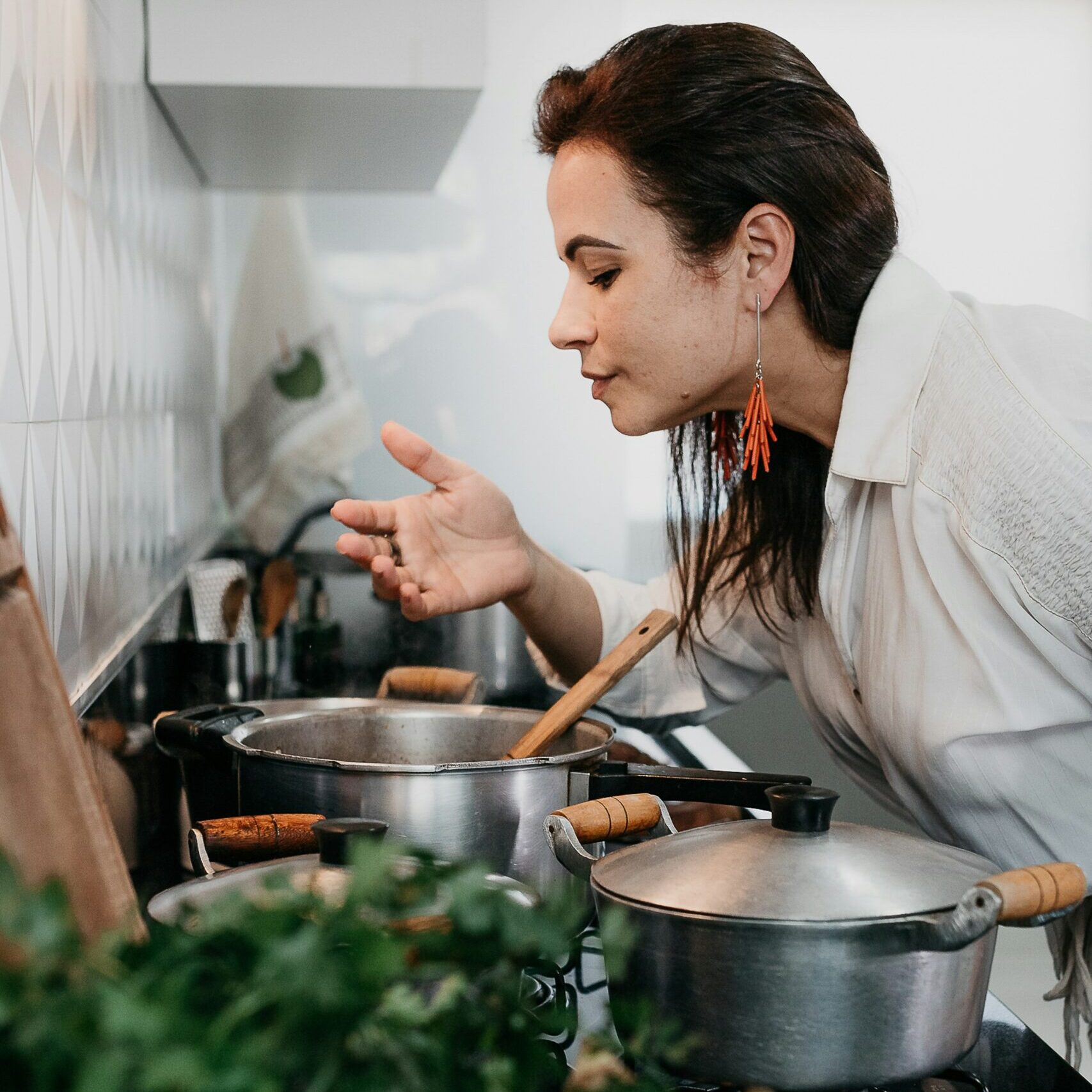
Hi, I’m Daisy Roots, the home cook and recipe developer behind this kitchen. I create simple, tested vegan recipes using everyday ingredients. Every dish is developed and cooked in my own kitchen, with clear steps to help you get reliable results every time. Thanks for stopping by — let’s cook something great!