Whether you’re baking a batch of muffins, making a creamy pasta sauce, or simply replacing dairy in your favorite recipes, choosing the right dairy-free milk can make a noticeable difference.
More people are cooking without dairy than ever, whether they’re following a vegan lifestyle, avoiding lactose, or simply enjoying plant-based alternatives.
The good news is that there are plenty of great options, but they don’t all work the same way.
Some create light, fluffy baked goods, while others add the rich, creamy texture that’s perfect for soups and sauces.
In this guide, you’ll discover the best dairy-free milks for cooking and baking, learn what each one does best, and pick the right option with confidence for every recipe.
At-a-Glance Comparison
| Milk | Best For | Flavor | Creaminess | Baking | Savory Cooking |
|---|---|---|---|---|---|
| Oat Milk | All-purpose | Mild | ★★★★★ | ⭐⭐⭐⭐⭐ | ⭐⭐⭐⭐⭐ |
| Soy Milk | Protein-rich recipes | Neutral | ★★★★☆ | ⭐⭐⭐⭐⭐ | ⭐⭐⭐⭐⭐ |
| Almond Milk | Light recipes | Nutty | ★★★☆☆ | ⭐⭐⭐⭐☆ | ⭐⭐⭐☆☆ |
| Coconut Milk | Rich desserts & curries | Coconut | ★★★★★ | ⭐⭐⭐⭐☆ | ⭐⭐⭐⭐⭐ |
| Cashew Milk | Creamy sauces | Mild | ★★★★★ | ⭐⭐⭐⭐☆ | ⭐⭐⭐⭐⭐ |
| Pea Milk | High-protein option | Neutral | ★★★★☆ | ⭐⭐⭐⭐☆ | ⭐⭐⭐⭐☆ |
Need a Quick Recommendation?
If you’re short on time, here’s a simple guide to help you choose the right dairy-free milk:
- Baking cakes? → Soy milk
- Making creamy sauces? → Cashew milk
- Everyday cooking? → Oat milk
- Rich desserts or curries? → Full-fat coconut milk
- Light baking? → Almond milk
- Looking for one all-purpose option? → Unsweetened oat milk
Keep reading to learn why each milk works best and how to choose the perfect one for every recipe.
Why Choosing the Right Dairy-Free Milk Matters
| Milk | Thickness |
|---|---|
| Almond | ⭐⭐☆☆☆ |
| Soy | ⭐⭐⭐⭐☆ |
| Oat | ⭐⭐⭐⭐⭐ |
| Cashew | ⭐⭐⭐⭐⭐ |
| Coconut | ⭐⭐⭐⭐⭐ |
| Pea | ⭐⭐⭐⭐☆ |
Texture
Texture plays a big role in both cooking and baking.
Some dairy-free milks are naturally thin, while others are thicker and creamier.
Thinner options blend well into lighter recipes like pancakes, muffins, and quick breads without making them feel too heavy.
Creamier choices, such as oat milk, cashew milk, and full-fat coconut milk, add body to soups, sauces, mashed potatoes, and casseroles.
Fat content also makes a difference.
Higher-fat milks create richer sauces, softer baked goods, and desserts with a smoother finish.
If a recipe usually calls for whole milk or cream, choosing a dairy-free milk with a little more richness will often give you the closest result.
Flavor
Every dairy-free milk has its own flavor, and that flavor doesn’t disappear during cooking.
Some options, like oat, soy, cashew, and pea milk, have a mild taste that blends easily into both sweet and savory dishes.
Others, such as almond milk, add a subtle nutty flavor that works especially well in baked goods and breakfast recipes.
Coconut milk has the most noticeable flavor and is an excellent choice for curries, tropical desserts, and recipes where a hint of coconut complements the other ingredients.
When you’re unsure which milk to use, a neutral-flavored option is usually the safest choice because it lets the other ingredients shine.
Sweetened vs Unsweetened
Dairy-free milk is often sold in both sweetened and unsweetened varieties, and choosing the right one can make a noticeable difference.
Unsweetened milk is usually the better option for everyday cooking and baking because it won’t add extra sweetness to soups, sauces, bread, or savory dishes.
It also gives you complete control over how much sugar goes into desserts, allowing you to follow the recipe more accurately.
Sweetened dairy-free milk has its place, especially in smoothies, hot chocolate, puddings, and desserts where a little extra sweetness is welcome.
Before you start cooking, take a quick look at the carton.
Using the right version from the beginning helps your recipe turn out just the way you intended.
| Milk | Flavor Strength |
|---|---|
| Soy | Mild |
| Oat | Mild |
| Cashew | Mild |
| Pea | Mild |
| Almond | Medium |
| Coconut | Strong |
What Makes a Dairy-Free Milk Good for Baking?
Moisture Content
Moisture keeps baked goods soft, tender, and enjoyable to eat.
Most dairy-free milks can replace dairy milk in a one-to-one ratio, but some contain more water than others.
Thinner milks may produce lighter batters, while creamier options often create a softer crumb and help baked goods stay moist for longer.
If your batter looks much thinner than usual, it’s worth checking whether the dairy-free milk you’re using has a lighter consistency.
Fat Content
Fat adds richness and helps create a tender texture in many baked recipes.
Creamier dairy-free milks, such as oat milk, soy milk, and cashew milk, usually produce cakes and muffins with a softer bite.
Full-fat coconut milk is ideal for recipes that call for extra richness, although its coconut flavor is more noticeable.
Lower-fat milks can still work well, but the finished bake may be slightly lighter and less rich.
Protein Content
Protein helps give baked goods structure as they cook.
Soy milk naturally contains more protein than most other dairy-free milks, making it a reliable choice for breads, cakes, and recipes where a sturdy texture is important.
Oat milk and pea milk also perform well in many baked goods and create consistent results.
Lower-protein options, such as almond milk, are still great for everyday baking but may produce a slightly softer texture in some recipes.
Ability to Brown
A beautifully golden top is part of what makes homemade baking so appealing.
Dairy-free milks with a little more protein and natural sugars often brown more easily in the oven.
Soy milk and oat milk are both excellent choices when you want muffins, dinner rolls, or pastries to develop an attractive golden finish.
If your baked goods don’t brown as much as expected, don’t worry.
They may simply need a few extra minutes in the oven, as long as they’re not overbaking.
How It Reacts with Baking Ingredients
Every dairy-free milk behaves a little differently once it’s mixed with the other ingredients.
Some blend smoothly into batters and doughs, while others may separate slightly if they’re added straight from the fridge.
Giving the carton a good shake before measuring helps create a smooth mixture and evenly distributes any natural solids.
For recipes that use baking powder, baking soda, or acidic ingredients like lemon juice or vinegar, oat milk and soy milk are dependable choices that work well in a wide range of baked goods.
If you’re trying a new dairy-free milk for the first time, test it in a simple recipe like muffins or pancakes.
It’s an easy way to see how it bakes and build confidence before using it in more special recipes.
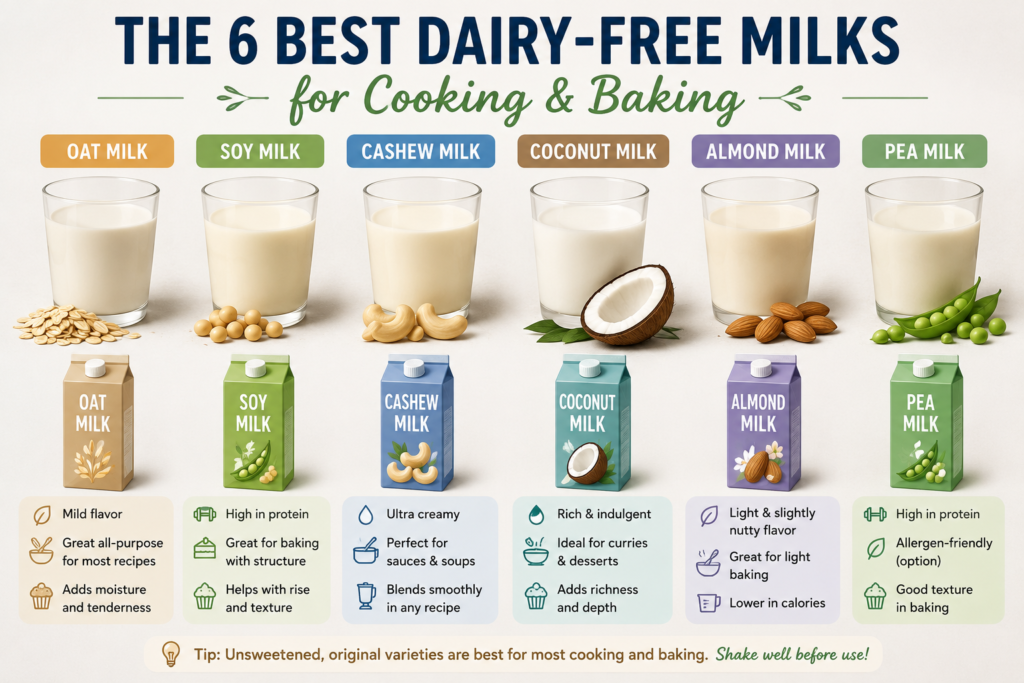
The 6 Best Dairy-Free Milks for Cooking and Baking
Each dairy-free milk has its own strengths in the kitchen.
Some are better for baking soft, fluffy cakes, while others shine in creamy sauces or rich desserts.
Here’s a closer look at the best options and where each one works best.
1. Oat Milk (Best Overall)
Oat milk is one of the most versatile dairy-free milks you can keep in your kitchen.
Its mild flavor and naturally creamy texture make it an excellent choice for both sweet and savory recipes.
It blends smoothly into batters, sauces, and soups without overpowering the other ingredients.
Pros
- Mild, neutral flavor
- Creamy texture that closely resembles dairy milk
- Works well in both cooking and baking
- Easy to substitute in most recipes
Cons
- Some brands are thinner than others
- Can become slightly gummy if overcooked in certain sauces
Best Recipes
- Cakes
- Muffins
- Pancakes
- White sauces
- Creamy soups
2. Soy Milk (Best for Baking)
Soy milk has long been a favorite for baking because its higher protein content helps create structure and a tender crumb.
It performs especially well in recipes that rely on milk for stability and moisture.
Its mild flavor also blends nicely into both sweet and savory dishes.
Pros
- Excellent for cakes and breads
- Higher protein than many other plant-based milks
- Browns well in the oven
- Neutral flavor
Cons
- Some people notice a slight bean-like flavor depending on the brand
- Not suitable for those avoiding soy
Best Recipes
- Bread
- Cookies
- Cakes
- Custards
3. Cashew Milk (Best for Creamy Sauces)
Cashew milk has a smooth, silky texture that makes sauces and soups feel rich without being heavy.
Its mild flavor allows herbs, spices, and other ingredients to stand out.
It’s also a great option when you want a creamy finish without using dairy.
Pros
- Smooth and creamy consistency
- Mild flavor
- Blends easily into sauces and soups
- Great for savory cooking
Cons
- Less widely available than oat or almond milk
- Usually lower in protein than soy milk
Best Recipes
- Alfredo sauce
- Cream soups
- Pasta dishes
- Mashed potatoes
4. Coconut Milk (Best for Rich Desserts)
Coconut milk is the richest option on this list and brings a naturally creamy texture to both sweet and savory recipes.
Its distinct coconut flavor works best in dishes where that taste complements the other ingredients.
Full-Fat vs Lite Coconut Milk
Full-fat coconut milk is thick, rich, and ideal for creamy desserts, curries, and sauces.
Lite coconut milk contains more water and less fat, making it better for lighter soups and recipes where you want a thinner consistency.
Pros
- Very rich and creamy
- Perfect for dairy-free desserts
- Excellent in curries and creamy sauces
- Great replacement for heavy cream in many recipes
Cons
- Strong coconut flavor
- Can be too rich for delicate baked goods
Best Recipes
- Curries
- Ice cream
- Puddings
- Cheesecake
- Coconut whipped cream
5. Almond Milk (Best for Light Recipes)
Almond milk is one of the most popular dairy-free milks thanks to its light texture and subtle nutty flavor.
It works especially well in recipes where you don’t need a lot of richness.
For best results, choose an unsweetened variety unless the recipe specifically calls for extra sweetness.
Pros
- Light consistency
- Mild nutty flavor
- Widely available
- Great for everyday baking
Cons
- Less creamy than oat or cashew milk
- Lower fat content may produce slightly drier baked goods
Best Recipes
- Pancakes
- Muffins
- Smooth batters
- Quick breads
6. Pea Milk (Best High-Protein Alternative)
Pea milk is a newer dairy-free option that’s quickly becoming popular for its creamy texture and balanced flavor.
Its higher protein content helps it perform well in both cooking and baking, making it a versatile alternative to dairy milk.
It’s a great choice if you want a neutral-tasting milk with a little more body.
Pros
- Higher protein than many plant-based milks
- Creamy consistency
- Mild flavor
- Works well in both sweet and savory recipes
Cons
- Availability varies by location
- Some brands have a slightly earthy aftertaste
Best Recipes
- Savory casseroles
- Baking
- Cream sauces
| If You’re Making… | Best Choice |
|---|---|
| Cakes | Soy Milk |
| Cookies | Oat Milk |
| Bread | Soy Milk |
| Brownies | Oat Milk |
| Muffins | Oat Milk |
| Pancakes | Oat Milk |
| Alfredo Sauce | Cashew Milk |
| Cream Soup | Cashew Milk |
| Curry | Coconut Milk |
| Ice Cream | Coconut Milk |
| Mashed Potatoes | Cashew Milk |
| Mac and Cheese | Oat or Cashew Milk |
Kitchen Test Notes
After using these dairy-free milks in cakes, muffins, pancakes, creamy pasta sauces, and soups, oat milk stood out as the easiest all-purpose choice thanks to its mild flavor and creamy consistency.
Cashew milk consistently produced the smoothest, silkiest sauces, while soy milk gave cakes the best structure and an even rise.
Full-fat coconut milk delivered the richest results in curries and desserts, and almond milk worked best in lighter baked goods where a subtle nutty flavor was a bonus.
Dairy-Free Milk Substitution Cheat Sheet
Need a quick replacement while you’re cooking?
Use this handy guide to choose the best dairy-free milk based on the dairy ingredient your recipe calls for.
| Replacing… | Best Dairy-Free Substitute |
|---|---|
| Whole milk | Unsweetened oat milk |
| Heavy cream | Full-fat coconut milk |
| Half-and-half | Unsweetened cashew milk |
| Buttermilk | Unsweetened soy milk + 1 tablespoon lemon juice or vinegar per cup |
| Evaporated milk | Full-fat coconut milk |
| Cream in pasta sauce | Unsweetened cashew milk |
For the most reliable results, choose unsweetened varieties unless your recipe is meant to be sweet.
If you’re ever unsure, unsweetened oat milk is the safest all-purpose substitute for everyday cooking and baking.
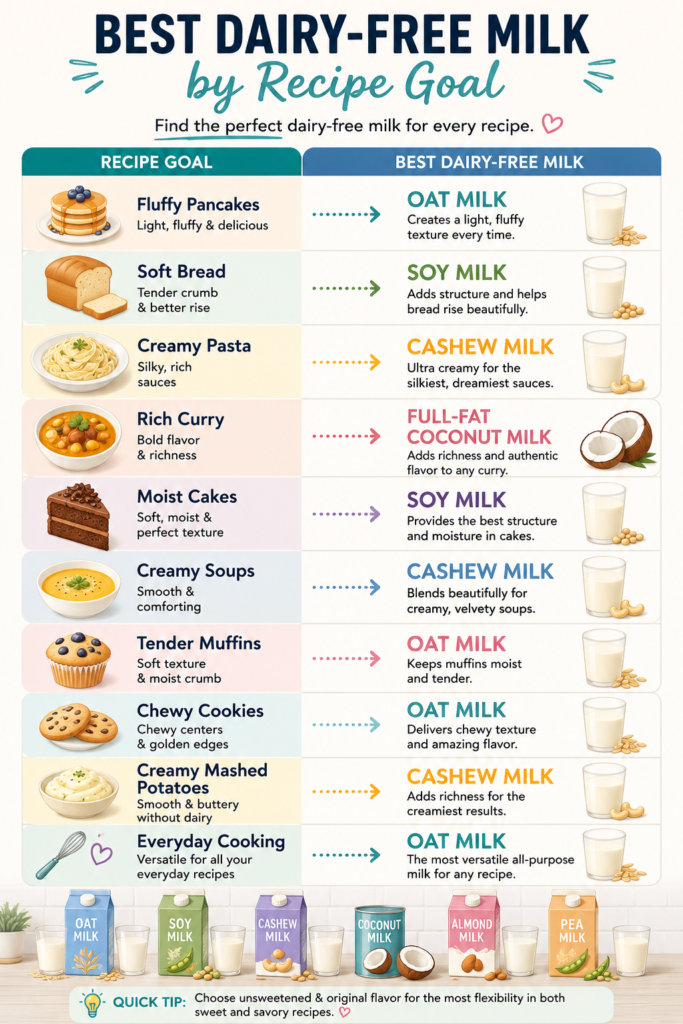
Dairy-Free Milk by Cooking Style
The best dairy-free milk often depends on what you’re making.
Best for Baking
Soy milk is the top choice for most baked goods because its higher protein content helps create structure and a soft, tender crumb.
Oat milk is a close second and works beautifully in cakes, muffins, cookies, brownies, and pancakes thanks to its creamy texture and mild flavor.
If you’re new to baking with dairy-free milk, either of these options is a great place to start.
Best for Savory Cooking
Oat milk and cashew milk are excellent choices for savory dishes because they have a mild flavor that doesn’t compete with herbs, spices, or vegetables.
They blend smoothly into pasta dishes, casseroles, mashed potatoes, and creamy side dishes without making the recipe taste overly sweet or nutty.
For recipes with bold flavors, such as curries, full-fat coconut milk is another fantastic option.
Best for Creamy Sauces
Cashew milk is hard to beat when you want a silky, creamy sauce.
Its smooth consistency creates rich pasta sauces, gravies, and dairy-free Alfredo without feeling heavy.
Oat milk also works well if you’re looking for a creamy finish with a slightly lighter texture.
Best for Soups
Creamy soups benefit from a dairy-free milk that adds body without overpowering the other ingredients.
Cashew milk creates a velvety texture that’s perfect for blended vegetable soups and chowders.
Oat milk is another reliable choice for everyday soups, while full-fat coconut milk adds richness to recipes with Thai, Indian, or tropical flavors.
Best for Desserts
Rich desserts often need a dairy-free milk with extra creaminess.
Full-fat coconut milk is ideal for puddings, cheesecakes, ice cream, and whipped toppings because of its thick texture.
For cakes, muffins, and cookies, oat milk and soy milk produce soft, moist results while letting flavors like vanilla, chocolate, and fruit shine.
Best All-Purpose Choice
If you only want to keep one dairy-free milk in your kitchen, unsweetened oat milk is the most versatile option.
It works well in baking, cooking, soups, sauces, and even hot drinks without changing the flavor of your recipes.
Its creamy consistency and mild taste make it a dependable choice for beginners and experienced home cooks alike.
When in doubt, reach for oat milk first, then switch to specialty options like cashew or coconut milk when a recipe calls for extra richness.
Recipe Pairing Guide
Still not sure which dairy-free milk to choose?
Use this quick guide to match the right milk with some of the most popular recipes.
| Recipe | Best Dairy-Free Milk | Why It Works |
|---|---|---|
| Chocolate cake | Soy milk | Adds structure and creates a tender crumb |
| Banana bread | Oat milk | Keeps the loaf moist and soft |
| Pancakes | Oat milk | Produces a light, fluffy texture |
| Alfredo sauce | Cashew milk | Creates a smooth, creamy sauce |
| Thai curry | Full-fat coconut milk | Adds richness and complements the flavors |
| Tomato soup | Oat milk | Creamy texture with a mild, neutral taste |
| Mashed potatoes | Cashew milk | Makes them silky and rich |
| Mac and cheese | Oat milk or cashew milk | Creates a creamy sauce without overpowering the flavor |
| Brownies | Oat milk | Helps keep the brownies moist and fudgy |
| Muffins | Soy milk | Supports a soft texture and even rise |
If you’re making a recipe that isn’t listed here, think about the texture you want.
For light, everyday baking, oat milk and soy milk are excellent choices, while cashew milk and full-fat coconut milk are ideal whenever extra creaminess is the goal.
Unsweetened vs Sweetened Dairy-Free Milk
Flavor Differences
Unsweetened dairy-free milk has a clean, mild taste that blends easily into almost any recipe.
It allows ingredients like herbs, spices, vanilla, chocolate, and fresh vegetables to stand out without adding extra sweetness.
Sweetened dairy-free milk has added sugar, giving it a sweeter flavor that works best in recipes where a little extra sweetness is welcome.
Sugar Content
The biggest difference between these two options is the amount of added sugar.
Unsweetened varieties contain little to no added sugar, making them the most flexible choice for everyday cooking and baking.
Sweetened versions can vary from brand to brand, so it’s always worth checking the nutrition label if you’re following a specific recipe.
Which Recipes Benefit from Each
Unsweetened dairy-free milk is the best choice for soups, sauces, mashed potatoes, casseroles, bread, and most baked goods.
It also works well in recipes where you’ll be adding your own sugar, giving you better control over the final flavor.
Sweetened dairy-free milk shines in smoothies, hot chocolate, puddings, milkshakes, and some desserts where the added sweetness complements the recipe.
If you’re making a sweet breakfast, such as overnight oats or baked oatmeal, sweetened milk can also be a nice option.
When to Avoid Sweetened Versions
Sweetened dairy-free milk is usually not the best choice for savory recipes.
It can make creamy soups, pasta sauces, mashed potatoes, and casseroles taste slightly sweeter than intended.
It may also throw off the balance of baked recipes that already include the right amount of sugar.
When you’re unsure which one to buy, choose unsweetened.
It’s the most versatile option and can be used in almost any recipe without changing the intended flavor.
Shelf-Stable vs Refrigerated Dairy-Free Milk
You’ll often find dairy-free milk in two places at the grocery store: on the pantry shelf and in the refrigerated section.
Both can work well for cooking and baking, so the best choice depends on how you plan to use them and how often you keep dairy-free milk on hand.
Shelf-Stable
Shelf-stable dairy-free milk is packaged to stay fresh at room temperature until it’s opened.
It’s a convenient option to keep in your pantry, especially if you don’t use dairy-free milk every day.
Advantages
- Long shelf life before opening
- Easy to store in a pantry or cupboard
- Great to have on hand for last-minute cooking and baking
- Available in many popular varieties, including oat, soy, almond, and coconut milk
Disadvantages
- Some brands may have a slightly different flavor than refrigerated versions
- It usually needs to be chilled after opening
- The milk may separate during storage, so it’s important to shake the carton well before using it
Refrigerated
Refrigerated dairy-free milk is kept cold from the time it’s packaged until you buy it.
Many people enjoy using it straight from the fridge because it’s ready to pour into recipes, coffee, or cereal.
Advantages
- Fresh, mild flavor
- Ready to use as soon as you bring it home
- Available in a wide variety of flavors and styles
- A great choice if you cook or bake with dairy-free milk regularly
Disadvantages
- Must stay refrigerated
- Has a shorter shelf life than shelf-stable milk
- Needs to be used within the recommended time after opening
For cooking and baking, both shelf-stable and refrigerated dairy-free milk usually perform very similarly.
If you always like to have a backup carton for unexpected recipes, shelf-stable milk is a smart pantry staple.
If you use dairy-free milk often, refrigerated cartons are convenient and always ready when it’s time to cook.
| Milk | Refrigerate After Opening | Best Used Within |
|---|---|---|
| Oat | Yes | 7–10 days |
| Soy | Yes | 7–10 days |
| Almond | Yes | 7–10 days |
| Cashew | Yes | 7–10 days |
| Pea | Yes | 7–10 days |
| Coconut* | Yes | 4–7 days |
Best Store-Bought Dairy-Free Milk to Look For
Not all dairy-free milks are made with cooking and baking in mind.
Choosing the right type at the store will give you more consistent results in the kitchen.
- Choose unsweetened varieties for the most flexibility in both sweet and savory recipes.
- Look for original flavor instead of vanilla or chocolate, unless your recipe specifically calls for a flavored milk.
- Pick full-fat coconut milk when making rich curries, creamy soups, sauces, or desserts that need extra richness.
- Skip barista blends for cooking and baking whenever possible, as they’re designed to froth well in coffee and may contain added oils or stabilizers that can change the texture of recipes.
- Shake the carton well before each use to mix any natural separation and ensure a smooth, even consistency.
If you only keep one dairy-free milk in your kitchen, unsweetened original oat milk is the most versatile option for everyday cooking and baking.
Tips for Successfully Substituting Dairy-Free Milk in Recipes
Use a 1:1 Replacement in Most Recipes
In most cases, dairy-free milk can replace dairy milk in equal amounts.
If a recipe calls for 1 cup of milk, start by using 1 cup of your chosen dairy-free milk.
This simple swap works well for cakes, muffins, pancakes, sauces, soups, and many everyday recipes.
If you’re trying a new brand for the first time, pay attention to the consistency and make small adjustments only if needed.
Choose Higher-Fat Milks for Creamy Dishes
Recipes like Alfredo sauce, creamy soups, mashed potatoes, and rich casseroles benefit from a dairy-free milk with a little more body.
Cashew milk, oat milk, and full-fat coconut milk all create a smooth, creamy texture that closely matches traditional dairy.
If a recipe normally uses heavy cream, full-fat coconut milk is often the best dairy-free substitute.
For everyday creamy sauces, oat or cashew milk usually provides a rich texture without changing the overall flavor.
Shake the Carton Before Using
Many dairy-free milks naturally separate while they sit.
The thicker parts settle to the bottom, leaving the liquid thinner at the top.
Giving the carton a good shake before measuring helps everything blend back together.
This simple step creates a smoother consistency and helps your recipes turn out more evenly.
Avoid Strongly Flavored Milks When Neutral Flavor Matters
Some dairy-free milks have a more noticeable taste than others.
Coconut milk, for example, adds a distinct coconut flavor that works beautifully in curries and tropical desserts but may not suit every recipe.
When you’re making something with delicate flavors, such as a vanilla cake, creamy white sauce, or mashed potatoes, a mild option like oat, soy, or cashew milk is usually the better choice.
Matching the flavor of the milk to the recipe helps every ingredient shine.
Taste Before Adding to Delicate Recipes
Not all dairy-free milks taste the same, even within the same variety.
Different brands can vary in sweetness, thickness, and flavor.
Taking a quick taste before adding the milk to your recipe helps you avoid unexpected flavors.
It’s a small habit that can make a big difference, especially when you’re preparing a special meal or baking for guests.
The more you cook with dairy-free milk, the easier it becomes to know which one works best for each recipe.
Signs You Chose the Wrong Dairy-Free Milk
If your recipe didn’t turn out quite as expected, don’t worry.
A different dairy-free milk is often all it takes to improve the result next time.
If your recipe… Try this next time Turned watery Use a creamier milk like oat or cashew milk. Tasted too sweet Choose an unsweetened variety. Had too much coconut flavor Use oat, soy, or cashew milk instead. Wasn’t creamy enough Try cashew milk or full-fat coconut milk. Felt a little dry after baking Switch to oat or soy milk for more moisture. Didn’t brown well Use soy milk or oat milk for a better golden finish.
Common Mistakes to Avoid
Using Sweetened Milk in Savory Recipes
It’s easy to grab the wrong carton if you aren’t paying attention to the label.
Sweetened dairy-free milk can add an unexpected sweetness to soups, pasta sauces, mashed potatoes, and casseroles.
That extra sugar can throw off the balance of flavors and make a savory dish taste slightly out of place.
For most everyday cooking, unsweetened dairy-free milk is the safer and more versatile choice.
Choosing Very Thin Milk for Cream Sauces
Not every dairy-free milk has enough body to create a rich, creamy sauce.
Very thin milks can leave sauces feeling watery instead of smooth and satisfying.
For recipes like Alfredo, creamy pasta sauces, or chowders, choose a richer option such as cashew milk, oat milk, or full-fat coconut milk.
A creamier milk will help you achieve a silky texture with less effort.
Forgetting to Shake Plant Milk
Many plant-based milks naturally separate while they sit.
The thicker ingredients settle at the bottom, which can affect both the texture and flavor of your recipe.
A quick shake before pouring mixes everything back together and helps create more consistent results.
It’s a simple step that’s easy to forget but well worth making a habit.
Ignoring Coconut Flavor
Full-fat coconut milk is wonderfully rich, but it also has a noticeable coconut taste.
That flavor is perfect in curries, tropical desserts, and coconut-based recipes.
In dishes with more delicate flavors, however, it can become the star when you don’t want it to.
If you want the milk to blend into the background, choose a milder option like oat, soy, or cashew milk instead.
Assuming All Dairy-Free Milks Bake the Same
Every dairy-free milk behaves a little differently in the oven.
Some create lighter cakes, while others produce a richer crumb or help baked goods brown more evenly.
If one type doesn’t give you the results you hoped for, don’t be discouraged.
Trying a different dairy-free milk is often all it takes to improve the texture and flavor of your next batch.
The more you experiment, the more confident you’ll become at choosing the right milk for every recipe.
At-a-Glance Buying Checklist
Heading to the grocery store? Use this quick checklist to choose a dairy-free milk that will work well in most recipes.
- Choose an unsweetened variety for the most versatility.
- Pick an original flavor instead of vanilla or chocolate.
- Make sure it’s suitable for cooking and baking.
- Choose full-fat coconut milk for rich sauces, curries, and desserts.
- Give the carton a good shake before using to mix any natural separation.
Final Thoughts
The best dairy-free milk depends on what you’re making and the texture you want to achieve.
Oat milk is a dependable all-rounder, soy milk shines in baking, cashew milk creates wonderfully creamy sauces, coconut milk adds richness to desserts and curries, almond milk is perfect for lighter recipes, and pea milk offers a great high-protein alternative.
Don’t be afraid to try different options in your favorite recipes.
With a little practice, you’ll quickly discover which dairy-free milks you enjoy most and feel confident using them in everything from cakes and cookies to soups and pasta sauces.
FAQs
Which dairy-free milk is closest to regular milk for cooking?
Unsweetened oat milk is often the closest to regular milk because it has a mild flavor and creamy texture that works well in both sweet and savory recipes.
What is the best dairy-free milk for baking cakes?
Soy milk is the best choice for most cakes because its higher protein content helps create a soft, tender crumb and reliable structure.
Which plant milk makes the creamiest sauces?
Cashew milk is one of the best options for creamy sauces thanks to its smooth, rich texture. Oat milk is another excellent choice for everyday cooking.
Can you substitute dairy-free milk 1:1 in recipes?
Yes. Most dairy-free milks can be substituted for dairy milk using a 1:1 ratio in cooking and baking.
Does almond milk change the flavor of baked goods?
Slightly. Almond milk adds a mild nutty flavor, but it’s usually subtle and pairs well with cakes, muffins, and quick breads.
Is oat milk better than soy milk for baking?
Both work well. Soy milk is ideal when you want more structure, while oat milk is a great all-purpose option that adds moisture and a creamy texture.
Can coconut milk replace heavy cream?
Yes. Full-fat coconut milk is an excellent substitute for heavy cream in many soups, sauces, curries, and desserts.
Which dairy-free milk works best in mashed potatoes?
Cashew milk is the top choice because it creates a smooth, creamy texture without overpowering the flavor. Unsweetened oat milk also works very well.

Hi, I’m Daisy Roots, the home cook and recipe developer behind this kitchen. I create simple, tested vegan recipes using everyday ingredients. Every dish is developed and cooked in my own kitchen, with clear steps to help you get reliable results every time. Thanks for stopping by — let’s cook something great!