Vegan baking can seem tricky at first, especially if you’re used to baking with eggs, butter, and milk.
A recipe that works perfectly one day can turn out dry, dense, or flat the next, leaving you wondering what went wrong.
The good news is that successful vegan baking isn’t about making random ingredient swaps.
It’s about understanding what each ingredient does and choosing the right replacement for the job.
Once you know a few simple basics, everything starts to make much more sense.
In this guide, you’ll learn the most common vegan baking mistakes, why they happen, and the easy fixes that help you get better results every time.
The Three Biggest Beginner Mistakes
If you’re new to vegan baking, these are the mistakes you’re most likely to make:
- Scooping flour directly from the bag: This often adds too much flour and can make baked goods dry or dense.
- Opening the oven too early: A sudden drop in temperature can cause cakes to sink before they’ve fully set.
- Swapping several ingredients at once: Changing multiple ingredients makes it difficult to know what affected the final result.
The good news? These are also some of the easiest mistakes to fix. A few small changes can make a big difference in your next batch.
Why Vegan Baking Is Different From Traditional Baking
Vegan baking isn’t just about leaving out eggs, butter, and milk.
Every ingredient in a traditional recipe has a specific purpose, and replacing it successfully means understanding what that purpose is.
Instead of making a simple one-to-one swap, you’ll get much better results by choosing ingredients that do the same job in the recipe.
Understanding the Role of Traditional Ingredients
Here’s how some of the most common baking ingredients work behind the scenes:
- Structure: Eggs help hold ingredients together, giving cakes, muffins, and breads their shape as they bake.
- Moisture: Dairy milk and eggs add liquid that keeps baked goods soft and tender.
- Fat: Butter provides richness, creates a tender crumb, and helps produce a soft texture.
- Flavor: Butter and dairy add a rich, creamy taste that enhances the finished bake.
- Browning: Milk proteins and butter help create a golden, lightly crisp exterior during baking.
- Leavening: Eggs trap air when beaten, helping many recipes rise and become light and fluffy.
Why Simple Ingredient Swaps Don’t Always Work
Not all plant-based alternatives behave the same way.
For example, mashed banana adds moisture and sweetness, while a flax egg is better for binding ingredients together.
Vegan butter, applesauce, yogurt, and aquafaba each bring something different to a recipe.
The best substitute depends on what you’re baking.
A replacement that works beautifully in cookies may not give the same results in a sponge cake or loaf.
Once you match the substitute to the ingredient’s job, vegan baking becomes much more predictable and much more enjoyable.
Vegan Ingredient Functions at a Glance
Use this quick reference whenever you’re choosing substitutions or troubleshooting a recipe.
Understanding what each ingredient does makes it much easier to create soft, tender, and flavorful vegan baked goods.
| Ingredient | Main Job |
|---|---|
| Flour | Provides structure |
| Plant milk | Adds moisture |
| Vegan butter | Adds fat and creates a tender texture |
| Oil | Adds moisture and keeps baked goods soft |
| Flax egg | Binds ingredients together |
| Chia egg | Provides binding and extra moisture |
| Applesauce | Adds moisture and tenderness |
| Aquafaba | Creates airiness and helps with lift |
| Baking powder | Helps baked goods rise |
| Baking soda + acid | Creates lift and promotes browning |
Mistake #1: Using the Wrong Egg Substitute
Choosing the wrong egg replacement is one of the most common reasons vegan baked goods don’t turn out as expected.
While it’s tempting to use the same substitute in every recipe, each option works a little differently.
Picking the right one can make the difference between a light, fluffy cake and a dense, heavy one.
Why It Happens
In traditional baking, eggs do more than one job. They can bind ingredients together, add moisture, help baked goods rise, and improve texture.
Since no single vegan substitute can do all of these things at once, using the wrong replacement can affect the final result.
Best Egg Replacements for Different Recipes
| Recipe Type | Best Egg Substitute |
|---|---|
| Cakes | Flax egg |
| Brownies | Chia egg |
| Muffins | Applesauce |
| Cookies | Aquafaba |
| Quick breads | Mashed banana |
How to Choose the Right Substitute
Start by thinking about what the egg does in the recipe.
If it mainly holds ingredients together, a flax or chia egg is usually a great choice.
If you want extra moisture in muffins or quick breads, applesauce or mashed banana can work well.
For cookies that benefit from a lighter texture, aquafaba can help create a softer bite.
When you’re trying a new recipe, stick to the egg substitute it recommends before making changes.
Once you’ve baked with a few different options, you’ll quickly learn which ones work best for your favorite treats.
| Instead of… | Use… | Avoid… |
|---|---|---|
| Egg in cake | Flax egg | Aquafaba |
| Egg in muffins | Applesauce | Extra oil |
| Butter | Vegan baking butter | Spreadable tub butter |
| Dairy milk | Soy or oat milk | Sweetened flavored milk |
Mistake #2: Measuring Flour Incorrectly
Measuring flour may seem like a small step, but it has a big impact on how your baked goods turn out.
Even a little extra flour can change the texture of cakes, cookies, muffins, and quick breads.
If your vegan bakes often come out dry, dense, or crumbly, inaccurate flour measuring is one of the first things to check.
The good news is that this is one of the easiest baking mistakes to fix.
Spoon and Level vs. Scooping
The best way to measure flour with measuring cups is to use the spoon-and-level method.
Start by stirring the flour in its container to loosen it, especially if it has been sitting in the pantry for a while.
Use a spoon to gently fill your measuring cup until it slightly overflows.
Then, use the straight edge of a knife or spatula to level off the excess flour without pressing it down.
Scooping the measuring cup directly into the flour may seem faster, but it packs the flour tightly into the cup.
That packed flour can add much more flour than the recipe intended.
While it may not look like a big difference, even a few extra tablespoons can affect the finished bake.
Why Too Much Flour Creates Dry Baked Goods
Flour absorbs liquid as the batter or dough comes together.
When there’s too much flour, it soaks up more moisture than the recipe was designed for.
The result is often a batter that feels stiff and a finished bake that tastes dry instead of soft and tender.
Cookies may spread less and become thick or cakey.
Cakes can turn out heavy with a tight crumb instead of being light and fluffy.
Muffins and quick breads may feel dense and crumbly rather than moist and soft.
Since many vegan recipes already rely on carefully balanced moisture from ingredients like plant milk, applesauce, or mashed banana, adding too much flour can throw that balance off even more.
Tips for Accurate Measuring
If you bake often, consider using a digital kitchen scale whenever a recipe includes ingredient weights.
Weighing flour gives you the most consistent results because every measurement is exactly the same.
If you’re using measuring cups, always use the spoon-and-level method instead of scooping straight from the bag or container.
Avoid tapping the measuring cup on the counter or pressing the flour down, as this packs more flour into the cup.
Measure your flour before mixing the wet ingredients so you can take your time without feeling rushed.
If a batter looks thicker than expected, resist the urge to add extra flour right away.
Many vegan batters naturally thicken as they rest for a few minutes, giving the flour time to absorb the liquid.
Mistake #3: Overmixing the Batter
It’s easy to think that mixing longer will create a smoother batter, but that’s not always true.
In vegan baking, gentle mixing often produces the softest cakes, the fluffiest muffins, and the most tender quick breads.
Once the ingredients are combined, it’s usually time to stop mixing.
What Happens When You Overmix
Every time you stir the batter, the flour absorbs more liquid and develops structure.
A little mixing is necessary, but too much can make baked goods firm instead of light and tender.
Overmixed cake batter can bake into a cake that feels dense and slightly chewy.
Muffins may rise unevenly and develop long tunnels or large holes inside instead of a soft, even crumb.
Quick breads can become tough, making each slice feel heavier than it should.
Cookie dough can also become harder to work with if it’s mixed longer than necessary, especially after the flour has been added.
Many vegan recipes also use ingredients like applesauce, yogurt, or flax eggs that naturally thicken the batter as they sit.
If you keep mixing after everything is combined, you may end up with a batter that’s much thicker than the recipe intended.
Signs You’ve Mixed Enough
A finished batter doesn’t have to look perfectly smooth.
It’s completely normal to see a few small streaks of flour or tiny lumps before the batter is given one or two final folds.
As soon as the dry ingredients are fully incorporated and you no longer see pockets of loose flour, stop mixing.
The batter should look evenly combined without being beaten until silky.
If you’re folding in chocolate chips, berries, nuts, or other mix-ins, add them at the very end.
Use a spatula to gently fold them through the batter with just a few strokes so they stay evenly distributed without overworking the mixture.
Recipes That Need Gentle Mixing
Some baked goods benefit even more from a light hand.
These include:
- Muffins
- Quick breads
- Cakes
- Pancakes
- Scones
For these recipes, think of mixing as combining the ingredients rather than beating them.
A few gentle folds are usually all it takes to bring the batter together.
If you’re ever unsure whether to keep mixing, it’s almost always better to stop a little early than to keep going.
Mistake #4: Expecting Vegan Butter to Behave Like Dairy Butter
Vegan butter is one of the easiest ingredients to swap in baking, but not every product works the same way.
Different brands can vary in fat and water content, which affects how your batter or dough comes together.
Different Vegan Butters Perform Differently
Some vegan butters are made to closely mimic dairy butter, while others are designed more for spreading on toast.
A baking-friendly vegan butter usually has a higher fat content, which helps create tender cakes, flaky pastries, and cookies with crisp edges.
Spreadable varieties often contain more water to keep them soft in the refrigerator.
That extra moisture can change the consistency of your batter and may cause cookies to spread more than expected or cakes to bake differently.
If you’re trying a new brand, don’t be surprised if you notice small differences in your results.
Every butter has its own balance of fat and moisture, so a little experimenting can help you find a favorite for baking.
Stick Butter vs. Tub Butter
For most baking recipes, stick-style vegan butter is the better choice.
It is usually firmer and has a fat content that’s closer to traditional butter, making it more reliable for cookies, pie crusts, biscuits, and cakes.
Tub-style vegan butter is softer because it contains more water and is made for easy spreading.
While it works well on bread, it may not deliver the same texture in baked goods that rely on a precise balance of fat and liquid.
If a recipe simply says “vegan butter” without giving more details, stick butter is generally the safest option.
Choosing Butter for Baking
Start by reading the recipe and using the type of vegan butter it recommends whenever possible.
If no specific brand or style is mentioned, choose a stick-style vegan butter labeled as suitable for baking.
Use the butter at the temperature called for in the recipe.
If the recipe asks for softened butter, let it sit at room temperature until it’s soft enough to press with a finger but not melted.
If it calls for cold butter, keep it chilled until you’re ready to use it.
Sticking to the correct type and temperature helps the butter do its job, giving your cakes a tender crumb, your cookies the right texture, and your pastries beautiful, flaky layers.
Mistake #5: Using Cold Ingredients
Using ingredients straight from the refrigerator might not seem like a big deal, but it can affect how well your batter comes together.
Cold ingredients don’t mix as smoothly, which can leave you with a batter that’s uneven in texture.
Taking a few minutes to let key ingredients warm up can help create lighter cakes, softer muffins, and more evenly baked treats.
Why Room Temperature Ingredients Matter
Room temperature ingredients blend together more easily than cold ones.
This creates a smoother batter, which helps ingredients mix evenly from the very beginning.
Softened vegan butter creams better with sugar, trapping tiny air pockets that help baked goods bake up lighter.
Cold butter, on the other hand, can stay in small lumps and won’t mix as evenly into the batter.
Room temperature plant milk and yogurt combine more smoothly with the other ingredients, helping create a consistent texture throughout the batter.
Using ingredients that are all at a similar temperature also reduces the chance of the batter separating or looking curdled.
While a slightly lumpy batter can still bake well, starting with room temperature ingredients makes it much easier to get reliable results.
Ingredients That Should Be Room Temperature
Before you begin baking, try to take these ingredients out of the refrigerator about 20 to 30 minutes ahead of time:
- Plant milk: Mixes more easily with dry ingredients and helps create a smoother batter.
- Vegan butter: Softens enough to cream properly with sugar while still holding its shape.
- Vegan yogurt: Blends evenly into the batter and helps distribute moisture throughout the mixture.
- Egg replacements: If you’re using a prepared flax egg, chia egg, or another liquid egg substitute, let it sit at room temperature before adding it to the batter whenever possible.
If you forget to take your ingredients out early, don’t worry.
You can gently warm plant milk for a few seconds in the microwave until it’s no longer cold.
Cutting vegan butter into small cubes also helps it soften more quickly at room temperature.
This small bit of preparation only takes a few minutes, but it can make your vegan baking more consistent and give you better results with every batch.
Mistake #6: Ignoring Moisture Balance
Getting the moisture balance right is one of the biggest keys to successful vegan baking.
Too little moisture can leave cakes, muffins, and quick breads dry and crumbly, while too much can make them heavy or gummy.
Why Vegan Batters Can Dry Out Quickly
Traditional recipes often rely on eggs and dairy to add both moisture and richness.
When those ingredients are replaced, it’s important to make sure the new ingredients provide enough liquid and fat to keep the bake tender.
Adding extra flour, baking for too long, or using ingredients that absorb a lot of liquid can also dry out a batter.
Even small changes to a recipe can affect the final texture, so it’s best to follow ingredient amounts closely, especially when trying a recipe for the first time.
If your batter looks a little thicker than you’re used to, don’t assume it needs more liquid right away.
Many vegan batters naturally thicken as ingredients like flax eggs, chia seeds, or flour absorb moisture during the first few minutes after mixing.
Ingredients That Add Moisture
Several common vegan ingredients help replace the moisture that eggs and dairy would normally provide.
Each one brings its own texture and flavor, so choosing the right option depends on what you’re baking.
- Applesauce: Adds moisture while creating a soft, tender crumb with a mild flavor that works well in cakes, muffins, and quick breads.
- Pumpkin puree: Makes baked goods rich and moist while adding a subtle earthy sweetness that’s perfect for fall-inspired recipes.
- Vegan yogurt: Adds both moisture and creaminess, helping cakes and muffins stay soft for longer.
- Mashed banana: Provides moisture and natural sweetness while creating a slightly denser texture that’s ideal for banana bread, muffins, and some cakes.
- Oil: Helps lock in moisture and creates a tender texture that stays soft even after the baked goods have cooled.
How to Prevent Dry Cakes
Measure your ingredients carefully so the batter has the right balance of wet and dry ingredients from the start.
Use the recommended amount of oil or other fat instead of reducing it, as fat plays an important role in keeping cakes soft.
Avoid baking longer than necessary.
Start checking for doneness a few minutes before the recommended baking time since every oven bakes a little differently.
Once the cake is baked, let it cool in the pan for the time suggested in the recipe before transferring it to a wire rack.
If you cut into it too soon, it can lose some of its moisture before it has finished setting.
Finally, store leftover cake in an airtight container as soon as it has completely cooled.
Keeping air out is one of the easiest ways to help your cake stay moist and delicious for the next slice.
Signs Your Batter Looks Right
One of the easiest ways to build confidence in vegan baking is to learn what the batter or dough should look like before it goes into the oven.
If the consistency matches the recipe, you’re already on the right track.
- Cake batter: Should pour slowly from a spoon or spatula in a smooth, steady ribbon without being watery.
- Muffin batter: Should be thick enough to scoop into the pan while still holding its shape.
- Cookie dough: Should be soft and easy to scoop without being runny or overly sticky.
- Brownie batter: Should be thick, smooth, and glossy, spreading slowly when poured into the baking pan.
If your batter looks very different from these descriptions, pause before baking and double-check your measurements.
Mistake #7: Adding Too Much Flour While Mixing
A sticky dough can make you think something has gone wrong.
Your first instinct might be to keep adding flour until the dough feels easier to handle.
In many cases, that’s exactly what causes the problem.
Adding extra flour during mixing can throw off the recipe’s balance and leave your baked goods dry, dense, or tough.
Sticky Dough Isn’t Always Bad
Many vegan doughs are naturally softer than traditional ones.
Ingredients like flax eggs, chia eggs, applesauce, yogurt, and plant-based butter all add moisture that can make the dough feel stickier at first.
Cookie dough, cinnamon roll dough, and enriched bread dough often look softer than expected before they’ve had time to rest.
If the recipe says the dough should be slightly sticky, trust it.
A dough that clings lightly to your hands or spatula can still bake into soft, tender results.
Instead of adding more flour right away, try lightly greasing your hands or using a silicone spatula to handle the dough more easily.
If you need to shape the dough, dust your work surface with just a small amount of flour rather than mixing extra flour into the dough itself.
How Dough Changes During Resting
One of the easiest ways to improve sticky dough is simply to give it time.
As the dough rests, the flour slowly absorbs more of the liquid ingredients.
This often makes the dough firmer and easier to work with without changing the recipe.
Resting also allows ingredients like flax eggs and chia eggs to continue thickening, helping the dough hold together better.
For cookie dough, a short rest of 15 to 30 minutes can improve both the texture and the flavor.
Some recipes even recommend chilling the dough in the refrigerator, which firms up the fat and makes shaping much easier.
If the dough still feels unusually wet after the recommended resting time, add flour one tablespoon at a time.
Mix gently after each addition and stop as soon as the dough reaches the consistency described in the recipe.
A little patience goes a long way.
Waiting a few extra minutes is often all your dough needs to become easier to handle while still baking up soft, tender, and full of flavor.
| Dough | Rest Time |
|---|---|
| Cookie dough | 20–30 minutes |
| Muffin batter | 5–10 minutes |
| Flax egg | 5–10 minutes |
| Chia egg | 5–10 minutes |
Mistake #8: Opening the Oven Too Early
It’s tempting to peek inside the oven to see how your cake is doing.
We all want that first look at a beautifully rising cake or a batch of golden muffins.
Opening the oven door too early, however, can interrupt the baking process and affect the final result.
Why Cakes Sink
During the first part of baking, the batter is still setting.
The heat from the oven helps the air bubbles expand, and the structure of the cake becomes firm enough to support itself.
When the oven door is opened too soon, a rush of cooler air enters the oven.
That sudden drop in temperature can slow the baking process and cause the center of the cake to collapse before it has fully set.
The result is often a cake with a sunken middle, a dense texture, or an uneven rise.
This is especially common with delicate cakes, cupcakes, and sponge-style recipes that rely on a light, airy structure.
When It’s Safe to Check
As a general rule, avoid opening the oven during the first two-thirds of the recommended baking time.
For example, if a cake needs to bake for 30 minutes, wait until at least 20 minutes have passed before checking it.
Once you’re close to the end of the baking time, you can quickly open the oven and test for doneness.
Insert a toothpick into the center of the cake.
If it comes out clean or with just a few moist crumbs, the cake is ready.
If you still see wet batter on the toothpick, close the oven door gently and continue baking for a few more minutes before checking again.
Try to keep each check as quick as possible to avoid letting too much heat escape.
Resist the urge to check every few minutes.
One or two well-timed checks are usually all you need to bake a cake that’s beautifully risen, evenly baked, and ready to enjoy.
Mistake #9: Overbaking
Overbaking is one of the quickest ways to turn a delicious vegan dessert into one that’s dry and disappointing.
Even if you’ve measured every ingredient perfectly, leaving your baked goods in the oven for just a few extra minutes can change their texture.
Why Vegan Baked Goods Dry Out Faster
Many vegan recipes don’t contain eggs, which naturally help retain moisture as baked goods cool.
Instead, they rely on ingredients like plant milk, oil, applesauce, yogurt, or mashed banana to keep the crumb soft and tender.
As baking continues, moisture slowly evaporates from the batter.
If the bake stays in the oven too long, more moisture is lost than necessary.
The result can be cakes that crumble easily, muffins that feel dry, and cookies that become hard instead of soft and chewy.
Since every oven heats a little differently, the baking time in a recipe should always be treated as a guide rather than an exact rule.
Checking your bake a few minutes before the suggested time is a simple habit that can prevent overbaking.
Signs Your Recipe Is Done
Instead of relying only on the timer, look for several signs that your baked goods are ready.
- Toothpick test: Insert a toothpick into the center of the cake or muffin. If it comes out clean or with a few moist crumbs attached, it’s ready. If there’s wet batter on the toothpick, continue baking for a few more minutes before testing again.
- Internal texture: Gently press the center with a fingertip. It should spring back lightly instead of leaving an indentation. If it feels very soft or sinks, it needs more time.
- Color: The top should be evenly golden and no longer look shiny or wet. A lightly browned surface is usually a good sign that the bake has set.
- Edges: Cakes and quick breads often begin to pull away slightly from the sides of the pan when they’re fully baked. Cookies should have lightly golden edges while the centers may still look slightly soft, as they’ll continue to set while cooling.
Remember that baked goods continue cooking for a few minutes after they’re removed from the oven because of the heat trapped inside.
Taking them out as soon as they’re done, rather than waiting until they look completely firm, helps keep them moist, tender, and full of flavor.
Mistake #10: Forgetting to Preheat the Oven
It can be tempting to slide your batter into the oven while it’s still heating up, especially when you’re eager to start baking.
That small shortcut can have a bigger effect than you might expect.
Most baking recipes are written with the assumption that the oven has already reached the correct temperature before the batter goes in.
Why Temperature Consistency Matters
A fully preheated oven starts baking the moment your pan is placed inside.
This steady heat helps the batter cook evenly from the outside to the center.
If the oven is still warming up, the batter may sit for several extra minutes before it begins baking properly.
During that time, ingredients like baking powder and baking soda may begin reacting before there’s enough heat to support a good rise.
The result can be cakes that are flatter than expected, muffins with uneven tops, or cookies that spread too much.
Giving your oven enough time to preheat creates a more reliable baking environment and helps you get the same great results each time you make the recipe.
How Oven Temperature Affects Rise
One of the first things that happens in the oven is that trapped air and steam begin to expand.
At the same time, your leavening ingredients start creating the lift that makes cakes, muffins, and quick breads rise.
When the oven is already at the correct temperature, these changes happen at the right pace.
The batter rises before its structure sets, creating a lighter and softer texture.
If the oven is too cool, the batter can spread before it has a chance to rise properly.
That often leads to baked goods that are shorter, denser, or unevenly shaped.
Before you start mixing your ingredients, turn on the oven and let it fully preheat.
Many ovens beep when they reach the selected temperature, but waiting another five to ten minutes can help ensure the heat is evenly distributed throughout the oven.
Mistake #11: Not Checking Oven Accuracy
You can follow a recipe perfectly and still end up with disappointing results if your oven isn’t heating to the temperature shown on the dial.
Many home ovens run a little hotter or cooler than the setting you choose.
Even a small difference can affect how evenly your vegan baked goods rise, brown, and bake.
Many Home Ovens Run Hot or Cold
An oven set to 350°F (175°C) may actually be closer to 325°F (163°C) or 375°F (190°C).
That difference might not sound like much, but it can change the texture of your finished bake.
An oven that runs too hot can brown the outside before the center has finished baking.
This often leads to cakes with dry edges and an underbaked middle.
An oven that runs too cool may cause baked goods to spread too much, rise less, or need a longer baking time.
Temperature can also fluctuate while the oven cycles on and off during baking.
That’s completely normal, but if the swings are large, your results may become less consistent from one batch to the next.
Why an Oven Thermometer Helps
An oven thermometer is a simple tool that sits inside your oven and shows the actual temperature.
It’s an easy way to find out whether your oven is running hotter or cooler than the setting on the control panel.
Once you know how your oven behaves, you can make small adjustments when needed.
For example, if your oven consistently runs 25°F (about 15°C) hot, you can lower the temperature slightly to match what the recipe calls for.
This small adjustment can help cakes bake more evenly, cookies brown at the right pace, and muffins develop a soft, tender crumb.
If you bake regularly, an oven thermometer is one of the most useful kitchen tools you can own.
It takes the guesswork out of baking and helps you achieve more consistent results, making it easier to enjoy successful vegan bakes every time.
Mistake #12: Using the Wrong Plant Milk
Plant milk is often treated as a simple one-to-one replacement for dairy milk, but different varieties can produce different results in baking.
Each type has its own flavor, thickness, and protein content.
Choosing the right one for your recipe can improve texture, moisture, and even the finished flavor.
Not All Plant Milks Bake the Same
Some plant milks are rich and creamy, while others are lighter and thinner.
A creamier milk can add richness to cakes and desserts, while a lighter option works well in recipes where you want a delicate texture.
Unsweetened varieties are usually the best choice for baking because they won’t add unexpected sweetness or change the recipe’s flavor.
If you’re using a flavored plant milk, such as vanilla, remember that it can slightly alter the taste of the finished bake.
Here’s a quick guide to choosing the best plant milk for different recipes:
| Plant Milk | Best Uses |
|---|---|
| Soy milk | Cakes, cupcakes, and recipes that benefit from a sturdy structure |
| Oat milk | Muffins, quick breads, pancakes, and everyday baking |
| Almond milk | Light cakes, biscuits, and recipes with delicate flavors |
| Coconut milk | Rich desserts, brownies, cheesecakes, and chocolate-based treats |
| Pea milk | High-protein baking, hearty breads, and recipes where extra richness is welcome |
If a recipe doesn’t specify which plant milk to use, unsweetened soy milk or oat milk are excellent all-purpose choices.
Both have a mild flavor and work well in a wide variety of baked goods.
Don’t be afraid to experiment once you’re comfortable with a recipe.
Trying different plant milks is a fun way to discover subtle changes in texture and flavor, helping you find the option that best suits your favorite vegan bakes.
Mistake #13: Skipping Acidic Ingredients
It might seem like a teaspoon of vinegar or a squeeze of lemon juice wouldn’t make much difference, but these small ingredients often play an important role in vegan baking.
If a recipe includes an acidic ingredient, it’s usually there for a reason.
Leaving it out can affect how well your baked goods rise and how light the finished texture becomes.
Why Acid Helps Leavening
Many vegan baking recipes use baking soda as a leavening agent.
Baking soda needs an acid to activate it properly.
When the two are mixed together, they create tiny bubbles of carbon dioxide.
These bubbles expand in the heat of the oven, helping cakes, muffins, and quick breads rise and develop a soft, airy crumb.
Without enough acid, baking soda won’t work as effectively.
That can lead to baked goods that are flatter, denser, and sometimes even have a slightly bitter taste because some of the baking soda remains unreacted.
Common acidic ingredients used in vegan baking include:
- Lemon juice: Adds a light citrus flavor while helping activate baking soda.
- Apple cider vinegar: A popular choice because its mild flavor is barely noticeable once baked.
- White vinegar: Another reliable option that reacts well with baking soda and disappears in the finished bake.
Don’t worry if you can smell the vinegar in the batter.
The flavor becomes much less noticeable during baking, especially when combined with ingredients like vanilla, cocoa, spices, or fruit.
For the best results, measure acidic ingredients carefully and avoid leaving them out unless you have a suitable replacement.
That small amount of acid can make a surprisingly big difference, helping your vegan cakes rise higher, your muffins stay lighter, and your quick breads bake with a soft, tender texture.
Mistake #14: Replacing Every Ingredient at Once
When a recipe doesn’t turn out the way you hoped, it’s tempting to change several ingredients the next time you make it.
You might switch the plant milk, try a different egg replacer, use another flour, and reduce the sugar all in the same batch.
While that sounds like a good way to improve the recipe, it actually makes it much harder to know what worked and what didn’t.
Make One Change at a Time
The easiest way to improve your baking is to change just one ingredient or technique each time you make the recipe.
If you’re curious whether oat milk works better than soy milk, keep everything else exactly the same.
If you want to try applesauce instead of a flax egg, leave the rest of the recipe unchanged.
Making one adjustment at a time lets you clearly see how that single change affects the texture, flavor, and appearance of the finished bake.
It also helps you build confidence because you’re learning from each batch instead of guessing what caused the result.
Keeping simple notes about what you changed can be surprisingly helpful.
A few quick notes after baking can save you from repeating the same mistakes later.
Learn What Each Ingredient Does
Every ingredient in a baking recipe has a purpose.
Flour provides structure.
Fat helps create a tender texture.
Plant milk adds moisture.
Egg replacements help with binding, moisture, or lift, depending on which one you choose.
Sugar does more than add sweetness.
It also helps baked goods stay moist and contributes to browning during baking.
Once you understand the role of each ingredient, you’ll find it much easier to make smart substitutions when needed.
Instead of changing several things at once, you’ll know exactly which ingredient to adjust to solve a specific problem.
That’s one of the best ways to become a more confident vegan baker.
With each batch, you’ll gain a better understanding of how recipes work, making it easier to create consistently delicious cakes, cookies, muffins, and breads.
Mistake #15: Not Reading the Entire Recipe Before Starting
One of the easiest ways to avoid baking mistakes is to read the recipe from start to finish before you begin.
It only takes a few minutes, but it helps you understand what’s coming and prevents last-minute surprises.
Nothing is more frustrating than discovering halfway through mixing that an ingredient should have been softened, chilled, or prepared ahead of time.
Why Preparation Prevents Mistakes
Reading the full recipe gives you a chance to gather your ingredients, prepare your equipment, and plan your time.
You’ll know exactly what needs to happen before the batter is mixed, making the entire baking process feel more relaxed and enjoyable.
It also helps you spot important instructions that are easy to miss when you’re rushing.
A little preparation at the beginning often leads to better results at the end.
Ingredient Temperatures
Many recipes call for ingredients to be at room temperature.
Taking plant milk, vegan butter, or yogurt out of the refrigerator ahead of time helps them blend smoothly into the batter.
If you overlook this step, the batter may not mix as evenly, which can affect the final texture.
Chilling Time
Some cookie doughs, pie crusts, and pastry recipes need time in the refrigerator before baking.
Chilling helps firm up the fat, making the dough easier to shape and helping cookies spread less in the oven.
If you skip this step, the finished texture may not match what the recipe intended.
Resting Time
Some batters and doughs improve after resting for a short time before baking.
This allows the flour to absorb moisture and gives ingredients like flax eggs or chia eggs time to thicken.
A brief rest can also make sticky dough easier to handle and help create a more even texture.
Mixing Order
The order in which ingredients are combined is just as important as the ingredients themselves.
Many recipes ask you to mix the dry and wet ingredients separately before bringing them together.
Others begin by creaming vegan butter and sugar or whisking wet ingredients first.
Following the mixing order helps every ingredient do its job and reduces the risk of overmixing.
Before you preheat the oven or measure your first ingredient, take a few minutes to read the recipe all the way through.
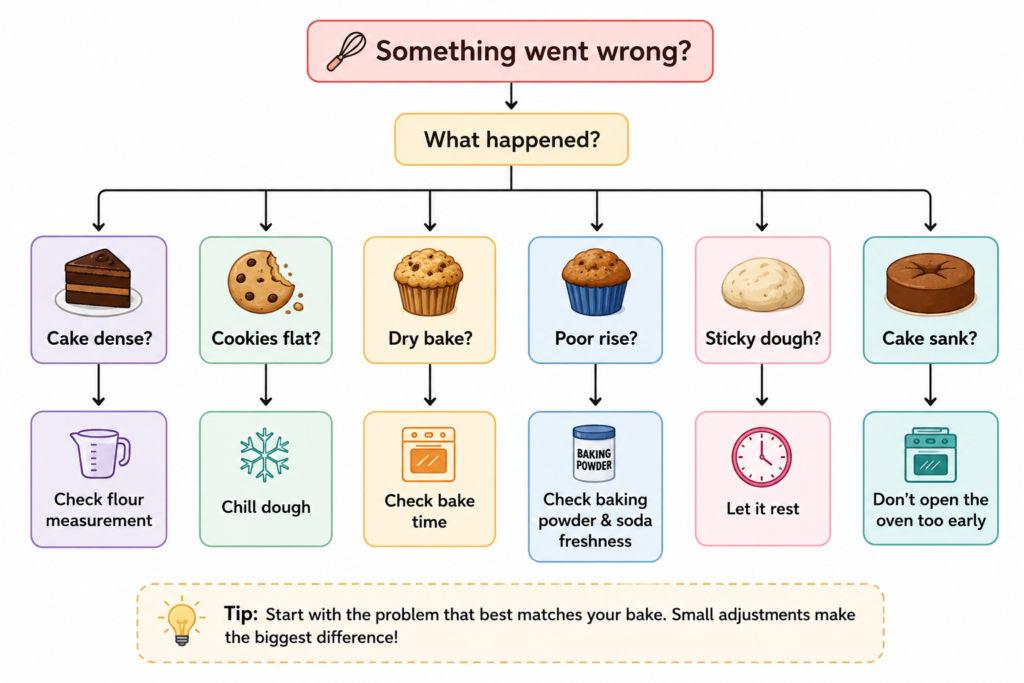
Quick Troubleshooting Guide
Use this quick guide to help identify what may have gone wrong and what to try the next time you bake.
| Problem | Likely Cause | Easy Fix |
|---|---|---|
| Dense cake | Too much flour | Measure flour using the spoon-and-level method or weigh it with a kitchen scale. |
| Dry muffins | Overbaked | Start checking for doneness a few minutes early and remove them as soon as they’re baked. |
| Flat cookies | Warm dough | Chill the dough for 20–30 minutes before baking. |
| Gummy center | Underbaked | Bake a little longer and test with a toothpick before removing from the oven. |
| Crumbly cake | Wrong egg replacer | Try a flax egg or vegan yogurt for better binding and moisture. |
| Tough texture | Overmixed batter | Mix only until the ingredients are just combined. |
| Poor rise | Expired baking powder or baking soda | Replace old leavening agents with fresh ones for a better rise. |
| Oily texture | Too much fat | Reduce the oil slightly or follow the recipe measurements more closely. |
Kitchen Tip: Before you blame the recipe, resist the urge to change several ingredients at once. Bake it again using the same recipe and adjust only one variable, such as the egg replacer, plant milk, or baking time. You’ll quickly discover what made the difference and get more consistent results with every batch.
Essential Vegan Baking Tips for Beginners
Keep these simple tips in mind every time you bake to improve your results and build confidence in the kitchen.
- Read recipes fully before starting: Know each step ahead of time so there are no surprises while you’re baking.
- Measure ingredients accurately: Precise measurements help create the right texture and consistency every time.
- Use fresh baking powder and baking soda: Fresh leavening agents help your baked goods rise properly.
- Keep pantry staples stocked: Having common vegan baking ingredients on hand makes baking easier and more convenient.
- Weigh ingredients when possible: A kitchen scale provides the most accurate and consistent measurements.
- Allow baked goods to cool properly: Cooling helps the texture set and makes cakes, cookies, and breads easier to slice or serve.
- Practice with simple recipes first: Mastering basic recipes builds confidence before moving on to more challenging bakes.
Vegan Baking Pantry Staples
Dry Ingredients
These pantry basics form the foundation of many vegan baking recipes.
- Flour: Provides structure for cakes, cookies, breads, and pastries.
- Sugar: Adds sweetness while also helping with browning and texture.
- Baking powder: Helps baked goods rise and creates a lighter crumb.
- Baking soda: Works with acidic ingredients to provide lift during baking.
- Cocoa powder: Adds rich chocolate flavor to cakes, brownies, and cookies.
- Cornstarch: Helps create softer textures and can improve the tenderness of some recipes.
Wet Ingredients
These ingredients add moisture, richness, and flavor to your baked goods.
- Plant milk: A versatile dairy-free liquid for mixing batters and doughs.
- Vegan butter: Adds richness and creates tender cakes and flavorful cookies.
- Neutral oil: Keeps baked goods moist without adding a strong flavor.
- Applesauce: Adds moisture and can replace eggs in many recipes.
- Vegan yogurt: Creates a soft, tender crumb while adding extra moisture.
- Vanilla extract: Enhances the flavor of almost any sweet baked treat.
Egg Replacements
Different egg substitutes work best for different recipes, so it’s helpful to keep more than one option available.
- Ground flaxseed: Perfect for making flax eggs that add binding and moisture.
- Chia seeds: Create a thick gel that works well in muffins, brownies, and quick breads.
- Aquafaba: The liquid from canned chickpeas that can replace eggs in cookies, meringues, and other light desserts.
- Commercial egg replacers: Convenient powdered mixes that provide consistent results in a wide variety of baked goods.
Must-Have Beginner Baking Tools
You don’t need a kitchen full of equipment to become a great vegan baker.
A few reliable tools can make baking easier, improve consistency, and help you get better results with every batch.
| Tool | Why It Helps |
|---|---|
| Digital kitchen scale | Provides the most accurate ingredient measurements for consistent baking. |
| Oven thermometer | Shows your oven’s true temperature so you can bake more accurately. |
| Silicone spatula | Gently folds batters without overmixing and helps scrape every bit from the bowl. |
| Measuring cups and spoons | Ensure consistent measurements for both dry and liquid ingredients. |
| Cooling rack | Allows air to circulate around baked goods, preventing soggy bottoms as they cool. |
These simple tools aren’t expensive, but they can make a noticeable difference in the texture, consistency, and overall success of your vegan baking.
Vegan Baking Success Checklist
Before you pop your next batch into the oven, take a quick look through this checklist to set yourself up for success.
- Read the recipe from start to finish.
- Measure flour correctly.
- Use room-temperature ingredients when needed.
- Check that your baking powder and baking soda are fresh.
- Preheat the oven completely.
- Avoid overmixing the batter.
- Check for doneness a few minutes before the suggested baking time.
- Let baked goods cool before slicing or serving.
Kitchen Confidence Tip: Don’t expect every batch to be perfect. Even experienced bakers have cakes that don’t rise as planned or cookies that spread a little too much. Every bake teaches you something new, and before long, you’ll naturally recognize when a batter looks right, when a cake is perfectly baked, and which ingredient swaps work best for your favorite recipes.
Final Thoughts
Vegan baking gets easier with every batch you make, especially once you understand what each ingredient does and how it affects the final result.
If something doesn’t turn out quite right, make one small change the next time instead of changing everything at once. That simple approach makes it much easier to learn what works.
Remember, even experienced bakers have the occasional baking mishap.
Every recipe is a chance to build your skills, grow your confidence, and enjoy even better cakes, cookies, muffins, and breads the next time you bake.
FAQs
Why is my vegan cake dense?
A dense vegan cake is often caused by too much flour, overmixing the batter, or using the wrong egg substitute. Measuring carefully and mixing just until combined usually improves the texture.
Why are my vegan cookies dry?
Dry cookies are commonly the result of overbaking, too much flour, or not enough moisture. Check them a few minutes before the suggested baking time and measure ingredients accurately.
Can I substitute almond milk for oat milk?
Yes, in most recipes you can. Keep in mind that almond milk is lighter, while oat milk is creamier, so the texture may vary slightly.
Why didn’t my vegan cake rise?
Your cake may not rise if your baking powder or baking soda is expired, the oven wasn’t fully preheated, or an acidic ingredient was left out of the recipe.
What is the easiest egg replacement for beginners?
A flax egg is one of the easiest and most reliable options for beginners. It works well in many cakes, muffins, cookies, and quick breads.
Why are my vegan muffins gummy inside?
Gummy muffins are usually caused by underbaking, too much moisture, or overmixing the batter. Bake until a toothpick comes out clean or with a few moist crumbs.
Can vegan butter replace regular butter in every recipe?
In most baking recipes, yes. For the best results, choose a stick-style vegan butter made specifically for baking rather than a spreadable tub variety.
Should I weigh ingredients instead of using measuring cups?
If possible, yes. A kitchen scale gives the most accurate measurements and helps you achieve more consistent baking results every time.
Hi, I’m Daisy Roots, the home cook and recipe developer behind this kitchen. I create simple, tested vegan recipes using everyday ingredients. Every dish is developed and cooked in my own kitchen, with clear steps to help you get reliable results every time. Thanks for stopping by — let’s cook something great!