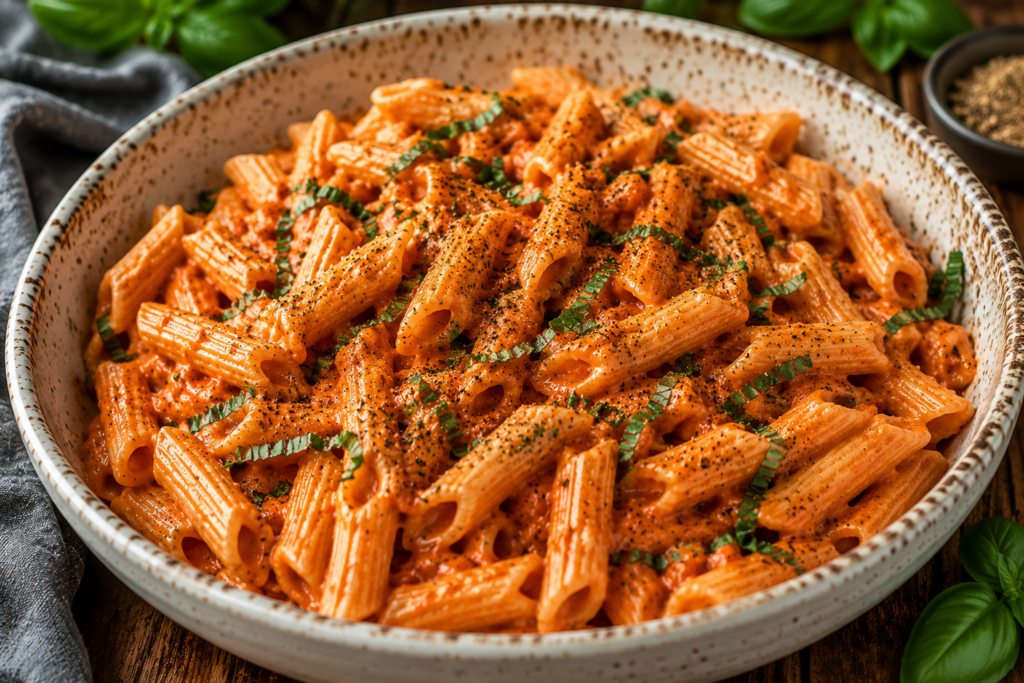
Few dishes are as comforting as a bowl of creamy tomato basil pasta.
The rich tomato sauce, fresh basil, and silky texture come together to create a meal that feels both simple and special.
This vegan version delivers all the creamy, satisfying flavor you expect without any dairy.
A handful of everyday ingredients transforms into a smooth, flavorful sauce that coats every bite of pasta perfectly.
Don’t worry if you’re new to vegan cooking because the steps are straightforward, and the results are delicious.
Recipe At a Glance
| Detail | Value |
|---|---|
| Prep Time | 10 Minutes |
| Cook Time | 20 Minutes |
| Total Time | 30 Minutes |
| Servings | 4 |
| Difficulty | Easy |
| Cuisine | Italian-Inspired |
| Diet | Vegan, Dairy-Free |
Why You’ll Love This Creamy Vegan Tomato Basil Pasta
- Ready in under 30 minutes – A quick and satisfying meal that’s perfect for busy weeknights.
- Simple pantry-friendly ingredients – Made with everyday staples that are easy to find and keep on hand.
- Dairy-free and vegan – Enjoy a creamy pasta dish without any dairy or animal-based ingredients.
- Rich and comforting without heavy cream – The sauce is smooth, flavorful, and satisfying without feeling overly heavy.
- Easily customizable – Add your favorite vegetables, protein, or spices to make it your own.
What Makes This Recipe So Creamy?
One of the best things about this pasta is its rich, velvety sauce.
Many people assume you need butter, cream, or cheese to create that smooth texture, but that’s not the case here.
With a few simple plant-based ingredients, you can make a sauce that is every bit as creamy and satisfying as a traditional version.
The combination of creamy ingredients, sweet tomatoes, and fresh basil creates a sauce that feels indulgent while keeping the ingredient list simple and approachable.
The Secret to a Dairy-Free Cream Sauce
A great dairy-free cream sauce starts with ingredients that blend smoothly and add body to the sauce.
The goal is to create a texture that coats the pasta evenly without feeling heavy or greasy.
This recipe gives you several options, so you can choose what works best for your taste and what you already have in your kitchen.
Cashews
Cashews are one of the most popular ingredients for creating creamy vegan sauces.
When soaked and blended, they transform into a smooth, silky cream with a mild flavor.
Because the flavor is so neutral, the tomatoes, garlic, and basil remain the stars of the dish.
Cashew cream also adds thickness to the sauce, helping it cling beautifully to every piece of pasta.
If you’re using cashews, blend them until completely smooth for the best texture.
A high-speed blender makes this easier, but a standard blender can work well too if the cashews have been soaked long enough.
Coconut Milk
Coconut milk is another excellent option for adding creaminess.
It creates a rich texture with very little effort and blends naturally into tomato-based sauces.
Full-fat coconut milk produces the creamiest results and gives the sauce a luxurious feel.
If you’re concerned about a coconut flavor, don’t worry too much.
The tomatoes, garlic, herbs, and seasonings help balance everything, leaving only a subtle richness behind.
This option is especially helpful when you want a creamy sauce without needing to soak or blend anything.
Plant-Based Cream Alternatives
Store-bought plant-based creams are a convenient choice when you’re short on time.
Many are made from oats, soy, almonds, or other plant-based ingredients and are designed specifically for cooking.
They blend smoothly into sauces and create a rich texture with very little effort.
If you’re new to vegan cooking, these products can make the process feel simple and stress-free.
Just stir them into the sauce and let everything simmer together until creamy and well combined.
How Tomatoes and Basil Create the Perfect Flavor Balance
A great pasta sauce is about more than just creaminess.
The flavors need balance so every bite tastes fresh, rich, and satisfying.
That’s where tomatoes and basil work their magic.
Together, they create a classic combination that never goes out of style.
Sweetness from Tomatoes
Tomatoes bring natural sweetness and depth to the sauce.
As they cook, their flavor becomes richer and more concentrated.
That gentle sweetness helps balance the savory ingredients and creates a fuller, more rounded flavor.
Using good-quality tomatoes can make a noticeable difference, so choose the best canned or fresh tomatoes available to you.
Even a simple can of crushed tomatoes can create incredible flavor when given a little time to simmer.
Freshness from Basil
Fresh basil adds a bright, fragrant note that lifts the entire dish.
Its fresh flavor keeps the sauce from feeling too heavy and adds a layer of freshness that pairs beautifully with tomatoes.
Adding basil near the end of cooking helps preserve its vibrant taste and aroma.
A small handful goes a long way.
The moment it hits the warm sauce, you’ll notice how it transforms the flavor.
Creaminess That Ties Everything Together
The creamy base brings all the flavors into one smooth, cohesive sauce.
It softens the acidity of the tomatoes while allowing the basil, garlic, and seasonings to shine.
Instead of tasting separate ingredients, you get a balanced bite where everything works together.
That’s what makes this pasta so comforting.
The sauce is creamy without being heavy, rich without being overwhelming, and full of flavor from the first bite to the last.
Ingredients You’ll Need
For the Pasta
- 12 ounces (340g) pasta of choice – Penne, rigatoni, fusilli, or fettuccine all work well.
- 1 tablespoon salt – For seasoning the pasta cooking water.
For the Creamy Tomato Basil Sauce
- 1 tablespoon olive oil
- 1 medium yellow onion, finely diced
- 4 garlic cloves, minced
- 1 can (28 ounces/800g) crushed tomatoes
- 1 cup (25g) fresh basil leaves, loosely packed
- 1 cup (150g) raw cashews, soaked or 1 cup vegan cooking cream
- 1 cup (240ml) vegetable broth
- 3 tablespoons nutritional yeast
- 1 teaspoon salt, or to taste
- ½ teaspoon black pepper, or to taste
Optional Add-Ins
- 2 cups (60g) fresh spinach
- 8 ounces (225g) mushrooms, sliced
- ¼ cup (35g) chopped sun-dried tomatoes
- ¼ cup (25g) vegan parmesan, for serving
- ¼ to ½ teaspoon red pepper flakes, for a little heat
| Servings | Pasta | Tomatoes | Cashews |
|---|---|---|---|
| 2 | 6 oz | 14 oz | ½ cup |
| 4 | 12 oz | 28 oz | 1 cup |
| 8 | 24 oz | 56 oz | 2 cups |
Ingredient Notes and Substitutions
Best Pasta Shapes for This Recipe
- Penne – The hollow center and ridged surface help capture plenty of creamy sauce in every bite.
- Rigatoni – A hearty pasta shape that holds up well to rich, creamy sauces.
- Fusilli – The twists and spirals trap the sauce beautifully, giving you lots of flavor throughout the dish.
- Fettuccine – A great choice if you prefer long pasta, as the creamy sauce coats the strands evenly.
Dairy-Free Cream Alternatives
- Cashew cream – Creates a rich, silky sauce with a neutral flavor that lets the tomatoes and basil shine.
- Coconut cream – Adds a luxurious texture and works especially well when you want extra richness.
- Oat cream – Smooth, mild, and creamy with no soaking or blending required.
- Store-bought vegan cream – A convenient option that blends easily into the sauce and saves preparation time.
Fresh vs. Dried Basil
- Fresh basil – Offers a bright, fragrant flavor that gives the sauce its classic tomato basil taste. Add it near the end of cooking for the freshest flavor.
- Dried basil – Has a more concentrated, earthy flavor and works well when fresh basil is unavailable.
- Flavor differences – Fresh basil tastes lighter and more vibrant, while dried basil provides a deeper, more subtle herbal flavor.
- When to use each – Use fresh basil whenever possible for the best flavor. If using dried basil, substitute about 1 tablespoon dried basil for ¼ cup fresh basil and add it while the sauce simmers.
| If You Don’t Have | Use Instead |
|---|---|
| Cashews | Oat Cream |
| Fresh Basil | Dried Basil |
| Crushed Tomatoes | Tomato Puree |
| Nutritional Yeast | Vegan Parmesan |
| Penne | Rigatoni or Fusilli |
Kitchen Tools Needed
- Large pot – Used for boiling the pasta until perfectly al dente.
- Blender – Essential for blending the cashews and broth into a smooth, creamy sauce. A high-speed blender works best, but a standard blender can also do the job.
- Skillet or saucepan – Used to sauté the onions and garlic and simmer the tomato basil sauce until rich and flavorful.
- Measuring cups and spoons – Help ensure accurate ingredient amounts for consistent results every time.
How to Make Creamy Vegan Tomato Basil Pasta
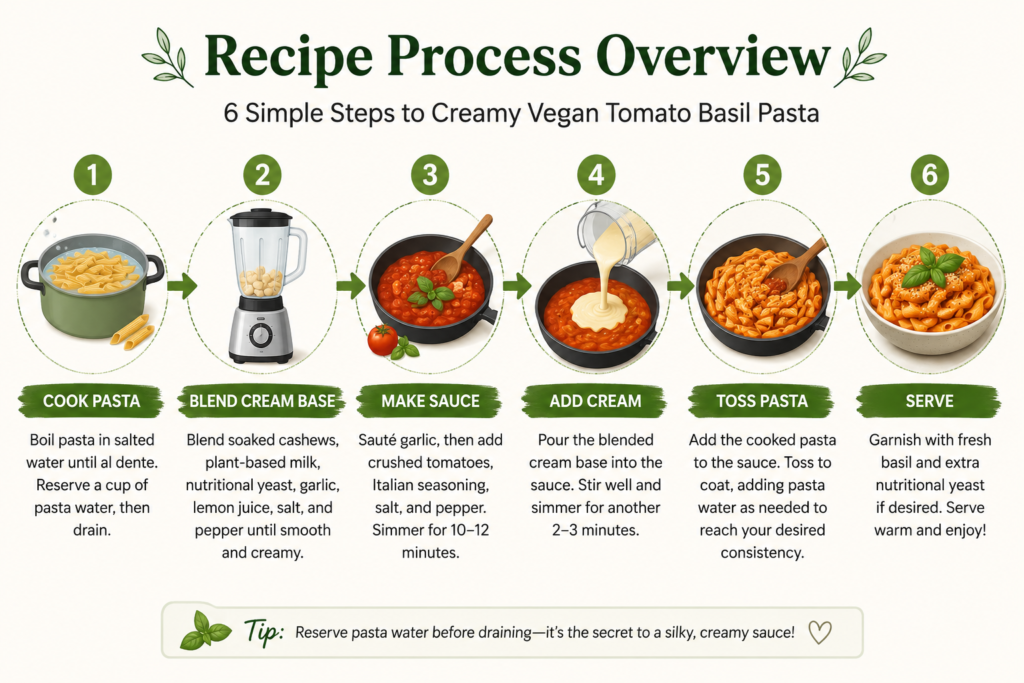
Step 1: Cook the Pasta
Fill a large pot with water and bring it to a rolling boil over high heat.
Once the water is boiling, add the salt.
Properly salted water is one of the easiest ways to add flavor to pasta from the start.
Add the pasta and stir for the first minute to prevent sticking.
Cook according to the package directions until al dente, which means the pasta should be tender but still have a slight bite in the center.
Before draining, reserve about 1 cup of the pasta water.
This starchy water can help loosen the sauce later if needed.
Drain the pasta and set it aside while you prepare the sauce.
Step 2: Prepare the Cream Base
If you’re using cashews, make sure they have been soaked until softened.
Add the soaked cashews and vegetable broth to a blender.
Blend on high speed until completely smooth and creamy.
The mixture should look silky and free of any small pieces.
If it seems too thick to blend easily, add a splash of extra broth.
Set the cream mixture aside once it’s smooth.
This simple step creates the rich texture that makes the sauce so satisfying.
Step 3: Make the Tomato Basil Sauce
Heat the olive oil in a large skillet or saucepan over medium heat.
Add the diced onion and cook for about 4 to 5 minutes until softened.
Stir occasionally to prevent browning.
Add the minced garlic and cook for about 30 seconds.
The garlic should become fragrant but not dark in color.
Pour in the crushed tomatoes and stir well to combine.
Add the nutritional yeast, salt, and black pepper.
Reduce the heat to a gentle simmer.
Let the sauce cook for about 10 minutes.
This allows the flavors to develop and gives the tomatoes time to become slightly richer and sweeter.
Step 4: Combine the Cream and Sauce
Pour the prepared cashew cream into the tomato sauce.
Stir slowly until the mixture becomes smooth and evenly combined.
Add the fresh basil and mix it into the sauce.
The basil will soften quickly and release its fresh aroma into the sauce.
Continue simmering for another 3 to 5 minutes.
During this time, the sauce will thicken slightly, and the flavors will come together beautifully.
Give the sauce a taste and adjust the seasoning if needed.
A little extra salt or pepper can make a big difference.
Step 5: Toss Everything Together
Add the cooked pasta directly to the skillet with the sauce.
Use a spoon or tongs to gently toss everything together.
Make sure every piece of pasta is coated in the creamy tomato basil sauce.
If the sauce feels too thick, add a small splash of the reserved pasta water.
Stir again until the sauce reaches your preferred consistency.
The pasta should look glossy and well coated, not dry or sticky.
Step 6: Serve and Garnish
Divide the pasta among serving bowls while it’s still hot.
Top with extra fresh basil for a burst of color and flavor.
Sprinkle vegan parmesan over each serving if desired.
Finish with a few twists of fresh cracked black pepper.
Serve immediately and enjoy while the sauce is at its creamiest.
Every bite should be rich, comforting, and full of tomato, basil, and creamy goodness.
Expert Tips for the Best Vegan Tomato Basil Pasta
Don’t Overcook the Pasta
Cook the pasta until it reaches al dente texture.
This means it should be tender but still have a slight firmness when you bite into it.
Pasta continues to cook a little when it’s mixed with the hot sauce.
If it’s already very soft when drained, it can become mushy by the time you’re ready to serve.
Check the pasta a minute or two before the package suggests.
A quick taste test is the easiest way to know when it’s ready.
Reserve Pasta Water
Before draining the pasta, save about 1 cup of the cooking water.
This simple step can help you adjust the sauce later if needed.
Pasta water contains starch released during cooking.
That starch helps the sauce cling to the pasta and creates a smoother, more cohesive texture.
If your sauce becomes too thick, add a small splash of pasta water at a time until it reaches the consistency you like.
A little goes a long way.
Blend the Sauce Until Silky Smooth
If you’re using cashews, take an extra minute to blend them thoroughly.
A smooth cream base creates a much better final texture.
The sauce should look silky and uniform, with no visible bits of cashew remaining.
If your blender is struggling, add a little more broth to help everything blend more easily.
The smoother the cream base, the creamier your finished pasta will be.
Add Basil at the End for Maximum Flavor
Fresh basil tastes best when it isn’t cooked for too long.
Adding it near the end of the cooking process helps preserve its bright flavor and aroma.
If basil simmers for too long, some of its fresh character can fade.
Stir it into the sauce during the final few minutes and let the heat gently release its flavor.
You’ll notice the difference right away.
Taste and Adjust Seasoning
One of the easiest ways to improve any pasta dish is to taste it before serving.
Tomatoes can vary in sweetness and acidity, so the sauce may need a small adjustment.
A pinch more salt can make the flavors pop.
An extra crack of black pepper can add a little more depth.
If you enjoy a touch of heat, a sprinkle of red pepper flakes works beautifully.
Trust your taste buds.
My Best Texture Tips
After making this recipe multiple times, these are the small details that consistently produce the creamiest, smoothest results.
- Soak cashews for at least 4 hours – Softened cashews blend much more smoothly and create a silkier sauce.
- Blend longer than you think you need to – An extra minute of blending can make the difference between a good sauce and a restaurant-quality texture.
- Use full-fat coconut milk when substituting for cashews – It provides a richer, creamier consistency than light coconut milk.
- Stir the pasta into the sauce immediately after draining – Warm pasta absorbs the sauce better and helps everything come together evenly.
- Add pasta water gradually – Start with a small splash, stir well, and add more only if needed to avoid thinning the sauce too much.
- Let the finished pasta rest for 1 to 2 minutes before serving – This gives the sauce time to cling to the pasta and develop an even creamier texture.
Common Mistakes to Avoid
- Grainy Sauce – Blend the cashews thoroughly until completely smooth to achieve a silky, creamy texture.
- Sauce Too Thick – Add a splash of reserved pasta water or vegetable broth to loosen the sauce as needed.
- Sauce Too Thin – Let the sauce simmer a few extra minutes to reduce and thicken naturally.
- Bland Flavor – Taste before serving and adjust the salt, pepper, or seasonings to bring the flavors to life.
- Overcooked Pasta – Cook the pasta just until al dente so it stays firm and holds up well in the sauce.
| Problem | Cause | Fix |
|---|---|---|
| Sauce Grainy | Cashews not blended enough | Blend longer |
| Sauce Too Thick | Too much reduction | Add pasta water |
| Sauce Too Thin | Excess liquid | Simmer longer |
| Sauce Too Tangy | Acidic tomatoes | Add a pinch of sugar |
| Pasta Sticking | Not enough stirring | Toss immediately |
Delicious Variations to Try
Spicy Vegan Tomato Basil Pasta
If you enjoy a little heat, this variation is an easy upgrade.
Add red pepper flakes when sautéing the garlic and onions.
The heat will infuse into the sauce as it simmers.
Start with a small amount and increase it to suit your taste.
For even more flavor, stir in a spoonful of chili paste or top the finished pasta with sliced fresh chili peppers.
The spicy kick pairs beautifully with the creamy sauce and sweet tomatoes.
Roasted Vegetable Version
Roasted vegetables add extra texture and rich flavor to the dish.
Bell peppers, zucchini, mushrooms, broccoli, and eggplant all work well.
Toss the vegetables with a little olive oil, then roast them until tender and lightly browned.
The roasting process brings out their natural sweetness and adds depth to the pasta.
Stir them into the finished sauce or spoon them over the top before serving.
This variation is a great way to use vegetables you already have in the refrigerator.
| Vegetable | Roast Time |
|---|---|
| Broccoli | 20 Minutes |
| Bell Peppers | 20 Minutes |
| Zucchini | 15 Minutes |
| Mushrooms | 20 Minutes |
| Eggplant | 25 Minutes |
Protein-Packed Version
For a heartier meal, add your favorite plant-based protein.
Crispy tofu is an excellent choice because it absorbs the flavors of the sauce while adding a satisfying texture.
Cooked lentils also blend well into the sauce and make the dish feel even more substantial.
You can also use vegan chicken-style strips, tempeh, or your preferred meat alternative.
Add the protein near the end of cooking so it stays tender and flavorful.
Gluten-Free Version
Making this recipe gluten-free is simple.
Just swap the regular pasta for your favorite gluten-free variety.
Brown rice pasta, chickpea pasta, lentil pasta, and corn-based pasta are all great options.
Cook gluten-free pasta according to the package directions, as cooking times can vary.
Keep an eye on it while it cooks because some gluten-free pastas soften more quickly than traditional pasta.
The creamy sauce works wonderfully with almost any gluten-free pasta shape.
One-Pot Vegan Tomato Pasta
When you want fewer dishes to wash, try a one-pot version.
Add the pasta, crushed tomatoes, vegetable broth, seasonings, and onion directly to a large pot.
Bring everything to a gentle boil and stir occasionally as the pasta cooks.
As the pasta releases starch, it naturally helps thicken the sauce.
Once the pasta is tender, stir in the cream base and fresh basil.
The result is a rich, flavorful meal with minimal cleanup and all the comforting flavors of the original recipe.
| Flavor Style | What to Add |
|---|---|
| Spicy | Red Pepper Flakes |
| Smoky | Smoked Paprika |
| Herb-Forward | Extra Basil and Parsley |
| Cheesy | More Nutritional Yeast |
| Mediterranean | Olives and Sun-Dried Tomatoes |
What to Serve with Creamy Tomato Basil Pasta
- Vegan Garlic Bread – Crispy, buttery, and perfect for soaking up every last bit of the creamy tomato basil sauce.
- Fresh Green Salad – A light and refreshing side that balances the richness of the pasta.
- Roasted Vegetables – Tender, caramelized vegetables add extra flavor, texture, and color to the meal.
- Vegan Caesar Salad – A creamy, crunchy salad that pairs beautifully with the comforting flavors of the pasta.
Storage and Reheating Instructions
This pasta stores surprisingly well, making it a great option for leftovers and meal prep.
The flavors often become even more developed after a day in the refrigerator.
How to Store Leftovers
Allow the pasta to cool for about 20 to 30 minutes before storing.
Avoid leaving it at room temperature for extended periods.
Transfer the cooled pasta to an airtight container.
A well-sealed container helps keep the pasta fresh and prevents it from absorbing other flavors from the refrigerator.
If possible, store the pasta in shallow containers.
This helps it cool evenly and makes reheating quicker later on.
Place the container in the refrigerator as soon as the pasta has cooled.
How Long It Lasts
Stored properly in the refrigerator, this pasta will stay fresh for up to 4 days.
For the best flavor and texture, try to enjoy it within the first 2 to 3 days.
The sauce may thicken slightly as it sits.
This is completely normal and easy to fix when reheating.
Before serving leftovers, check for any unusual smell or appearance.
If anything seems off, it’s best to discard it.
Best Reheating Methods
The stovetop is the best way to reheat this pasta.
Place the pasta in a skillet or saucepan over medium-low heat.
Add a splash of vegetable broth, water, or plant-based milk.
This helps loosen the sauce and restore its creamy consistency.
Stir occasionally until the pasta is heated through.
If you’re using a microwave, transfer a portion to a microwave-safe bowl.
Add a small splash of liquid before heating.
Cover loosely and heat in short intervals, stirring between each one.
This prevents the sauce from drying out and helps it warm evenly.
Can You Freeze It?
Yes, this pasta can be frozen if you want to save it for later.
Allow it to cool completely before transferring it to freezer-safe containers or bags.
Leave a little space at the top of the container to allow for expansion during freezing.
Freeze for up to 2 months for the best quality.
When you’re ready to enjoy it, thaw the pasta overnight in the refrigerator.
Reheat gently on the stovetop with a splash of broth, water, or plant-based milk.
The sauce may separate slightly after freezing, but a good stir while reheating usually brings it back together.
A little extra basil added before serving can help freshen the flavors and make the leftovers taste almost like a freshly made batch.
Meal Prep Tips
- Make the sauce ahead – Prepare the tomato basil sauce up to 3 days in advance and store it in the refrigerator until needed.
- Batch-cook pasta – Cook a larger quantity of pasta at once to make quick meals throughout the week.
- Portion for lunches – Divide the pasta into individual containers for easy grab-and-go lunches or dinners.
- Freezer-friendly options – Freeze the sauce separately or freeze fully assembled portions for convenient future meals.
Make It Ahead Timeline
| Time | Task |
|---|---|
| Night Before | Soak the cashews to ensure they blend into a smooth, creamy sauce. |
| Night Before | Prepare the tomato basil sauce and store it in an airtight container in the refrigerator. |
| Morning | Cook the pasta if meal prepping for lunches or quick dinners later in the day. |
| Dinner Time | Reheat the sauce, combine with the pasta, and add a splash of pasta water if needed to refresh the texture. |
Nutritional Benefits
Tomatoes
Tomatoes are the heart of this recipe and provide much of its rich flavor.
They are a good source of vitamin C, which plays an important role in overall health.
Tomatoes also contain lycopene, a natural plant compound that gives them their vibrant red color.
Cooking tomatoes can make lycopene easier for the body to absorb.
Beyond nutrition, tomatoes add natural sweetness and depth that help create a balanced sauce.
Fresh Basil
Fresh basil does much more than add aroma and flavor.
It contains vitamins and plant compounds that contribute to its nutritional value.
Even a small amount can add freshness and brightness to the dish.
Its vibrant flavor helps balance the richness of the creamy sauce.
Fresh basil also adds color, making the finished pasta look as appealing as it tastes.
Cashews
Cashews are responsible for much of the creaminess in this recipe.
They provide healthy fats that help create a smooth and satisfying sauce.
Cashews also contain minerals such as magnesium and copper.
Their mild flavor makes them an excellent base for dairy-free sauces.
Because they blend so smoothly, they create richness without overpowering the other ingredients.
Nutritional Yeast
Nutritional yeast adds a savory, cheese-like flavor that works beautifully in vegan recipes.
It helps give the sauce extra depth and complexity.
Many varieties are fortified with B vitamins, making them a popular ingredient in plant-based cooking.
A small amount can make a noticeable difference in flavor.
It’s one of those ingredients that quietly brings everything together while enhancing the overall taste of the dish.
Recipe Developer’s Note
After testing this recipe, I’ve found that the biggest difference between a good sauce and a great one comes down to blending and consistency.
For the smoothest, creamiest texture, blend the cashew mixture until it is completely silky before adding it to the tomatoes.
If the sauce seems too thick after sitting for a few minutes, don’t worry.
A small splash of reserved pasta water will loosen it up and help it cling beautifully to the pasta.
I also recommend adding the fresh basil near the end of cooking rather than at the beginning.
This keeps its flavor bright and fresh, giving the finished dish a more vibrant tomato-basil taste.
Final Thoughts
This creamy vegan tomato basil pasta is the kind of recipe that delivers big flavor with simple ingredients and straightforward steps.
The rich, creamy sauce, sweet tomatoes, and fresh basil come together to create a comforting meal that’s easy enough for busy weeknights and special enough to serve to family and friends.
Don’t be afraid to make it your own.
Try different vegetables, add your favorite plant-based protein, or adjust the seasonings to suit your taste.
FAQs
Can I make this recipe nut-free?
Yes. Replace the cashew cream with oat cream, coconut cream, or your favorite nut-free vegan cooking cream.
Can I use canned tomatoes?
Absolutely. Canned crushed tomatoes are convenient, consistent, and work perfectly in this recipe.
What is the best vegan cream substitute?
Cashew cream provides the richest texture, but oat cream and vegan cooking cream are excellent alternatives.
Can I make this ahead of time?
Yes. The sauce can be prepared up to 3 days in advance and stored in the refrigerator until you’re ready to use it.
How do I make the sauce thicker?
Let the sauce simmer a few extra minutes, or add a little more cashew cream to increase its thickness.
Can I freeze creamy vegan pasta?
Yes. Store it in a freezer-safe container and freeze for up to 2 months for the best quality.
Which pasta shape works best?
Penne, rigatoni, and fusilli are great choices because they hold the creamy sauce well, but any pasta you enjoy will work.
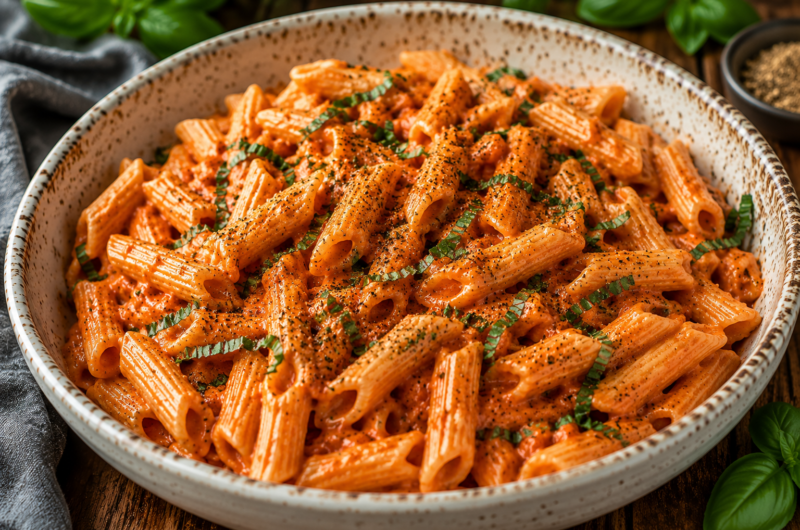
This Creamy Vegan Tomato Basil Pasta Is Pure Comfort Food
Course: Vegan Dinner RecipesCuisine: ItalianDifficulty: Easy4
servings10
minutes20
minutes30
minutesA rich and creamy vegan tomato basil pasta made with simple ingredients, fresh basil, and a silky dairy-free sauce. Perfect for busy weeknights and ready in just 30 minutes.
Ingredients
12 oz (340g) pasta of choice
1 tbsp olive oil
1 medium onion, diced
4 garlic cloves, minced
1 can (28 oz) crushed tomatoes
1 cup raw cashews, soaked
1 cup vegetable broth
3 tbsp nutritional yeast
1 cup fresh basil, chopped
1 tsp salt
½ tsp black pepper
Directions
- Cook the pasta in salted boiling water until al dente. Reserve 1 cup of pasta water, then drain.
- Blend the soaked cashews and vegetable broth until completely smooth.
- Heat olive oil in a large skillet and sauté the onion until softened. Add the garlic and cook for 30 seconds.
- Stir in the crushed tomatoes, nutritional yeast, salt, and pepper. Simmer for 10 minutes.
- Add the cashew cream and fresh basil. Stir well and simmer for 3 to 5 minutes until creamy.
- Toss the cooked pasta with the sauce until evenly coated. Add reserved pasta water as needed to adjust the consistency.
- Serve warm with extra basil, vegan parmesan, and freshly cracked black pepper if desired.
Notes
- Soak cashews for at least 4 hours or use hot water for a quick 30-minute soak.
- Add pasta water gradually to achieve your preferred sauce consistency.
- Store leftovers in an airtight container in the refrigerator for up to 4 days.
- For a nut-free version, substitute the cashews with oat cream or vegan cooking cream.
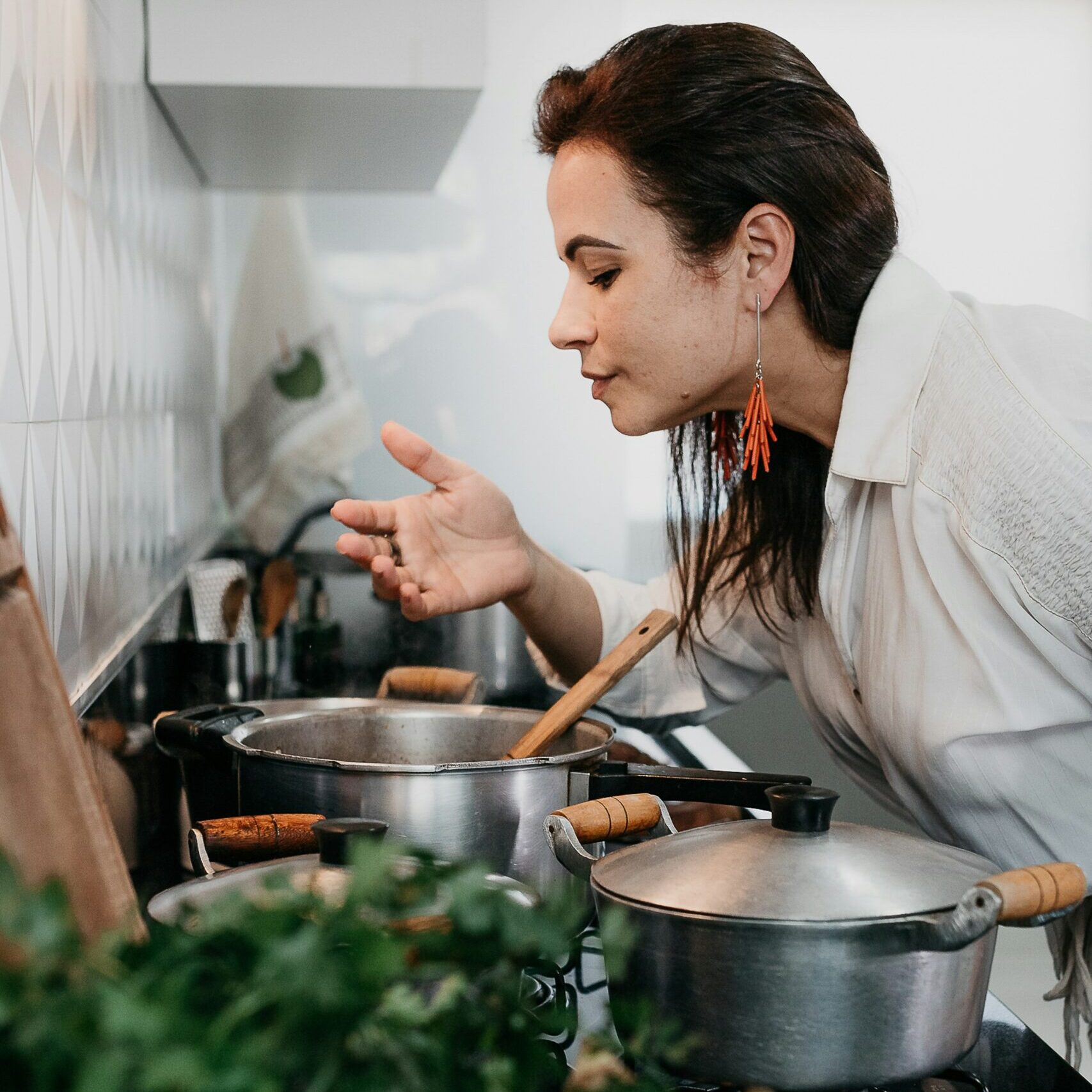
Hi, I’m Daisy Roots, the home cook and recipe developer behind this kitchen. I create simple, tested vegan recipes using everyday ingredients. Every dish is developed and cooked in my own kitchen, with clear steps to help you get reliable results every time. Thanks for stopping by — let’s cook something great!