The right kitchen tools can make vegan cooking faster, easier, and a lot more enjoyable.
You don’t need a drawer full of expensive gadgets to prepare delicious meals.
A few reliable essentials are enough to handle everything from chopping vegetables to blending creamy sauces and baking homemade treats.
In this guide, you’ll find practical tools that help with everyday cooking, meal prep, and baking without adding unnecessary clutter to your kitchen.
If you’re just getting started, don’t worry because you don’t have to buy everything at once.
Start with the basics, add new tools as you need them, and you’ll soon have a kitchen that’s ready for all your favorite vegan recipes.
Why the Right Kitchen Tools Matter
Save Time During Meal Prep
Meal prep becomes much faster when you have tools designed for the job.
A sharp chef’s knife slices vegetables cleanly instead of crushing them, making chopping quicker and more enjoyable.
A sturdy cutting board gives you a safe, stable surface so you can work with confidence.
Simple tools like a vegetable peeler, box grater, and kitchen shears also help you prepare ingredients in just a few minutes instead of wrestling with them.
Good tools can also reduce the number of dishes you use.
For example, a large mixing bowl can be used to toss salads, mix dough, or coat vegetables with seasoning before roasting.
A silicone spatula helps scrape every bit of sauce or batter from the bowl, which means less waste and less time spent washing up afterward.
Improve Cooking Results
The right equipment helps your recipes turn out more consistently.
Accurate measuring cups, spoons, and a digital kitchen scale make baking much more reliable because your ingredient amounts stay the same every time.
This is especially helpful when making vegan cakes, muffins, and breads, where small measurement changes can affect the final texture.
Quality cookware also makes a noticeable difference.
A heavy saucepan heats evenly, helping soups and sauces cook gently without burning on the bottom.
A good nonstick skillet makes it easier to cook tofu until it’s golden and crisp while keeping delicate foods from sticking.
Even something as simple as a sturdy whisk can help you create smoother dressings, lump-free batters, and creamy sauces with very little effort.
Reduce Food Waste
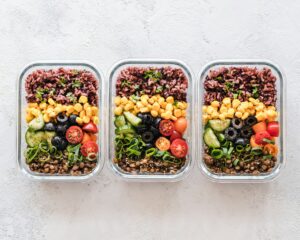
Having the right storage containers makes it much easier to keep ingredients fresh after grocery shopping or meal prep.
Glass containers with tight-fitting lids are great for storing chopped vegetables, cooked grains, leftovers, and homemade sauces.
Clear containers also let you see what’s inside at a glance, making it less likely that food gets forgotten in the back of the fridge.
Simple storage habits can help fresh herbs, leafy greens, and prepared vegetables stay usable for longer.
That means fewer last-minute trips to the store and fewer ingredients ending up in the compost bin.
The right prep tools also help reduce waste while you’re cooking.
A sharp knife, peeler, and grater let you remove only what you need, so you get more from every carrot, potato, zucchini, or block of tofu.
Small improvements like these quickly add up, making everyday vegan cooking more efficient, more enjoyable, and more rewarding.
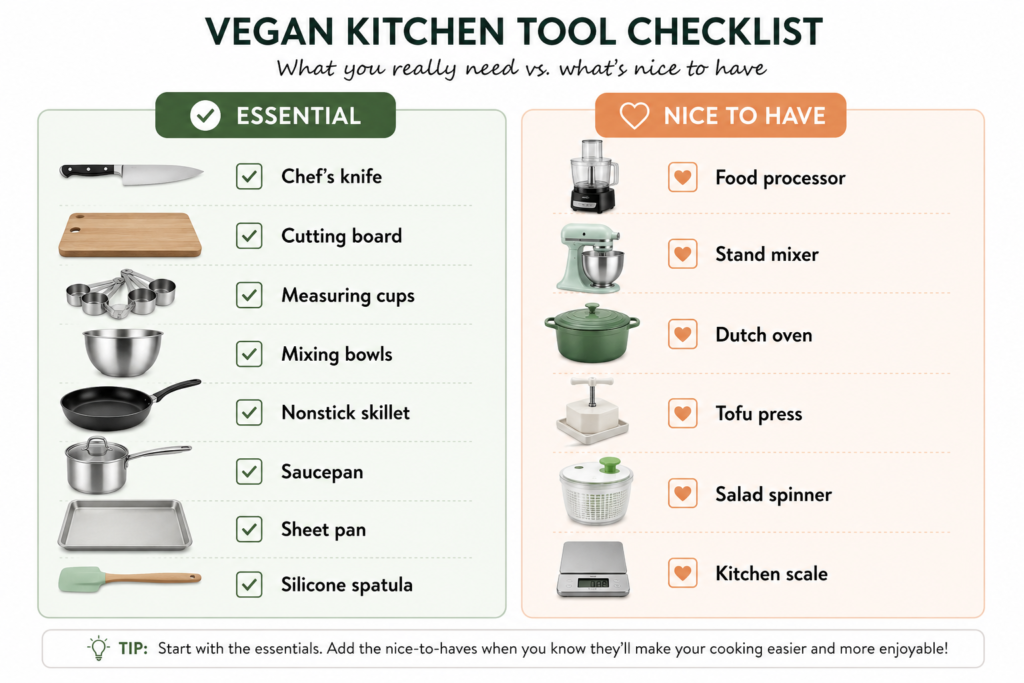
Essential Kitchen Prep Tools
These are the tools you’ll reach for almost every time you cook.
If you’re building your kitchen from scratch, this is the best place to start because each item can be used in dozens of recipes.
Chef’s Knife
A good chef’s knife is the most important tool in any vegan kitchen.
Since vegan cooking often involves preparing plenty of fresh vegetables, herbs, fruits, and tofu, you’ll likely use this knife every day.
A sharp knife makes chopping quicker, gives you cleaner cuts, and feels much easier to control than a dull one.
You don’t need the most expensive knife on the shelf.
A comfortable, well-balanced knife that holds its edge will serve you well for years with proper care.
What to Look For
When shopping for a chef’s knife, focus on quality rather than price.
Look for these features:
- A comfortable handle that feels secure in your hand.
- A blade between 8 and 10 inches for everyday cooking.
- Good balance between the blade and handle.
- Stainless steel for durability and easy maintenance.
- A knife that feels neither too heavy nor too light.
If possible, hold the knife before buying it.
The best knife is the one that feels comfortable and gives you confidence while chopping.
Basic Care Tips
Keeping your knife sharp is easier than replacing one that’s damaged.
Wash it by hand instead of putting it in the dishwasher, as harsh detergents and high heat can dull the blade over time.
Dry it immediately after washing to help keep the blade in great condition.
Store it safely in a knife block, on a magnetic strip, or with a blade guard to protect both the knife and your fingers.
Cutting Boards
A sturdy cutting board protects your countertops and provides a stable surface for preparing ingredients.
Having at least two cutting boards can also help keep your kitchen organized.
Wood vs. Plastic
Both materials work well, and each has its strengths.
| Wood Cutting Boards | Plastic Cutting Boards |
|---|---|
| Gentle on knife blades | Lightweight and affordable |
| Durable with proper care | Easy to clean |
| Attractive enough for serving | Often dishwasher safe |
| Requires occasional oiling | Available in different colors for easy organization |
Many home cooks enjoy using a wooden board for everyday vegetable prep because it feels sturdy and comfortable.
Plastic boards are handy when you want something lightweight that’s easy to wash after messy jobs.
Using Separate Boards
Keeping separate boards for fresh produce and baking ingredients helps keep flavors from mixing.
For example, you can use one board for chopping onions, garlic, and vegetables, and another for slicing bread, fruit, or preparing baked treats.
This simple habit also makes cleanup easier since you won’t have to wash the same board between every task.
Cleaning Tips
Wash cutting boards with warm, soapy water after each use.
Dry them thoroughly before storing to help them last longer.
If you use a wooden board, apply food-safe mineral oil every so often to prevent it from drying out and cracking.
Vegetable Peeler
A vegetable peeler may seem simple, but it’s one of the biggest time-savers in the kitchen.
A sharp peeler removes thin, even layers, helping you waste less while working much faster than using a knife.
You’ll find yourself reaching for it often when preparing:
- Carrots
- Potatoes
- Sweet potatoes
- Zucchini
- Cucumbers
- Apples and pears for desserts
Choose a peeler with a comfortable handle that fits naturally in your hand.
Box Grater
A box grater is much more versatile than many people realize.
Its different sides allow you to handle several prep tasks with one tool.
You can use it for:
- Shredding carrots, zucchini, cabbage, and potatoes.
- Grating vegan cheese for pizzas, pasta, and casseroles.
- Finely grating garlic or ginger into sauces and marinades.
- Zesting lemons, limes, and oranges to brighten baked goods and dressings.
After using a grater with sticky foods like vegan cheese, soaking it in warm, soapy water for a few minutes makes cleaning much easier.
Kitchen Shears
Kitchen shears are one of those tools you don’t realize you need until you start using them regularly.
They often save time because they’re faster than reaching for a knife and cutting board for small tasks.
You’ll find them useful for:
- Snipping fresh herbs directly into soups, salads, and sauces.
- Opening food packages with ease.
- Trimming green onions, asparagus, or leafy vegetables.
- Cutting parchment paper to fit baking trays.
- Chopping dried fruit for cookies or granola.
Look for kitchen shears that come apart for cleaning if possible.
Being able to separate the blades makes it much easier to wash away small bits of herbs or vegetables and helps keep the shears in excellent condition for years.
Measuring and Baking Essentials
Baking is all about consistency.
Unlike everyday cooking, where you can often adjust ingredients as you go, baking works best when measurements are accurate from the start.
These simple tools help your recipes turn out the way you expect, whether you’re making muffins, cookies, cakes, or homemade bread.
Measuring Cups
Measuring cups are a kitchen staple, and it’s worth having both dry and liquid sets.
Although they look similar, each type is designed for a different job.
Dry vs. Liquid Measuring Cups
Dry measuring cups are meant for ingredients like flour, sugar, cocoa powder, oats, and chopped nuts.
You fill them to the top and level them off with the flat edge of a knife for an accurate measurement.
Liquid measuring cups have extra space above the measurement line, making it easy to pour without spilling.
They’re perfect for plant-based milk, vegetable broth, oil, maple syrup, and other liquids.
Using the correct measuring cup may seem like a small detail, but it helps recipes come out more consistently, especially when baking.
Measuring Spoons
Measuring spoons are just as important as measuring cups.
They’re used for smaller amounts of ingredients that can have a big impact on flavor and texture.
You’ll use them for baking powder, baking soda, salt, vanilla extract, cinnamon, cocoa powder, spices, and other seasonings.
For the best results, fill each spoon completely and level off dry ingredients when needed.
Keeping a complete set together also saves time when following recipes.
Digital Kitchen Scale
If you enjoy baking, a digital kitchen scale is one of the best upgrades you can make.
Measuring ingredients by weight is much more accurate than measuring by volume because ingredients like flour can easily become packed into a measuring cup.
Even a small difference can change the texture of cakes, cookies, and bread.
A kitchen scale removes the guesswork and helps you get consistent results every time.
It’s also useful for dividing dough evenly, portioning cookie dough, measuring oats, nuts, seeds, and other ingredients with precision.
Many digital scales include a tare button that resets the display to zero after you place a bowl on top.
This lets you add several ingredients to the same bowl without doing extra math or creating more dishes to wash.
Mixing Bowls
A good set of mixing bowls is something you’ll use almost every time you cook or bake.
Having several sizes makes preparing multiple ingredients much easier.
A practical set usually includes:
- Small bowl (1–2 quarts): Mixing spices, sauces, and dressings.
- Medium bowl (3–4 quarts): Cake batters, cookie dough, and salads.
- Large bowl (5–8 quarts): Bread dough, large batches of vegetables, and meal prep.
Stainless Steel vs. Glass
Both materials are excellent choices, and many home cooks like having a mix of each.
| Stainless Steel Bowls | Glass Bowls |
|---|---|
| Lightweight and durable | Great for seeing ingredients as you mix |
| Easy to carry with one hand | Can be used in the microwave if needed |
| Won’t stain or absorb odors | Ideal for melting ingredients over warm water |
| Excellent for everyday prep | Slightly heavier but very sturdy |
Whichever you choose, bowls with wide openings give you more room to stir, whisk, and fold ingredients comfortably.
Silicone Spatulas
A silicone spatula is one of the most versatile tools in the kitchen.
Its flexible edge reaches every corner of a bowl, so very little batter or sauce goes to waste.
You’ll use it for:
- Folding delicate cake and muffin batters.
- Scraping bowls clean.
- Stirring sauces while they cook.
- Mixing nut butters and thick spreads.
- Transferring smoothies, hummus, and dips into storage containers.
Choose a heat-resistant silicone spatula so you can safely use it while cooking on the stovetop as well as during baking.
Whisk
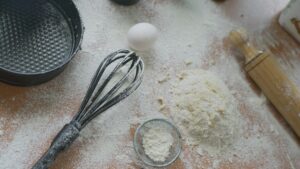
A whisk makes mixing quick and effortless while helping create smooth, lump-free mixtures.
It’s a simple tool, but it plays an important role in both cooking and baking.
You’ll reach for it when:
- Mixing homemade salad dressings.
- Preparing pancake, waffle, cake, and muffin batters.
- Blending sauces and gravies until smooth.
- Combining dry baking ingredients evenly.
- Whipping aquafaba into a light, fluffy foam for vegan meringues, mousses, and other desserts.
A medium-sized balloon whisk is a great all-purpose choice for most home kitchens.
It handles everyday mixing jobs with ease and takes up very little storage space, making it a practical addition for beginners and experienced cooks alike.
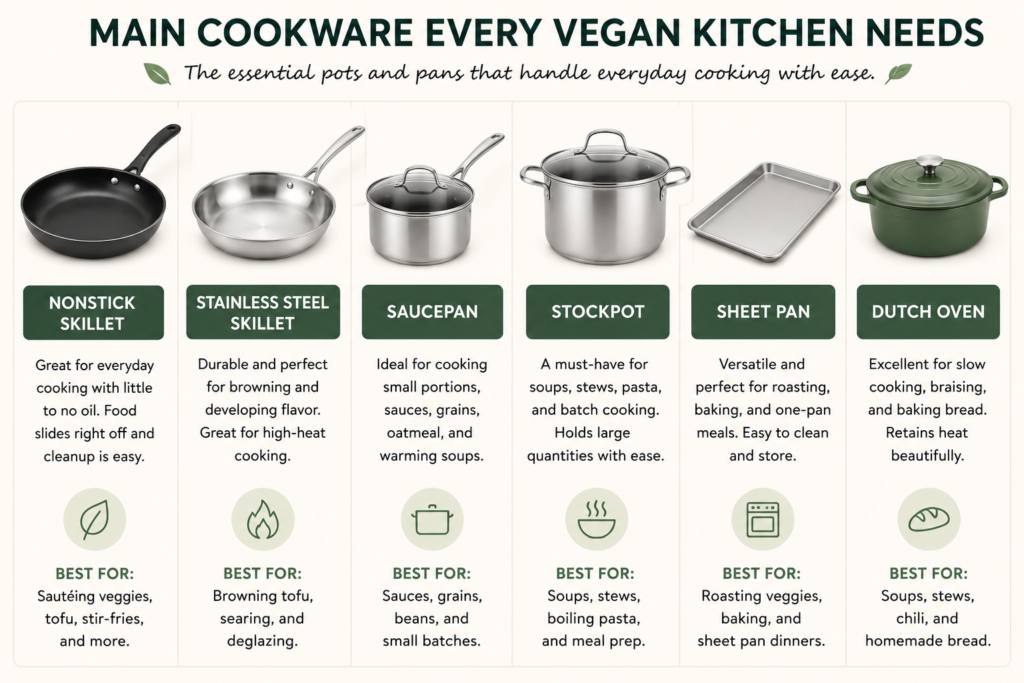
Cookware Every Vegan Kitchen Needs
The right cookware makes everyday cooking simpler and more enjoyable.
You don’t need a cabinet full of pots and pans to prepare great vegan meals.
A small collection of dependable cookware can handle everything from quick breakfasts to hearty soups and fresh-baked bread.
Nonstick Skillet
A nonstick skillet is one of the most useful pans you’ll own.
It’s perfect for everyday meals because food releases easily, even when you’re using very little oil.
You’ll reach for it when cooking:
- Tofu until it’s crisp and golden.
- Pancakes with evenly browned surfaces.
- Stir-fried vegetables.
- Vegan burgers.
- Scrambled tofu.
- Grilled sandwiches.
Choose a skillet with a comfortable handle and a sturdy base that heats evenly.
Using silicone, wood, or nylon utensils will help protect the nonstick coating and keep the pan in good condition for longer.
Stainless Steel Skillet
A stainless steel skillet is a great companion to a nonstick pan.
It shines when you want deep browning and rich flavor.
Vegetables like mushrooms, onions, and Brussels sprouts develop beautiful caramelized edges that add extra depth to your dishes.
Stainless steel is also ideal for deglazing.
After sautéing vegetables, simply add a splash of vegetable broth, wine, or water and stir to lift the flavorful browned bits from the bottom of the pan.
That creates a delicious base for sauces and gravies without much extra effort.
Another advantage is durability.
With proper care, a quality stainless steel skillet can last for many years, making it a worthwhile investment for any home cook.
Saucepan
A medium-sized saucepan is one of the hardest-working pieces of cookware in the kitchen.
It’s the pan you’ll use for many everyday recipes.
Some of its most common jobs include:
- Cooking oatmeal for breakfast.
- Simmering rice and other grains.
- Making homemade sauces and gravies.
- Heating soups.
- Preparing pasta sauces.
- Warming plant-based milk for hot drinks.
A saucepan with a tight-fitting lid helps trap heat and moisture, making cooking more efficient while reducing the need to stir as often.
Large Stockpot
A large stockpot is perfect for cooking bigger batches that can feed a family or provide leftovers for later in the week.
Its generous size gives ingredients plenty of room to cook evenly.
You’ll find it especially useful for:
- Cooking dried beans.
- Boiling pasta.
- Preparing vegetable soups.
- Making hearty stews.
- Batch cooking grains.
- Preparing homemade vegetable broth.
Batch cooking in a stockpot can save both time and effort.
Making larger portions means you’ll have ready-to-enjoy meals waiting in the refrigerator or freezer for busy days.
Sheet Pans
A sturdy sheet pan is one of the easiest ways to prepare flavorful vegan meals.
Roasting brings out natural sweetness and creates delicious browned edges with very little hands-on work.
Sheet pans are ideal for:
- Roasting mixed vegetables.
- Crisping chickpeas.
- Baking seasoned tofu.
- Cooking potatoes and sweet potatoes.
- Preparing one-pan dinners with vegetables and protein together.
Lining the pan with parchment paper or a reusable silicone baking mat makes cleanup much faster and helps prevent sticking.
Dutch Oven (Optional Upgrade)
A Dutch oven isn’t essential when you’re first building your kitchen, but it’s a wonderful upgrade if you enjoy cooking from scratch.
Its thick walls and heavy lid hold heat well, allowing food to cook slowly and evenly.
A Dutch oven is especially useful for:
- Baking crusty homemade bread.
- Simmering rich vegetable stews.
- Cooking large batches of chili.
- Preparing slow-cooked soups.
- Braising vegetables until tender.
- Making hearty one-pot meals.
Because it moves easily from the stovetop to the oven, it can replace several other pieces of cookware for many recipes.
If you cook often and enjoy weekend projects like homemade bread or long-simmered soups, a Dutch oven is a versatile piece that’s likely to become one of your favorite kitchen tools.
Small Appliances Worth Having
Small appliances can save time and open the door to recipes that are difficult to make by hand.
The good news is that you don’t need to buy them all at once.
Start with the ones that match the way you cook most often, then add more as your kitchen grows.
| Appliance | Best For | Worth Buying If… |
|---|---|---|
| Blender | Smoothies, soups | You make creamy recipes often |
| Food Processor | Hummus, chopping | You cook from scratch frequently |
| Immersion Blender | Soups | You want easier cleanup |
| Hand Mixer | Cakes | You bake occasionally |
| Stand Mixer | Bread | You bake every week |
High-Speed Blender
A high-speed blender is one of the most useful appliances for vegan cooking.
It quickly turns whole ingredients into smooth, creamy mixtures that would be difficult to achieve with a regular blender.
You’ll use it for:
- Smoothies packed with fruit and plant-based milk.
- Creamy cashew cream for pasta dishes and soups.
- Vegan cheese sauces.
- Velvety vegetable soups.
- Homemade salad dressings.
- Nut-based dips and spreads.
A powerful blender can also crush ice, blend frozen fruit, and puree fibrous vegetables with ease, making it a versatile choice for everyday cooking.
If a high-speed model isn’t in your budget yet, a standard blender can still handle many recipes. You may simply need to blend a little longer or stop occasionally to scrape down the sides.
Food Processor
A food processor is all about making prep work faster.
Instead of chopping, mixing, or grinding everything by hand, it does the hard work in just a few seconds.
It’s especially useful for:
- Homemade nut butters.
- Smooth hummus.
- Energy bites.
- Pie crusts.
- Chopping onions, carrots, and celery.
- Making veggie burgers.
- Grating vegetables.
Many food processors include different blades for slicing, shredding, and chopping, giving you several tools in one appliance.
If you enjoy cooking from scratch, a food processor quickly becomes one of the most-used machines in your kitchen.
Immersion Blender
An immersion blender, sometimes called a stick blender, lets you blend ingredients directly in the pot or bowl.
That means fewer dishes to wash and less transferring of hot food.
It’s perfect for:
- Blending creamy soups.
- Making smooth pasta sauces.
- Mixing salad dressings.
- Pureeing beans for dips.
- Blending small batches of sauces.
Because it’s compact and easy to store, an immersion blender is a great option for kitchens with limited counter space.
Hand Mixer
A hand mixer makes baking easier without taking up much storage space.
It mixes ingredients more quickly than doing everything by hand and helps create lighter, smoother batters.
You’ll find it useful for:
- Vegan cakes.
- Cookie dough.
- Frosting.
- Whipped coconut cream toppings.
- Brownie batter.
- Mashed potatoes.
Most hand mixers come with multiple speed settings, allowing you to mix gently when combining ingredients or increase the speed when you need a lighter texture.
Stand Mixer (Optional)
If you bake regularly, a stand mixer can be a worthwhile investment.
Its powerful motor handles heavier mixtures with very little effort, and because it works on its own, your hands are free to prepare other ingredients while it mixes.
A stand mixer is especially helpful for:
- Kneading bread dough.
- Mixing thick cookie dough.
- Preparing large batches of cake batter.
- Whipping frostings and buttercream-style vegan icings.
- Making pizza dough.
- Baking for holidays or special occasions.
For occasional baking, a hand mixer is usually more than enough.
But if homemade bread, cookies, and cakes are a regular part of your kitchen routine, a stand mixer offers extra convenience and consistent results that many home bakers appreciate.
Storage Solutions
Good storage keeps your kitchen organized and makes everyday cooking much easier.
When ingredients are easy to find and leftovers stay fresh, you’ll spend less time searching through cupboards and more time enjoying your meals.
Glass Food Storage Containers
Glass food storage containers are one of the best investments for any home kitchen.
They’re durable, easy to clean, and don’t absorb stains or odors from strongly flavored foods like tomato sauce or curry.
They’re perfect for storing:
- Meal prep for the week.
- Leftovers.
- Cooked grains.
- Homemade soups.
- Chopped vegetables.
- Dips and sauces.
Containers with airtight lids help keep food fresher for longer while making it easy to stack meals neatly in the refrigerator.
Clear glass also lets you see what’s inside without opening every container.
Mason Jars
Mason jars are surprisingly versatile and don’t take up much space.
They work well for both food preparation and pantry organization.
You can use them for:
- Overnight oats.
- Homemade salad dressings.
- Dry goods like nuts, seeds, and grains.
- Smoothies.
- Chia pudding.
- Spice blends.
Their tight-fitting lids make them easy to transport, and the clear glass helps you quickly see when it’s time to restock your favorite ingredients.
Reusable Silicone Bags
Reusable silicone bags are a simple way to store food while reducing the need for disposable plastic bags.
They’re flexible, easy to wash, and can be used again and again.
They’re especially useful for:
- Freezing fruit for smoothies.
- Packing snacks.
- Storing fresh herbs.
- Chopped vegetables.
- Homemade veggie burgers.
- Marinated tofu.
Many reusable silicone bags stand upright on their own, making them easy to fill without making a mess.
Pantry Storage Containers
Keeping pantry staples in matching storage containers helps your cupboards stay neat and organized.
Airtight containers also protect ingredients from moisture while making them easy to scoop and measure.
They’re ideal for storing:
- Flour.
- Rice.
- Beans.
- Lentils.
- Oats.
- Pasta.
- Sugar.
- Breadcrumbs.
Adding simple labels to each container makes it even easier to find what you need while cooking.
You’ll also be able to see at a glance when supplies are running low, making grocery shopping and meal planning much simpler.
| Tool | Storage Space |
|---|---|
| Blender | Medium |
| Food Processor | Large |
| Hand Mixer | Small |
| Stand Mixer | Large |
| Immersion Blender | Small |
| Dutch Oven | Medium |
Specialty Tools That Make Vegan Cooking Easier
These tools aren’t absolute must-haves, but they can make everyday cooking faster, easier, and more enjoyable.
If you cook vegan meals regularly, you’ll probably find yourself reaching for them more often than you expect.
They save time, improve texture, and help bring fresh flavor to your favorite recipes.
Citrus Juicer
Fresh citrus juice can brighten a dish in just a few seconds.
Whether you’re finishing a soup, making a dressing, or adding a splash of lemon to roasted vegetables, freshly squeezed juice has a fresher taste than bottled alternatives.
A handheld citrus juicer helps you get the most juice with very little effort.
It’s especially useful for:
- Fresh lemon juice.
- Fresh lime juice.
- Homemade salad dressings.
- Marinades.
- Dipping sauces.
- Fresh lemonade or limeade.
Many juicers also catch the seeds, so you can squeeze directly into your bowl or pan without stopping to remove them.
Garlic Press
If garlic is a regular ingredient in your kitchen, a garlic press can speed up meal prep.
Instead of peeling and finely chopping each clove, simply place it in the press and squeeze.
The garlic comes out finely crushed and ready to add to your recipe.
It’s especially handy when you’re preparing:
- Pasta sauces.
- Soups.
- Stir-fries.
- Marinades.
- Salad dressings.
- Roasted vegetables.
Choose a sturdy garlic press that opens fully for easy cleaning after use.
Microplane Grater
A Microplane-style grater creates very fine shreds that blend smoothly into recipes.
It’s one of those simple tools that adds big flavor with very little effort.
You’ll use it for:
- Grating fresh ginger into sauces and curries.
- Finely grating garlic.
- Zesting lemons, limes, and oranges.
- Grating whole nutmeg for baking.
- Finishing pasta with vegan Parmesan.
- Adding chocolate shavings to desserts.
Because it removes only the colorful outer layer of citrus, it helps you capture bright flavor without the bitter white pith underneath.
Tofu Press
A tofu press makes it easy to remove excess moisture before cooking.
Pressing tofu allows it to absorb marinades more effectively and helps it develop a firmer texture when baked, grilled, air-fried, or pan-fried.
The result is tofu with crispier edges and a more satisfying bite.
There are two common styles of tofu presses.
Manual presses use knobs or screws that you tighten gradually to squeeze out moisture.
They give you more control over the amount of pressure and work well for different sizes of tofu.
Spring-loaded presses apply steady pressure automatically with built-in springs.
They’re quick to use and require very little adjustment, making them a convenient option for busy cooks.
If you don’t own a tofu press yet, you can still press tofu by wrapping it in a clean kitchen towel, placing it on a plate, and setting a heavy pan or a few cans on top for about 20 to 30 minutes.
Salad Spinner
A salad spinner is a simple tool that quickly removes water from freshly washed greens.
Dry leaves hold dressings better and help prevent salads from becoming watery.
It’s useful for:
- Washing lettuce.
- Cleaning spinach and kale.
- Drying fresh herbs.
- Preparing leafy greens for meal prep.
Removing excess moisture before storing greens can also help them stay crisp for longer in the refrigerator.
If you enjoy salads throughout the week, a salad spinner can save time and make fresh greens easier to keep on hand.
Helpful Baking Tools
If you enjoy baking vegan treats, a few extra tools can make the process easier and help you get more consistent results.
You don’t need all of them right away, but each one has a practical purpose and can quickly earn a permanent place in your kitchen.
- Cooling Rack – Allows baked goods to cool evenly by letting air circulate underneath. It’s perfect for cookies, muffins, cakes, quick breads, and even roasted vegetables that you want to stay crisp.
- Muffin Pan – Ideal for baking vegan muffins, cupcakes, mini frittatas made with chickpea flour, baked oatmeal cups, and individual desserts. A standard 12-cup pan is a great all-purpose choice.
- Loaf Pan – Perfect for sandwich bread, banana bread, pumpkin bread, lemon loaf, pound cake, and meatless loaves. A quality loaf pan provides even baking and clean slices.
- Round Cake Pans – Great for layer cakes, celebration cakes, cheesecakes, and deep-dish desserts. Having two matching pans lets you bake cake layers at the same time, saving both time and effort.
- Parchment Paper – Helps prevent food from sticking while making cleanup much easier. It’s especially useful for lining cake pans, baking cookies, roasting vegetables, and baking tofu without sticking to the pan.
- Silicone Baking Mats – A reusable alternative to parchment paper that creates a naturally nonstick surface. They’re excellent for cookies, pastries, roasted vegetables, and other baked recipes while helping reduce kitchen waste over time.
Budget-Friendly Kitchen Starter Kit
If you’re just starting your vegan cooking journey, there’s no need to buy everything at once.
Begin with the tools you’ll use every day, then add specialty items as you try new recipes and spend more time in the kitchen.
The table below can help you decide what to buy first.
| Tool | Estimated Priority | Typical Uses |
|---|---|---|
| Chef’s Knife | High | Chopping vegetables, herbs, fruit, and tofu |
| Cutting Board | High | Safe food preparation |
| Measuring Cups & Spoons | High | Cooking and baking recipes accurately |
| Mixing Bowls | High | Mixing batters, salads, sauces, and dough |
| Silicone Spatula | High | Folding batters, scraping bowls, stirring sauces |
| Nonstick Skillet | High | Cooking tofu, vegetables, pancakes, and everyday meals |
| Saucepan | High | Oatmeal, rice, soups, grains, and sauces |
| Sheet Pan | High | Roasting vegetables, tofu, chickpeas, and one-pan dinners |
| Glass Food Storage Containers | High | Meal prep, leftovers, and ingredient storage |
| Vegetable Peeler | Medium | Peeling carrots, potatoes, sweet potatoes, and other vegetables |
| Box Grater | Medium | Shredding vegetables, grating vegan cheese, zesting citrus |
| Whisk | Medium | Mixing dressings, sauces, and baking batters |
| High-Speed Blender | Medium | Smoothies, soups, vegan cheese sauces, and cashew cream |
| Food Processor | Low | Hummus, nut butters, pie crusts, and chopping vegetables |
| Digital Kitchen Scale | Low | Accurate baking and portioning ingredients |
| Tofu Press | Low | Removing moisture for crispier, more flavorful tofu |
| Salad Spinner | Low | Washing and drying leafy greens and herbs |
| Dutch Oven | Low | Bread, stews, soups, and slow-cooked meals |
Starting with the high-priority items gives you everything you need to prepare most vegan recipes with confidence.
As your cooking skills grow and you discover new favorite dishes, you can gradually add the medium- and low-priority tools that best match your style of cooking.
| If You Start Making… | Consider Buying… |
|---|---|
| Homemade bread | Stand mixer |
| Smooth soups | Immersion blender |
| Hummus every week | Food processor |
| Tofu regularly | Tofu press |
| Large family meals | Dutch oven |
How to Build Your Kitchen Without Overspending
Building a well-equipped vegan kitchen doesn’t have to happen in a single shopping trip.
Start with the basics, cook with them for a while, and let your favorite recipes guide your next purchase.
Taking this approach helps you spend money on tools you’ll actually use instead of filling your cupboards with gadgets that sit untouched.
Buy Essentials First
Begin with the tools you know you’ll reach for every day.
A chef’s knife, cutting board, mixing bowls, measuring cups and spoons, a saucepan, a nonstick skillet, and a sheet pan are enough to prepare a wide variety of vegan meals.
These basics will cover everything from chopping vegetables and cooking grains to baking simple treats and roasting tofu.
Once these essentials are in your kitchen, you’ll be able to make most recipes without feeling limited.
If your budget is tight, it’s perfectly fine to spread your purchases over several weeks or months.
Buying one useful tool at a time is often a smarter choice than purchasing a large set filled with items you may never use.
Choose Multi-Purpose Tools
Whenever possible, look for tools that can do more than one job.
Multi-purpose items save money, reduce clutter, and make your kitchen easier to organize.
A high-speed blender, for example, can make smoothies in the morning, creamy soups for lunch, and pasta sauce for dinner.
A sheet pan works for roasting vegetables, baking cookies, crisping tofu, and preparing complete one-pan meals.
Large mixing bowls can be used for baking, tossing salads, marinating vegetables, and storing prepared ingredients while you cook.
Before buying something new, ask yourself if another tool you already own can do the same job.
You’ll often discover that one versatile tool can replace several single-purpose gadgets.
One Tool, Many Jobs: A sheet pan is one of the most versatile tools in your kitchen. Beyond baking cookies, you can roast vegetables, bake marinated tofu, crisp chickpeas, toast nuts and seeds, roast potatoes, warm flatbreads, and prepare complete one-pan meals. Getting the most out of one reliable tool helps you save money, reduce clutter, and make everyday cooking even easier.
Invest in Quality for Frequently Used Items
Not every kitchen tool needs to be expensive.
However, the items you use almost every day are worth buying in good quality.
A comfortable chef’s knife, a sturdy saucepan, and a reliable skillet can make cooking easier every single time you step into the kitchen.
Well-made tools often last much longer, perform better, and feel more enjoyable to use.
That doesn’t mean you need premium brands.
Many affordable kitchen tools offer excellent performance and can serve you well for years with proper care.
Reading reviews and choosing durable materials can help you get the best value for your money.
Upgrade as Your Skills Grow
As you become more comfortable in the kitchen, you’ll naturally discover which tools would make cooking even easier.
If you find yourself baking bread every weekend, a stand mixer might become a worthwhile addition.
If homemade hummus, veggie burgers, and pie crusts become regular favorites, a food processor could save you plenty of time.
There’s no pressure to own every kitchen gadget.
The best kitchen is one that’s built around the meals you love to cook.
Adding tools gradually lets you spend wisely while creating a collection that truly fits your cooking style.
Over time, you’ll have a kitchen that’s practical, organized, and ready for everything from quick weeknight dinners to fun weekend baking projects.
Kitchen Tool Buying Checklist
Before you add a new kitchen tool to your cart, take a minute to ask yourself these simple questions:
- ✅ Will I use it every week? Prioritize tools you’ll reach for regularly instead of ones you’ll only use once in a while.
- ✅ Can another tool already do this job? Multi-purpose tools often save both money and storage space.
- ✅ Is it easy to clean? Simple-to-clean tools are more enjoyable to use and are less likely to sit unused.
- ✅ Will it fit in my kitchen? Make sure you have enough cupboard, drawer, or countertop space before buying larger items.
- ✅ Is it built to last? Look for sturdy materials and solid construction that can handle years of regular use.
- ✅ Are replacement parts available? For small appliances, check whether blades, lids, seals, or other parts can be replaced if needed.
Common Mistakes When Buying Kitchen Tools
Avoiding a few common mistakes can save you money, reduce clutter, and help you build a kitchen you’ll enjoy cooking in for years.
- Buying Too Many Gadgets – It’s easy to be tempted by tools that promise to make cooking easier, but many end up being used only once or twice. Start with versatile essentials and add specialty tools only when you know you’ll use them regularly.
- Choosing the Cheapest Knife Available – A low-quality knife can become dull quickly, making chopping more difficult and less enjoyable. Instead of buying the least expensive option, look for a comfortable, well-made chef’s knife that will last with proper care.
- Ignoring Storage Space – Before bringing home a new appliance or cookware, think about where you’ll keep it. Choosing tools that fit comfortably in your cupboards or drawers helps keep your kitchen organized and easy to work in.
- Purchasing Single-Purpose Appliances – Appliances designed for just one task can quickly fill valuable storage space. Whenever possible, choose multi-purpose tools like a blender or food processor that can handle a wide variety of recipes.
- Forgetting Replacement Parts and Durability – Some tools, especially small appliances, may eventually need replacement blades, lids, or seals. Buying products from reputable brands with available replacement parts can help your favorite kitchen tools last much longer.
Mistakes Beginners Don’t Expect
Even experienced home cooks have learned these lessons the hard way.
Avoiding them can save you both money and frustration.
- Buying tools before learning basic cooking skills. Mastering a few simple techniques is more valuable than owning lots of gadgets.
- Forgetting to sharpen knives. A sharp knife makes meal prep faster, easier, and much more enjoyable.
- Buying cookware that’s too small. Slightly larger pots and pans give ingredients room to cook evenly and make batch cooking much easier.
- Filling drawers with duplicate utensils. One good spatula, whisk, peeler, and set of measuring spoons is usually all you need.
- Choosing looks over comfort. A stylish tool isn’t much help if it’s uncomfortable to hold. Whenever possible, choose kitchen tools that feel balanced and comfortable in your hand—you’ll enjoy using them far more.
Caring for Your Kitchen Tools
Taking care of your kitchen tools doesn’t take much time, but it can make a big difference in how well they perform and how long they last.
| Tool | Typical Lifespan |
|---|---|
| Chef’s Knife | Decades with proper care |
| Cutting Board | 5–10+ years |
| Nonstick Pan | 3–5 years |
| Stainless Steel Pan | Decades |
| Silicone Spatula | Several years |
| Mixing Bowls | Decades |
| Sheet Pan | 5–10+ years |
| Glass Containers | Many years |
Proper Cleaning
Cleaning your tools soon after using them is one of the easiest ways to keep them in great condition.
Warm water, dish soap, and a soft sponge are enough for most everyday cookware and utensils.
Avoid using harsh scrubbers on nonstick pans because they can damage the cooking surface over time.
Wooden cutting boards, wooden spoons, and knife handles should be washed by hand instead of soaking in water.
Let everything dry completely before putting it away to help prevent unwanted moisture and keep your tools looking their best.
Sharpening Knives
A sharp knife is easier to use than a dull one.
It cuts cleanly through vegetables, herbs, and fruit with less effort, making meal prep quicker and more enjoyable.
If you notice yourself pressing harder than usual while chopping, it’s probably time to sharpen your knife.
You can use a sharpening stone, a manual knife sharpener, or have your knife professionally sharpened from time to time.
Using a cutting board made from wood or plastic instead of glass or stone will also help keep the blade sharper for longer.
Seasoning Cast Iron (If You Own One)
If you have a cast iron skillet or Dutch oven, seasoning helps create a naturally nonstick cooking surface.
Seasoning simply means baking a very thin layer of cooking oil onto the cookware to protect it and improve its performance.
After washing and drying your cast iron completely, lightly coat the surface with a small amount of oil before storing it.
With regular use and proper care, the seasoning becomes stronger, making the pan even better for cooking vegetables, breads, and other favorite recipes.
Storing Appliances Correctly
Putting appliances away properly helps keep them clean and ready to use.
Before storing a blender, food processor, or hand mixer, make sure every part is completely dry.
Wrap cords neatly instead of winding them tightly around the appliance, which can reduce wear over time.
Store blades, attachments, and lids together whenever possible so they’re easy to find when you need them.
If you use an appliance several times a week, keeping it on an easily accessible shelf or countertop can make everyday cooking more convenient.
Replacing Worn-Out Silicone and Nonstick Cookware
Even well-cared-for kitchen tools eventually need replacing.
Check silicone spatulas occasionally for deep cuts, cracks, or loose handles that could make them harder to use.
Inspect nonstick pans for peeling, flaking, or heavy scratches on the cooking surface.
If the coating becomes damaged, it’s a good time to replace the pan so cooking stays easy and cleanup remains simple.
Kitchen Confidence Tip: You don’t need every tool on this list to start cooking delicious vegan meals. Begin with a sharp chef’s knife, a reliable skillet, and a few mixing bowls. As you cook more often, you’ll naturally discover which tools you use the most, making it easier to build a kitchen that fits your cooking style and budget.
Final Thoughts
You don’t need a kitchen full of equipment to make delicious vegan meals.
Start with a few quality essentials like a good chef’s knife, sturdy cutting board, reliable cookware, measuring tools, and mixing bowls, then add more as your cooking adventures grow.
Every new recipe will help you discover which tools you’ll use the most.
With a small collection of dependable kitchen essentials, you’ll spend less time struggling with prep and more time enjoying fresh, flavorful meals made right at home.
FAQs
What kitchen tools do vegan beginners really need?
Start with the basics: a chef’s knife, cutting board, measuring cups and spoons, mixing bowls, a nonstick skillet, a saucepan, a sheet pan, a silicone spatula, and a whisk.
These tools are enough to prepare most everyday vegan recipes.
Is a food processor necessary for vegan cooking?
No. It’s a helpful time-saver for recipes like hummus, nut butters, veggie burgers, and pie crusts, but you can make plenty of delicious vegan meals without one.
Can I cook vegan meals without a high-speed blender?
Absolutely. A standard blender works well for smoothies, soups, and many sauces. You may just need to blend a little longer or stop to scrape down the sides.
What’s the difference between a blender and a food processor?
A blender is best for liquids, such as smoothies, soups, sauces, and dressings.
A food processor is designed for chopping, shredding, slicing, mixing dough, and making thicker recipes like hummus and nut butters.
Which baking tools are most useful for vegan baking?
A good set of measuring cups and spoons, a digital kitchen scale, mixing bowls, silicone spatulas, a whisk, loaf and cake pans, a muffin pan, parchment paper, and a cooling rack are the most useful baking essentials.
Are expensive kitchen tools worth buying?
Not always. It’s often better to invest in quality for tools you use every day, like a chef’s knife and cookware, while choosing budget-friendly options for items you use less often.
What’s the best cookware material for vegan cooking?
There isn’t a single best choice. A nonstick skillet is great for everyday cooking, while stainless steel is excellent for browning vegetables and long-term durability.
Having one of each gives you plenty of flexibility.
How many mixing bowls should I own?
A set of three mixing bowls—small, medium, and large—is enough for most home cooks. Different sizes make it easy to prepare multiple ingredients and recipes at the same time.
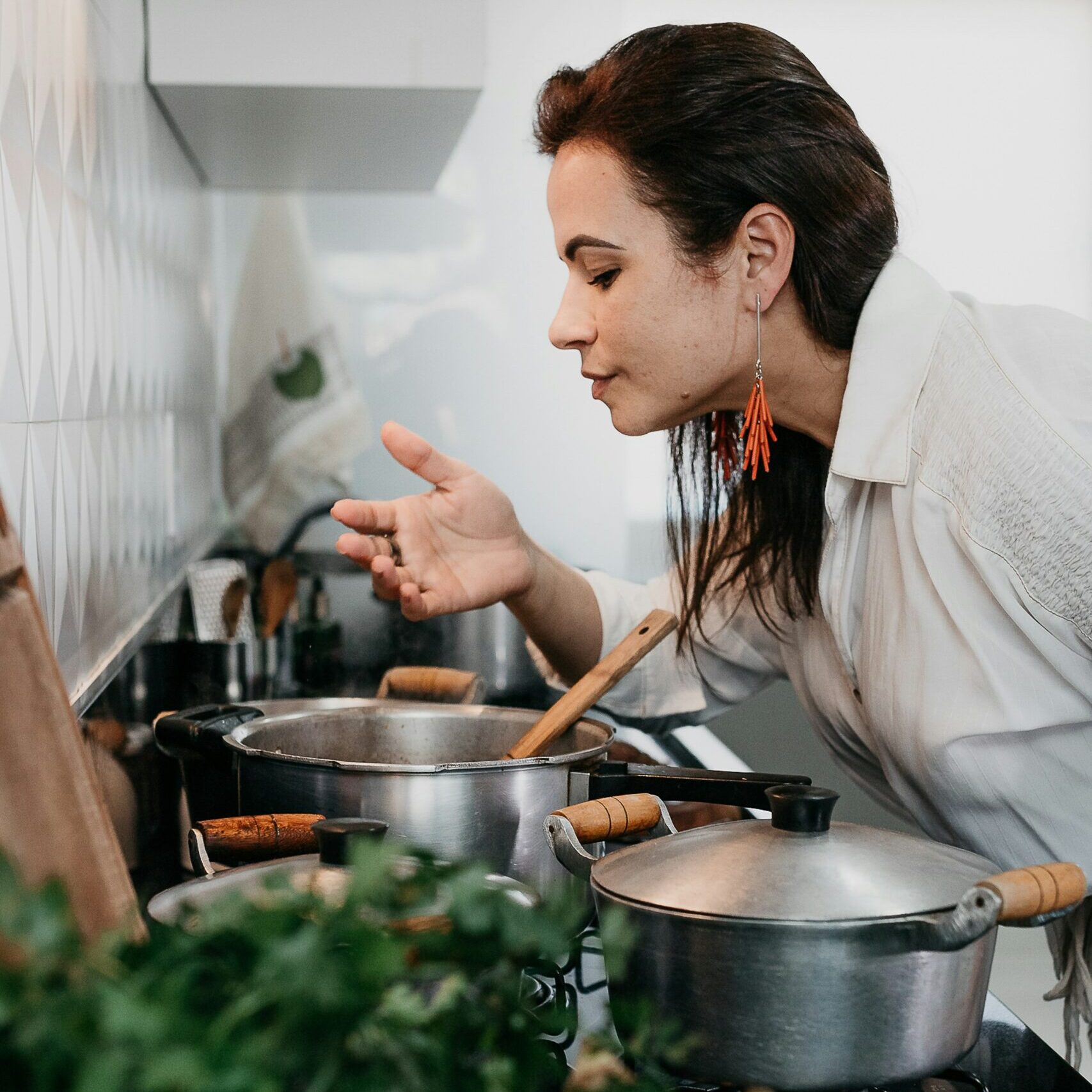
Hi, I’m Daisy Roots, the home cook and recipe developer behind this kitchen. I create simple, tested vegan recipes using everyday ingredients. Every dish is developed and cooked in my own kitchen, with clear steps to help you get reliable results every time. Thanks for stopping by — let’s cook something great!