Many people think vegan soups and stews can’t be as rich and satisfying as ones made with meat, but that’s simply not true.
The secret isn’t a single ingredient, but it’s how you build flavor from the very beginning.
In this guide, you’ll learn simple techniques that make every spoonful taste better.
From slowly cooking aromatics and blooming spices to adding umami-rich ingredients and the right finishing touches, these easy steps will help you make vegan soups and stews that are full of deep, comforting flavor every time.
Why Flavor Matters in Vegan Cooking
Vegan soups and stews don’t rely on meat for their flavor, so seasoning and cooking techniques play a much bigger role.
By building flavor in layers, you can create meals that taste rich, balanced, and deeply satisfying with simple pantry ingredients.
One of the easiest ways to improve your cooking is to understand the five basic tastes and how they work together:
- Umami: The savory, rich flavor found in ingredients like mushrooms, miso, soy sauce, and nutritional yeast.
- Sweet: Natural sweetness from vegetables like carrots, onions, sweet potatoes, and squash helps round out bold flavors.
- Salty: Salt brings out the flavor of every ingredient, making the soup taste fuller and more balanced.
- Sour: A squeeze of lemon juice or a splash of vinegar brightens the entire dish and keeps it from tasting flat.
- Bitter: Ingredients like kale, spinach, or certain herbs add depth when balanced with the other tastes.
The best vegan soups and stews don’t focus on just one of these flavors.
Instead, they combine several of them in the right amounts.
As you cook, taste your soup along the way and make small adjustments.
A pinch of salt, a squeeze of lemon, or a spoonful of miso can completely transform the final bowl.
Start with a Flavorful Base
Every great soup or stew starts with a solid foundation.
Taking a few extra minutes at the beginning of the cooking process helps create layers of flavor that carry through the entire dish.
Cook Aromatics Slowly
Aromatics are vegetables that release rich flavors and inviting aromas as they cook.
They form the base of many delicious vegan soups and stews.
Some of the best aromatics include:
- Onion
- Garlic
- Shallots
- Leeks
- Celery
- Carrots
Cook these ingredients over medium to medium-low heat until they become soft and fragrant.
This process, often called sweating, gently softens the vegetables without browning them too quickly, allowing their natural sweetness to develop.
If your recipe starts with onions, let them cook for a few extra minutes until they turn lightly golden.
This brings out even more sweetness and adds a richer, deeper flavor to your soup or stew.
Use Quality Olive Oil or Vegan Butter
A little fat goes a long way when building flavor.
Good-quality olive oil or vegan butter helps coat the vegetables as they cook, allowing their flavors to develop more evenly.
It also adds a richer mouthfeel, making soups and stews taste more satisfying without overpowering the other ingredients.
Just as importantly, it prevents aromatics from drying out or sticking to the bottom of the pot while they soften.
For most recipes, one to two tablespoons of olive oil or vegan butter is enough to create a flavorful base without making the dish feel heavy.
Helpful Kitchen Tools
A few reliable tools can make cooking easier and help you get more consistent results.
- Heavy-bottomed soup pot: Distributes heat evenly and helps prevent ingredients from sticking or burning.
- Wooden spoon: Perfect for stirring and scraping up the flavorful browned bits from the bottom of the pot.
- Sharp chef’s knife: Makes chopping vegetables quicker, safer, and more even, so everything cooks at the same rate.
- Blender or immersion blender: Ideal for creating smooth, creamy soups without adding dairy.
- Measuring spoons: Help you season consistently, especially when using spices, herbs, and other flavor boosters.
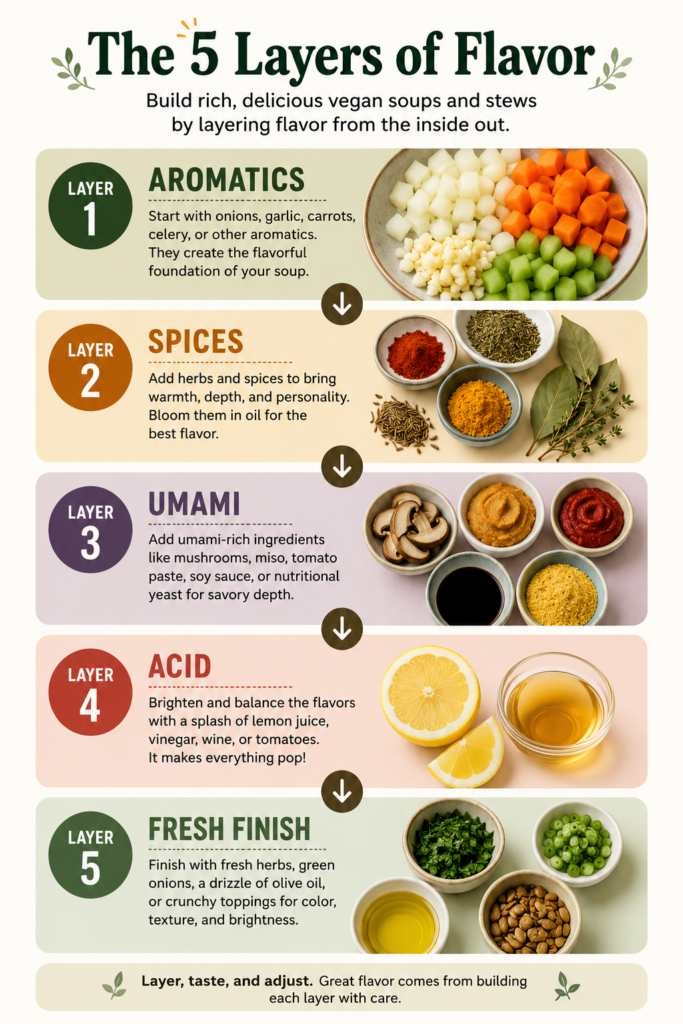
Build Layers of Flavor Instead of Adding Everything at Once
The most flavorful soups and stews aren’t made by adding every ingredient to the pot at the same time.
Instead, each step builds on the one before it, creating a deeper, more balanced flavor by the time the soup is ready to serve.
Bloom Spices
Ground spices become much more fragrant when they’re briefly cooked in hot oil before liquid is added.
This simple step, called blooming, helps release their natural oils and brings out a richer flavor.
Some of the best spices to bloom include:
- Cumin
- Coriander
- Paprika
- Curry powder
- Chili powder
- Turmeric
After your aromatics have softened, stir the spices into the pot and cook for 30 to 60 seconds.
Keep them moving so they don’t burn. Once they smell warm and fragrant, you’re ready for the next step.
Toast Tomato Paste
If your recipe includes tomato paste, don’t stir it straight into the broth. Instead, cook it in the pot for a minute or two before adding any liquid.
This quick step deepens its flavor, brings out its natural sweetness, and cooks away some of its raw acidity.
It also gives soups and stews a richer color and a more concentrated, savory taste.
Deglaze the Pot
After cooking your vegetables, spices, or tomato paste, you may notice browned bits stuck to the bottom of the pot.
Those little pieces are packed with flavor.
Pour in a small amount of one of these liquids:
- Vegetable broth
- White wine
- Red wine
- Apple cider
- Water
Use a wooden spoon to scrape up the browned bits as the liquid simmers gently.
They dissolve back into the soup, adding extra depth and making every bowl taste richer.
Choose a Rich Broth
The broth is the foundation of your soup or stew, so it’s worth choosing one with plenty of flavor.
A rich broth gives the rest of your ingredients something to build on and makes the finished dish taste more satisfying.
Homemade Vegetable Broth
If you have the time, homemade vegetable broth is an excellent choice.
It’s easy to adjust to your own taste and lets the natural flavors of the vegetables shine.
Some of the biggest benefits include:
- Fresher, cleaner flavor
- Lower sodium than many packaged options
- Easy to customize with your favorite vegetables, herbs, and spices
You can also freeze homemade broth in portions, making it a convenient option for future meals.
Store-Bought Broth Tips
A good store-bought broth is a great time-saver, but not all brands taste the same.
Reading the label can help you choose one that adds flavor instead of overpowering your soup.
When shopping, look for a broth that is:
- Low in sodium, so you can season to taste
- Free from added sugar
- Made with a rich blend of vegetables for a fuller, more balanced flavor
If your broth tastes a little mild, don’t worry.
You can always boost it with herbs, spices, or umami-rich ingredients as your soup cooks.
Add Umami Naturally
Umami is the rich, savory flavor that makes soups and stews taste hearty and satisfying.
Since vegan recipes don’t rely on meat, adding a few naturally umami-rich ingredients can make a big difference.
Mushrooms
Mushrooms are one of the easiest ways to add savory depth to vegan soups and stews.
They become even more flavorful as they cook.
Great choices include:
- Cremini
- Shiitake
- Portobello
- Dried mushrooms
Dried mushrooms have an especially concentrated flavor.
Soak them in warm water before using, then add both the mushrooms and the soaking liquid to your soup for an extra boost.
Nutritional Yeast
Nutritional yeast has a mild, cheesy, nutty flavor that blends beautifully into soups without making them taste like cheese.
Stir in a tablespoon or two near the end of cooking to add extra depth and richness.
Soy Sauce and Tamari
A small splash of soy sauce or tamari can make a soup taste fuller and more balanced.
You don’t need much—just one or two teaspoons can enhance the savory flavors without making the dish taste noticeably like soy sauce.
Tamari is a great choice if you need a gluten-free alternative.
Miso Paste
Miso paste is packed with umami and adds a rich, complex flavor to soups and stews.
For the best results, stir it in during the last few minutes of cooking.
High heat can dull its delicate flavor, so avoid boiling the soup after adding the miso.
Whisk it with a little warm broth first to help it blend smoothly.
Tomato Products
Tomatoes naturally contain plenty of umami, making them an easy way to deepen flavor.
Depending on the recipe, try using:
- Tomato paste
- Crushed tomatoes
- Sun-dried tomatoes
Each option adds a slightly different level of richness, from the concentrated flavor of tomato paste to the bright sweetness of crushed tomatoes.
Sea Vegetables
Sea vegetables add subtle savory notes that make vegetable-based broths taste more complex.
Popular options include:
- Kombu
- Dulse flakes
A small piece of kombu can simmer with the broth and be removed before serving, while dulse flakes can be stirred in during cooking.
Both add depth without giving the soup a strong seaweed flavor.
Best Umami Ingredients Compared
Not all umami ingredients work the same way.
This quick comparison can help you choose the best option for your recipe and know when to add it for the best flavor.
| Ingredient | Best For | When to Add |
|---|---|---|
| Miso paste | Creamy soups, noodle soups, vegetable soups | Last few minutes |
| Soy sauce or tamari | Bean soups, lentil soups, vegetable stews | Middle or end of cooking |
| Tomato paste | Tomato soups, chili, hearty stews | Early, after blooming spices |
| Mushrooms | Vegetable soups, mushroom soups, stews | Beginning of cooking |
| Nutritional yeast | Creamy soups, potato soups, blended soups | Last few minutes |
| Dried mushrooms | Brothy soups and rich vegetable stews | Beginning, after soaking |
| Sun-dried tomatoes | Tomato-based soups and Mediterranean-style stews | Middle of cooking |
There’s no need to use every ingredient in one recipe.
In most cases, one or two umami-rich ingredients are enough to create a deep, savory flavor without overpowering the soup.
Don’t Forget Herbs
Herbs add freshness, aroma, and depth to vegan soups and stews.
Using both fresh and dried herbs at the right time helps create a well-rounded flavor.
Fresh Herbs
Fresh herbs brighten a soup just before it’s served, adding color and a burst of fresh flavor.
Some of the best choices include:
- Parsley
- Cilantro
- Dill
- Basil
Stir them in during the last minute or sprinkle them over each bowl before serving.
This keeps their flavor vibrant and prevents them from becoming dull during cooking.
Dried Herbs
Dried herbs need time to release their flavor, making them ideal for the beginning of the cooking process.
Popular options include:
- Thyme
- Rosemary
- Oregano
- Sage
- Bay leaves
Add dried herbs after cooking your aromatics and let them simmer with the broth.
As the soup cooks, it’ll slowly infuse every spoonful with rich, comforting flavor.
If you use bay leaves, remember to remove them before serving.
Balance the Acidity
A small amount of acid can completely change a soup or stew.
It brightens the flavors, balances richness, and makes the other ingredients taste more vibrant.
If your soup seems a little flat, it may not need more salt—it may just need a touch of acid.
Some great options include:
- Lemon juice
- Lime juice
- Apple cider vinegar
- Red wine vinegar
- White wine vinegar
- Balsamic vinegar
It’s usually best to add acidic ingredients near the end of cooking.
Long simmering can soften their bright, fresh flavor, making them less noticeable.
By stirring them in just before serving, you’ll get a fresher, more balanced finish.
Start with a small amount, taste, and adjust as needed.
Often, just a teaspoon of lemon juice or vinegar is enough to make the whole pot taste brighter without making it taste sour.
Add Natural Sweetness
A touch of natural sweetness can make vegan soups and stews taste more balanced.
It softens sharp acidity, mellows spicy flavors, and helps bring all the ingredients together without making the dish taste sweet.
Some ingredients that add gentle sweetness include:
- Carrots
- Sweet potatoes
- Roasted onions
- Pumpkin
- Butternut squash
- Coconut milk
These ingredients work especially well in tomato-based, spicy, or curry-inspired soups.
For example, sweet potatoes can balance the heat of chili powder, while a splash of coconut milk can smooth out the tang of tomatoes or the warmth of curry spices.
Choose just one or two naturally sweet ingredients so they support the other flavors instead of overpowering them.
Build Creaminess Without Dairy
You don’t need cream or butter to make a soup rich and silky.
Plenty of plant-based ingredients add a smooth texture while letting the other flavors shine.
The best choice depends on the type of soup you’re making.
Coconut Milk
Coconut milk adds a rich, velvety texture and a subtle sweetness.
It’s a great match for curries, pumpkin soup, butternut squash soup, and other recipes with warm spices.
Cashew Cream
Cashew cream has a mild flavor and creates a smooth, luxurious finish.
It works well in creamy vegetable soups, mushroom soups, and vegan versions of classic cream-based recipes.
Stir it in near the end of cooking for the best texture.
Blended White Beans
White beans add creaminess without changing the flavor very much.
Blend a portion of the beans with a little broth, then stir the mixture back into the pot.
This is an easy way to thicken bean, vegetable, and potato soups while adding extra body.
Silken Tofu
Silken tofu blends into a smooth, creamy consistency with almost no noticeable flavor.
It’s ideal for creamy tomato soups, vegetable soups, and light blended soups where you want richness without extra sweetness.
Blended Potatoes
Potatoes naturally release starch as they cook, making them an excellent thickener.
Blend part of the cooked potatoes directly into the soup to create a creamy texture while keeping the flavor hearty and comforting.
This method works especially well in chowders, potato soups, and rustic vegetable stews.
| Instead of | Use |
|---|---|
| Coconut milk | Cashew cream |
| Cashew cream | Blended white beans |
| Miso | Soy sauce |
| Fresh thyme | Dried thyme |
| Lemon juice | Apple cider vinegar |
Use Texture to Increase Flavor Perception
Flavor isn’t just about what you taste, but it’s also about what you feel.
A soup with a variety of textures often feels more satisfying and interesting, even when it uses simple ingredients.
To make your soups and stews heartier, add ingredients like:
- Lentils
- Chickpeas
- White beans
- Barley
- Brown rice
- Wild rice
- Quinoa
These ingredients add body, make each bite more filling, and absorb the flavors of the broth as they cook.
Don’t forget the toppings. A little crunch creates a delicious contrast with a smooth or brothy soup.
Try finishing your bowl with:
- Toasted seeds
- Croutons
- Crispy chickpeas
Add crunchy toppings just before serving so they stay crisp.
It’s a simple finishing touch that makes homemade soups and stews feel even more satisfying.
Use Texture to Increase Flavor Perception
Flavor isn’t just about what you taste, but it’s also about what you feel.
A soup with a variety of textures often feels more satisfying and interesting, even when it uses simple ingredients.
To make your soups and stews heartier, add ingredients like:
- Lentils
- Chickpeas
- White beans
- Barley
- Brown rice
- Wild rice
- Quinoa
These ingredients add body, make each bite more filling, and absorb the flavors of the broth as they cook.
Don’t forget the toppings. A little crunch creates a delicious contrast with a smooth or brothy soup.
Try finishing your bowl with:
- Toasted seeds
- Croutons
- Crispy chickpeas
Add crunchy toppings just before serving so they stay crisp.
It’s a simple finishing touch that makes homemade soups and stews feel even more satisfying.
Simmer Long Enough
Good soups and stews need time for the flavors to come together.
As the ingredients gently simmer, the vegetables soften, herbs and spices infuse the broth, and everything blends into a richer, more balanced dish.
For most vegetable soups, 20 to 30 minutes of simmering is enough.
Heartier soups and stews with beans, lentils, or tougher vegetables often benefit from 30 to 45 minutes so the flavors have more time to develop.
Longer isn’t always better, though. Overcooking can cause vegetables to become mushy, herbs to lose their freshness, and delicate ingredients to break down too much.
Keep the heat at a gentle simmer rather than a rolling boil, and check the texture as the soup cooks.
A good habit is to taste the soup during the last few minutes of cooking. If the flavors seem well balanced and the vegetables are tender, it’s ready to serve.
Kitchen Confidence Tip: If your soup tastes a little flat after simmering, resist the urge to add more salt right away. Taste it first, then try a squeeze of lemon juice, a splash of vinegar, or a spoonful of miso paste. These small finishing touches often bring the flavors to life and create a more balanced, satisfying bowl.
Season Throughout Cooking
Great flavor doesn’t come from adding all the salt at the end.
The best soups and stews are seasoned in stages, allowing each layer of ingredients to develop its full flavor as it cooks.
Add a small pinch of salt when cooking the aromatics, then taste again after adding the broth and other ingredients.
As the soup simmers, continue tasting and make small adjustments instead of adding a large amount all at once.
Before serving, give the soup one final taste. It may need another pinch of salt, a little black pepper, a squeeze of lemon juice, or a splash of vinegar to bring all the flavors together.
These small finishing adjustments can make the difference between a good soup and a truly memorable one.
Batch Cooking Flavor Tips
Soups and stews are perfect for making ahead, and many taste even better the next day as the flavors continue to develop.
Keep these simple tips in mind when cooking a large batch.
- Season lightly before freezing. It’s easier to add a little more salt after reheating than to fix a soup that’s too salty.
- Save fresh herbs for serving. Add parsley, cilantro, basil, or dill after reheating to keep their flavor bright and fresh.
- Finish with acid after reheating. A squeeze of lemon juice or a splash of vinegar just before serving helps restore freshness.
- Adjust the consistency. Soups often thicken in the fridge or freezer. Stir in a little warm vegetable broth while reheating until the texture is just right.
A quick taste before serving is always worth it. Small adjustments after reheating can make a batch-cooked soup taste just as fresh and flavorful as the day you made it.
Finish with Fresh Flavor
The final touches can make a good soup or stew taste even better.
Adding fresh ingredients just before serving brings brightness, aroma, and a little extra texture that balances the rich flavors developed during cooking.
Try finishing your bowl with:
- Lemon zest
- Fresh herbs
- Chili flakes
- Freshly ground black pepper
- A drizzle of good-quality olive oil
- A spoonful of vegan pesto
- Toasted nuts
You don’t need to use every topping. Choose one or two that complement your soup and add them just before serving.
A squeeze of lemon, a handful of chopped parsley, or a drizzle of olive oil can make the flavors taste fresher and more vibrant with very little effort.
Common Mistakes That Lead to Bland Vegan Soups
Even simple soups can fall flat if a few key steps are skipped.
Avoid these common mistakes to build deeper, richer flavor every time.
- Using only water: Water adds moisture but very little flavor. Start with a good vegetable broth whenever possible.
- Skipping aromatics: Onions, garlic, celery, and carrots create the flavorful foundation that every great soup needs.
- Under-seasoning: Season a little at a time throughout cooking instead of relying on one big pinch of salt at the end.
- Adding herbs at the wrong time: Dried herbs need time to simmer, while fresh herbs are best added just before serving.
- Not using acid: A squeeze of lemon juice or a splash of vinegar can brighten the entire pot and balance rich flavors.
- Adding too much liquid: Too much broth can dilute the flavor. If your soup tastes weak, let it simmer uncovered for a few minutes to concentrate the broth.
- Not tasting while cooking: Tasting as you go helps you catch small adjustments before it’s too late.
- Using old spices: Ground spices lose their flavor over time. Fresh spices provide a much stronger aroma and better overall taste.
If your soup tastes bland, don’t give up. A small adjustment—whether it’s a pinch of salt, a splash of vinegar, or a spoonful of miso—can often bring the whole dish back to life.
Flavor Rescue Guide
Even experienced cooks need to make small adjustments from time to time.
If your soup or stew doesn’t taste quite right, use this quick guide to get it back on track.
| If Your Soup Tastes… | Try This |
|---|---|
| Bland | Add a pinch of salt, a spoonful of miso paste, or a splash of soy sauce or tamari. |
| Too salty | Stir in more unsalted vegetable broth, add unsalted beans, or simmer with a few chunks of potato, then remove them before serving. |
| Too acidic | Add a splash of coconut milk or stir in a little cooked butternut squash or pumpkin to soften the sharpness. |
| Too spicy | Mix in coconut milk or blended white beans to mellow the heat without losing flavor. |
| Too thick | Gradually stir in warm vegetable broth until you reach your desired consistency. |
| Too thin | Simmer uncovered to reduce the liquid, or blend a portion of the beans or vegetables and stir them back into the soup. |
Remember to make only one adjustment at a time and taste before adding anything else.
Small changes are often all you need to create a well-balanced, flavorful soup.
Flavor Pairing Guide
Not sure which herbs, spices, or finishing touches work best together? Use this quick guide to build balanced, flavorful vegan soups and stews with confidence.
Mix and match these combinations, then adjust them to suit your own taste.
| Soup Base | Best Flavor Boosters |
|---|---|
| Tomato | Basil, oregano, balsamic vinegar |
| Lentil | Cumin, smoked paprika, lemon juice |
| Mushroom | Thyme, miso paste, soy sauce |
| Potato | Chives, nutritional yeast, garlic |
| Butternut squash | Sage, coconut milk, nutmeg |
| Chickpea | Turmeric, cumin, cilantro |
| Vegetable | Bay leaf, parsley, thyme |
| Black bean | Chili powder, lime juice, cilantro |
These pairings are a great starting point, but don’t be afraid to experiment.
Sometimes a simple squeeze of lemon or a sprinkle of fresh herbs is all it takes to make your favorite soup even more flavorful.
Soup Type Finishing Guide
The right finishing touch can bring out the best in your soup.
Use this guide for simple combinations that add freshness, texture, and balance just before serving.
| Soup | Best Finish |
|---|---|
| Tomato | Fresh basil and a drizzle of olive oil |
| Lentil | Lemon juice and chopped parsley |
| Potato | Chopped chives and freshly ground black pepper |
| Mushroom | Fresh thyme and a drizzle of truffle oil (optional) |
| Black bean | Cilantro and a squeeze of lime juice |
| Pumpkin or butternut squash | Crispy sage and toasted pumpkin seeds |
These pairings are easy to customize, so don’t be afraid to try your own favorite combinations.
Even a simple garnish can add the perfect finishing touch and make a homemade soup feel extra special.
Pantry Staples That Instantly Improve Vegan Soups
Keeping a few flavorful ingredients in your pantry makes it easy to turn a simple soup into something rich and satisfying.
These staples last well, work in a wide variety of recipes, and can quickly add depth, balance, or creaminess when your soup needs a little extra help.
| Ingredient | Why Keep It |
|---|---|
| Tomato paste | Adds concentrated richness and savory flavor |
| Miso paste | Boosts umami and depth |
| Nutritional yeast | Adds a mild cheesy, savory flavor |
| Soy sauce or tamari | Enhances saltiness and umami |
| Vegetable broth | Creates a flavorful foundation |
| Bay leaves | Slowly infuse the broth with aroma |
| Smoked paprika | Adds smoky warmth and complexity |
| Dried mushrooms | Provide intense, concentrated umami |
| Apple cider vinegar | Brightens and balances flavors |
| Coconut milk | Creates a rich, creamy texture |
You don’t need every ingredient on this list to make a delicious soup.
Even keeping a handful of these pantry staples on hand gives you plenty of ways to adjust flavor and create comforting vegan soups and stews whenever inspiration strikes.
Easy Flavor-Building Formula
If you’re not following a specific recipe, use this simple formula to build rich, balanced flavor in almost any vegan soup or stew.
- Cook the aromatics. Soften onions, garlic, celery, carrots, or other aromatics in olive oil or vegan butter.
- Bloom the spices. Stir ground spices into the hot oil and cook for 30–60 seconds until fragrant.
- Add tomato paste. Cook it for a minute or two to deepen its flavor and reduce raw acidity.
- Deglaze the pot. Pour in a little broth, wine, cider, or water and scrape up the flavorful browned bits from the bottom.
- Add the broth. Pour in your vegetable broth and bring everything to a gentle simmer.
- Stir in beans, grains, or vegetables. Add the main ingredients that will give your soup body and texture.
- Simmer until the flavors develop. Let the ingredients cook gently until the vegetables are tender and the broth tastes rich and well balanced.
- Add leafy greens, if using. Stir in spinach, kale, or other greens during the last few minutes so they stay vibrant.
- Finish with acid. Add a squeeze of lemon juice or a splash of vinegar to brighten the flavors.
- Garnish before serving. Top with fresh herbs, toasted nuts, crispy chickpeas, croutons, or a drizzle of olive oil for extra flavor and texture.
Once you’ve used this method a few times, it becomes second nature. It’s an easy way to create flavorful vegan soups and stews, even when you’re cooking with whatever ingredients you already have.
When to Add Ingredients
Adding ingredients at the right time is just as important as choosing the right ones.
Use this quick timeline to help each ingredient develop its best flavor and texture.
| Stage | Add |
|---|---|
| Beginning | Olive oil or vegan butter, onions, carrots, celery, leeks |
| Early | Garlic, dried herbs, ground spices, tomato paste |
| Middle | Vegetable broth, beans, lentils, grains, root vegetables |
| Last 5 minutes | Leafy greens, miso paste, nutritional yeast |
| Before serving | Lemon juice, vinegar, fresh herbs, black pepper, olive oil, crunchy toppings |
If you’re ever unsure when to add an ingredient, remember this simple rule: ingredients that need time to soften or release flavor go in early, while fresh, delicate ingredients are usually best added right before serving.
Flavor Builder Cheat Sheet
Keep this quick guide nearby whenever you’re making soup or stew.
If something feels like it’s missing, these simple additions can help you balance the flavor in just a few minutes.
| Need More… | Try Adding… |
|---|---|
| Richness | Miso paste, mushrooms, tomato paste |
| Brightness | Lemon juice, lime juice, or apple cider vinegar |
| Smokiness | Smoked paprika |
| Freshness | Chopped parsley, cilantro, dill, or basil |
| Creaminess | Cashew cream, coconut milk, or blended white beans |
| Heat | Chili flakes, cayenne pepper, or chili powder |
Remember to add small amounts, stir well, and taste before adding more.
It’s much easier to build flavor gradually than to fix a soup that’s been over-seasoned.
Final Thoughts
Making flavorful vegan soups and stews is all about building layers of flavor, balancing the different tastes, and using simple cooking techniques.
With the right combination of aromatics, herbs, spices, umami-rich ingredients, and finishing touches, you can create rich, comforting meals without relying on meat.
Don’t be afraid to experiment with different flavor combinations and make each recipe your own.
Most importantly, taste your soup as it cooks and make small adjustments along the way.
A little extra seasoning or a squeeze of lemon at the end can turn a good soup into a great one.
FAQs
How can I make vegan soup taste richer?
Start with aromatics, use a flavorful vegetable broth, add umami-rich ingredients like mushrooms or miso, and finish with a squeeze of lemon juice or fresh herbs.
What is the best ingredient for umami in vegan soups?
Miso paste, dried mushrooms, soy sauce or tamari, nutritional yeast, and tomato paste are all excellent choices for adding savory depth.
Should I add herbs at the beginning or end?
Add dried herbs early so they can infuse the broth. Stir in fresh herbs just before serving to keep their flavor bright and fresh.
Why does my vegan soup taste flat?
It may need more salt, a splash of acid, an umami-rich ingredient, or a little more simmering time. Taste and adjust before serving.
Can I freeze vegan soups?
Yes. Most bean-, lentil-, and vegetable-based soups freeze well for up to 3 months. If your soup contains coconut milk or cashew cream, stir it well after reheating to restore a smooth texture.

Hi, I’m Daisy Roots, the home cook and recipe developer behind this kitchen. I create simple, tested vegan recipes using everyday ingredients. Every dish is developed and cooked in my own kitchen, with clear steps to help you get reliable results every time. Thanks for stopping by — let’s cook something great!