A flax egg is a simple mixture of ground flaxseed and water that works as an easy egg substitute in many baked recipes.
It takes just a few minutes to make, uses affordable pantry ingredients, and is a great option for cookies, muffins, quick breads, pancakes, and more.
If you’ve never made one before, don’t worry. Once you see how the mixture thickens into a gel, you’ll understand why so many home bakers keep flaxseed on hand.
It’s a small step that can make vegan baking feel much more approachable.
In this guide, you’ll learn the correct flax egg ratio, how to make one step by step, which recipes it works best in, and a few simple tips to help your baked goods turn out their best every time.
What Is a Flax Egg?
A flax egg is a simple mixture of ground flaxseed and water that is used in place of eggs in many baking recipes.
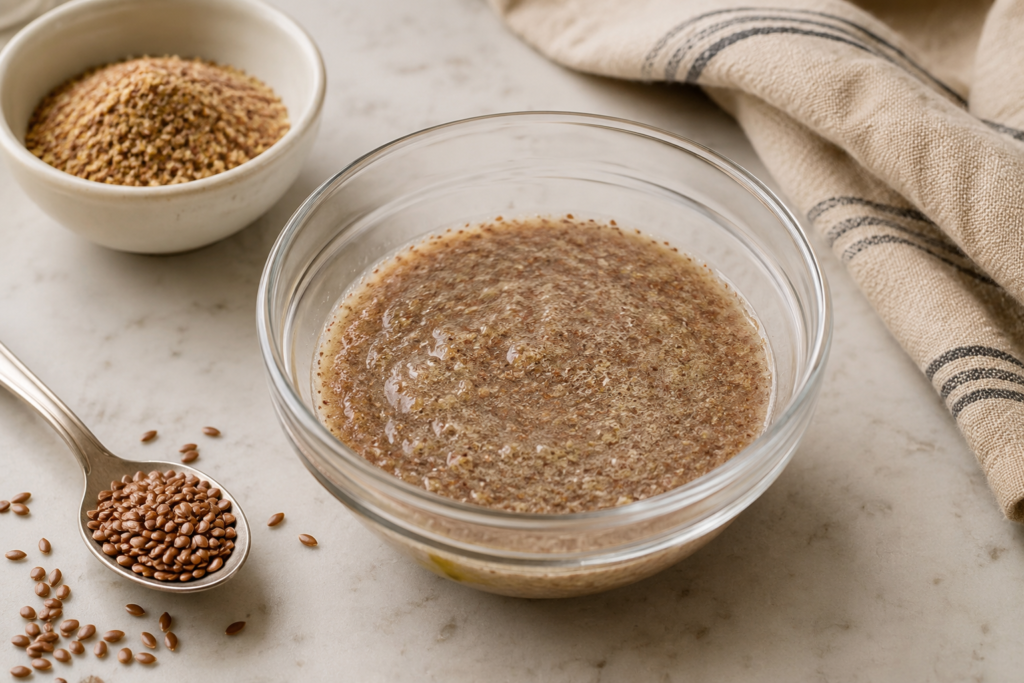
When the two ingredients are stirred together and left to sit for a few minutes, the flaxseed absorbs the water and turns into a thick, gel-like mixture.
This gel helps hold ingredients together in much the same way a regular egg does, making it a reliable choice for many baked treats.
Although it doesn’t behave exactly like a chicken egg, it does an excellent job in recipes where eggs are mainly used as a binder rather than for creating lots of lift or a light, airy texture.
One flax egg is typically made by mixing 1 tablespoon of ground flaxseed with 3 tablespoons of water, then letting it rest for about 5 to 10 minutes until it thickens.
Using ground flaxseed, often called flax meal, is important because whole flaxseeds won’t absorb enough water to create the gel you need.
Why Bakers Use Flax Eggs
Flax eggs have become a favorite ingredient because they’re easy to make and use ingredients many people already have in their pantry.
If you keep a bag of ground flaxseed on hand, you’re only a few minutes away from having an egg substitute whenever you need one.
They’re also a great choice when you’re baking for someone who follows a vegan lifestyle or when you’ve simply run out of eggs and don’t want to make a trip to the store.
Many home bakers appreciate how inexpensive flax eggs are compared to specialty egg replacers, especially since a little ground flaxseed goes a long way.
Flax eggs work especially well in recipes like muffins, cookies, brownies, pancakes, waffles, banana bread, and quick breads, where they help create a moist, tender texture.
They have a mild, slightly nutty flavor that blends into most recipes without standing out, so the finished bake still tastes just as you expect.
Once you’ve made a flax egg a few times, it quickly becomes one of those simple kitchen tricks that’s easy to remember and even easier to use whenever a recipe calls for an egg.
Flax Eggs: Pros and Cons at a Glance
Flax eggs are a simple and reliable vegan baking substitute, but they work best in certain types of recipes.
Pros
- Two simple ingredients: Made with only ground flaxseed and water.
- Budget-friendly: Uses affordable pantry staples instead of specialty egg replacers.
- Easy to make: Takes just a few minutes to prepare.
- Great binder: Helps hold cookies, muffins, brownies, and quick breads together.
- Pantry staple: Ground flaxseed can be stored and used whenever you need an egg substitute.
Cons
- Doesn’t whip: Cannot create the airy texture needed for meringues or soufflés.
- Slightly denser texture: Some baked goods may be a little more compact than those made with eggs.
- Not suitable for airy desserts: Recipes that rely on whipped eggs usually need a different substitute.
Kitchen Tip: Flax eggs are best thought of as a binding ingredient, not a perfect copy of a regular egg. They shine in everyday baking recipes where moisture and structure matter most.
How Do Flax Eggs Work in Baking?
A flax egg doesn’t replace every job that a regular egg does, but it does several important ones that help many baked goods turn out soft, moist, and well-shaped.
Binding Ingredients
One of the main jobs of a flax egg is to help bind ingredients together.
As the flaxseed and water form a thick gel, they create a mixture that helps keep flour, sugar, fats, and other ingredients from falling apart during baking.
This binding effect helps cookies stay together, keeps muffins from becoming crumbly, and gives quick breads a sliceable texture once they’ve cooled.
If you’ve ever had a baked treat break apart too easily, you’ll appreciate how much this simple mixture helps hold everything together.
Adding Moisture
Flax eggs also add moisture to your batter.
The water used to make the flax egg stays in the mixture as it bakes, helping create baked goods that are tender instead of dry.
This extra moisture works especially well in recipes that already include naturally moist ingredients like mashed bananas, applesauce, pumpkin purée, or grated zucchini.
A well-balanced batter is easier to mix and often bakes more evenly, giving you a better final texture.
Creating Structure
While flax eggs don’t create the same structure as regular eggs, they still provide enough support for many everyday baking recipes.
They help cakes, muffins, brownies, pancakes, waffles, and quick breads keep their shape as they bake and cool.
The finished texture is often slightly softer and a little denser than recipes made with chicken eggs, but that’s part of what makes many vegan baked goods so satisfying.
In recipes where eggs are mainly used to hold ingredients together rather than create a light, fluffy texture, flax eggs are an excellent substitute.
What Flax Eggs Cannot Do
Flax eggs have a few limits, and understanding them will save you frustration in the kitchen.
They cannot be whipped like egg whites, so they won’t create the airy foam needed for recipes such as meringues or soufflés.
They also don’t provide the same lifting power that eggs can add to certain cakes or delicate baked desserts.
Recipes that depend on whipped eggs for volume or a light, sponge-like texture usually need a different egg substitute or a recipe developed specifically for vegan baking.
For everything from chewy cookies to hearty muffins and moist banana bread, though, flax eggs are a dependable choice that delivers great results with very little effort.
Ingredients You’ll Need
One of the best things about making a flax egg is how little you need to get started.
With just two simple ingredients, you can have a reliable egg substitute ready in minutes.
Ground Flaxseed (Flax Meal)
Ground flaxseed, also called flax meal, is the key ingredient in a flax egg.
Because the seeds have already been finely ground, they absorb water quickly and create the thick, gel-like texture that makes flax eggs work so well in baking.
Whole flaxseeds won’t produce the same result because their hard outer shell keeps them from soaking up enough water.
If you only have whole flaxseeds at home, you can easily grind them yourself using a coffee grinder, spice grinder, or a high-speed blender until they become a fine meal.
You’ll usually find both golden and brown flaxseed at most grocery stores, and either one works well for baking.
Brown flaxseed has a slightly nuttier flavor and darker color, which blends naturally into recipes like brownies, chocolate cakes, and darker quick breads.
Golden flaxseed has a milder flavor and lighter color, making it a great choice for vanilla cakes, muffins, pancakes, and other light-colored baked goods where you want the finished appearance to stay as bright as possible.
If you only have one type on hand, don’t worry.
The difference is subtle, and both varieties create a flax egg that performs the same way in most recipes.
Water
Water is the only other ingredient you’ll need.
Room-temperature water works perfectly because it allows the ground flaxseed to absorb moisture evenly and thicken into a smooth gel.
There’s no need to heat the water or use any special equipment.
Simply measure it accurately, stir it well with the flaxseed, and let the mixture sit for about 5 to 10 minutes.
By the time you’ve gathered your remaining ingredients or prepared your baking pan, your flax egg will usually be ready to use.
Flax Egg Ratio (Quick Reference)
Making a flax egg is easy once you remember the basic ratio.
For every egg you’re replacing, use 1 tablespoon of ground flaxseed and 3 tablespoons of water.
| Eggs Needed | Ground Flaxseed | Water |
|---|---|---|
| 1 | 1 tablespoon | 3 tablespoons |
| 2 | 2 tablespoons | 6 tablespoons |
| 3 | 3 tablespoons | 9 tablespoons |
| 4 | 4 tablespoons | 12 tablespoons |
After measuring the ingredients, stir them together until there are no dry clumps of flaxseed.
Let the mixture stand for about 5 to 10 minutes until it becomes thick and gel-like.
Once it has thickened, it’s ready to add to your batter just as you would a regular egg.
| Eggs | Ground Flaxseed | Water |
|---|---|---|
| 1 | 1 tbsp | 3 tbsp |
| 2 | 2 tbsp | 6 tbsp |
| 3 | 3 tbsp | 9 tbsp |
| 4 | 4 tbsp | 12 tbsp |
| 6 | 6 tbsp | 18 tbsp (1 cup + 2 tbsp) |
Step-by-Step: How to Make a Flax Egg
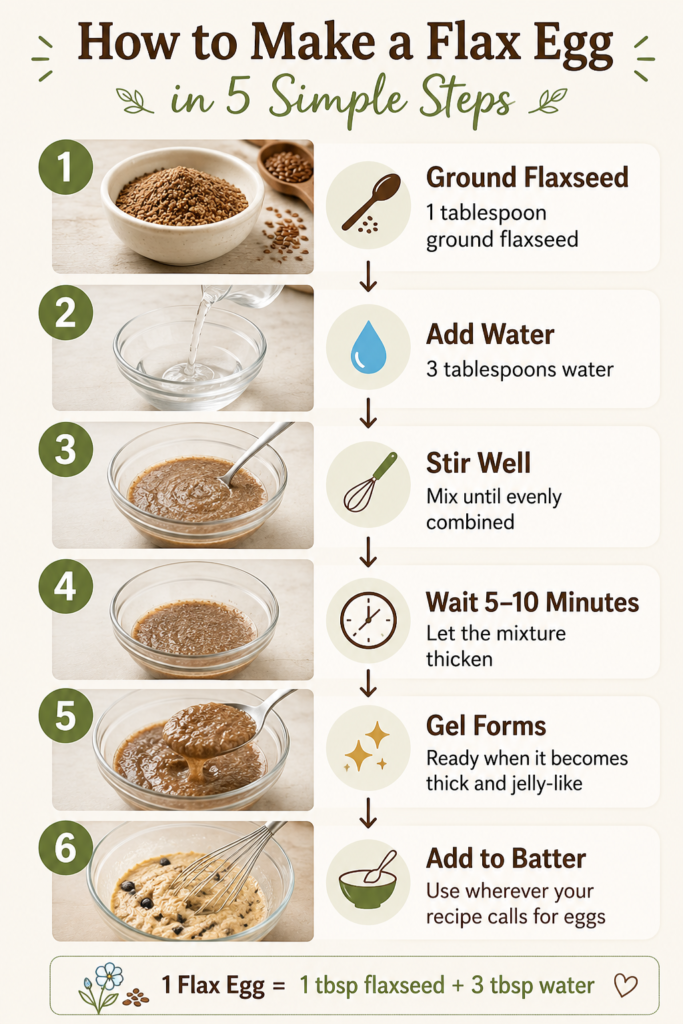
Step 1: Measure the Flax Meal
Measure 1 tablespoon of ground flaxseed into a small bowl for each egg you’re replacing.
Using a measuring spoon helps keep the ratio accurate, which gives you the best texture in your finished bake.
If your recipe calls for two or more eggs, simply multiply the ingredients while keeping the same 1-to-3 ratio of flaxseed to water.
Step 2: Add Water
Pour 3 tablespoons of room temperature water over the ground flaxseed.
Room temperature water mixes easily and gives the flaxseed time to absorb the liquid evenly.
There’s no need to use hot or boiling water for this step.
Step 3: Stir Well
Stir the mixture thoroughly until all of the flax meal is fully moistened.
Take a few extra seconds to scrape around the sides and bottom of the bowl so there aren’t any dry pockets left behind.
The mixture will still look thin at first, so don’t worry if it doesn’t seem ready right away.
Step 4: Let It Rest
Set the bowl aside for 5 to 10 minutes.
During this time, the ground flaxseed absorbs the water and gradually thickens into a smooth, gel-like mixture.
You’ll notice the texture change from watery to slightly sticky, similar to the consistency of a lightly beaten egg.
If it still looks a little runny after a few minutes, simply give it another stir and let it rest for another minute or two.
Preparing your other ingredients while the flax egg thickens is an easy way to make the most of this waiting time.
Step 5: Add to Your Recipe
Once the flax egg has thickened, it’s ready to use.
Add it to your mixing bowl whenever your recipe calls for eggs.
Mix it with the other wet ingredients or follow the recipe instructions as written.
From there, continue baking as usual and let the flax egg do its job of helping bind the ingredients together while adding moisture to the batter.
How Long Does a Flax Egg Take to Set?
A flax egg usually takes 5 to 10 minutes to set, although the exact time can vary slightly depending on the grind of the flaxseed and the temperature of the water.
As it rests, the ground flaxseed absorbs the water and gradually changes from a thin, watery mixture into a thicker gel.
One of the easiest signs that it’s ready is that the mixture no longer looks runny and has a consistency similar to a lightly beaten egg.
If you lift your spoon, the flax egg should slowly fall back into the bowl instead of pouring like water.
The mixture should also look smooth and evenly thickened, with no pools of water sitting on top.
If it still seems too thin after 5 minutes, simply give it another good stir and let it rest for another minute or two.
A small amount of extra waiting time won’t hurt the mixture, so there’s no need to rush this step.
A simple way to save time is to prepare your flax egg before measuring the rest of your ingredients, since it will usually be ready by the time your mixing bowls and baking pan are prepared.
Once the flax egg has reached a thick, gel-like texture, you can confidently add it to your recipe and continue baking as usual.
Best Recipes for Flax Eggs
Flax eggs work best in recipes where eggs are mainly used to bind ingredients and add moisture rather than create a light, airy texture.
- Muffins: Help create soft, tender muffins that hold together well.
- Quick Breads: Perfect for recipes like zucchini, pumpkin, or lemon bread, keeping each slice moist.
- Pancakes: Add structure while helping pancakes stay fluffy and easy to flip.
- Waffles: Provide enough binding for crisp edges and a soft center.
- Brownies: Contribute to a rich, fudgy texture without affecting the chocolate flavor.
- Cookies: Help cookies hold their shape while keeping them chewy or soft, depending on the recipe.
- Snack Bars: Keep ingredients firmly packed together so the bars slice neatly.
- Loaf Cakes: Work well in everyday loaf cakes, creating a moist and even crumb.
- Banana Bread: Pair naturally with mashed bananas for a soft, flavorful loaf.
- Baked Oatmeal: Help the oats and other ingredients bake into firm, easy-to-serve portions.
Recipes Where Flax Eggs Don’t Work Well
While flax eggs are a fantastic choice for many baked goods, they aren’t the best option for every recipe.
They work as a binder, but they can’t replace the unique lifting and foaming abilities of regular eggs in certain types of baking.
For the following recipes, another egg substitute or a recipe developed specifically for vegan baking will usually give better results:
- Angel Food Cake: Depends on whipped egg whites to create its light, airy texture.
- Meringues: Require whipped egg whites to form stiff, glossy peaks that flax eggs cannot produce.
- Soufflés: Need eggs to trap air and help the mixture rise dramatically during baking.
- Popovers: Rely on eggs to create steam and the signature hollow center.
- Sponge Cakes Requiring Whipped Eggs: Flax eggs can’t provide the volume needed for a light, fluffy crumb.
- Recipes Relying Heavily on Egg Structure: Dishes where eggs are the main structural ingredient usually need a different vegan substitute designed for that purpose.
If you’re ever unsure, check how the eggs are used in the recipe.
If they’re mainly there to bind the ingredients together, a flax egg is often a great choice.
If they’re responsible for creating height, volume, or a delicate texture, it’s usually better to use a different egg replacement or follow a recipe that was created with vegan ingredients from the start.
| Recipe | Flax Egg? |
|---|---|
| Muffins | ✅ Excellent |
| Cookies | ✅ Excellent |
| Brownies | ✅ Excellent |
| Pancakes | ✅ Excellent |
| Banana Bread | ✅ Excellent |
| Cheesecake | ⚠ Usually |
| Sponge Cake | ❌ Not Recommended |
| Angel Food Cake | ❌ |
| Meringues | ❌ |
| Soufflés | ❌ |
Golden Flaxseed vs Brown Flaxseed
Both golden and brown flaxseed make excellent flax eggs, so you don’t need to worry if your grocery store only carries one variety.
The biggest differences are their color and flavor, not how they perform in baking.
| Golden Flaxseed | Brown Flaxseed |
|---|---|
| Mild flavor | Slightly nuttier flavor |
| Lighter color | Darker color |
| Great for light-colored baked goods | Great for darker baked goods |
Golden flaxseed is a popular choice for recipes like vanilla cakes, lemon muffins, pancakes, and sugar cookies because its lighter color blends more easily into the batter.
Brown flaxseed has a slightly richer, nuttier flavor that pairs naturally with recipes like brownies, chocolate cakes, spice cakes, banana bread, and other darker baked goods.
The flavor difference between the two is subtle, and most people won’t notice it once the baked goods are finished.
If you already have one type in your pantry, there’s no need to buy the other just for baking.
Both golden and brown flaxseed absorb water the same way, form the same gel-like texture, and work equally well as a flax egg in most recipes.
Whole Flaxseed vs Ground Flaxseed
When making a flax egg, ground flaxseed is always the better choice.
Whole flaxseeds have a hard outer shell that doesn’t absorb water well, so they won’t form the thick, gel-like mixture needed to replace an egg.
Even if you let whole flaxseeds sit in water for a long time, they’ll stay mostly intact instead of creating the smooth texture that helps bind your batter.
Ground flaxseed, often labeled as flax meal, absorbs water quickly and transforms into the gel that gives flax eggs their binding power.
The finer the flaxseed is ground, the more evenly it mixes into your batter, creating a consistent texture throughout your baked goods.
If you only have whole flaxseeds at home, you can grind them yourself in a coffee grinder, spice grinder, or high-speed blender until they become a fine meal.
To keep ground flaxseed fresh, store it in an airtight container in the refrigerator or freezer after opening.
Because ground flaxseed contains natural oils, it can lose its fresh flavor more quickly than whole seeds when stored at room temperature.
Best Containers for Storing Ground Flaxseed
Proper storage helps keep ground flaxseed fresh and ready for your next batch of baking.
Because ground flaxseed contains natural oils, keeping it protected from air, moisture, and heat can help preserve its flavor.
For the best freshness, store it in:
- Airtight glass jar: A simple option that keeps out air and makes it easy to see how much flaxseed you have left.
- BPA-free food container: A lightweight option that works well for everyday kitchen storage.
- Resealable freezer bag: A convenient choice if you store larger amounts in the freezer.
Always label your container with the purchase date or the date you ground the flaxseed.
A quick smell test before baking is a good habit.
Fresh ground flaxseed has a mild, nutty aroma, while old flaxseed may smell bitter or stale, which can affect the flavor of your baked goods.
Can You Grind Your Own Flaxseed?
Yes, you can easily grind your own flaxseed at home, and it’s a great option if you prefer to buy whole flaxseeds or can’t find ground flaxseed at your local store.
A coffee grinder is one of the easiest tools for the job because it quickly turns whole flaxseeds into a fine, even meal in just a few seconds.
A spice grinder works just as well and is especially handy if you already use one for herbs and spices.
A high-speed blender can also grind flaxseed, although it usually works best when you’re grinding a larger batch instead of just a tablespoon or two.
Whichever tool you use, aim for a fine, powdery texture rather than coarse pieces, since finely ground flaxseed absorbs water more evenly and creates a smoother flax egg.
After grinding, transfer the flax meal to an airtight container to help keep out moisture and air.
For the best flavor and freshness, store it in the refrigerator if you’ll use it within a few weeks, or in the freezer if you want it to last longer.
Tips for Success
- Measure accurately: Use 1 tablespoon of ground flaxseed and 3 tablespoons of water for each egg you’re replacing to create the right consistency.
- Allow enough time to gel: Give the mixture 5 to 10 minutes to thicken before adding it to your recipe so it can develop its full binding power.
- Mix thoroughly: Stir until all of the flax meal is evenly moistened and there are no dry clumps left in the bowl.
- Use fresh flaxseed: Fresh ground flaxseed creates a better gel and has a mild, nutty flavor, while older flaxseed can develop a stale or bitter taste.
- Stir again before adding to the batter: If the flax egg has been sitting for a few extra minutes, give it one quick stir to keep the texture smooth and evenly mixed.
- Avoid using flax eggs in recipes that require whipped eggs: They’re excellent for binding ingredients, but they won’t provide the lift or airy texture needed for recipes like meringues, soufflés, or angel food cake.
Before You Bake Checklist
Before adding your flax egg to the batter, take a quick moment to check these steps:
✓ Used ground flaxseed: Whole flaxseed won’t create the gel needed for baking.
✓ Measured the correct ratio: Use 1 tablespoon of ground flaxseed with 3 tablespoons of water for each egg replacement.
✓ Mixed thoroughly: Make sure the flaxseed and water are evenly combined with no dry patches.
✓ Waited 5–10 minutes: The mixture should thicken into a gel-like texture before using.
✓ Confirmed the recipe doesn’t rely on whipped eggs: Flax eggs work best for binding, not recipes that need eggs to create volume or a light texture.
Common Mistakes to Avoid
Even though flax eggs are easy to make, a few common mistakes can affect the texture of your baked goods.
The good news is that they’re all easy to avoid once you know what to look for.
- Using whole flaxseed: Whole flaxseeds don’t absorb enough water to form the thick gel needed for a proper flax egg, so always use ground flaxseed or grind the seeds yourself first.
- Not waiting long enough: A freshly mixed flax egg needs about 5 to 10 minutes to thicken, and using it too soon can make your batter thinner than intended.
- Using the wrong water ratio: Too much or too little water can change the consistency, so stick to the standard ratio of 1 tablespoon of ground flaxseed to 3 tablespoons of water for each egg you’re replacing.
- Using old flaxseed: Ground flaxseed can lose its fresh, nutty flavor over time, so check that it smells mild and pleasant before using it in your baking.
- Expecting identical results to chicken eggs: Flax eggs are an excellent substitute in many recipes, but they won’t produce the same light, airy texture in recipes that depend on whipped eggs or lots of lift.
| Problem | Likely Cause | Solution |
|---|---|---|
| Too runny | Not enough flaxseed | Add a little more flax meal |
| Too thick | Too little water | Stir in a splash of water |
| Won’t gel | Whole or old flaxseed | Use fresh ground flaxseed |
| Visible clumps | Not mixed well | Stir thoroughly before resting |
Flavor and Texture Changes
One of the biggest questions people have about flax eggs is whether they’ll noticeably change the finished baked goods.
In most recipes, the differences are small and often go unnoticed, especially when the batter includes ingredients like vanilla, cinnamon, cocoa, fruit, or spices.
Flavor
Flax eggs have a mild, slightly nutty flavor that blends naturally into most baked goods.
The flavor is subtle enough that it rarely stands out, making flax eggs a great choice for everything from cookies and muffins to banana bread and brownies.
If you’re making a light-colored dessert with delicate flavors, golden flaxseed has an even milder taste that many bakers prefer.
Texture
Flax eggs help create baked goods that are moist and tender, which is one of the reasons they’re so popular in vegan baking.
They work especially well in recipes where a soft crumb is desirable, such as quick breads, loaf cakes, and muffins.
In some recipes, you may notice that the finished bake is slightly denser than one made with chicken eggs.
This difference is usually minor and often adds a satisfying, homemade texture rather than taking away from the recipe.
Appearance
Ground flaxseed blends well into most batters, but you may notice tiny flax specks in the finished baked goods.
These small flecks are completely normal and don’t affect the flavor or texture.
They’re usually less noticeable in darker recipes like brownies, chocolate cakes, or banana bread, but they can also appear in lighter baked goods.
If you’d like a cleaner-looking crumb, using golden flaxseed can help the specks blend in more naturally while delivering the same great baking results.
Flax Eggs vs Chia Eggs
Flax eggs and chia eggs are two of the most popular vegan egg substitutes, and they work in very similar ways.
Both are made by mixing ground seeds with water to create a gel that helps bind ingredients together.
Choosing between them often comes down to the recipe you’re making and your personal preference.
| Feature | Flax Egg | Chia Egg |
|---|---|---|
| Flavor | Mild | Neutral to mild |
| Texture | Slightly smoother | Slightly thicker |
| Color | Brown or golden | Black, white, or gray specks |
| Best For | Most baked goods | Dense baked goods and puddings |
Flax eggs are a great all-purpose choice for recipes like cookies, muffins, pancakes, brownies, quick breads, and loaf cakes because they create a smooth mixture that blends easily into the batter.
Chia eggs form a slightly thicker gel, which makes them a good option for recipes that benefit from extra thickness, such as baked oatmeal, dense snack bars, and puddings.
Both options provide excellent binding, so you can often use one in place of the other in many baking recipes.
The main difference you’ll notice is appearance, as chia seeds tend to leave more visible specks throughout the finished bake.
If you’re looking for the smoothest texture and the least noticeable seed flecks, flax eggs are usually the better choice.
If you already have chia seeds in your pantry, they’re a reliable substitute that can deliver great results in many of the same recipes.
Other Vegan Egg Substitutes
Flax eggs are one of the most versatile vegan egg substitutes, but they’re not the only option.
Different recipes call for different ingredients, so choosing the right substitute can help you achieve the best texture and flavor.
- Chia Egg: Made with ground chia seeds and water, chia eggs create a thick gel that works well in muffins, cookies, quick breads, snack bars, and other dense baked goods.
- Unsweetened Applesauce: Adds moisture and a soft texture, making it a popular choice for cakes, muffins, brownies, and quick breads where a light fruit flavor won’t stand out.
- Mashed Banana: Helps bind ingredients while adding natural sweetness and moisture, making it perfect for banana bread, pancakes, muffins, and other baked goods where a subtle banana flavor fits the recipe.
- Pumpkin Purée: Adds moisture and a rich texture, making it an excellent choice for fall-inspired breads, muffins, spice cakes, and brownies.
- Silken Tofu: Blends into a smooth, creamy consistency that works well in dense cakes, cheesecakes, brownies, baked custards, and other recipes that benefit from extra richness.
- Commercial Egg Replacers: These powdered products are designed specifically for baking and are a dependable option for cakes, cookies, muffins, pancakes, waffles, and many other everyday recipes. Simply prepare them according to the package directions.
- Aquafaba: The liquid from a can of chickpeas can be whipped into soft or stiff peaks, making it the best choice for recipes that rely on whipped egg whites, such as meringues, macarons, mousses, and some sponge cakes.
Best Pantry Staples for Vegan Baking
Having a few basic ingredients ready makes vegan baking easier and more convenient.
- Ground flaxseed: A must-have for making flax eggs and adding binding power to baked goods.
- Chia seeds: Another easy egg substitute that creates a thick gel for muffins, cookies, and other dense recipes.
- Baking powder: Helps baked goods rise and creates a lighter texture in cakes, muffins, and pancakes.
- Baking soda: Works with acidic ingredients to provide lift and improve texture.
- Vanilla extract: Adds warmth and depth of flavor to cookies, cakes, and other sweet recipes.
- Unsweetened applesauce: A useful ingredient for adding moisture and replacing eggs in some baked goods.
- Plant-based milk: Helps create smooth batters and can replace dairy milk in many recipes.
- Coconut oil or vegan butter: Adds richness and helps create the right texture in cookies, cakes, and pastries.
Can You Make Flax Eggs Ahead?
Yes, you can make a flax egg a little ahead of time if it helps simplify your baking routine.
Once the flaxseed and water have formed a gel, cover the bowl or transfer the mixture to an airtight container and store it in the refrigerator.
A prepared flax egg is best used within 24 hours, as it has the freshest texture and works most reliably during baking.
While it will usually remain usable for a short time in the refrigerator, it’s generally best to make only what you need for your recipe.
Before adding a refrigerated flax egg to your batter, give it a quick stir.
The mixture may separate slightly or become a bit thicker as it sits, and a quick stir helps restore a smooth, even consistency.
If you’re already measuring your baking ingredients, it’s often just as easy to prepare the flax egg first and let it thicken while you gather everything else.
Using it fresh is the simplest way to get consistent results and the best texture in your baked goods.
Beginner’s Quick Reference Box
1 Flax Egg =
- 1 tablespoon ground flaxseed
- 3 tablespoons water
- Stir until well combined.
- Wait 5–10 minutes for the mixture to thicken into a gel.
- Add to your batter wherever the recipe calls for 1 egg.
Quick Tip: Make your flax egg before measuring the rest of your ingredients so it’s ready to use when your batter comes together.
Pro Baking Tips
Once you’ve made a few flax eggs, these simple habits can help you get even more consistent results.
- Store ground flaxseed in the refrigerator or freezer: Keeping it chilled helps preserve its fresh, nutty flavor and extends its shelf life.
- Prepare your flax egg first: Mix the flaxseed and water before measuring your other ingredients so it has plenty of time to thicken while you prep.
- Choose golden flaxseed for lighter baked goods: Its lighter color blends more naturally into recipes like vanilla cakes, pancakes, and lemon muffins without changing their appearance.
- Make multiple flax eggs in one bowl: If you’re doubling a recipe or replacing several eggs, combine all the flaxseed and water together using the same ratio to create a consistent mixture throughout the batter.
- Measure ingredients carefully: Small changes in the flaxseed-to-water ratio can affect the texture, so using measuring spoons is worth the extra minute.
- Don’t overthink it: Flax eggs are one of the most forgiving vegan baking substitutes, and with a little practice, mixing one will become as routine as cracking a regular egg.
Kitchen Confidence Tip
Don’t worry if your first flax egg doesn’t look exactly like a regular beaten egg.
The goal is not to copy the appearance of an egg, but to create a thick, gel-like mixture that helps bind your ingredients.
If it has thickened after 5–10 minutes and no liquid is separating, it’s ready to use.
Like any baking technique, making flax eggs becomes easier with practice.
After a few batches of cookies, muffins, or quick breads, you’ll quickly recognize the right texture and know exactly when your flax egg is ready.
Final Thoughts
Making a flax egg is one of the easiest ways to replace eggs in vegan baking, and all it takes is ground flaxseed, water, and a few minutes of waiting.
It’s affordable, simple to prepare, and works beautifully in many everyday recipes.
If you’re just getting started, try using flax eggs in muffins, cookies, quick breads, or brownies to build your confidence.
These recipes are forgiving and a great way to see just how well this simple substitute works.
Once you’ve mastered the basics, you’ll be ready to experiment with other vegan egg replacements and discover even more beginner-friendly recipes to enjoy in your kitchen.
FAQs
Can I use whole flaxseed?
No. Whole flaxseeds won’t absorb enough water to form the gel needed for a flax egg. Use ground flaxseed (flax meal) or grind whole seeds before using them.
How many flax eggs can I use in one recipe?
You can replace multiple eggs by following the same ratio of 1 tablespoon ground flaxseed and 3 tablespoons water per egg. Flax eggs work best in recipes where eggs are used mainly for binding rather than creating lift.
Why didn’t my flax egg thicken?
This usually happens if you used whole flaxseed, the wrong flaxseed-to-water ratio, or didn’t let the mixture rest long enough. Freshly ground flaxseed also thickens more reliably than older flaxseed.
Can I use hot water?
Room temperature water is recommended because it creates a smooth, consistent gel. Hot water isn’t necessary and won’t significantly improve the results.
Does flaxseed change the taste of baked goods?
Only slightly. Flax eggs have a mild, nutty flavor that blends into most recipes and is rarely noticeable once baked.
Are flax eggs gluten-free?
Yes. Flaxseed is naturally gluten-free, making flax eggs suitable for gluten-free recipes when all the other ingredients are also gluten-free.
Can I freeze prepared flax eggs?
It’s best to use flax eggs fresh. While they can be frozen, the texture may change after thawing, so freshly prepared flax eggs generally produce more consistent baking results.
Can I substitute flax eggs in every baking recipe?
No. Flax eggs work well in muffins, cookies, brownies, quick breads, and similar baked goods, but they aren’t suitable for recipes that rely on whipped eggs or lots of lift, such as meringues, soufflés, or angel food cake.

Hi, I’m Daisy Roots, the home cook and recipe developer behind this kitchen. I create simple, tested vegan recipes using everyday ingredients. Every dish is developed and cooked in my own kitchen, with clear steps to help you get reliable results every time. Thanks for stopping by — let’s cook something great!