Walking down the grocery aisle can feel overwhelming when you’re new to vegan shopping.
Packages are covered with claims like “plant-based,” “natural,” and “dairy-free,” but those words don’t always tell the whole story.
The real answers are usually found in the ingredient list.
The good news is that reading food labels is a skill you can learn quickly.
Once you know what to look for, shopping becomes faster, easier, and much less stressful.
You’ll spend less time guessing and feel more confident about the products you bring home.
In this guide, you’ll learn how to read food labels step by step, spot common animal-derived ingredients, understand vegan certifications, and avoid confusing marketing claims.
By the end, you’ll know exactly what to check before adding an item to your cart.
Why Reading Food Labels Matters
Reading food labels is one of the most useful habits you can build as a vegan.
It helps you understand exactly what’s in the food you’re buying instead of relying on the words printed across the front of the package.
After a little practice, checking a label takes only a few seconds and quickly becomes part of your normal shopping routine.
It also gives you more confidence when trying new products, whether you’re picking up a snack, a frozen meal, or ingredients for tonight’s dinner.
Not Every Plant-Based Product Is Vegan
One of the biggest surprises for new vegans is that a product labeled “plant-based” isn’t always completely vegan.
Some foods are made mostly from plants but still include small amounts of animal-derived ingredients.
For example, a frozen meal might contain vegetables and grains but still use cheese, cream, or butter in the sauce.
A breakfast cereal may be made with whole grains yet contain vitamin D sourced from animals, depending on the brand.
Even dark chocolate, which many people assume is always vegan, can sometimes include milk ingredients.
That’s why it’s important to turn the package over and read the ingredient list instead of making a decision based on the front label.
The ingredient list tells you exactly what was used to make the product, making it your most reliable source of information.
Another common misunderstanding is thinking that “vegetarian” means the same thing as “vegan.”
Vegetarian foods can still include ingredients such as milk, cheese, butter, eggs, or honey.
A vegetarian pizza, for example, may not contain meat, but it still includes dairy cheese.
Checking the ingredients helps you avoid these simple mistakes and makes shopping much less frustrating.
Hidden animal-derived ingredients can also appear in foods where you wouldn’t expect them.
Some breads contain milk or butter to improve texture.
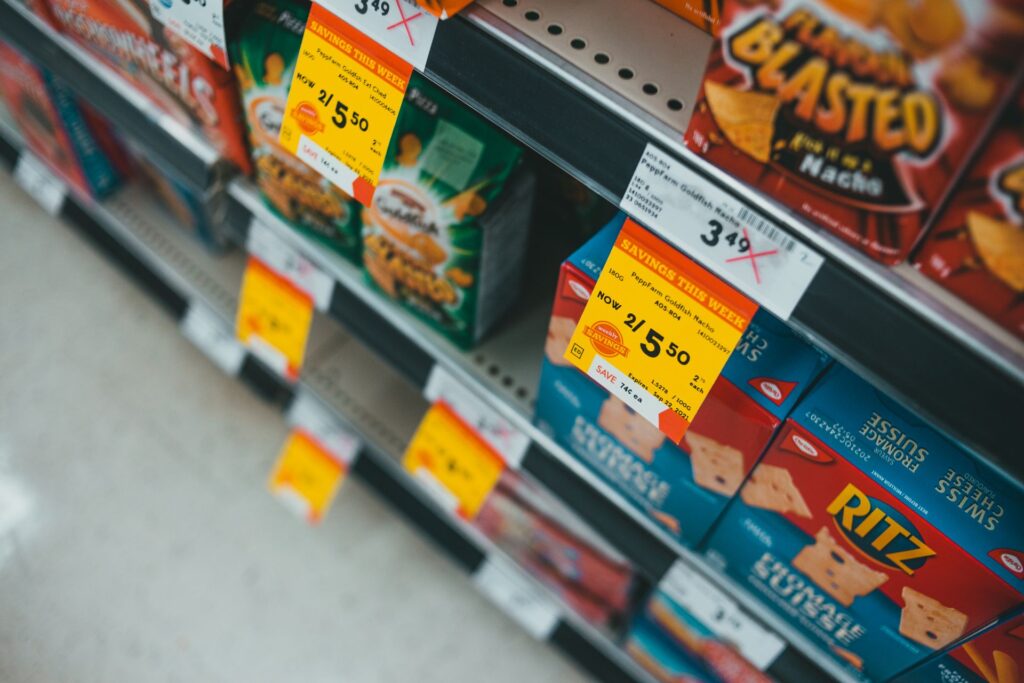
Certain crackers and chips use cheese powder or whey for extra flavor.
Candy, marshmallows, and gummy sweets often contain gelatin, while some glazed treats may use shellac or beeswax for a shiny finish.
These ingredients aren’t always obvious from the product name, which is why reading the full ingredient list is worth the extra few moments.
Marketing Terms Can Be Misleading
Food packaging is designed to catch your attention, but the biggest words on the front don’t always tell the full story.
Marketing claims can describe how a product is made or promoted without confirming that every ingredient is vegan.
Understanding a few common terms can help you shop with more confidence.
“Natural”
The word “natural” has no connection to whether a food is vegan.
A product can be labeled as natural and still contain milk, eggs, honey, or other animal-derived ingredients.
Treat this claim as a description of the product, not proof that it’s suitable for a vegan lifestyle.
“Healthy”
“Healthy” is another term that doesn’t tell you whether a product is vegan.
Foods promoted as healthy may still include dairy, fish, eggs, or other animal ingredients.
Instead of relying on this claim, take a quick look at the ingredient list to see what’s actually inside.
“Plant-Based”
The term “plant-based” usually means that plants make up most of the product, but there isn’t one universal definition that guarantees it’s completely free from animal ingredients.
Some products with this label are fully vegan, while others may still contain ingredients like milk, honey, or egg.
That’s why it’s always worth checking the ingredient list, even when the front of the package says “plant-based.”
Understanding the Parts of a Food Label
Before you start looking for specific ingredients, it helps to know what each section of a food label is meant to tell you.
Every part of the label has a purpose, and together they give you a clearer picture of what’s inside the package.
Ingredient List
The ingredient list is the most important part of the package for anyone following a vegan lifestyle.
It shows every ingredient used to make the product, making it your best source for deciding whether a food is vegan.
Ingredients are usually listed from the largest amount to the smallest amount by weight.
That means the first few ingredients make up most of the product, while those near the end are used in smaller amounts.
Take your time and read the entire list instead of stopping after the first few ingredients.
Animal-derived ingredients can appear anywhere in the list, even if the product is mostly made from plants.
If you come across an ingredient you don’t recognize, don’t panic.
Many unfamiliar names are completely vegan, while others may need a little extra checking.
Nutrition Facts Panel
The Nutrition Facts panel tells you how much of certain nutrients are in each serving.
You’ll usually find information such as serving size, calories, fat, carbohydrates, protein, and sodium.
While this section is useful for comparing similar products, it doesn’t tell you whether a food is vegan.
For example, two products may have nearly identical nutrition information, but one could contain milk while the other is completely plant-based.
That’s why the Nutrition Facts panel should always be used alongside the ingredient list rather than on its own.
Allergen Statement
Many packaged foods include an allergen statement near the ingredient list.
This section highlights common allergens such as milk, eggs, soy, wheat, peanuts, tree nuts, fish, shellfish, and sesame.
If a product says “Contains: Milk” or “Contains: Eggs,” you can immediately tell that it isn’t vegan.
This statement can save you time because you may not need to search through the full ingredient list for those allergens.
Keep in mind that not every animal-derived ingredient is included in the allergen statement.
Ingredients like honey or gelatin may appear in the ingredient list without being mentioned as allergens.
For that reason, it’s always a good idea to read both sections before making your decision.
Manufacturer Information
Most food packages include the name and contact details of the company that makes the product.
If you’re ever unsure about an ingredient, you can visit the company’s website or contact its customer service team for clarification.
Many manufacturers also answer common questions about their products online, including whether certain items are suitable for vegans.
Some brands even include a short statement on the package explaining if a product is vegan or suitable for plant-based diets.
When the ingredient list leaves you uncertain, checking directly with the manufacturer is often the most reliable next step.
Certifications and Logos
Many products display certifications or logos that can make shopping easier.
A certified vegan logo means the product has been reviewed against the standards of the organization that issued the certification.
These certifications can give you extra confidence, especially when you’re trying a new product or shopping in a hurry.
You’ll also see labels such as “vegetarian,” “plant-based,” or “dairy-free” on many packages.
While these claims can be helpful, they shouldn’t replace reading the ingredient list.
Think of certifications and logos as useful shortcuts rather than the only thing to rely on.
Example: Reading a Food Label in 30 Seconds
Putting everything together is easier than you might think.
Here’s a simple example of how you can check a product while you’re shopping.
Imagine you’re picking up a box of crackers at the grocery store.
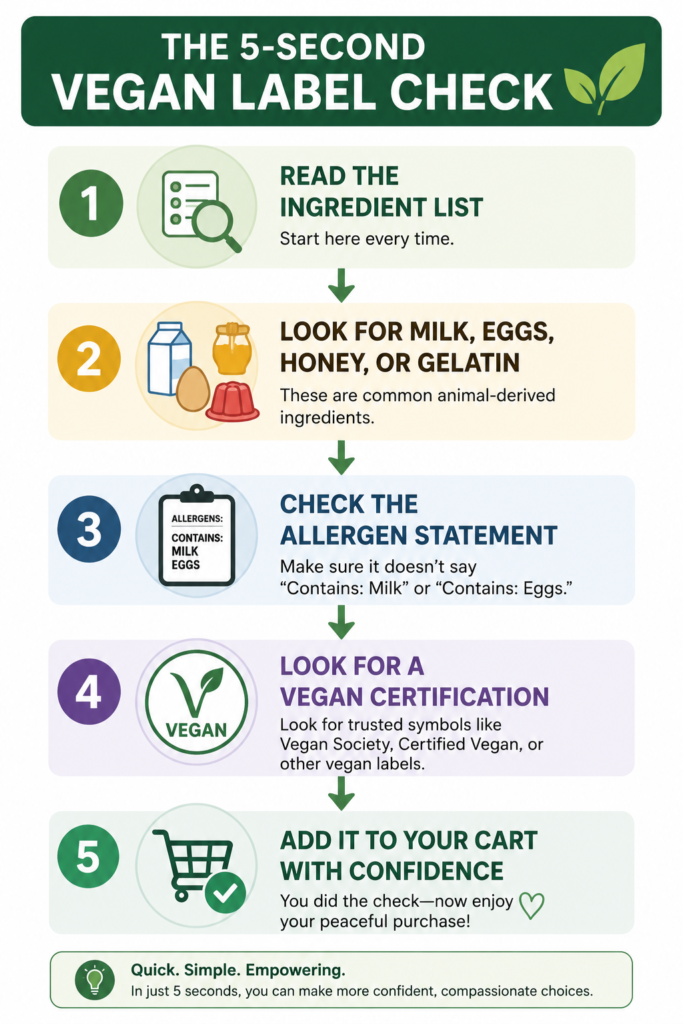
Step 1: Read the ingredient list.
You see: wheat flour, vegetable oil, yeast, salt, sugar, and spices.
You don’t notice obvious animal-derived ingredients like milk, eggs, butter, honey, whey, or gelatin.
Step 2: Check the allergen statement.
It says: Contains: Wheat. May contain milk.
This tells you milk isn’t an ingredient, but the crackers may have come into contact with milk during manufacturing.
Step 3: Look for a vegan certification.
There isn’t one on the package.
That’s okay—the ingredient list is still your most reliable source of information.
Step 4: Make your decision.
Since the ingredient list doesn’t include animal-derived ingredients, the recipe appears vegan.
The “may contain milk” statement is simply a precaution about possible cross-contact, not an indication that milk was intentionally added to the crackers.
Start with the Ingredient List
When you’re checking whether a product is vegan, always begin with the ingredient list.
It’s the most reliable place to see exactly what was used to make the food.
The front of the package is designed to grab your attention, but the ingredient list gives you the facts.
Making this your first stop will help you shop with more confidence and avoid relying on marketing claims.
Ingredients Are Listed by Weight
Food manufacturers generally list ingredients from the largest amount to the smallest amount by weight.
This means the first few ingredients make up most of the product, while those near the end are used in smaller quantities.
For example, if oats are listed first on a cereal box, they are the main ingredient.
If milk powder appears later in the list, it’s still part of the recipe, even though it’s used in a smaller amount.
Remember that even a small amount of an animal-derived ingredient means the product is not vegan.
Don’t assume a product is vegan just because most of its ingredients are plant-based.
Take a few extra seconds to read the entire list from beginning to end.
Scan for Obvious Animal Ingredients First
You don’t need to memorize every possible ingredient to become a confident label reader.
A simple way to save time is to scan the ingredient list for the most common animal-derived ingredients first.
If you spot one of these ingredients, you’ll know right away that the product isn’t vegan.
Some of the most common ingredients to look for include:
- Milk – Found in everything from chocolate and baked goods to soups and sauces.
- Eggs – Common in baked goods, pasta, mayonnaise, and some dressings.
- Butter – Often used in cookies, crackers, pastries, and flavored rice or pasta mixes.
- Cream – Frequently added to soups, sauces, desserts, and coffee products.
- Cheese – Found in snacks, chips, frozen meals, sauces, and seasoning blends.
- Honey – Common in cereals, granola bars, sauces, teas, and baked goods.
- Gelatin – Used in gummy candies, marshmallows, desserts, and some yogurt products.
- Lard – A type of animal fat that may be used in pie crusts, refried beans, tortillas, and baked goods.
- Fish – Sometimes included in sauces, spreads, seasonings, and ready-made meals.
- Meat ingredients – Such as chicken, beef, pork, bacon, or meat broths that can appear in soups, sauces, stuffing mixes, and frozen foods.
These ingredients are usually easy to recognize, making them a great place to start.
If none of them appear, take another quick look for less familiar ingredients that may also come from animals.
Learn These 10 Ingredients First
You don’t need to memorize every possible animal-derived ingredient to become a confident label reader.
Start with these common ingredients, and you’ll be able to identify many non-vegan products in just a few seconds.
- Whey
- Casein
- Lactose
- Butter
- Cream
- Gelatin
- Honey
- Lard
- Milk powder
- Eggs
Once these names become familiar, you’ll naturally recognize them while shopping.
You can always learn additional ingredient names over time, but mastering these ten is a great place to start.
Common Hidden Animal-Derived Ingredients
Some animal-derived ingredients are easy to spot, while others have names that aren’t immediately familiar.
These hidden ingredients often appear in processed foods, so it’s worth learning to recognize the most common ones.
You don’t need to memorize the entire list in one shopping trip.
Keep this table handy, and after you’ve seen these ingredients a few times, they’ll become much easier to identify.
| Ingredient | Usually Vegan? | Commonly Found In |
|---|---|---|
| Whey | No | Protein bars, baked goods, crackers, chocolate, and snack foods |
| Casein | No | Cheese products, cream sauces, processed cheese, and packaged meals |
| Lactose | No | Snacks, instant foods, chocolate, and some seasoning mixes |
| Gelatin | No | Gummies, marshmallows, jelly desserts, and some candies |
| Carmine | No | Candy, drinks, yogurt, and foods with red or pink coloring |
| Shellac | No | Confectionery coatings, shiny candies, and some coated chocolates |
| Isinglass | No | Some beers, wines, and other filtered beverages |
| Beeswax | No | Candy coatings, chewing gum, and some confectionery products |
| Collagen | No | Supplements, protein snacks, nutrition bars, and some packaged foods |
Finding one of these ingredients on a label is a good sign that the product isn’t vegan.
Don’t worry if you don’t recognize every ingredient the first time you shop.
Most people learn these names gradually through regular grocery trips.
If you’re unsure about an unfamiliar ingredient, it’s perfectly fine to pause and look it up or check the manufacturer’s website before buying the product.
Common Ingredient Name Cheat Sheet
If you’re in a hurry, this quick-reference table can help you recognize some of the most common non-vegan ingredients at a glance.
You don’t need to memorize them all at once.
After a few shopping trips, many of these names will become familiar and much easier to spot.
| If You See… | It Usually Means |
|---|---|
| Whey | Dairy |
| Casein | Dairy |
| Lactose | Dairy |
| Gelatin | Animal-derived collagen |
| Honey | Bee product |
| Carmine | Insect-derived coloring |
| Shellac | Insect-derived coating |
Keep this list in mind while shopping, and you’ll be able to scan ingredient lists much more quickly with each trip to the grocery store.
Ingredients That May Require a Closer Look
Not every ingredient has a simple yes-or-no answer when it comes to vegan shopping.
Some ingredients can be made from either plant or animal sources, depending on how the manufacturer produces them.
That doesn’t mean you should avoid every product that contains these ingredients.
Instead, treat them as a reminder to do a little extra checking before making a decision.
The table below highlights some of the ingredients that may require a closer look.
| Ingredient | Can It Be Plant or Animal Derived? | What to Do |
|---|---|---|
| Mono- and diglycerides | Yes | Check if the product is labeled vegan or contact the manufacturer. |
| Glycerin | Yes | Look for a vegan certification or ask the manufacturer about its source. |
| Lecithin | Yes | Often made from soy or sunflower, but it can come from other sources. If you’re unsure, check with the manufacturer. |
| Natural flavors | Yes | This broad term can include many ingredients, so review the product information or contact the company if needed. |
| Vitamin D | Yes | The source varies by product, so check for a vegan label or ask the manufacturer. |
| Stearic acid | Yes | It may come from plants or animals, so verify the source if it isn’t clearly labeled. |
| Lactic acid | Yes | This ingredient is usually produced through fermentation, but if you have any doubts, the manufacturer can provide clarification. |
It’s easy to feel overwhelmed when you first come across these ingredient names.
Remember that you don’t need to investigate every label you read.
Many products clearly state that they’re vegan or carry a trusted vegan certification, which can save you time.
If a product isn’t clearly labeled and you’re unsure about one of these ingredients, the manufacturer’s website is often the best place to look.
Many companies answer common questions about ingredient sourcing in their FAQs or product pages.
If the information isn’t available online, a quick email or message to customer support can provide a clear answer.
Avoid making assumptions based on the ingredient name alone.
Taking a moment to verify the source is a much more reliable approach and helps you make confident choices without unnecessary guesswork.
The more brands and products you become familiar with, the less often you’ll need to double-check these ingredients.
Ingredients That Are Usually Vegan
When you’re new to reading food labels, it’s easy to become cautious about every unfamiliar ingredient.
The good news is that many ingredients with scientific-sounding names are commonly made from plant or mineral sources and are generally considered vegan.
Learning to recognize these ingredients can make shopping much less stressful.
Instead of stopping to research every label, you’ll know which ingredients are usually nothing to worry about.
| Ingredient | Usually Vegan? | Commonly Used For |
|---|---|---|
| Citric acid | Yes | Adds tartness and helps preserve foods and drinks. |
| Ascorbic acid | Yes | Also known as vitamin C, it’s commonly used to maintain freshness. |
| Baking soda | Yes | A leavening agent used in breads, cakes, cookies, and other baked goods. |
| Xanthan gum | Yes | Thickens and stabilizes sauces, dressings, dairy alternatives, and gluten-free foods. |
| Guar gum | Yes | Improves texture in sauces, soups, ice creams, and baked goods. |
| Modified starch | Usually | Thickens soups, sauces, gravies, and many packaged foods. |
| Pectin | Yes | A plant-based gelling agent commonly used in jams, jellies, and fruit fillings. |
| Agar-agar | Yes | A seaweed-based gelling agent often used as a vegan alternative to gelatin. |
| Tapioca starch | Yes | Thickens sauces, puddings, baked goods, and gluten-free recipes. |
| Cornstarch | Yes | Used to thicken soups, sauces, gravies, and desserts. |
Seeing these ingredients on a label doesn’t usually mean a product isn’t vegan.
In fact, many of them are pantry staples that help improve texture, consistency, or shelf life without using animal-derived ingredients.
This is one reason it’s helpful to become familiar with common ingredient names instead of judging them by how they sound.
Over time, you’ll spend less time wondering about ingredients like xanthan gum or citric acid and more time focusing on the ingredients that truly deserve a closer look.
Building this knowledge makes grocery shopping faster, easier, and much more enjoyable.
Products That Usually Don’t Need Much Checking
Not every grocery item requires a careful label inspection.
Many whole and minimally processed foods contain just one ingredient, making them some of the easiest vegan-friendly options to shop for.
| Often Simple to Check | Why |
|---|---|
| Fresh fruit | Usually a single ingredient with no added ingredients. |
| Fresh vegetables | Naturally one ingredient. |
| Dried beans | Plain varieties are usually just beans. |
| Plain rice | Typically contains only rice. |
| Plain oats | Usually made with one simple ingredient. |
These foods can make grocery shopping feel much simpler, especially when you’re just getting started.
Keep in mind that flavored, seasoned, or ready-to-eat versions may include additional ingredients such as milk, butter, honey, or other animal-derived products.
When buying anything that’s been flavored or prepared, it’s still a good idea to read the ingredient list before adding it to your cart.
Understanding Vegan Certifications
Vegan certifications can make grocery shopping much easier, especially when you’re trying a product for the first time.
Instead of reading every ingredient from top to bottom, you can often spot a trusted certification on the package and feel more confident about your choice.
These certifications are issued by independent organizations that review products against their own vegan standards.
This process is known as third-party verification, which means the product is evaluated by an organization that is separate from the manufacturer.
While each certification has its own requirements, they all aim to help shoppers identify products that are suitable for a vegan lifestyle.
Here are some of the certifications you’re most likely to see.
| Certification | What It Generally Indicates |
|---|---|
| Certified Vegan | The product has been reviewed by a third-party organization and is intended to meet its vegan certification standards. |
| Vegan Society Trademark | The product has been assessed by The Vegan Society and meets the organization’s requirements for using its trademark. |
| Plant Based Certified | The product has been evaluated against the certification program’s plant-based standards. |
These logos can save you time when you’re shopping, particularly if you’re comparing several similar products.
They’re also helpful when ingredient lists include names you’re unfamiliar with or when you’re in a hurry.
That said, it’s important to remember that not every vegan product carries a certification.
Some companies choose not to apply for certification even though their products are made entirely without animal-derived ingredients.
For that reason, don’t assume a product isn’t vegan just because it doesn’t display one of these logos.
The ingredient list is still your most reliable source of information.
Understanding “May Contain” Statements
After you’ve read the ingredient list, you may notice a statement such as “May contain milk” or “Made in a facility that also processes eggs.”
These statements often raise questions, especially for people who are new to vegan shopping.
The first thing to know is that a “may contain” statement is different from the ingredient list.
The ingredient list tells you what was intentionally used to make the product.
A “may contain” statement is a precaution that alerts shoppers to the possibility of cross-contact during manufacturing.
Cross-contact happens when foods are made in the same production environment, and tiny traces of another ingredient could accidentally come into contact with the product.
For example, a chocolate bar made without dairy ingredients might be produced on equipment that is also used to make milk chocolate.
Manufacturers include these statements to help people with food allergies understand that small amounts of an allergen could be present.
You may also see statements such as “Made on shared equipment” or “Processed on equipment that also handles milk and eggs.”
This means the same machines are used to make different products, even if the equipment is cleaned between production runs.
Another common statement is “Made in a facility that also processes…”
This means different products are made in the same manufacturing building, although they may not be produced on the same equipment.
These notices are not the same as ingredients.
If milk, eggs, or another animal-derived ingredient appears only in a “may contain” statement and not in the ingredient list, it was not intentionally added to the recipe.
Understanding this difference can make food labels much less confusing.
When you’re checking whether a product is vegan, always start with the ingredient list.
Then read any “may contain” statement so you have the full picture of how the product was manufactured.
How to Identify Vegan-Friendly Claims
Many food packages include claims that sound vegan at first glance.
These labels can be helpful, but they don’t always tell the full story.
The best approach is to treat them as useful hints rather than final proof that a product is vegan.
A quick check of the ingredient list will help you confirm what’s actually inside.
| Label Claim | What It Means | Does It Always Mean the Product Is Vegan? |
|---|---|---|
| Dairy-free | The product is made without dairy ingredients. | No. It may still contain eggs, honey, gelatin, or other animal-derived ingredients. |
| Egg-free | The product does not contain eggs. | No. It may still include milk, honey, or other non-vegan ingredients. |
| Lactose-free | The lactose has been removed or reduced, or the product is made without lactose. | No. It can still contain dairy-derived ingredients and is not necessarily vegan. |
| Plant-based | The product is made mostly or entirely from plant ingredients, depending on the brand. | No. Some products may still contain small amounts of animal-derived ingredients. |
| Vegetarian | The product is suitable for a vegetarian diet. | No. Vegetarian foods may still contain milk, cheese, eggs, butter, or honey. |
These claims can make shopping easier by narrowing down your choices, but they shouldn’t replace reading the ingredient list.
For example, a product labeled dairy-free may still contain honey.
A plant-based frozen meal could include a small amount of cheese or another animal-derived ingredient.
A vegetarian snack may be completely meat-free but still contain milk or eggs.
That’s why the ingredient list remains the most reliable source of information.
If the ingredients match your needs, the front-of-package claims become a helpful bonus rather than something you have to rely on.
Tips for Reading Labels Faster While Shopping
Check the Allergy Statement First
One of the fastest ways to screen a product is to read the allergen statement.
If it says “Contains: Milk” or “Contains: Eggs,” you already know the product isn’t vegan.
This quick check can save you from reading the full ingredient list on products that clearly contain animal-derived ingredients.
If the allergen statement doesn’t list milk or eggs, continue by reading the ingredient list to check for other non-vegan ingredients such as honey or gelatin.
Using both sections together makes shopping quicker and more reliable.
Learn the Most Common Non-Vegan Ingredients
You don’t need to memorize hundreds of ingredient names.
Start by learning the ones you see most often.
Ingredients like whey, casein, gelatin, butter, cream, honey, and lard appear in many packaged foods.
Once these names become familiar, they’ll stand out almost immediately when you scan an ingredient list.
Every shopping trip helps build that recognition, so don’t worry if it takes a little time at first.
Look for Vegan Certifications
A trusted vegan certification can be a useful shortcut when you’re comparing products.
If you spot a recognized vegan logo, you’ll often spend less time checking every ingredient.
Certifications are especially helpful when you’re trying a new brand or shopping in a hurry.
Even so, it’s still a good habit to glance at the ingredient list, especially if the packaging has recently changed.
Save Trusted Brands
As you discover products you enjoy, remember the brands that consistently offer vegan-friendly options.
The next time you shop, you’ll know exactly where to look instead of starting from scratch.
Some people like to keep a short list on their phone, while others simply remember their favorite products after buying them a few times.
Building a list of trusted brands makes future grocery trips faster and less stressful.
Compare Similar Products
If you’re deciding between two similar products, place them side by side and compare their ingredient lists.
You may find that one version is completely vegan while another contains milk, honey, or another animal-derived ingredient.
Small differences between brands are common, even when the products look almost identical from the front.
Taking an extra minute to compare labels can help you find a vegan option without giving up the food you were hoping to buy.
💡 Shopping Tip: If you’re comparing several similar products, skip the front-of-package claims and go straight to the ingredient lists. You’ll usually find the vegan option much faster by checking the ingredients first, then using the allergen statement and any vegan certification to confirm your choice.
Why Similar Products Have Different Ingredients
It’s common to find two products that look almost identical but have different ingredient lists.
That’s because manufacturers often use different recipes, suppliers, flavorings, and processing methods.
For example, one tomato soup may be made with olive oil, while another uses cream for a richer texture.
The same can happen with bread, crackers, chocolate, or granola bars.
Instead of assuming similar products are made the same way, take a quick look at the ingredient list.
You may discover that one brand is completely vegan while another contains animal-derived ingredients.
Food Categories That Often Need Extra Attention
Some foods are more likely than others to contain unexpected animal-derived ingredients.
That doesn’t mean you should avoid them.
It simply means they’re worth checking a little more carefully before adding them to your cart.
Even products that look almost identical can have very different ingredient lists depending on the brand.
The table below highlights some common food categories that deserve an extra glance.
| Food Category | What to Watch For |
|---|---|
| Bread | Milk, butter, eggs, honey, or dairy-based dough conditioners in some varieties. |
| Chips | Cheese powder, whey, butter, or milk-based seasonings, especially on flavored varieties. |
| Crackers | Butter, cheese, whey, or milk ingredients used for flavor and texture. |
| Chocolate | Milk, milk fat, whey, or other dairy ingredients, even in some dark chocolate products. |
| Breakfast cereal | Honey, milk powder, or animal-derived vitamin D in some brands. |
| Granola bars | Honey, whey, milk chocolate, yogurt coatings, or gelatin in certain recipes. |
| Salad dressings | Milk, cheese, eggs, honey, or fish-based ingredients in some creamy or specialty dressings. |
| Sauces | Butter, cream, cheese, honey, or fish-based ingredients depending on the recipe. |
| Instant noodles | Chicken, beef, seafood, milk powder, or other animal-derived flavorings in the seasoning packet. |
| Frozen meals | Cheese, cream, butter, meat broths, or other animal-derived ingredients mixed into sauces and fillings. |
Don’t assume a product is vegan just because it looks like it should be.
For example, one loaf of whole wheat bread may be completely vegan, while another brand uses honey or milk.
The same is true for chocolate, crackers, and breakfast cereals.
Reading the label is the easiest way to spot these differences.
You’ll also notice that recipes change from time to time.
A product you’ve bought for months may have an updated ingredient list after a recipe change.
That’s why it’s a good habit to give the label a quick scan, even on products you already know.
After you’ve checked a few brands, you’ll quickly discover your favorites.
Vegan Food Label Checklist
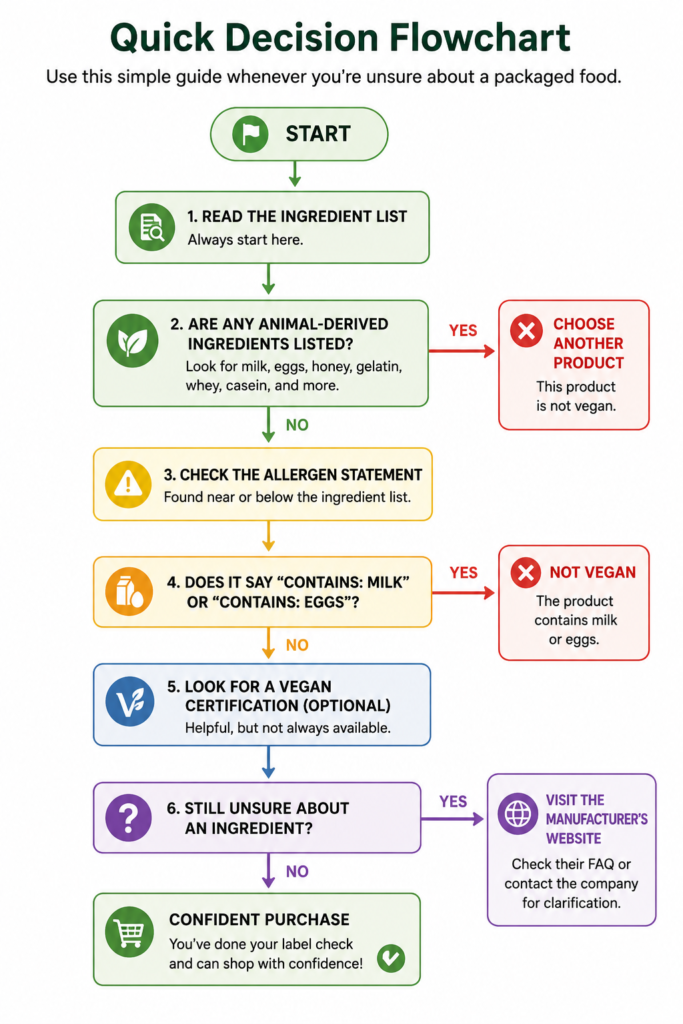
Use this simple checklist to make label reading quick and consistent.
✔ Read the full ingredient list from beginning to end.
✔ Look for milk, eggs, or other allergens in the allergen statement.
✔ Check for hidden animal-derived ingredients such as whey, casein, gelatin, honey, or lard.
✔ Look for a trusted vegan certification if one is displayed on the package.
✔ Read any “Contains” or “May contain” statements so you understand what they mean.
✔ Don’t rely only on front-of-package marketing like “plant-based,” “natural,” or “healthy.”
✔ If you’re unsure about an ingredient, check the manufacturer’s website or contact the company instead of guessing.
✔ When comparing similar products, choose the one with the clearest vegan-friendly ingredient list.
Common Label-Reading Mistakes Beginners Make
Assuming “Plant-Based” Means Vegan
A product labeled “plant-based” isn’t automatically vegan.
Some products use this term even though they contain small amounts of animal-derived ingredients.
Always turn the package over and check the ingredient list before adding it to your cart.
Ignoring the Ingredient List
The ingredient list is the most reliable part of the food label.
Relying only on the front of the package can lead to unexpected purchases.
Even if a product looks vegan, take a few seconds to read the ingredients from start to finish.
Forgetting to Check Candy Coatings
Candy can be surprisingly tricky.
Some sweets use ingredients like shellac or beeswax to create a shiny coating.
Others may contain gelatin or milk ingredients that aren’t obvious from the product name.
A quick scan of the ingredient list can help you avoid these hidden surprises.
Assuming All Bread Is Vegan
Many loaves of bread are naturally vegan, but not all of them are.
Some recipes include milk, butter, eggs, or honey to improve flavor or texture.
The only way to know for sure is to check the label, even if you’ve bought a similar type of bread before.
Not Recognizing Dairy Ingredient Names
Milk doesn’t always appear on a label simply as “milk.”
Ingredients like whey, casein, lactose, and milk powder are also dairy ingredients.
Learning these common names will make it much easier to spot non-vegan products at a glance.
Buying Products Based Only on Front Packaging
Food packaging is designed to attract attention.
Words like “natural,” “healthy,” or “made with plants” can sound reassuring, but they don’t guarantee a product is vegan.
The ingredient list should always have the final say.
If you remember just one thing from this guide, let it be this: always read the ingredient list before making your decision.
Kitchen Confidence Tip
Learning to read food labels is a lot like learning a new recipe—it gets easier every time you do it.
Your first few grocery trips may take a little longer as you check ingredient lists and look up unfamiliar names.
That’s completely normal.
Before long, you’ll recognize common vegan-friendly ingredients, trusted certifications, and your favorite products almost at a glance.
Don’t worry about memorizing every ingredient name.
Instead, focus on learning the ones you see most often and building confidence with each shopping trip.
A few extra minutes today can save you time on every future visit to the grocery store, making it easier to fill your cart with foods you can enjoy with confidence.
Final Thoughts
Reading food labels is one of the simplest ways to shop with confidence as a vegan.
Start by checking the ingredient list, learn to recognize the most common animal-derived ingredients, and use certifications and allergen statements as helpful guides rather than your only source of information.
Don’t worry if it feels slow at first.
Like any kitchen skill, label reading becomes faster and more natural with practice.
Before long, you’ll be able to spot vegan-friendly products with confidence and spend less time guessing and more time enjoying the foods you love.
FAQs
Is “plant-based” the same as vegan?
No. A product labeled “plant-based” may still contain small amounts of animal-derived ingredients. Always check the ingredient list to be sure.
Does dairy-free always mean vegan?
No. Dairy-free products can still contain ingredients like eggs, honey, or gelatin. Read the ingredient list before buying.
What should I check first on a food label?
Start with the ingredient list. It’s the most reliable way to see whether a product contains any animal-derived ingredients.
Are ingredient lists updated over time?
Yes. Manufacturers can change recipes, so it’s a good idea to check the ingredient list every time you buy a product, even if you’ve purchased it before.
What does “may contain milk” mean?
It means the product could have come into contact with milk during manufacturing. It does not mean milk was intentionally added as an ingredient.
Should I rely only on vegan certification?
No. Vegan certifications are helpful, but they shouldn’t replace reading the ingredient list. Using both together is the best way to shop with confidence.

Hi, I’m Daisy Roots, the home cook and recipe developer behind this kitchen. I create simple, tested vegan recipes using everyday ingredients. Every dish is developed and cooked in my own kitchen, with clear steps to help you get reliable results every time. Thanks for stopping by — let’s cook something great!