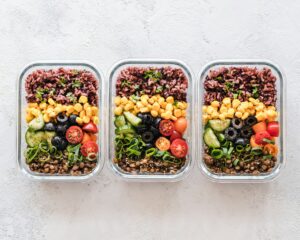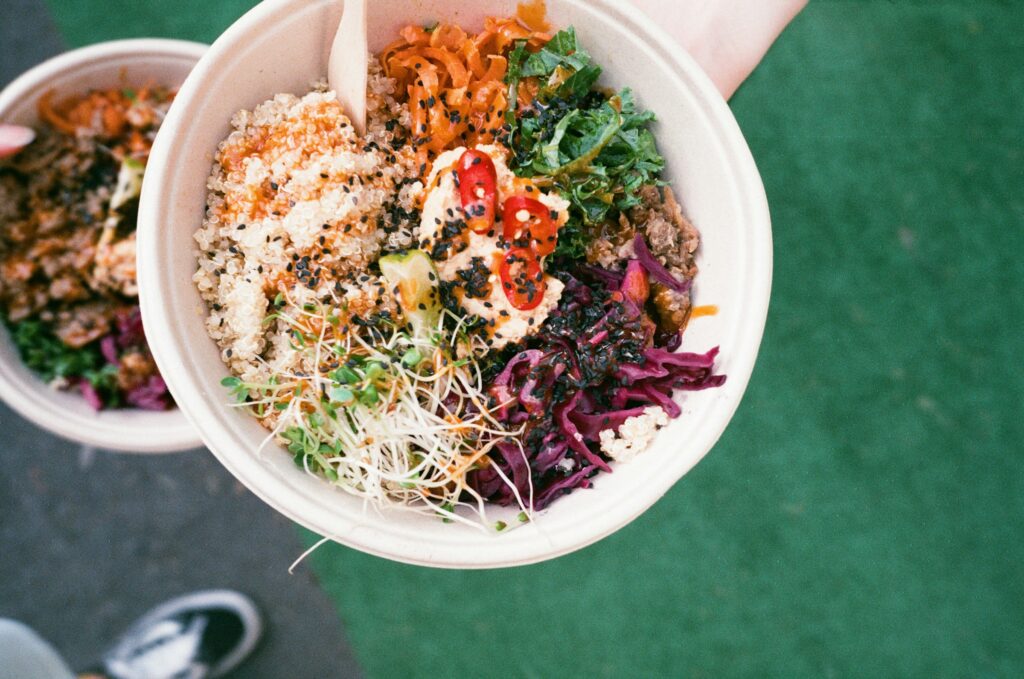
Monthly vegan meal planning can make everyday cooking feel much simpler.
Instead of wondering what to cook each day, you’ll have a clear plan that saves time, keeps your grocery trips organized, and helps you make the most of the ingredients you buy.
Planning a full month may sound like a big task, but it’s often easier than creating a new plan every week.
It helps reduce food waste, cuts down on last-minute shopping, and brings more variety to your meals while keeping your routine consistent.
By the end, you’ll have a simple system that makes meal planning feel less like a chore and more like a helpful habit.
Monthly Meal Planning at a Glance
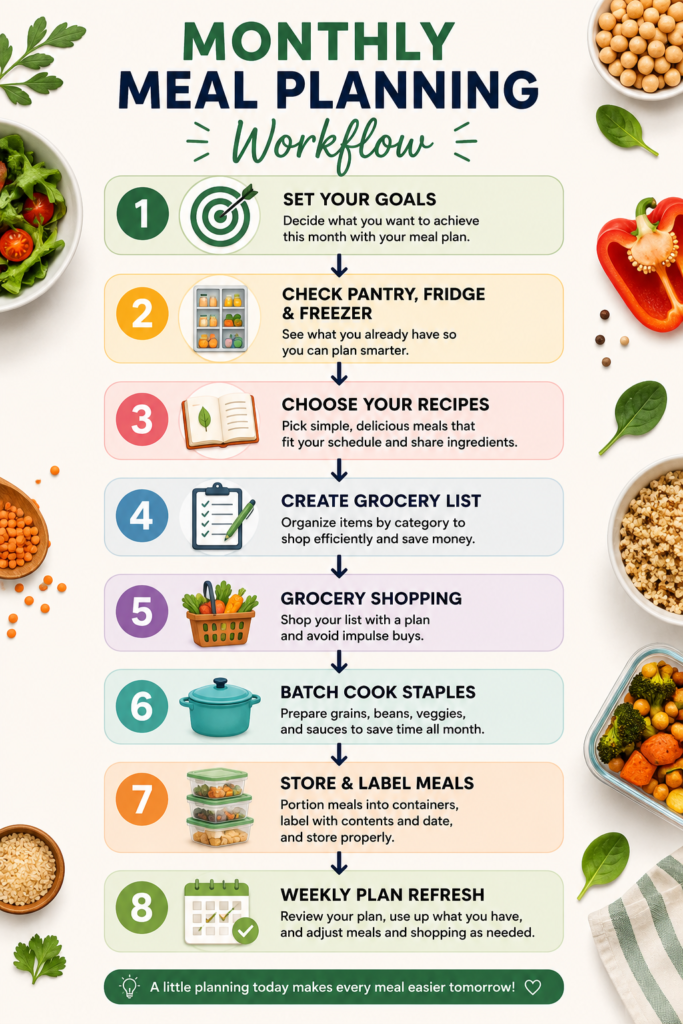
If you’re new to monthly meal planning, this quick overview shows the entire process from start to finish.
Use it as a simple roadmap while working through the rest of this guide.
| Step | What to Do |
|---|---|
| 1. Set Your Goals | Decide what you want to achieve, such as saving time, reducing food waste, or lowering grocery costs. |
| 2. Check Your Inventory | Look through your pantry, refrigerator, and freezer before planning meals or shopping. |
| 3. Choose Your Recipes | Pick simple meals that fit your schedule and share common ingredients. |
| 4. Organize Your Grocery List | Group ingredients by category to make shopping faster and avoid unnecessary purchases. |
| 5. Batch Cook Key Ingredients | Prepare staples like grains, beans, roasted vegetables, and sauces in advance. |
| 6. Store and Label Meals | Portion food into containers, label everything with the contents and date, and refrigerate or freeze as needed. |
| 7. Refresh Your Plan Weekly | Review your remaining ingredients, adjust meals, and shop for fresh produce if necessary. |
Why Plan Vegan Meals a Month in Advance?
Planning your vegan meals a month ahead gives you a simple roadmap for everyday cooking.
Instead of making dozens of small food decisions each week, you create one plan that keeps everything organized and easy to follow.
Save Time
One of the biggest benefits of monthly meal planning is spending less time thinking about what to cook.
Rather than sitting down every weekend to plan another week of meals, you can do most of the work in one session.
That means fewer planning days and more time to enjoy cooking.
Weekday dinners become much easier because you’ve already decided what’s on the menu.
Your grocery list is ready before you leave the house, which makes shopping quicker and helps you avoid wandering through every aisle.
You can also batch prep ingredients once and use them in several meals, saving even more time throughout the month.
Save Money
A monthly plan makes it easier to buy only what you need.
When you know which meals you’re making, you can shop with purpose instead of filling your cart with items that may never get used.
Staple ingredients like rice, dried beans, lentils, oats, pasta, and canned tomatoes are often more affordable when purchased in larger packages.
These pantry basics can be used in many different recipes, giving you excellent value over the course of the month.
Planning ahead also lets you take advantage of grocery specials.
If your favorite vegetables or plant-based ingredients are on sale, you can build meals around them or freeze extras for later.
A shopping list based on your meal plan also helps reduce impulse purchases.
When you know exactly what you need, it’s much easier to skip unnecessary items that can quickly increase your grocery bill.
Reduce Food Waste
Monthly planning helps every ingredient serve more than one purpose.
Instead of buying spinach for one recipe and forgetting about the rest, you can use it in salads, pasta dishes, wraps, soups, and smoothies throughout the week.
The same idea works well with vegetables like bell peppers, carrots, broccoli, mushrooms, and sweet potatoes.
Planning multiple meals with the same ingredients means less food ends up forgotten in the back of the refrigerator.
It’s also easier to make good use of leftovers.
A pot of chili can become tomorrow’s baked potato topping, while roasted vegetables can be added to grain bowls, wraps, or pasta for another quick meal.
Your freezer becomes part of the plan instead of an afterthought.
Freezing extra portions gives you ready-made meals for busy evenings and helps prevent perfectly good food from going to waste.
Eat More Variety
Planning a month ahead gives you a chance to create meals that feel exciting instead of repetitive.
When you can see your calendar at a glance, it’s much easier to mix different cuisines, cooking methods, and ingredients throughout the month.
You might enjoy tacos one night, a comforting lentil curry another, homemade veggie burgers later in the week, and a colorful pasta dish over the weekend.
This simple rotation keeps meals interesting without making your grocery shopping more complicated.
Seasonal fruits and vegetables are another easy way to add variety.
Choosing produce that’s in season often gives you better flavor while naturally changing your meals as the months go by.
You can also balance different textures and flavors across your meal plan.
Pair creamy soups with crunchy salads, hearty grain bowls with fresh wraps, and roasted vegetables with simple pasta dishes to keep every week feeling fresh and satisfying.
What You’ll Need Before You Start
Taking a few minutes to get organized before you build your monthly meal plan will make the entire process much smoother.
You don’t need fancy tools or a complicated system.
A few simple resources are all it takes to stay organized and make planning feel much less overwhelming.
A Calendar or Planner
Start by choosing a place to map out your meals for the month.
The best planner is simply the one you’ll enjoy using consistently.
You can use:
- A paper planner or notebook
- A printable monthly meal calendar
- A spreadsheet on your computer
- A digital calendar on your phone or tablet
- A meal planning app
Seeing your meals laid out on a monthly calendar makes it easier to spot busy days, repeat favorite meals, and spread recipes evenly throughout the month.
If you’re just getting started, don’t overthink it.
Even a simple handwritten calendar works perfectly.
A Collection of Recipes
Before you start filling in your calendar, gather a list of recipes you’d like to make.
Having everything in one place saves time and keeps you from searching for ideas every time you plan a meal.
Include a good mix of recipes, such as:
- Family favorites everyone enjoys
- Quick dinners for busy evenings
- One-pot meals with easy cleanup
- Slow cooker recipes that cook while you’re busy
- Sheet pan meals for simple roasting
- Freezer-friendly meals for future lunches or dinners
Aim for recipes that use similar ingredients whenever possible.
For example, if several meals use spinach, chickpeas, or sweet potatoes, you’ll use more of what you buy and waste less.
Check Your Grocery Inventory
Before writing your shopping list, take a quick look at what you already have.
This simple habit helps prevent buying duplicates and gives you ideas for meals using ingredients that are already waiting in your kitchen.
Check your:
- Pantry for grains, beans, pasta, canned goods, herbs, spices, and cooking oils
- Refrigerator for fresh vegetables, fruit, sauces, tofu, plant-based milk, and leftovers
- Freezer for frozen vegetables, fruit, cooked grains, homemade meals, and batch-cooked ingredients
Keep a small list of anything that needs to be used first.
Building a few meals around those ingredients is one of the easiest ways to save money and reduce food waste before you even begin shopping.
Set Your Monthly Meal Planning Goals
Before you start filling in your meal calendar, take a moment to decide what you want your plan to help you achieve.
Having a few clear goals makes it easier to choose recipes, build shopping lists, and create a routine that fits your lifestyle.
Your goals don’t have to be big.
Even one or two simple priorities can help you stay focused throughout the month.
Here are a few practical goals that work well for many home cooks:
Spend Less on Groceries
If saving money is your priority, plan meals that use affordable pantry staples like beans, lentils, rice, pasta, and oats.
Look for recipes that share ingredients so you can buy only what you need and use everything you bring home.
Cook More Homemade Meals
Cooking at home doesn’t have to mean preparing something complicated every night.
Mix quick dinners with a few batch-cooked meals so you always have something ready when time is short.
Reduce Food Waste
Plan several meals around the same fresh ingredients before adding new ones to your shopping list.
This simple habit helps vegetables, herbs, and other fresh foods get used while they’re still at their best.
Eat More Vegetables
Instead of adding vegetables as an afterthought, make them part of your meal plan from the beginning.
Choose a variety of colorful produce and include them in stir-fries, soups, grain bowls, wraps, pasta dishes, and roasted side dishes throughout the month.
Try One New Recipe Each Week
Adding one new recipe each week keeps meal planning fun without making it overwhelming.
Pair new recipes with familiar favorites so you’re always looking forward to something different while still enjoying meals you already know and love.
Simplify Weekday Dinners
Busy evenings are much easier when dinner is already planned.
Save quick meals, leftovers, freezer meals, or batch-cooked dishes for your busiest days, and leave recipes that take a little longer for weekends or quieter evenings.
Quick Tip: Choose two or three goals for the month instead of trying to do everything at once. A simple, realistic plan is much easier to follow, and small improvements each month quickly turn into lasting habits.
Build a Simple Monthly Meal Planning System
Step 1: Choose Your Monthly Themes
One of the easiest ways to keep meals interesting is to give each week a simple theme.
Themes make it easier to choose recipes because you already have a starting point instead of staring at a blank calendar.
Your themes can be based on your favorite foods, cooking methods, or the type of meals you enjoy most.
Here’s one simple example:
| Week | Theme | Meal Ideas |
|---|---|---|
| Week 1 | Comfort Foods | Lentil shepherd’s pie, creamy pasta, vegetable soup |
| Week 2 | International Dishes | Chickpea curry, vegetable stir-fry, black bean tacos |
| Week 3 | Protein-Packed Meals | Lentil bowls, tofu stir-fry, bean chili |
| Week 4 | Easy Freezer Meals | Lasagna, burritos, soups, casseroles |
Your themes don’t have to be the same every month.
Changing them with the seasons or trying new cuisines keeps meal planning fresh without making it more complicated.
Step 2: Plan Around Your Schedule
Your calendar should work with your life, not against it.
Before choosing recipes, look over your month and make note of busy days when cooking time may be limited.
Think about things like:
- Busy workdays
- School activities
- Holidays
- Travel plans
- Social events
- Date nights
Once you know which days will be hectic, match them with simple meals that require very little effort.
This could be a freezer meal, leftovers from the night before, a sheet pan dinner, or something you’ve already batch cooked.
Save recipes that take a little more time for weekends or evenings when you can enjoy cooking without feeling rushed.
Planning this way helps dinner feel manageable, even during your busiest weeks.
Step 3: Select Your Core Recipes
Now it’s time to fill your calendar with recipes.
Instead of choosing completely different meals every day, look for recipes that work well together.
Recipes that share ingredients make shopping easier, reduce food waste, and simplify meal prep.
Try choosing meals that:
- Use similar vegetables and pantry staples
- Freeze well for future meals
- Reheat without losing flavor or texture
- Require minimal cleanup
Aim to include a balanced mix of meals for the entire day, such as:
- Breakfasts
- Lunches
- Dinners
- Snacks
For example, roasted vegetables prepared for dinner can also be used in lunch wraps or grain bowls the next day.
A batch of cooked rice can become a side dish one evening and the base for fried rice later in the week.
Small connections like these make your meal plan much more efficient.
Step 4: Repeat Your Favorite Meals
Many people think meal planning means cooking something different every single day.
In reality, repeating favorite meals is one of the easiest ways to make monthly planning sustainable.
If your family enjoys a particular pasta dish, soup, curry, or taco night, there’s no reason not to include it several times during the month.
Repeating meals offers several advantages.
It saves time because you already know the recipe.
It saves money because you can buy ingredients in larger quantities and use them before they spoil.
It also reduces decision fatigue because you spend less time wondering what to cook.
To keep things from feeling repetitive, rotate your favorite meals every few weeks.
You can also make small changes by using different vegetables, sauces, grains, or seasonings while keeping the same basic recipe.
This gives you the comfort of familiar meals while still adding enough variety to keep your monthly menu enjoyable.
Monthly Planning Timeline
A simple timeline helps break monthly meal planning into manageable tasks instead of trying to do everything at once.
Use this schedule as a starting point and adjust it to fit your routine.
| Time | Task |
|---|---|
| Last Weekend of the Month | Choose recipes, review your schedule, and create your monthly meal plan. |
| Day 1 | Check your pantry, refrigerator, and freezer before making your grocery list. |
| Day 1 | Complete your main grocery shopping trip for pantry staples, frozen foods, and plant-based proteins. |
| Day 1 or 2 | Batch cook grains, beans, roasted vegetables, and sauces, then portion and label everything. |
| Weekly | Buy fresh fruits, vegetables, herbs, and other perishable ingredients. |
| Weekly | Refresh your meal calendar, rearrange meals if needed, and use up leftovers before shopping again. |
| End of the Month | Review what worked well, note any favorite recipes, and update your plan for the following month. |
Quick Tip: Treat this timeline as a flexible guide rather than a strict schedule. Adjust it to match your work, family, and lifestyle so meal planning stays simple and sustainable.
Organize Your Grocery Shopping
A well-organized grocery list makes shopping faster and helps you stay within your budget.
Instead of writing one long list, divide it into categories based on where you’ll find the items in the store.
This simple approach helps you shop more efficiently and reduces the chance of forgetting something important.
It also makes it easier to see what you already have at home before adding new items to your list.
Pantry Staples
Your pantry is the foundation of a flexible vegan meal plan.
Keeping a few reliable staples on hand means you can prepare a wide variety of meals without making extra trips to the grocery store.
Consider stocking ingredients like:
- Rice
- Pasta
- Lentils
- Beans (dried or canned)
- Oats
- Flour
- Nuts
- Seeds
- Canned tomatoes
- Vegetable broth
These ingredients have a long shelf life and work well in everything from soups and curries to pasta dishes, grain bowls, and baked recipes.
Check your pantry before every shopping trip so you only replace what you’re running low on.
Buying these items in larger quantities can also save money if you use them regularly.
Fresh Produce
Fresh fruits and vegetables bring color, flavor, and variety to your meals.
Whenever possible, build your meal plan around produce that’s in season.
Seasonal fruits and vegetables are often fresher, more flavorful, and easier to find throughout the year.
Focus on buying:
- Seasonal vegetables
- Seasonal fruits
- Fresh herbs
- Leafy greens
Choose produce that works across several recipes.
For example, spinach can be added to smoothies, pasta dishes, soups, wraps, and salads throughout the week.
Bell peppers, carrots, broccoli, onions, and sweet potatoes are also versatile ingredients that fit into many different meals.
If you’re worried about using everything before it spoils, plan recipes that use the same fresh ingredients over several days.
Refrigerated Items
These ingredients add variety and make it easy to prepare satisfying vegan meals throughout the month.
Keep your refrigerator stocked with essentials such as:
- Plant-based milk
- Tofu
- Tempeh
- Vegan yogurt
Buy only what you’ll use within its freshness period, especially items with shorter shelf lives.
If you find a good sale, check whether the product can be frozen so you can enjoy it later without waste.
Frozen Foods
Your freezer is one of the best tools for successful monthly meal planning.
Frozen ingredients last much longer than fresh ones and are perfect for busy days when you need something quick.
Keep a few freezer favorites on hand, including:
- Frozen vegetables
- Frozen fruit
- Frozen edamame
- Frozen herbs
Frozen vegetables can be added straight to soups, stir-fries, casseroles, and pasta dishes with little preparation.
Frozen fruit is perfect for smoothies, oatmeal, baking, and homemade desserts.
Frozen herbs are a simple way to add fresh flavor without worrying about them spoiling in the refrigerator.
Sample Monthly Grocery Budget Breakdown
If you’re trying to spend less on groceries, it helps to divide your budget into broad categories instead of shopping without a plan.
The percentages below are a flexible guideline and can be adjusted to match your household size, eating habits, and local food prices.
| Category | Suggested Budget |
|---|---|
| Fresh fruits and vegetables | 35% |
| Grains (rice, pasta, oats, quinoa, bread) | 20% |
| Beans and legumes | 20% |
| Plant-based proteins (tofu, tempeh, seitan) | 10% |
| Frozen fruits and vegetables | 10% |
| Herbs, spices, sauces, and pantry extras | 5% |
Money-Saving Tip: Build your meals around affordable staples like rice, beans, lentils, oats, and seasonal vegetables, then use sauces, herbs, and spices to add variety without significantly increasing your grocery bill.
Plan Meals That Share Ingredients
One of the easiest ways to make monthly meal planning work is to choose recipes that use many of the same ingredients.
This simple strategy saves money, reduces food waste, and makes meal prep much easier throughout the month.
Instead of buying a different list of ingredients for every recipe, you’ll use what you already have in several creative ways.
Reduce Food Waste
Fresh ingredients are much less likely to spoil when they’re included in multiple meals.
Rather than buying a bag of spinach for one dinner and forgetting about the rest, you can plan several recipes that use it throughout the week.
The same approach works well for vegetables, herbs, grains, and pantry staples.
By giving each ingredient more than one purpose, you’ll throw away less food and get more value from every grocery trip.
Lower Your Grocery Bill
Buying ingredients that appear in several recipes means you can shop more efficiently.
Instead of purchasing small amounts of many different foods, you can buy versatile ingredients that work in a variety of meals.
This keeps your shopping list shorter and helps you make the most of everything you buy.
It also makes it easier to take advantage of sales because you know those ingredients will be used before they spoil.
Save Time in the Kitchen
Using the same ingredients across several meals also speeds up meal prep.
You can wash, chop, roast, or cook larger batches once and use them throughout the week.
That means less time preparing ingredients every evening and fewer dishes to wash after dinner.
A little preparation at the beginning of the week can make several meals come together in just a few minutes.
A Simple Ingredient Reuse Example
Here’s an example of how just five ingredients can appear in several different meals throughout the month.
| Ingredient | Ways to Use It |
|---|---|
| Bell peppers | Stir-fries, fajitas, pasta, grain bowls, salads |
| Spinach | Smoothies, wraps, pasta dishes, soups, salads |
| Chickpeas | Curries, roasted snacks, salads, wraps, hummus |
| Sweet potatoes | Sheet pan dinners, tacos, grain bowls, soups, baked wedges |
| Brown rice | Stir-fries, burrito bowls, stuffed peppers, fried rice, side dishes |
Example Weekly Ingredient Rotation
Here’s how those same ingredients can be used across several meals without feeling repetitive.
| Day | Meal | Shared Ingredients |
|---|---|---|
| Monday | Chickpea curry with brown rice | Chickpeas, brown rice, spinach |
| Tuesday | Sweet potato and black bean tacos | Sweet potatoes, bell peppers |
| Wednesday | Vegetable stir-fry | Bell peppers, spinach, brown rice |
| Thursday | Roasted chickpea grain bowl | Chickpeas, spinach, sweet potatoes, brown rice |
| Friday | Stuffed bell peppers | Bell peppers, brown rice, spinach |
| Saturday | Sweet potato soup with fresh herbs | Sweet potatoes, spinach |
| Sunday | Mediterranean chickpea salad | Chickpeas, spinach, bell peppers |
Even though the same ingredients appear throughout the week, each meal has its own flavor and texture.
Small changes in seasonings, sauces, and cooking methods can turn a handful of simple ingredients into a month’s worth of satisfying vegan meals without making your shopping list longer or your kitchen routine more complicated.
Quick Ingredient Swap Guide
Running out of an ingredient doesn’t mean you need another trip to the grocery store.
Use these simple swaps to keep your monthly meal plan on track while making the most of what you already have.
| Instead of… | Try… |
|---|---|
| Chickpeas | Black beans or kidney beans |
| Lentils | Cannellini beans or split peas |
| Black beans | Pinto beans or chickpeas |
| Spinach | Kale, Swiss chard, or arugula |
| Broccoli | Cauliflower or Brussels sprouts |
| Sweet potatoes | Butternut squash or pumpkin |
| Brown rice | Quinoa, farro, or barley |
| Quinoa | Brown rice or bulgur |
| Tofu | Tempeh or cooked chickpeas |
| Tahini | Sunflower seed butter or cashew butter |
| Fresh herbs | Dried herbs (use about one-third as much) |
| Fresh vegetables | Frozen vegetables of the same type |
Quick Tip: Choose swaps with similar cooking times and textures to keep your recipes tasting their best while reducing food waste and avoiding extra grocery trips.
Batch Cooking Throughout the Month
Cook Staple Ingredients in Larger Batches
Many vegan staples store well and can be used in dozens of different meals.
Preparing them ahead of time makes busy weeknights much less stressful.
Consider batch cooking:
- Beans
- Lentils
- Rice
- Quinoa
- Roasted vegetables
- Homemade sauces
A large pot of cooked beans can become chili one night, tacos the next, and a grain bowl later in the week.
Cooked lentils work well in soups, pasta sauces, salads, and veggie patties.
Rice and quinoa can be served as side dishes, mixed into stir-fries, added to bowls, or used as the base for quick lunches.
Roasted vegetables are equally versatile.
They can be enjoyed with dinner, tossed into pasta, added to wraps, blended into soups, or served over grains.
Preparing one or two homemade sauces, such as a tahini dressing, tomato sauce, or peanut sauce, makes it easy to give similar ingredients completely different flavors.
Portion Ingredients for Easy Meals
After cooking, allow your food to cool before dividing it into meal-sized portions.
Smaller portions are easier to grab when you’re preparing lunch or dinner, and they thaw much faster than one large container.
Clear, airtight containers make it easy to see what you have available.
You can also use reusable freezer bags for grains, beans, and vegetables if freezer space is limited.
If you’re storing several batches at once, label each container with the contents and the date it was prepared.
This simple habit helps you use older food first and reduces waste.
Store Ingredients Properly
Most batch-cooked ingredients will keep well in the refrigerator for several days, making them perfect for meals throughout the week.
If you won’t use everything right away, freeze individual portions for future meals.
Having a freezer stocked with cooked staples means you can prepare a satisfying meal even when you don’t have time to cook.
For example, you might freeze cooked rice in single-serving portions, roasted vegetables in family-sized containers, and sauces in smaller containers that are easy to thaw as needed.
Mix and Match Throughout the Month
The real advantage of batch cooking is flexibility.
Instead of preparing complete meals in advance, keep a variety of cooked ingredients ready to mix and match.
One evening you might combine rice, roasted vegetables, chickpeas, and a lemon-tahini sauce for a grain bowl.
The next day, those same roasted vegetables can be tucked into wraps with hummus, while the remaining rice becomes a quick vegetable stir-fry.
Using the same batch-cooked ingredients in different combinations keeps meals interesting while dramatically reducing the amount of cooking you need to do each day.
Vegan Meal Prep Shelf Life Reference
Knowing how long prepared foods stay fresh helps you reduce food waste, maintain food quality, and plan meals with confidence.
Always cool cooked foods before storing them, use airtight containers, and label each container with the preparation date.
| Food | Refrigerator | Freezer |
|---|---|---|
| Cooked rice | Up to 4 days | Up to 3 months |
| Cooked quinoa | Up to 5 days | Up to 3 months |
| Cooked pasta | Up to 4 days | Up to 2 months |
| Cooked lentils | Up to 5 days | Up to 3 months |
| Cooked chickpeas | Up to 5 days | Up to 3 months |
| Cooked black beans | Up to 5 days | Up to 3 months |
| Roasted vegetables | Up to 4 days | Up to 3 months |
| Steamed vegetables | Up to 4 days | Up to 2 months |
| Baked tofu | Up to 4 days | Up to 3 months |
| Homemade sauces | Up to 5 days | Up to 3 months |
| Soup or stew | Up to 4 days | Up to 3 months |
Tip: When in doubt, freeze extra portions within a few days of cooking. Freezing meals while they’re still fresh helps preserve their flavor and texture, giving you quick, ready-to-eat vegan meals for busy days.
Keep Meals Balanced and Interesting
One of the easiest ways to enjoy monthly meal planning is to build variety into your menu.
Eating the same meals over and over can quickly become boring, even if they’re your favorites.
A simple mix of ingredients, flavors, and cooking styles keeps meals exciting while helping you make the most of your grocery shopping.
Include a Variety of Ingredients
Try to include different food groups throughout your monthly plan.
Using a wide range of ingredients creates meals with different colors, textures, and flavors while giving you plenty of options when it’s time to cook.
Aim to include:
- Whole grains such as brown rice, quinoa, barley, whole wheat pasta, and oats
- Legumes including beans, lentils, chickpeas, peas, and edamame
- Colorful vegetables like broccoli, carrots, bell peppers, zucchini, tomatoes, mushrooms, and sweet potatoes
- Fruits such as berries, apples, bananas, oranges, grapes, and seasonal favorites
- Healthy fats from avocados, nuts, seeds, olives, and plant-based oils
- Herbs and spices including basil, parsley, cilantro, oregano, cumin, paprika, turmeric, garlic, ginger, and black pepper
You don’t need every ingredient in every meal.
Instead, aim for variety across the entire month so your meals stay fresh and enjoyable.
Rotate Your Cooking Methods
Preparing ingredients in different ways can completely change the eating experience.
Even if you’re using the same vegetables or proteins, switching cooking methods creates new flavors and textures.
Try rotating between:
- Roasting
- Baking
- Steaming
- Stir-frying
- Grilling
- Slow cooking
- Pressure cooking
For example, broccoli can be roasted until crispy one evening, steamed as a side dish the next, or added to a colorful stir-fry later in the week.
Experiment with Different Flavors
Changing seasonings is one of the simplest ways to make familiar ingredients feel new.
The same bowl of rice and vegetables can taste completely different with a different sauce or spice blend.
Mix things up by using flavors such as:
- Garlic and herbs
- Smoky paprika
- Lemon and fresh herbs
- Ginger and soy
- Peanut sauce
- Tomato-based sauces
- Mild curry spices
Small changes like these help prevent meals from feeling repetitive without requiring extra effort.
Explore Different Cuisines
Planning meals from different parts of the world naturally adds variety to your monthly menu.
Each cuisine introduces unique ingredients, spices, and cooking techniques while often using many of the same pantry staples.
You might enjoy:
- Mediterranean grain bowls
- Mexican-inspired tacos and burrito bowls
- Indian-style lentil curries
- Asian-inspired stir-fries
- Italian pasta dishes
- Middle Eastern wraps and salads
Rotating cuisines throughout the month keeps meal planning fun and encourages you to try new recipes without completely changing your shopping habits.
Add a Mix of Textures
Great meals aren’t just about flavor.
Texture plays an important role in making food satisfying and enjoyable.
Try combining different textures within the same meal, such as:
- Creamy hummus with crunchy vegetables
- Crispy roasted chickpeas over a fresh salad
- Soft roasted sweet potatoes with toasted seeds
- Tender grains paired with crisp vegetables
- Smooth soups served with crusty bread
These small contrasts make even simple meals feel more interesting.
Create Flexible “Mix-and-Match” Meals
One of the biggest advantages of monthly meal planning is having prepared ingredients that can be turned into completely different meals.
Instead of cooking a new recipe from start to finish every day, you simply combine ingredients you’ve already prepared in fresh and creative ways.
This approach saves time, reduces food waste, and makes it much easier to adapt meals to your schedule and cravings.
Start with Prepared Building Blocks
Think of your batch-cooked ingredients as building blocks rather than finished meals.
A refrigerator stocked with cooked grains, roasted vegetables, beans, sauces, and fresh toppings gives you endless meal possibilities.
For example, you might have:
- Cooked brown rice or quinoa
- Roasted vegetables
- Chickpeas or lentils
- Tofu or tempeh
- Fresh leafy greens
- A few homemade sauces or dressings
With these basics ready to go, putting together lunch or dinner often takes just a few minutes.
Build Colorful Grain Bowls
Grain bowls are one of the easiest mix-and-match meals because almost every ingredient works together.
Start with a cooked grain, add a protein, pile on roasted or fresh vegetables, and finish with a flavorful sauce.
For example:
- Brown rice + roasted sweet potatoes + chickpeas + spinach + tahini dressing
- Quinoa + roasted broccoli + tofu + carrots + peanut sauce
- Rice + black beans + corn + avocado + salsa
Each bowl feels different simply by changing the vegetables or sauce.
Make Quick Wraps
Wraps are perfect for using leftover ingredients without much preparation.
Fill a tortilla or flatbread with cooked vegetables, protein, leafy greens, and your favorite spread for a quick lunch or dinner.
Try combinations such as:
- Hummus + roasted vegetables + spinach
- Chickpeas + avocado + shredded carrots
- Tofu + bell peppers + lettuce + dairy-free yogurt sauce
Wraps are also easy to pack for work, school, or travel.
Create Fresh Salads
Prepared ingredients make salads much more satisfying.
Instead of using only leafy greens, build a hearty salad by adding grains, legumes, and roasted vegetables.
For example:
- Spinach + quinoa + roasted vegetables + chickpeas
- Mixed greens + brown rice + edamame + cucumbers
- Kale + lentils + roasted sweet potatoes + pumpkin seeds
Finish with your favorite vinaigrette or creamy dressing for extra flavor.
Turn Leftovers into Stir-Fries
A stir-fry is one of the fastest ways to use leftover vegetables and cooked grains.
Simply heat everything in a pan, add your favorite sauce, and dinner is ready in minutes.
You can combine ingredients like:
- Brown rice + broccoli + bell peppers + tofu
- Quinoa + mushrooms + carrots + edamame
- Rice + mixed vegetables + chickpeas + garlic-ginger sauce
Since many of the ingredients are already cooked, the meal comes together very quickly.
Reinvent Pasta Dishes
Pasta is another excellent base for using ingredients you’ve already prepared.
Instead of making the same pasta every time, change the vegetables, protein, or sauce to create a completely new meal.
Ideas include:
- Pasta + roasted vegetables + tomato sauce
- Whole wheat pasta + spinach + mushrooms + white bean sauce
- Pasta + broccoli + chickpeas + garlic and olive oil
Even small changes can make familiar ingredients feel new.
Transform Ingredients into Soups
Soups are perfect for using small amounts of leftover vegetables, grains, and legumes that might otherwise go to waste.
Simply add vegetable broth, seasonings, and your prepared ingredients to create a comforting meal.
You might combine:
- Lentils + carrots + spinach + vegetable broth
- Brown rice + mixed vegetables + beans
- Roasted sweet potatoes + onions + vegetable broth blended into a creamy soup
Soup is also an excellent option for freezing, giving you ready-made meals for busy days later in the month.
Sample Mix-and-Match Combinations
| Prepared Ingredients | Meal Idea 1 | Meal Idea 2 | Meal Idea 3 |
|---|---|---|---|
| Brown rice + chickpeas + roasted vegetables | Grain bowl | Stir-fry | Stuffed peppers |
| Quinoa + spinach + tofu | Salad | Wrap | Warm bowl |
| Lentils + vegetables | Soup | Pasta sauce | Veggie patties |
| Sweet potatoes + black beans | Tacos | Burrito bowl | Loaded baked sweet potatoes |
| Roasted vegetables + hummus | Wrap | Grain bowl | Pasta topping |
The beauty of mix-and-match meals is their flexibility.
With a small collection of prepared ingredients, you can create dozens of different lunches and dinners throughout the month without feeling like you’re eating the same meal over and over again.
Leave Space for Flexibility
A monthly meal plan should be a helpful guide, not a strict schedule.
Trying to plan every breakfast, lunch, and dinner perfectly often leads to frustration when life doesn’t go as expected.
Leaving a little flexibility makes your meal plan easier to follow and much more sustainable over the long term.
Remember that the goal is progress, not perfection.
Make Room for Leftovers
Not every meal needs to be cooked from scratch.
Leftovers can become tomorrow’s lunch or provide an easy dinner on a busy evening.
Planning one or two leftover meals each week helps reduce food waste while giving you a welcome break from cooking.
If you end up with more leftovers than expected, simply adjust your meal plan instead of preparing another full meal.
Plan for Dining Out
Most people enjoy eating out occasionally or accepting invitations from family and friends.
Rather than seeing these meals as interruptions, include them in your monthly plan from the beginning.
For example, you might leave Friday evenings or one weekend meal open for dining out.
This keeps your meal plan realistic and helps prevent fresh ingredients from sitting unused while you’re away from home.
If your plans change, simply move that scheduled home-cooked meal to another day.
Expect Unexpected Schedule Changes
Busy workdays, school events, appointments, travel, or family commitments can all affect your cooking plans.
Instead of trying to predict every detail, leave a few flexible days throughout the month.
If you miss a planned meal, there’s no need to start over.
Simply continue with your next scheduled meal or swap meals around based on what works best that day.
A flexible meal plan adapts to your life instead of forcing your life to fit the plan.
Keep a Few Quick Meals Ready
Some days you simply won’t have the time or energy to cook a more involved recipe.
Having a few quick meal options available makes it much easier to stay on track.
Consider keeping ingredients on hand for meals like:
- Vegetable stir-fry with frozen vegetables
- Pasta with tomato sauce and chickpeas
- Bean and avocado wraps
- Frozen veggie burgers with salad
- Soup made with batch-cooked ingredients
These meals can usually be prepared in 20 minutes or less and are perfect for hectic evenings.
Give Yourself Permission to Adjust
Your monthly meal plan isn’t set in stone.
If you’re craving something different, have extra leftovers, or your schedule suddenly changes, don’t be afraid to rearrange meals.
Swapping Tuesday’s dinner with Thursday’s or freezing an extra portion for another week is completely normal.
The more flexible your plan is, the easier it becomes to maintain throughout the month.
Refresh Your Plan Each Week
A monthly meal plan doesn’t have to be created once and followed exactly as written.
The most successful meal planners spend just a few minutes each week making small adjustments instead of rebuilding the entire month from scratch.
This weekly check-in keeps your plan realistic, helps you use the food you already have, and prevents unnecessary grocery shopping.
Review Your Remaining Groceries
Before writing your shopping list for the week, take a quick look through your pantry, refrigerator, and fruit bowl.
You may already have ingredients that can be used before buying more.
Look for vegetables that need to be cooked soon, half-used packages, or pantry staples that can become the base of several meals.
Using these ingredients first helps reduce food waste and saves money on groceries.
Check Your Freezer Inventory
Your freezer is like a backup pantry filled with ready-to-use ingredients.
Take a few minutes each week to see what you already have available.
You might discover frozen vegetables, cooked grains, homemade soups, sauces, or batch-cooked beans that can replace something on your shopping list.
Using freezer items regularly also prevents forgotten food from sitting untouched for months.
Keeping a simple inventory on your freezer door or inside your meal planner makes it even easier to remember what’s available.
Rearrange Meals if Needed
Life rarely follows a perfect schedule.
If you skipped a recipe because you worked late or had unexpected plans, simply move it to another day.
There’s no need to rewrite your entire monthly plan.
Swap meals based on your current schedule, the ingredients you have available, or what you’re in the mood to eat.
For example, if a recipe uses vegetables that should be eaten soon, move it earlier in the week and save a freezer meal for later.
This small adjustment keeps ingredients fresh while reducing unnecessary waste.
Replace Unavailable Ingredients
Sometimes an ingredient isn’t available at the grocery store or becomes too expensive.
Instead of abandoning the recipe, make a simple substitution.
Many vegan ingredients can be swapped without changing the overall meal.
For example:
- Replace spinach with kale or Swiss chard.
- Use black beans instead of chickpeas.
- Swap quinoa for brown rice.
- Substitute broccoli with cauliflower.
- Use frozen vegetables when fresh produce isn’t available.
Being flexible with ingredients makes shopping easier and helps you continue following your meal plan without extra stress.
A Five-Minute Weekly Refresh Routine
You only need a few minutes each week to keep your monthly meal plan running smoothly.
- Check your pantry, refrigerator, and freezer.
- Use ingredients that need to be eaten first.
- Rearrange meals based on your upcoming schedule.
- Update your grocery list with only the items you truly need.
- Make simple ingredient substitutions if something is unavailable.
This quick weekly refresh keeps your monthly meal plan organized without requiring you to start over.
Signs Your Monthly Meal Plan Needs Adjusting
A monthly meal plan should make life easier, not feel restrictive.
If you notice any of the signs below, make a few small changes instead of starting your plan over from scratch.
- Fresh produce is spoiling before you use it: Buy smaller amounts or choose more frozen vegetables for the following week.
- You’re skipping the same meals every week: Replace recipes you don’t enjoy with meals you know you’ll actually eat.
- Your freezer is filling up with uneaten meals: Batch cook smaller portions until your freezer inventory catches up.
- Your grocery bill is increasing unexpectedly: Review your shopping list and focus more on affordable staples and seasonal produce.
- You’re relying on takeout more often than planned: Schedule quicker meals for your busiest days and keep a few freezer meals ready.
- You have too many leftovers at the end of the week: Prepare slightly smaller portions or plan dedicated leftover lunches.
- Meal prep is taking too long: Reduce the number of recipes you prepare and repeat more ingredients across multiple meals.
- Your schedule has changed: Rearrange your meal calendar to fit your current routine instead of forcing yourself to follow the original plan.
Common Monthly Meal Planning Mistakes
Even a well-designed meal plan can become difficult to follow if you make a few common mistakes.
Keep an eye out for these common pitfalls:
- Planning overly complicated meals: Choose recipes that match the time and energy you have available, especially on busy weekdays.
- Ignoring leftovers: Plan leftover meals into your schedule so cooked food gets eaten instead of thrown away.
- Buying too much fresh produce: Purchase only the amount of fresh fruits and vegetables you can realistically use before they spoil.
- Forgetting freezer space: Check that you have enough room to store batch-cooked meals and frozen ingredients before preparing large quantities.
- Not checking pantry inventory: Look through your pantry, refrigerator, and freezer before shopping to avoid buying items you already have.
- Planning every meal without flexibility: Leave room for dining out, schedule changes, quick meals, and unexpected leftovers so your plan is easier to maintain.
- Trying too many new recipes at once: Mix one or two new recipes with familiar favorites to keep meal planning enjoyable without becoming overwhelming.
Seasonal Vegan Meal Planning Tips
One of the easiest ways to improve your monthly meal plan is to shop with the seasons.
Seasonal fruits and vegetables are often at their best, making your meals more flavorful while helping you stretch your grocery budget.
Instead of planning the exact same meals every month, let the produce available during each season inspire your menu.
Seasonal Produce Tastes Fresher
Fruits and vegetables that are harvested during their natural growing season are usually fresher and more flavorful.
They often have better texture, brighter colors, and richer taste because they haven’t spent as much time in storage or transportation.
Using fresh, seasonal ingredients can make even simple meals like grain bowls, soups, salads, and roasted vegetable dishes more enjoyable.
Seasonal Produce Often Costs Less
When produce is in season, it’s usually more abundant and easier for stores to stock.
This often leads to lower prices, making it easier to eat a wide variety of fruits and vegetables without increasing your grocery bill.
Planning your monthly meals around seasonal ingredients allows you to take advantage of these savings while reducing the need for expensive out-of-season produce.
If you find a great sale, consider buying a little extra and freezing some for future meals.
Seasonal Ingredients Add Variety
Eating the same vegetables every month can quickly become repetitive.
Changing your meal plan with the seasons naturally introduces new colors, flavors, and textures throughout the year.
For example, you might enjoy:
- Spring: Asparagus, peas, spinach, lettuce, radishes, and fresh herbs.
- Summer: Tomatoes, zucchini, cucumbers, bell peppers, berries, and peaches.
- Autumn: Sweet potatoes, pumpkins, squash, mushrooms, apples, and pears.
- Winter: Broccoli, cabbage, cauliflower, kale, carrots, citrus fruits, and Brussels sprouts.
Rotating seasonal ingredients helps keep your meals exciting while encouraging you to try new recipes throughout the year.
Adjust Your Monthly Plan as the Seasons Change
Your meal plan doesn’t need to stay the same every month.
As different fruits and vegetables become available, update your recipes to make the most of what’s fresh.
For example, swap roasted squash for zucchini as summer approaches, replace hearty winter soups with colorful salads in warmer months, or use fresh berries instead of apples when they’re in season.
Helpful Tools for Monthly Meal Planning
The right tools can make monthly meal planning faster, more organized, and easier to stick with.
You don’t need to buy everything on this list, but using a few of these items can simplify your routine.
- Printable meal planners: Provide a clear overview of your meals for the month and make planning easier.
- Grocery list templates: Help organize shopping by category so you can shop more efficiently and avoid forgetting items.
- Pantry inventory sheets: Keep track of what you already have to prevent duplicate purchases and reduce food waste.
- Label maker: Creates clear, easy-to-read labels for containers, helping you quickly identify stored ingredients and meals.
- Meal prep containers: Store individual portions neatly, making meals easy to refrigerate, freeze, and reheat.
- Freezer labels: Record the contents and preparation date so you can use older meals first and avoid mystery containers.
- Whiteboard calendar: Displays your monthly meal plan in a visible place, making it easy for everyone in the household to see what’s planned and note any changes.
Sample One-Week Monthly Meal Plan
Here’s an example of a balanced vegan meal plan for one week:
| Day | Breakfast | Lunch | Dinner |
|---|---|---|---|
| Monday | Overnight oats | Lentil salad | Vegetable stir-fry |
| Tuesday | Smoothie | Grain bowl | Chickpea curry |
| Wednesday | Toast with nut butter | Leftovers | Pasta primavera |
| Thursday | Chia pudding | Wrap | Black bean tacos |
| Friday | Oatmeal | Soup | Veggie pizza |
| Saturday | Pancakes | Salad | Sheet pan vegetables |
| Sunday | Breakfast burrito | Leftovers | Lentil shepherd’s pie |
This type of weekly plan provides a healthy balance of whole grains, legumes, vegetables, and simple meals while leaving room for leftovers and variety.
As the month progresses, you can easily adjust the framework by replacing ingredients with seasonal produce, trying different cuisines, or using whatever you already have in your pantry and freezer.
For example, chickpea curry can become a lentil curry, vegetable stir-fry can feature different seasonal vegetables, and grain bowls can be customized with new sauces and toppings.
Using a flexible weekly template like this makes monthly meal planning much easier because you’re building on a system that already works instead of starting from scratch every week.
Monthly Meal Planning Success Checklist
Before you start a new month, use this checklist to make sure your meal plan is practical, budget-friendly, and easy to stick with.
- Set realistic monthly meal planning goals.
- Check your pantry, refrigerator, and freezer before shopping.
- Plan recipes that share common ingredients.
- Create a grocery list organized by food category.
- Batch cook staple foods like grains, beans, and roasted vegetables.
- Portion, label, and date refrigerated and frozen meals.
- Include a mix of quick meals, leftovers, and freezer-friendly recipes.
- Leave room for unexpected schedule changes and dining out.
- Buy seasonal produce whenever possible to save money and add variety.
- Review and refresh your meal plan each week.
- Use older ingredients before opening new ones to reduce food waste.
- Make notes about favorite recipes and improvements for next month’s plan.
Final Thoughts
Monthly vegan meal planning doesn’t have to be complicated to make a big difference.
Starting with a simple, flexible plan can save time, reduce food waste, make grocery shopping easier, and take the stress out of deciding what to cook each day.
Don’t worry about creating the perfect monthly schedule right away.
Begin with a few favorite meals, prepare a handful of versatile ingredients, and adjust your plan as your month unfolds.
With each month, you’ll learn what works best for your routine, making meal planning feel more natural and less like a chore.
Small planning habits can lead to easier cooking, less waste, and a delicious variety of plant-based meals that you’ll look forward to enjoying every week.
FAQs
How far ahead should I plan vegan meals?
Planning one month at a time works well for many people, but keep your plan flexible so you can adjust for schedule changes, seasonal produce, and leftovers.
Can beginners successfully meal plan for a month?
Yes. Start with simple recipes you already enjoy, repeat meals when needed, and make small adjustments as you build confidence.
How often should I grocery shop during the month?
A large shopping trip at the beginning of the month, combined with one or two smaller trips for fresh produce, is a practical approach for most households.
Can I freeze prepared vegan meals?
Absolutely. Many vegan meals, including soups, curries, chili, cooked grains, beans, and casseroles, freeze well and are perfect for busy days.
How do I avoid getting bored with repeated meals?
Use the same core ingredients but change the sauces, seasonings, vegetables, and cooking methods to create new flavors throughout the month.
What’s the easiest way to organize a monthly meal calendar?
Use a printable meal planner, whiteboard calendar, spreadsheet, or meal planning app to map out your meals and update them as your schedule changes.
Hi, I’m Daisy Roots, the home cook and recipe developer behind this kitchen. I create simple, tested vegan recipes using everyday ingredients. Every dish is developed and cooked in my own kitchen, with clear steps to help you get reliable results every time. Thanks for stopping by — let’s cook something great!