Peanut noodle bowls are a favorite for good reason.
They’re easy to make, packed with fresh ingredients, and coated in a rich, creamy sauce that brings every bite to life.
This Thai-inspired version delivers the perfect mix of sweet, savory, tangy, and spicy flavors.
The peanut sauce is smooth and flavorful, while the crisp vegetables add color, texture, and freshness.
Making it at home is simple, budget-friendly, and allows you to customize every bowl exactly how you like it.
In this guide, I’ll show you how to make a delicious Thai-inspired peanut noodle bowl step by step, along with helpful tips, variations, and serving ideas to make it your own.
Recipe At a Glance
| Detail | Information |
|---|---|
| Prep Time | 15 minutes |
| Cook Time | 10 minutes |
| Total Time | 25 minutes |
| Difficulty | Easy |
| Servings | 4 |
| Best Noodles | Rice Noodles |
| Make Ahead | Yes |
| Meal Prep Friendly | Yes |
What Is a Thai-Inspired Peanut Noodle Bowl?
A Thai-inspired peanut noodle bowl is a colorful and satisfying dish made with noodles, fresh vegetables, and a creamy peanut sauce packed with bold flavor.
It combines different textures and tastes in every bite, making it both comforting and refreshing at the same time.
The rich peanut sauce coats the noodles beautifully, while crisp vegetables add freshness and crunch.
One of the best things about this dish is how easy it is to customize with your favorite ingredients.
Origins of Thai Peanut Flavors
Peanuts play an important role in many popular Thai dishes.
They are often used in sauces, curries, salads, and noodle dishes to add richness, texture, and a slightly nutty flavor.
Traditional Thai cooking is known for balancing several flavors at once.
Sweet, salty, sour, and spicy elements are carefully combined to create dishes that taste vibrant and layered rather than one-dimensional.
Peanut-based sauces are especially loved because they bring many of these flavors together in a smooth and creamy form.
A typical Thai-inspired peanut sauce often includes ingredients like peanuts, lime juice, soy sauce or fish sauce, garlic, and chili.
Each ingredient contributes something different to the final flavor.
The recipe in this guide takes inspiration from those classic flavor combinations while keeping the ingredient list simple and accessible.
Instead of requiring specialty ingredients or advanced cooking skills, it uses easy-to-find pantry staples that most home cooks can work with confidently.
The result is a bowl that captures the spirit of Thai-inspired flavors while remaining practical for everyday cooking.
Why You’ll Love This Recipe
This recipe comes together quickly, making it perfect for busy days when you want something homemade without spending hours in the kitchen.
Most of the preparation involves simple tasks like cooking noodles, whisking together the sauce, and slicing fresh vegetables.
The ingredients are affordable and widely available in most grocery stores.
A few basic pantry items create a sauce that tastes far more impressive than the effort required to make it.
It is also an excellent meal prep option.
The sauce can be made ahead of time, and the vegetables can be chopped in advance, making assembly fast and easy throughout the week.
The flavors often become even better after they have had a little time to mingle together.
Another reason people love this recipe is its flexibility.
You can add tofu, chicken, shrimp, or edamame for extra protein.
You can swap vegetables based on what you have available in your refrigerator.
You can make the sauce milder, spicier, sweeter, or tangier depending on your personal taste.
The recipe can also be adapted for different dietary preferences with just a few simple ingredient swaps.
No matter how you customize it, the creamy peanut sauce ties everything together and keeps every bowl full of flavor.
My Favorite Ingredient Combination
If you’re not sure where to start, this is the combination I come back to most often.
My favorite version uses rice noodles, shredded purple cabbage, carrots, cucumber, grilled tofu, and plenty of creamy peanut sauce.
Just before serving, I add a generous squeeze of fresh lime juice and a sprinkle of crushed peanuts.
The combination creates the perfect balance of creamy, crunchy, savory, and fresh flavors.
Every ingredient brings something different to the bowl, making each bite satisfying and full of texture.
It’s simple, colorful, and a great example of how delicious this recipe can be with just a handful of fresh ingredients.
Ingredients You’ll Need
The ingredients for this Thai-inspired peanut noodle bowl are simple, fresh, and easy to find.
Most of them may already be sitting in your pantry or refrigerator.
Feel free to adjust the vegetables or protein based on what you enjoy most.
For the Noodles
Choose one of the following options:
- 8 ounces rice noodles
- 8 ounces whole wheat spaghetti (alternative option)
- 8 ounces soba noodles
For the Peanut Sauce
- ½ cup natural peanut butter
- 3 tablespoons soy sauce or tamari
- 2 tablespoons fresh lime juice
- 1 tablespoon maple syrup or honey
- 1 tablespoon rice vinegar
- 1 teaspoon sesame oil
- 2 cloves garlic, minced
- 1 tablespoon fresh ginger, grated
- 1 to 2 teaspoons sriracha or chili garlic sauce (adjust to taste)
- 2 to 4 tablespoons warm water, as needed to thin the sauce
For the Bowl Toppings
- 1 red bell pepper, thinly sliced
- 1 medium cucumber, julienned or sliced into matchsticks
- 1 cup shredded carrots
- 1 cup shredded purple cabbage
- 3 green onions, thinly sliced
- ¼ cup fresh cilantro, roughly chopped
- ¼ cup crushed peanuts
- Lime wedges, for serving (optional)
Optional Protein Additions
Choose one or mix and match:
- 8 ounces extra-firm tofu, cubed and cooked
- 8 ounces tempeh, sliced and cooked
- 1 pound grilled chicken, sliced
- 1 pound cooked shrimp, peeled and deveined
- 1 cup shelled edamame
| Protein | Flavor | Prep Time |
|---|---|---|
| Tofu | Mild | 10 mins |
| Tempeh | Nutty | 10 mins |
| Chicken | Savory | 15 mins |
| Shrimp | Light | 5 mins |
| Edamame | Mild | 3 mins |
These ingredients create a flavorful and well-balanced bowl, but don’t be afraid to make it your own.
The peanut sauce works beautifully with a wide variety of vegetables and proteins.
Ingredient Substitutions
Don’t worry if you’re missing an ingredient or two.
These simple swaps work well and help you make the recipe with what you already have on hand.
| If You Don’t Have | Use Instead |
|---|---|
| Peanut Butter | Almond Butter |
| Rice Noodles | Soba Noodles |
| Tamari | Soy Sauce |
| Maple Syrup | Honey |
| Cilantro | Fresh Parsley |
| Sriracha | Chili Garlic Sauce |
These substitutions may slightly change the flavor, but the finished bowl will still be delicious, creamy, and full of Thai-inspired flavor.
Essential Kitchen Equipment
A few basic kitchen essentials are all it takes to prepare the noodles, mix the sauce, and assemble the bowl with ease.
Large Pot
- Used for cooking the noodles according to the package instructions.
- Choose a pot large enough to allow the noodles to cook evenly without sticking together.
- A larger pot also makes draining the noodles easier.
Mixing Bowls
- One medium bowl for preparing the peanut sauce.
- One large bowl for tossing the noodles and vegetables together if desired.
- Having separate bowls helps keep the preparation process organized.
Whisk
- Used to blend the peanut sauce ingredients until smooth and creamy.
- A whisk helps break up the peanut butter and creates a silky sauce with fewer lumps.
- If you do not have a whisk, a fork works well too.
Sharp Knife
- Needed for slicing vegetables like bell peppers, cucumbers, green onions, and cabbage.
- A sharp knife makes prep work faster, easier, and safer.
- Thin, even slices also help create a more appealing bowl.
Cutting Board
- Provides a stable surface for chopping and slicing ingredients.
- A large cutting board gives you plenty of room to work comfortably.
- Keeping vegetables organized during prep can make assembly much easier.
Measuring Cups and Spoons
- Help ensure accurate ingredient amounts for the peanut sauce.
- Proper measurements create a balanced flavor with the right mix of sweet, savory, tangy, and spicy elements.
- Measuring tools are especially helpful if you are making the recipe for the first time.
How to Make Thai-Inspired Peanut Noodle Bowls
This recipe comes together in a few simple steps.
Once the noodles are cooked and the sauce is mixed, the rest is mostly assembly.
Take your time with the prep, and you’ll be rewarded with a bowl that’s packed with flavor, color, and texture.
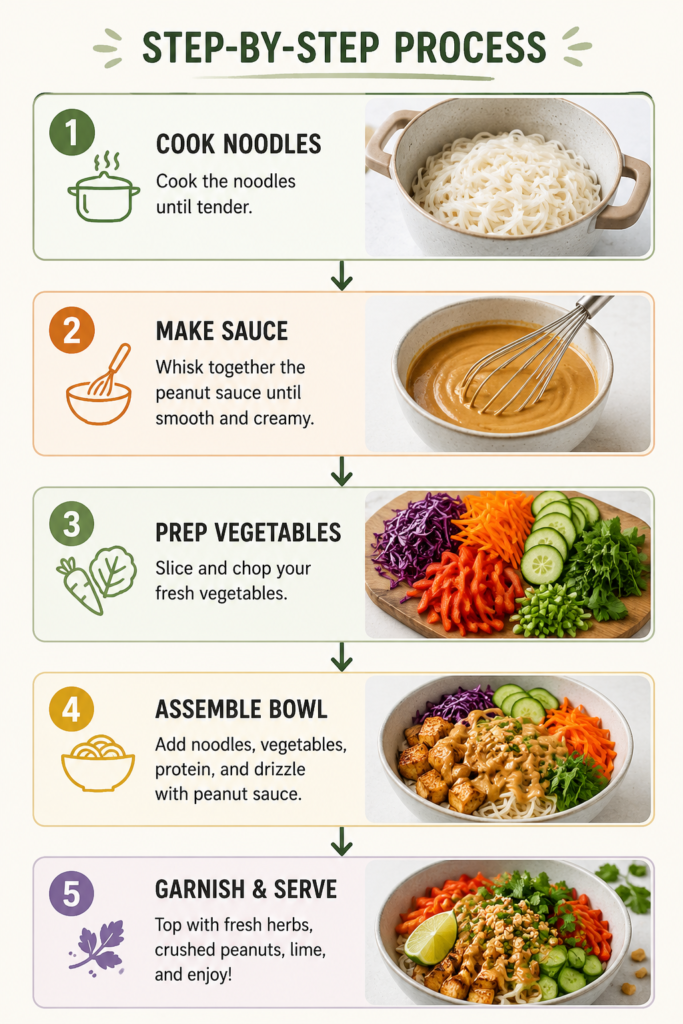
Step 1: Cook the Noodles
Bring a large pot of water to a boil over high heat.
Add your noodles and cook according to the package directions.
Keep an eye on them during the last minute of cooking.
The goal is to cook the noodles until they are tender but still have a slight bite in the center.
This texture helps the noodles hold up well when coated in the peanut sauce.
Overcooked noodles can become soft and mushy, especially after they sit for a few minutes.
Once cooked, drain the noodles immediately.
Rinse them under cool water if using rice noodles or if you plan to serve the dish cold.
The cool water stops the cooking process and helps prevent the noodles from becoming sticky.
If the noodles will sit for a while before assembling the bowls, toss them with a small splash of sesame oil.
This simple step helps keep them separated and easier to work with later.
Set the noodles aside while you prepare the remaining ingredients.
Step 2: Prepare the Peanut Sauce
In a medium mixing bowl, combine the peanut butter, soy sauce, lime juice, maple syrup, rice vinegar, sesame oil, garlic, ginger, and sriracha.
Whisk everything together until smooth.
At first, the mixture may seem thick.
This is completely normal.
Slowly add warm water, one tablespoon at a time.
Continue whisking until the sauce reaches a creamy, pourable consistency.
The sauce should easily coat a spoon without being too runny.
Now is the perfect time to taste and adjust the flavors.
If you prefer a sweeter sauce, add a little more maple syrup or honey.
For extra tang, squeeze in more lime juice.
If you enjoy heat, add another small amount of sriracha.
Don’t worry about making it perfect right away.
Small adjustments can make a big difference.
Once you’re happy with the flavor, set the sauce aside.
Step 3: Prep the Vegetables
Wash and dry all of your vegetables before slicing.
Cut the bell pepper into thin strips.
Slice the cucumber into matchsticks or thin rounds.
Shred the carrots and cabbage if they are not already prepared.
Thin slices work best because they blend easily with the noodles and make every bite balanced.
Try to keep the vegetables similar in size.
This creates a more attractive bowl and makes the ingredients easier to eat.
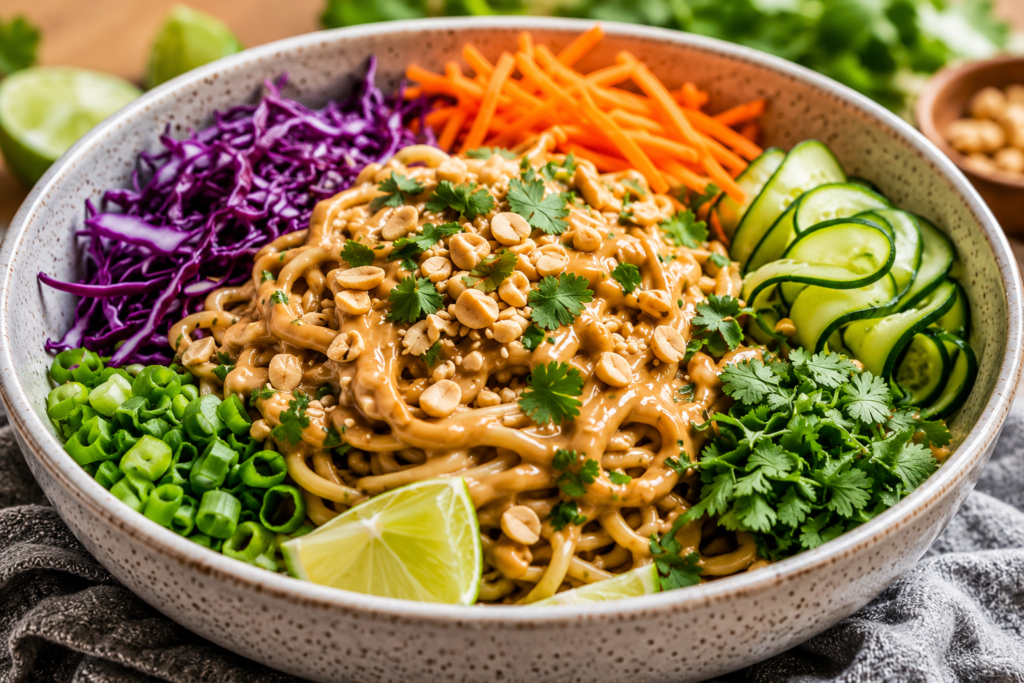
The mix of red bell pepper, orange carrots, green cucumber, and purple cabbage creates a beautiful combination of colors.
A colorful bowl not only looks inviting but also adds a variety of textures.
Finish by slicing the green onions and roughly chopping the cilantro.
Keep everything nearby so assembly is quick and easy.
| Vegetable | Crunch Level |
|---|---|
| Cucumber | Medium |
| Bell Pepper | High |
| Purple Cabbage | Very High |
| Carrots | Very High |
| Snap Peas | High |
| Bean Sprouts | Medium |
Step 4: Assemble the Bowl
Start by dividing the cooked noodles between serving bowls.
Arrange the vegetables around or on top of the noodles.
You can place each ingredient in its own section for a colorful presentation.
This approach works especially well when serving guests.
Another option is to combine the noodles, vegetables, and peanut sauce in a large bowl.
Gently toss everything together until evenly coated.
This method ensures every bite is packed with flavor.
Both options work well, so choose whichever style you prefer.
If using a protein such as tofu, chicken, shrimp, tempeh, or edamame, add it now.
Spread it evenly throughout the bowl so each serving gets a good portion.
Step 5: Garnish and Serve
The finishing touches bring extra flavor and texture to the bowl.
Sprinkle chopped cilantro over the top for a fresh, bright flavor.
Add a handful of crushed peanuts for a satisfying crunch.
The peanuts also reinforce the nutty flavor of the sauce.
Place a few lime wedges alongside each bowl.
A squeeze of fresh lime juice right before eating adds a burst of freshness that ties everything together.
Serve immediately while the noodles are at their best.
If you’re making the bowls ahead of time, keep the garnish separate until serving.
This helps the herbs stay fresh, and the peanuts stay crunchy.
Grab a fork, dig in, and enjoy every flavorful bite.
Pro Tips for the Best Peanut Noodle Bowl
These tips will help you create a bowl with the perfect balance of flavor, texture, and presentation every time.
Achieving the Perfect Sauce Consistency
The peanut sauce is the heart of this recipe.
A smooth, creamy sauce helps coat the noodles evenly and brings all of the ingredients together.
If the sauce feels too thick, add warm water one tablespoon at a time.
Warm water blends more easily with peanut butter and helps create a silky texture.
Whisk thoroughly after each addition.
It is much easier to thin a sauce than it is to thicken one.
If the sauce becomes too thin, stir in a small spoonful of peanut butter until it reaches the consistency you want.
The finished sauce should be thick enough to cling to the noodles but loose enough to drizzle easily.
Keep in mind that peanut sauce naturally thickens as it sits.
If you make it ahead of time, you may need to whisk in a little water before serving.
| Sauce Problem | Solution |
|---|---|
| Too Thick | Add warm water 1 tbsp at a time |
| Too Thin | Add 1 tbsp peanut butter |
| Too Salty | Add lime juice |
| Too Sweet | Add soy sauce |
| Too Spicy | Add extra peanut butter |
Balancing Sweet, Savory, and Spicy Flavors
One reason peanut noodle bowls are so satisfying is the combination of different flavors working together.
The peanut butter provides richness.
The soy sauce adds savory depth.
Lime juice brings brightness.
The maple syrup or honey adds a touch of sweetness.
The sriracha contributes gentle heat.
Before serving, take a moment to taste the sauce.
If it feels too rich, add a squeeze of lime juice.
If it tastes too tangy, add a little more sweetener.
If you enjoy spicy food, increase the sriracha gradually until the flavor feels right.
Small changes can have a big impact.
Trust your taste buds and adjust the sauce to match your preferences.
Keeping Vegetables Fresh and Crisp
Fresh vegetables add crunch and contrast to the creamy noodles.
For the best texture, prepare the vegetables shortly before serving.
Thin slices not only look better but also make the bowl easier to eat.
After slicing, keep the vegetables chilled until you are ready to assemble the bowls.
Cold vegetables create a refreshing contrast against the noodles and sauce.
Avoid mixing the vegetables into the sauce too far in advance.
The longer they sit, the softer they become.
If you are meal prepping, store the vegetables separately and combine everything just before serving.
This simple step helps maintain their freshness and crunch.
Avoiding Common Noodle Mistakes
Properly cooked noodles make a huge difference in the final dish.
Always follow the cooking time listed on the package as a starting point.
Check the noodles a minute before the recommended cooking time ends.
You want them tender but not overly soft.
Overcooked noodles can break apart and become mushy once the sauce is added.
After draining, rinse rice noodles with cool water to stop the cooking process.
If the noodles will be sitting for more than a few minutes, toss them with a small amount of sesame oil.
This helps prevent them from sticking together.
Avoid letting the noodles sit in a large pile for too long without tossing.
They can clump together and become harder to separate later.
Easy Recipe Variations
Vegan Peanut Noodle Bowl
To make this recipe fully vegan, use maple syrup instead of honey and choose plant-based protein options such as tofu, tempeh, or edamame.
Gluten-Free Version
For a gluten-free bowl, use rice noodles and replace regular soy sauce with tamari to maintain the same rich, savory flavor.
High-Protein Peanut Noodle Bowl
Add grilled chicken, shrimp, tofu, tempeh, or extra edamame to increase the protein content and make the meal even more satisfying.
Spicy Thai Peanut Noodles
If you enjoy extra heat, increase the amount of sriracha, stir in chili garlic sauce, or add a pinch of red pepper flakes to the peanut sauce.
Low-Carb Alternative
For a lighter version, swap the noodles for spiralized zucchini, cucumber noodles, or finely shredded cabbage while keeping the same flavorful peanut sauce and toppings.
Best Ways to Customize This Bowl
Add Mango for Sweetness
Fresh mango adds a naturally sweet, juicy contrast to the savory peanut sauce.
Its bright flavor pairs especially well with the lime and fresh vegetables.
Add Avocado for Extra Creaminess
Sliced avocado adds a rich, buttery texture that complements the creamy peanut sauce.
It also makes the bowl feel even more satisfying.
Use Zucchini Noodles for a Lighter Bowl
Swap some or all of the noodles for spiralized zucchini if you prefer a lighter option.
The fresh zucchini pairs beautifully with the bold flavors of the sauce.
Add Crushed Cashews for Extra Crunch
Crushed cashews provide another layer of crunch and a slightly buttery flavor.
They make an excellent alternative or addition to crushed peanuts.
Mix in Bean Sprouts for Freshness
Bean sprouts add a crisp texture and refreshing bite.
They work especially well when added just before serving.
Add Thai Basil for More Authentic Flavor
Fresh Thai basil brings a slightly sweet, peppery flavor that complements the peanut sauce beautifully.
A small handful can add extra depth and give the bowl a more authentic Thai-inspired taste.
What to Serve with Thai Peanut Noodle Bowls
These peanut noodle bowls are satisfying on their own, but pairing them with the right sides, proteins, and drinks can turn them into a complete meal.
Fresh Side Dishes
- Thai cucumber salad – Crisp, refreshing, and lightly tangy, making it a perfect contrast to the rich peanut sauce.
- Fresh spring rolls – Filled with fresh vegetables and herbs, they add extra texture and flavor without feeling heavy.
Protein Pairings
- Grilled tofu – A flavorful plant-based option that pairs beautifully with the creamy peanut sauce.
- Chicken satay – Tender, seasoned chicken skewers that complement the Thai-inspired flavors of the bowl.
- Shrimp skewers – Light, juicy, and quick to prepare, adding a delicious seafood twist to the meal.
Refreshing Drinks
- Iced green tea – Clean and refreshing, helping balance the richness of the peanut sauce.
- Thai iced tea – Sweet, creamy, and full of flavor, making it a classic pairing for Thai-inspired dishes.
- Sparkling lime water – Bright, bubbly, and refreshing with a burst of citrus flavor.
Meal Prep and Storage Tips
This Thai-inspired peanut noodle bowl is an excellent meal prep recipe.
Many of the ingredients can be prepared in advance, making lunches and dinners much easier throughout the week.
A little planning ahead helps keep the flavors fresh and the textures at their best.
How to Store Leftovers
Allow the noodles and any cooked protein to cool before storing them.
Transfer leftovers to an airtight container and place them in the refrigerator.
For the best texture, store extra peanut sauce separately whenever possible.
Keeping the sauce separate prevents the noodles from absorbing too much moisture as they sit.
If you have not yet assembled the bowls, store the vegetables in a separate container from the noodles.
This helps the vegetables stay crisp and fresh.
Properly stored leftovers are usually best enjoyed within 3 to 4 days.
How Long the Peanut Sauce Lasts
Homemade peanut sauce keeps surprisingly well in the refrigerator.
Store it in a sealed jar or airtight container.
When refrigerated properly, the sauce typically stays fresh for up to 5 days.
You may notice the sauce thickening as it chills.
This is completely normal.
Before using it again, stir in a small splash of warm water and whisk until smooth.
The sauce should return to its original creamy consistency.
Making the sauce ahead of time is a great way to save time on busy days.
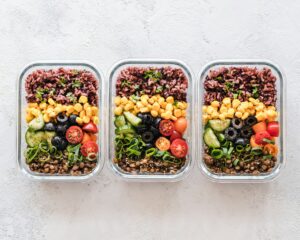
Best Containers for Meal Prep
Clear glass containers work especially well for meal prep.
They make it easy to see what is inside and help keep ingredients fresh.
Containers with tight-fitting lids are ideal for preventing leaks and maintaining freshness.
If possible, use separate containers for the noodles, vegetables, protein, and sauce.
This approach keeps everything tasting freshly made when it is time to eat.
Small containers are also useful for storing extra sauce, crushed peanuts, and garnishes.
Keeping these items separate helps preserve their texture and flavor.
Reheating Instructions
If you prefer your noodle bowl warm, reheat only the noodles and protein.
Place them in a microwave-safe dish and heat in short intervals until warmed through.
Avoid overheating the noodles, as they can become soft and lose their texture.
If the noodles seem dry after reheating, add a spoonful of peanut sauce or a splash of water.
This helps bring back moisture and flavor.
Fresh vegetables are best added after reheating.
This keeps them crisp and prevents them from becoming wilted.
Finish with fresh cilantro, crushed peanuts, and a squeeze of lime just before serving.
Make It Ahead Timeline
If you’re preparing this recipe for a busy weeknight or planning meals for the week, a little prep in advance can save time and make assembly even easier.
| Time | Task |
|---|---|
| 1 Day Before | Make the peanut sauce |
| 1 Day Before | Wash and chop the vegetables |
| Morning Of | Cook the noodles and store them in the refrigerator |
| Before Serving | Assemble the bowls with noodles, vegetables, and protein |
| Before Serving | Add cilantro, crushed peanuts, and lime wedges |
Following this simple timeline keeps the vegetables crisp, the sauce fresh, and the final bowl quick and easy to put together when it’s time to eat.
Nutritional Benefits of This Recipe
This peanut noodle bowl is more than just flavorful.
It combines a variety of ingredients that contribute different nutrients while creating a satisfying and balanced meal.
The combination of noodles, vegetables, peanut sauce, and optional proteins allows you to enjoy plenty of flavor while adding a variety of wholesome ingredients to your plate.
Benefits of Peanuts
Peanuts are the star ingredient in the creamy sauce that gives this dish its signature flavor.
They provide plant-based protein, which helps make the meal more satisfying.
Peanuts also contain healthy fats that contribute to the rich and creamy texture of the sauce.
In addition to flavor and texture, peanuts naturally contain important nutrients such as vitamin E, magnesium, and several B vitamins.
A little peanut butter goes a long way in creating a sauce that feels indulgent while delivering plenty of nutritional value.
Nutrient-Rich Vegetables
The colorful vegetables in this recipe bring much more than visual appeal.
Bell peppers add crunch and contain vitamin C.
Carrots contribute natural sweetness along with vitamin A.
Purple cabbage adds color, texture, and a variety of beneficial plant compounds.
Cucumbers provide freshness and help balance the richness of the peanut sauce.
Green onions and cilantro add bright flavor while contributing additional nutrients.
Using a variety of vegetables helps create a bowl with different textures, colors, and flavors in every bite.
Healthy Fats and Protein
The peanut butter and sesame oil provide healthy fats that help make the dish satisfying and flavorful.
Protein can come from several different sources, depending on how you customize the bowl.
Tofu, tempeh, edamame, chicken, and shrimp all work well and can help make the meal more filling.
Combining protein with the noodles and vegetables creates a balanced dish that can keep you satisfied for longer.
The flexibility of this recipe makes it easy to choose the protein source that best fits your preferences.
Making the Recipe More Nutritious
There are several simple ways to boost the nutritional value of this recipe without changing its delicious flavor.
Adding extra vegetables is one of the easiest options.
Broccoli, snap peas, shredded kale, and spinach all blend well with the peanut sauce.
Choosing whole wheat spaghetti instead of traditional noodles can add extra fiber.
Edamame is another excellent addition that increases both protein and texture.
You can also reduce the amount of sweetener slightly if you prefer a less sweet sauce.
Common Mistakes to Avoid
Overcooking the Noodles
Noodles are the foundation of this dish, so getting their texture right is important.
Cooking them for too long can make them soft, mushy, and more likely to break apart when mixed with the sauce.
Start checking the noodles about a minute before the package suggests.
They should be tender but still have a slight bite.
Once they reach that point, drain them immediately.
If you’re using rice noodles, a quick rinse under cool water helps stop the cooking process.
Remember that the noodles will continue to absorb some moisture from the sauce after they are mixed together.
Slightly firm noodles usually produce the best final texture.
Using Thick Peanut Sauce
A thick peanut sauce may seem rich and flavorful, but it can be difficult to distribute evenly throughout the bowl.
Instead of coating the noodles, it may clump together and leave some bites overly saucy, while others stay dry.
The sauce should be smooth and easy to pour.
If it feels too thick, whisk in a little warm water until it loosens up.
Add the water gradually and mix well between additions.
A properly thinned sauce will coat every noodle more evenly and create a much better eating experience.
Skipping Fresh Ingredients
Fresh vegetables and herbs play a major role in this recipe.
They add crunch, brightness, and contrast to the creamy peanut sauce.
Without them, the bowl can feel heavier and less balanced.
Fresh cilantro, green onions, cucumber, carrots, and bell peppers each contribute their own flavor and texture.
Even a simple squeeze of fresh lime juice can make the entire dish taste more vibrant.
If possible, prepare these ingredients shortly before serving for the best results.
Overseasoning the Bowl
The peanut sauce already contains several bold ingredients.
Soy sauce, peanut butter, lime juice, garlic, ginger, and sriracha all bring strong flavors to the dish.
Adding too much extra seasoning can overpower the balance that makes the bowl so enjoyable.
Taste the sauce before adding more salt, spice, or sweetness.
Make small adjustments rather than large ones.
It is much easier to add flavor than it is to remove it.
A balanced sauce allows every ingredient to shine without any single flavor taking over.
Reader Success Tips
Before you serve your peanut noodle bowl, keep these simple tips in mind for the best results:
- Taste the peanut sauce before mixing it with the noodles and adjust the flavors if needed.
- Slice the vegetables thinly so they blend easily with the noodles and create a better texture in every bite.
- Keep fresh garnishes like cilantro, crushed peanuts, and lime wedges separate until serving.
- Add a squeeze of fresh lime juice just before eating to brighten the flavors.
- Avoid overcooking the noodles so they stay tender without becoming soft or mushy.
Final Thoughts
This Thai-inspired peanut noodle bowl is the kind of recipe that makes busy weeknights feel a little easier without sacrificing flavor.
The creamy peanut sauce, fresh vegetables, and tender noodles come together in a meal that is both simple and satisfying.
Don’t be afraid to make it your own.
Swap in your favorite vegetables, choose the protein you love most, and adjust the flavors to suit your taste.
Once you’ve made it, you’ll likely find yourself coming back to it again and again!
FAQs
Can I make peanut noodles ahead of time?
Yes. You can prepare the noodles, vegetables, and peanut sauce up to 3 days in advance and assemble the bowls when ready to serve.
What noodles work best for this recipe?
Rice noodles are the most popular choice, but soba noodles and whole wheat spaghetti also work well.
Can I freeze peanut sauce?
Yes. Store the sauce in a freezer-safe container for up to 3 months and thaw it in the refrigerator before using.
How do I make the sauce less spicy?
Simply reduce or omit the sriracha or chili garlic sauce and add extra peanut butter or a little more sweetener if needed.
Can I use almond butter instead of peanut butter?
Yes. Almond butter is a great substitute and creates a slightly different but equally delicious flavor.
Is this recipe suitable for meal prep?
Absolutely. The ingredients store well, and the bowls can be prepared ahead of time for easy lunches or dinners throughout the week.
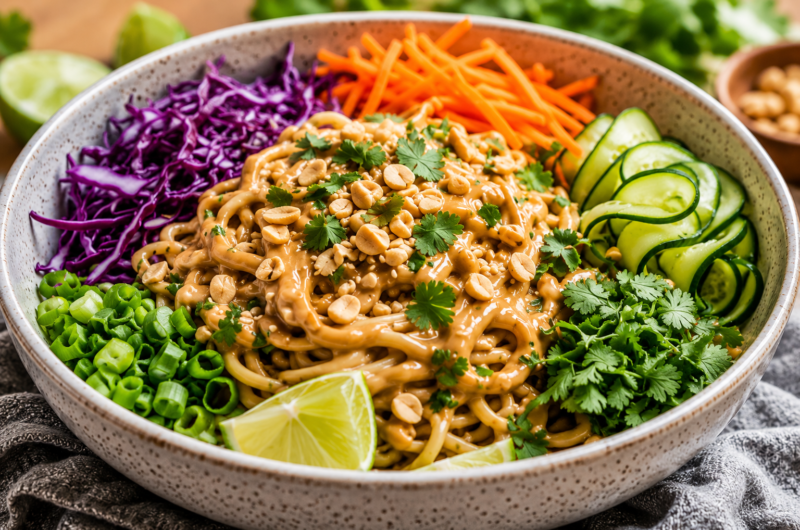
Creamy Thai Peanut Noodle Bowl Recipe Ready in Just 30 Minutes
Course: Vegan Dinner RecipesCuisine: ThaiDifficulty: Easy4
servings15
minutes10
minutes25
minutesA quick and flavorful Thai-inspired peanut noodle bowl made with tender noodles, crunchy vegetables, and a creamy homemade peanut sauce.
Ingredients
- For the Noodles:
8 oz rice noodles
1 red bell pepper, thinly sliced
1 cup shredded carrots
1 cup shredded purple cabbage
1 cucumber, sliced into ribbons
3 green onions, sliced
¼ cup fresh cilantro
¼ cup crushed peanuts
- For the Peanut Sauce:
½ cup natural peanut butter
3 tbsp soy sauce
2 tbsp lime juice
1 tbsp maple syrup
1 tbsp rice vinegar
1 tsp sesame oil
2 cloves garlic, minced
1 tbsp grated ginger
1 tsp sriracha
2–4 tbsp warm water
Directions
- Cook the rice noodles according to package directions, then drain and set aside.
- Whisk together all peanut sauce ingredients until smooth, adding warm water as needed.
- Prepare and slice all vegetables.
- Divide the noodles between bowls and arrange the vegetables on top.
- Drizzle generously with peanut sauce.
- Garnish with cilantro, crushed peanuts, and a squeeze of fresh lime.
- Serve immediately and enjoy.
Notes
- Add tofu, chicken, shrimp, or edamame for extra protein.
- Adjust the sriracha to make the sauce milder or spicier.
- Store leftovers in an airtight container for up to 3 days.
- For the best texture, keep the sauce separate until ready to serve.
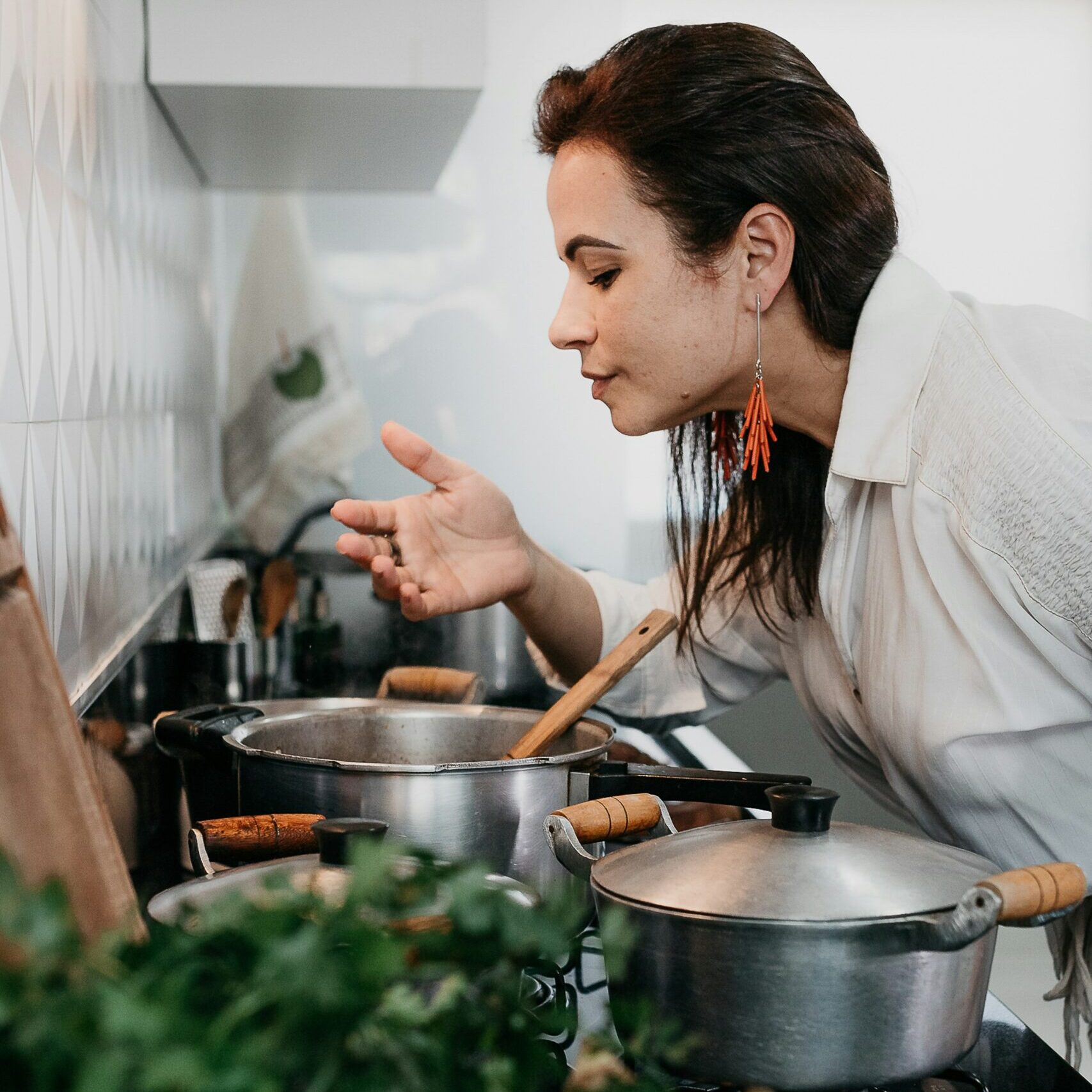
Hi, I’m Daisy Roots, the home cook and recipe developer behind this kitchen. I create simple, tested vegan recipes using everyday ingredients. Every dish is developed and cooked in my own kitchen, with clear steps to help you get reliable results every time. Thanks for stopping by — let’s cook something great!