Whether you’re cooking for a vegan guest, trying a new recipe, or simply working with what you already have, knowing a few vegan substitutions can save the day.
The best swaps do more than replace an ingredient—they help your meals keep the flavor, texture, and look you expect.
The good news is that you don’t need a pantry full of specialty products to cook great vegan meals.
In this guide, you’ll discover simple, reliable substitutions for everyday ingredients, along with practical tips on when to use each one so you can cook with confidence from breakfast to dessert.
At a Glance
This guide is designed to be a practical reference you can return to whenever you need a reliable vegan ingredient swap.
| 🟢 Skill Level | Beginner |
| ⏱️ Reading Time | 12–15 minutes |
| 🥣 Pantry Staples Covered | 16+ |
| 🔄 Ingredient Swaps | 20+ |
| 🍽️ Best For | Everyday cooking and baking |
| 📖 Includes | Conversion tables, recipe recommendations, pantry tips, and beginner-friendly graphics |
Why Learn Vegan Cooking Substitutions?
Easier Meal Planning
Meal planning becomes much simpler when you know there is more than one option for common ingredients.
If a recipe calls for eggs, dairy milk, or butter, you’ll already have a backup plan instead of changing your menu.
This flexibility makes grocery shopping easier because you can choose ingredients that work across several recipes.
You’ll also feel more confident trying new dishes since you know how to adjust them if needed.
More Pantry Flexibility
A well-stocked pantry becomes much more useful when you know how to mix and match ingredients.
Simple staples like oats, canned beans, lentils, tofu, plant milk, and flaxseed can be used in many different meals.
Instead of making a special trip to the store, you can often create a great substitute using ingredients you already have.
Keeping a few versatile basics on hand means you’re ready for everything from baking cookies to making creamy pasta sauces.
Budget-Friendly Alternatives
Many vegan substitutions are made from affordable everyday ingredients.
Mashed bananas, applesauce, beans, oats, and homemade cashew cream can often replace more expensive specialty products.
Buying ingredients that work in multiple recipes also helps stretch your grocery budget.
Over time, you’ll learn which pantry staples give you the most value while still delivering delicious results.
Great for Families with Different Preferences
Cooking for a family is easier when you know how to adapt recipes without making completely separate meals.
You can prepare one dish and simply swap a few ingredients to suit different preferences.
For example, a pasta sauce can be served with dairy cheese for some people and a vegan topping for others.
Small changes like these make mealtime more relaxed while keeping everyone happy around the table.
Reduce Food Waste
Knowing how to substitute ingredients helps you make better use of what you already own.
If one ingredient runs out, another may work just as well without affecting the finished dish.
This approach helps prevent perfectly good food from sitting unused in the pantry or refrigerator.
How to Choose the Right Vegan Substitute
Not every substitute works the same way, and that’s completely normal.
The easiest way to choose the right replacement is to think about what the original ingredient does in the recipe.
Consider the Ingredient’s Purpose
Before swapping an ingredient, ask yourself one simple question: What job is this ingredient doing?
Some ingredients add flavor, while others hold everything together or create a light, fluffy texture.
Choosing a substitute that performs the same job will usually give you the best results.
Here are the main roles ingredients play in cooking and baking:
| Purpose | What It Does | Good Vegan Substitutes |
|---|---|---|
| Flavor | Adds sweetness, richness, or savory taste. | Nutritional yeast, maple syrup, plant-based butter, herbs, spices, miso |
| Texture | Makes food creamy, crispy, chewy, or tender. | Cashew cream, coconut milk, tofu, mashed avocado, mushrooms |
| Moisture | Keeps baked goods and cooked dishes from becoming dry. | Unsweetened applesauce, mashed banana, plant milk, vegan yogurt |
| Binding | Holds ingredients together so they don’t fall apart. | Flax egg, chia egg, mashed potatoes, silken tofu |
| Leavening | Helps baked goods rise and become light and airy. | Baking powder, baking soda with an acid like lemon juice or vinegar |
| Richness | Adds body, creaminess, and a satisfying mouthfeel. | Vegan butter, coconut cream, olive oil, cashew cream |
Thinking about these roles instead of simply replacing one ingredient with another will help you make smarter substitutions in almost any recipe.
Start with Simple One-to-One Swaps
If you’re new to vegan cooking, begin with substitutions that require little or no adjustment.
Swapping dairy milk for oat milk or vegan butter for regular butter is often as easy as using the same amount.
These straightforward changes help you build confidence before trying more advanced substitutions.
As you become more comfortable, you’ll naturally learn which ingredients work best in different recipes.
Test Small Batches First
When you’re trying a new substitute, make a smaller batch whenever possible.
This lets you see how the ingredient affects the flavor, texture, and appearance without using all of your ingredients.
If you’d like the dish to be creamier, firmer, or sweeter, you can make small adjustments the next time.
Every recipe is a learning experience, and even experienced home cooks fine-tune their favorite dishes.
Adjust Seasoning as Needed
Different vegan ingredients bring their own unique flavors to a recipe.
For example, coconut milk adds a subtle sweetness, while nutritional yeast provides a savory, cheesy flavor.
Once your dish is cooked, taste it before serving.
A small pinch of salt, a squeeze of lemon juice, a little extra garlic, or a few fresh herbs can brighten the flavors and help everything come together beautifully.
| If the Recipe Needs… | Traditional Ingredient | Vegan Options |
|---|---|---|
| Binding | Egg | Flax egg, chia egg |
| Moisture | Egg, butter | Applesauce, mashed banana |
| Richness | Butter, cream | Vegan butter, cashew cream |
| Creaminess | Cream cheese, sour cream | Cashew cream, tofu, vegan cream cheese |
| Stretchy cheese | Mozzarella | Vegan cheese |
| Crispy coating | Breadcrumbs | Crushed crackers, rolled oats |
Before You Start
- Choose unsweetened plant milk for savory recipes unless the recipe specifically calls for sweetened milk.
- Press extra-firm tofu for 20–30 minutes before cooking to remove excess moisture and help it brown more evenly.
- Soak raw cashews in hot water for 20–30 minutes (or overnight in cold water) before blending to create ultra-smooth sauces.
- Let homemade vegan buttermilk rest for 5–10 minutes after mixing plant milk with lemon juice or vinegar so it can thicken properly.
- Season generously. Ingredients like tofu, lentils, and soy curls absorb flavor best when cooked with herbs, spices, marinades, or sauces.
- Taste before serving. A small squeeze of lemon juice, pinch of salt, or sprinkle of nutritional yeast can dramatically improve the finished dish.
- Start with small substitutions when adapting a favorite recipe. Replacing one or two ingredients at a time makes it easier to learn what works best.
The Ultimate Vegan Ingredient Substitution Guide
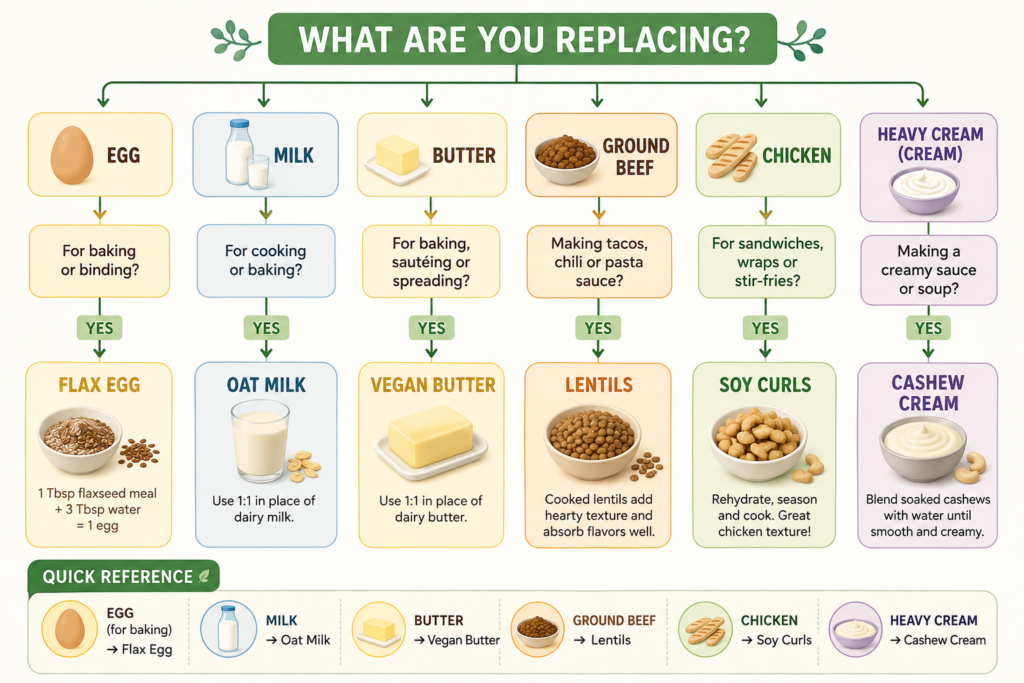
1. Eggs
Eggs can do several different jobs in a recipe, so there isn’t a single substitute that works for everything.
Sometimes they hold ingredients together, sometimes they add moisture, and other times they help baked goods become light and fluffy.
The best replacement depends on what you’re making, so it’s helpful to match the substitute to the recipe rather than choosing one at random.
Best Vegan Egg Replacements
Flax Egg
A flax egg is one of the most popular vegan egg substitutes because it’s simple to make and works in many baked goods.
To make one flax egg, mix 1 tablespoon of ground flaxseed with 3 tablespoons of water, then let it sit for about 5 to 10 minutes until it becomes thick and gel-like.
It adds moisture and helps bind ingredients together without changing the flavor very much.
Best uses:
- Cookies
- Muffins
- Pancakes
- Brownies
- Quick breads
Chia Egg
A chia egg is made the same way as a flax egg using 1 tablespoon of chia seeds and 3 tablespoons of water.
After a few minutes, it forms a thick gel that helps hold batters together.
Chia seeds have a slightly more noticeable texture than flax, but they work just as well in many recipes.
Best uses:
- Muffins
- Cakes
- Waffles
- Homemade veggie burgers
- Cookies
Unsweetened Applesauce
Unsweetened applesauce adds moisture while creating a soft, tender texture in baked goods.
Use ¼ cup of applesauce to replace one egg.
Because it has a mild sweetness, it’s best suited for recipes where a little extra fruit flavor won’t be noticeable.
Best uses:
- Cakes
- Muffins
- Quick breads
- Snack bars
- Brownies
Mashed Banana
Mashed banana works much like applesauce by adding moisture and helping ingredients stick together.
Use ¼ cup of mashed ripe banana for each egg.
It gives baked goods a slight banana flavor, which can be delicious in the right recipe but may not suit every dish.
Best uses:
- Banana bread
- Muffins
- Pancakes
- Oat cookies
- Breakfast bakes
Silken Tofu
Silken tofu blends into a smooth, creamy consistency that adds structure without making recipes taste like tofu.
Blend it until smooth before measuring.
Use ¼ cup of blended silken tofu to replace one egg.
It creates dense, rich baked goods and works well in creamy recipes.
Best uses:
- Cheesecake-style desserts
- Brownies
- Dense cakes
- Quiches
- Custard-style fillings
Commercial Egg Replacers
Store-bought egg replacers are made specifically for vegan baking and are designed to perform much like eggs.
Most come as a powder that you mix with water according to the package directions.
They’re a convenient option when you want reliable, consistent results.
Best uses:
- Cakes
- Cookies
- Cupcakes
- Pancakes
- Recipes that call for several eggs
Best Uses
Choosing the right substitute depends on what the egg is meant to do in the recipe.
If you need a binder, flax eggs and chia eggs are excellent choices.
For extra moisture, applesauce and mashed banana work beautifully.
When you want structure and a creamy texture, silken tofu is a dependable option.
If you’re baking something that relies on several eggs, a commercial egg replacer often delivers the most consistent results.
When Each Option Works Best
| Egg Substitute | Best For | Notes |
|---|---|---|
| Flax Egg | Cookies, muffins, brownies, quick breads | Excellent binder with a mild flavor |
| Chia Egg | Cakes, waffles, veggie burgers, muffins | Strong binding power with a slight seed texture |
| Unsweetened Applesauce | Cakes, muffins, brownies | Adds moisture and softness |
| Mashed Banana | Banana bread, pancakes, breakfast baking | Adds moisture and a light banana flavor |
| Silken Tofu | Brownies, cheesecakes, quiches, dense cakes | Creates a rich, creamy texture |
| Commercial Egg Replacer | Nearly all baked goods | Reliable choice for recipes using multiple eggs |
2. Dairy Milk
Replacing dairy milk is one of the easiest changes you can make in vegan cooking.
Most plant-based milks can be swapped 1:1 for dairy milk, so there’s usually no need to adjust the amount.
The best choice depends on the flavor, creaminess, and texture you want in the finished dish.
Popular Plant-Based Alternatives
Oat Milk
Oat milk has a smooth, creamy texture and a mild flavor that works well in both sweet and savory recipes.
It blends easily into sauces, soups, and baked goods without overpowering other ingredients.
Its balanced taste makes it a great everyday option for home cooks.
Best uses:
- Baking
- Coffee and tea
- Creamy soups
- Pasta sauces
- Pancake batter
Soy Milk
Soy milk is one of the closest plant-based alternatives to dairy milk in terms of texture and cooking performance.
Its creamy consistency makes it especially reliable in recipes that need a little extra body.
For the most flexibility, choose an unsweetened, unflavored variety.
Best uses:
- Baking
- Cream sauces
- Mashed potatoes
- Custards
- Smoothies
Almond Milk
Almond milk has a light texture and a subtle nutty flavor.
It works best in recipes where a thinner milk won’t affect the final texture.
Unsweetened almond milk is the better choice for cooking since it won’t add unwanted sweetness.
Best uses:
- Muffins
- Pancakes
- Oatmeal
- Smoothies
- Light soups
Coconut Milk
Coconut milk is much richer than most other plant-based milks.
Canned coconut milk creates thick, creamy sauces and desserts, while refrigerated coconut milk is lighter and works more like regular milk.
Its gentle coconut flavor pairs well with many recipes but may be noticeable in delicate dishes.
Best uses:
- Curries
- Creamy soups
- Desserts
- Ice cream
- Rich sauces
Cashew Milk
Cashew milk is naturally smooth and creamy with a mild, slightly buttery flavor.
It blends well into recipes where you want richness without a strong taste.
Because of its silky texture, it’s an excellent choice for creamy dishes.
Best uses:
- Cream sauces
- Mashed potatoes
- Pasta dishes
- Soups
- Baking
Pea Milk
Pea milk has a creamy consistency and a neutral flavor that makes it surprisingly versatile.
It performs well in both cooking and baking and is easy to substitute in most recipes.
If you’re looking for a plant-based milk with a taste that’s close to dairy, pea milk is worth keeping on hand.
Best uses:
- Baking
- Cooking
- Coffee
- Cereal
- Smoothies
Best Uses for Each Milk
| Plant-Based Milk | Flavor | Texture | Best Uses |
|---|---|---|---|
| Oat Milk | Mild and slightly sweet | Creamy | Baking, coffee, soups, sauces |
| Soy Milk | Neutral | Rich and creamy | Baking, sauces, mashed potatoes, custards |
| Almond Milk | Light and slightly nutty | Thin to medium | Pancakes, muffins, smoothies, oatmeal |
| Coconut Milk | Mild coconut flavor | Very rich and creamy | Curries, desserts, creamy soups, sauces |
| Cashew Milk | Mild and buttery | Smooth and creamy | Pasta sauces, soups, mashed potatoes, baking |
| Pea Milk | Neutral | Creamy | Everyday cooking, baking, coffee, smoothies |
Which Works Best in Baking?
Most plant-based milks can be used successfully in baking, but a few stand out for their consistent results.
Soy milk is often the closest replacement for dairy milk because of its creamy texture and reliable performance in cakes, muffins, breads, and cookies.
Oat milk is another excellent choice thanks to its balanced flavor and smooth consistency, making it a favorite for everyday baking.
Cashew milk also works well when you want a rich, tender crumb without adding a noticeable flavor.
For the best results, choose unsweetened and unflavored plant-based milk unless a recipe specifically calls for a sweetened variety.
If you’re trying a new recipe for the first time, oat milk or soy milk are dependable choices that work well in almost any baked treat.
3. Butter
Butter adds richness, moisture, and flavor to many recipes, but it’s also one of the easiest ingredients to replace.
In most cases, you can use a vegan alternative without changing the cooking method or sacrificing great results.
Vegan Butter
Vegan butter is the closest replacement for dairy butter because it looks, spreads, and cooks in much the same way.
Most brands can be swapped 1:1 for regular butter in both cooking and baking.
It melts well, adds a rich flavor, and helps baked goods stay tender.
Best for:
- Cookies
- Cakes
- Muffins
- Frosting
- Mashed potatoes
- Sautéing vegetables
Coconut Oil
Coconut oil is a versatile substitute that works well when a recipe needs fat and moisture.
Refined coconut oil has a neutral flavor, while unrefined or virgin coconut oil adds a light coconut taste.
If a recipe calls for melted butter, melted coconut oil is often an easy swap.
Best for:
- Brownies
- Quick breads
- Granola
- Roasted vegetables
- Some pie crusts
Olive Oil
Olive oil brings a smooth, rich texture and works especially well in savory recipes.
It can also be used in many baked goods, particularly those with a rustic style, such as focaccia or quick breads.
Choose a mild olive oil if you don’t want its flavor to stand out.
Best for:
- Pasta dishes
- Roasted vegetables
- Salad dressings
- Bread
- Savory muffins
Avocado Oil
Avocado oil has a mild taste that lets the other ingredients shine.
Its smooth texture makes it an excellent all-purpose cooking oil.
Because it has a high smoke point, it’s also a great choice for frying, roasting, and sautéing.
Best for:
- Stir-fries
- Roasted vegetables
- Baking
- Pan-frying
- Homemade marinades
Nut Butters
Nut butters like almond, peanut, and cashew butter can replace butter in certain recipes while adding extra richness.
Each variety has its own flavor, so choose one that pairs well with the other ingredients.
Natural nut butters usually blend more easily into batters and sauces.
Best for:
- Cookies
- Energy bites
- Sauces
- Dressings
- Smoothies
Best Uses
Each butter substitute shines in different situations, so it’s worth keeping more than one option in your kitchen.
| Butter Substitute | Best For | Typical Ratio |
|---|---|---|
| Vegan Butter | Baking, spreading, sauces, everyday cooking | 1:1 |
| Coconut Oil | Brownies, quick breads, roasting | 1:1 (melted when replacing melted butter) |
| Olive Oil | Savory cooking, bread, roasting | Use about ¾ the amount of butter unless the recipe states otherwise |
| Avocado Oil | Frying, sautéing, roasting, baking | Use about ¾ the amount of butter unless the recipe states otherwise |
| Nut Butters | Cookies, sauces, dressings, snacks | Varies by recipe; use where a nutty flavor complements the dish |
Flavor Differences
The flavor of your substitute can have a noticeable effect on the finished dish.
Vegan butter has the most familiar buttery taste, making it the easiest choice for classic baking and everyday cooking.
Refined coconut oil is fairly neutral, while virgin coconut oil adds a gentle coconut flavor that works well in tropical-inspired desserts.
Olive oil contributes a light fruity note that pairs beautifully with breads, pasta, and roasted vegetables.
Avocado oil has a very mild flavor, making it one of the most versatile options when you want the other ingredients to take center stage.
Nut butters add a rich, roasted flavor that can make cookies, sauces, and desserts even more satisfying when used in the right recipe.
4. Heavy Cream
Heavy cream adds richness, body, and a smooth texture to both sweet and savory recipes.
The good news is that several vegan alternatives can create the same creamy finish without making your dish feel complicated.
Coconut Cream
Coconut cream is one of the richest vegan substitutes for heavy cream.
It has a thick texture that blends beautifully into sauces, curries, and desserts.
Its light coconut flavor is pleasant in many recipes, but it may be noticeable in dishes with delicate flavors.
For the thickest consistency, use canned coconut cream or scoop the solid cream from the top of a chilled can of full-fat coconut milk.
Best for:
- Curries
- Creamy soups
- Chocolate mousse
- Ice cream
- Whipped toppings
- Rich desserts
Cashew Cream
Cashew cream is smooth, mild, and incredibly versatile.
It’s made by blending soaked cashews with water until completely silky.
Because its flavor is so neutral, it works well in both savory meals and sweet treats.
You can easily adjust the thickness by adding a little more or less water while blending.
Best for:
- Alfredo sauce
- Creamy pasta dishes
- Soups
- Casseroles
- Cheesecake-style desserts
- Dips
Silken Tofu Cream
Silken tofu creates a creamy, protein-rich base when blended until smooth.
It has a very mild flavor, making it easy to season for different recipes.
Its thick texture works especially well when you want a creamy dish without using nuts.
A splash of plant milk can be blended in if you’d like a lighter consistency.
Best for:
- Creamy soups
- Pasta sauces
- Quiches
- Puddings
- Smoothies
- Dessert fillings
Oat-Based Cream Alternatives
Store-bought oat-based cooking creams are designed to replace heavy cream with very little effort.
They have a smooth texture and a mild flavor that won’t overpower the other ingredients in your recipe.
Most can be poured directly into sauces, soups, or casseroles without any extra preparation.
They’re a convenient choice when you need a quick and reliable substitute.
Best for:
- Cream sauces
- Pasta dishes
- Soups
- Gratins
- Casseroles
- Everyday cooking
Best Recipes for Each Option
Different cream substitutes shine in different recipes, so choosing the right one can make a noticeable difference in the final dish.
| Heavy Cream Substitute | Texture | Best Recipes |
|---|---|---|
| Coconut Cream | Thick and rich | Curries, whipped toppings, chocolate desserts, creamy soups, ice cream |
| Cashew Cream | Smooth and silky | Alfredo sauce, pasta dishes, dips, casseroles, cheesecakes |
| Silken Tofu Cream | Thick and creamy | Quiches, puddings, creamy soups, pasta sauces, dessert fillings |
| Oat-Based Cream | Smooth and pourable | Pasta sauces, casseroles, soups, gratins, everyday cooking |
If you’re making a savory pasta sauce or creamy soup, cashew cream and oat-based cream are excellent all-purpose choices.
For rich desserts or whipped toppings, coconut cream delivers the closest texture to traditional heavy cream.
When you need a nut-free option with a smooth finish, blended silken tofu is a dependable substitute that works well in many everyday recipes.
5. Cheese
Cheese can add creaminess, richness, saltiness, or a gooey texture, so the best substitute depends on what the recipe needs.
Sometimes a store-bought vegan cheese is the easiest choice, while other dishes are even better with a simple homemade alternative.
Once you know what each option does best, replacing cheese becomes much easier.
Vegan Cheese
Store-bought vegan cheese is available in slices, blocks, shreds, and soft spreads.
Many varieties melt well, making them a convenient option for pizzas, sandwiches, casseroles, and baked pasta dishes.
Different brands can vary in flavor and melting ability, so don’t be afraid to try a few until you find your favorites.
For the best melt, add vegan cheese during the final stage of cooking rather than too early.
Best for:
- Pizza
- Burgers
- Grilled cheese sandwiches
- Lasagna
- Baked pasta
- Tacos
Nutritional Yeast
Nutritional yeast is a flaky seasoning with a naturally savory, cheesy flavor.
It doesn’t melt like cheese, but it adds plenty of flavor to everyday meals.
A sprinkle can make soups, pasta, popcorn, roasted vegetables, and sauces taste richer without much effort.
Keep a jar in your pantry because it’s one of the most versatile vegan ingredients you’ll use.
Best for:
- Pasta
- Popcorn
- Mashed potatoes
- Roasted vegetables
- Salad dressings
- Cheese sauces
Cashew Cheese
Cashew cheese is made by blending soaked cashews with seasonings until smooth and creamy.
Its mild flavor makes it easy to customize with garlic, herbs, lemon juice, or spices.
Depending on how much liquid you add, it can be used as a spread, dip, or thick sauce.
It’s a great homemade option when you want a rich, creamy texture.
Best for:
- Crackers
- Sandwiches
- Dips
- Pasta sauces
- Vegetable platters
- Wraps
Tofu-Based Cheese
Tofu can be blended into a creamy cheese-style spread or crumbled to replace soft cheeses in certain recipes.
Its mild taste absorbs herbs, spices, garlic, and nutritional yeast very well.
Firm tofu works nicely in savory fillings, while silken tofu creates a smooth, creamy consistency.
A squeeze of lemon juice or a splash of vinegar helps give tofu-based cheese a brighter, tangier flavor.
Best for:
- Stuffed pasta
- Lasagna
- Sandwich spreads
- Dips
- Savory pastries
- Pizza topping
Homemade Cheese Sauces
A homemade vegan cheese sauce is one of the easiest ways to add creamy, cheesy flavor to comfort food.
Many recipes combine ingredients like cashews, nutritional yeast, plant milk, garlic, and seasonings to create a smooth sauce.
Blend everything until silky, then gently warm it before serving.
If the sauce becomes too thick, stir in a little extra plant milk until it reaches your preferred consistency.
Best for:
- Mac and cheese
- Nachos
- Baked potatoes
- Steamed vegetables
- Burgers
- Grain bowls
Best Uses
Each cheese substitute shines in different recipes, so matching it to the dish will give you the best results.
| Cheese Substitute | Texture | Best Uses |
|---|---|---|
| Vegan Cheese | Melty and creamy | Pizza, burgers, grilled cheese, casseroles, baked pasta |
| Nutritional Yeast | Light and flaky | Pasta, popcorn, vegetables, soups, sauces |
| Cashew Cheese | Smooth and creamy | Dips, spreads, wraps, crackers, creamy pasta dishes |
| Tofu-Based Cheese | Soft and creamy | Lasagna, stuffed shells, sandwich spreads, savory fillings |
| Homemade Cheese Sauce | Rich and pourable | Mac and cheese, nachos, baked potatoes, vegetables, grain bowls |
If you want something that melts, reach for a good vegan cheese.
When you’re looking for a savory, cheesy flavor without extra fuss, nutritional yeast is hard to beat.
For creamy spreads and sauces, cashew cheese, tofu-based cheese, and homemade cheese sauces are simple, satisfying options that are easy to make your own.
6. Sour Cream
Sour cream adds a cool, creamy texture and a light tangy flavor to many recipes.
Whether you’re making a dip, topping baked potatoes, or stirring it into a sauce, there are several vegan substitutes that deliver similar results.
The right choice depends on how thick, creamy, or tangy you want the finished dish to be.
Dairy-Free Yogurt
Plain, unsweetened dairy-free yogurt is one of the simplest substitutes for sour cream.
Its creamy consistency and mild tang make it an easy 1:1 replacement in many recipes.
Choose an unsweetened variety so it doesn’t add unwanted sweetness to savory dishes.
If the yogurt seems a little thin, let it drain through a fine mesh strainer or cheesecloth for 20 to 30 minutes to create a thicker texture.
Best for:
- Baked potato toppings
- Taco night
- Creamy dips
- Salad dressings
- Baking
- Stirring into soups
Cashew Cream
Cashew cream is rich, silky, and easy to customize.
Blend soaked cashews with water, then add a squeeze of lemon juice or a splash of apple cider vinegar to create the familiar tang of sour cream.
You can make it thicker for dips or slightly thinner for sauces and dressings.
Its mild flavor blends well with herbs, garlic, and fresh spices.
Best for:
- Dips
- Tacos
- Burrito bowls
- Pasta sauces
- Creamy soups
- Salad dressings
Blended Silken Tofu
Silken tofu blends into a smooth, creamy mixture that’s perfect when you need a nut-free alternative.
On its own, the flavor is very mild, so adding lemon juice, vinegar, and a pinch of salt helps create a sour cream-style taste.
Blend until completely smooth for the creamiest texture.
A small splash of plant milk can be added if you’d like a lighter consistency.
Best for:
- Dips
- Creamy sauces
- Baked potatoes
- Sandwich spreads
- Pasta dishes
- Baking
Store-Bought Vegan Sour Cream
If you’re looking for convenience, store-bought vegan sour cream is the closest match to the traditional version.
Most brands have the same creamy texture and tangy flavor, making them an easy swap in everyday recipes.
Simply use it anywhere you would normally use dairy sour cream.
It’s especially handy when you’re serving guests or need a quick topping for a meal.
Best for:
- Nachos
- Chili
- Tacos
- Burritos
- Baked potatoes
- Dips
Best Uses
Each substitute has its own strengths, so choosing the right one depends on your recipe and the texture you’re aiming for.
| Sour Cream Substitute | Texture | Best Uses |
|---|---|---|
| Dairy-Free Yogurt | Smooth and creamy | Toppings, dips, dressings, baking, soups |
| Cashew Cream | Rich and silky | Sauces, tacos, burrito bowls, creamy dips |
| Blended Silken Tofu | Thick and creamy | Dips, pasta sauces, baked potatoes, spreads |
| Store-Bought Vegan Sour Cream | Creamy and tangy | Nachos, tacos, chili, burritos, everyday toppings |
If you’re after the quickest option, plain dairy-free yogurt or vegan sour cream are both excellent choices.
For homemade recipes, cashew cream offers a rich, creamy finish, while blended silken tofu is a reliable nut-free alternative that works in everything from sauces to dips.
7. Yogurt
Yogurt adds moisture, creaminess, and a gentle tang to many recipes.
Whether you’re baking muffins, blending a smoothie, or making a creamy sauce, there are several plant-based yogurts that work beautifully.
Most unsweetened vegan yogurts can be used as a 1:1 replacement for dairy yogurt, making them an easy swap for everyday cooking.
Coconut Yogurt
Coconut yogurt has a rich, creamy texture and a mild coconut flavor.
It works especially well in recipes where a little extra richness is welcome.
The coconut taste is usually subtle, but it may be more noticeable in lighter dishes.
Choose an unsweetened variety when using it in savory recipes.
Best for:
- Smoothies
- Fruit parfaits
- Curries
- Creamy dips
- Baking
- Dessert recipes
Soy Yogurt
Soy yogurt is one of the most versatile dairy-free options.
Its smooth texture and mild flavor make it suitable for both sweet and savory dishes.
Because it behaves much like traditional yogurt, it’s a dependable choice for everyday cooking and baking.
Plain, unsweetened soy yogurt is the most flexible option to keep in your refrigerator.
Best for:
- Baking
- Marinades
- Dressings
- Dips
- Smoothies
- Sauces
Almond Yogurt
Almond yogurt has a lighter texture and a delicate nutty flavor.
It works well in recipes where you want creaminess without making the dish feel too rich.
Its mild taste pairs nicely with fruit, granola, and baked treats.
For savory dishes, choose an unsweetened version to keep the flavors balanced.
Best for:
- Muffins
- Pancakes
- Smoothies
- Breakfast bowls
- Light dips
- Baking
Oat Yogurt
Oat yogurt has a smooth, creamy consistency and a gentle flavor that complements a wide variety of recipes.
Its neutral taste makes it easy to use without changing the overall flavor of the dish.
It’s an excellent all-purpose choice for anyone new to vegan cooking.
Many home cooks enjoy using oat yogurt because it performs well in both baking and everyday meals.
Best for:
- Baking
- Creamy sauces
- Salad dressings
- Smoothies
- Overnight oats
- Dips
Baking vs Cooking Uses
The type of yogurt you choose can slightly change the texture and flavor of your recipe, so it’s worth picking one that matches your goal.
For baking, soy yogurt and oat yogurt are often the most reliable choices because of their neutral flavor and creamy consistency.
Coconut yogurt also works well in cakes, muffins, and quick breads when a hint of coconut complements the other ingredients.
For cooking, soy yogurt and oat yogurt blend smoothly into sauces, soups, dressings, and marinades without overpowering the dish.
Coconut yogurt is excellent for creamy curries and tropical-inspired recipes, while almond yogurt works best in lighter sauces, dips, and breakfast dishes.
8. Mayonnaise
Mayonnaise adds creaminess, richness, and moisture to everything from sandwiches to salad dressings.
Fortunately, replacing it is simple, and you have several tasty vegan options to choose from.
Some substitutes closely match the flavor of traditional mayonnaise, while others add their own delicious twist to a recipe.
Vegan Mayo
Store-bought vegan mayonnaise is the easiest and most direct substitute for regular mayonnaise.
Most varieties have a smooth, creamy texture and a mild flavor, making them a 1:1 replacement in almost any recipe.
It’s a great pantry staple because it works just as well in cold dishes as it does in cooked recipes.
Keep a jar in the refrigerator, and you’ll always have a reliable swap ready to use.
Best for:
- Sandwiches
- Burgers
- Potato salad
- Coleslaw
- Pasta salad
- Dips
Mashed Avocado
Mashed avocado creates a creamy spread with a fresh, buttery flavor.
It won’t taste exactly like mayonnaise, but it adds richness and a beautiful green color to many dishes.
Mash it with a fork until smooth, then season with a little salt and lemon or lime juice to brighten the flavor.
For the creamiest texture, use ripe avocados.
Best for:
- Sandwiches
- Wraps
- Toast
- Burgers
- Grain bowls
- Simple salads
Hummus
Hummus is made from blended chickpeas, making it both creamy and full of flavor.
Its thick texture works well as a spread or dip, and it pairs nicely with vegetables, roasted foods, and sandwiches.
Choose plain hummus if you want the closest match to mayonnaise, or try flavored varieties to add something different to your meal.
A squeeze of lemon juice can help lighten the flavor if needed.
Best for:
- Sandwiches
- Wraps
- Veggie burgers
- Dips
- Grain bowls
- Snack platters
Cashew Spread
A homemade cashew spread is smooth, rich, and easy to customize.
Blend soaked cashews with water, lemon juice, and your favorite seasonings until creamy.
You can make it thicker for spreading or thinner for dressings and sauces.
Adding garlic, fresh herbs, or a little mustard creates even more flavor.
Best for:
- Sandwiches
- Crackers
- Vegetable platters
- Wraps
- Salad dressings
- Dips
Best Uses
| Mayonnaise Substitute | Texture | Best Uses |
|---|---|---|
| Vegan Mayo | Smooth and creamy | Sandwiches, salads, dips, burgers, coleslaw |
| Mashed Avocado | Creamy and buttery | Toast, wraps, burgers, grain bowls, sandwiches |
| Hummus | Thick and creamy | Wraps, sandwiches, veggie burgers, dips, snack boards |
| Cashew Spread | Rich and silky | Sandwiches, dressings, crackers, vegetable platters, dips |
If you’re looking for the closest match to traditional mayonnaise, vegan mayo is the easiest choice.
For a fresh twist, mashed avocado brings plenty of creaminess with very little effort.
Hummus and cashew spread are excellent homemade-style alternatives that add extra flavor while keeping your meals satisfying and delicious.
9. Honey
Honey is often used to add sweetness, moisture, and a touch of flavor to recipes.
Luckily, there are several plant-based sweeteners that can do the same job while bringing their own unique character to a dish.
Most liquid sweeteners can be substituted 1:1 for honey, although you may want to adjust the amount slightly depending on how sweet you like your food.
Maple Syrup
Maple syrup is one of the most popular vegan alternatives to honey.
It has a smooth consistency and a rich, slightly caramel-like flavor that pairs well with both baked goods and breakfast favorites.
Because it blends easily into batters, sauces, and dressings, it’s a versatile ingredient to keep in your pantry.
Choose pure maple syrup for the best flavor.
Best for:
- Pancakes and waffles
- Muffins
- Cookies
- Oatmeal
- Marinades
- Salad dressings
Agave Syrup
Agave syrup has a mild, neutral flavor that won’t overpower the other ingredients in your recipe.
Its smooth texture makes it easy to stir into both hot and cold dishes.
Since it’s a little sweeter than honey, you may find that you need slightly less in some recipes.
Start with a small amount and taste as you go.
Best for:
- Drinks
- Smoothies
- Baking
- Fruit salads
- Homemade sauces
- Dessert toppings
Date Syrup
Date syrup is made from cooked dates and has a deep, rich flavor with hints of caramel.
It adds sweetness along with a little extra body, making it especially good in hearty recipes.
Its darker color can slightly change the appearance of lighter baked goods, so keep that in mind when choosing a substitute.
Best for:
- Brownies
- Energy bites
- Oatmeal
- Granola
- Cookies
- Glazes
Brown Rice Syrup
Brown rice syrup has a mild, lightly nutty flavor and a thicker consistency than many other liquid sweeteners.
It’s less sweet than honey, making it a good choice when you want gentle sweetness without overpowering the recipe.
Its sticky texture also helps hold ingredients together in no-bake treats.
Best for:
- Granola bars
- Rice cereal treats
- Homemade snack bars
- Cookies
- Glazes
- No-bake desserts
Sweetness Comparison
| Honey Substitute | Flavor | Sweetness | Best Uses |
|---|---|---|---|
| Maple Syrup | Rich and caramel-like | Similar to honey | Baking, breakfast dishes, dressings, marinades |
| Agave Syrup | Mild and neutral | Slightly sweeter than honey | Drinks, baking, sauces, desserts |
| Date Syrup | Deep and caramel-like | Similar to honey | Brownies, granola, cookies, oatmeal |
| Brown Rice Syrup | Mild and lightly nutty | Less sweet than honey | Snack bars, no-bake treats, cookies, glazes |
If you want a substitute that works in almost any recipe, maple syrup is a dependable choice.
Agave syrup is perfect when you want sweetness without adding much flavor.
Date syrup brings rich caramel notes to baked treats, while brown rice syrup is an excellent option for chewy bars and sticky desserts where a little extra binding is helpful.
10. Gelatin
Gelatin is commonly used to help desserts set and hold their shape.
Fortunately, several plant-based ingredients can do a similar job, and each one works best in different types of recipes.
Agar Agar
Agar agar is made from seaweed and is one of the closest vegan alternatives to gelatin.
It comes as a powder or flakes and must be heated in liquid until it completely dissolves before it can set properly.
Once it cools, it creates a firm texture that slices cleanly.
Because agar agar sets more firmly than gelatin, it’s a good idea to follow the recipe measurements carefully.
Best for:
- Fruit jelly
- Cheesecake fillings
- Panna cotta
- Custards
- Layered desserts
Pectin
Pectin is a natural thickener found in fruit and is most often used for making jams and fruit preserves.
It creates a soft, spreadable texture instead of a firm gel.
Many recipes use pectin together with sugar and fruit to achieve the best results.
Always check the package instructions because different types of pectin may be used in slightly different ways.
Best for:
- Jams
- Jellies
- Fruit preserves
- Fruit sauces
- Pie fillings
Cornstarch
Cornstarch is a simple pantry staple that thickens liquids when heated.
To prevent lumps, stir it with a small amount of cold water first to create a smooth mixture called a slurry before adding it to hot ingredients.
It won’t create a firm jelly like gelatin, but it gives puddings, pie fillings, and dessert sauces a smooth, creamy texture.
Cook the mixture until it thickens and turns glossy.
Best for:
- Puddings
- Pie fillings
- Dessert sauces
- Fruit toppings
- Custard-style desserts
Arrowroot Powder
Arrowroot powder is another excellent thickener that creates a smooth, glossy finish.
It works much like cornstarch but often produces a clearer appearance, making it especially useful in fruit-based desserts.
Mix it with a little cold water before adding it to warm liquids for the smoothest results.
Avoid cooking it for too long, as extended heat can reduce its thickening power.
Best for:
- Fruit pies
- Berry sauces
- Fruit glazes
- Puddings
- Dessert fillings
Which Desserts They Work Best In
Each gelatin substitute has its own strengths, so matching it to the dessert will give you the best texture.
| Gelatin Substitute | Texture | Best Desserts |
|---|---|---|
| Agar Agar | Firm and sliceable | Jelly, panna cotta, cheesecake fillings, custards |
| Pectin | Soft and spreadable | Jams, fruit preserves, pie fillings, fruit sauces |
| Cornstarch | Smooth and creamy | Puddings, custards, pie fillings, dessert sauces |
| Arrowroot Powder | Smooth and glossy | Fruit pies, berry sauces, glazes, dessert fillings |
If you’re making a dessert that needs to hold its shape, agar agar is usually the best choice.
For fruit-based recipes, pectin helps create a naturally thick, spoonable texture.
Cornstarch and arrowroot powder are both excellent for creamy desserts and silky fillings, making them handy pantry staples for everyday baking.
11. Meat
Replacing meat is easier than many people expect because there isn’t just one option that fits every recipe.
Some substitutes are best for soaking up marinades, while others add a hearty bite or create a satisfying, meaty texture.
Tofu
Tofu is one of the most versatile vegan ingredients you can keep in your kitchen.
It has a mild flavor, which means it absorbs marinades, sauces, herbs, and spices very well.
Firm and extra-firm tofu are excellent for frying, grilling, baking, and stir-frying because they hold their shape during cooking.
For even better texture, press tofu before cooking to remove excess moisture so it browns more easily.
Best for:
- Stir-fries
- Curries
- Grain bowls
- Skewers
- Scrambles
- Sandwiches
Tempeh
Tempeh is made from whole fermented soybeans and has a firm texture with a slightly nutty flavor.
It slices, crumbles, and cubes easily, making it a great choice for hearty meals.
Steaming tempeh for a few minutes before marinating can help it absorb flavors even better.
Its firm bite makes it especially satisfying in recipes where you want more texture.
Best for:
- Sandwiches
- Tacos
- Stir-fries
- Grain bowls
- Salads
- Barbecue dishes
Seitan
Seitan has a chewy, meat-like texture that works especially well in recipes where you want hearty slices or strips.
It absorbs sauces beautifully and develops a flavorful crust when grilled or pan-fried.
Because of its texture, it’s often used in place of chicken or beef in many savory dishes.
Slice it thinly for quick cooking and even browning.
Best for:
- Stir-fries
- Fajitas
- Sandwiches
- Skewers
- Grilled dishes
- Pasta recipes
Jackfruit
Young green jackfruit has a stringy texture that closely resembles shredded meat once cooked.
It has a very mild flavor, so it easily takes on smoky barbecue sauces, taco seasonings, and flavorful marinades.
Be sure to buy young green jackfruit in water or brine, not ripe jackfruit packed in syrup.
After cooking, simply pull it apart with two forks for the best texture.
Best for:
- Pulled sandwiches
- Tacos
- Burritos
- Sliders
- Barbecue dishes
- Wraps
Mushrooms
Mushrooms provide a rich, savory flavor and a satisfying bite.
Varieties like portobello, cremini, and oyster mushrooms work especially well as meat substitutes.
Cooking mushrooms over medium-high heat helps them brown nicely and develop deeper flavor.
They’re an excellent choice when you want a hearty ingredient without much preparation.
Best for:
- Burgers
- Pasta dishes
- Stir-fries
- Fajitas
- Pizza
- Rice bowls
Lentils
Lentils are affordable, filling, and easy to cook.
They hold their shape well while adding a hearty texture to many recipes.
Brown and green lentils work especially well when you want a substitute for ground meat.
Season them generously so they absorb the flavors of the dish.
Best for:
- Tacos
- Chili
- Bolognese sauce
- Shepherd’s pie
- Stuffed peppers
- Soups
Chickpeas
Chickpeas have a firm texture and a mild flavor that works in countless recipes.
They can be left whole, mashed, or lightly crushed depending on the dish.
Roasting chickpeas also creates a crispy topping for salads and grain bowls.
They’re a simple pantry staple that’s always worth keeping on hand.
Best for:
- Salads
- Sandwich fillings
- Curries
- Grain bowls
- Wraps
- Roasted snacks
Black Beans
Black beans are creamy, hearty, and full of flavor.
They mash easily, making them perfect for patties and fillings, but they also hold their shape well in soups and stews.
Pair them with spices, onions, garlic, and fresh herbs for the best flavor.
They’re one of the easiest meat substitutes for beginner cooks.
Best for:
- Burgers
- Tacos
- Burritos
- Chili
- Rice bowls
- Quesadilla fillings
Best Substitute by Recipe Type
| Recipe Type | Best Meat Substitute |
|---|---|
| Stir-fries | Tofu, Seitan, Tempeh |
| Tacos & Burritos | Lentils, Jackfruit, Black Beans |
| Burgers | Black Beans, Portobello Mushrooms, Tempeh |
| Barbecue Sandwiches | Jackfruit, Tempeh |
| Pasta Sauces | Lentils, Mushrooms |
| Curries | Tofu, Chickpeas |
| Grain Bowls | Tofu, Tempeh, Chickpeas |
| Salads | Chickpeas, Tempeh, Roasted Mushrooms |
| Sandwiches & Wraps | Tempeh, Seitan, Jackfruit |
There isn’t one “best” meat substitute for every recipe.
Tofu is the ultimate all-rounder, tempeh and seitan are perfect when you want a hearty bite, jackfruit shines in shredded dishes, mushrooms bring deep savory flavor, and beans and lentils make everyday meals filling, flavorful, and budget-friendly.
12. Ground Beef
Ground beef is often used to add hearty texture and absorb the flavors of sauces and seasonings.
Fortunately, several vegan ingredients can do the same job while bringing their own unique qualities to a recipe.
Lentils
Cooked brown or green lentils are one of the easiest and most affordable replacements for ground beef.
They have a hearty texture and soak up herbs, spices, and sauces very well.
Be careful not to overcook them, as they should stay slightly firm to give the best bite.
They’re an excellent choice for recipes where ground beef is mixed into a sauce or filling.
Best for:
- Tacos
- Chili
- Bolognese sauce
- Stuffed peppers
- Shepherd’s pie
- Sloppy joes
Crumbled Tofu
Extra-firm tofu can be crumbled by hand to create a texture that’s surprisingly similar to cooked ground beef.
Its mild flavor makes it perfect for absorbing taco seasoning, tomato sauce, soy sauce, and your favorite spice blends.
For the best results, press the tofu before cooking and brown it in a hot pan until lightly crisp.
A splash of soy sauce or tamari adds extra savory flavor and a deeper color.
Best for:
- Tacos
- Burritos
- Pasta sauces
- Lettuce wraps
- Fried rice
- Stuffed vegetables
Textured Vegetable Protein (TVP)
Textured Vegetable Protein, often called TVP, is made from dried soy and is one of the closest substitutes for ground beef.
It comes in small dried pieces that quickly soften after soaking in hot water or vegetable broth.
Once rehydrated, TVP easily absorbs seasonings and develops a satisfying texture.
Using vegetable broth instead of plain water adds even more flavor before cooking.
Best for:
- Taco filling
- Chili
- Spaghetti sauce
- Meatballs
- Casseroles
- Stuffed shells
Walnut and Mushroom Mixture
A blend of finely chopped walnuts and mushrooms creates a rich, savory mixture with plenty of texture.
The mushrooms add moisture and a deep, earthy flavor, while the walnuts provide a satisfying bite.
Pulse them in a food processor or chop them finely by hand, then cook until the mushrooms release their moisture and begin to brown.
This combination is especially delicious in recipes where you want extra flavor and texture.
Best for:
- Taco filling
- Pasta sauce
- Stuffed mushrooms
- Burgers
- Lettuce wraps
- Grain bowls
Best Uses
| Ground Beef Substitute | Texture | Best Uses |
|---|---|---|
| Lentils | Hearty and tender | Chili, tacos, Bolognese, stuffed peppers, shepherd’s pie |
| Crumbled Tofu | Light and crumbly | Tacos, burritos, pasta sauces, fried rice, lettuce wraps |
| Textured Vegetable Protein (TVP) | Meaty and chewy | Chili, tacos, spaghetti sauce, casseroles, meatballs |
| Walnut and Mushroom Mixture | Rich and chunky | Burgers, pasta sauces, tacos, grain bowls, stuffed vegetables |
If you’re looking for the closest texture to traditional ground beef, TVP is a fantastic option.
Lentils are perfect for hearty everyday meals, while crumbled tofu is incredibly versatile and easy to season.
For recipes that benefit from bold, savory flavor, a walnut and mushroom mixture creates a delicious homemade alternative that’s sure to impress.
13. Chicken
Chicken is often used because it has a mild flavor and easily absorbs seasonings, sauces, and marinades.
The same is true for several vegan substitutes, making it simple to recreate your favorite recipes without changing the overall style of the dish.
Soy Curls
Soy curls are made from whole soybeans and have a tender, chewy texture that’s remarkably similar to cooked chicken.
They are sold dried and only need a quick soak in warm water or vegetable broth before cooking.
After rehydrating, squeeze out the excess liquid so they brown more easily and absorb marinades better.
They’re excellent at soaking up bold flavors, making them one of the closest chicken substitutes available.
Best for:
- Stir-fries
- Fajitas
- Curries
- Wraps
- Sandwiches
- Pasta dishes
Seitan
Seitan has a firm, chewy texture that works especially well in recipes calling for sliced or grilled chicken.
It holds its shape during cooking and develops a delicious golden crust when pan-fried or roasted.
Because its flavor is mild, it pairs well with everything from barbecue sauce to garlic and herb marinades.
Slice it thinly for quick-cooking meals or leave it in larger pieces for heartier dishes.
Best for:
- Sandwiches
- Stir-fries
- Skewers
- Grilled dishes
- Pasta recipes
- Rice bowls
Tofu
Tofu is one of the most versatile chicken substitutes because it comes in several textures and adapts to almost any seasoning.
Firm or extra-firm tofu works best for recipes where you want bite-sized pieces that stay together during cooking.
Pressing the tofu before cooking helps it become crisp on the outside while staying tender inside.
Marinating it for at least 20 minutes adds even more flavor.
Best for:
- Stir-fries
- Curries
- Salads
- Grain bowls
- Sheet pan dinners
- Noodle dishes
Jackfruit
Young green jackfruit has a naturally shredded texture that makes it a great substitute for pulled or shredded chicken.
Its mild flavor allows it to soak up sauces and spices with ease.
Choose canned young jackfruit packed in water or brine rather than sweet syrup.
After cooking, use two forks to pull it apart for an even more realistic texture.
Best for:
- Sandwiches
- Tacos
- Burritos
- Wraps
- Barbecue dishes
- Enchiladas
Best Uses
Each substitute shines in different recipes, so matching it to the cooking style will give you the best results.
| Chicken Substitute | Texture | Best Uses |
|---|---|---|
| Soy Curls | Tender and chewy | Stir-fries, fajitas, curries, wraps, pasta dishes |
| Seitan | Firm and meaty | Sandwiches, grilled dishes, skewers, rice bowls |
| Tofu | Tender with a crisp exterior when cooked | Curries, stir-fries, salads, grain bowls, noodle dishes |
| Jackfruit | Soft and shredded | Barbecue sandwiches, tacos, burritos, enchiladas, wraps |
If you’re looking for the closest all-around replacement, soy curls are hard to beat because they closely mimic the texture of chicken and absorb flavor beautifully.
Seitan is ideal when you want hearty slices, tofu is the most versatile everyday option, and jackfruit is the perfect choice for recipes that call for tender, shredded chicken.
14. Fish
Fish is often valued for its tender texture and ability to soak up light seasonings and marinades.
Several plant-based ingredients can recreate those qualities, making it easy to prepare familiar seafood-inspired dishes with simple pantry and produce staples.
Hearts of Palm
Hearts of palm have a naturally tender texture that becomes lightly flaky when pulled apart with a fork.
Their mild flavor makes them easy to season with herbs, garlic, citrus, and your favorite spice blends.
They require very little preparation, making them one of the quickest fish substitutes to use.
Pat them dry before cooking so they brown more evenly.
Best for:
- Fish tacos
- Sandwiches
- Salads
- Patties
- Grain bowls
- Wraps
Banana Blossoms
Young banana blossoms have delicate layers that create a flaky texture similar to cooked fish.
Their mild taste absorbs marinades well, allowing the seasonings to shine.
After rinsing and draining canned banana blossoms, gently squeeze out any excess liquid before cooking.
A light coating and a quick bake or pan-fry creates a crisp outside with a tender center.
Best for:
- Fish and chips
- Fish tacos
- Sandwiches
- Crispy fillets
- Wraps
- Rice bowls
Tofu
Firm or extra-firm tofu is another excellent substitute for fish because of its mild flavor and adaptable texture.
Pressing the tofu before marinating helps it absorb more flavor and improves browning during cooking.
A simple marinade with ingredients like lemon juice, garlic, soy sauce, and herbs adds plenty of flavor.
Bake, pan-fry, or grill it depending on the recipe.
Best for:
- Rice bowls
- Stir-fries
- Fish-style sandwiches
- Curries
- Skewers
- Salads
Marinated King Oyster Mushrooms
King oyster mushrooms have thick stems with a firm, meaty texture that closely resembles seafood when cooked.
Slicing or scoring the stems allows marinades to soak in while creating an attractive finished appearance.
Their mild flavor pairs beautifully with fresh herbs, citrus, garlic, and savory seasonings.
Cook them until golden brown for the best texture and flavor.
Best for:
- Pan-seared fillets
- Skewers
- Pasta dishes
- Tacos
- Rice bowls
- Grilled recipes
Best Uses
| Fish Substitute | Texture | Best Uses |
|---|---|---|
| Hearts of Palm | Tender and lightly flaky | Fish tacos, patties, sandwiches, salads, wraps |
| Banana Blossoms | Soft and flaky | Fish and chips, crispy fillets, tacos, sandwiches |
| Tofu | Firm and tender | Curries, stir-fries, rice bowls, salads, sandwiches |
| Marinated King Oyster Mushrooms | Firm and meaty | Pan-seared dishes, grilled recipes, tacos, pasta, skewers |
If you’re looking for a flaky texture, hearts of palm and banana blossoms are excellent choices.
For everyday cooking, tofu is a dependable all-purpose substitute that works with almost any seasoning.
When you want a heartier bite, king oyster mushrooms deliver a satisfying texture that pairs well with grilling, roasting, and pan-searing.
15. Bacon
Bacon is loved for its smoky flavor, crispy texture, and savory bite.
The good news is that you can recreate those qualities with a few simple plant-based ingredients and the right seasoning.
Tempeh Bacon
Tempeh bacon is one of the closest substitutes for traditional bacon because it has a firm texture that holds up well during cooking.
Thin slices of tempeh soak up smoky marinades beautifully and become crisp around the edges when baked or pan-fried.
A marinade made with soy sauce, maple syrup, smoked paprika, garlic powder, and black pepper creates plenty of savory flavor.
Cook the slices until they are browned and slightly crisp for the best texture.
Best for:
- Breakfast plates
- Sandwiches
- Burgers
- BLTs
- Salads
- Grain bowls
Coconut Bacon
Coconut bacon is made from large coconut flakes coated in a smoky, savory seasoning before being baked until crisp.
It has a light, crunchy texture that’s perfect for sprinkling over finished dishes.
Keep a close eye on it while baking because coconut flakes can brown quickly.
Let it cool completely after baking to become even crispier.
Best for:
- Salads
- Baked potatoes
- Soups
- Grain bowls
- Avocado toast
- Snack toppings
Mushroom Bacon
Thinly sliced mushrooms become wonderfully savory and slightly crisp when roasted or pan-fried.
Varieties like shiitake, oyster, and king oyster mushrooms work especially well because of their hearty texture.
Season them with smoky spices and cook until most of the moisture has evaporated.
The result is a flavorful topping with plenty of satisfying bite.
Best for:
- Burgers
- Sandwiches
- Pasta
- Pizza
- Salads
- Breakfast dishes
Rice Paper Bacon
Rice paper bacon is made by brushing sheets of rice paper with a smoky marinade before baking or air frying until crisp.
The finished strips have a crunchy texture that’s ideal for sandwiches and wraps.
Layering two sheets of softened rice paper before baking creates a sturdier strip that resembles bacon more closely.
Enjoy it soon after cooking for the best crunch.
Best for:
- BLT sandwiches
- Wraps
- Burgers
- Breakfast plates
- Salad toppings
- Snack boards
Best Uses
| Bacon Substitute | Texture | Best Uses |
|---|---|---|
| Tempeh Bacon | Firm and chewy with crisp edges | BLTs, burgers, breakfast plates, grain bowls, salads |
| Coconut Bacon | Light and crispy | Salads, soups, baked potatoes, avocado toast, toppings |
| Mushroom Bacon | Meaty and slightly crisp | Burgers, pizza, pasta, sandwiches, breakfast dishes |
| Rice Paper Bacon | Thin and crispy | BLTs, wraps, burgers, salads, snack boards |
If you want the heartiest option, tempeh bacon is a fantastic choice for sandwiches and breakfast recipes.
Coconut bacon is perfect when you need a crispy topping with smoky flavor, while mushroom bacon brings a rich, savory bite to countless dishes.
For extra crunch, rice paper bacon is a fun homemade alternative that’s especially delicious in sandwiches and wraps.
16. Parmesan Cheese
Parmesan cheese adds a salty, savory finish that brings extra flavor to pasta, soups, salads, and roasted vegetables.
Fortunately, several vegan alternatives can provide that same rich, cheesy taste without much effort.
Some are as simple as a pantry seasoning, while others can be made at home in just a few minutes.
Nutritional Yeast
Nutritional yeast is one of the most popular substitutes for Parmesan cheese.
Its naturally savory, cheesy flavor makes it an easy way to add depth to a wide variety of dishes.
Simply sprinkle it over hot food or stir it into sauces for an instant boost of flavor.
Because it doesn’t melt, it’s best used as a finishing ingredient or mixed into recipes.
Best for:
- Pasta
- Popcorn
- Roasted vegetables
- Soups
- Mashed potatoes
- Garlic bread
Cashew Parmesan
Cashew Parmesan is a simple homemade blend that closely resembles grated Parmesan in texture.
It’s usually made by pulsing raw cashews with nutritional yeast, garlic powder, onion powder, and a pinch of salt until the mixture resembles fine crumbs.
Store it in an airtight container so it’s ready whenever you need a quick topping.
A small sprinkle goes a long way because it has a rich, savory flavor.
Best for:
- Pasta dishes
- Pizza
- Caesar-style salads
- Roasted vegetables
- Garlic bread
- Grain bowls
Vegan Parmesan Alternatives
Store-bought vegan Parmesan is a convenient choice when you want the familiar look and flavor of grated Parmesan.
Many varieties are ready to sprinkle straight from the container, making them perfect for busy weeknight meals.
Different brands vary in texture and flavor, so it’s worth trying a few to find your favorite.
Keep a container in the refrigerator for an easy finishing touch whenever a recipe needs a little extra savory flavor.
Best for:
- Spaghetti
- Lasagna
- Pizza
- Risotto
- Pasta bakes
- Salads
Best Uses
| Parmesan Substitute | Texture | Best Uses |
|---|---|---|
| Nutritional Yeast | Light and flaky | Pasta, soups, vegetables, popcorn, mashed potatoes |
| Cashew Parmesan | Fine and crumbly | Pasta, pizza, salads, garlic bread, grain bowls |
| Store-Bought Vegan Parmesan | Grated or finely shredded | Pasta bakes, lasagna, risotto, pizza, salads |
If you’re looking for the quickest option, nutritional yeast is a pantry staple that adds savory flavor in seconds.
For a homemade topping with a texture similar to grated Parmesan, cashew Parmesan is hard to beat.
When convenience is your priority, store-bought vegan Parmesan makes it easy to finish your favorite dishes with a familiar cheesy touch.
17. Whipping Cream
Whipping cream is used to add lightness, richness, and an airy texture to desserts and drinks.
Thankfully, there are several vegan alternatives that whip beautifully and work well for everything from cakes to hot chocolate.
Coconut Cream
Coconut cream is one of the most reliable substitutes for traditional whipping cream.
For the best results, refrigerate a can of full-fat coconut milk overnight and scoop out the thick cream that rises to the top.
Whip it with a mixer until light and fluffy, adding powdered sugar and vanilla extract if you want a sweeter topping.
Keep it chilled until you’re ready to serve, as it softens more quickly than dairy whipped cream.
Best for:
- Cakes
- Cupcakes
- Pies
- Fruit desserts
- Hot chocolate
- Coffee drinks
Aquafaba
Aquafaba is the liquid from a can of chickpeas, and it can be whipped into soft, fluffy peaks that closely resemble whipped egg whites.
Use unsalted chickpeas whenever possible so the flavor stays neutral.
A small amount of cream of tartar or lemon juice helps stabilize the mixture while whipping.
Because aquafaba is very light, it’s best used soon after preparing it.
Best for:
- Meringues
- Mousses
- Pavlovas
- Frostings
- Macarons
- Light dessert toppings
Store-Bought Vegan Whipping Cream
Store-bought vegan whipping creams are a convenient option for anyone who wants consistent results with minimal effort.
Most varieties whip just like traditional cream and are ready to use straight from the refrigerator.
Follow the package directions for the best volume and texture.
They’re an excellent choice for decorating cakes or preparing desserts ahead of time.
Best for:
- Cake decorating
- Cupcakes
- Cheesecakes
- Trifles
- Ice cream sundaes
- Fruit tarts
Best Uses
Each vegan whipping cream has its own strengths, making it easy to find one that suits your recipe.
| Whipping Cream Substitute | Texture | Best Uses |
|---|---|---|
| Coconut Cream | Rich, thick, and fluffy | Cakes, pies, fruit desserts, coffee drinks, hot chocolate |
| Aquafaba | Light and airy | Meringues, mousses, pavlovas, frostings, dessert toppings |
| Store-Bought Vegan Whipping Cream | Smooth and stable | Cake decorating, cheesecakes, trifles, cupcakes, sundaes |
If you want a rich homemade whipped topping, coconut cream is the easiest and most dependable choice.
Aquafaba is perfect for delicate desserts that need a light, airy texture, while store-bought vegan whipping cream offers the most convenience and consistent results for baking and decorating.
18. Buttermilk
Buttermilk adds moisture, tenderness, and a slight tang to baked goods like cakes, biscuits, pancakes, and muffins.
Making a vegan version is surprisingly easy and only takes a couple of minutes using ingredients you probably already have at home.
Plant Milk + Lemon Juice
Combining plant milk with fresh lemon juice creates a tangy mixture that closely mimics traditional buttermilk.
Unsweetened soy milk is often the best choice because it thickens well, but oat milk also works nicely in many recipes.
For every 1 cup of buttermilk, mix:
- 1 cup unsweetened plant milk
- 1 tablespoon fresh lemon juice
Stir the mixture gently and let it rest before using.
Best for:
- Pancakes
- Waffles
- Muffins
- Cakes
- Biscuits
- Quick breads
Plant Milk + Apple Cider Vinegar
Apple cider vinegar creates the same gentle acidity as lemon juice and is another reliable way to make vegan buttermilk.
The vinegar flavor becomes very mild once it’s mixed into the batter and baked.
For every 1 cup of buttermilk, combine:
- 1 cup unsweetened plant milk
- 1 tablespoon apple cider vinegar
Mix well and allow the mixture to sit before adding it to your recipe.
Best for:
- Cakes
- Cupcakes
- Scones
- Cornbread
- Pancakes
- Biscuits
Resting Time Tips
After mixing the plant milk with either lemon juice or apple cider vinegar, let it stand for 5 to 10 minutes.
During this time, the mixture thickens slightly and develops the tangy flavor that helps recreate traditional buttermilk.
If the mixture looks lightly curdled, that’s completely normal and means it’s ready to use.
Use it immediately after resting for the best baking results.
Best Uses
| Buttermilk Substitute | Ratio | Best Uses |
|---|---|---|
| Plant Milk + Lemon Juice | 1 cup plant milk + 1 tbsp lemon juice | Pancakes, waffles, muffins, cakes, biscuits, quick breads |
| Plant Milk + Apple Cider Vinegar | 1 cup plant milk + 1 tbsp apple cider vinegar | Cakes, cupcakes, cornbread, scones, pancakes, biscuits |
For the most consistent results, use unsweetened plant milk so the flavor of your baked goods stays balanced.
19. Cream Cheese
Cream cheese is prized for its smooth, creamy texture and mild tangy flavor.
It’s commonly used in spreads, frostings, dips, cheesecakes, and creamy sauces.
Luckily, there are several vegan alternatives that deliver a similar richness while working beautifully in both sweet and savory recipes.
Vegan Cream Cheese
Store-bought vegan cream cheese is the easiest substitute because it’s ready to use straight from the container.
Many varieties have a smooth, spreadable texture that’s very similar to traditional cream cheese.
Different brands vary slightly in flavor and consistency, so you may want to try a few to find your favorite.
For the best texture, let it sit at room temperature for a few minutes before spreading or mixing.
Best for:
- Bagels
- Cheesecakes
- Frostings
- Sandwiches
- Dips
- Stuffed pastries
Blended Cashews
Soaked raw cashews blend into a rich, silky mixture that works well as a homemade cream cheese alternative.
Adding lemon juice, apple cider vinegar, and a pinch of salt creates the tangy flavor that’s associated with traditional cream cheese.
Blend until completely smooth, adding a little water only if needed to reach the desired consistency.
You can also mix in fresh herbs or garlic for a flavorful savory spread.
Best for:
- Cheesecakes
- Dips
- Sandwich spreads
- Pasta sauces
- Crackers
- Vegetable platters
Tofu Spread
Silken tofu or soft tofu can be blended into a smooth, creamy spread that’s both versatile and easy to customize.
A splash of lemon juice and a little apple cider vinegar help create a mild tang, while garlic, herbs, or nutritional yeast add extra flavor.
Blend until silky smooth for the best consistency.
This option is especially useful when you want a nut-free alternative.
Best for:
- Sandwiches
- Wraps
- Dips
- Pasta sauces
- Crackers
- Vegetable spreads
Best Uses
| Cream Cheese Substitute | Texture | Best Uses |
|---|---|---|
| Vegan Cream Cheese | Smooth and spreadable | Bagels, cheesecakes, frostings, dips, sandwiches |
| Blended Cashews | Rich and creamy | Cheesecakes, spreads, pasta sauces, dips, vegetable platters |
| Tofu Spread | Light and silky | Sandwiches, wraps, dips, crackers, pasta sauces |
If convenience is your priority, vegan cream cheese is the quickest and most reliable option for everyday cooking and baking.
Blended cashews create a rich homemade alternative that’s perfect for creamy desserts and savory spreads.
When you need a nut-free substitute, a blended tofu spread delivers a smooth texture that works well in a wide variety of recipes.
20. Breadcrumbs
Breadcrumbs help bind ingredients together, add a crispy coating, and create a crunchy topping for baked dishes.
If you’ve run out or want a different option, several pantry staples can do the job just as well.
Rolled Oats
Rolled oats are one of the easiest substitutes for breadcrumbs.
You can use them whole for a heartier texture or pulse them in a food processor for a finer consistency.
They absorb moisture well, making them excellent for binding ingredients together.
Choose plain rolled oats without added flavors or sweeteners.
Best for:
- Veggie burgers
- Meatless loaf
- Bean patties
- Meatballs
- Stuffed vegetables
- Casseroles
Crushed Crackers
Plain crackers can be crushed into fine crumbs that closely resemble traditional breadcrumbs.
Their crisp texture makes them useful for both binding and creating crunchy coatings.
Use unsalted or lightly salted crackers so you can control the seasoning in your recipe.
Crush them evenly for the best results.
Best for:
- Crispy coatings
- Casseroles
- Veggie burgers
- Stuffed mushrooms
- Baked vegetables
- Patties
Ground Nuts
Finely ground nuts, such as almonds, walnuts, pecans, or cashews, add a rich flavor and slightly crunchy texture.
Because they contain natural oils, they brown nicely during baking.
Choose the type of nut that complements the flavors in your recipe.
Pulse the nuts until finely ground, but avoid over-processing them into nut butter.
Best for:
- Veggie burgers
- Stuffed vegetables
- Casseroles
- Crispy coatings
- Nut roasts
- Baked mushrooms
Almond Flour
Almond flour creates a light, tender coating while adding a subtle nutty flavor.
It works especially well in recipes that need a delicate crumb rather than a crunchy coating.
Since almond flour browns quickly, keep an eye on your food while it cooks.
It can also be combined with herbs and spices for extra flavor.
Best for:
- Vegetable fritters
- Crispy coatings
- Baked vegetables
- Patties
- Casseroles
- Tofu cutlets
Best Uses
| Breadcrumb Substitute | Texture | Best Uses |
|---|---|---|
| Rolled Oats | Hearty and slightly chewy | Veggie burgers, meatless loaf, bean patties, casseroles |
| Crushed Crackers | Fine and crispy | Crispy coatings, baked vegetables, patties, casseroles |
| Ground Nuts | Rich and crunchy | Nut roasts, veggie burgers, stuffed vegetables, coatings |
| Almond Flour | Fine and tender | Tofu cutlets, fritters, baked vegetables, patties, coatings |
Rolled oats are the best all-purpose choice when you need a reliable binder for homemade patties and loaves.
Crushed crackers provide a familiar breadcrumb-like texture, while ground nuts add extra flavor and crunch.
For a lighter coating with a subtle nutty taste, almond flour is an excellent option for baking and pan-frying.
Best Vegan Substitute by Recipe Type
Sometimes it’s easier to start with the recipe rather than the ingredient.
Use this table to quickly find the vegan substitute that typically delivers the best flavor and texture for common dishes.
| Recipe | Best Vegan Substitute | Why It Works |
|---|---|---|
| Cakes | Flax egg + oat milk | Keeps cakes moist while providing structure. |
| Cookies | Vegan butter | Produces a rich flavor and tender texture. |
| Brownies | Applesauce | Adds moisture and creates a soft, fudgy center. |
| Pancakes | Flax egg | Helps bind the batter without changing the flavor. |
| Muffins | Flax egg | Creates a tender crumb and holds ingredients together. |
| Alfredo Sauce | Cashew cream | Blends into a rich, silky sauce that closely mimics heavy cream. |
| Creamy Soups | Cashew cream | Adds body and creaminess without dairy. |
| Chili | Lentils | Provides a hearty texture while absorbing seasonings well. |
| Burgers | Tempeh | Firm texture makes sturdy, satisfying burger patties. |
| Tacos | Lentils or TVP | Delivers a meaty texture and takes on taco seasoning beautifully. |
| Stir-Fries | Extra-firm tofu | Crisps well and soaks up sauces. |
| Sandwiches & Wraps | Soy curls | Chewy texture closely resembles shredded chicken. |
| Fish Tacos | Banana blossoms | Flaky texture works especially well in battered tacos. |
| Pizza | Vegan mozzarella | Melts better than most other vegan cheeses. |
| Pasta | Nutritional yeast or vegan Parmesan | Adds a savory, cheesy finish. |
| Cheesecake | Vegan cream cheese | Provides the smooth, creamy texture needed for desserts. |
Quick Tip: If you’re unsure which substitute to choose, start by thinking about the recipe you’re making—not just the ingredient you’re replacing. The right substitute depends on whether you need binding, creaminess, moisture, or a meaty texture.
Quick Conversion Reference
Need a fast reminder while you’re cooking?
This handy table summarizes some of the most common vegan substitutions covered in this guide.
While most swaps work as a direct replacement, remember that a few may require small adjustments depending on the recipe and the texture you’re trying to achieve.
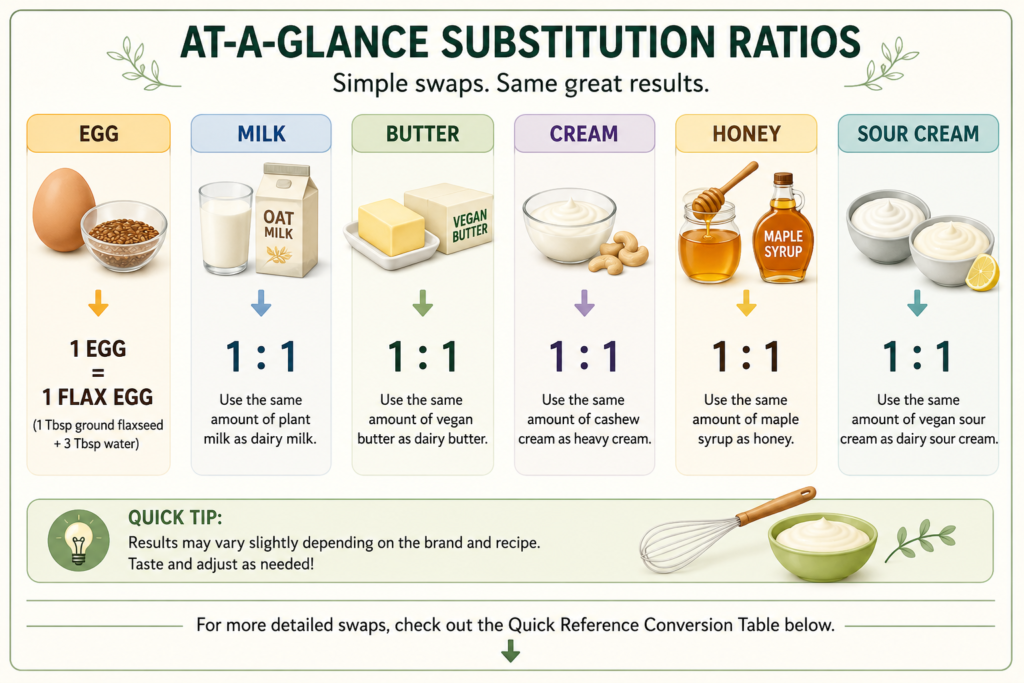
| Traditional Ingredient | Vegan Substitute | Typical Ratio | Best For |
|---|---|---|---|
| Egg | Flax Egg | 1:1 (1 flax egg per egg) | Baking |
| Milk | Oat Milk | 1:1 | Cooking & Baking |
| Butter | Vegan Butter | 1:1 | Most Recipes |
| Heavy Cream | Cashew Cream | 1:1 | Creamy Sauces |
| Honey | Maple Syrup | 1:1 | Baking & Drinks |
| Sour Cream | Vegan Yogurt | 1:1 | Dips & Toppings |
| Ground Beef | Cooked Lentils | Varies by recipe | Chili, Tacos & Pasta Sauces |
| Parmesan Cheese | Nutritional Yeast | To taste | Pasta, Soups & Roasted Vegetables |
Keep this table bookmarked or save it for quick reference whenever you’re cooking.
Tips for Successful Vegan Cooking
- Read Recipes Before Starting
Read the entire recipe before you begin so you understand the steps, gather your ingredients, and avoid any last-minute surprises. - Taste as You Cook
Sample your food throughout the cooking process so you can adjust the seasoning, acidity, or sweetness before serving. - Build Flavor with Herbs and Spices
Use fresh or dried herbs, spices, garlic, onions, citrus, and other seasonings to create rich, well-balanced flavors in every dish. - Don’t Be Afraid to Experiment
Try different ingredients and substitutions to discover new flavor combinations and find what works best for your favorite recipes. - Keep Staple Ingredients Stocked
Keep pantry essentials like beans, lentils, plant milk, nutritional yeast, tofu, spices, and grains on hand, so you’re always ready to prepare a satisfying vegan meal.
| If Your Dish Needs More… | Add |
|---|---|
| Richness | Vegan butter |
| Creaminess | Cashew cream |
| Cheesy flavor | Nutritional yeast |
| Smokiness | Smoked paprika |
| Umami | Soy sauce, miso |
| Brightness | Lemon juice |
Common Vegan Substitution Mistakes to Avoid
- Choosing the Wrong Egg Replacement
Different egg substitutes serve different purposes, so choose one that matches the recipe. For example, flax eggs work well for binding, while applesauce adds moisture and silken tofu provides structure. - Using Sweet Plant Milk in Savory Recipes
Always use unsweetened plant milk for soups, sauces, mashed potatoes, and other savory dishes to avoid adding unwanted sweetness. - Expecting Every Substitute to Taste Identical
Vegan alternatives often have their own unique flavors, so focus on creating a delicious dish rather than trying to perfectly copy the original ingredient. - Ignoring Texture Differences
Some substitutes are softer, firmer, or creamier than their traditional counterparts, so choose the option that best matches the texture your recipe needs. - Overlooking Cooking Times
Many vegan ingredients cook faster or slower than the foods they replace, so keep an eye on your dish and adjust the cooking time as needed to achieve the best results.
Essential Vegan Pantry Staples
- Nutritional Yeast
Adds a savory, cheesy flavor to pasta, sauces, soups, roasted vegetables, and homemade cheese alternatives. - Flaxseed Meal
Mix with water to create a flax egg that works as a reliable binder in cookies, muffins, pancakes, and quick breads. - Chia Seeds
Combine with water to make a chia egg or use them to thicken puddings, smoothies, and baked goods. - Plant Milk
Keep unsweetened varieties like oat, soy, or almond milk on hand for cooking, baking, sauces, and beverages. - Coconut Milk
Full-fat canned coconut milk adds richness to curries, soups, desserts, whipped toppings, and creamy sauces. - Vegan Butter
A simple one-to-one replacement for dairy butter in baking, sautéing, frosting, and everyday cooking. - Tofu
An incredibly versatile ingredient that can replace eggs, chicken, fish, and even cream in a wide variety of recipes. - Tempeh
Its firm texture makes it an excellent substitute for bacon, sandwiches, stir-fries, grain bowls, and hearty main dishes. - Lentils
A budget-friendly staple that’s perfect for replacing ground beef in tacos, chili, pasta sauces, and casseroles. - Chickpeas
Great for curries, salads, sandwiches, roasted snacks, and homemade spreads like hummus. - Textured Vegetable Protein (TVP)
A shelf-stable pantry staple that closely mimics ground beef once rehydrated, making it ideal for tacos, chili, and pasta sauces. - Aquafaba (from Canned Chickpeas)
The liquid from canned chickpeas can be whipped into a light foam for meringues, mousses, frostings, and other airy desserts. - Maple Syrup
A versatile natural sweetener that’s perfect for baking, marinades, dressings, coffee drinks, and desserts. - Agar Agar
A plant-based setting agent that’s commonly used in jellies, cheesecakes, puddings, and other gelatin-free desserts. - Cashews
Blend soaked cashews into creamy sauces, cheese alternatives, dips, soups, and rich dessert fillings. - Olive Oil
A versatile cooking oil that’s excellent for sautéing, roasting vegetables, making dressings, and adding richness to savory recipes.
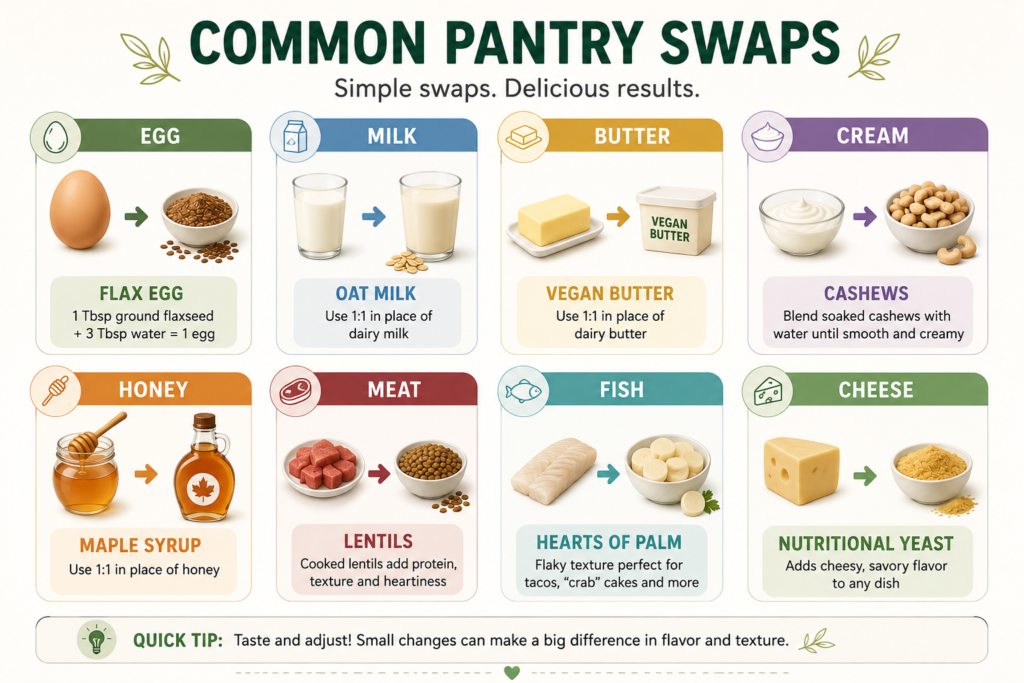
Storage Tips for Vegan Pantry Staples
Proper storage helps your pantry staples stay fresh longer, reduces food waste, and ensures they’re ready whenever you need them.
Use this quick guide as a reference after stocking your kitchen.
| Ingredient | Best Storage Method | Typical Shelf Life* |
|---|---|---|
| Flaxseed meal | Refrigerate after opening in an airtight container to prevent it from going rancid. | 4–6 months |
| Chia seeds | Store in an airtight container in a cool, dry pantry. Refrigerate for longer storage. | Up to 2 years |
| Nutritional yeast | Keep tightly sealed in a cool, dry pantry away from heat and moisture. | 1–2 years |
| Raw cashews | Store in an airtight container in the pantry, or freeze for maximum freshness. | Pantry: 6 months • Freezer: Up to 1 year |
| Oat milk (opened) | Refrigerate immediately after opening and use within the manufacturer’s recommended timeframe. | 7–10 days |
| Coconut milk (leftovers) | Transfer unused coconut milk to a sealed container and refrigerate. | 3–5 days |
| Tofu | Refrigerate after opening and keep submerged in fresh water, changing the water daily. | 3–5 days after opening |
| Tempeh | Refrigerate unopened; once opened, wrap tightly or store in an airtight container. | 5–7 days after opening |
| Vegan butter | Keep refrigerated and tightly wrapped. Freeze extra sticks for long-term storage. | Refrigerator: 1–2 months • Freezer: Up to 6 months |
| Dried lentils | Store in a sealed container in a cool, dry pantry away from moisture. | Up to 2 years |
Quick Tip: Label homemade sauces, cashew cream, vegan cheese, and other leftovers with the preparation date before refrigerating. It’s an easy habit that helps reduce food waste and keeps your pantry organized.
Final Thoughts
Vegan cooking doesn’t have to be complicated.
With a few reliable ingredient swaps, you can make everything from baked goods to hearty dinners without giving up great flavor or texture.
Start by learning a handful of versatile substitutions, then gradually add more staples to your pantry as you become comfortable.
Before long, choosing the right replacement will feel natural.
The key is understanding what each ingredient does in a recipe.
Once you know whether it’s adding moisture, structure, richness, or flavor, you’ll be able to adapt your favorite meals with confidence and enjoy experimenting in the kitchen.
FAQs
Can I substitute plant milk in every recipe?
Yes. Unsweetened plant milk can replace dairy milk in most cooking and baking recipes using a 1:1 ratio.
Which vegan egg substitute works best for baking?
Flax eggs are one of the best all-purpose choices for cookies, muffins, pancakes, and quick breads, while applesauce and silken tofu work well in specific recipes.
What’s the closest substitute for butter?
Vegan butter is the closest replacement because it matches the flavor, texture, and performance of dairy butter in most recipes.
What ingredient replaces meat most easily?
Tofu is the most versatile option, while lentils, tempeh, seitan, TVP, and jackfruit each work best in different types of dishes.
How do I make sauces creamy without dairy?
Cashew cream, coconut cream, blended silken tofu, and oat-based cream alternatives all create smooth, creamy sauces without dairy.
Which vegan substitutes should beginners buy first?
Start with plant milk, vegan butter, tofu, nutritional yeast, flaxseed meal, canned coconut milk, lentils, and maple syrup. These staples cover most everyday cooking and baking needs.

Hi, I’m Daisy Roots, the home cook and recipe developer behind this kitchen. I create simple, tested vegan recipes using everyday ingredients. Every dish is developed and cooked in my own kitchen, with clear steps to help you get reliable results every time. Thanks for stopping by — let’s cook something great!