Vegan lasagna is the kind of comfort meal that brings everyone to the table. It’s warm, hearty, and layered with rich tomato sauce, tender noodles, and plenty of flavor.
Instead of traditional ricotta, this recipe uses smooth cashew cream. It blends into a thick, creamy layer that adds richness without any dairy, making every bite soft, savory, and satisfying.
This vegan lasagna is simple to prepare and perfect for family dinners, weekend cooking, or make-ahead meals.
Follow along step by step, and you’ll have a bubbling pan of homemade lasagna ready to serve.
Vegan Lasagna Recipe Snapshot
| Recipe Detail | Information |
|---|---|
| Prep Time | 25 minutes |
| Cook Time | 30 minutes |
| Total Time | 55 minutes |
| Servings | 8 servings |
| Difficulty | Easy |
| Diet | Vegan, Dairy-Free |
| Baking Temperature | 375°F (190°C) |
| Freezer Friendly | Yes |
| Make Ahead | Up to 24 hours |
This vegan lasagna combines creamy cashew ricotta, savory vegetables, tender pasta, and rich marinara sauce into a comforting plant-based meal that’s perfect for family dinners, meal prep, and freezer-friendly cooking.
Why You’ll Love This Vegan Lasagna
Completely Dairy-Free and Plant-Based
This lasagna skips all dairy but keeps the rich, comforting feel of the classic version. Instead of cheese, a smooth cashew cream adds the creamy layer you expect in a good lasagna.
The rest of the dish is built with simple plant-based ingredients—lasagna noodles, vegetables, and a flavorful tomato sauce. Everything bakes together into soft layers that are hearty and satisfying.
It’s a great option when you want a comforting pasta dinner without using dairy, while still enjoying the same cozy flavors you love.
Rich, Creamy, and Satisfying
The cashew cream is the star of this recipe. Once blended, it becomes smooth and thick, creating a creamy layer that spreads easily between the noodles.
As the lasagna bakes, the cream melts slightly into the sauce and vegetables. This creates soft, rich layers that hold together beautifully when sliced.
Each bite is warm, creamy, and full of savory flavor. It feels like classic comfort food straight from the oven.
Packed with Vegetables and Flavor
This lasagna includes a generous mix of vegetables that add both texture and flavor. Ingredients like mushrooms, zucchini, and spinach cook down into a savory filling that pairs perfectly with the tomato sauce.
Sautéing the vegetables first brings out their natural flavor. They become tender, slightly caramelized, and deeply savory.
Layered with sauce and noodles, the vegetables turn this dish into a hearty, well-balanced meal.
Great for Meal Prep and Leftovers
Lasagna is one of those meals that often tastes even better the next day. After resting in the fridge, the layers settle, and the flavors deepen.
You can make the entire dish ahead of time and store it in the refrigerator until you’re ready to bake. This makes dinner much easier on busy days.
Leftovers also reheat well, whether in the oven or microwave. A single pan can easily provide several satisfying meals.
Easy to Customize with Your Favorite Veggies
One of the best things about this recipe is how flexible it is. You can swap or add vegetables depending on what you have in your kitchen.
Bell peppers, eggplant, kale, or carrots all work well in the filling. Roasted vegetables can also add a deeper, slightly sweet flavor.
Think of this lasagna as a simple base. Once you learn the layers, you can adjust the vegetables to match your taste and create a version your family loves.
Ingredients You’ll Need
For the Cashew Cream
- 1 cup raw cashews (soaked in hot water for 10–15 minutes if not using a high-speed blender)
- 1 clove garlic
- 1 tablespoon lemon juice
- 2 tablespoons nutritional yeast
- ½ teaspoon salt
- ¾ cup water (add more if needed for a smoother texture)
For the Vegetable Filling
- 1 tablespoon olive oil
- 1 small onion, finely chopped
- 2 cloves garlic, minced
- 1 medium zucchini, diced
- 1 cup mushrooms, sliced
- 2 cups fresh spinach, roughly chopped
- ½ teaspoon salt
- ¼ teaspoon black pepper
For the Lasagna
- 9–12 lasagna noodles (vegan, regular, or oven-ready)
- 3 cups marinara sauce
- 1 cup shredded vegan mozzarella (optional)
- 2 tablespoons fresh basil or parsley, chopped, for garnish
Ingredient Substitutions Guide
Don’t have every ingredient on hand? Here are a few simple substitutions that work well in this vegan lasagna without significantly changing the texture or flavor.
| If You Don’t Have | Use Instead |
|---|---|
| Raw cashews | Silken tofu or raw sunflower seeds |
| Nutritional yeast | Vegan parmesan |
| Zucchini | Eggplant or bell peppers |
| Spinach | Kale or Swiss chard |
| Vegan mozzarella | Omit it or use vegan parmesan |
| Marinara sauce | Homemade tomato sauce |
Substitution Tips:
- Silken tofu creates a creamy, ricotta-like texture and is the closest nut-free alternative to cashew cream.
- Sunflower seeds work well for a dairy-free cream but may have a slightly stronger flavor than cashews.
- Kale should be cooked a little longer than spinach to soften the leaves before layering.
- Eggplant is best roasted before adding to the filling to remove excess moisture.
- If using homemade tomato sauce, season it well with garlic, oregano, basil, salt, and pepper for the best flavor.
Kitchen Tools Required
- Blender or Food Processor
Used to blend the cashews, garlic, lemon juice, nutritional yeast, salt, and water into a smooth, creamy sauce. A high-speed blender works best for the creamiest texture. - Large Skillet
Needed to cook the vegetable filling. This gives the onions, garlic, zucchini, mushrooms, and spinach enough space to cook evenly and develop good flavor. - Baking Dish (9×13-inch recommended)
Used to layer and bake the lasagna. A dish this size holds the noodles, sauce, vegetables, and cashew cream comfortably. - Mixing Bowls
Helpful for holding the prepared vegetables, cashew cream, and other ingredients while assembling the lasagna. - Large Pot for Boiling Noodles
Needed if you are using regular lasagna noodles that require boiling before assembling the dish.
How to Make Vegan Lasagna with Cashew Cream
Step 1: Prepare the Cashew Cream
Start by softening the cashews if your blender is not high-powered. Place the cashews in a bowl and cover them with hot water. Let them soak for about 10–15 minutes, then drain.
Add the soaked cashews to a blender along with the garlic, lemon juice, nutritional yeast, salt, and water. Blend until completely smooth and creamy. Stop and scrape down the sides if needed.
The finished cream should be thick but spreadable, similar to ricotta. If it feels too thick, add a small splash of water and blend again until smooth.
Step 2: Cook the Vegetable Filling
Heat olive oil in a large skillet over medium heat. Add the chopped onion and cook for about 3–4 minutes until soft and fragrant.
Stir in the minced garlic and cook for about 30 seconds. This brings out the flavor without letting it burn.
Add the diced zucchini and sliced mushrooms to the skillet. Cook for 5–7 minutes, stirring occasionally, until the vegetables soften and release their moisture.
Finally, add the chopped spinach and cook until wilted. Season the mixture with salt and black pepper, then stir well so the vegetables are evenly coated with flavor.
Step 3: Cook the Lasagna Noodles
Bring a large pot of salted water to a boil. Add the lasagna noodles and cook according to the package instructions until tender.
Stir occasionally so the noodles do not stick together. Once cooked, drain them carefully.
Lay the noodles flat on a plate or baking sheet. This keeps them from sticking while you prepare the layers.
Step 4: Assemble the Lasagna
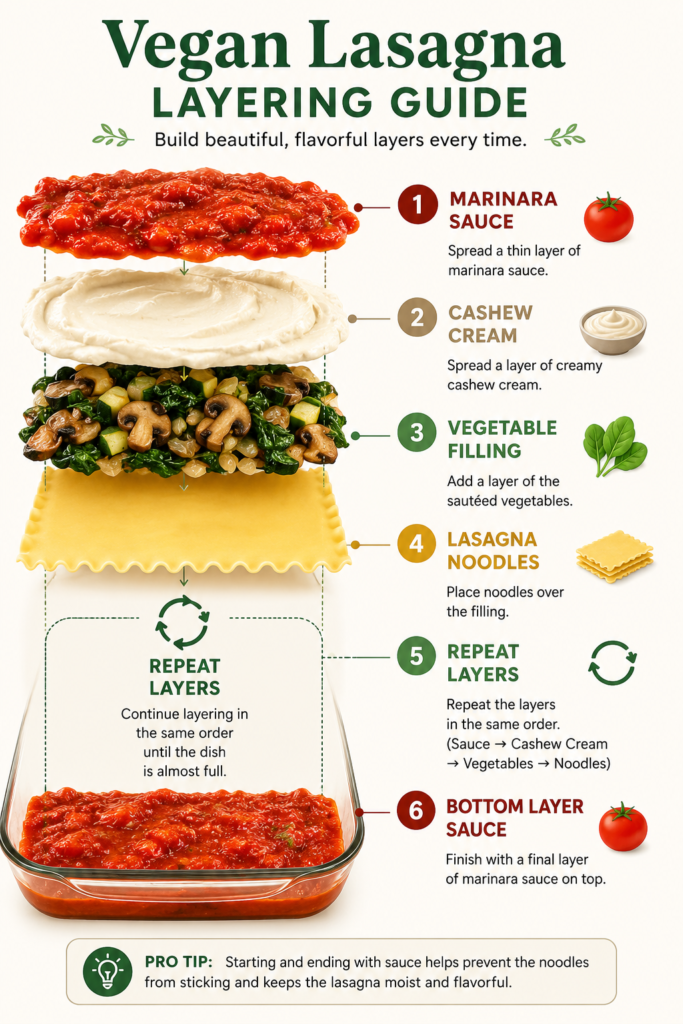
Preheat your oven to 375°F (190°C). Spread a thin layer of marinara sauce across the bottom of a 9×13-inch baking dish. This keeps the noodles from sticking and adds flavor to the base.
Place a layer of lasagna noodles over the sauce. Spoon part of the vegetable filling evenly across the noodles.
Add several spoonfuls of cashew cream and gently spread it across the vegetables. Spoon a little marinara sauce on top to finish the layer.
Repeat the layers—noodles, vegetables, cashew cream, and sauce—until the dish is filled. Finish with a final layer of sauce on top.
Step 5: Bake the Lasagna
Cover the baking dish with foil to keep the lasagna moist while it bakes. Place it in the oven and bake for about 25–30 minutes, until the sauce is bubbling around the edges.
If you are using vegan mozzarella, remove the foil during the last 10 minutes of baking. Sprinkle the cheese over the top and return the dish to the oven until melted.
Once baked, remove the lasagna from the oven and let it rest for 10 minutes. This helps the layers settle and makes slicing much easier.
For best results, the center of the lasagna should reach approximately 165°F (74°C) before serving. If using a food thermometer, insert it into the center of the dish to check the temperature after baking.
The sauce should be bubbling around the edges and the top should look lightly golden before removing it from the oven.
Tips for the Best Vegan Lasagna
Soak Cashews for Ultra-Smooth Cream
Soft cashews blend much more easily and create a smoother cream. If you have time, soak the cashews in hot water for about 10–15 minutes before blending.
This softens them and helps the blender break them down fully.
Once blended, the cashew cream should be thick, silky, and easy to spread. If it feels grainy, blend it a little longer or add a small splash of water to help it smooth out.
A creamy texture makes a big difference in the final dish. It helps the layers melt together while baking.
Use High-Quality Marinara Sauce
The marinara sauce brings the whole dish together, so choose one with good flavor. A rich tomato sauce with garlic, herbs, and a little sweetness works best.
If you are using store-bought sauce, taste it first. Add a pinch of salt, pepper, or dried oregano if it needs a little boost.
A well-seasoned sauce ensures every layer of the lasagna tastes balanced and full.
Let the Lasagna Rest Before Slicing
It’s tempting to cut into lasagna right away, but letting it rest makes a big difference. After baking, allow the dish to sit for about 10 minutes.
During this time, the layers settle and firm up slightly. This makes the slices cleaner and easier to serve.
Resting also helps the flavors come together, giving you a richer, more balanced bite.
Add Roasted Vegetables for Deeper Flavor
Roasting vegetables before adding them to the lasagna can bring out deeper flavor. The heat caramelizes the edges and adds a slightly sweet, savory taste.
Vegetables like eggplant, bell peppers, or zucchini work especially well when roasted. Spread them on a baking sheet with a little olive oil and roast until tender.
Once added to the lasagna layers, these roasted vegetables add extra richness and texture to every bite.
Common Vegan Lasagna Mistakes to Avoid
Even simple lasagna recipes can run into a few common problems.
Here are the mistakes that most often affect texture and structure, along with easy ways to avoid them.
Not Cooking Off Excess Vegetable Moisture
Mushrooms, zucchini, and spinach release a lot of water as they cook.
If too much moisture remains in the filling, the lasagna can become watery during baking.
Cook the vegetables until most of the liquid has evaporated before layering them into the dish.
This helps create firmer slices and better texture.
Using Cashew Cream That Is Too Thick
The cashew cream should be thick and creamy, but still easy to spread.
If it’s too thick, it may clump between the layers instead of creating an even, ricotta-like texture.
Add water one tablespoon at a time until the mixture spreads easily with the back of a spoon.
Skipping the Resting Time
Cutting into lasagna straight from the oven often causes the layers to slide apart.
The filling needs a few minutes to settle after baking.
Allow the lasagna to rest for at least 10 minutes before slicing.
This helps the layers hold together and makes serving much easier.
Overcooking the Noodles
Lasagna noodles continue cooking while the dish bakes in the oven.
If they are fully softened during boiling, they can become mushy after baking.
Cook regular noodles just until al dente, then drain and assemble the lasagna immediately.
Using Too Little Sauce
Lasagna needs enough sauce between the layers to keep the noodles tender and flavorful.
Using too little can result in dry edges and uneven texture.
Spread a thin, even layer of marinara throughout the dish and finish with sauce on top to help retain moisture during baking.
Recipe Variations
- Gluten-Free Version
Use gluten-free lasagna noodles instead of regular noodles. Cook them according to the package instructions before layering to keep the texture tender. - High-Protein Version
Add 1 cup cooked lentils or 1 cup tofu crumbles to the vegetable filling. Stir them into the skillet while the vegetables cook so they absorb the flavor of the sauce and seasonings. - Extra Veggie Version
Add more vegetables such as 1 cup diced eggplant, 1 cup chopped bell peppers, or ½ cup shredded carrots. Cook them with the other vegetables until soft and flavorful. - Spicy Version
Mix ½–1 teaspoon chili flakes into the marinara sauce, or use a spicy marinara. This adds a gentle heat that balances well with the creamy cashew layer.
Best Vegetables for Vegan Lasagna
One of the easiest ways to customize this recipe is by changing the vegetables.
The options below work particularly well in layered vegan lasagna and pair nicely with the creamy cashew filling.
| Vegetable | Flavor Profile | Best Preparation |
|---|---|---|
| Zucchini | Mild and tender | Dice and sauté |
| Mushrooms | Rich and savory | Slice and sauté |
| Eggplant | Hearty and rich | Roast before layering |
| Bell Peppers | Slightly sweet | Dice and sauté |
| Kale | Earthy and robust | Chop finely and sauté |
| Spinach | Mild and delicate | Wilt before layering |
Tip: If using vegetables with a high water content, such as zucchini, mushrooms, or spinach, cook them until excess moisture has evaporated. This helps prevent a watery lasagna and creates cleaner slices after baking.
What to Serve with Vegan Lasagna
Garlic Bread
Garlic bread is a classic partner for lasagna. The crisp edges and buttery garlic flavor pair perfectly with the rich tomato sauce.
Spread softened vegan butter on sliced bread, add minced garlic, and toast it in the oven until golden. The bread becomes crispy on the outside and soft inside.
Serve it warm alongside the lasagna so it can soak up the extra sauce on the plate.
Fresh Green Salad
A simple green salad adds a fresh, crisp balance to the warm pasta dish. The light texture contrasts nicely with the creamy layers of lasagna.
Use a mix of lettuce, cucumbers, and cherry tomatoes. Toss everything with a simple dressing made from olive oil, lemon juice, salt, and pepper.
This bright and fresh side keeps the meal balanced and refreshing.
Roasted Vegetables
Roasted vegetables add extra flavor and color to the table. The roasting process brings out natural sweetness and gives the vegetables slightly crisp edges.
Good choices include broccoli, carrots, zucchini, or bell peppers. Toss them with olive oil, salt, and pepper, then roast until tender.
Serve them hot next to the lasagna for a simple and satisfying side.
Vegan Caesar Salad
A vegan Caesar salad adds bold flavor and a crunchy texture. Crisp romaine lettuce works best for this salad.
Toss the lettuce with a creamy vegan Caesar dressing and top with crunchy croutons. A sprinkle of nutritional yeast can add a slightly cheesy flavor.
This salad pairs well with lasagna and adds another layer of savory taste to the meal.
Estimated Nutrition Information
The following nutrition information is an estimate based on 8 servings and may vary depending on the specific ingredients and brands used.
| Nutrient | Amount Per Serving |
|---|---|
| Calories | 320 |
| Protein | 11g |
| Carbohydrates | 39g |
| Fat | 14g |
| Saturated Fat | 2g |
| Fiber | 6g |
| Sugar | 7g |
| Sodium | 520mg |
Nutrition values are estimates only and should be used as a general guide.
Storage and Reheating Tips
Lasagna stores very well, which makes it perfect for leftovers. Once the dish has cooled, transfer the slices to an airtight container and store them in the refrigerator for up to 4 days.
Keeping it sealed helps the layers stay moist and prevents the pasta from drying out.
For longer storage, place individual portions in freezer-safe containers or wrap them tightly and freeze for up to 2 months. Freezing in single portions makes reheating much easier later.
When you’re ready to enjoy it again, reheat the lasagna in the oven at 350°F (175°C) for about 15–20 minutes until warmed through.
Cover the dish with foil so the top doesn’t dry out. For a faster option, place a slice on a microwave-safe plate and heat it in the microwave for 2–3 minutes, or until hot.
If the lasagna looks slightly dry, add a small spoonful of marinara sauce before reheating to bring back moisture and flavor.
Make-Ahead Timeline
This vegan lasagna is a great meal-prep recipe and can be prepared in stages to fit your schedule.
| When | What To Do |
|---|---|
| Up to 24 Hours Before | Assemble the lasagna, cover tightly, and refrigerate |
| Baking Day | Remove from the refrigerator while the oven preheats, then bake as directed |
| Up to 4 Days After Baking | Store leftovers in an airtight container in the refrigerator |
| Up to 2 Months After Baking | Freeze individual portions or the entire lasagna for longer storage |
Make-Ahead Tip: If baking directly from the refrigerator, you may need to add 5–10 extra minutes to the baking time to ensure the center is fully heated through.
Recipe Notes From My Kitchen
After making this vegan lasagna multiple times, here are a few things I’ve found that consistently improve the final result:
- Cook the vegetables until most of their moisture has evaporated. Zucchini, mushrooms, and spinach release a surprising amount of liquid while cooking. Taking an extra few minutes to cook off that moisture helps create firmer, cleaner slices after baking.
- Soaking the cashews produces a noticeably smoother cream. Even when using a high-speed blender, I find that soaking the cashews first creates a creamier, more ricotta-like texture that’s easier to spread between the layers.
- The flavor often improves overnight. Like many lasagna recipes, this dish tends to taste even better the next day after the layers have had time to settle and the flavors have blended together in the refrigerator.
- Letting the lasagna rest is worth the wait. I’ve found that allowing it to sit for at least 10 minutes after baking makes a big difference in how well the slices hold together when serving.
Final Thoughts
This vegan lasagna is creamy, hearty, and full of rich flavor.
The smooth cashew cream, tender noodles, savory vegetables, and marinara sauce come together in comforting layers that bake beautifully.
Give it a try in your own kitchen and make it your own.
Swap vegetables, adjust the seasoning, and enjoy a warm, homemade lasagna that’s simple to prepare and always satisfying.
FAQs
Can I make vegan lasagna ahead of time?
Yes. Assemble the lasagna, cover it tightly, and store it in the refrigerator for up to 24 hours before baking. When ready to cook, bake as directed.
Do I have to soak the cashews first?
Soaking helps the cashews blend into a smoother cream. If you’re using a high-speed blender, you can skip soaking, but soaking for 10–15 minutes will still improve the texture.
Can I freeze vegan lasagna?
Yes. Let the lasagna cool completely, then wrap it well or store it in freezer-safe containers. It can be frozen for up to 2 months.
What can I use instead of cashews?
You can use blended silken tofu, sunflower seeds, or a store-bought vegan ricotta as a creamy alternative.

Vegan Lasagna with Cashew Cream (Rich, Creamy & Dairy-Free)
Course: Vegan Dinner RecipesDifficulty: Easy6
servings20
minutes30
minutes50
minutesThis vegan lasagna is layered with tender noodles, savory vegetables, rich marinara sauce, and a smooth cashew cream that replaces traditional ricotta. It bakes into a warm, hearty dish that’s creamy, flavorful, and perfect for family dinners.
Ingredients
- Cashew Cream
1 cup raw cashews (soaked 10–15 minutes if needed)
1 clove garlic
1 tbsp lemon juice
2 tbsp nutritional yeast
½ tsp salt
¾ cup water
- Vegetable Filling
1 tbsp olive oil
1 small onion, chopped
2 cloves garlic, minced
1 medium zucchini, diced
1 cup mushrooms, sliced
2 cups fresh spinach, chopped
½ tsp salt
¼ tsp black pepper
- Lasagna
9–12 lasagna noodles (vegan)
3 cups marinara sauce
1 cup vegan mozzarella (optional)
2 tbsp chopped fresh basil or parsley
Directions
- Prepare the cashew cream. Blend cashews, garlic, lemon juice, nutritional yeast, salt, and water until smooth and creamy. Set aside.
- Cook the vegetables. Heat olive oil in a skillet over medium heat. Sauté onion for 3–4 minutes. Add garlic, zucchini, and mushrooms, and cook until tender. Stir in spinach and cook until wilted. Season with salt and pepper.
- Cook the noodles. Boil lasagna noodles according to package instructions. Drain and set aside.
- Assemble the lasagna. Preheat oven to 375°F (190°C). Spread a thin layer of marinara sauce in a baking dish. Add a layer of noodles, vegetables, cashew cream, and sauce. Repeat layers and finish with sauce on top.
- Bake. Cover with foil and bake for 25–30 minutes. Add vegan mozzarella during the last 10 minutes if using.
- Rest and serve. Let the lasagna rest for 10 minutes, then garnish with fresh basil or parsley before slicing.
Notes
- Soak cashews in hot water for a smoother cream.
- Use oven-ready noodles to skip the boiling step.
- Lasagna tastes even better the next day as the flavors deepen.
- Store leftovers in the fridge for up to 4 days or freeze for 2 months.

Hi, I’m Daisy Roots, the home cook and recipe developer behind this kitchen. I create simple, tested vegan recipes using everyday ingredients. Every dish is developed and cooked in my own kitchen, with clear steps to help you get reliable results every time. Thanks for stopping by — let’s cook something great!