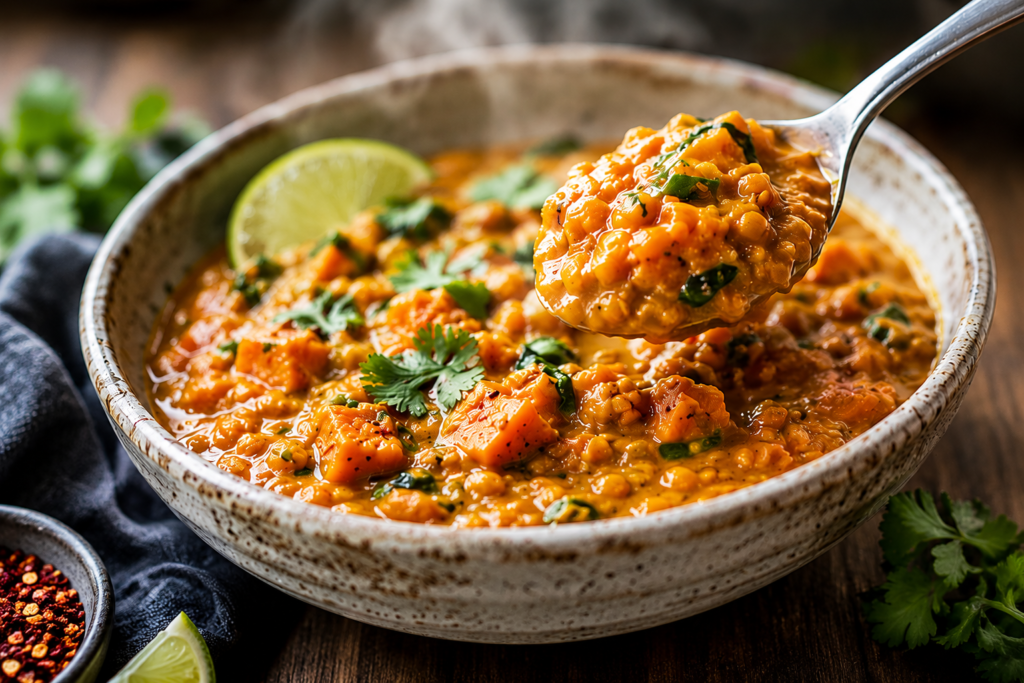
If you’re looking for a cozy, flavorful meal that doesn’t take hours to make, this coconut red lentil curry is a recipe you’ll want to keep on repeat.
Creamy coconut milk, tender red lentils, and warm spices come together in one pot to create a comforting dish that’s both simple and satisfying.
It’s perfect for busy weeknights when you need something filling without a lot of effort.
Made with affordable pantry staples, this naturally vegan curry is packed with plant-based protein and big, comforting flavor.
I’ll show you exactly how to make it, along with helpful tips and easy variations so you can make it your own.
Recipe At a Glance
| Detail | Information |
|---|---|
| Prep Time | 10 minutes |
| Cook Time | 25 minutes |
| Total Time | 35 minutes |
| Servings | 4 servings |
| Difficulty | Easy |
| Cuisine Style | Indian-Inspired |
| Diet | Vegan, Gluten-Free |
| One-Pot Recipe | Yes |
| Freezer Friendly | Yes |
Why You’ll Love This Coconut Red Lentil Curry
Rich and Creamy Texture
One of the best things about this curry is its rich, creamy texture.
The red lentils soften as they cook and naturally thicken the sauce, creating a comforting consistency without any extra work.
Coconut milk brings everything together with a smooth, velvety finish that makes every spoonful satisfying.
The combination of tender lentils and creamy coconut milk creates a sauce that feels indulgent while still being simple to make.
If you enjoy cozy meals with plenty of sauce for spooning over rice or scooping up with warm bread, this recipe delivers exactly that.
Quick and Easy
This is the kind of recipe that works perfectly on busy evenings when you want a homemade meal without spending hours in the kitchen.
Most of the cooking time is completely hands-off once the ingredients are in the pot.
The curry typically comes together in under 40 minutes from start to finish.
There is no need for complicated techniques or special equipment.
Even if you’re new to cooking lentils, you’ll find this recipe easy to follow and forgiving.
The ingredient list is made up of everyday pantry staples that are easy to find in most grocery stores.
Many of the ingredients may already be sitting in your kitchen, making this a convenient meal to prepare whenever you need it.
Healthy and Nutritious
Red lentils add a hearty texture and make this curry filling enough to serve as a complete meal.
They are naturally rich in plant-based protein and fiber, helping create a dish that feels satisfying and substantial.
The vegetables, aromatics, and spices add layers of flavor while bringing color and freshness to the pot.
Every ingredient has a purpose, creating a balanced dish that tastes as good as it looks.
It’s a simple way to turn a handful of basic ingredients into something truly comforting and flavorful.
Great for Meal Prep
This curry is an excellent choice for meal prep because it stores well and reheats beautifully.
In fact, many people find that the flavors become even deeper and more developed after a night in the refrigerator.
The spices have more time to blend together, creating an even richer taste the next day.
You can portion leftovers into containers for easy lunches or quick dinners throughout the week.
It also freezes very well, making it a great recipe to keep on hand for busy days.
Simply thaw, reheat, and enjoy a homemade meal without starting from scratch.
Having a batch of this curry ready to go can make weeknight cooking feel a whole lot easier.
What Is Coconut Red Lentil Curry?
Coconut red lentil curry is a warm, comforting one-pot dish made by simmering red lentils with coconut milk, aromatics, tomatoes, and flavorful spices until everything becomes rich, creamy, and deeply satisfying.
The dish is known for its smooth texture, hearty consistency, and ability to transform simple pantry ingredients into a meal that feels both comforting and full of flavor.
Red lentils are small, orange-red legumes that cook much faster than many other lentil varieties, making them a favorite ingredient for quick soups, stews, and curries.
Unlike green or brown lentils, which tend to hold their shape after cooking, red lentils soften and break down as they simmer, naturally creating a thick and creamy sauce without the need for flour, cornstarch, or other thickeners.
This is one of the reasons coconut red lentil curry is so beginner-friendly, since the lentils do much of the work for you as they cook.
Lentil-based curries have been enjoyed for generations throughout South Asia, where lentils are often cooked with spices, onions, garlic, ginger, and other everyday ingredients to create nourishing and flavorful meals.
Many versions are inspired by traditional dishes such as dal, which is a broad term used for lentil dishes that vary from region to region and family to family.
This coconut red lentil curry takes inspiration from those comforting lentil dishes while incorporating creamy coconut milk for extra richness and a slightly mellow flavor.
The coconut milk balances the warmth of the spices and creates a silky texture that coats every spoonful.
If you’ve never cooked with red lentils before, this recipe is an excellent place to start because they require very little preparation and cook relatively quickly.
They absorb flavors beautifully, which means every bite picks up the savory aromatics, spices, and creamy coconut sauce surrounding them.
The result is a curry that feels hearty enough for dinner, simple enough for a weeknight, and flavorful enough to make again and again.
Ingredients You’ll Need
Main Ingredients
- 1 cup red lentils, rinsed and drained
- 1 can (13.5 ounces / 400 ml) full-fat coconut milk
- 1 medium yellow onion, finely diced
- 3 cloves garlic, minced
- 1 tablespoon fresh ginger, grated
- 1 can (14.5 ounces / 410 g) diced tomatoes
- 2 cups vegetable broth
Spices and Seasonings
- 2 teaspoons curry powder
- 1 teaspoon ground turmeric
- 1 teaspoon ground cumin
- ½ teaspoon paprika
- 1 teaspoon salt, or to taste
- ¼ teaspoon black pepper
Optional Add-Ins
Choose one or more of the following to customize your curry:
- 2 cups fresh spinach
- 2 cups chopped kale
- 1 red bell pepper, diced
- 1 medium sweet potato, peeled and cut into small cubes
- 1 can (15 ounces / 425 g) chickpeas, drained and rinsed
These optional ingredients can be added during the simmering stage to make the curry even heartier and add extra texture and flavor.
Ingredient Substitutions
If you’re missing an ingredient or simply want to use what you already have on hand, these easy substitutions can help you make the recipe successfully.
| Ingredient | Substitute |
|---|---|
| Red Lentils | Yellow lentils (allow extra cooking time) |
| Coconut Milk | Cashew cream or additional vegetable broth |
| Curry Powder | Garam masala plus an extra pinch of turmeric |
| Vegetable Broth | Water with additional seasoning |
| Spinach | Kale or Swiss chard |
| Sweet Potato | Butternut squash |
Keep in mind that substitutions may slightly change the flavor, texture, or cooking time, but the curry will still be delicious and satisfying.
Ingredients I Prefer for This Recipe
After making this curry multiple times, these ingredient choices consistently produce the best flavor and texture.
- Full-Fat Canned Coconut Milk – Creates the richest, creamiest sauce and gives the curry its signature velvety texture.
- Small Red Lentils – Cook quickly and break down beautifully, helping create a naturally thick and creamy curry.
- Low-Sodium Vegetable Broth – Gives you more control over the final seasoning and prevents the curry from becoming overly salty.
- Fresh Ginger – Provides a brighter, fresher flavor than ground ginger and adds more depth to the finished dish.
While substitutions can work well, these ingredients are my go-to choices when I want the most flavorful and reliable results.
Kitchen Equipment Needed
You don’t need any special equipment to make this coconut red lentil curry.
A few basic kitchen tools are all it takes to bring everything together smoothly.
- Large pot or Dutch oven – You’ll need a large pot or Dutch oven to cook the curry. It provides enough space for the lentils, vegetables, broth, and coconut milk to simmer without overflowing. A heavy-bottomed pot is especially helpful because it distributes heat evenly and helps prevent sticking.
- Wooden spoon – A wooden spoon is perfect for stirring the aromatics, spices, and lentils as they cook. It makes it easy to scrape the bottom of the pot and keep everything well combined throughout the cooking process.
- Measuring cups and spoons – Measuring tools help ensure the right balance of ingredients and seasonings. Accurate measurements are especially useful when working with spices and liquids to achieve the best flavor and texture.
- Cutting board and knife – You’ll need a cutting board and a sharp knife for preparing the onion, garlic, ginger, and any optional vegetables you decide to add. Taking a few minutes to prep everything before cooking will make the process much easier and more enjoyable.
How to Make Coconut Red Lentil Curry
Step 1: Sauté the Aromatics
Place a large pot or Dutch oven over medium heat and add a small drizzle of oil.
Once the oil is warm, add the diced onion and cook for 4 to 5 minutes, stirring occasionally, until softened and lightly golden.
Add the minced garlic and grated ginger to the pot.
Cook for about 1 minute, stirring constantly, until everything smells fragrant.
This step creates the flavor foundation for the entire curry, so don’t rush it.
If the garlic starts to brown too quickly, lower the heat slightly to prevent it from becoming bitter.
Step 2: Toast the Spices
Add the curry powder, turmeric, cumin, paprika, salt, and black pepper directly to the pot.
Stir continuously for about 30 seconds to 1 minute.
The goal is to gently warm the spices so they release their natural aromas and deepen in flavor.
You’ll notice the mixture becoming very fragrant almost immediately.
This quick step makes a noticeable difference in the finished curry and helps the spices blend more evenly throughout the sauce.
Step 3: Add Lentils and Liquids
Pour in the rinsed red lentils, diced tomatoes, vegetable broth, and coconut milk.
Stir everything together until the ingredients are fully combined.
Use your spoon to scrape the bottom of the pot to make sure nothing is sticking.
The mixture will look fairly liquid at this stage, which is exactly what you want.
The lentils will absorb much of the liquid as they cook and naturally thicken the curry.
If you’re adding sweet potatoes or bell peppers, this is a great time to stir them in.
Step 4: Simmer Until Tender
Increase the heat slightly and bring the mixture to a gentle simmer.
Once it begins bubbling lightly, reduce the heat to low or medium-low.
Let the curry cook uncovered for about 20 to 25 minutes.
Stir every few minutes to prevent the lentils from sticking to the bottom of the pot.
As the lentils cook, they will soften and begin breaking down into the sauce.
This is what gives coconut red lentil curry its signature creamy texture.
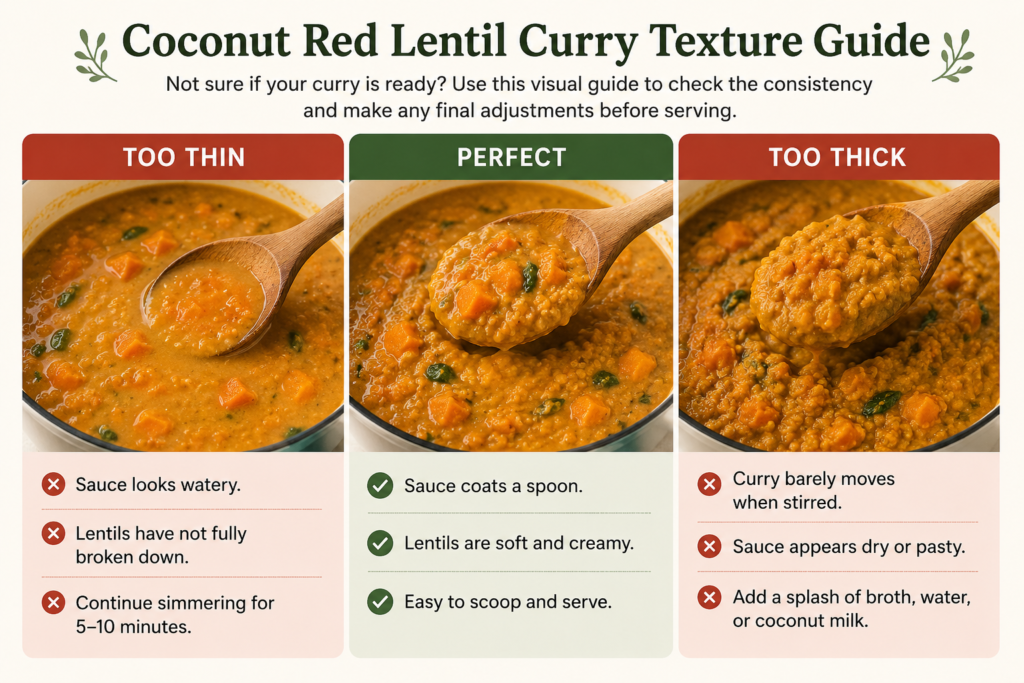
If the curry becomes thicker than you’d like, simply add a splash of vegetable broth or water and stir until it reaches your preferred consistency.
The curry is ready when the lentils are tender, and the sauce is rich, creamy, and well combined.
Step 5: Adjust Seasoning and Finish
Taste the curry and adjust the seasoning as needed.
You may want an extra pinch of salt, a little more black pepper, or an additional sprinkle of curry powder, depending on your preferences.
If you’re using spinach or kale, stir it in during the last few minutes of cooking.
The greens will quickly wilt into the hot curry without losing their color and texture.
Once everything is heated through, remove the pot from the heat.
Let the curry rest for a few minutes before serving.
This short resting time allows the flavors to settle and gives the sauce a chance to thicken slightly.
Serve warm over rice, alongside naan, or enjoy it on its own with a spoon and a cozy seat at the table.
How to Know Your Curry Is Ready
If you’re making this recipe for the first time, these simple signs will help you know exactly when your curry is ready to serve.
- The lentils should be soft and easy to mash with a spoon – They should break apart easily and blend naturally into the sauce.
- The sauce should be thick enough to coat a spoon but still pour easily – It should be creamy and rich without becoming dry or overly thick.
- The vegetables should be tender without falling apart – They should be fully cooked while still holding their shape and texture.
- The curry should have a rich golden-orange color – The coconut milk, tomatoes, and spices should combine into a vibrant, uniform sauce.
- The spices should smell fragrant rather than raw – You should notice warm, inviting aromas from the curry, with no harsh or powdery spice smell remaining.
If your curry checks all of these boxes, it’s ready to serve and enjoy.
Tips for the Best Coconut Red Lentil Curry
Rinse Lentils Before Cooking
Always give your red lentils a quick rinse under cold water before adding them to the pot.
This simple step removes any dust or debris that may be present from packaging and handling.
Place the lentils in a fine-mesh strainer and rinse until the water runs mostly clear.
It only takes a minute and helps ensure a cleaner flavor and better texture in the finished curry.
Use Full-Fat Coconut Milk for Extra Creaminess
For the richest and creamiest curry, use full-fat coconut milk whenever possible.
The higher fat content creates a silky sauce that blends beautifully with the softened lentils.
Light coconut milk can be used if that’s what you have on hand, but the curry won’t be quite as rich or velvety.
If your canned coconut milk has separated, simply stir it well before adding it to the pot.
The creamy coconut flavor is one of the stars of this dish, so using a good-quality coconut milk can make a noticeable difference.
Don’t Overcook If You Prefer Some Lentil Texture
Red lentils naturally soften and break down as they cook.
If you enjoy a curry with a little more texture, start checking the lentils a few minutes before the recommended cooking time is up.
Once the lentils are tender but still hold a bit of their shape, you can remove the pot from the heat.
Keep in mind that the curry will continue to thicken slightly as it rests.
If you prefer an ultra-creamy, almost stew-like consistency, simply let it simmer a little longer.
Adjust the Spice Level to Your Preference
One of the easiest ways to make this recipe your own is by adjusting the spice level.
For a milder curry, stick to the ingredient amounts listed in the recipe.
If you’d like more heat, add a pinch of red pepper flakes, a chopped chili, or a little cayenne pepper while the curry simmers.
It’s always easier to add more spice than to take it away, so increase it gradually and taste as you go.
This helps you create a curry that suits your personal preference perfectly.
Add a Squeeze of Lime Before Serving
A small squeeze of fresh lime juice right before serving can completely brighten the finished dish.
The fresh citrus balances the creamy coconut milk and brings out the flavors of the spices.
You don’t need much to make an impact.
Just a wedge or two squeezed over the curry is enough to add a fresh finishing touch.
It’s a simple step, but it can make the entire bowl taste more vibrant and balanced.
Delicious Variations
Spicy Coconut Lentil Curry
If you enjoy a little heat, this curry is easy to spice up without changing the overall flavor of the dish.
Add ¼ to ½ teaspoon of red pepper flakes when you add the other spices to the pot.
You can also slice a fresh red chili or green chili and cook it with the onions, garlic, and ginger.
The heat blends beautifully with the creamy coconut milk, creating a curry that feels bold without overpowering the other flavors.
Start with a small amount if you’re unsure about spice levels.
You can always add more later, but it’s much harder to make a curry less spicy once everything is combined.
Vegetable-Packed Version
This curry is a great way to use extra vegetables you may already have in your kitchen.
Diced carrots add a subtle sweetness and a pleasant bite that pairs well with the creamy sauce.
Sweet potatoes make the curry heartier and bring a natural richness as they soften during cooking.
Add them along with the lentils so they have enough time to become tender.
Fresh spinach is another excellent addition.
Simply stir it in during the final few minutes of cooking and let it wilt into the curry.
You can also use kale if you’d like a heartier green that holds its texture a little longer.
The extra vegetables add color, texture, and even more flavor to every bowl.
Protein Boost
While red lentils already make this curry filling, you can easily add even more substance if desired.
A can of drained and rinsed chickpeas blends naturally into the curry and adds a satisfying texture.
Stir them in when you add the lentils and liquids so they can absorb some of the flavors as everything cooks.
Cubed tofu is another excellent option.
For the best texture, lightly pan-fry the tofu before adding it to the curry.
The golden edges help it hold its shape and soak up the flavorful sauce.
These additions make the curry even more hearty while keeping the recipe simple and approachable.
Thai-Inspired Curry
For a completely different flavor profile, give the recipe a Thai-inspired twist.
Replace the curry powder with 2 to 3 tablespoons of red curry paste.
The curry paste adds layers of savory, spicy, and aromatic flavors that work wonderfully with coconut milk.
If you can find lime leaves, add a few to the pot while the curry simmers.
They infuse the sauce with a fresh citrus aroma that makes the dish taste bright and vibrant.
A squeeze of lime juice before serving helps tie everything together.
The result is a creamy lentil curry with a fresh and fragrant character that feels like a whole new recipe while still being just as easy to make.
What to Serve with Coconut Red Lentil Curry
Rice Options
- Basmati Rice – Light, fluffy, and perfect for soaking up the creamy curry sauce.
- Jasmine Rice – Soft and slightly fragrant, adding a delicate aroma to the meal.
- Brown Rice – A hearty option with a nutty flavor and chewy texture.
Bread Options
- Naan – Soft, pillowy bread that’s ideal for scooping up every last bit of curry.
- Roti – A simple flatbread that pairs beautifully with rich and flavorful curries.
- Flatbread – Warm and versatile, making it an easy side for dipping and serving.
Side Dishes
- Cucumber Salad – Cool and refreshing, providing a nice contrast to the warm spices in the curry.
- Roasted Vegetables – Add extra texture and flavor while making the meal even more satisfying.
- Mango Chutney – Sweet and tangy, balancing the savory flavors of the curry with a burst of fruitiness.
Best Toppings for Coconut Red Lentil Curry
The curry is delicious on its own, but a few simple toppings can add extra flavor, texture, and freshness to every bowl.
- Fresh Cilantro – Adds a bright, fresh flavor that complements the warm spices.
- Lime Wedges – A squeeze of lime juice brings balance and brightens the rich coconut sauce.
- Sliced Green Onions – Provide a mild onion flavor and a pop of color.
- Toasted Coconut Flakes – Add a subtle crunch and enhance the coconut flavor in the curry.
- Crushed Roasted Peanuts – Bring a satisfying crunch and a slightly nutty contrast to the creamy texture.
- Red Pepper Flakes – An easy way to add extra heat for those who enjoy a spicier curry.
- Dairy-Free Yogurt – Creates a cool, creamy finish that pairs beautifully with the warm spices.
Feel free to mix and match your favorite toppings to create a bowl that’s perfectly suited to your taste.
Storage and Reheating Tips
Refrigerator Storage
One of the best things about coconut red lentil curry is how well it keeps after cooking.
Allow the curry to cool to room temperature before transferring it to an airtight container.
Once stored properly, it will stay fresh in the refrigerator for up to 4 days.
The flavors often become even richer as the curry sits, making leftovers especially delicious.
If the curry thickens while refrigerated, don’t worry.
This is completely normal because the lentils continue to absorb liquid as they rest.
A small splash of water or vegetable broth will easily bring it back to your preferred consistency when reheating.
Freezing Instructions
This curry freezes exceptionally well, making it a great option for future meals.
Let the curry cool completely before placing it into freezer-safe containers or freezer bags.
Leaving a little space at the top of the container is helpful since the curry may expand slightly as it freezes.
For the best flavor and texture, enjoy frozen curry within 2 to 3 months.
Labeling containers with the date can make it easier to keep track of stored portions.
When you’re ready to enjoy it, transfer the curry to the refrigerator and allow it to thaw overnight.
If you’re short on time, you can also thaw it gently using the defrost setting on your microwave.
Once thawed, give the curry a good stir before reheating.
Reheating Methods
Stovetop
The stovetop is one of the best ways to reheat coconut red lentil curry because it allows you to easily control the texture.
Place the curry in a saucepan over medium-low heat.
Add a splash of water, vegetable broth, or coconut milk if the curry has become too thick.
Stir occasionally as it warms to prevent sticking and ensure even heating.
Within a few minutes, the curry should be hot, creamy, and ready to serve.
Microwave
For a quick and convenient option, the microwave works very well.
Transfer a serving of curry to a microwave-safe bowl.
Cover it loosely to help prevent splatters.
Heat in short intervals, stirring between each round to distribute the heat evenly.
If needed, add a small splash of liquid to loosen the consistency.
Once heated through, give it one final stir and enjoy.
Make-Ahead Timeline
If you’re planning meals ahead of time, here’s a quick reference for storing and reheating your curry.
| Storage Method | Time Frame |
|---|---|
| Refrigerator | Up to 4 days |
| Freezer | Up to 3 months |
| Best Flavor | After resting overnight in the refrigerator |
| Stovetop Reheating | About 5 minutes |
This curry is a great make-ahead meal because the flavors continue to develop as it rests, making leftovers just as enjoyable as the day it was made.
Common Mistakes to Avoid
- Using Too Little Liquid – Red lentils absorb a lot of liquid as they cook, so using too little can leave you with a curry that is overly thick or prone to sticking.
- Not Seasoning Adequately – Taste the curry before serving and adjust the salt and spices as needed to ensure the flavors are balanced and fully developed.
- Skipping the Spice-Toasting Step – Briefly cooking the spices before adding the liquids helps release their aromas and creates a deeper, richer flavor throughout the curry.
- Overcooking Vegetables – Add vegetables at the right stage of cooking so they become tender without turning mushy or losing their texture.
| Problem | Solution |
|---|---|
| Curry is too thick | Add broth or water a little at a time |
| Curry is too thin | Simmer uncovered for 5–10 minutes |
| Lentils aren’t soft | Continue simmering and add more liquid if needed |
| Curry tastes bland | Add salt, lime juice, or extra spices |
| Curry is too spicy | Stir in extra coconut milk |
Final Thoughts
This coconut red lentil curry is proof that a handful of simple ingredients can turn into a rich, comforting, and flavor-packed meal.
It’s easy enough for a busy weeknight, yet satisfying enough to serve whenever you’re craving something warm and cozy.
Don’t be afraid to make it your own by adding your favorite vegetables, adjusting the spice level, or trying one of the variations shared above.
Cooking should be flexible and fun, and this recipe makes it easy to experiment with what you have on hand.
FAQs
Can I use green or brown lentils instead?
Yes, but they take longer to cook and won’t break down as much as red lentils. You may also need to add extra liquid and increase the cooking time.
Is coconut red lentil curry spicy?
Not typically. This recipe is mildly spiced and flavorful rather than hot. You can easily add more heat with chili flakes, fresh chilies, or cayenne pepper.
Can I make this curry without coconut milk?
Yes. You can substitute additional vegetable broth or use an unsweetened plant-based cream alternative, though the curry will be less rich and creamy.
How do I thicken or thin the curry?
To thicken the curry, simmer it for a few extra minutes. To thin it out, stir in a little water, vegetable broth, or coconut milk until you reach your desired consistency.
Is this recipe gluten-free?
Yes, this recipe is naturally gluten-free. Just be sure to check the labels on packaged ingredients to confirm there are no gluten-containing additives.
Can I freeze leftovers?
Absolutely. Allow the curry to cool completely, then store it in freezer-safe containers for up to 3 months. Thaw overnight in the refrigerator before reheating.
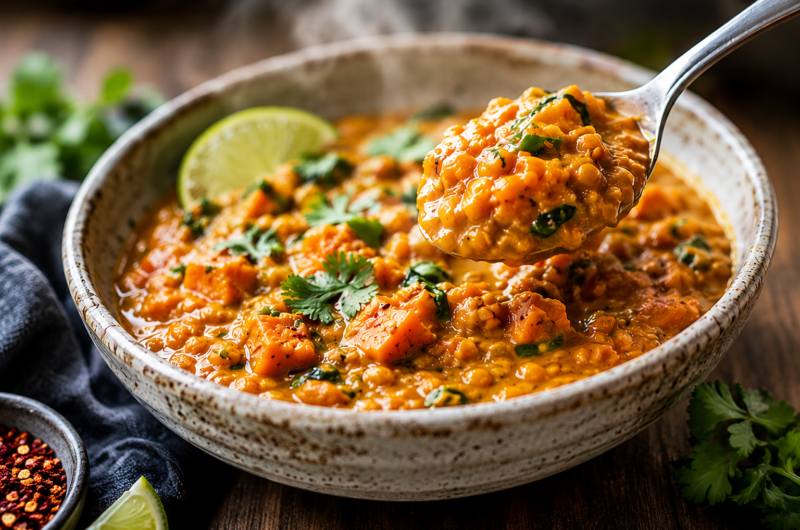
Coconut Red Lentil Curry: Creamy, Flavorful & Easy One-Pot Meal
Course: Vegan Dinner RecipesDifficulty: Easy4
servings10
minutes25
minutes35
minutesThis Coconut Red Lentil Curry is a creamy, comforting one-pot meal made with tender red lentils, coconut milk, tomatoes, and warm spices. It’s simple to prepare, packed with flavor, and perfect for busy weeknights.
Ingredients
1 cup red lentils, rinsed
1 tablespoon olive oil
1 medium onion, diced
3 cloves garlic, minced
1 tablespoon fresh ginger, grated
1 can (14.5 oz / 410 g) diced tomatoes
1 can (13.5 oz / 400 ml) full-fat coconut milk
2 cups vegetable broth
2 teaspoons curry powder
1 teaspoon ground cumin
1 teaspoon turmeric
½ teaspoon paprika
1 teaspoon salt
¼ teaspoon black pepper
2 cups fresh spinach (optional)
Lime wedges and cilantro for serving
Directions
- Heat the oil in a large pot over medium heat and sauté the onion for 4–5 minutes until softened.
- Add the garlic and ginger and cook for 1 minute until fragrant.
- Stir in the curry powder, cumin, turmeric, paprika, salt, and pepper and cook for 30 seconds.
- Add the lentils, diced tomatoes, coconut milk, and vegetable broth. Stir well.
- Bring to a gentle simmer and cook for 20–25 minutes, stirring occasionally, until the lentils are tender and creamy.
- Stir in the spinach during the last few minutes of cooking if using.
- Taste and adjust seasoning as needed, then serve with fresh cilantro and a squeeze of lime.
Notes
- Use full-fat coconut milk for the creamiest texture.
- Add extra broth if the curry becomes too thick.
- Store leftovers in the refrigerator for up to 4 days or freeze for up to 3 months.
- The flavors become even better the next day, making this an excellent meal-prep recipe.

Hi, I’m Daisy Roots, the home cook and recipe developer behind this kitchen. I create simple, tested vegan recipes using everyday ingredients. Every dish is developed and cooked in my own kitchen, with clear steps to help you get reliable results every time. Thanks for stopping by — let’s cook something great!