Busy weeknights don’t have to mean boring dinners.
With a few bags of frozen vegetables in your freezer, you can create flavorful vegan meals in less time and with less effort.
Frozen vegetables are a true kitchen staple.
They’re budget-friendly, last for months, and come pre-washed and pre-cut, making dinner prep much easier.
They’re also a great way to reduce food waste since you can use only what you need and save the rest for later.
In this roundup, you’ll find 10 quick vegan dinners that turn simple frozen vegetables into satisfying meals.
My Go-To Freezer Staples
My freezer is almost always stocked with broccoli, mixed vegetables, spinach, peas, and cauliflower. These are the vegetables I reach for most often because they’re incredibly versatile and work in everything from stir-fries and curries to soups, pasta dishes, and rice bowls. Keeping these staples on hand makes it easy to put together a flavorful vegan dinner, even on the busiest weeknights.
Why Frozen Vegetables Are Perfect for Quick Vegan Meals
Frozen vegetables make weeknight cooking simple without sacrificing flavor.
They’re picked and frozen at peak freshness, easy to keep on hand, and ready whenever you need a fast meal.
Nutritional Benefits of Frozen Produce
Many frozen vegetables are processed shortly after harvest, helping them retain their nutrients.
They can be just as nutritious as fresh produce and are a convenient way to add more vegetables to your meals throughout the week.
Time-Saving Advantages for Busy Weeknights
One of the biggest advantages of frozen vegetables is convenience.
Since they’re already washed, peeled, and chopped, you can skip much of the prep work and get dinner started right away.
They’re also available year-round, so you don’t have to worry about what’s in season.
Best Frozen Vegetables to Keep Stocked
Keeping a few freezer staples on hand makes it easy to throw together a quick vegan dinner whenever you need one.
- Broccoli
- Mixed vegetables
- Peas
- Corn
- Spinach
- Stir-fry blends
- Cauliflower
- Bell peppers
- Green beans
| Frozen Vegetable | Best Uses |
|---|---|
| Broccoli | Stir-fries, rice bowls, pasta |
| Cauliflower | Buffalo bowls, curries, roasting |
| Peas | Pasta, soups, fried rice |
| Corn | Tacos, bowls, salads |
| Spinach | Soups, skillets, curries |
| Mixed Vegetables | Fried rice, soup, stir-fries |
| Bell Peppers | Tacos, fajitas, stir-fries |
| Green Beans | Stir-fries, sheet pan meals |
Build a Quick Vegan Dinner in 4 Steps
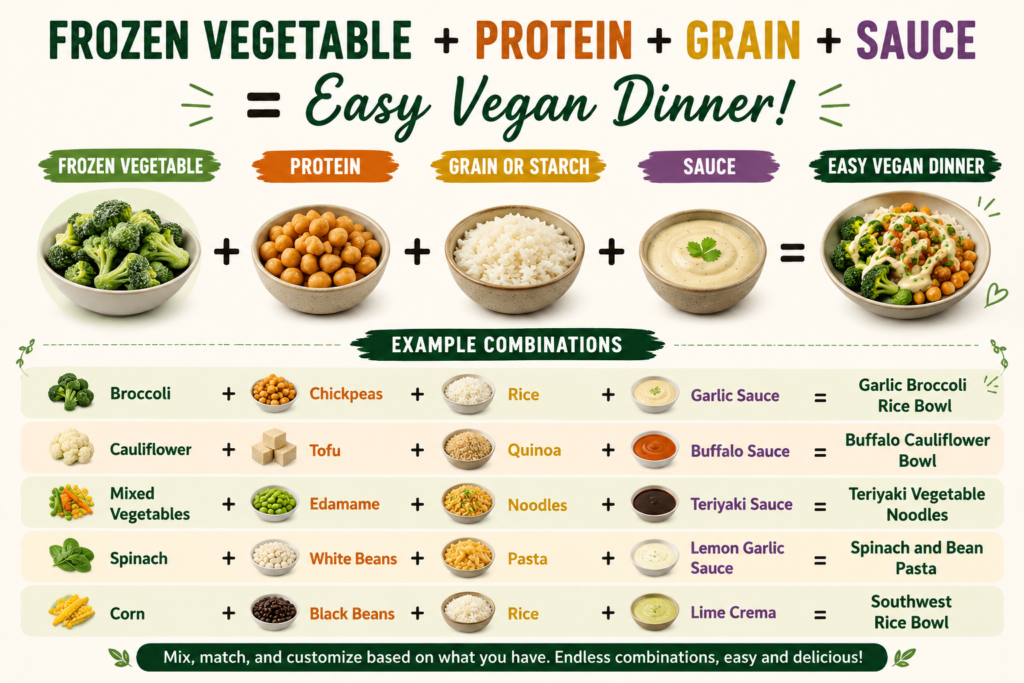
One of the best things about cooking with frozen vegetables is how easy it is to mix and match ingredients based on what you already have at home.
Once you learn a simple formula, you can create countless vegan dinners without following a specific recipe every time.
Start with a frozen vegetable, add a protein, choose a grain or starch, and finish everything with a flavorful sauce.
It’s a flexible approach that makes weeknight cooking faster, easier, and much less stressful.
Step 1: Choose a Frozen Vegetable
Your vegetables create the foundation of the meal.
Broccoli, peas, cauliflower, spinach, mixed vegetables, and stir-fry blends are all versatile options that work in a variety of dishes.
Step 2: Pick a Protein
Adding a protein helps make the meal more satisfying.
Chickpeas, tofu, lentils, white beans, and edamame are all easy choices that pair well with frozen vegetables.
Step 3: Add a Grain or Starch
A grain or starch turns your vegetables and protein into a complete meal.
Rice, quinoa, pasta, noodles, and even roasted potatoes work well depending on the flavors you’re using.
Step 4: Finish with a Sauce
A good sauce brings everything together.
Whether you prefer something creamy, spicy, savory, or slightly sweet, a simple sauce can completely transform the final dish.
| Component | Examples |
|---|---|
| Vegetables | Broccoli, peas, cauliflower, spinach, mixed vegetables |
| Protein | Chickpeas, tofu, lentils, white beans, edamame |
| Grain or Starch | Rice, quinoa, pasta, noodles, potatoes |
| Sauce | Peanut sauce, buffalo sauce, curry sauce, teriyaki sauce |
Example Meal Combinations
- Broccoli + Chickpeas + Rice + Garlic Sauce
- Cauliflower + Tofu + Quinoa + Buffalo Sauce
- Mixed Vegetables + Edamame + Noodles + Teriyaki Sauce
- Spinach + White Beans + Pasta + Lemon Garlic Sauce
Once you have a few favorite combinations, putting together a quick vegan dinner becomes almost effortless.
10 Best Vegan Dinners Using Frozen Vegetables
| Recipe | Time | Main Frozen Vegetable | One-Pan? | Best Served With |
|---|---|---|---|---|
| Garlic Broccoli & Chickpea Stir-Fry | 20 min | Broccoli | Yes | Rice |
| Creamy Pea Pasta | 25 min | Peas | No | Pasta |
| Vegetable Fried Rice | 20 min | Mixed Vegetables | Yes | As-is |
| Coconut Curry | 30 min | Mixed Vegetables | Yes | Rice |
| Roasted Vegetable Tacos | 35 min | Fajita Veggies | No | Tortillas |
| Vegan Vegetable Soup | 30 min | Mixed Vegetables | Yes | Bread |
| Buffalo Cauliflower Bowls | 30 min | Cauliflower | No | Rice |
| Sesame Ginger Noodles | 25 min | Stir-Fry Blend | Yes | Noodles |
| Spinach & White Bean Skillet | 20 min | Spinach | Yes | Bread |
| Peanut Stir-Fry | 25 min | Stir-Fry Blend | Yes | Rice |
1. Garlic Broccoli and Chickpea Stir-Fry
This quick stir-fry turns simple pantry staples into a flavorful and satisfying dinner.
Frozen broccoli cooks in minutes, while chickpeas add heartiness and protein.
A simple garlic sauce brings everything together for an easy meal that’s perfect for busy weeknights.
Why You’ll Love It
- Ready in about 20 minutes
- Uses simple pantry ingredients
- Budget-friendly and filling
- Great served over rice, quinoa, or noodles
- Easy to customize with other vegetables
Ingredients
- 4 cups frozen broccoli florets
- 1 (15-ounce) can chickpeas, drained and rinsed
- 2 tablespoons olive oil
- 4 cloves garlic, minced
- 2 tablespoons soy sauce
- 1 tablespoon maple syrup
- 1 tablespoon rice vinegar
- ½ teaspoon red pepper flakes (optional)
- ¼ teaspoon black pepper
- 2 tablespoons water
- 2 green onions, sliced
- Cooked rice for serving
How to Make It
Step 1: Cook the Broccoli
Heat 1 tablespoon olive oil in a large skillet over medium-high heat. Add the frozen broccoli and cook for 5 to 7 minutes, stirring occasionally, until heated through and lightly browned.
Step 2: Add the Chickpeas
Add the chickpeas to the skillet and cook for 3 to 4 minutes until warmed through.
Step 3: Make the Sauce
In a small bowl, whisk together the garlic, soy sauce, maple syrup, rice vinegar, red pepper flakes, black pepper, and water.
Step 4: Combine Everything
Pour the sauce over the broccoli and chickpeas. Stir well and cook for 2 to 3 minutes until the sauce thickens slightly and coats everything evenly.
Step 5: Serve
Top with sliced green onions and serve immediately over cooked rice.
Easy Variations
- Replace broccoli with frozen cauliflower.
- Add frozen bell peppers for extra color.
- Use sriracha instead of red pepper flakes for more heat.
- Serve over noodles instead of rice.
2. Creamy Frozen Pea Pasta
This creamy pasta comes together with frozen peas, garlic, and a simple dairy-free sauce.
The peas blend into the sauce, creating a smooth texture and naturally sweet flavor that pairs perfectly with pasta.
Why You’ll Love It
- Comforting and creamy
- Family-friendly flavor
- Uses freezer and pantry staples
- Ready in under 30 minutes
- Great for meal prep
Ingredients
- 12 ounces of your pasta of choice
- 3 cups frozen peas
- 2 tablespoons olive oil
- 3 cloves garlic, minced
- 1 cup unsweetened plant-based milk
- ¼ cup nutritional yeast
- 1 tablespoon lemon juice
- ½ teaspoon salt
- ¼ teaspoon black pepper
- ¼ teaspoon onion powder
- 2 tablespoons fresh parsley, chopped
How to Make It
Step 1: Cook the Pasta
Bring a large pot of salted water to a boil. Cook the pasta according to package directions. Reserve ½ cup of pasta water before draining.
Step 2: Cook the Peas
While the pasta cooks, place the frozen peas in a saucepan with a splash of water. Cook for 3 to 4 minutes until tender.
Step 3: Make the Sauce
Transfer 2 cups of the peas to a blender. Add the garlic, plant-based milk, nutritional yeast, lemon juice, salt, pepper, and onion powder. Blend until smooth and creamy.
Step 4: Combine
Return the sauce to the saucepan. Add the cooked pasta and remaining peas. Stir until everything is coated. Add a little reserved pasta water if needed to loosen the sauce.
Step 5: Serve
Sprinkle with fresh parsley and serve warm.
Easy Variations
- Add sautéed mushrooms.
- Stir in baby spinach before serving.
- Use frozen broccoli alongside the peas.
- Add crushed red pepper for a little heat.
3. Vegetable Fried Rice with Frozen Mixed Veggies
Vegetable fried rice is one of the easiest ways to turn frozen vegetables into a complete meal.
Using day-old rice helps create the perfect texture, while a simple soy sauce seasoning adds plenty of flavor.
Why You’ll Love It
- Ready in 20 minutes
- Excellent way to use leftover rice
- One-pan meal
- Budget-friendly and filling
- Easily customizable
Ingredients
- 4 cups cooked and chilled rice
- 3 cups frozen mixed vegetables
- 2 tablespoons sesame oil
- 1 small onion, diced
- 3 cloves garlic, minced
- 3 tablespoons soy sauce
- 1 tablespoon rice vinegar
- 1 teaspoon toasted sesame oil
- ½ teaspoon ground ginger
- ¼ teaspoon black pepper
- 3 green onions, sliced
How to Make It
Step 1: Sauté the Aromatics
Heat the sesame oil in a large skillet or wok over medium-high heat. Add the onion and cook for 3 to 4 minutes until softened. Stir in the garlic and cook for 30 seconds.
Step 2: Cook the Vegetables
Add the frozen mixed vegetables directly to the pan. Cook for 4 to 5 minutes until heated through.
Step 3: Add the Rice
Add the chilled rice and break up any clumps with a spatula. Stir-fry for 3 to 4 minutes.
Step 4: Season
Pour in the soy sauce and rice vinegar. Add the ginger and black pepper. Stir well until everything is evenly coated and heated through.
Step 5: Finish and Serve
Drizzle with toasted sesame oil and sprinkle with green onions before serving.
Easy Variations
- Add shelled edamame for extra protein.
- Use frozen stir-fry vegetables instead of mixed vegetables.
- Stir in baked tofu cubes.
- Add chopped cashews or peanuts for crunch.
4. Coconut Curry with Frozen Vegetables
This comforting coconut curry is packed with flavor and comes together with minimal effort.
Frozen vegetables make prep incredibly easy, while coconut milk creates a rich, creamy sauce that tastes as if it simmered for hours.
Serve it over rice for a simple dinner that feels special any night of the week.
Why You’ll Love It
- Ready in about 30 minutes
- Rich and creamy without dairy
- Perfect for using frozen vegetables
- Great for meal prep and leftovers
- Easily customizable to suit your tastes
Ingredients
- 1 tablespoon coconut oil or olive oil
- 1 small onion, diced
- 3 cloves garlic, minced
- 1 tablespoon grated fresh ginger
- 2 tablespoons curry powder
- 1 (14-ounce) can full-fat coconut milk
- 1 cup vegetable broth
- 4 cups frozen mixed vegetables
- 1 (15-ounce) can chickpeas, drained and rinsed
- 1 tablespoon soy sauce
- 1 tablespoon lime juice
- ½ teaspoon salt
- ¼ teaspoon black pepper
- Fresh cilantro for garnish (optional)
- Cooked rice for serving
How to Make It
Step 1: Sauté the Aromatics
Heat the oil in a large skillet or saucepan over medium heat. Add the onion and cook for 4 to 5 minutes until softened. Stir in the garlic and ginger and cook for 1 minute.
Step 2: Build the Curry Base
Add the curry powder and stir continuously for 30 seconds to release its flavor.
Step 3: Add the Liquids
Pour in the coconut milk and vegetable broth. Stir until smooth and bring the mixture to a gentle simmer.
Step 4: Add Vegetables and Chickpeas
Stir in the frozen vegetables and chickpeas. Simmer for 12 to 15 minutes, stirring occasionally, until the vegetables are tender and the sauce has thickened slightly.
Step 5: Finish the Curry
Add the soy sauce, lime juice, salt, and black pepper. Taste and adjust seasoning if needed.
Step 6: Serve
Serve hot over cooked rice and garnish with fresh cilantro if desired.
Easy Variations
- Use frozen broccoli and cauliflower instead of mixed vegetables.
- Add frozen spinach during the last few minutes of cooking.
- Stir in a spoonful of peanut butter for extra richness.
- Serve with naan or flatbread instead of rice.
5. Sheet Pan Roasted Frozen Vegetable Tacos
These roasted vegetable tacos are an easy way to turn a bag of frozen vegetables into a flavorful dinner.
Roasting adds caramelized edges and deeper flavor, while warm tortillas and simple toppings make every bite satisfying.
Why You’ll Love It
- Minimal hands-on cooking
- Great for feeding a crowd
- Easy to customize with toppings
- Budget-friendly and filling
- Perfect for taco night
Ingredients
- 6 cups frozen mixed vegetables or fajita-style vegetable blend
- 2 tablespoons olive oil
- 1 teaspoon chili powder
- 1 teaspoon smoked paprika
- 1 teaspoon ground cumin
- ½ teaspoon garlic powder
- ½ teaspoon salt
- ¼ teaspoon black pepper
- 8 small corn or flour tortillas
Optional Toppings
- 1 avocado, sliced
- ½ cup salsa
- ¼ cup chopped cilantro
- Lime wedges
- Vegan sour cream
How to Make It
Step 1: Prepare the Vegetables
Preheat the oven to 425°F (220°C). Line a large baking sheet with parchment paper.
Place the frozen vegetables on the baking sheet.
Drizzle with olive oil and sprinkle with chili powder, smoked paprika, cumin, garlic powder, salt, and black pepper. Toss until evenly coated.
Step 2: Roast
Spread the vegetables into a single layer. Roast for 25 to 30 minutes, stirring halfway through, until tender and lightly browned.
Step 3: Warm the Tortillas
While the vegetables roast, warm the tortillas in a dry skillet or microwave.
Step 4: Assemble the Tacos
Fill each tortilla with roasted vegetables and your favorite toppings.
Step 5: Serve
Serve immediately with lime wedges for squeezing over the tacos.
Easy Variations
- Add black beans for extra protein.
- Use frozen peppers and onions for a fajita-style filling.
- Top with shredded lettuce and diced tomatoes.
- Add sliced jalapeños for extra heat.
6. Quick Vegan Vegetable Soup
This simple vegetable soup is warm, comforting, and perfect for nights when you want something easy.
Frozen vegetables eliminate most of the prep work, allowing you to create a hearty homemade soup in less than 30 minutes.
Why You’ll Love It
- One-pot meal
- Easy freezer-friendly ingredients
- Light yet satisfying
- Great for meal prep
- Beginner-friendly recipe
Ingredients
- 1 tablespoon olive oil
- 1 small onion, diced
- 2 cloves garlic, minced
- 1 teaspoon dried Italian seasoning
- 6 cups vegetable broth
- 5 cups frozen mixed vegetables
- 1 (15-ounce) can diced tomatoes
- 1 (15-ounce) can white beans, drained and rinsed
- ½ teaspoon salt
- ¼ teaspoon black pepper
- 1 tablespoon lemon juice
- 2 tablespoons chopped fresh parsley
How to Make It
Step 1: Cook the Onion and Garlic
Heat the olive oil in a large soup pot over medium heat. Add the onion and cook for 4 to 5 minutes until softened. Stir in the garlic and Italian seasoning and cook for 30 seconds.
Step 2: Add the Broth
Pour in the vegetable broth and diced tomatoes. Bring the mixture to a gentle boil.
Step 3: Add Vegetables and Beans
Stir in the frozen vegetables and white beans. Reduce the heat and simmer for 15 to 20 minutes until the vegetables are tender.
Step 4: Season
Add the salt, black pepper, and lemon juice. Stir well and taste for seasoning.
Step 5: Serve
Ladle into bowls and garnish with fresh parsley before serving.
Easy Variations
- Add small pasta shapes during the last 10 minutes of cooking.
- Stir in frozen spinach for extra greens.
- Use chickpeas instead of white beans.
- Add red pepper flakes for a little spice.
7. Buffalo Cauliflower Rice Bowls
These bold and flavorful rice bowls combine spicy buffalo cauliflower with fresh vegetables and fluffy rice for a satisfying dinner.
Using frozen cauliflower keeps prep work to a minimum, making this an easy meal that delivers plenty of flavor without much effort.
Why You’ll Love It
- Packed with bold buffalo flavor
- Quick and easy weeknight meal
- Great balance of spicy and fresh ingredients
- Easily customizable with your favorite toppings
- Perfect for meal prep
Ingredients
For the Buffalo Cauliflower
- 4 cups frozen cauliflower florets
- 1 tablespoon olive oil
- ⅓ cup buffalo sauce
- ½ teaspoon garlic powder
- ¼ teaspoon black pepper
For the Bowls
- 3 cups cooked brown rice or white rice
- 1 avocado, sliced
- 1 cup shredded lettuce
- 1 cup shredded carrots
- 2 green onions, sliced
Optional Drizzle
- ¼ cup vegan ranch dressing
How to Make It
Step 1: Roast the Cauliflower
Preheat the oven to 425°F (220°C). Line a baking sheet with parchment paper.
Spread the frozen cauliflower on the baking sheet. Drizzle with olive oil and season with garlic powder and black pepper. Roast for 20 minutes.
Step 2: Add the Buffalo Sauce
Remove the cauliflower from the oven and toss with buffalo sauce. Return to the oven and roast for another 5 to 7 minutes.
Step 3: Assemble the Bowls
Divide the cooked rice among serving bowls. Top with buffalo cauliflower, avocado, lettuce, carrots, and green onions.
Step 4: Finish and Serve
Drizzle with vegan ranch if desired and serve immediately.
Easy Variations
- Add black beans for extra protein.
- Use quinoa instead of rice.
- Swap buffalo sauce for barbecue sauce.
- Top with cucumber slices for added freshness.
8. Sesame Ginger Vegetable Noodles
This quick noodle dish features crisp-tender vegetables coated in a savory sesame ginger sauce.
Frozen stir-fry vegetables make preparation simple while delivering plenty of color, texture, and flavor.
Why You’ll Love It
- Ready in under 30 minutes
- Better than takeout
- Uses simple pantry ingredients
- Great for busy weeknights
- Easy to customize
Ingredients
- 8 ounces spaghetti, rice noodles, or lo mein noodles
- 4 cups frozen stir-fry vegetables
- 1 tablespoon sesame oil
- 3 cloves garlic, minced
- 1 tablespoon grated fresh ginger
For the Sauce
- 3 tablespoons soy sauce
- 1 tablespoon maple syrup
- 1 tablespoon rice vinegar
- 1 teaspoon toasted sesame oil
- 1 tablespoon peanut butter
- 2 tablespoons water
For Garnish
- 2 green onions, sliced
- 1 tablespoon sesame seeds
How to Make It
Step 1: Cook the Noodles
Cook the noodles according to package directions. Drain and set aside.
Step 2: Prepare the Sauce
In a small bowl, whisk together the soy sauce, maple syrup, rice vinegar, toasted sesame oil, peanut butter, and water until smooth.
Step 3: Cook the Vegetables
Heat the sesame oil in a large skillet over medium-high heat. Add the garlic and ginger and cook for 30 seconds.
Add the frozen vegetables and cook for 5 to 7 minutes until tender.
Step 4: Combine
Add the cooked noodles and prepared sauce to the skillet. Toss until everything is evenly coated and heated through.
Step 5: Garnish and Serve
Top with green onions and sesame seeds before serving.
Easy Variations
- Add baked tofu for extra protein.
- Use frozen broccoli instead of a stir-fry blend.
- Add crushed red pepper flakes for heat.
- Substitute almond butter for peanut butter.
9. Spinach and White Bean Skillet
This simple one-pan meal combines creamy white beans with tender spinach in a garlic-infused sauce.
It’s a comforting dinner that comes together quickly using ingredients you can easily keep stocked in your kitchen.
Why You’ll Love It
- One-pan recipe
- Budget-friendly ingredients
- Ready in about 20 minutes
- Rich, comforting flavor
- Great with crusty bread or rice
Ingredients
- 1 tablespoon olive oil
- 1 small onion, diced
- 3 cloves garlic, minced
- 4 cups frozen spinach
- 2 (15-ounce) cans white beans, drained and rinsed
- ½ cup vegetable broth
- 1 tablespoon lemon juice
- ½ teaspoon dried oregano
- ½ teaspoon salt
- ¼ teaspoon black pepper
- 2 tablespoons chopped parsley
How to Make It
Step 1: Cook the Onion
Heat the olive oil in a large skillet over medium heat. Add the onion and cook for 4 to 5 minutes until softened.
Step 2: Add Garlic and Spinach
Stir in the garlic and cook for 30 seconds. Add the frozen spinach and cook until fully thawed and heated through.
Step 3: Add the Beans
Add the white beans, vegetable broth, oregano, salt, and black pepper. Stir well.
Step 4: Simmer
Cook for 5 to 7 minutes until the broth slightly reduces and the flavors combine.
Step 5: Finish and Serve
Stir in the lemon juice and parsley. Serve warm with bread, rice, or quinoa.
Easy Variations
- Add cherry tomatoes for extra color and flavor.
- Use chickpeas instead of white beans.
- Stir in nutritional yeast for a savory finish.
- Add red pepper flakes for a little heat.
10. Frozen Veggie Peanut Stir-Fry
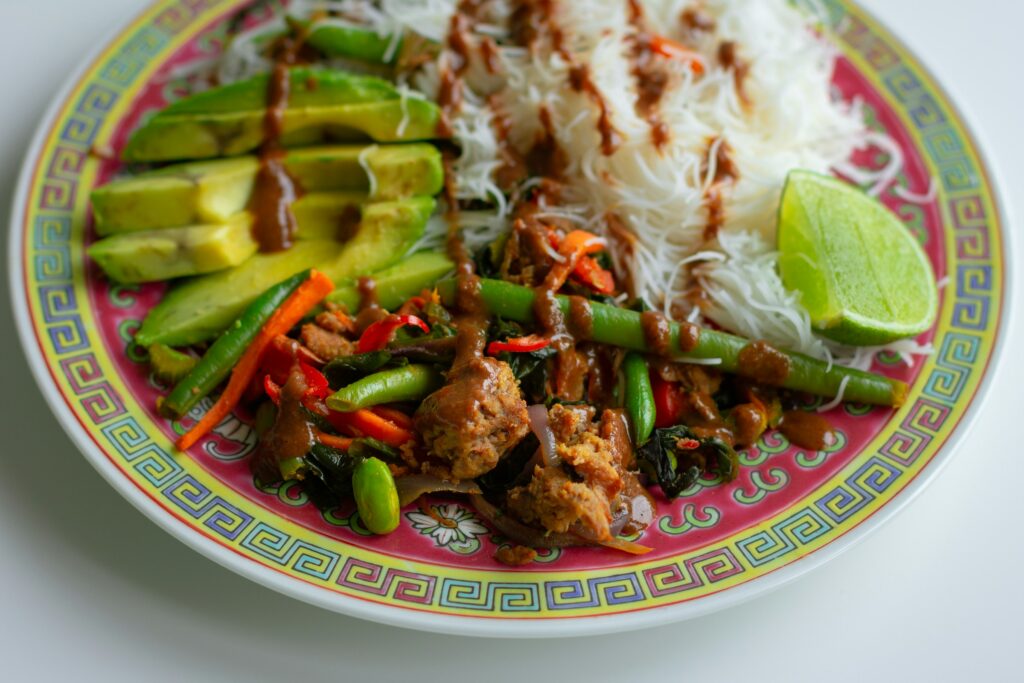
This peanut stir-fry is packed with colorful vegetables and coated in a creamy, savory peanut sauce.
It’s a fast, satisfying dinner that transforms basic frozen vegetables into something that tastes restaurant-worthy.
Why You’ll Love It
- Rich and flavorful peanut sauce
- Quick weeknight dinner
- Family-friendly meal
- Uses freezer and pantry staples
- Perfect served over rice or noodles
Ingredients
- 5 cups frozen stir-fry vegetables
- 1 tablespoon sesame oil
- 3 cloves garlic, minced
- 1 teaspoon grated ginger
For the Peanut Sauce
- ¼ cup creamy peanut butter
- 3 tablespoons soy sauce
- 1 tablespoon maple syrup
- 1 tablespoon rice vinegar
- 1 teaspoon sesame oil
- ¼ teaspoon red pepper flakes
- 3 tablespoons warm water
For Serving
- 3 cups cooked rice
- 2 green onions, sliced
- 1 tablespoon chopped peanuts
How to Make It
Step 1: Make the Sauce
In a bowl, whisk together the peanut butter, soy sauce, maple syrup, rice vinegar, sesame oil, red pepper flakes, and warm water until smooth.
Step 2: Cook the Vegetables
Heat the sesame oil in a large skillet or wok over medium-high heat. Add the garlic and ginger and cook for 30 seconds.
Add the frozen vegetables and cook for 6 to 8 minutes, stirring frequently.
Step 3: Add the Sauce
Pour the peanut sauce over the vegetables and stir until evenly coated. Cook for 2 to 3 minutes until the sauce thickens slightly.
Step 4: Serve
Spoon the stir-fry over cooked rice and garnish with green onions and chopped peanuts.
Easy Variations
- Add baked tofu or edamame for extra protein.
- Serve over noodles instead of rice.
- Use almond butter in place of peanut butter.
- Add extra buffalo sauce or sriracha for more heat.
Favorite Flavor Pairings for Frozen Vegetables
Not sure how to season your frozen vegetables?
A few simple flavor combinations can turn basic ingredients into a delicious meal with very little effort.
Use this quick reference guide whenever you need inspiration for stir-fries, rice bowls, soups, pasta dishes, or sheet pan dinners.
| Frozen Vegetable | Best Seasonings and Flavors |
|---|---|
| Broccoli | Garlic, soy sauce, sesame oil |
| Cauliflower | Buffalo sauce, curry powder |
| Peas | Lemon, garlic, fresh herbs |
| Corn | Chili powder, lime |
| Spinach | Garlic, lemon |
| Mixed Vegetables | Teriyaki sauce, ginger, soy sauce |
These pairings are a great starting point, but don’t be afraid to experiment with your favorite herbs, spices, and sauces.
Sometimes the best weeknight meals come from simple combinations that use what you already have in your kitchen.
Best Tips for Cooking Frozen Vegetables
Frozen vegetables can make dinner prep much easier, but a few simple techniques can make a big difference in flavor and texture.
If you’ve ever ended up with vegetables that were watery, bland, or overly soft, don’t worry.
A few small adjustments can help you get better results every time.
Don’t Always Thaw First
One of the most common mistakes is thawing frozen vegetables before cooking them.
In many recipes, frozen vegetables cook best straight from the freezer.
When vegetables thaw first, they release moisture before they hit the heat.
That extra water can make stir-fries soggy and prevent vegetables from developing any browning.
For dishes like fried rice, sheet pan meals, curries, and stir-fries, add the vegetables directly from the freezer whenever possible.
The high heat helps cook off excess moisture while keeping the vegetables from becoming mushy.
Always check your recipe instructions, but in most quick dinners, thawing is an unnecessary extra step.
Avoid Overcrowding the Pan
Giving vegetables enough space to cook is one of the easiest ways to improve texture.
When too many frozen vegetables are packed into a skillet or baking sheet, they start to steam instead of roast or sauté.
Steamed vegetables can still be tasty, but they won’t develop the lightly browned edges that add extra flavor.
If you’re cooking a large batch, use a bigger pan or divide the vegetables between two pans.
A little extra space allows heat to circulate more evenly.
This simple trick helps vegetables cook faster and taste better.
Roast at High Heat for Better Texture
Roasting frozen vegetables at a high temperature is one of the easiest ways to make them more flavorful.
High heat helps evaporate excess moisture quickly.
This encourages caramelization, which creates rich, roasted flavors and lightly crisp edges.
For most frozen vegetables, an oven temperature of 425°F (220°C) works very well.
Spread the vegetables in a single layer and avoid stacking them on top of one another.
A quick toss halfway through cooking helps everything roast evenly.
Don’t be surprised if roasted frozen vegetables become a regular part of your weeknight dinner routine.
Season Generously
Frozen vegetables benefit from good seasoning.
Because they contain extra moisture, some seasonings can become diluted during cooking.
A pinch of salt is a good start, but don’t stop there.
Garlic, onion powder, smoked paprika, curry powder, Italian seasoning, and black pepper can add plenty of flavor with very little effort.
Sauces are another easy way to bring vegetables to life.
Soy sauce, buffalo sauce, peanut sauce, teriyaki sauce, and simple garlic sauces all pair beautifully with frozen vegetables.
Taste as you cook and adjust the seasoning if needed.
A small tweak at the end can make the entire dish more satisfying.
Use Frozen Vegetables Straight from the Freezer
One of the biggest advantages of frozen vegetables is convenience.
There’s no washing, peeling, or chopping required.
When dinner needs to happen quickly, that saved time really adds up.
Keep a variety of vegetables stocked in your freezer, so you always have options available.
Broccoli, peas, spinach, mixed vegetables, cauliflower, and stir-fry blends can be turned into countless meals with just a few pantry ingredients.
Instead of waiting for fresh produce to be used before it spoils, you’ll have vegetables ready whenever you need them.
That’s what makes frozen vegetables such a reliable kitchen staple for busy nights.
The more you cook with them, the easier it becomes to create fast, flavorful vegan dinners without a lot of planning or prep work.
| Vegetable | Sauté | Roast (425°F) |
|---|---|---|
| Broccoli | 6-8 min | 20-25 min |
| Cauliflower | 7-9 min | 25-30 min |
| Green Beans | 5-7 min | 20-25 min |
| Mixed Vegetables | 5-7 min | 20-25 min |
| Bell Peppers | 5-6 min | 18-22 min |
| Peas | 3-4 min | Not recommended |
| Spinach | 3-5 min | Not recommended |
Common Mistakes to Avoid
Avoiding a few common mistakes can help your frozen vegetable meals turn out more flavorful and satisfying every time.
- Overcooking Frozen Vegetables – Frozen vegetables cook quickly, so leaving them on the heat too long can make them soft, mushy, and less appealing.
- Adding Too Much Water – Most frozen vegetables release moisture as they cook, so adding extra water often leads to soggy dishes and diluted flavors.
- Under-Seasoning – Frozen vegetables need enough seasoning to bring out their best flavor, so don’t be afraid to use herbs, spices, sauces, and a little salt.
- Using the Wrong Cooking Method – Some vegetables are better suited for roasting, while others work best in soups, stir-fries, or curries, so choose a cooking method that matches the dish you’re making.
Meal Prep and Storage Tips
A little planning can make weeknight cooking feel much easier.
Many of the recipes in this list are perfect for preparing ahead, storing for later, and reheating when you need a quick meal.
You don’t need a full day of meal prep to save time.
Even a few small steps can make dinner come together much faster.
How to Prep Faster Weeknight Dinners
One of the easiest ways to speed up dinner is to keep a variety of frozen vegetables stocked in your freezer.
Having broccoli, peas, spinach, mixed vegetables, and stir-fry blends on hand gives you plenty of options without needing a trip to the store.
Cook a large batch of rice, quinoa, or pasta at the beginning of the week.
Store it in the refrigerator so it’s ready to use in stir-fries, bowls, soups, and curries.
You can also prepare sauces ahead of time.
Peanut sauce, curry sauce, and simple stir-fry sauces keep well in the refrigerator and can save several minutes during dinner prep.
If you enjoy meal prepping, portion ingredients into containers so everything is ready to cook.
When it’s time to make dinner, you’ll simply combine the ingredients and start cooking.
Storing Leftovers
Most of these vegan dinners store very well and often taste just as good the next day.
Allow leftovers to cool before transferring them to airtight containers.
This helps maintain the best texture and flavor.
Store leftovers in the refrigerator for up to 4 days.
Rice bowls, curries, soups, pasta dishes, and stir-fries are all excellent options for make-ahead lunches and dinners.
When reheating, add a small splash of water or vegetable broth if the dish seems dry.
This is especially helpful for rice dishes, pasta, and stir-fries.
Heat until warmed through and serve.
Freezing Prepared Meals
Many frozen vegetable recipes can be frozen after cooking for even greater convenience.
Soups, curries, stir-fries, and bean-based dishes generally freeze very well.
Allow the food to cool completely before transferring it to freezer-safe containers or bags.
Label each container with the name of the dish and the date.
This makes it easy to keep track of what you have available.
Most prepared meals can be frozen for up to 3 months while maintaining good quality.
When you’re ready to enjoy them, thaw overnight in the refrigerator whenever possible.
Reheat gently on the stovetop or in the microwave until hot.
Having a few homemade meals in the freezer can make busy evenings much less stressful.
Future-you will be glad they’re there.
Best Recipes for Different Needs
Not sure which recipe to try first?
This quick guide can help you choose the best option based on what you’re looking for tonight.
- Fastest Dinner: Garlic Broccoli and Chickpea Stir-Fry – A simple, flavor-packed meal that comes together in about 20 minutes.
- Best Meal Prep Option: Coconut Curry with Frozen Vegetables – Reheats beautifully and tastes even better the next day.
- Best Family-Friendly Meal: Creamy Frozen Pea Pasta – Mild, creamy, and easy to customize for different tastes.
- Best High-Protein Choice: Spinach and White Bean Skillet – A hearty combination of beans and vegetables that makes a satisfying meal.
- Best Freezer-Friendly Recipe: Quick Vegan Vegetable Soup – Easy to freeze in portions for future lunches and dinners.
- Best Takeout-Inspired Meal: Sesame Ginger Vegetable Noodles – Loaded with savory flavor and perfect when you’re craving takeout-style comfort food at home.
Reader Success Tips
Before you head to the kitchen, keep these simple tips in mind to make cooking with frozen vegetables even easier:
✓ Keep at least three frozen vegetable varieties on hand to give yourself more meal options throughout the week.
✓ Cook vegetables directly from frozen whenever possible for the best texture and the quickest prep.
✓ Use high heat when roasting to encourage browning and develop deeper flavor.
✓ Taste and adjust seasonings before serving since a small pinch of salt, squeeze of lemon, or splash of sauce can make a big difference.
✓ Make extra portions for easy lunches so tomorrow’s meal is already taken care of.
These small habits can help you create flavorful vegan dinners with less effort and more confidence.
Final Thoughts
Frozen vegetables are one of the easiest ways to make vegan cooking simpler, more affordable, and less stressful.
With a few freezer staples on hand, you can turn everyday ingredients into quick, flavorful dinners without spending a lot of time in the kitchen.
Keep your favorite frozen vegetables stocked, and you’ll always be just a few steps away from an easy weeknight dinner.
FAQs
Can you cook frozen vegetables without thawing them first?
Yes. Most frozen vegetables can be cooked straight from the freezer, which saves time and often helps maintain a better texture.
Are frozen vegetables healthy?
Yes. Frozen vegetables are typically frozen shortly after harvest and can be just as nutritious as fresh vegetables.
What frozen vegetables work best in stir-fries?
Broccoli, bell peppers, green beans, peas, cauliflower, and frozen stir-fry vegetable blends are all excellent choices for stir-fries.
Can frozen vegetables be roasted?
Absolutely. Roasting frozen vegetables at a high temperature helps create caramelized edges and adds plenty of flavor.
How do you make frozen vegetables taste better?
Use plenty of seasoning, cook them at a high heat when appropriate, and add flavorful sauces, herbs, spices, or fresh garnishes.
What proteins pair well with frozen vegetables in vegan meals?
Chickpeas, tofu, tempeh, edamame, lentils, black beans, and white beans all pair well with frozen vegetables and help create more filling meals.
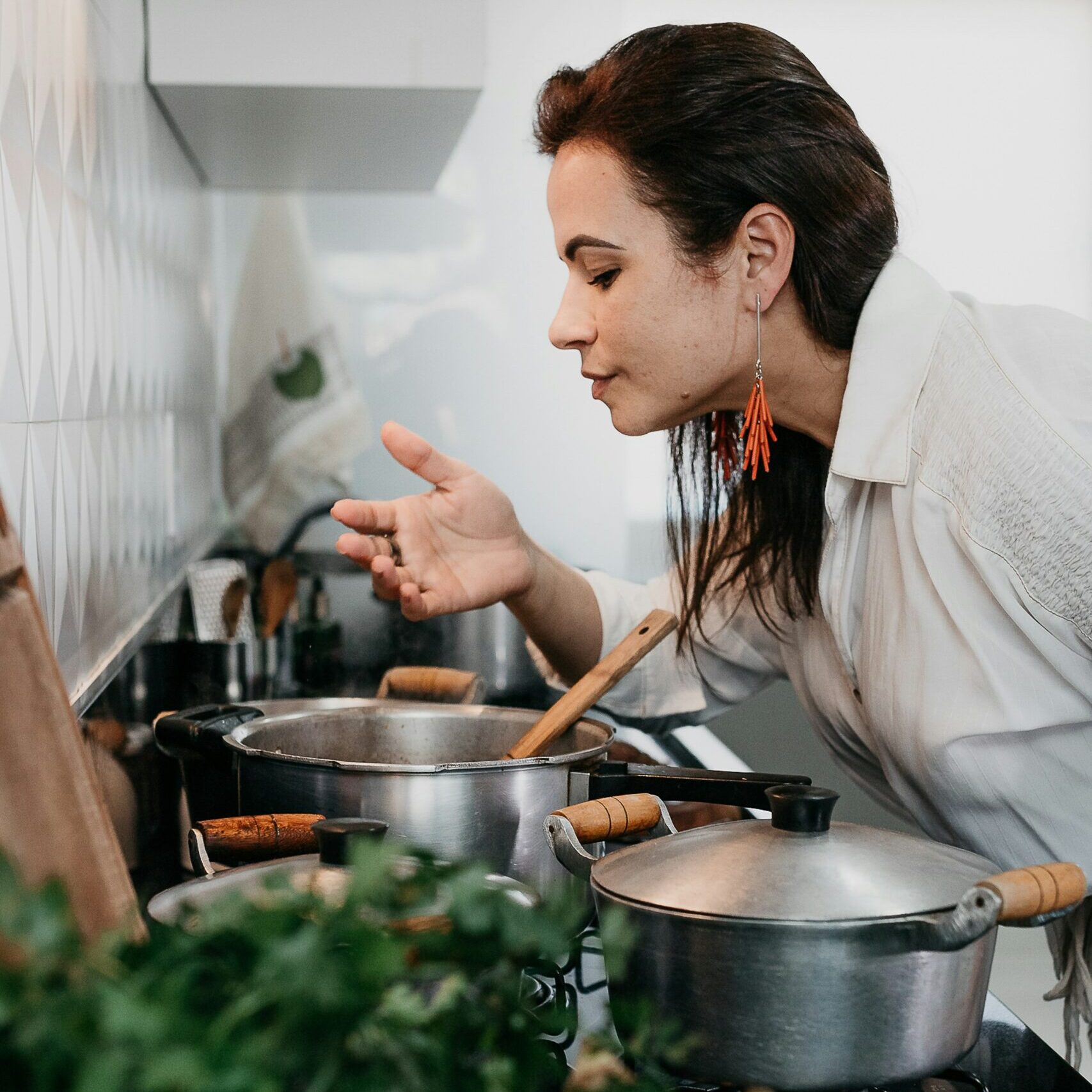
Hi, I’m Daisy Roots, the home cook and recipe developer behind this kitchen. I create simple, tested vegan recipes using everyday ingredients. Every dish is developed and cooked in my own kitchen, with clear steps to help you get reliable results every time. Thanks for stopping by — let’s cook something great!