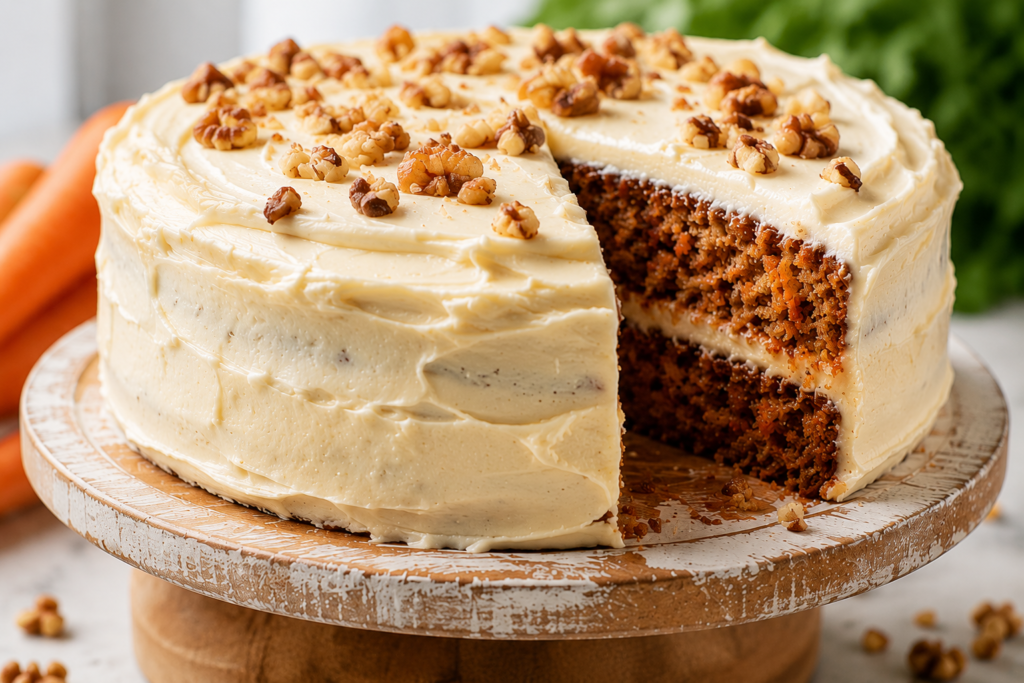
Carrot cake has been a favorite for generations, and it’s easy to see why.
It’s soft, warmly spiced, and packed with sweet carrot flavor that makes every bite feel comforting and special.
This vegan version delivers everything you love about classic carrot cake without using eggs or dairy.
Simple ingredients come together to create a cake that stays moist, tender, and full of flavor, while the creamy dairy-free frosting adds the perfect finishing touch.
If you’re new to vegan baking, don’t worry, because I’ll guide you through each step so you can bake with confidence.
Recipe At a Glance
| Detail | Information |
|---|---|
| Prep Time | 20 minutes |
| Bake Time | 30–35 minutes |
| Total Time | 55 minutes |
| Servings | 10–12 slices |
| Difficulty | Easy |
| Diet | Vegan |
| Freezer Friendly | Yes |
| Make-Ahead Friendly | Yes |
Why You’ll Love This Vegan Carrot Cake
- Soft and Moist Every Time – Freshly grated carrots and simple pantry ingredients help create a tender cake with the perfect texture.
- Warm, Cozy Flavor – Cinnamon and other classic spices add a comforting flavor that pairs perfectly with the sweet carrots.
- Made with Simple Plant-Based Ingredients – Everything you need can be found in most grocery stores, making this recipe easy to prepare.
- Rich and Creamy Dairy-Free Frosting – The smooth frosting adds the perfect balance of sweetness and makes every slice extra special.
- Perfect for Any Occasion – Serve it for birthdays, holidays, family gatherings, or whenever you’re craving a homemade dessert.
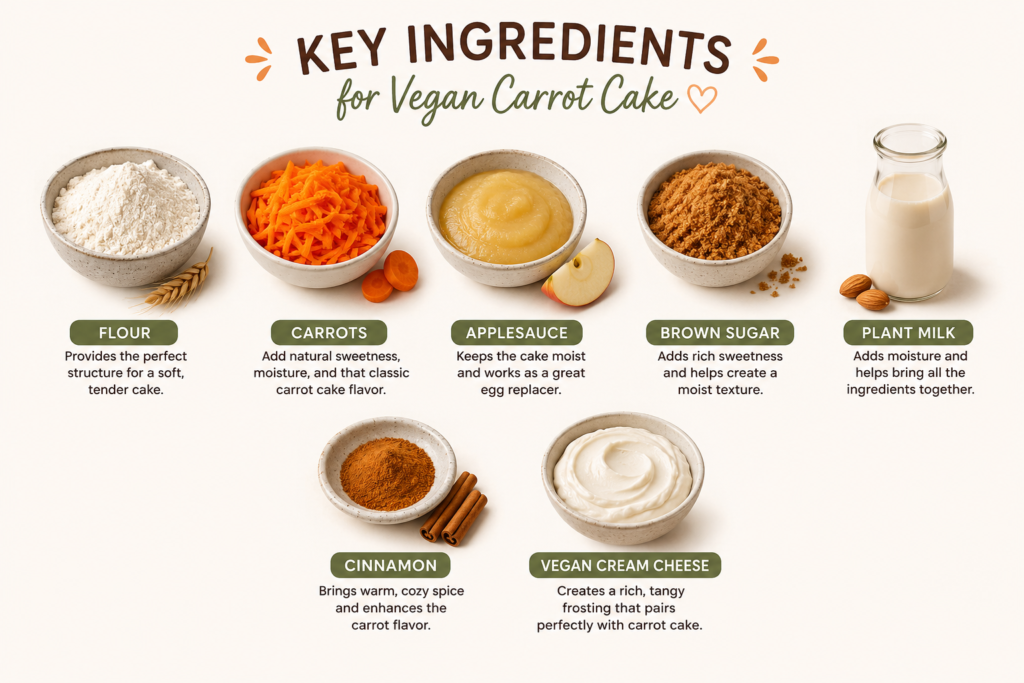
Ingredients You’ll Need
For the Vegan Carrot Cake
- 2 cups (250g) all-purpose flour
- 2 teaspoons baking powder
- 1 teaspoon baking soda
- 2 teaspoons ground cinnamon
- ½ teaspoon ground nutmeg
- ½ teaspoon salt
- 1 cup (200g) brown sugar, packed
- ½ cup (120g) unsweetened applesauce
- ½ cup (120ml) vegetable oil
- 2 teaspoons vanilla extract
- ¾ cup (180ml) unsweetened plant-based milk
- 2 cups (220g) grated carrots
- ½ cup (60g) chopped walnuts or pecans (optional)
For the Dairy-Free Frosting
- ½ cup (115g) vegan butter, softened
- 8 ounces (225g) dairy-free cream cheese, softened
- 3 cups (360g) powdered sugar
- 1 teaspoon vanilla extract
Ingredient Substitutions
If you’re missing an ingredient or want to use what you already have on hand, these simple swaps work well in this recipe.
| Ingredient | Substitute |
|---|---|
| Unsweetened Applesauce | Mashed banana |
| Brown Sugar | Coconut sugar |
| Vegetable Oil | Melted coconut oil |
| Almond Milk | Oat milk or soy milk |
| Walnuts | Pecans or omit entirely |
Keep in mind that substitutions may slightly change the flavor and texture of the finished cake, but each option listed above has been chosen because it works well in vegan baking.
Equipment Needed
- Mixing Bowls – For separately combining the wet and dry ingredients.
- Measuring Cups and Spoons – To accurately measure all ingredients for consistent results.
- Box Grater – For grating fresh carrots, which provide the best texture and moisture.
- Electric Mixer – Helps create a smooth, creamy dairy-free frosting with minimal effort.
- 8-Inch or 9-Inch Cake Pans – Used to bake the cake layers evenly.
- Cooling Rack – Allows the cake to cool properly before frosting and serving.
How to Make Vegan Carrot Cake
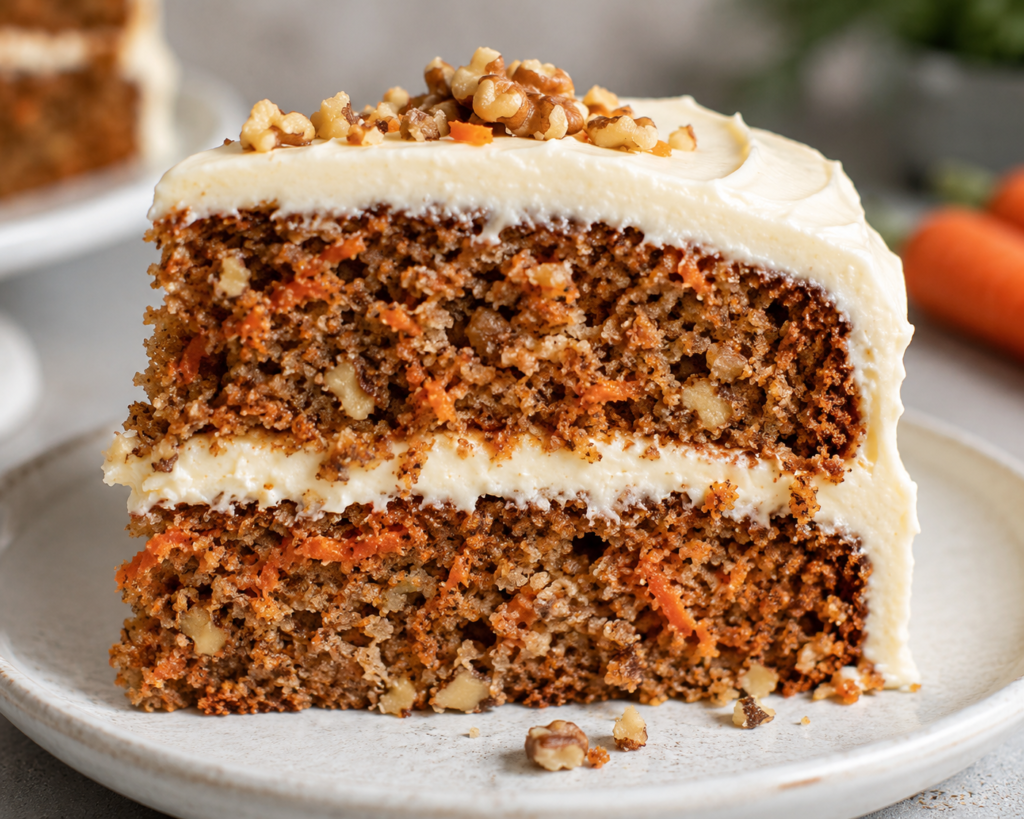
Step 1: Prepare the Cake Pans
Start by preheating your oven to 350°F (175°C).
Grease two 8-inch or 9-inch cake pans with a light coating of oil or vegan butter.
Line the bottoms with parchment paper to prevent sticking and make the cakes easier to remove after baking.
Taking a few extra minutes to prepare the pans properly helps ensure your cake layers come out clean and intact.
Step 2: Mix the Dry Ingredients
In a large mixing bowl, add the all-purpose flour, baking powder, baking soda, ground cinnamon, ground nutmeg, and salt.
Whisk everything together until the ingredients are evenly combined.
This simple step helps distribute the spices and leavening agents throughout the batter, giving the cake a consistent texture and flavor.
Make sure there are no lumps of baking powder or baking soda remaining in the mixture.
Step 3: Mix the Wet Ingredients
In a separate bowl, combine the brown sugar, unsweetened applesauce, vegetable oil, vanilla extract, and plant-based milk.
Whisk until the mixture looks smooth and well blended.
The applesauce helps keep the cake moist, while the oil creates a soft and tender crumb.
Mix until the sugar is fully incorporated and the ingredients are evenly combined.
Step 4: Combine and Fold
Pour the wet ingredients into the bowl of dry ingredients.
Using a spatula or wooden spoon, gently stir until no dry flour remains visible.
Avoid overmixing the batter.
A few small lumps are perfectly fine and will help keep the cake light and soft.
Fold in the grated carrots until they are evenly distributed throughout the batter.
If you’re using chopped walnuts or pecans, gently fold them in at this stage as well.
The batter should be thick, moist, and easy to spread.
Step 5: Bake the Cake
Divide the batter evenly between the prepared cake pans.
Use a spatula to smooth the tops so the layers bake evenly.
Place the pans on the center rack of the preheated oven.
Bake for 30 to 35 minutes, or until the tops are lightly golden and a toothpick inserted into the center comes out clean.
Try not to open the oven door too often while the cakes bake.
Keeping the oven temperature steady helps the cake rise properly.
Once baked, remove the pans from the oven and place them on a cooling rack.
Signs Your Vegan Carrot Cake Is Ready
Knowing when your cake is fully baked can make the difference between a perfectly moist cake and one that is underbaked or dry.
Gently press the center of the cake with your fingertip.
If the top springs back instead of leaving an indentation, the cake is likely done.
Take a look around the edges of the pan as well.
The cake should begin pulling away slightly from the sides as it finishes baking.
For the most reliable test, insert a toothpick into the center of the cake.
If it comes out clean or with just a few dry crumbs attached, the cake is ready to come out of the oven.
The center should also look fully set rather than wet or shiny.
If any of these signs are missing, continue baking for a few more minutes and check again.
Step 6: Cool Completely
Allow the cakes to cool in their pans for about 15 minutes.
This gives the cake time to set and makes it easier to remove from the pans without breaking.
Carefully run a knife around the edges if needed, then turn the cakes out onto a cooling rack.
Peel away the parchment paper and let the layers cool completely.
Be patient during this step.
Frosting a warm cake can cause the frosting to melt and slide off, so wait until the layers are fully cooled before decorating.
How to Make Dairy-Free Frosting
Step 1: Beat the Vegan Butter
Place the softened vegan butter in a large mixing bowl.
Using an electric mixer, beat the butter on medium speed for 2 to 3 minutes.
Keep mixing until it looks light, smooth, and slightly fluffy.
Starting with well-whipped butter helps create a frosting that is creamy and easy to spread.
If your vegan butter is too cold, let it sit at room temperature for a few minutes before mixing.
Soft butter blends more smoothly and prevents lumps in the finished frosting.
Step 2: Add Remaining Ingredients
Add the softened dairy-free cream cheese to the bowl with the whipped butter.
Beat until the mixture is completely smooth and evenly combined.
Pour in the vanilla extract and mix again until incorporated.
Gradually add the powdered sugar, about one cup at a time.
Mix on low speed at first to prevent the sugar from spilling out of the bowl.
Once the sugar is mostly incorporated, increase the speed and continue mixing.
Scrape down the sides of the bowl as needed to make sure everything blends evenly.
Continue beating until the frosting is thick, creamy, and smooth.
The finished frosting should hold its shape while still being soft enough to spread easily over the cake.
Step 3: Adjust Consistency
Check the texture before frosting your cake.
If the frosting feels too soft, add a little more powdered sugar, a few tablespoons at a time.
Mix well after each addition until you reach your desired consistency.
If the frosting seems too thick, add a small splash of plant-based milk.
Start with one teaspoon at a time and mix thoroughly before adding more.
The goal is a frosting that spreads smoothly without being runny.
For the best results, place the frosting in the refrigerator for 15 to 20 minutes if it becomes too soft while mixing.
Once ready, your dairy-free frosting should be rich, creamy, and perfect for layering and decorating your vegan carrot cake.
Recommended Frosting Thickness Guide
The amount of frosting you use can completely change the look and feel of the finished cake.
Use the guide below to choose the style that best fits your occasion.
| Style | Frosting Amount |
|---|---|
| Thin Layer | Use the standard frosting recipe as written. |
| Thick Bakery Style | Make 1.5 times the frosting recipe for extra filling and thicker outer layers. |
| Naked Cake | Use ¾ of the frosting recipe for a lightly frosted, rustic appearance. |
If you’re serving the cake for a birthday or special celebration, the thick bakery-style option creates a more dramatic presentation.
For casual gatherings or everyday baking, the standard amount provides the perfect balance of cake and frosting.
A naked cake works especially well when you want the beautiful carrot cake layers to remain visible.
How to Assemble the Cake
Level the Cake Layers
Make sure both cake layers are completely cool before you begin assembling.
If the tops have domed slightly during baking, use a long serrated knife to carefully trim them until they are level.
This step is optional, but it helps create a more stable cake and gives the finished dessert a cleaner look.
Take your time and remove only a small amount at a time.
Even if the layers are not perfectly even, the cake will still taste wonderful.
Spread Frosting Between the Layers
Place one cake layer on your serving plate or cake stand.
Add a generous scoop of dairy-free frosting to the center of the cake.
Using an offset spatula or the back of a spoon, spread the frosting evenly from the center toward the edges.
Try to create a smooth, even layer so every slice has the perfect balance of cake and frosting.
Place the second cake layer on top with the flat side facing up.
Gently press down to secure the layers without squeezing out the frosting.
Frost the Top and Sides
Spread a layer of frosting over the top of the cake.
Work outward from the center until the entire surface is covered.
Next, apply frosting around the sides of the cake.
Use smooth, gentle strokes to create an even finish.
If crumbs mix into the frosting, don’t worry.
A quick chill in the refrigerator for 15 to 20 minutes can help firm up the cake and make the final layer of frosting easier to apply.
You can keep the finish rustic and homemade or smooth it out for a more polished presentation.
Decorate and Serve
Sprinkle chopped walnuts or pecans around the top edge of the cake for a simple and classic finish.
For extra color, add a small handful of finely shredded carrots to the center.
You can also combine both toppings for added texture and visual appeal.
Keep the decoration simple so the beautiful layers remain the star of the cake.
Once decorated, the cake is ready to slice and serve.
Each bite is packed with moist carrot cake, warm spices, and creamy dairy-free frosting, making it a dessert that’s perfect for sharing.
Tips for the Best Vegan Carrot Cake
Use Freshly Grated Carrots for Maximum Moisture
Freshly grated carrots make a noticeable difference in both texture and flavor.
They contain more natural moisture than pre-shredded carrots, which helps keep the cake soft and tender.
Grate the carrots yourself using the fine or medium side of a box grater for the best results.
The smaller pieces blend more evenly into the batter and create a smoother texture in every bite.
If the grated carrots seem very wet, there is no need to squeeze them dry.
That natural moisture helps create the rich, moist crumb carrot cake is known for.
Avoid Overmixing the Batter
Once the wet and dry ingredients are combined, stir only until everything is incorporated.
Overmixing can make the cake denser than intended.
A few small lumps in the batter are completely normal.
The goal is to mix just enough so there are no large pockets of dry flour remaining.
After adding the carrots and optional nuts, fold them in gently.
This simple step helps keep the cake light while still giving it plenty of texture.
Let the Cake Cool Completely Before Frosting
It can be tempting to frost the cake right away, especially when your kitchen smells amazing.
However, patience pays off here.
Even a slightly warm cake can cause the frosting to soften and slide around.
Allow the layers to cool completely on a wire rack before assembling and decorating.
Cool cake layers are easier to handle and create cleaner, more even layers when stacked.
This also helps the frosting stay smooth and beautiful from the first slice to the last.
Chill the Frosting if It Becomes Too Soft
Dairy-free frostings can soften quickly, especially in a warm kitchen.
If the frosting starts feeling too loose while mixing or decorating, place it in the refrigerator for 15 to 20 minutes.
A short chill helps it firm up without becoming difficult to spread.
If you’re decorating the cake on a warm day, you can also chill the assembled cake briefly before serving.
This helps the frosting hold its shape and makes slicing easier.
A little time in the refrigerator can make the decorating process much smoother and less stressful.
Measure Ingredients Carefully
Accurate measurements help create consistent results every time you bake.
Too much flour can make the cake dry, while too little can affect the structure.
For the most reliable results, spoon the flour into your measuring cup and level it off with a knife.
This simple habit can make a big difference in the final texture of the cake.
Don’t Skip the Spices
The warm spices are what give carrot cake its signature flavor.
Cinnamon adds sweetness and warmth, while nutmeg brings extra depth.
Using fresh spices will give your cake the best flavor possible.
If your spices have been sitting in the pantry for years, replacing them can instantly improve the finished cake.
A well-spiced carrot cake tastes rich, comforting, and full of homemade goodness.
Troubleshooting Common Carrot Cake Problems
Even simple recipes can have the occasional hiccup.
If something doesn’t turn out exactly as expected, this quick guide can help you identify the cause and fix it next time.
| Problem | Possible Cause | Simple Fix |
|---|---|---|
| Cake is dense | Batter was overmixed | Stir until the ingredients are just combined. |
| Cake is dry | Cake was baked too long | Start checking for doneness about 5 minutes early. |
| Frosting is runny | Ingredients became too warm | Chill the frosting for 15–20 minutes before using. |
| Cake sticks to pan | Pan was not properly lined | Grease the pan and line the bottom with parchment paper. |
Small adjustments can make a big difference, and even an imperfect homemade cake is usually delicious.
Variations and Add-Ins
- Raisins or Dried Cranberries – Stir in ½ cup for extra sweetness and chewy texture throughout the cake.
- Crushed Pineapple – Add ½ cup of well-drained crushed pineapple to make the cake even more moist and flavorful.
- Coconut Flakes – Mix in ½ cup of unsweetened coconut flakes for a subtle coconut flavor and added texture.
- Walnut or Pecan Topping – Sprinkle chopped walnuts or pecans over the frosted cake for a crunchy, decorative finish.
- Cupcake Version – Divide the batter into a lined muffin tin and bake for 18 to 22 minutes to create easy-to-serve carrot cake cupcakes.
Make Ahead Instructions
This vegan carrot cake is a great make-ahead dessert when you’re planning for a holiday, party, or special occasion.
You can bake the cake layers up to 2 days in advance.
Once the layers have cooled completely, wrap each one tightly in plastic wrap to help retain moisture.
Store the wrapped layers in the refrigerator until you’re ready to assemble the cake.
For the freshest presentation, prepare and apply the frosting on the day you plan to serve the cake.
If you’d like to prepare even further ahead, the unfrosted cake layers can be frozen for up to 3 months.
Wrap each layer in plastic wrap and then a layer of aluminum foil before freezing.
When ready to use, thaw the layers overnight in the refrigerator and bring them to room temperature before frosting.
Making the cake ahead of time can help break the process into smaller steps and make serving day much more relaxed.
Storage Instructions
Refrigerator
Once the cake is frosted, store it in an airtight container or cover it tightly with plastic wrap.
Keeping the cake covered helps prevent it from drying out and protects the frosting from absorbing odors from the refrigerator.
The frosted cake will stay fresh for up to 5 days when refrigerated.
For the best texture and flavor, allow individual slices to sit at room temperature for 15 to 20 minutes before serving.
This gives the frosting time to soften slightly and allows the warm spices to shine through.
If you’re making the cake ahead for a party or gathering, storing it in the refrigerator overnight works very well.
The flavors often become even better after the cake has had time to rest.
Freezer
This carrot cake freezes beautifully, making it a great make-ahead dessert.
You can freeze whole cake layers before frosting or freeze individual slices after the cake has been assembled.
To freeze unfrosted cake layers, allow them to cool completely first.
Wrap each layer tightly in plastic wrap, followed by a layer of aluminum foil.
This extra protection helps prevent freezer burn and keeps the cake fresh.
Place the wrapped layers in a freezer-safe bag or container and freeze for up to 3 months.
For frosted cake slices, place the slices on a baking sheet and freeze until firm.
Once frozen, wrap each slice individually and transfer them to a freezer-safe container.
This makes it easy to thaw only the amount you need.
When you’re ready to enjoy the cake, transfer it to the refrigerator and let it thaw overnight.
For quicker thawing, leave a slice at room temperature for about 30 to 60 minutes.
The cake will retain its soft texture and delicious flavor, making it taste just as enjoyable as the day it was baked.
Serving Suggestions
A slice of this vegan carrot cake pairs beautifully with a hot cup of coffee, as the rich flavors of the cake and the warm spices complement the deep notes of the coffee.
If you prefer tea, try serving it with black tea, chai, or a lightly spiced herbal blend for a cozy and comforting combination.
For special occasions, place the cake on a decorative cake stand and garnish it with a sprinkle of chopped walnuts, pecans, or a few curls of shredded carrot for an attractive presentation.
This cake is a wonderful choice for birthdays because it feels celebratory while offering a homemade touch that guests always appreciate.
It also fits perfectly on an Easter dessert table, where its classic carrot cake flavors and beautiful appearance make it a natural centerpiece.
For family gatherings, serve generous slices alongside fresh fruit, coffee, or tea to create a simple dessert spread that everyone can enjoy.
Because the cake stays moist and flavorful for several days, it’s also a great make-ahead dessert when you’re hosting guests.
Final Thoughts
This vegan carrot cake is proof that simple ingredients can create a dessert that is moist, flavorful, and truly satisfying.
With its warm spices, tender crumb, and creamy dairy-free frosting, it’s the kind of cake that feels special without being difficult to make.
Give it a try, make it your own with your favorite add-ins, and don’t forget to share your results with family and friends.
FAQs
Can I make this carrot cake gluten-free?
Yes. Substitute the all-purpose flour with a 1:1 gluten-free baking flour blend for the best results.
What is the best dairy-free milk for baking?
Unsweetened almond milk, soy milk, and oat milk all work well and provide consistent results in this recipe.
Can I make the cake ahead of time?
Absolutely. You can bake the cake layers 1 to 2 days in advance and store them covered in the refrigerator until you’re ready to frost and serve.
How do I keep carrot cake moist?
Use freshly grated carrots, measure the flour carefully, and avoid overbaking the cake to maintain a soft, moist texture.
Can I use store-bought vegan cream cheese frosting?
Yes. Store-bought vegan cream cheese frosting is a convenient option when you’re short on time and still want a delicious finished cake.
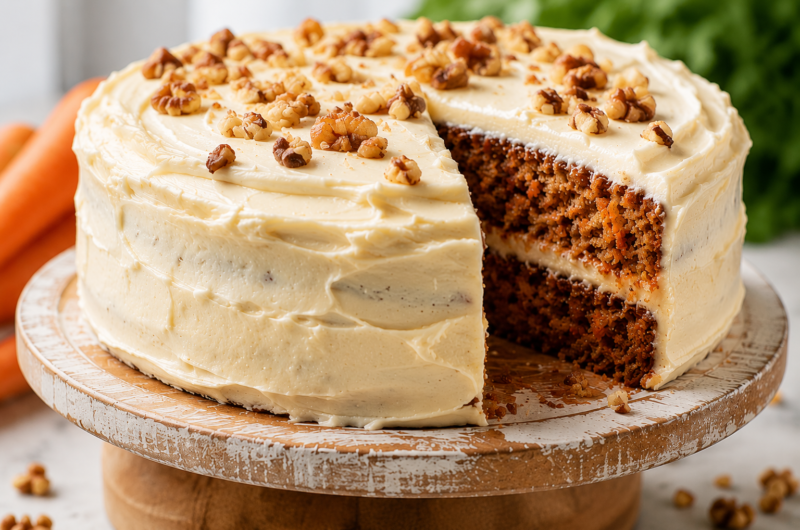
Vegan Carrot Cake with Dairy-Free Frosting (So Moist and Easy!)
Course: Vegan DessertsDifficulty: Easy12
Slices20
minutes35
minutes55
minutesThis vegan carrot cake is soft, moist, and packed with warm spices, then finished with a rich dairy-free frosting. It’s an easy homemade dessert that’s perfect for birthdays, holidays, or any time you’re craving a classic carrot cake.
Ingredients
- For the Cake
2 cups all-purpose flour
2 teaspoons baking powder
1 teaspoon baking soda
2 teaspoons ground cinnamon
½ teaspoon ground nutmeg
½ teaspoon salt
1 cup brown sugar
½ cup unsweetened applesauce
½ cup vegetable oil
2 teaspoons vanilla extract
¾ cup plant-based milk
2 cups grated carrots
½ cup chopped walnuts or pecans (optional)
- For the Frosting
½ cup vegan butter, softened
8 ounces dairy-free cream cheese, softened
3 cups powdered sugar
1 teaspoon vanilla extract
Directions
- Preheat the oven to 350°F (175°C) and prepare two 8-inch cake pans.
- Whisk together the flour, baking powder, baking soda, cinnamon, nutmeg, and salt.
- In a separate bowl, whisk together the brown sugar, applesauce, oil, vanilla, and plant-based milk.
- Combine the wet and dry ingredients, then fold in the grated carrots and nuts if using.
- Divide the batter between the pans and bake for 30–35 minutes.
- Cool the cakes completely before removing them from the pans.
- Beat the vegan butter and dairy-free cream cheese until smooth.
- Mix in the powdered sugar and vanilla until creamy.
- Frost the cooled cake layers and serve.
Notes
- Use freshly grated carrots for the best texture and moisture.
- Do not overmix the batter to keep the cake soft and tender.
- Allow the cake to cool completely before frosting.
- Refrigerate leftover cake for up to 5 days.
Hi, I’m Daisy Roots, the home cook and recipe developer behind this kitchen. I create simple, tested vegan recipes using everyday ingredients. Every dish is developed and cooked in my own kitchen, with clear steps to help you get reliable results every time. Thanks for stopping by — let’s cook something great!