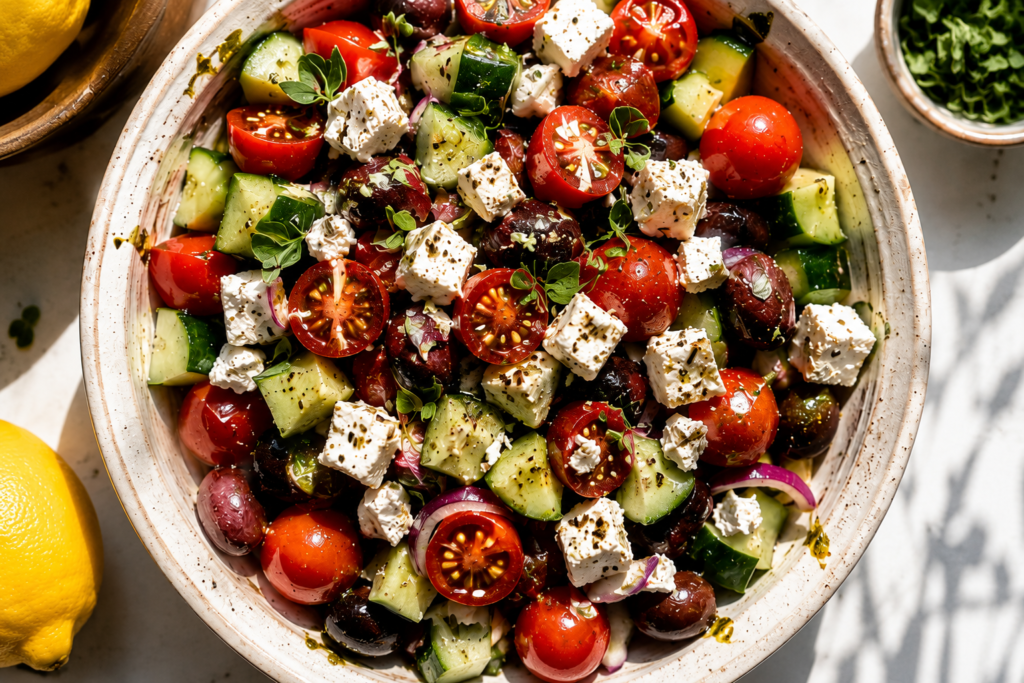
There’s a reason Greek salad has been loved for generations.
Crisp vegetables, briny olives, and a tangy dressing come together to create a simple dish that’s full of fresh Mediterranean flavor.
This vegan version keeps everything you love while swapping traditional feta for a dairy-free alternative.
It’s colorful, refreshing, and comes together in just minutes with everyday ingredients.
Grab a bowl, and let’s make it together.
Why You’ll Love This Vegan Greek Salad
- Quick and easy to prepare – This salad comes together in about 15 minutes with minimal prep and no cooking required.
- Packed with fresh vegetables – Crisp cucumbers, juicy tomatoes, crunchy peppers, and red onion add plenty of color and texture to every bite.
- Naturally dairy-free and gluten-free – Simple ingredients make this salad a great option for a variety of dietary needs.
- Loaded with Mediterranean flavors – Kalamata olives, herbs, and a tangy homemade dressing bring classic Greek-inspired taste to the table.
- Great as a side dish or light meal – Serve it alongside your favorite main course or enjoy a generous bowl on its own for a fresh and satisfying meal.
What Is a Traditional Greek Salad?
A traditional Greek salad, often known as Horiatiki or “village salad,” is a simple dish that highlights the fresh flavors of everyday ingredients rather than relying on complicated preparation or heavy dressings.
In Greece, this salad is typically made with ripe tomatoes, crisp cucumbers, red onion, green bell pepper, Kalamata olives, and a generous piece of feta cheese, all brought together with olive oil, oregano, and sometimes a splash of vinegar.
One of the reasons Greek salad has remained popular for so many years is its balance of flavors, with juicy vegetables, salty olives, creamy cheese, and fragrant herbs creating a dish that feels both refreshing and satisfying.
Unlike many leafy green salads, traditional Greek salad usually skips lettuce altogether, allowing the vegetables to be the star of the bowl and giving every bite a crisp, vibrant texture.
This vegan version stays true to those classic Mediterranean flavors while replacing dairy-based feta with a plant-based alternative that offers a similar creamy texture and tangy taste.
A good vegan feta made from ingredients like coconut oil, almonds, or tofu can absorb the flavors of the dressing beautifully, helping it blend naturally with the vegetables and olives.
The homemade dressing also plays an important role, coating every ingredient with rich olive oil, bright acidity, garlic, and oregano so the salad still delivers the bold flavor people expect from a classic Greek salad.
The result is a fresh and colorful vegan dish that respects the spirit of the original recipe while making it completely dairy-free and easy for everyone at the table to enjoy.
Flavor Profile Guide
Understanding what each ingredient brings to the bowl can help you appreciate how the flavors work together to create a balanced and delicious vegan Greek salad.
| Ingredient | Flavor Contribution |
|---|---|
| Kalamata Olives | Salty and briny, adding the signature Mediterranean taste. |
| Tomatoes | Sweet and juicy, bringing freshness and natural sweetness. |
| Cucumber | Cool and refreshing, providing a crisp texture in every bite. |
| Red Onion | Sharp and slightly sweet, adding depth and a subtle bite. |
| Vegan Feta | Tangy and creamy, helping balance the fresh vegetables and olives. |
| Greek Dressing | Bright and zesty, tying all the flavors together with citrus, vinegar, and herbs. |
When combined, these ingredients create a salad that is crisp, refreshing, savory, tangy, and full of classic Mediterranean flavor without any single ingredient overpowering the others.
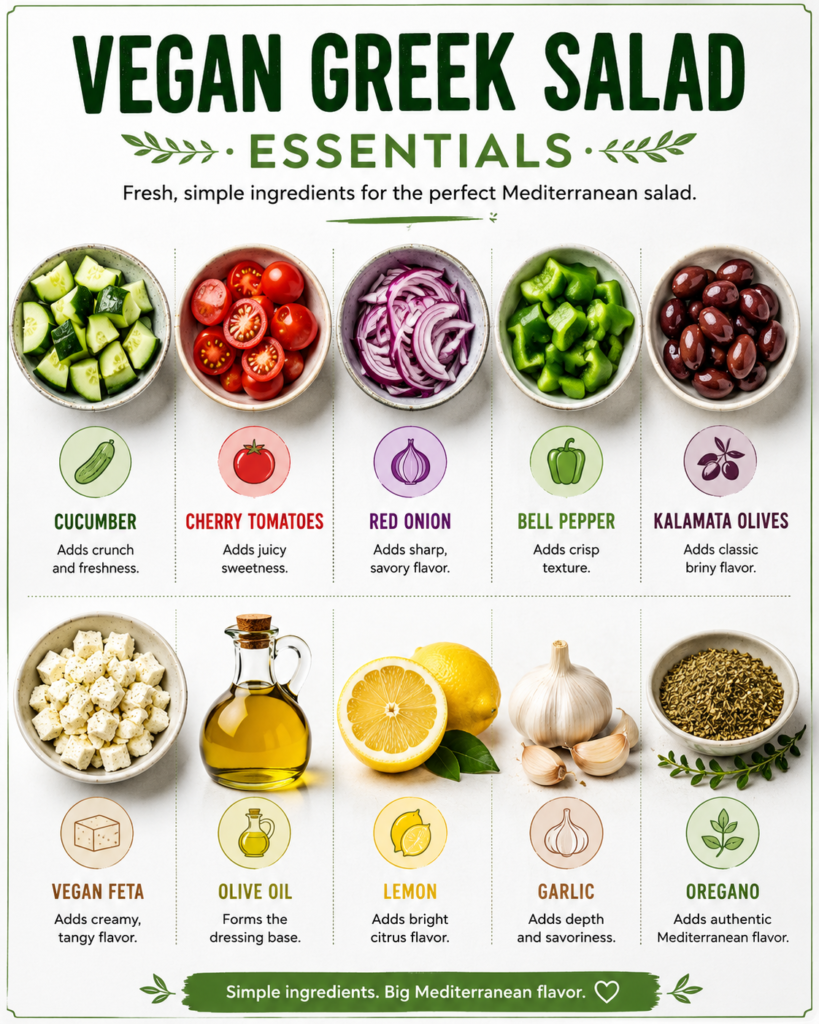
Ingredients You’ll Need
For the Salad
- 4 cups romaine lettuce, chopped (optional) – Adds extra crunch and volume if you prefer a heartier salad.
- 1 large cucumber, sliced or chopped – Provides a refreshing, crisp texture.
- 2 cups cherry tomatoes, halved – Brings juicy sweetness and bright color.
- ½ medium red onion, thinly sliced – Adds a mild sharpness that balances the other ingredients.
- 1 medium green bell pepper, chopped – Contributes a fresh, crunchy bite.
- ¾ cup Kalamata olives, pitted – Adds the classic salty, briny flavor Greek salad is known for.
- 1 cup vegan feta cheese, crumbled – Delivers a creamy, tangy element without dairy.
- 2 tablespoons fresh parsley or fresh oregano, chopped – Adds freshness and a burst of herb flavor.
For the Homemade Greek Dressing
- ¼ cup extra virgin olive oil – Forms the rich, flavorful base of the dressing.
- 2 tablespoons red wine vinegar – Adds bright acidity and authentic Greek salad flavor.
- 1 tablespoon fresh lemon juice – Brings a fresh citrus note that balances the olive oil.
- 2 garlic cloves, minced – Adds depth and savory flavor.
- 1 teaspoon dried oregano – A classic Mediterranean herb that ties everything together.
- 1 teaspoon Dijon mustard – Helps emulsify the dressing and adds subtle tanginess.
- ½ teaspoon salt – Enhances the flavors of the vegetables and dressing.
- ¼ teaspoon black pepper – Adds a gentle touch of warmth and spice.
Ingredient Notes and Substitutions
Best Vegan Feta Options
Store-bought vegan feta is the easiest option and works beautifully in this salad because it offers the salty, tangy flavor that makes Greek salad so recognizable.
Many grocery stores now carry vegan feta made from coconut oil, almonds, or other plant-based ingredients, and most crumble easily just like traditional feta.
If you’re using store-bought vegan feta, let it sit at room temperature for a few minutes before serving so its texture softens slightly and blends more naturally with the vegetables.
Homemade tofu feta is another excellent choice and can be made by marinating firm tofu in lemon juice, vinegar, olive oil, herbs, and salt.
The tofu absorbs those flavors over time, creating a tangy and savory cheese alternative that pairs wonderfully with fresh vegetables and olives.
Cashew-based feta is often creamier than tofu feta and provides a rich texture that feels especially satisfying in every bite.
If you enjoy making homemade vegan cheeses, cashew feta can add a smooth, slightly tangy element that complements the crisp vegetables without overpowering them.
| Vegan Feta Type | Texture | Flavor | Best For |
|---|---|---|---|
| Store-Bought Vegan Feta | Firm and crumbly | Tangy and salty | Quick everyday use |
| Tofu Feta | Slightly firm | Mild and savory | Budget-friendly option |
| Cashew Feta | Creamy | Rich and tangy | Special occasions and entertaining |
Vegetable Variations
One of the best things about this salad is how easy it is to adapt based on what you have available in your kitchen.
Diced avocado adds a creamy texture that contrasts nicely with the crunchy vegetables and tangy dressing.
For the best texture, add avocado just before serving so it stays fresh and keeps its shape.
If you’d like to make the salad a little more filling, chickpeas are a simple addition that blends naturally with the Mediterranean flavors.
Their mild taste allows the dressing, herbs, and olives to remain the stars of the dish while adding extra substance to the bowl.
Although traditional Greek salad does not usually include leafy greens, a handful of mixed greens can create a larger salad that’s perfect for lunch or a light dinner.
Mixed greens also provide extra texture and help stretch the recipe when serving a larger group.
Dressing Substitutions
Red wine vinegar gives this dressing its classic Greek salad flavor, but apple cider vinegar works very well if that’s what you already have on hand.
Apple cider vinegar offers a slightly milder taste with a gentle sweetness that pairs nicely with the fresh vegetables.
Dried oregano is convenient and provides the familiar Mediterranean flavor found in many Greek-inspired dishes.
If you have fresh oregano available, feel free to use it instead for a brighter and more vibrant herbal flavor.
Fresh parsley, dill, or a combination of fresh herbs can also be added to the dressing to create a slightly different but equally delicious variation.
Don’t be afraid to adjust the dressing to suit your taste, because a quick taste and small adjustment before serving can make a good salad even better.
Kitchen Tip
💡 After making this vegan Greek salad many times, I’ve found that chilling the chopped vegetables for about 30 minutes before assembling makes a noticeable difference.
The vegetables stay extra crisp, the salad feels more refreshing, and the homemade dressing coats the ingredients more evenly.
If you have a little extra time, this simple step is well worth it and can make the finished salad taste even better.
How to Make Vegan Greek Salad
Step 1: Prepare the Vegetables
Start by thoroughly washing the cucumber, cherry tomatoes, green bell pepper, parsley or oregano, and any lettuce you plan to use.
Dry the vegetables well with a clean kitchen towel or salad spinner, as excess water can dilute the dressing and make the salad less flavorful.
Slice the cucumber into bite-sized pieces that are easy to eat and large enough to hold their crunch.
Cut the cherry tomatoes in half so they release some of their juices while still keeping their shape in the salad.
Thinly slice the red onion to spread its flavor evenly throughout the bowl without creating overpowering bites.
Chop the green bell pepper into similar-sized pieces so every forkful contains a balanced mix of ingredients.
If using romaine lettuce, chop it into manageable pieces that blend easily with the other vegetables.
Place all of the prepared vegetables nearby so assembling the salad becomes quick and effortless.
Step 2: Make the Homemade Greek Dressing
Add the extra virgin olive oil, red wine vinegar, fresh lemon juice, minced garlic, dried oregano, Dijon mustard, salt, and black pepper to a small bowl or jar.
Whisk the ingredients together until they look smooth and combined.
If using a jar, secure the lid tightly and shake vigorously for about 20 to 30 seconds.
As the dressing mixes, the oil and vinegar will come together into a slightly thicker mixture, which helps coat the vegetables more evenly.
Give the dressing a quick taste and adjust the seasoning if needed.
A little extra lemon juice can brighten the flavor, while a pinch of salt can help bring everything together.
Set the dressing aside while you assemble the salad.
Use this simple ratio as a quick reference whenever you want to make a larger or smaller batch of dressing.
| Ingredient | Ratio |
|---|---|
| Extra Virgin Olive Oil | 4 Parts |
| Red Wine Vinegar | 2 Parts |
| Fresh Lemon Juice | 1 Part |
Example:
- 4 tablespoons olive oil
- 2 tablespoons red wine vinegar
- 1 tablespoon lemon juice
Step 3: Assemble the Salad
Transfer the prepared cucumber, tomatoes, red onion, bell pepper, and romaine lettuce, if using, to a large serving bowl.
Using a large bowl gives you plenty of room to mix the ingredients without crushing the vegetables.
Scatter the Kalamata olives throughout the salad so their briny flavor is evenly distributed.
Add the vegan feta and gently spread it across the top of the vegetables.
Sprinkle the fresh parsley or oregano over the bowl to add a final layer of fresh Mediterranean flavor.
Take a moment to admire the colors before mixing, because a Greek salad should look just as inviting as it tastes.
Step 4: Dress and Serve
Pour the prepared dressing evenly over the salad, making sure it reaches all areas of the bowl.
Using salad tongs or two large spoons, gently toss everything together until the vegetables are lightly coated.
Mix carefully to keep the tomatoes intact and prevent the vegan feta from breaking apart too much.
Once everything is combined, taste a bite and make any final seasoning adjustments if needed.
Serve the salad immediately while the vegetables are crisp and the dressing is fresh.
If you’re preparing it for guests, a final sprinkle of fresh herbs on top adds a simple finishing touch that makes the salad look even more appealing.
Tips for the Best Vegan Greek Salad
Use the Freshest Vegetables Possible
The quality of the vegetables has a huge impact on the final flavor of this salad, so choose the freshest produce you can find.
Look for firm cucumbers, bright tomatoes, crisp peppers, and fresh herbs with vibrant color and no signs of wilting.
Because this recipe uses simple ingredients, every vegetable has a chance to shine, making freshness one of the easiest ways to improve the overall taste.
If tomatoes are in season, take advantage of them, as their natural sweetness adds incredible flavor to the salad.
Fresh vegetables also provide the crisp texture that makes Greek salad so satisfying to eat.
Chill Ingredients Before Assembling
Cold ingredients help create a more refreshing salad and make the flavors feel even brighter.
If possible, store the vegetables, olives, and vegan feta in the refrigerator until you’re ready to prepare the salad.
Even 20 to 30 minutes of chilling can make a noticeable difference, especially on warm days.
Serving the salad cold also helps maintain the crisp texture of the vegetables for longer.
If you’ve just washed your vegetables, make sure they are completely dry before chilling and assembling.
Dress Just Before Serving
For the best texture, wait to add the dressing until shortly before serving.
Adding the dressing too early can cause some vegetables to soften and release excess moisture.
When the dressing is added at the last minute, the cucumbers stay crisp, the lettuce remains fresh, and the salad keeps its vibrant appearance.
This is especially helpful if you’re preparing the salad ahead of time for a gathering or family meal.
You can have all the ingredients ready and simply toss everything together when it’s time to eat.
Allow Flavors to Marinate for a Few Minutes
Although Greek salad is delicious immediately after mixing, letting it sit for about 5 to 10 minutes can help the flavors come together.
During this short resting time, the vegetables absorb some of the dressing while the herbs, olives, and vegan feta begin to mingle with the other ingredients.
The result is a more balanced flavor throughout the entire bowl without sacrificing the fresh texture of the vegetables.
There’s no need to wait long, but those few extra minutes can make each bite taste even more flavorful.
Think of it as giving the ingredients a chance to get acquainted before serving.
Common Mistakes to Avoid
Using Watery Tomatoes
Tomatoes that are overly ripe or watery can release excess liquid into the bowl and weaken the flavor of the dressing.
If your tomatoes seem especially juicy, let them drain for a few minutes after cutting to help keep the salad crisp and flavorful.
Skipping the Drying Step After Washing Vegetables
Washing your vegetables is important, but leaving excess water on them can dilute the dressing and make the salad taste less vibrant.
Take a few extra minutes to thoroughly dry the vegetables before assembling the salad for the best texture and flavor.
Adding the Dressing Too Early
Greek salad is at its best when the vegetables are crisp and fresh.
If the dressing sits on the vegetables for too long, they can soften and release moisture, which may make the salad less appealing.
For the freshest results, add the dressing shortly before serving.
Cutting the Vegetables Too Small
One of the things that makes Greek salad so enjoyable is its hearty texture.
Cutting the vegetables into pieces that are too small can make the salad feel more like a chopped salad and reduce the contrast between the ingredients.
Aim for bite-sized pieces that are large enough to showcase the individual flavors and textures.
Overmixing the Salad
Once the dressing is added, gently toss the salad just enough to coat the ingredients evenly.
Mixing too aggressively can break apart the vegan feta and soften delicate ingredients like tomatoes.
A light hand helps the salad maintain its beautiful appearance and keeps every ingredient looking fresh and inviting.
Serving Suggestions
- Pair with pita bread – Warm pita bread is perfect for scooping up the vegetables, olives, and flavorful homemade dressing.
- Serve alongside grilled vegetables – Grilled zucchini, eggplant, bell peppers, or mushrooms complement the fresh Mediterranean flavors beautifully.
- Enjoy with vegan souvlaki – Serve the salad with vegan souvlaki made from tofu, seitan, or plant-based meat for a more substantial meal.
- Add to Mediterranean meal bowls – Combine the salad with rice, quinoa, hummus, and chickpeas to create a colorful and satisfying Mediterranean-inspired bowl.
Perfect Occasions for Serving
This vegan Greek salad is versatile enough to fit into everything from casual lunches to special gatherings, making it a recipe you’ll reach for throughout the year.
Summer Barbecues
The fresh vegetables and bright dressing provide a refreshing contrast to grilled foods, making this salad a welcome addition to any backyard barbecue.
Potlucks
Because it’s easy to prepare and serves a crowd well, this salad is a reliable choice when you need a dish that’s both colorful and easy to transport.
Picnics
Packed with crisp vegetables and simple ingredients, this salad travels well and makes a refreshing option for outdoor meals.
Meal Prep Lunches
Prepare the vegetables and dressing ahead of time, then assemble individual portions for quick and easy lunches throughout the week.
Mediterranean-Themed Dinners
Serve this salad alongside hummus, pita bread, vegan souvlaki, or roasted vegetables to create a complete Mediterranean-inspired meal.
Holiday Side Dishes
Its vibrant colors and fresh flavors help balance richer holiday foods, making it a great addition to festive tables throughout the year.
Ways to Customize This Salad
Make It More Filling
Adding cooked quinoa is an easy way to turn this salad into a more substantial meal while keeping its fresh Mediterranean character.
Chickpeas blend naturally with the vegetables, olives, and dressing, adding a hearty texture that works especially well for lunches and meal prep.
White beans, such as cannellini beans, have a mild flavor and creamy texture that complement the crisp vegetables without overpowering them.
Add More Mediterranean Flavor
Sun-dried tomatoes bring a concentrated tomato flavor that adds richness and depth to every bite.
Artichoke hearts provide a slightly tangy, savory element that pairs beautifully with the olives and homemade dressing.
Roasted red peppers add a subtle sweetness and a soft texture that creates a delicious contrast to the crunchy vegetables.
Add Extra Freshness
Fresh mint adds a cool, bright flavor that makes the salad feel even more refreshing, especially during warmer months.
Fresh dill contributes a delicate herbal note that pairs wonderfully with cucumber, lemon, and vegan feta.
Extra parsley is a simple addition that boosts freshness and adds a vibrant finishing touch without changing the classic flavor profile of the salad.
Feel free to mix and match these additions to create a version that suits your taste while still keeping the fresh, Mediterranean-inspired flavors that make this salad so enjoyable.
Storage Instructions
Refrigerating Leftovers
If you have leftover vegan Greek salad, transfer it to an airtight container as soon as possible to help keep the ingredients fresh.
Whenever possible, store the salad and dressing separately rather than mixing everything together ahead of time.
Keeping the dressing separate helps the vegetables stay crisp and prevents excess liquid from collecting at the bottom of the container.
If the salad has already been dressed, it will still taste good the next day, but some of the vegetables may soften slightly as they absorb the dressing.
For the best texture and flavor, enjoy leftover salad within 1 to 2 days.
Before serving leftovers, give the salad a gentle toss and add a small splash of fresh dressing if it needs a little extra brightness.
If using avocado as a variation, keep in mind that it is best added fresh rather than stored with the salad.
Make-Ahead Tips
This salad is a great option when you want to get some prep work done ahead of time.
The cucumber, tomatoes, bell pepper, and red onion can all be washed, chopped, and stored in separate containers in the refrigerator a day in advance.
Keeping the vegetables separate helps preserve their texture and prevents them from becoming watery before serving.
Fresh herbs can also be chopped ahead of time and stored in a small airtight container until needed.
The homemade Greek dressing can be prepared up to one week in advance and kept refrigerated in a sealed jar or container.
Before using stored dressing, give it a good shake or whisk because the oil and vinegar naturally separate as they sit.
When you’re ready to serve, simply combine the prepared vegetables, olives, vegan feta, and dressing for a fresh salad that tastes like it was made moments ago.
A little advance preparation can make mealtime quicker while still giving you all the bright, fresh flavors that make this salad so enjoyable.
Final Thoughts
This vegan Greek salad is proof that simple ingredients can create incredible flavor, with crisp vegetables, briny olives, creamy vegan feta, and a bright homemade dressing coming together in every bite.
It’s quick to prepare, easy to customize, and perfect for everything from casual lunches to sharing with family and friends.
If you enjoyed this recipe, share it on Pinterest and social media so others can enjoy this fresh and flavorful vegan Greek salad too.
FAQs
Is Greek Salad Naturally Vegan?
No. Traditional Greek salad contains feta cheese, which is made from dairy milk.
This vegan version uses plant-based feta or another dairy-free alternative to keep the classic flavor while making the salad completely vegan.
What Can I Use Instead of Vegan Feta?
If you don’t have vegan feta, try tofu feta, marinated tofu, or extra Kalamata olives.
Each option adds savory flavor and pairs well with the fresh vegetables and dressing.
Can I Make This Salad Ahead of Time?
Yes. You can chop the vegetables and prepare the dressing in advance, then store them separately in the refrigerator.
For the best texture, combine everything and add the dressing just before serving.
What Protein Can I Add?
Chickpeas, white beans, lentils, and baked tofu are all excellent additions.
They blend well with the Mediterranean flavors and make the salad more filling.
Is Greek Salad Healthy?
Greek salad is made with fresh vegetables, olives, herbs, and olive oil, which provide a variety of vitamins, minerals, and flavorful plant-based ingredients.
It’s a fresh and balanced dish that’s easy to enjoy as part of a well-rounded meal.
Vegan Greek Salad with Homemade Dressing (Fresh & Easy!)
Course: Quick u0026 Easy Vegan RecipesDifficulty: Easy4
servings15
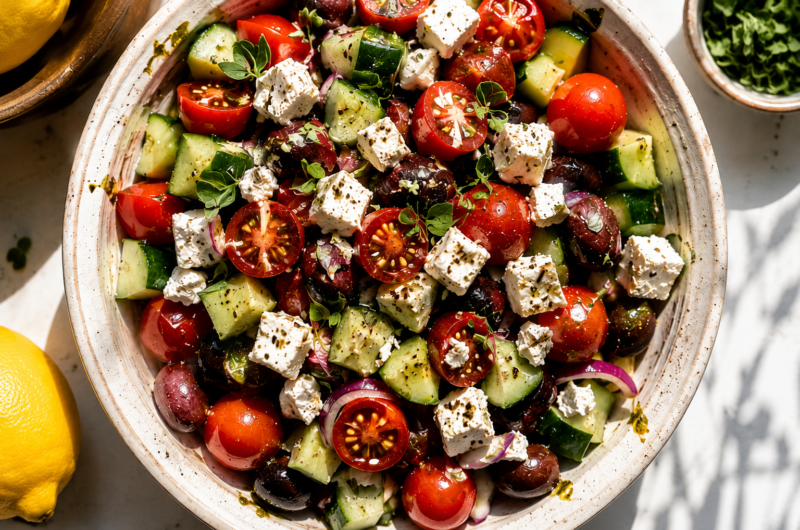
minutesThis vegan Greek salad is fresh, colorful, and packed with Mediterranean flavor. Crisp vegetables, briny olives, vegan feta, and a zesty homemade dressing come together in just minutes.
Ingredients
- For the Salad:
1 large cucumber, chopped
2 cups cherry tomatoes, halved
½ red onion, thinly sliced
1 green bell pepper, chopped
¾ cup Kalamata olives
1 cup vegan feta, cubed or crumbled
2 tbsp fresh parsley or oregano, chopped
- For the Dressing:
¼ cup extra virgin olive oil
2 tbsp red wine vinegar
1 tbsp fresh lemon juice
2 garlic cloves, minced
1 tsp dried oregano
1 tsp Dijon mustard
½ tsp salt
¼ tsp black pepper
Directions
- Add the cucumber, tomatoes, red onion, bell pepper, olives, vegan feta, and fresh herbs to a large serving bowl.
- In a small bowl or jar, combine the olive oil, vinegar, lemon juice, garlic, oregano, Dijon mustard, salt, and pepper.
- Whisk or shake until the dressing is well combined.
- Pour the dressing over the salad and toss gently to coat.
- Serve immediately and enjoy.
Notes
- Chill the vegetables for 20–30 minutes before assembling for the freshest texture.
- For the best results, add the dressing just before serving.
- Add chickpeas or quinoa to make the salad more filling.
- Store leftovers in the refrigerator for up to 2 days.

Hi, I’m Daisy Roots, the home cook and recipe developer behind this kitchen. I create simple, tested vegan recipes using everyday ingredients. Every dish is developed and cooked in my own kitchen, with clear steps to help you get reliable results every time. Thanks for stopping by — let’s cook something great!